The corporate gifting woven label beanies Unit Cost Review should begin with use case, not just price. A beanie that gets worn all winter gives more value than a cheaper item that never leaves the box.
That changes the buying math. The real comparison is cost per piece, then landed cost, then how reliably the order can be produced and delivered. When decoration, quantity, and timeline are aligned early, the project is easier to approve and less likely to pick up surprise costs later.
Why woven-label beanies outperform disposable swag
Beanies work for corporate gifting because they are practical. Cold offices, early commutes, outdoor events, and travel all create repeat wear. A gift that gets used many times is a stronger brand asset than a novelty item that is discarded quickly.
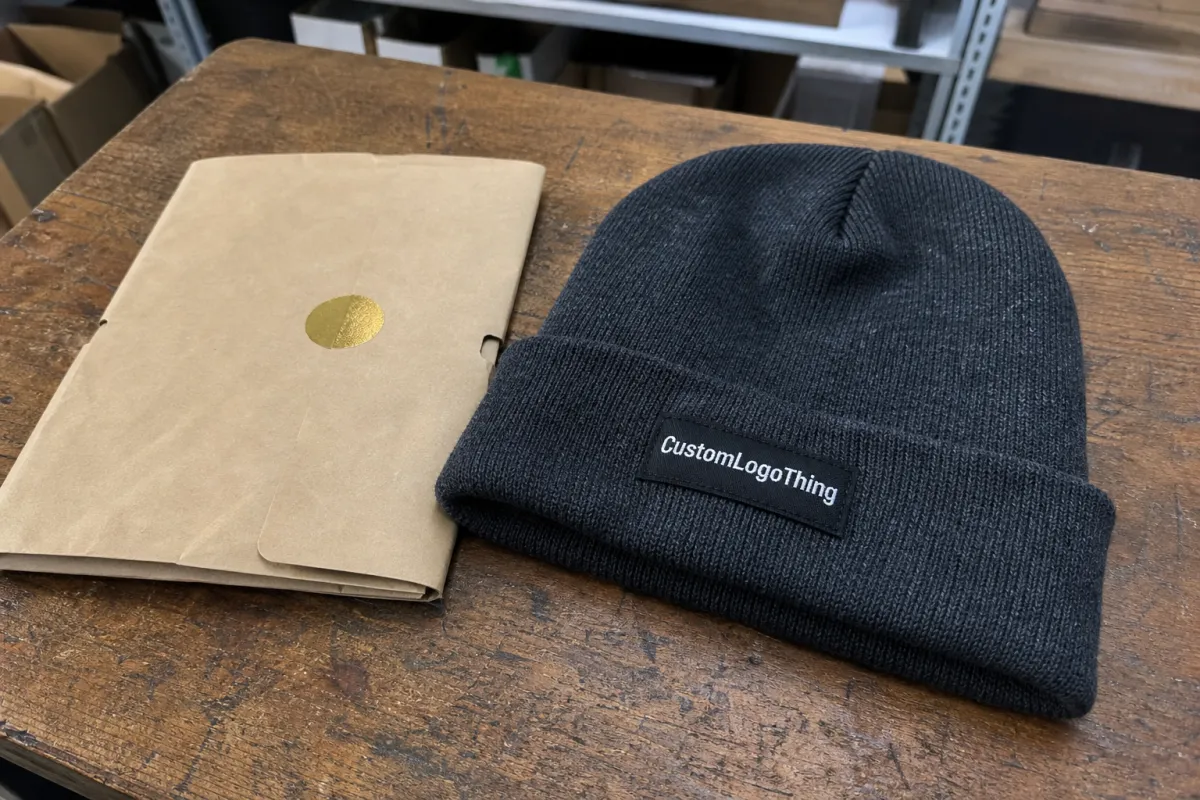
A woven label helps the beanie feel finished without making the branding heavy-handed. It reads more like apparel trim than promo merch, which matters when the audience includes employees, clients, and partners with different style preferences. An embroidered patch can work too, but woven labels usually keep the surface cleaner and the finish more refined on a tighter budget.
Perceived value matters as much as exposure. A recipient compares a beanie to winter apparel, not to a pen or sticker. That helps even a modest unit cost feel thoughtful if the yarn, cuff, and label placement are chosen well. Employee welcome kits, client holiday boxes, field-team bundles, and event mailers all benefit from that kind of everyday utility.
A slightly better beanie that gets worn twice a week usually beats a cheaper one that stays in a drawer.
For packaging teams, that is the real payoff: one useful item can circulate through office photos, airport lounges, and weekend errands. Disposable swag cannot compete with that kind of long-tail visibility.
What buyers actually get in a woven-label beanie build
A woven-label beanie is a stack of decisions, not a single product. Knit style, crown shape, cuff height, yarn blend, label placement, and finishing all affect the final result. Buyers who approve those details early usually avoid the most common rework.
Cuffed rib knits are the most common corporate gifting option because they stretch to fit most adult heads and leave a clean placement area for branding. Uncuffed styles can feel softer and more retail-like, but they offer less branding space. The choice depends on whether the beanie should read premium, utility-first, or somewhere in between.
Label placement does most of the visual work. Front cuff placement is the most direct branding move. Side placement feels quieter and often suits gifts where the wearer may not want a loud promotional look. Either way, the label should stay readable at arm's length and crisp in close-up photos.
Buyers can also add branded patches, side tags, size tags, hang tags, or custom sleeves. If the project needs extra presentation, pair the beanie with Custom Labels & Tags for care cards or secondary brand touches. For a more retail-style presentation, a belly band or folded insert can lift perceived value without turning the build into full custom packaging.
Color deserves more attention than it usually gets. Matching brand colors exactly on knitwear is harder than matching them on paper. A navy that looks perfect in a deck can read almost black in yarn. That does not mean the project is off; it means the brief should allow for a close match instead of a rigid one, especially if the beanies are meant to be worn outdoors.
Simple builds are easier to repeat. Fewer variables mean fewer delays, cleaner reorders, and less back-and-forth between procurement and decoration teams. If the goal is an annual gifting program, repeatability often matters more than novelty.
Specs that affect fit, feel, and reorder consistency
Spec discipline is what keeps an apparel gifting program on track. The key details are not glamorous, but they drive fit, price, and reorders. Confirm adult sizing, stretch range, cuffed versus uncuffed profile, and whether the style is being built for winter utility or premium gifting.
Yarn composition has a bigger effect than many teams expect. Acrylic is common because it is affordable, easy to knit, and consistent across runs. Wool blends add warmth and a more premium handfeel, but usually raise unit cost and can introduce care concerns. Recycled yarns can support sustainability goals, though texture and availability vary. None of these options is wrong; the right one depends on how the beanie will be used.
Label construction also matters. Woven labels vary by weave density, edge finish, thread contrast, and size. Higher weave density helps legibility when the logo includes fine text. Edge finish matters because loose edges can make the item feel unfinished. Thread contrast matters because a label too close to the knit color can disappear in photos.
Durability checks should not be skipped. Colorfastness, pilling resistance, and label wash performance tell you whether the item will hold up after real use. Textile suppliers often reference common test methods such as ASTM standards for wear and wash performance, which is a useful sign that the product has been evaluated beyond the sample stage.
Packaging matters too, especially for shipping-heavy programs. Cartons, inserts, and folding method all affect how the finished beanie arrives. If the order will move through a tougher transit chain, ask whether the packing plan aligns with ISTA test thinking to reduce crushed cartons, flattened cuffs, and messy presentation on arrival.
A clean spec sheet should include the logo file, Pantone references if relevant, placement notes, packaging choice, and final delivery split. Procurement, marketing, and operations should all approve the same version before samples are ordered. Otherwise, the quote changes three times and nobody trusts the number.
Corporate gifting woven label beanies unit cost review
This is the part buyers care about most. Unit cost is not just the factory price. It is the sum of yarn choice, label complexity, quantity, packaging, and any setup charges tied to art or finishing. If the brief changes after quoting, the number moves.
Quantity is the biggest lever. Lower runs carry more setup overhead per piece, while larger runs usually improve bulk pricing. MOQ matters because it determines how much of the production line is being reserved for your order. A 100-piece run and a 1,000-piece run may use the same process, but the smaller order absorbs far more of the fixed work.
Yarn choice changes the economics too. Standard acrylic beanies usually land below wool blends or recycled yarn options. Adding a woven label is typically affordable, but multi-color labels, custom edge finishing, or extra brand touches can push the quote up. Packaging does the same thing. A polybagged bulk shipment is cheaper than a gift-ready fold with sleeve, insert, and individual carton labeling.
Tooling fees are often modest on apparel, but they still matter. A new woven label setup, special hang tag die-cut, or custom presentation sleeve can add charges that buyers forget to include in the first comparison. Those fees may be small compared with the total order, yet they can distort the apparent cost if one supplier rolls them into the unit price and another lists them separately.
Here is a practical pricing view for corporate gifting woven label beanies Unit Cost Review. These are indicative ranges, not a promise, but they help with budget planning:
| Order size | Indicative unit cost | Common MOQ | What usually shifts the quote |
|---|---|---|---|
| 100-199 pcs | $8.50-$13.00 | 100 pcs | Higher setup charges, small-run labor, limited packaging choices |
| 250-499 pcs | $6.20-$9.40 | 250 pcs | Better bulk pricing, label complexity, single-location shipping |
| 500-999 pcs | $4.80-$7.10 | 500 pcs | Stronger cost per piece, optional kitting, more freight variables |
| 1,000+ pcs | $3.90-$5.80 | 500-1,000 pcs | Best unit cost, but QC and color consistency become more important |
That table only tells part of the story. True landed cost includes freight, split shipments, inserts, and any kitting or polybag requirement. A quote that looks higher on paper can still win if it includes packing and delivery that another supplier charges separately. Compare the same scope, not just the same style name.
Ask for two numbers every time: the price at your target quantity and the next higher tier. The jump between tiers often shows the best value point. If 250 pieces and 500 pieces are close enough, the larger run may reduce cost per piece enough to justify extra inventory. If the jump is steep, staying closer to the true need is the smarter move.
Compare the final quote against the intended use. If the beanie is for a short-term event, the cheapest acceptable build may be enough. If it is for client gifting or employee onboarding, a cleaner finish usually pays for itself in perceived value.
Process and turnaround: from artwork approval to delivery
The production path should be boring in the best possible way: brief intake, spec confirmation, digital proof, sample or mockup approval, bulk production, packing, and shipment. Each step is simple on its own. The schedule slips when one step is vague or left waiting on internal signoff.
Approval timing is critical. A delayed response on label art can shift the whole schedule, even if the actual knitting is fast. Buyers should decide in advance who can approve the proof, who can approve the budget, and who can approve the final ship-to list. When those lanes are clear, the order moves.
Typical turnaround depends on stock availability, decoration complexity, and packaging scope. For a standard decorated beanie with a woven label, production often lands around 12-18 business days after proof approval. Add custom packaging, multiple ship-to addresses, or peak-season volume, and the timeline can stretch toward 20-25 business days. Rush jobs are possible, but rushing a complex build usually costs more than simplifying the spec.
Seasonality matters as well. Cold-weather gifting creates a narrow window where everyone wants the same product at the same time. Planning backward from the event date is safer than planning forward from the purchase order date. If the giveaway is tied to holiday mailers, onboarding kits, or a conference launch, the delivery deadline should be the first number on the sheet.
Ask for a written recap after the first quote. It should list quantity, unit price, MOQ, decoration method, packaging format, and timeline. That single document keeps marketing, finance, and operations aligned and reduces the chance that someone references an outdated version later.
Why a controlled production and QC process matters
Consistency is the real buying reason. One crooked label, one off-color knit, or one badly folded beanie can make a polished gift program feel rushed. In corporate gifting, the product is judged as a representation of the brand, not just as a warm accessory.
A solid production partner should check label placement, color comparison, packaging counts, and pre-ship carton condition before anything leaves the facility. The buyer should not have to find a missing piece after the boxes are sealed. That is a waste of time and usually a waste of goodwill.
Fulfillment support matters just as much as product quality. Mixed ship-to lists, kitting, and staged deliveries create complexity fast. If gifts are being sent to employees, clients, and event attendees in different locations, the supplier should manage carton labels and packing lists carefully. A small mistake in address handling can cost more than the apparel itself.
When paper inserts or sleeves are part of the presentation, FSC-certified stock is worth considering. It helps keep the sustainability story clean and gives procurement an easy sourcing signal. For the packaging side of the order, the FSC framework is a useful reference point when a paper component is included in the gift set.
The most useful test of a supplier is simple: does the process get easier as the order gets more specific? A dependable partner makes the order easier to manage, not just cheaper on paper. If the quote is low but the coordination load is high, the buyer is paying for that difference somewhere else.
Next steps to lock the order without rework
Finalizing a beanie order is straightforward if the inputs are clean. Start with four things: quantity, deadline, brand colors, and delivery addresses. Then ask for a quote built on that exact scope. If any of those items are still moving, the pricing will be too.
Next, prepare the logo files and decide whether the woven label is the only branding element or one part of a fuller presentation package. If the order needs secondary branding, keep the support pieces simple. The more layers you add, the more room there is for revision. If you need help planning the add-ons, start with Custom Labels & Tags and build the rest around that choice.
Confirm the approval chain before sampling begins. One stakeholder who appears late can hold up production for days. That is an operations problem, and it is avoidable.
Before you sign off, make sure the final recap shows the MOQ, unit cost, setup charges, packaging method, and ship date. If the numbers are written down, everyone works from the same version. If they are not, someone will remember a different quote.
For a corporate gifting woven label beanies Unit Cost Review, the smartest move is rarely the cheapest one. It is the one that matches the intended use, fits the deadline, and arrives looking exactly like the approved sample.
What drives the unit cost for corporate gifting woven label beanies?
Quantity is the biggest lever, followed by yarn choice, label complexity, and packaging requirements. Freight, split shipments, and kitting can also change landed cost even when the base unit price looks stable.
What MOQ should buyers expect for woven label beanies?
MOQ usually depends on whether the build is a stock-style beanie or a more customized version. Lower quantities are possible in some cases, but setup charges and tooling fees usually make the cost per piece less efficient.
How long does production usually take after artwork approval?
Timeline depends on stock availability, decoration complexity, and packaging scope. A standard run often takes about 12-18 business days after proof approval, while more complex builds or peak-season orders can take longer.
Can the woven label match our brand colors closely?
Yes, but the match depends on thread availability and how tightly the label detail needs to replicate the brand color. Ask for a proof or sample reference before bulk production if color accuracy is critical to the gift presentation.
What should be confirmed before placing the order?
Confirm size, cuff style, label placement, quantity, delivery location, and deadline before asking for final pricing. A clean spec sheet reduces revision cycles and helps prevent surprise charges during production.