A retail printed poly mailers Unit Cost Review should start with the full landed cost, not just the bag price. Labor, freight, damage risk, and rework can outweigh the cost of the printed film itself. For apparel, accessories, cosmetics, supplements, and other light retail goods, a poly mailer often makes sense because it removes packing steps rather than adding more material.
If you are still deciding on packaging, start with Custom Packaging Products and narrow to Custom Poly Mailers once the product weight, shipping method, and print needs are clear. That order of work prevents avoidable mistakes in size, thickness, and artwork.
A mailer is not only a shipping shell. It is also a retail-facing surface, a workflow choice, and a transport decision. The best buying calls balance all three, because the wrong tradeoff shows up later as labor friction, damage, or poor presentation.
Why Retail Printed Poly Mailers Cut Packing Costs Fast
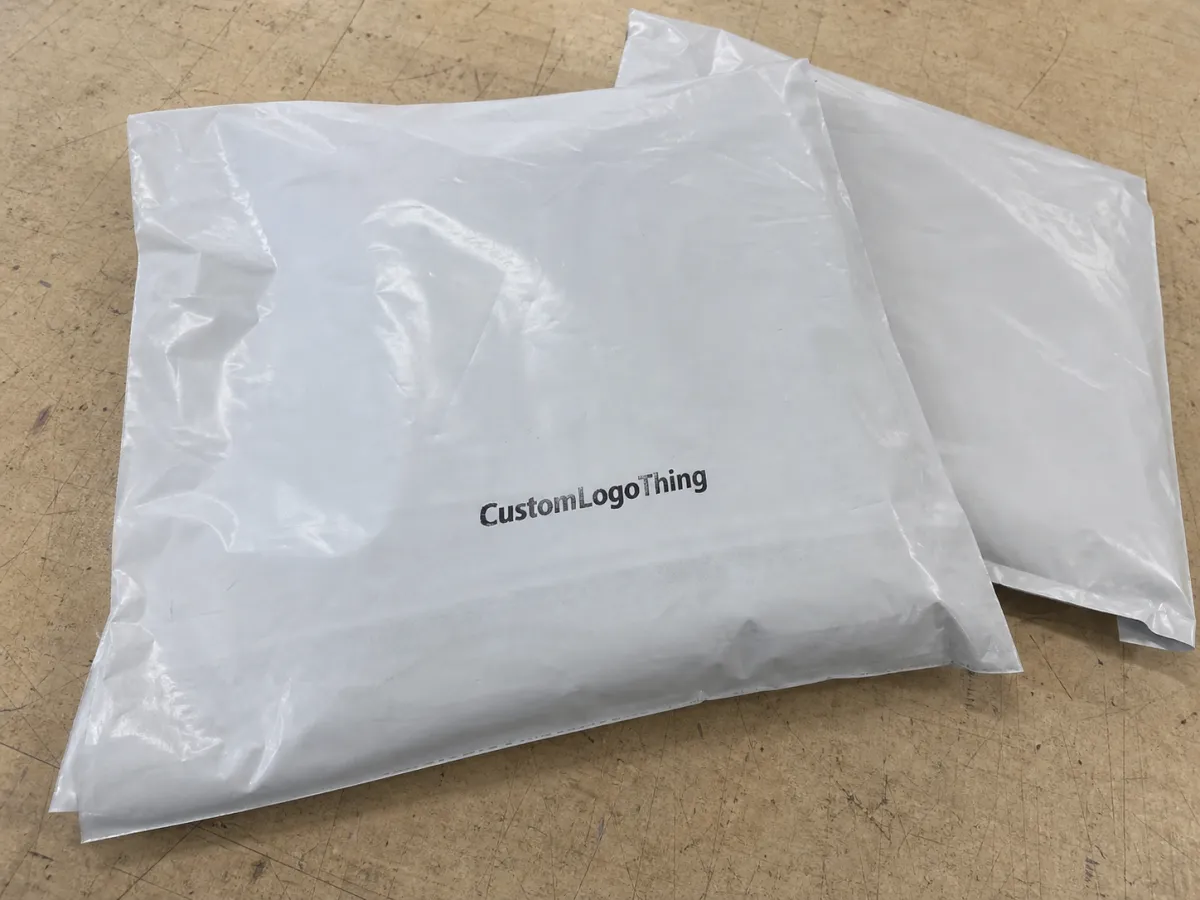
Most savings come from labor. A mailer closes in one motion. A box usually needs assembly, loading, void fill if needed, taping, and inspection. Those differences sound small on paper, but at warehouse scale they add up quickly.
That is why a retail printed poly mailers Unit Cost Review should include labor per order, not just unit price. A bag that costs a few cents more can still lower total cost if it cuts 20 to 40 seconds from each pack-out. Over thousands of orders, that time savings becomes real money.
Freight is the second savings layer. Poly mailers are light, so you are not paying to move cardboard and air. For apparel and accessory orders, lighter parcels can also reduce dimensional weight pressure. That matters most for high-volume brands where the same package profile repeats all month.
Presentation matters too, but only if it supports the operation. A clean logo, a controlled color block, or a clear return-address zone can make the parcel look finished without adding box complexity. Most retail brands do not need ornate packaging. They need something that seals consistently and keeps the line moving.
Cheap unit price can be misleading. If the bag wrinkles, sticks to itself, opens unevenly, or fails at the seal, the savings disappear into rework and complaints. A low price that creates handling problems is not a bargain.
There is also a product-fit issue. Boxes offer rigidity and protection, but they add material and handling. Poly mailers work best when the contents are soft, folded, or low risk for puncture. Retail packaging works when the format matches the item, not when the packaging is forced to do a job it cannot handle.
The best mailer is the one packing staff do not have to fight.
Retail Packaging Details That Make the Mailer Pull Its Weight
Film construction comes first. Most custom shipping bags use co-extruded polyethylene, usually with an outer layer optimized for print and an inner layer designed for seal performance and flexibility. That structure affects stackability, fold memory, and how reliably the adhesive strip grabs the film.
Do not judge only from the mockup. A proof can hide problems in the actual bag behavior. Check how it opens, whether the seal line is straight, whether the adhesive releases and reseals cleanly, and whether the film resists stretch at the corners. A bag that feels too thin may buckle in storage. One that is too stiff can slow packing because it does not fold naturally around the product.
Branding should help both the warehouse and the parcel. Repeat logos, readable color fields, and a clear return-address zone are practical choices. So is leaving enough unprinted space for barcodes or shipping labels if the operation needs them. Overcrowded artwork often looks busy in a design deck and cluttered on a live shipment.
Mailers have limits. They work well for folded apparel, soft goods, low-fragility accessories, and many lightweight retail shipments. They are a poor fit for sharp edges, brittle items, or anything likely to puncture film under transit pressure. In those cases, an inner wrap, a padded layer, or a different packaging format may be the better choice.
Material thickness is another point that needs judgment. A 2.5 to 3 mil film is common for soft apparel and light accessories. Heavier, sharper, or more irregular products often need 4 mil or more. The goal is not the thickest film possible. The goal is the right mix of puncture resistance, seal strength, and cost.
That balance should be tied to the actual product load, not a generic standard. A sample that performs well with a T-shirt may fail with a bulkier item. Too light creates damage risk, while too heavy pushes the cost beyond what the packaging should absorb.
Specs That Decide Strength, Print Quality, and Shelf Appeal
Specs drive the buying decision. Start with size, then film thickness, then opacity, seal width, and print coverage. If the bag is too small, the product stresses the seal. If it is too large, film waste increases and the parcel can look sloppy. Both outcomes affect cost and presentation.
Print method changes both appearance and price. A one-color logo is usually the least expensive route. More colors add setup, ink, and tighter color control. Full-coverage printing can create a stronger brand presence, but it often raises cost and reduces flexibility in proofing and production. PMS matching helps keep brand color consistent, though it may add plate or setup fees depending on the process.
Finish also changes perception. Matte hides handling marks better and often feels more restrained. Gloss makes color pop but shows scuffs more readily. Frosted film can suit some retail looks, while opaque black or white bags help conceal contents. The right finish depends on what the parcel needs to communicate and how it will be handled in transit.
Seal behavior deserves close review. A weak adhesive is a false economy if mailers open during transit or lose tack in hot storage. If shipments may sit in a warm warehouse or travel through variable climates, ask how the adhesive performs under storage stress, not just how it looks on a desk sample.
For brands that care about transit abuse, compare the mailer against ISTA test standards rather than relying on a smooth sample alone. A proof shows graphics. It does not show how the bag behaves when dropped, compressed, or scraped against other parcels. If environmental claims or recyclability language will appear on the bag, check EPA guidance before printing anything that is hard to substantiate.
The more clearly a buyer defines the spec, the fewer surprises appear later. Size, thickness, print count, finish, seal width, carton count, and destination all belong in the brief. “Make it nice” is not a spec. It creates guesswork, and guesswork is expensive.
Retail Printed Poly Mailers Unit Cost, MOQ, and Quote Drivers
This is where the budget question gets real. A retail printed poly mailers Unit Cost Review only helps if it separates the printed bag price from setup, freight, and minimum order conditions. Otherwise the quote looks attractive until the invoice arrives.
Typical bulk pricing declines as volume rises, but the curve is not linear. Setup and tooling can make small runs look expensive per piece, while larger runs spread those fixed costs across more units. The exact rate depends on size, film thickness, print complexity, carton configuration, and destination. A two-color full-coverage bag is not comparable to a single-color logo on one side.
Here is a practical range for standard printed mailers before remote-zone freight. Real quotes will move with the details, and that is normal.
| Order Tier | Typical Cost per Piece | Common MOQ | Setup / Tooling | Best Fit |
|---|---|---|---|---|
| 1,000-2,000 pcs | $0.28-$0.55 | 1,000 pcs | $80-$250 one-time, depending on print method | Launch runs, seasonal tests, small SKU counts |
| 5,000 pcs | $0.16-$0.32 | 3,000-5,000 pcs | Lower per-piece impact once the run is repeated | Stable reorder volume, mid-size DTC brands |
| 10,000+ pcs | $0.10-$0.22 | 5,000-10,000 pcs | Spread thin across the run | High-volume retail shipping and recurring campaigns |
The main quote drivers are usually straightforward. Bag dimensions. Film thickness. Number of print colors. Whether the bag needs a gusset or custom shape. Carton pack count. Freight terms. A smaller run with more artwork coverage may cost more than a larger run with a simple logo, even if the item size is the same.
MOQ creates a second tradeoff. A lower minimum helps with launches, seasonal programs, and uncertain demand. A higher minimum often lowers the unit cost enough to matter, especially if the packaging will be used continuously. If the volume is unproven, flexibility may be more valuable than the lowest available price. If demand is stable, a larger run usually makes more sense.
Compare landed price, not just unit price. A neat per-piece number can hide shipping surcharges, carton fees, or separate tooling charges. Ask for the same spec on every quote and make sure freight terms are spelled out. If the assumptions differ, the comparison is not useful.
Production Steps, Timeline, and Approval Milestones
The production sequence is simple if the buyer provides clean information. First comes spec confirmation. Then artwork review. Then proof approval. After that, the factory sources material, prints the film, cures or dries the ink, inspects the output, packs the cartons, and ships the order.
Lead time depends on run size and file quality. Standard production often lands in the 12-18 business day range after proof approval, with sampling and freight added separately. Rush jobs can move faster if stock film is available and the print is simple. Larger runs need more calendar room because setup, queue time, drying, carton packing, and freight booking all take time.
The delays usually come from the same places: incomplete dielines, fuzzy logos, file changes after proof sign-off, and dimensional changes after the quote is approved. Clean artwork files, a confirmed PMS reference if color matters, a correct ship-to address, and a final quantity remove most of the friction before it starts.
Reorders are easier than first orders because the learning curve is already paid for. Once the size, film, seal, and print profile are established, the second run becomes a check against the first. That is why good packaging teams keep a simple spec record. A page or two of accurate details can prevent a long chain of questions later.
Sampling is worth the time whenever the print is critical or the product is borderline for a mailer. A proof confirms art placement. A physical sample shows how the adhesive behaves, how the film folds, and whether the size actually suits the packed product. That is a much better way to catch problems than discovering them on the first live shipment.
Why Buyers Reorder These Mailers Instead of Switching Suppliers
Most buyers change suppliers because something failed: seal performance, color consistency, sizing accuracy, or communication. Reliable suppliers know the basics are what keep a reorder alive. Stable dimensions matter. Repeatable print matters. Clean proofing matters. So does an answer that arrives before inventory runs out.
From an operations perspective, a dependable mailer reduces friction in the warehouse. Staff know how it opens. Cartons stack consistently. The package fits the product the same way each time. That predictability lowers the odds of damage, which is often more important than a small unit-cost difference.
Support also affects cost. A good supplier flags artwork problems before printing, explains when a MOQ is too low for the chosen spec, and clarifies freight terms without forcing the buyer to decode a maze of line items. A quote that comes with vague answers usually becomes a more expensive order later.
The cheapest quote is not always the lowest landed cost. The invoice usually proves that faster than the spec sheet does.
That is the real reason buyers reorder. Once a mailer fits the product, the warehouse, and the budget, switching only makes sense if there is a measurable gain. A slightly lower price means little if it raises defect rates, slows packing, or creates artwork revisions every reorder.
Next Steps for Ordering the Right Mailer Run
Before requesting pricing, lock the basics. Measure the packed product, not just the item alone. Decide on bag size. Choose a film thickness that matches puncture risk and product weight. Set a target quantity. Determine whether the print should be simple or full coverage. Then send the ship-to address so freight is quoted correctly.
- Measure the packed product and allow for fold thickness or accessories.
- Match film thickness to weight, shape, and puncture risk.
- Choose print coverage based on brand need, not habit.
- Prepare final artwork files and any PMS targets before quoting.
- Request a sample or proof if seal strength or color accuracy matters.
A size error on a 5,000-piece run can erase the advantage of a lower cost per piece. So can an artwork revision after production starts. A good brief, a clean proof cycle, and a realistic reorder point prevent the kind of scramble that turns packaging into a margin leak.
For teams handling a retail printed poly mailers Unit Cost Review, the smartest comparison is the simplest one: same spec, same quantity, same freight assumptions, same lead time. Compare the landed cost, not just the unit line. Check the seal, confirm the thickness, and confirm that the packaging fits the product rather than forcing the product to adapt to a bad size choice.
Frequently Asked Questions
What affects retail printed poly mailers unit cost the most?
Bag size, film thickness, print colors, and order volume tend to move the price more than anything else. Freight, setup charges, and finish choices can also shift the landed cost. A fair comparison starts with identical specs across vendors.
What MOQ should buyers expect for printed poly mailers?
MOQ depends on size, print method, and customization level. Higher customization usually means a higher minimum. For low-volume launches, standard sizes and simpler print layouts can sometimes reduce the threshold.
How long does production usually take after artwork approval?
Standard production often takes about 12-18 business days after proof approval, though the exact timing depends on queue load and run size. Sampling and freight add time on top of that. Rush options may be available when stock film and simple print conditions align.
Can retail printed poly mailers be used for heavier products?
Yes, if the film thickness and seal strength match the load. Heavier, sharper, or brittle items may need inner protection or a different format. A mailer works best when the product is soft, folded, or otherwise low risk for puncture.
What should I send for a fast quote on retail printed poly mailers?
Send dimensions, quantity, print colors, artwork files, ship-to location, and any finish or opacity requirements. If the color must match a brand standard, include the PMS reference. The clearer the brief, the fewer revisions and surprises later.


