Buyer Fit Snapshot
| Best fit | Corrugated Corner Boards Bulk projects where brand print, material claims, artwork control, MOQ, and repeat-order consistency need to be specified before quoting. |
|---|---|
| Quote inputs | Share finished size, material target, print colors, finish, packing count, annual reorder estimate, ship-to region, and any compliance wording. |
| Proofing check | Approve dieline scale, logo placement, barcode or warning zones, color tolerance, closure strength, and carton packing before bulk production. |
| Main risk | Vague material claims, crowded artwork, missing packing details, or unclear freight terms can make a low unit price expensive after revisions. |
Fast answer: Corrugated Corner Boards Bulk: Specs, Pricing, Timing should be specified like a repeatable production item. The safest quote records material, print method, finish, artwork proof, packing count, and reorder notes in one written spec.
Production checks before approval
Compare the actual filled-product size with the drawing, then confirm tolerance on folds, seals, hang holes, label areas, and retail display edges. Reserve space for logos, QR codes, warning copy, and material claims before decorative graphics fill the panel.
Quote comparison points
Review material grade, print process, finish, sampling route, tooling charges, carton quantity, and freight assumptions side by side. A quote is only useful when the supplier can repeat the same color, closure quality, and packing count on the next order.
Corrugated Corner Boards Bulk: Specs, Pricing, Timing
Corrugated Corner Boards Bulk orders make sense the moment pallet damage keeps showing up in the same place: crushed edges, strap cuts, and load shift that starts at the corners. The math is boring, which is usually a good sign. A few cents per pallet edge costs less than replacing dented cartons, paying a claim, or rewrapping a load that should have left the dock looking right the first time.
For manufacturers, distributors, 3PLs, and retail replenishment teams, that is the real value. Not hype. Just a repeatable protection part that helps pallets ship straighter, cleaner, and with fewer surprises at receiving.
Corrugated Corner Boards Bulk: Orders Save More Than They Cost
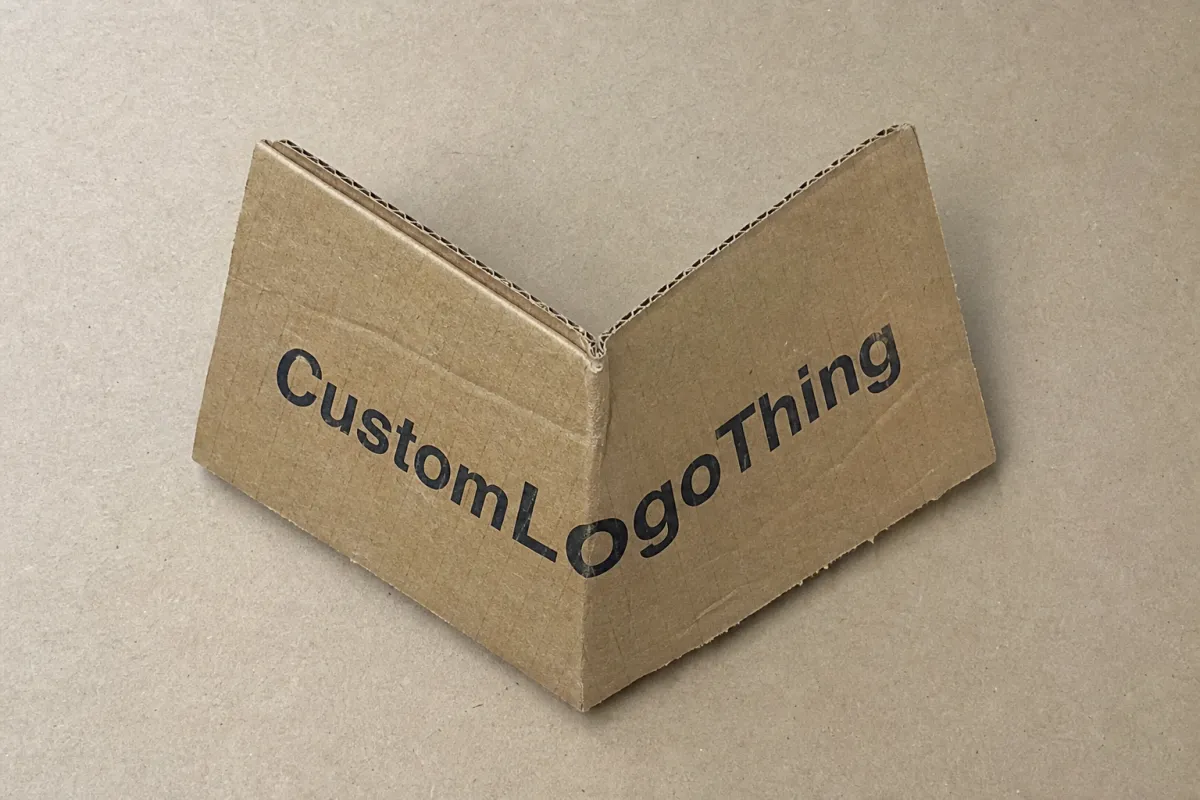
Most pallet damage starts at the edges, not the center. Cartons buckle where straps bite. Stretch wrap cuts into a sharp corner. A top-heavy stack shifts just enough in transit to bruise the outer layers, and the whole load ends up looking rough even when the product inside survived.
Corrugated corner boards earn their keep there. In bulk, they are not just a cheap add-on. They become part of the load standard. Once the size is set and the line team knows where they go, the boards cut repeat damage claims, reduce rework, and let the wrap do its job without fighting bare cardboard edges.
Bulk ordering only makes sense when the load pattern repeats. Think pallet heights that stay within a 4-6 inch band, cartons with a consistent footprint, or weekly outbound volume that makes a one-off solution look pointless. If you are shipping 1,500 pallets a month, a few cents per corner matters less than the labor saved on dock repairs and the complaints you do not have to answer later.
Picture a stack of printed retail cartons rolling through the warehouse. The bottom tier gets crushed because the strap was too tight. The top course shifts because the pallet corners were bare and the wrap had nothing solid to grab. Add four corner boards, and the load holds shape better under strapping, wrapping, and stacking. Nothing magical. Just basic load control.
- Best fit: recurring pallet programs with the same carton size or product family
- Best payoff: fewer edge dents, cleaner wraps, and fewer rework touches
- Best buyers: manufacturers, distributors, retail replenishment teams, and 3PLs
- Worst fit: one-off shipments with no repeat spec or wildly different pallet profiles
Corrugated corner boards bulk orders also cut waste in a way that rarely shows up cleanly on a spreadsheet. If the boards match the load, you use less extra wrap, fewer filler materials, and fewer emergency fixes at the dock. The result is a cleaner landed cost, not just a lower material line item.
A cheap board is not cheap if it fails under strap pressure, arrives late, or turns one bad pallet into a trailer of complaints.
What Corrugated Corner Boards Do on a Pallet
The core job is straightforward: protect vertical edges, spread strap pressure, and help the pallet stay square under stacking and transport stress. That sounds basic because it is. Basic protection is often what keeps a shipment from looking battered when it hits a customer dock.
Corrugated corner boards are usually L-shaped protectors made from layered kraft liner and corrugated medium. They sit at the edges of the load, usually four per pallet, and act like a stiff frame. The board spreads force across a larger surface area, so a strap does not cut into one carton seam or crush a corner flap. If the pallet gets stacked, the corner boards also help carry vertical load more evenly.
Compared with plastic or wood, corrugated board has a few practical advantages. It is lighter, easier to recycle in many streams, and usually cheaper at volume. Plastic can make sense in wet environments, and wood can be necessary for very heavy industrial loads, but for a large share of palletized goods, corrugated gives the better balance of cost and protection.
| Option | Typical Use | Strength | Typical Cost Impact | Buyer Tradeoff |
|---|---|---|---|---|
| Corrugated corner boards | Retail cartons, e-commerce bulk packs, mixed product pallets | Good to very good, depending on grade and thickness | Lowest for most standard loads | Best all-around fit, but not ideal for very wet or extremely heavy loads |
| Plastic edge protectors | Reusable routes, humid storage, repeated internal moves | Very good | Higher upfront cost | Useful if reuse matters more than single-use economics |
| Wood corner posts or lumber | Heavy industrial, export, long-term stacking | Excellent | Highest material and handling cost | Strong, but heavier and less efficient for standard shipping lines |
Corner boards do not replace stretch wrap, strapping, or slip sheets. They work with those components. The wrap still holds the unit together. The straps still compress the load. The corner boards give both a better surface to press against. That is why they show up in food, beverage, retail replenishment, industrial parts, and export shipments where edge damage shows up fast.
If your pallets are moving through distribution testing or export review, the ISTA framework is a useful way to think about vibration, compression, and handling abuse. For sourcing questions, FSC certification matters when buyers want documented fiber responsibility instead of vague claims. Both are more useful than a glossy brochure.
Specifications: Sizes, Grades, and Performance Options
The right spec starts with the load, not the catalog. Buyers usually need to decide five things: leg length, board thickness, overall length, board construction, and whether the corner should be equal-leg or unequal-leg.
Leg length is the width of each side of the L-profile. Common legs run from about 1 inch to 4 inches, with custom options larger when the load has broad cartons or wide straps. A 2 x 2 inch corner works fine for many light to medium pallet loads. A 3 x 3 inch board gives more surface area and helps on taller stacks or tighter strap pressure.
Board thickness usually sits somewhere in the 2 mm to 8 mm range, depending on strength requirements and construction. Thin boards are fine for clean internal shipping lines and lighter cartons. Heavy-duty laminated boards are better for export, taller loads, or cases where the pallet may be stacked and handled hard.
Length should match the protected height of the load. A common mistake is ordering a board that is shorter than the product stack or forgetting that the wrap needs a little coverage above the top tier. If the load is 54 inches tall, a 54-inch or slightly longer corner board is usually safer than cutting it close. The board should cover the exposed edge, not just most of it.
Equal-leg vs. unequal-leg construction matters more than some buyers expect. Equal-leg boards are the standard choice. Unequal-leg boards can help where one face needs more width because of strap placement, carton geometry, or partial exposure. That can be useful on mixed loads or pallets with an odd overhang.
Construction options generally include single-wall, double-wall, and laminated multi-layer builds. Single-wall is lighter and cheaper. Double-wall adds compression strength. Laminated multi-layer boards are for loads that do not forgive weak packaging. If a customer expects a clean unit load and the cartons are expensive, the extra material cost is often easy to justify.
- Single-wall: lighter loads, clean warehouse environments, cost-sensitive programs
- Double-wall: medium loads, mixed product stacks, better crush resistance
- Laminated multi-layer: tall pallets, export shipments, heavy cartons, higher strap tension
- Recycled content: useful for sustainability targets, though virgin kraft liners may give better strength
Performance options matter too. Moisture resistance can help in humid storage or long ocean transit, but extra coating is not free and not always necessary. Printability matters if the corner board needs SKU marking, handling instructions, or a simple logo. Automation matters if boards need to run cleanly with a packaging line that places them fast and repeatedly.
For buyers building a repeat spec, I usually suggest matching the board to the pallet instead of forcing the pallet to fit the board. That matters when the load includes different carton heights or mixed product groups. In those cases, custom dimensions are often worth it because stock sizes waste material or leave one edge exposed.
One more practical point: a spec sheet should describe the real use environment, not just the carton size. A board that works on a dry, indoor warehouse route may fail in a humid export lane or a cold chain where condensation softens the outer liner. That is not a defect in corrugated. It is a mismatch between the board and the job.
Corrugated Corner Boards Bulk Pricing, MOQ, and Quote Factors
Corrugated corner boards bulk pricing is driven by the same unglamorous things that drive most packaging quotes: dimensions, board grade, number of layers, print requirements, and order volume. Bigger boards use more material. Stronger boards use more fiber and more production time. Custom shapes or special coatings add cost. There is no mystery there, just arithmetic.
For typical bulk orders, lighter stock boards often land around $0.18-$0.45 per piece before freight. Medium-duty custom boards can run about $0.35-$0.85. Heavy laminated boards for tall or export-bound pallets may sit around $0.75-$1.80 per piece, sometimes more if the dimensions are large or the board has special handling requirements. Those are broad ranges, not promises. Size and freight can swing the number faster than people expect.
| Order Type | Typical Spec | Indicative Unit Price | Common MOQ | Typical Lead Time |
|---|---|---|---|---|
| Stock light-duty | 2 x 2 inch legs, 24-36 inch length, single-wall | $0.18-$0.45 | 1,000-5,000 pieces | 5-12 business days |
| Custom medium-duty | 3 x 3 inch legs, 40-60 inch length, double-wall | $0.35-$0.85 | 3,000-10,000 pieces | 10-18 business days |
| Heavy-duty laminated | 4 x 4 inch legs, 72-96 inch length, multi-layer | $0.75-$1.80 | 5,000+ pieces | 12-25 business days |
Freight is the part many buyers undercook. Long corner boards are bulky, and bulky freight costs money. Even if the unit price looks attractive, landed cost can climb fast if the shipment moves half-empty, needs special palletizing, or goes a long distance. For large boards, freight can add 12% to 30% to the landed price, and sometimes more on smaller-volume shipments.
That is why a delivered quote matters more than an ex-factory quote. Ask for the total landed cost to your ZIP code or port, not just the board price. A quote that looks cheap on paper can turn expensive after palletizing, liftgate service, or accessorial charges show up.
Use this checklist before asking for a quote:
- Dimensions: leg width, overall length, and whether the board is equal-leg or unequal-leg
- Grade: single-wall, double-wall, or laminated construction
- Quantity: total piece count and any reorder cadence
- Destination: ZIP code, port, or warehouse location
- Use case: carton weight, pallet height, strap tension, and stacking risk
- Packing: bundle count, palletizing needs, and whether the load needs corner protection during transit
MOQ trips people up more than price does. Stock sizes may allow smaller trial orders, sometimes 1,000 pieces or a little less if the supplier already runs that spec. True custom dimensions usually need more volume because the setup cost has to be spread across the run. That is normal. Compare a trial run against a trial run, and a production lot against a production lot. Otherwise the numbers lie to you.
One supplier might quote a low piece price but bury the real cost in freight and handling. Another may price the board a little higher and ship it more efficiently. The second quote often wins. Buyers who only stare at the unit price tend to discover that the cheapest-looking option is not the least expensive once the trailer reaches the dock.
The lowest quote is not the cheapest quote if the board arrives short, crushes under strap pressure, or forces a second handling cycle at receiving.
Process and Timeline: From Spec Sheet to Shipment
Ordering is simple if the spec is clean. It gets messy when the numbers are vague. The best process starts with dimensions, weight, and a real pallet photo. That gives the supplier enough information to quote a board that protects the load instead of a board that just looks like it might.
- Submit the load details. Send pallet dimensions, carton size, estimated pallet weight, and destination. A photo helps more than a paragraph.
- Confirm the material grade. Decide whether single-wall is enough or whether double-wall or laminated construction makes more sense.
- Review the drawing or spec sheet. Check leg width, overall length, and any print or coating requirements before production starts.
- Approve samples if needed. For heavy, tall, or export-bound loads, a sample on a real pallet is worth the time.
- Lock the schedule. Once the spec is approved, production can be slotted and freight booking can begin.
Lead time depends on order type. Clean stock reorders can move in about 5-10 business days from order confirmation. Custom sizes usually need 10-18 business days after proof approval. Heavy laminated orders, coated boards, or jobs with print may stretch to 15-25 business days if the plant is busy or the freight lane is complicated.
What slows production down? Unclear sizes. Last-minute width changes. Waiting on artwork approval. A buyer who wants a sample, then changes the carton height, then changes the strap spec. Packaging teams see that all the time, and it burns calendar days for no good reason.
Quality control should not be treated like a nice-to-have. A serious run should include dimension checks, angle consistency, bundle count verification, and a basic compression review where the board matters to the load. If the shipment is going through distribution testing, some buyers reference ASTM D642 compression data for the packed load. That is not always necessary, but it is useful language when the pallet is carrying expensive product or moving through a demanding network.
Use internal planning language that the warehouse can actually act on. For example:
- Purchasing: approve the spec before the PO goes out
- Warehouse: reserve dock space on the ETA day plus one
- Receiving: expect bundled boards on pallets, not loose cartons
- Transportation: confirm whether liftgate or appointment delivery is required
That kind of coordination sounds dull. It is. It also keeps one late truck from creating a pile of unrelated problems.
If the program is recurring, build in a simple review after the first shipment. Check whether the board is too tall, too short, too narrow, or more material than the pallet actually needs. A one-time review saves money faster than arguing over packaging later.
Why Buy Corrugated Corner Boards Bulk From Us
Buyers do not need a lecture on packaging theory. They need a quote that matches the load, a spec they can hand to the warehouse, and a repeat order that comes back the same way next month. That is the real reason to buy corrugated corner boards bulk through a supplier that treats the spec like a working document instead of a sales prop.
Factory-direct pricing matters, but consistency matters more. If the first order lands at 48 inches with a 3 x 3 leg and the reorder comes in at 47.5 inches with softer corners, the program starts leaking money immediately. Repeat packaging programs need the same dimensions, the same board grade, and the same pack count every time.
Buying in volume also makes logistics easier. A proper bulk program lets you match the board to the actual load, set a steady reorder point, and reduce the number of emergency buys that cost more just because someone waited too long. If you are already sourcing cartons, pairing the boards with Custom Shipping Boxes can improve pallet stability because the carton footprint and edge protection are designed together instead of patched later.
For teams that buy on a recurring schedule, the Wholesale Programs page is the cleaner place to start. Repeat buyers usually care about three things: price stability, reorder consistency, and a supplier that does not force them to re-explain the same spec every quarter.
Here is what practical support looks like:
- Quote speed: fast enough to keep purchasing moving
- Sample support: board samples or spec sheets before a full run
- Packaging advice: help matching board size to carton height and strap pressure
- Freight planning: delivery terms that do not hide the real landed cost
- Customization: size, grade, recycled content, print, and pack configuration
The value is not just the part itself. It is fewer headaches, fewer damaged corners, and a landed cost that stays sane across repeat shipments. That is what buyers actually pay for, even if they do not say it out loud.
There is also a trust issue that gets ignored too often. A supplier should be willing to tell you when a lower-cost stock board is enough and when it is not. If the load is heavy, wet, or export-sensitive, a candid recommendation is worth more than a bargain quote that creates problems later.
Next Steps for Ordering Corrugated Corner Boards Bulk
If you want a quote that is useful instead of decorative, gather three things first: pallet dimensions, target quantity, and the shipping destination. That gives the supplier enough information to estimate material usage, freight, and lead time without guessing.
Then ask for a sample or spec sheet before placing a large run, especially if the load is heavy, tall, or export-bound. A sample on a real pallet can show you whether the leg width is right, whether the board sits cleanly under the wrap, and whether the strap tension is too aggressive for the carton structure.
The smartest buyers compare three variables together: board strength, freight terms, and timeline. If you compare only unit price, you miss the part of the bill that often hurts the most. If you compare only freight, you might buy a board that is too weak. If you compare only lead time, you may end up paying extra just to meet a deadline. No one wins that way.
- Confirm the spec. Measure the full load, not just the carton.
- Approve the quote. Check landed price, MOQ, and freight terms.
- Lock the production slot. Do not wait until stock runs out.
- Plan receiving. Make sure the warehouse knows what is arriving and when.
If your shipment is part of a recurring program, set a reorder point before inventory gets tight. That prevents rush charges and keeps the spec from drifting. Corrugated corner boards bulk orders work best when the plan is settled before the run starts, not after the first damaged pallet shows up. For cleaner pallet loads, fewer claims, and a sane landed cost, corrugated corner boards bulk buying is the practical move once the dimensions, freight, and timing are locked.
One final takeaway: start with one real pallet, not a guess. Measure the load, pick the board grade that matches the actual stress, and compare delivered cost instead of chasing the lowest piece price. That small bit of discipline usually pays for itself on the first avoided damage claim.
How many corrugated corner boards bulk orders do I need per pallet?
Most pallet loads use four corner boards, one on each vertical edge. Tall, heavy, or banded loads may need longer legs or extra coverage, especially if the pallet is stacked or the wrap is under higher tension. The right count depends on load height, strap pressure, and whether the shipment is single- or double-stacked.
What affects corrugated corner boards bulk pricing the most?
Size and board grade drive the biggest price swings because they change material usage and crush strength. Custom dimensions, coatings, print, and special packing requirements can raise the cost, and freight often changes the landed price more than buyers expect. Long boards are especially sensitive to shipping expense.
Can corrugated corner boards bulk orders be customized?
Yes. Common custom options include length, leg width, thickness, recycled content, and print. Custom sizing is useful when standard stock boards leave exposed edges or waste material. A good supplier should match the board to the pallet instead of forcing the pallet to fit the board.
What is the usual MOQ for corrugated corner boards bulk?
MOQ varies by manufacturer, board grade, and whether the order is stock or custom. Stock sizes may allow smaller runs, while custom specs usually need higher minimums to stay economical. Ask for MOQ before quoting so you are comparing a real production offer, not a trial run against a full lot.
How do I know if corrugated corner boards bulk are strong enough for my load?
Match the board grade to pallet weight, stack height, and strap pressure. Ask for compression or edge strength data if the load is heavy, tall, or export-sensitive. If the shipment is important enough to claim later, it is important enough to test on a real pallet before you commit to the full order.


