PVC Zipper Garment Bags moq for cosmetics brands is less a styling question than a buying one. The answer shifts with size, film thickness, zipper style, print setup, and packing method, and those variables can move both MOQ and unit cost more than first-time buyers usually expect.
Cosmetic brands use this format for practical reasons. A clear or frosted PVC zipper bag keeps the product visible, protects against dust and scuffs, and presents neatly in retail, PR kits, and storage. One bag structure can often serve sampling, seasonal packing, and display without forcing a redesign every time the use case changes.
Good quotes start with good information. Finished dimensions, artwork, and a quantity range should go out together; a vague request like “price for zipper bags” tends to create back-and-forth, while a clean spec sheet gives the supplier enough detail to quote MOQ, setup charges, and the likely cost per piece with far less guesswork.
PVC Zipper Garment Bags MOQ for Cosmetics Brands: Why the First Quote Is Not the Final Number
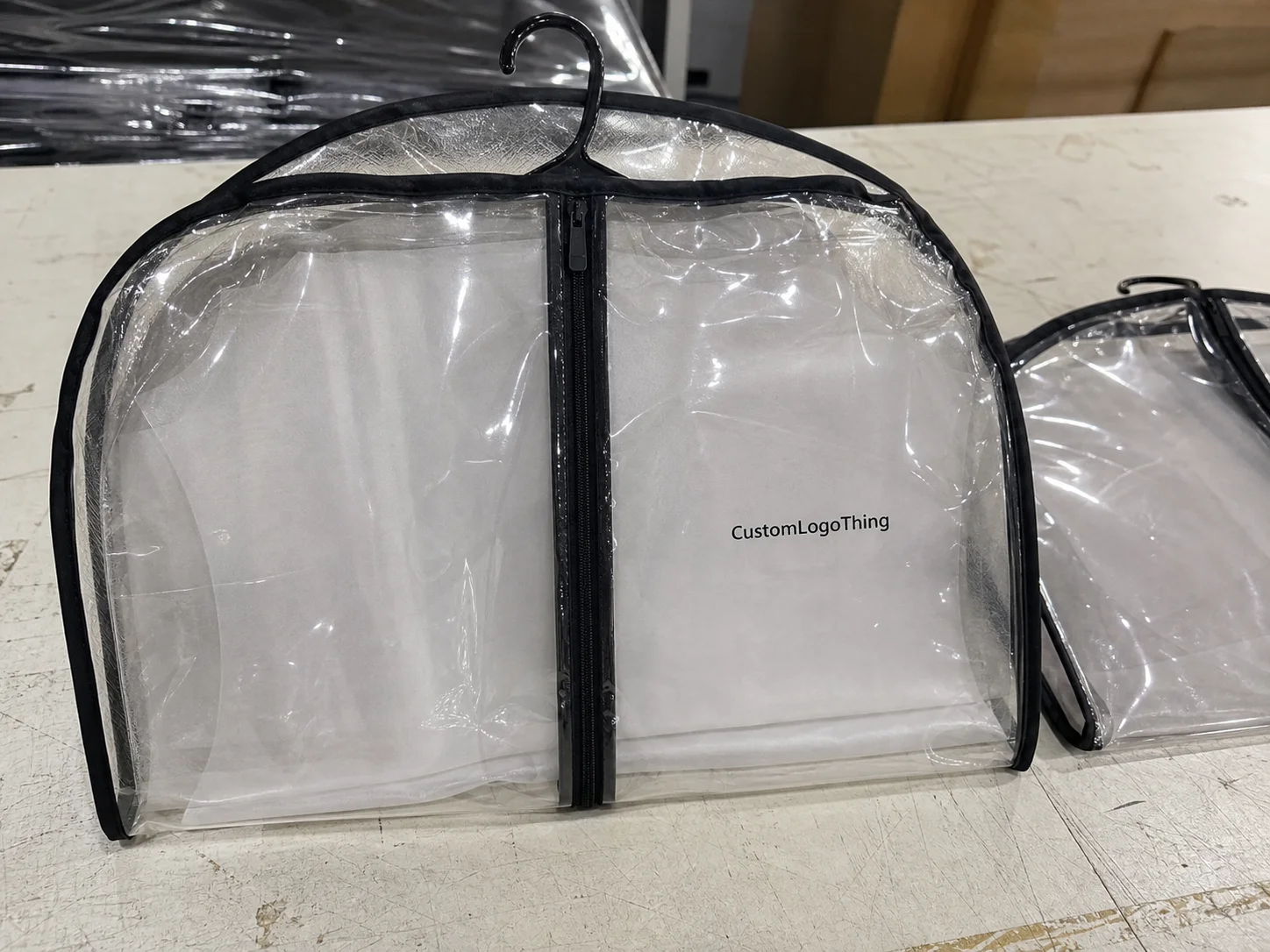
The first quote is usually a starting point, not the final buying number. For PVC Zipper Garment Bags moq for cosmetics brands, pricing changes with the actual build: bag dimensions, film gauge, zipper hardware, print coverage, and whether the order uses a standard shape or a custom one. A bag that looks simple from the outside may still need a new cutting pattern, a different zipper color, or an extra packing step, and each of those choices affects MOQ and price.
Cosmetic brands value this structure because presentation matters without requiring fragile packaging. A PVC zipper bag gives visibility for brushes, travel sets, accessory kits, and soft goods, while still keeping items protected from handling marks and dust. It also gives a brand one format that can work across several channels: PR seeding, retail shelving, warehouse sorting, and seasonal gifting.
That flexibility is the commercial upside. Instead of building a new bag for every campaign, a brand can often keep the same base structure and change only the printed message, insert card, or pack-out. That reduces design churn and usually improves reordering discipline, because the supplier already knows the base spec.
What buyers often miss is that the best price comes from accuracy, not pressure. If you send exact dimensions, zipper style, logo artwork, finish preference, and target quantity bands, the factory can show where the quote improves at 500, 1,000, or 3,000 pieces. If the request is only a general idea, the answer has to protect against unknowns, and that usually pushes the MOQ up.
A clean spec sheet is often the fastest path to a better quote. The more the supplier understands the real use case, the easier it is to reduce risk without cutting quality.
For brands comparing packaging options more broadly, the FAQ can help narrow the first round of questions before a request reaches production. Structured approval also matters later, because a repeatable spec saves time on replenishment and keeps the bag consistent from one run to the next.
Film, Zipper, and Finish Choices That Change the Shelf Look
Clear PVC is the simplest option to understand: it shows the product, reads cleanly on shelf, and usually gives the highest visual transparency. Frosted PVC softens the look and hides fingerprints better, which helps when the bag is handled often in a retail or warehouse setting. Lightly tinted film can add brand color, but too much color can reduce product visibility and make inspection harder during packing.
The finish matters as much as the color. High-clarity film often feels more premium because the contents are visible with little distortion. Matte and frosted surfaces can look more restrained, and they are useful when the brand wants a quieter presentation or wants to hide minor movement inside the bag. In practical terms, the finish should match the product, the shelf environment, and the way the bag will be touched.
Zipper choice is another detail that changes the buying result. A standard zipper may be enough for sample kits and soft goods, but a smoother pull tab, tighter interlock, or better closure feel can improve daily use. Cosmetics buyers often ask for a closure that opens easily during packing but still feels secure on display, and that balance usually needs a sample, not just a line item on paper.
Decorative add-ons can help, but they also add work. Hang holes, gussets, label windows, inner cards, or reinforced edges can make a bag more useful for retail or gifting, yet each item adds material usage or setup time. If the bag has to support more than one use case, it is better to decide that early rather than adding extras after the tooling path is already set.
| Option | Best Use | Typical Tradeoff |
|---|---|---|
| Clear PVC | Retail display, PR kits, product visibility | Shows fingerprints and scuffs more easily |
| Frosted PVC | Premium presentation, handling-heavy packs | Less product visibility than clear film |
| Lightly tinted PVC | Brand color stories, seasonal collections | Can reduce inspection visibility if too dark |
| Gusseted bag | Bulkier cosmetics, accessory sets | More material and slightly higher unit cost |
For brands that want a clearer view of packaging materials and recovery considerations, the EPA packaging guidance is useful background. It is not a purchasing spec, but it helps buyers think more carefully about material choice and end-of-life handling.
Size, Thickness, and Closure Specs to Lock Before You Request Samples
Finished dimensions should be the starting point. Do not quote the bag from the product alone, because zipper clearance, seam allowance, and any gusset or side fold all change the final size. A cosmetics buyer who sends a bag size based on a product photo usually ends up revising the sample once the real item arrives on the table.
Film thickness changes both feel and function. Lighter gauges are often suitable for sample kits, giveaway packs, and softer presentation use, where the bag does not need to stand upright on its own. Thicker film gives more structure and better resistance to flexing, which matters when the same bag is opened and closed repeatedly or shipped with heavier contents.
Seam placement and edge finish deserve attention early. A bag that looks fine in a flat drawing may fail in use if the seal line sits too close to the zipper or if the film is too stressed at the corners. Good suppliers will discuss seam width, sealing method, and whether the closure area needs extra reinforcement before sampling begins.
Print placement should also be locked before a sample is approved. Logo size, one-color or multi-color print, and any special finish such as matte ink or metallic effect can influence the tooling path and minimum quantity. If the artwork is still changing, the supplier may quote a higher MOQ because the job is not stable enough for efficient production.
Packaging format for shipment is another detail that affects the final cost. Nested bags, folded bags, or bulk-packed bags each use cartons differently, and that changes freight efficiency and receiving time. It also affects whether the bags arrive ready for immediate use or need unpacking and rehandling at the buyer’s warehouse.
Sample checklist
- Finished width, height, and depth.
- Film thickness target, not just “thick” or “light.”
- Zipper type, pull tab style, and closure feel.
- Print area, number of colors, and artwork file format.
- Packing method for shipment and carton count target.
Cost, MOQ, and Quote Drivers for Smaller Cosmetic Runs
For smaller cosmetic runs, the quote is built from a few repeatable levers: material grade, bag size, zipper component, print complexity, and packing method. Once those are set, the supplier can show the real bulk pricing curve instead of giving a single number that may not hold when the spec changes.
Simple, unprinted, standard-size bags usually support the lowest MOQ. The more the order departs from that setup, the more the minimum tends to rise. Custom sizing, multi-color printing, matte or frosted finishes, and special closure details often require more setup time and more quality checks, so they are not priced the same as a plain stock-style build.
Setup charges are not the same thing as unit cost. Artwork prep, screen or plate charges, sample charges, and any mold or tooling fees can sit outside the per-piece price. A quote may look attractive until those items are added back in, especially on a pilot run. For a brand comparing offers, the better question is total landed cost at each quantity band, not just the lowest list price.
Typical pricing bands can look something like this for a standard PVC zipper bag, depending on size and print coverage:
| Quantity Band | Price Pressure | What Usually Changes |
|---|---|---|
| 300-500 pcs | Highest unit cost | Setup charges spread across fewer pieces |
| 1,000 pcs | Middle ground | Better balance between MOQ and unit cost |
| 3,000+ pcs | Lower cost per piece | More efficient material use and production flow |
For a plain bag, a realistic cost per piece might sit in a modest range once the order reaches a workable quantity. Printed or custom-sized bags can move upward quickly, especially if the order includes color matching or special finishing. A single price without the spec is not very useful; a better approach is to quote three levels and let the breakpoints show themselves.
There are also straightforward ways to control cost without weakening the product. Standardize the size if the brand can live with it. Reduce print colors. Avoid a special zipper unless the use case truly needs it. If several SKUs can share one bag format, the supplier can often hold the price better across the run.
Small cosmetic launches also tend to expose the hidden cost of rework. If artwork changes after plates or screens are prepared, or if a zipper color is swapped late, the quote can move in a way that is hard to recover from on a short run. That is one reason the first sample should be checked against the real product and the actual packing method, not just viewed flat on a table.
Process, Timeline, and Production Steps From Spec Sheet to Shipment
The process is usually direct, but the timeline depends on how prepared the buyer is. A typical path starts with inquiry, then spec confirmation, quotation, sample approval, production, inspection, packing, and shipment. Each step can move quickly if the artwork is final and the dimensions are clear. If not, the schedule stretches because the factory has to wait for revisions before anything can be locked.
Sampling is where most risk gets removed. A practical sample should verify finished dimensions, zipper function, clarity or finish, seal strength, and print alignment. For cosmetics brands, it also helps to check whether the bag sits cleanly on a shelf or in a display tray, because a bag that looks fine flat may behave differently once it is packed with bottles, compacts, or accessories.
The common delay points are easy to predict. Unclear artwork files slow the print setup. Late feedback on sample changes pushes the production slot. Quantity changes after quoting can force a revised MOQ or reprice the order. And if the bag uses a custom zipper or an uncommon film color, sourcing can add time before the first unit is even made.
That is why launch-driven buyers should work from the latest acceptable ship date, not the ideal date in a marketing calendar. If a promotion or retail drop depends on the bags arriving on time, the order should be planned with enough room for approval, rework, and transit. A realistic production window is often more valuable than a fast promise that has no room for correction.
For brands that need extra reassurance on shipping and handling discipline, packaging performance standards such as ISTA testing are worth understanding. They do not replace your product spec, but they help explain why carton strength, internal protection, and transit planning matter once the goods leave the factory.
What a Cosmetic Packaging Supplier Should Show Before You Place Repeat Orders
A low quote is not the same as a dependable supplier. For repeat orders, consistency matters more than headline pricing. The same dimensions, the same zipper action, the same print density, and the same film clarity need to hold from one run to the next. If those details drift, the brand ends up re-approving the bag and losing the efficiency the repeat order was meant to create.
Look for clear communication on tolerances, material availability, lead times, and what will trigger a new MOQ or a price adjustment. A good supplier will say where the risk lives instead of hiding it. If the order depends on a specific film grade or zipper component, that should be flagged before the purchase order is issued, not after the schedule slips.
Documentation also matters. Spec sheets, sample references, and production notes keep the bag stable across replenishment runs. If a cosmetics brand expands from a pilot order into a larger replenishment cycle, those records reduce the chance of dimensional drift, print mismatch, or packed-carton confusion. That becomes especially useful for teams handling multiple SKUs at once.
Scalable manufacturing is another sign of a serious supplier. A brand may start with a small test order, then move into a larger restock once the bag proves itself. If the supplier can hold the same build across those phases without forcing a redesign, the buying process becomes much easier. This is also where bulk pricing matters: it should reward scale without changing the product in a way that hurts the user experience.
Packaging and export discipline should not be ignored either. Neat carton labels, stable palletizing, and damage prevention affect the receiving team as much as the production team. Cosmetic bags are light, but they can still crease, scuff, or arrive out of order if packing is rushed. A supplier with good export habits reduces avoidable friction after shipment.
Quality control checks should be plain and repeatable. Common points include seal strength, zipper function, print registration, film clarity, and carton count verification. If a supplier can explain how those checks are performed and what tolerance range is acceptable, that usually tells you more than a polished sales sheet.
Next Steps to Get an Accurate MOQ and Quote Without Back-and-Forth
If you want a useful quote, send one clean message with the essentials: finished dimensions, target quantity, film thickness preference, zipper style, logo artwork, and delivery destination. That is the fastest way to move beyond a generic response and into a quote that reflects the actual production setup.
It also helps to ask for pricing at three quantity levels. A small trial run, a repeat order, and a larger replenishment order will show the real unit cost impact of scaling up. That comparison often does more for decision-making than a single number ever could. Buyers who see the ladder can choose whether to absorb a higher pilot cost or wait until the larger run makes more sense.
Be explicit about the use case. A plain bag, a printed bag, and a retail-ready presentation version are not the same product, even if they share the same zipper format. If the supplier knows whether the bag is for product sampling, retail display, or warehouse storage, the quote will be closer to reality and the sample will be more relevant.
Lead time should be tied to the business deadline, not treated as a vague estimate. If the brand has a launch date, replenishment date, or event date, put it in the first message. That helps the supplier plan around sample approval, setup charges, and transit windows in a way that fits the real schedule.
For buyers comparing PVC Zipper Garment Bags MOQ for cosmetics brands, the most reliable path is simple: send the exact spec set, ask for quantity-based pricing, and review the sample against the real product before approving production. That is how you get the right MOQ, the right unit cost, and a bag that performs the same way on the last carton as it did on the first sample.
What MOQ should cosmetics brands expect for PVC zipper garment bags?
MOQ usually depends on bag size, print complexity, and whether the build is standard or custom. Simple, unprinted bags can often start lower than printed or specialty-finished versions. The fastest way to confirm is to send dimensions, quantity range, and artwork details together.
Can I lower the MOQ for custom PVC zipper garment bags?
Yes, often by simplifying the print, using a standard size, or reducing component variations. Shared tooling and fewer color changes can also make a smaller run more practical. A supplier can usually show the lowest feasible MOQ once the spec is locked.
What thickness works best for cosmetic zipper garment bags?
Lighter film works for sample kits and soft presentation use, while thicker film adds structure and a more premium feel. The right choice depends on how often the bag will be handled and whether it needs to stand up on display. Balance clarity, stiffness, and seam strength instead of choosing thickness by appearance alone.
How long does sampling and production usually take for cosmetic packaging bags?
Sampling depends on artwork readiness and whether the order needs custom components or print setup. Production starts after sample approval, so approval speed has a direct effect on the final ship date. The most accurate timeline comes from a supplier quote tied to your approved spec and order size.
What should I send to get a fast quote on PVC zipper garment bags?
Send finished dimensions, target quantity, thickness preference, print artwork, zipper style, and delivery location. If you have a sample reference or photo, include it so the supplier can confirm the build more quickly. Adding your launch date helps align the quote with the right process and timeline.


