Ribbon handle paper Bags Lead Time and MOQ can decide whether a retail launch, gifting program, or event handout feels polished or patched together at the last minute. The bag may look simple from the outside, but custom production has several moving parts: paper stock, print setup, finishing, handle preparation, hand assembly, packing, quality control, and freight.
For buyers, the practical question is not only, “Can this bag look right?” It is also, “Can this exact bag be produced at the quantity we need, within the budget we have, and before the date the bags must be in hand?” A ribbon handle bag that arrives late, tears at the handle, or costs twice the planned unit price has missed the point, even if the mockup looked beautiful.
Ribbon handle paper bags are popular because they add a finished, gift-ready feel without moving all the way into rigid box pricing. They stack cleanly in cartons, present well at retail counters, and suit cosmetics, jewelry, apparel, hospitality, events, and corporate gifting. The surprise for many first-time buyers is that the ribbon itself is rarely the only factor affecting schedule or MOQ. Paper availability, sheet yield, foil dies, lamination, reinforcement, and manual tying or threading often create the real production pressure.
Ribbon Handle Paper Bags Lead Time and MOQ: What Buyers Need to Know
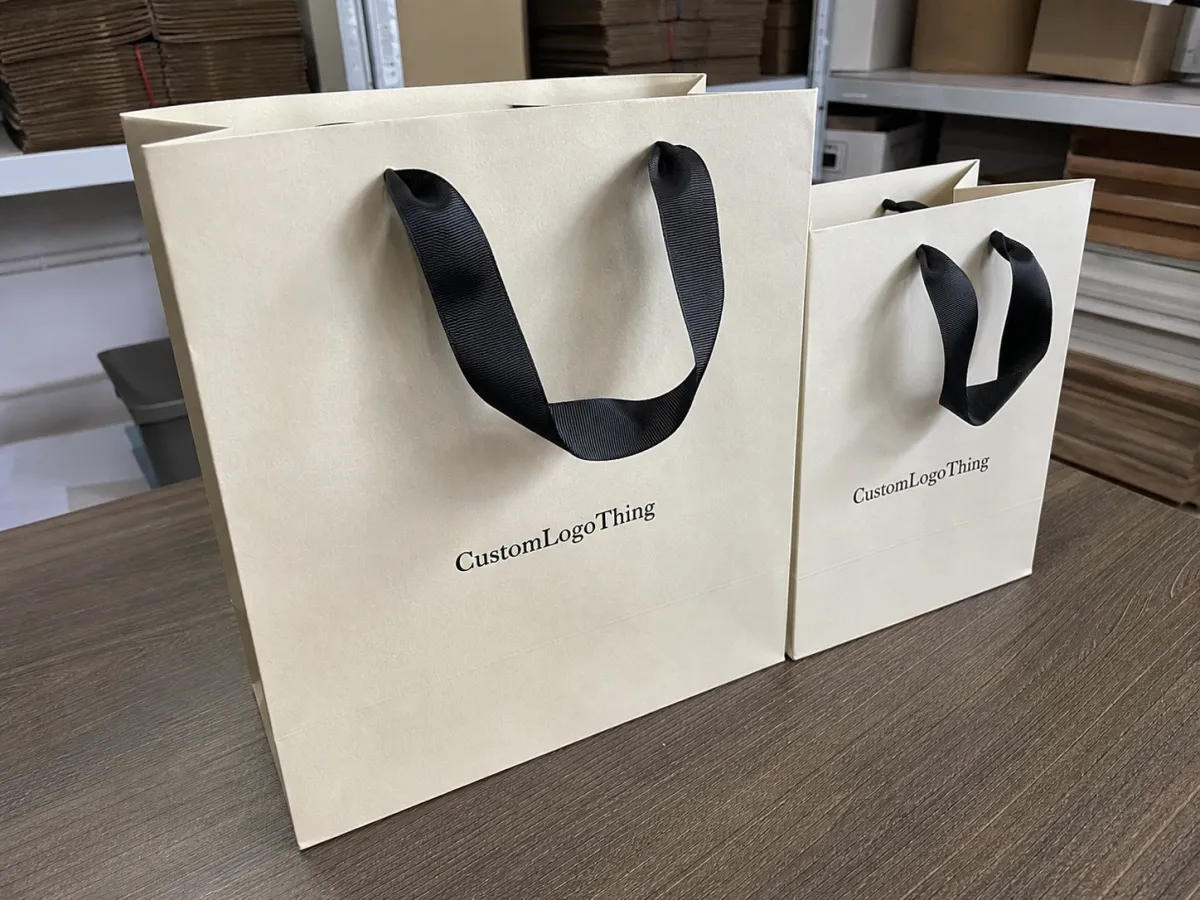
These bags are worth considering when the handoff matters. A standard merchandise bag can carry the item, but a ribbon handle bag can make the purchase feel wrapped, considered, and ready to give. That difference is useful for beauty products, small luxury goods, boxed apparel, stationery, wedding or hospitality kits, and seasonal retail collections where packaging forms part of the perceived value.
The best orders usually start with planning rather than decoration. If the launch date is fixed, every material choice should be checked against that date. A specialty paper that needs extra sourcing time, a custom-dyed ribbon, or a foil stamp that requires a new die may still be the right decision, but it should be chosen knowingly. Speed, price, and finish rarely move in the same direction.
Here is the basic buying logic:
- Choose ribbon handles when the bag should feel premium, giftable, or event-ready at the point of handoff.
- Choose twisted paper or rope handles when lower cost and faster production matter more than presentation.
- Choose flat paper merchandise bags for light items, simple giveaways, or short-use retail packaging.
- Request pricing only after the size, artwork, quantity, material direction, and delivery timing are reasonably clear.
A serious quote is a specification conversation. The supplier should ask about bag dimensions, paper grade, GSM or thickness, print coverage, handle style, finish, packing requirements, delivery destination, and the required arrival date. A quote based only on a photo may look convenient, but it usually leaves out the details that affect cost and lead time.
A good bag quote is built from measurements, materials, artwork, quantity, and freight assumptions, not from a product image alone.
Product Details That Affect Appearance, Strength, and Ordering Confidence
A ribbon handle paper bag is a simple structure with several small decisions inside it. The body is usually made from printed paper or paperboard with side gussets, a bottom fold, and a folded top turn-over for strength. The ribbon may pass through punched holes or metal eyelets, then be knotted, tied, or secured inside the bag. For heavier items, a bottom board or insert can help the bag stand neatly and reduce bowing at the base.
Paper choice affects both appearance and performance. White kraft gives a clean natural look and works well for simple branding. Brown kraft feels more organic, but printed colors will shift on the darker base. Coated art paper gives smoother print results and sharper color control, especially for full-coverage artwork or photography. Textured and specialty stocks can look excellent for gifting, although fine lines and small type may lose sharpness depending on the surface.
Paper weight should follow the product, not just the desired look. Small cosmetic items, jewelry boxes, and light promotional kits may work with a moderate GSM, while candles, boxed apparel, glass items, and dense gift sets often need heavier paper, a reinforced top fold, or a bottom insert. If the product has sharp corners, rigid packaging, or a high center of gravity, the structure deserves extra attention before artwork is finalized.
Ribbon selection changes the feel of the bag and the labor needed to assemble it. Grosgrain has a ribbed, structured texture. Satin looks softer and more formal. Cotton-look ribbon can support a natural or craft brand style. Polyester ribbon is often the practical option when durability, color range, and repeat availability matter. Width also matters: a narrow ribbon may look delicate, but it can cut into the hand if the contents are heavy.
Finish options should be chosen with restraint. Matte lamination, gloss lamination, soft-touch lamination, foil stamping, embossing, debossing, and spot UV can all improve shelf presence, but each one adds cost, setup, approval steps, or production handling. A single well-chosen finish often looks better than three competing effects on a small bag.
For product fit, these broad categories are a useful starting point:
- Small bags work well for cosmetics, jewelry, accessories, premium stationery, or compact gift sets.
- Medium bags suit apparel, candles, boxed sets, event kits, and retail bundles.
- Large bags are better for boxed merchandise, larger promotional kits, or lightweight apparel orders.
Specifications to Confirm Before a Factory Quote
A useful factory quote starts with a clean spec sheet. At minimum, the buyer should provide width, gusset, height, material preference, paper thickness or GSM, handle type, ribbon color, print colors, finish, bottom insert needs, order quantity, packing method, shipping destination, and required delivery date. If those details are missing, the quote will either be slow, padded with assumptions, or incomplete.
Size affects much more than appearance. A wider or taller bag uses more paper, may reduce sheet yield, and can increase carton volume even when the unit price looks acceptable. Gusset depth is just as important. Too shallow, and the product pushes against the panels; too deep, and the bag can look bulky or collapse around smaller items. Cost per piece should always be read together with packed carton count and freight method.
Artwork files need the same discipline as the physical spec. Vector artwork in AI, EPS, or editable PDF format is preferred. Pantone references should be included when brand color control matters. Bleed, safe zones, dieline alignment, fold lines, and handle-hole placement all need review before production. A logo that looks centered on a flat mockup may feel too high once the top turn-over is folded, or it may compete with the handle area once the ribbon is installed.
Foil, embossing, debossing, and spot UV need clean separation in the artwork file. These effects are usually produced from distinct layers or plates, and unclear files can delay proofing. Thin foil lines, tiny serif type, and delicate reverse details may not hold cleanly on every stock, so it is better to catch those limits during proofing than after materials are already on press.
If file preparation is unfamiliar, the FAQ is a useful place to review basic artwork requirements before sending files. A few minutes spent checking format, color references, and dieline placement can save days of back-and-forth later.
Good buyers also explain how the bag will be used. Will staff hand it out flat or pre-opened? Will the product be packed at a warehouse, in-store, or at an event table? Will the bag sit in a showroom, travel through a retail distribution chain, or be carried for several hours at a trade show? Use conditions influence reinforcement, carton packing, and quality-control expectations.
Pricing, MOQ, and Unit Cost Drivers for Ribbon Handle Bags
MOQ exists because custom ribbon handle bags require setup across several production steps: printing, die-cutting, creasing, handle punching, ribbon cutting, finishing, forming, hand assembly, inspection, and packing. A very small order still needs much of that setup, so the unit cost climbs quickly when the run is too short. That is why ribbon handle paper bags Lead Time and MOQ are often quoted together.
The main cost drivers are usually clear once the bag is broken down:
- Bag size, gusset depth, and total paper usage
- Paper grade, GSM, coating, or specialty texture
- Print coverage, color count, and color matching needs
- Lamination, foil stamping, embossing, debossing, or spot UV
- Ribbon material, width, color match, and attachment method
- Manual assembly time, especially for tied or threaded handles
- Carton packing, palletization, freight method, duties, and delivery terms
Small quantities usually carry more setup cost per bag. Higher volumes often look much better on a unit basis, but the largest order is not always the smartest order. If a brand is testing a new product line, a lower quantity may protect cash flow, reduce storage pressure, and avoid being stuck with outdated packaging after an artwork change. For repeat programs, comparing two or three quantity breaks gives a clearer view of the reorder economics.
The following ranges are practical planning references, not fixed prices. Actual pricing will move with bag size, print coverage, finish, order quantity, packed volume, freight method, and destination.
| Option | Typical MOQ | Ballpark cost per piece | Lead time after approval | Best fit |
|---|---|---|---|---|
| Simple printed kraft bag with ribbon handles | 1,000-3,000 pcs | $0.42-$0.78 | 12-18 business days | Launches, promotions, lighter retail items |
| Laminated art paper bag with matched ribbon color | 2,000-5,000 pcs | $0.68-$1.25 | 15-22 business days | Gift retail, cosmetics, apparel, events |
| Premium finish with foil or embossing | 3,000 pcs and up | $0.92-$1.70 | 18-28 business days | Luxury presentation, corporate gifting, branded handoff |
A complete quote should state whether tooling fees, setup charges, sampling, and shipping are included. It should also show carton quantity, estimated packed weight, delivery terms, and whether taxes or duties are included or excluded. If the quote only lists a unit price, the buyer does not yet know the landed cost.
For sourcing standards, references such as ISTA shipping tests and FSC-certified paper can help frame expectations around transit performance and responsible material sourcing. Not every project needs formal certification or transport testing, but these standards are useful when packaging sits inside a larger procurement, retail, or compliance program.
Lead Time, Sampling, and Production Timeline From Approval to Delivery
Lead time starts after approval, not after the first inquiry. This distinction causes many avoidable schedule slips. If the logo file is incomplete, the dieline is still being adjusted, the Pantone color is undecided, or three departments are still commenting on the proof, production has not truly started.
A typical order moves through specification confirmation, artwork check, dieline placement, proofing, sample or pre-production approval, material preparation, printing, finishing, bag forming, ribbon assembly, quality control, packing, and shipping. Each stage has a reason. Press time cannot be booked confidently if artwork is unresolved; assembly cannot begin before finished sheets are ready; freight cannot be planned accurately without carton dimensions and packed weight.
Sampling should match the risk level of the project:
- Digital proof is fastest and works for layout, copy, logo placement, and general review.
- Blank structural sample checks size, gusset depth, paper feel, and product fit.
- Printed sample helps confirm color, finish, ribbon appearance, and overall presentation.
- Pre-production sample is sensible for high-value orders, strict brand standards, or complex finishes.
The easiest time savings are usually practical rather than dramatic. Use in-stock paper where possible. Choose standard ribbon colors unless a custom match is truly needed. Avoid combining foil, embossing, specialty paper, and custom ribbon on a rush order unless the budget and schedule can absorb it. Keep one internal decision-maker responsible for final approval, because split approvals are one of the quietest causes of delay.
Freight deserves early attention. Air shipping can protect a launch date but raises landed cost sharply, especially on bulky paper products. Ocean freight, truck freight, or consolidated shipping may be more economical for larger orders, but they require a wider planning window. If bags will pass through warehousing or retail distribution, carton strength and packing method should be discussed before the order ships, not after crushed corners appear on arrival.
Quality control checks are straightforward but important. Inspectors should review print registration, color consistency, lamination adhesion, foil placement, handle-hole position, ribbon length, knot security, bottom fold strength, glue lines, surface scuffs, and carton packing. For heavier items, a basic load check is worth doing, even when the order is not formally tested. The bag does not need to survive abuse, but it should survive the actual use case.
Common Ordering Mistakes That Delay Custom Paper Bags
The first mistake is choosing a bag from a photo without checking product weight, box dimensions, and how the item sits inside the gusset. A bag can look right on screen and still feel awkward in hand if the proportions are wrong. Boxed cosmetics, premium stationery, candles, and gift sets often need more depth or reinforcement than a photo suggests.
The second mistake is approving artwork before the dieline is reviewed. A logo that looks elegant in a mockup can run into a handle hole, fold line, top turn-over, or foil limitation once placed on the real structure. The print area, reinforcement zone, and finished bag shape should be checked together.
The third mistake is assuming color behaves the same on every stock. A deep brand color may print cleanly on coated art paper but look muted on brown kraft or uneven on textured stock. Lamination can shift the appearance too, especially on dark solids and metallic effects. If color consistency is critical, ask for a proof or sample rather than judging from a screen image.
The fourth mistake is treating MOQ only as a purchasing obstacle. It is also a planning tool. Ordering too few bags can force costly reorders and repeat setup charges. Ordering too many can create storage pressure, tie up cash, or leave the brand with old artwork after a campaign changes. Better planning looks at campaign length, replenishment cycles, storage space, and realistic usage rate.
Use a simple checklist before approval:
- Approve the dieline before final artwork sign-off.
- Confirm product fit, total filled weight, and how the contents sit in the bag.
- Review top reinforcement, handle attachment, and bottom support.
- Ask for carton quantity, packed weight, and estimated freight volume.
- Verify production and shipping timing against the required in-hands date.
- Keep one person responsible for final approval and proof comments.
These checks sound basic, but they prevent the small errors that turn into schedule problems. In custom packaging, small misses rarely stay small once materials are ordered and production space is booked.
Practical Spec Planning for Ribbon Handle Bag Buyers
A practical bag spec balances presentation, strength, cost, and time. The goal is not to make the most complex bag possible. The goal is to match the structure and finish to the product, the brand standard, the budget, and the delivery date.
For a light retail item, that may mean white kraft, one or two print colors, a standard satin ribbon, and no lamination. For cosmetics or apparel gifting, a laminated art paper bag with a matched ribbon and clean logo placement may justify the higher cost. For a premium handoff, foil or embossing can be worth adding, but the rest of the design should stay controlled so the finish has room to work.
Buyers often need related packaging items at the same time: boxes, tissue, stickers, inserts, hang tags, mailers, or thank-you cards. Coordinating those pieces helps the final presentation feel intentional, but it also adds proofing and production steps. If several items share the same launch date, treat them as one schedule rather than separate last-minute orders.
There are honest caveats. Exact color matching on paper is harder than on a screen. Rush production narrows material choices. Lower MOQs can raise unit cost. Premium finishes add approval points. Very heavy products may need a different handle structure or a heavier paper grade than the original design suggests. None of these issues are deal breakers, but they should be handled before the quote is treated as final.
The most useful supplier conversation covers load weight, material options, ribbon selection, finish limitations, carton packing, freight timing, and the effect each choice has on unit cost. A clear spec does not remove every production variable, but it gives the order a much better chance of arriving on time and performing properly.
Next Steps Before You Request a Ribbon Handle Bag Quote
Before requesting a quote, gather the details a production team needs to price the order accurately: target bag size, product dimensions, filled weight, order quantity, paper preference, ribbon color, logo file, finish preference, delivery address, and required in-hands date. That short list keeps the conversation grounded in real production constraints.
A photo or sample of the product being packed is also helpful. Seeing the item in its actual box, tray, or wrap makes it easier to judge gusset depth, handle strength, and finished proportions. If the product is unusually dense, fragile, sharp-edged, or tall, say so early. That one detail can change the paper grade, bottom support, or handle reinforcement.
If the budget is still open, ask for a good-better-best comparison. One simple printed version, one upgraded finish version, and one higher-volume price break often show where the real value sits. This is especially useful for buyers comparing a low first run against a larger replenishment order.
For event-driven orders, start with the must-arrive date and work backward through proofing, sampling, production, QC, packing, and freight. Do not assume custom processes can always be compressed near the end. Sometimes they can; often they cannot without changing the material, finish, or shipping method.
For dependable planning around ribbon handle paper bags Lead Time and MOQ, get the specifications in early, approve the dieline carefully, and make schedule part of the buying decision from the first quote. A well-made bag should look right, carry properly, pack efficiently, and arrive before it is needed.
Frequently Asked Questions
What is the typical MOQ for custom ribbon handle paper bags?
MOQ depends on bag size, paper stock, print method, finish, and ribbon choice, but custom production commonly starts around 1,000-3,000 pieces for simpler bags and can move higher for laminated, foil-stamped, embossed, or specialty-material orders. Ask for pricing at the minimum run and at one or two higher quantities so the unit-cost difference is clear.
How long is the lead time for ribbon handle paper bags?
Lead time begins after artwork, specifications, and proofs are approved. Simple custom orders may run about 12-18 business days after approval, while laminated or premium-finish bags may need 15-28 business days before shipping. Sampling, custom ribbon colors, specialty paper, and freight method can extend the schedule.
Can I lower the MOQ or unit cost on ribbon handle paper bags?
The most practical ways are to use standard sizes, in-stock paper, common ribbon colors, fewer print colors, and finishes that do not require extra tooling. Unit cost often improves at higher quantities, so compare volume breaks before deciding whether the lowest MOQ is the best value.
What artwork files are needed for custom printed ribbon handle bags?
Vector artwork is preferred, usually in AI, EPS, or editable PDF format, with Pantone references if brand color matching matters. The artwork should be reviewed on the bag dieline so bleed, safe zones, logo placement, handle holes, fold lines, and foil or spot UV areas are checked before production.
Do ribbon handle paper bags cost more than twisted handle bags?
Usually yes. Ribbon handles add material cost, color selection, punching or eyelet work, ribbon preparation, and more hand assembly than standard twisted paper handles. The added cost can be justified when the bag is part of a gift experience, premium retail presentation, event package, or branded handoff customers may keep or reuse.

