Cosmetics embroidered beanies Bulk Order Planning looks straightforward on a purchase order, then the sample arrives and the logo sits too high, the yarn tone clashes with the packaging, or the cuff folds in a way that makes the whole piece feel less premium than it did on screen. That gap between mockup and reality is where most avoidable mistakes live. The beanie is often the most repeated branded item in a winter beauty kit, which means small production choices get magnified every time it is worn, photographed, or unboxed.
Beauty teams usually buy beanies for staff gifts, influencer kits, holiday bundles, retail add-ons, and salon partner packs. Each use case changes the brief. A beanie meant for social content has to read well at a distance and under mixed light. A staff piece has to hold up to frequent wear. A retail insert needs to fold cleanly and survive shipping without looking crushed. The order only feels simple after those details are settled.
Cosmetics embroidered beanies bulk order planning: what buyers miss first
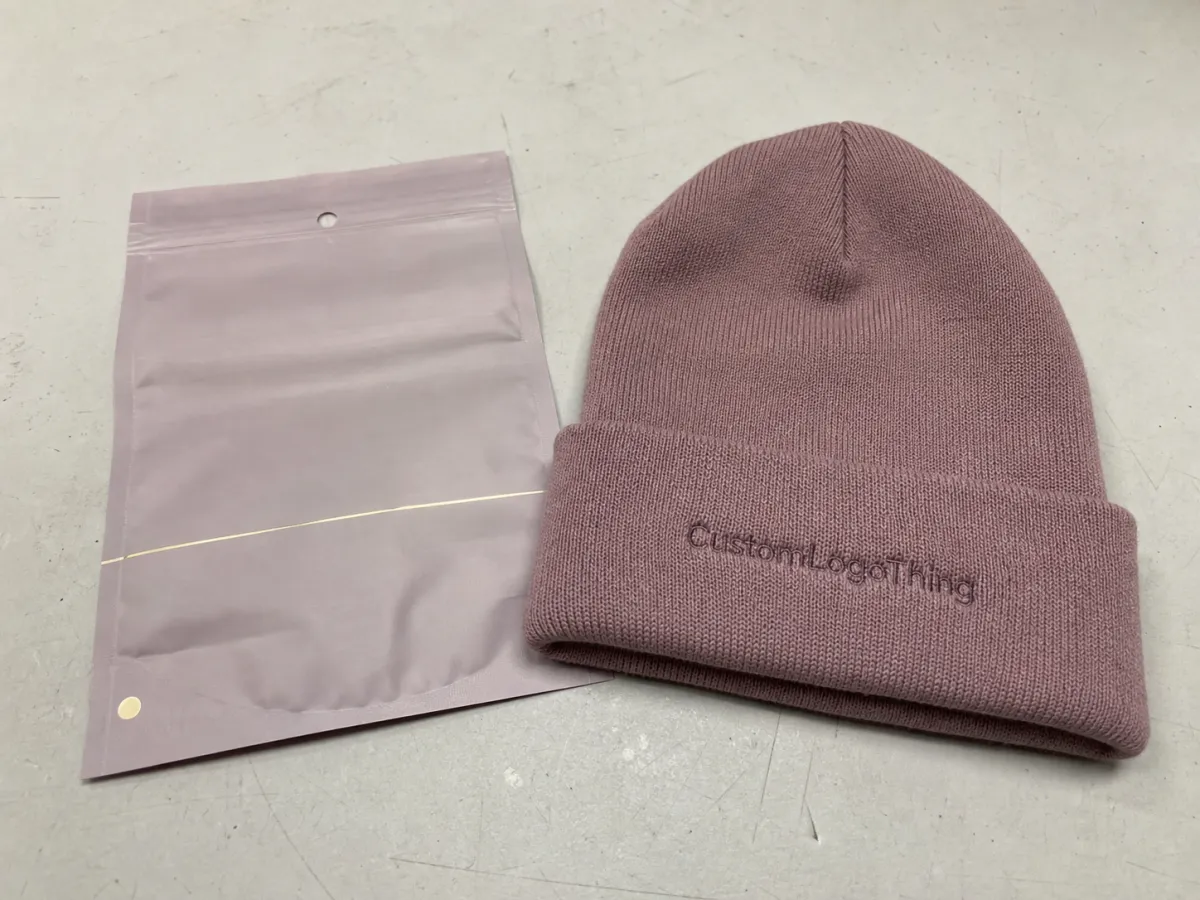
The first mistake is treating the beanie as an afterthought. The second is treating it like a flat print job. Embroidery behaves differently. Knit structure, thread thickness, seam placement, and cuff depth all affect how the logo reads. A neat vector file can still fail if the actual knit is too loose or the design is packed with fine detail.
Start with use case, not decoration. If the beanies are going into influencer mailers, camera visibility matters more than warmth. If they are for retail staff, fit and durability matter more because the item may be worn weekly. If they sit inside boxed holiday sets, the fold, polybag, and label placement become part of the product experience. In cosmetics embroidered Beanies Bulk Order Planning, that context drives the whole spec.
Buyer reality: if a logo is barely readable at arm's length, it usually disappears once the beanie is stretched on a head, tucked into a scarf, or photographed under warm store lighting.
Color is the next quiet variable. Black and white are safe, but not always smart. Black can look sharp with high-contrast thread, yet it can feel severe beside soft skincare packaging. Cream and oat tones feel elevated, but they can wash out a tonal mark. Many strong orders borrow a color from the carton, insert card, or tissue paper so the beanie feels like part of the campaign system instead of a random branded item.
Material choice also matters more than most buyers expect. Common blanks are 100% acrylic, acrylic-poly blends, or, at a higher price point, wool blends. Acrylic is usually the easiest to source and the most consistent for bulk. It holds shape well, accepts embroidery cleanly, and keeps the unit cost manageable. Wool blends feel softer and more substantial, but they can cost more, pill more visibly, and introduce color variation across dye lots. Recycled polyester shows up more often in sustainability-focused lines, though the hand feel depends heavily on the knit density.
Beanie styles and branding choices that fit cosmetic campaigns
Cuffed beanies usually give the cleanest front panel for embroidery. The cuff creates a defined landing zone, the logo stays visible when worn, and the look feels familiar without being boring. Ribbed beanies bring more texture and tend to photograph better because the knit catches light in a more controlled way. Slouch beanies read casual and editorial. Fisherman styles sit shorter, which can work for fashion-led beauty launches but can also reduce the available stitch field.
| Beanie style | Logo visibility | Best use case | Typical price impact |
|---|---|---|---|
| Cuffed | High on front cuff | Staff gifts, influencer kits, standard promo packs | Usually easiest to price and decorate |
| Ribbed | High, with a more textured finish | Premium beauty bundles, camera-friendly campaigns | Often a modest bump for the cleaner visual effect |
| Slouch | Moderate, depending on placement | Lifestyle promotions, softer brand positioning | Can rise if the logo needs a larger stitch field |
| Fisherman | Moderate, but compact | Trend-led cosmetic launches, fashion crossover drops | May cost more if the blank is less common |
Branding choices should follow the visual language of the campaign. A minimalist skincare line can often use tonal embroidery or a very small mark. Color cosmetics campaigns tend to tolerate bolder thread contrast because the rest of the packaging is already louder. Luxury positioning usually benefits from restraint: one clean mark, a tight stitch field, and no extra clutter. Promotional positioning can carry a larger logo, but a large logo is not the same thing as a good one. If the stitch density is too low, the design begins to look patchy instead of intentional.
There is also a practical limit to how much beanie style should compete with the rest of the kit. If the gift box already has metallic foil, printed tissue, and a full-size insert, the beanie should probably stay quieter. If the rest of the bundle is simple, the beanie can carry more of the visual weight. That balance matters because the item is often photographed as part of the unboxing story long before anyone notices the brand mark itself.
For buyers comparing several options, ask for a flat lay mockup and a worn mockup. The beanie can look excellent laid flat and awkward on-head, especially if the cuff is too stiff or the logo lands too close to the seam. That difference is easy to miss if the only approval asset is a single digital render.
Decoration specs, placement rules, and artwork limits
Embroidery is forgiving in one sense and unforgiving in another. It can add texture, depth, and perceived value. It can also expose every bad decision in the artwork file. Fine lines, tiny type, gradients, and overly complex icons often need simplification before they can be stitched cleanly. The knit surface adds movement, which means the artwork has to survive stretching, not just look good on a monitor.
Placement choices
Center front on the cuff is the standard for a reason. It reads quickly, it photographs clearly, and it keeps the mark visible when the beanie is worn. Left cuff placement feels more restrained and often suits skincare, fragrance, or higher-end beauty brands that prefer understatement. Side placement can work if the front panel needs to stay clean for a woven label or if the logo would otherwise hit a seam.
Most logos land well in a field around 2.5 to 4 inches wide, though the exact size depends on knit density, cuff height, and how much text sits in the mark. A ribbed beanie may tolerate a slightly tighter design because the texture hides some of the background, while a loose knit usually needs more breathing room. Avoid placing embroidery too close to the edge of the cuff or directly across a seam transition. That is where distortion starts.
Artwork and proofing limits
Vector files in AI, EPS, or SVG format give the cleanest starting point. PNG and JPG files can help as references, but they are not enough for digitizing if the artwork needs precision. Embroidery converts a graphic into stitches; it does not reproduce a graphic pixel for pixel. That means small serifs, gradients, and hairline strokes often have to be rebuilt.
Thread color count affects more than the bill. It affects how much visual noise the final piece carries. One or two thread colors usually produce the cleanest result. Three to six colors remain manageable if the logo is simple. Beyond that, the design can become crowded, and setup takes longer. If a brand mark depends on subtle shading or tiny color separation, a woven label or patch may outperform direct embroidery, but that is a design decision, not a shortcut.
Good suppliers usually ask for:
- logo file in vector format
- Pantone, HEX, or other color references
- preferred placement and approximate size
- any text that must remain readable
- deadline, ship-to ZIP, and packaging preference
Before approving production, ask to see the digitized proof and, if the order matters visually, a stitched strike-off. Check the edge of the mark, the spacing between letters, and the tension of the satin columns. Turn the sample over. If the backing is bulky enough to warp the cuff, the item may feel stiffer than the buyer intended. That reverse side tells you a lot about the production standard.
If the beanies will ship inside larger kits, ask for a packed view as well. A logo can look right on the table and wrong once the item is folded, bagged, and tucked into a carton. The packaging layer is part of the final presentation, not an afterthought.
Cost, pricing, and MOQ levers that change your quote
Pricing changes faster than many buyers expect because several levers move at once. Quantity is the strongest lever. After that come blank style, embroidery area, stitch count, thread colors, packaging, and any add-on decoration such as woven labels or hangtags. A simple one-location logo on a common cuffed beanie can price very differently from a layered mark on a specialty knit with individual retail folding.
For planning purposes, a basic embroidered beanie often lands around $2.40-$4.80 per unit at 500 to 1,000 pieces, depending on blank quality, knit density, and decoration complexity. At 2,500 pieces or more, the unit price may move closer to $1.85-$3.25 if the blank is standard and the artwork stays simple. Special yarns, premium knits, and packaging upgrades push those numbers up. A digitizing or strike-off charge of roughly $25-$75 is common, and some suppliers credit that cost back once production is approved.
MOQ usually reflects how the blank is sourced and how the setup is billed. If the beanie is in stock, the minimum can be relatively low. If the color must be dyed to order, the MOQ rises because the mill has to justify the run. Custom labels, special dye lots, or branded packaging can also raise the floor. A 300-piece order and a 1,000-piece order are not just different sizes; they are often different production economics.
The cleanest ways to reduce cost without making the item look cheap are practical:
- keep the logo to one embroidery location
- limit thread colors to the brand essentials
- choose a stocked blank color rather than a special shade
- skip premium folding or individual bagging if the kit already has packaging
- standardize one style across multiple campaign uses
Two other details influence price more than buyers usually expect. The first is stitch density. A dense logo uses more machine time and more thread, which can add cost even if the artwork looks small. The second is rework risk. A design that sits near a seam, uses tiny text, or asks for high contrast on a textured knit may be harder to run cleanly, and the quote will often reflect that risk.
If the campaign has a hard budget, ask for two quote tiers rather than one. A 500-piece run and a 1,000-piece run can reveal whether the added inventory is worth the lower unit price. That comparison is more useful than chasing the cheapest line item because it shows the real tradeoff between cash outlay and per-unit efficiency.
If the order also includes inserts, wraps, or cartons, it helps to group those pieces under one broader sourcing plan, such as Wholesale Programs. Not every supplier handles packaging well, and the ones that do usually price the labor differently from the embroidery itself.
Process and timeline: proof approval to final delivery
The schedule is easier to protect if the process starts with a proof deadline instead of a ship date. A ship date alone gives the illusion of control. In practice, the timeline has several moving parts: artwork review, digitizing, proof approval, sample or strike-off approval, bulk production, finishing, packing, and freight. If any one of those slips, the launch window shrinks quickly.
Typical workflow
- Quote request: the buyer sends quantity, style, artwork, placement, colors, and destination ZIP.
- Artwork review: the supplier checks whether the design can be stitched cleanly.
- Digitizing: the logo is translated into embroidery instructions.
- Mockup approval: the buyer confirms size, thread color, and placement.
- Strike-off or sample: a physical reference is reviewed if the design needs validation.
- Bulk production: the full run is embroidered and finished.
- Packing and shipping: units are folded, bagged, cartoned, and sent out.
Timing varies with order size and artwork readiness. A straightforward quote can return in one business day. Digitizing often takes one to three days. A strike-off may add three to seven days. Bulk production commonly falls in the 10-20 business day range after approval, though larger or more complex runs can take longer. Freight is a separate clock. Domestic ground shipping might take two to five business days; seasonal congestion or split shipments can add more.
Most delays come from familiar places: missing vector files, weak color references, slow proof approval, or a change made after the sample is already in motion. Holiday launches are especially vulnerable because production, packaging, and freight all compete for the same narrow window. A buyer who approves late rarely gets the same flexibility as a buyer who sends a complete brief early.
Packaging detail deserves its own line in the schedule. If the beanies are being folded to a specific size, polybagged individually, or packed with a tag that has to face a certain direction, that work adds labor. If the order ships to multiple destinations, carton marks and inner pack counts matter too. None of that changes the embroidery itself, but it absolutely changes how long the order takes to finish.
For buyers who need to discuss shipping durability or carton handling, the language used by ISTA is useful because it gives a standard way to talk about transit risk. If the project includes paper inserts or hangtags with sourcing claims, FSC certification may matter for the printed components, even if the beanie itself is unchanged.
Supplier standards that matter for beauty-brand orders
A quote tells you the price. It does not tell you whether the supplier can repeat the result across a second run, a color refresh, or a holiday reorder. Beauty brands often need consistency more than novelty. The right partner understands that the beanie has to match the campaign today and still look like the same program six months from now.
Strong vendors tend to show the same traits: quick communication, clear proof files, realistic lead times, stable embroidery tension, and honest limits. That last one matters more than most buyers admit. A supplier who says yes to every request without warning about seam placement, stitch density, or schedule pressure is often the one that creates the mess later.
Quality control should be specific, not vague. Before approving production, check the stitch edges for fraying, the alignment of the logo against the cuff, the consistency of thread color across samples, and the clean finish on the inside backing. If the backing is too stiff or the stitches pull the knit out of shape, the beanie may feel cheaper than it looks. If the embroidery is too loose, the logo can appear fuzzy after a few wears.
Finishing matters too. A folded beanie that lands in a polybag with a crooked tag can undermine the premium feel of the piece even when the stitch work is solid. Ask how the supplier handles:
- folding method and piece count per polybag
- size labels or custom tags
- carton marking and destination labeling
- rework policy if embroidery misses spec
- replenishment ability for future runs
There is a real difference between a quote-only shop and a production partner. The first sends a number and waits. The second points out problems before they show up in a carton. That difference matters because embroidery errors are harder to disguise than print defects. Once thread is stitched into knit, the fix is not simple.
For recurring promotional goods, the best suppliers also keep records of the approved digitized file, thread colors, and sample notes. That sounds mundane. It is not. The stored proof makes future reorders faster and reduces drift when a brand revisits the same beanie with a seasonal color change.
Next steps for a clean bulk order and faster approval
The cleanest orders move fast because the buyer sends a complete brief on the first pass. Before requesting a quote, decide who will wear the beanie, which style fits the campaign, what color range the packaging supports, and whether the item needs to arrive folded, bagged, or boxed. If the order is for cosmetics, also decide whether the beanie ships alone or as part of a full kit. That single choice can change packing labor, carton counts, and freight weight.
Send these details in the first inquiry:
- target quantity and a backup quantity tier
- delivery ZIP or final ship-to location
- deadline for approval and final arrival
- logo format and any brand color references
- preferred placement and approximate size
- budget range if the project has a ceiling
That information gives the supplier something real to work with. It also makes comparing quotes easier because the numbers reflect the same assumptions. If one proposal is based on 500 units and another on 1,000, the buyer can see whether the lower unit cost offsets the larger inventory commitment. That is a more useful comparison than picking the cheapest line and hoping the details stay manageable later.
A good order plan is not complicated. Define the use case, lock the style, approve the stitch proof, and leave enough time for production and transit. Do that, and cosmetics embroidered Beanies Bulk Order Planning becomes a controlled buying process instead of a string of last-minute corrections.
How many cosmetics embroidered beanies should I order to get a useful price break?
Pricing usually drops in tiers, so even a moderate jump in quantity can lower the unit cost more than buyers expect. The best target depends on logo complexity, blank style, and packaging choices. Ask for quotes at two or three volume levels so you can compare savings against inventory risk.
What beanie style works best for cosmetics embroidered beanies bulk order planning?
Cuffed beanies usually give the cleanest logo placement and the most consistent brand visibility. Ribbed styles feel more premium on camera, while slouch styles work better when the campaign wants a relaxed look. Choose the style that fits the packaging and customer profile, not just the lowest unit price.
What artwork do you need before placing a bulk embroidery order?
A vector logo file is ideal because it speeds digitizing and reduces cleanup. Provide Pantone or reference colors if matching matters, and note any text that must stay readable at a small size. If the art is detailed, ask for a stitch proof before production starts.
How long does a bulk beanie order usually take from proof to delivery?
Timing depends on artwork approval, sample review, production capacity, and shipping distance. Simple runs move faster when the logo is ready and the buyer approves mockups quickly. Build in buffer time for holiday launches, influencer kits, or retail events because freight delays can compress the final schedule.
Can I mix colors, sizes, or embroidery placements in one cosmetics beanie order?
Mixing colors is often possible, but it can affect MOQ, pricing tiers, and inventory availability. Multiple placements or logo versions usually add setup complexity and may require separate quotes. List every variation in one request so the supplier can confirm whether the mix is efficient or better split into separate runs.

