Tea Cuffed Knit Beanies: Bulk Order Planning for Buyers
Tea Cuffed Knit Beanies look simple until the order moves into production. The color can shift with yarn lot and lighting, cuff depth changes the decoration area, and a logo that looks balanced in a mockup may land too low once the hat is worn. That is why a clear spec sheet matters more than a fast quote.
The best approach is to define the product before comparing vendors. Lock cuff height, decoration method, fiber blend, label placement, packaging, and delivery target first. Once those choices are fixed, pricing becomes meaningful. Tea works well in bulk because it sits between muted and memorable, which makes it useful for staff kits, retail, and event merchandise without splitting the order into separate style families.
Why Tea Is a Safer Color Than It Looks for Bulk Runs
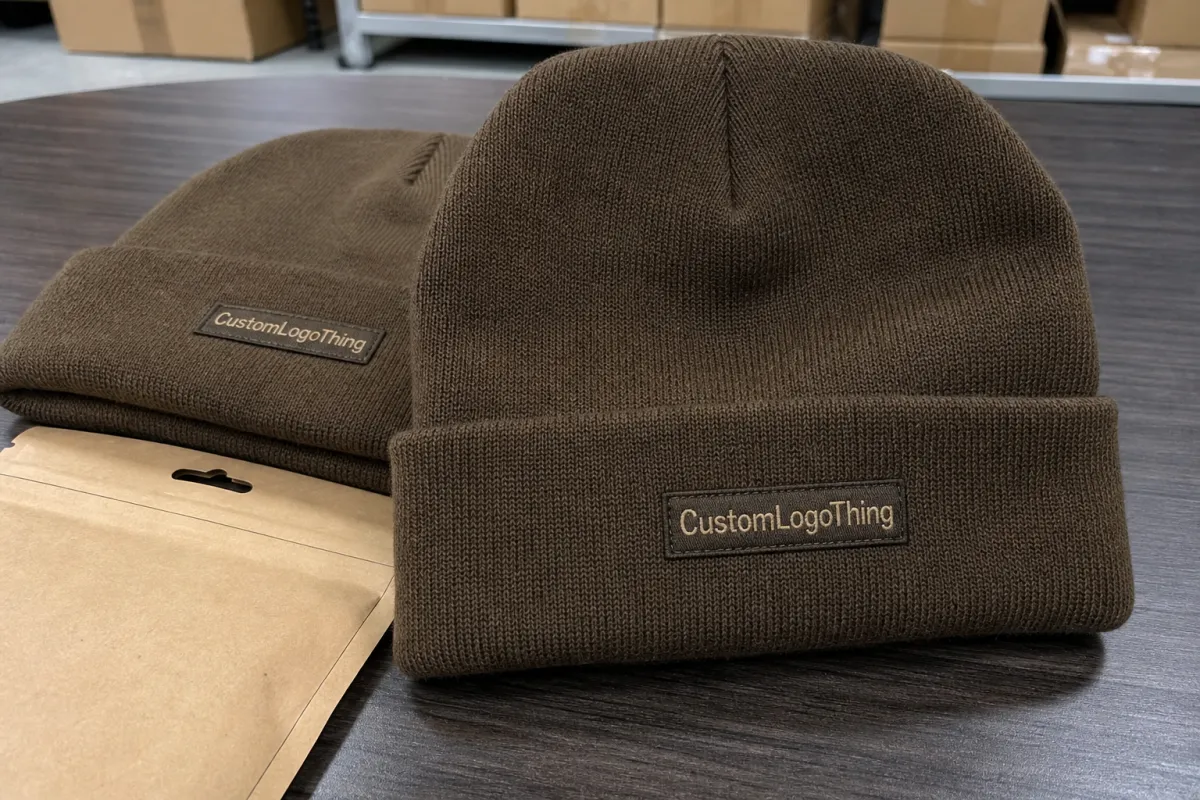
Tea looks narrow at first, but it covers more use cases than many winter colors. Black can feel flat, cream shows wear quickly, and navy or forest are common enough to disappear on a crowded table. Tea sits in the middle: warm, grounded, and distinct without becoming loud.
That flexibility matters when one style has to serve multiple audiences. A tea beanie can work for employee gifts, retail shelves, client kits, and outdoor events without feeling off-brand in any one of them. Fewer colorways usually mean fewer approvals, fewer inventory splits, and less leftover stock when one campaign ends early.
Tea also photographs well. Under warm light it reads premium and calm; under cooler light it can lean taupe or tan. That shift is normal for a warm neutral. For brands that want the hat to feel elevated but still practical, tea gives enough character to stand out while pairing cleanly with black, cream, bronze, muted red, navy, or olive.
It is also forgiving in mixed lots. If an order uses yarn batches made at different times, bright shades often expose variation immediately. Tea softens that contrast. It does not erase dye-lot differences, but it can make the run feel more unified across staff distributions, retail channels, or multiple recipients.
Cuff Height, Knit Gauge, and Decoration Zones That Matter
The cuff does more than keep the hat warm. It sets the branding zone, affects structure, and changes how polished the final piece feels. A taller cuff gives more room for embroidery or a patch, but it changes the proportions once worn. A shorter cuff looks sleeker, yet it can make some logos feel cramped. Cuff height should be confirmed before artwork is finalized.
Knit gauge changes the result in ways buyers can feel, not just see. A tighter gauge usually gives a cleaner surface, sharper stitch definition, and better support for small details. A looser knit feels softer and more relaxed, but thin linework can sink into the texture. If the beanie is meant to look retail-ready, ask for the gauge and expected stitch density. “One size fits most” is not a specification.
Decoration method affects both cost and appearance. Embroidery is usually the simplest and lowest-cost option. Woven patches keep detail crisp and work better for small type or thin shapes. Woven labels are subtle and suit minimal branding. Rubber or faux-leather patches add contrast and a more rugged look, which can work well on tea because the base color stays calm while the patch carries the visual weight.
The following comparison gives a practical starting point for planning:
| Decoration method | Typical added cost per unit | Visual effect | MOQ impact | Best use case |
|---|---|---|---|---|
| Embroidery | $0.20-$0.45 | Clean, low profile | Lower | Simple logos, tighter budgets |
| Woven patch | $0.35-$0.70 | Sharp detail, retail look | Moderate | Thin lines, small type, higher visual precision |
| Woven label | $0.08-$0.18 | Subtle branding | Lower | Minimal programs, high-volume orders |
| Rubber or faux-leather patch | $0.40-$0.95 | Heavier contrast, more tactile | Moderate to higher | Outdoor, workwear, premium retail |
Tea changes how each decoration reads. Light thread can disappear. Dark thread can create too much contrast if the artwork is thin. Matte finishes usually work better than glossy ones on this color because the yarn already carries warmth. If cuff height is still open, placement can shift, the stitch count may change, and the quote will drift. That is avoidable if the decoration zone is fixed early.
Fit, Fiber, and Label Specs Buyers Should Lock First
Fit sounds basic until the first bulk run arrives and half the team wants a deeper crown or a tighter band. With knit beanies, the useful details are crown shape, cuff depth, and stretch recovery. Many factories quote a one-size-fits-most body, but that does not tell you whether the hat sits shallow, medium, or deep on the head. Youth sizing should be treated as a separate pattern, not as a note in the margin.
Fiber choice affects comfort, color consistency, and budget. Most tea Cuffed Knit Beanies are made from acrylic, wool blends, or recycled blends. Acrylic is usually the most price-stable and gives consistent color results. Wool blends feel warmer and more substantial, but they can raise unit cost and require more careful sample approval. Recycled yarns support sustainability programs, although the finish can vary more from lot to lot and may need extra lead time for color approval.
Label and packaging details are easy to underestimate because they feel secondary. They are not. A woven main label gives the hat a finished edge. A care label may be required depending on the market and sales channel. Hangtags help with retail presentation but add setup time. Polybags are common for bulk fulfillment because they protect the finish during transit and help with count control. Carton marks should stay simple and readable, especially if the order passes through more than one warehouse.
If recyclable paper components are part of the brief, ask for FSC-certified materials for hangtags or cartons. If the order will be handled through multiple distribution points, ask for packaging that holds shape under compression. A beanie can be well made and still arrive looking careless if the finishing plan was vague.
A useful bulk quote does more than state a unit price. It shows what is fixed, what is still open, and which changes will add cost after sampling.
Cost, Pricing, MOQ, and Unit Cost Drivers
The true cost of tea cuffed knit beanies Bulk Order Planning is spread across more than the hat itself. Quantity, decoration, yarn selection, label work, packaging, and freight all stack on top of each other. A price given without quantity and specs is only a placeholder. It will change once the order becomes real.
Quantity is still the strongest lever. Stock-body programs may allow minimums around 100 to 300 pieces, depending on the decoration method and packaging. Custom yarn, special patches, or multiple colorways usually raise the minimum because they slow production and create more setup. Once a factory has to split yarn, trim, pack, or inspect several variations, efficiency drops quickly.
Price breaks are usually stepped rather than smooth. The jump from 100 to 300 pieces can be meaningful, and the difference between 300 and 1,000 pieces is often real as well. Past that point, savings flatten unless the order uses existing yarn, standard labels, and a familiar decoration zone. For comparison shopping, ask for price breaks at 100, 300, 500, 1,000, and 3,000 pieces.
A quote is most useful when it is itemized. Ask for:
- Base beanie cost per unit
- Setup fees for patches, embroidery, or labels
- Sampling fees and whether they are credited back
- Packaging cost for polybags, hangtags, or custom cartons
- Freight basis whether ex-factory, FOB, or landed
That last point changes the picture more often than buyers expect. An attractive ex-factory quote can become less attractive once duties, freight, and final delivery are added. The cleanest comparison is the landed number, or at least a quote that clearly states which parts are included. Without that, the lowest line item is just the least complete one.
For a realistic budget range, stock bodies with simple embroidery usually sit near the lower end of the market, while custom yarn, woven patches, and retail packaging push pricing higher. The exact number depends on quantity, but the cost pattern is predictable.
Process and Timeline From Spec Sheet to Shipment
A clean production run starts with a spec sheet that leaves little room for interpretation. It should list quantity, tea color reference, cuff height, logo placement, decoration method, label needs, packaging requirements, and delivery destination. Once those fields are filled in, the workflow is straightforward: artwork review, proof or sample, production booking, knitting and decoration, quality control, packing, and shipment.
Lead time depends on how much is being changed. A stock-body run with simple branding can move faster than a custom color program with a layered patch and special packaging. Peak season slows everything down. If the order needs a custom tea shade, expect the color approval step to take longer than a digital mockup would suggest. Yarn can look different under room light, daylight, and warehouse light, so a physical sample or lab dip is safer than a screen image.
For planning purposes, many straightforward orders need roughly 12 to 20 business days after approval before they are ready to ship, though volume and decoration complexity can extend that window. Sampling adds time in front of production, especially if the first version needs changes to placement or stitch count. If the hats must arrive for a holiday, launch, or event, the deadline should be set before pricing is finalized.
Quality control should be specific, not casual. Ask how the team checks cuff alignment, patch placement, stitch consistency, and carton counts. If the order is moving across borders or through several warehouses, transit protection matters as well. Packaging performance standards such as those used by ISTA are a sensible reference point for shipment testing and handling expectations.
Shipping time and production time are not the same thing. An order can finish on schedule and still arrive late if freight booking slips, documents are incomplete, or the receiving appointment is wrong. That issue is common enough that it deserves attention before production begins.
If the delivery date is fixed, lock artwork and shipping method first. Price only matters if the beanies arrive before the campaign is over.
Bulk Order Mistakes That Create Rework and Delays
The first avoidable mistake is approving tea from a screen alone. Tea can lean dusty, caramel, tan, olive, or warm gray depending on yarn source and light. A phone image flattens those differences. A physical swatch gives a better read on whether the color supports the brand or clashes with it.
The second mistake is treating cuff height as a cosmetic detail. It changes the logo zone, the proportions of the hat, and the way the beanie sits on the head. A design that looks balanced on a flat mockup may end up too low once the cuff is folded and worn. If the logo is wide or has thin details, the cuff has to be specified before artwork is approved.
The third mistake is adding too many variables to one order. Extra colorways, alternate patches, custom hangtags, or mixed packaging all increase setup time and raise the chance of a mismatch during packing. Buyers often think one extra option is harmless. On the factory side, each variation creates a new point of failure.
The fourth mistake is leaving freight and receiving out of the plan. A beanie that finishes production on time but misses the receiving window is still a failed order. If the items are tied to a retail floor, staff rollout, or event kit, the shipping schedule belongs in the brief from the start.
Another common issue is over-decorating tea. The base color already carries enough personality. A bright patch, shiny thread, loud hangtag, and heavy carton graphics can push the piece from thoughtful to cluttered. The strongest bulk orders usually keep one clear focal point and let the yarn do the rest.
Next Steps for a Clean Quote and Smooth Reorder
Before asking for pricing, gather the details that actually move the quote: quantity, tea color reference, cuff height, logo placement, decoration method, packaging needs, shipping destination, and target delivery date. Missing information is the main reason quotes come back uneven. Different vendors will fill in the blanks differently, which makes comparison harder than it should be.
One clean spec sheet is more useful than a long thread of partial answers. It also makes reorders easier because the final version can be compared against the original without guessing what changed. Keep the artwork in vector format, keep the color reference in writing, and keep the packaging plan plain enough to repeat.
For tea cuffed knit beanies Bulk Order Planning, the first run should usually be treated as the template. Save the approved art, the final measurements, the decoration method, the packing count, and the shipping basis. If the next order follows the same structure, the buyer spends less time re-approving details that were already solved.
Tea works best when the order is built with restraint. Clear cuff height, a decoration method that fits the knit, a believable timeline, and a quote that includes freight assumptions are enough to keep the project steady.
FAQs
How far ahead should I place a tea cuffed knit beanie bulk order?
Allow extra time if the run needs custom yarn, woven patches, or packaging tied to a launch date. Standard orders can move faster, but sample approval still adds a step. If the project is seasonal, start earlier than the calendar suggests.
What affects the unit cost most on cuffed knit beanies in tea?
Quantity usually has the biggest effect, followed by yarn type, decoration method, and packaging. Custom patches, extra labels, and retail presentation often add more cost than buyers expect. Freight terms matter too, because a low factory price can rise once shipping and duties are included.
What MOQ is typical for tea cuffed knit beanies bulk ordering?
Stock-body programs may start around 100 to 300 pieces, while custom yarn or multiple colorways can push the minimum higher. MOQ can also shift by decoration method. The most useful question is not just the total MOQ, but the MOQ per color, per logo, and per packaging style.
Can I approve a sample before full production starts?
Yes, and that is usually the safer route. A physical sample or lab dip helps verify tea color, fit, cuff height, and logo placement. Digital proofs are helpful for layout, but they cannot show how the yarn reads under light or how the cuff sits on the head.
What should I have ready before requesting a quote?
Have the quantity, target delivery date, shipping address, and decoration method ready first. Send vector artwork, color references, label needs, and packaging instructions so the quote is based on the same assumptions across vendors. The clearer the brief, the easier it is to compare pricing without guesswork.

