ecommerce twisted handle paper bags Bulk Order Planning looks simple at first: pick a size, add a logo, place the order. The real work is deciding whether the bag will fit the product, survive packing and transit, and arrive in a carton format that the warehouse can receive quickly. If any of those parts are off, the cost shows up later in labor, damage, or rework rather than on the first quote.
That is why buyers should start with use case, not artwork. A gift bag, a ship-add insert bag, and a retail-to-ecommerce hybrid can all use the same handle style, but they do not need the same stock, reinforcement, or print coverage. The best bulk plan matches the bag to the item, the packing flow, and the replenishment schedule instead of trying to make one spec solve every channel.
Useful decisions happen when the buyer tests with a real sample. Put the actual product in the bag, close it the way fulfillment will close it, and check whether the handle feel, top edge, and carton pack-out still make sense. That single test usually exposes more problems than a stack of mockups.
For teams that want a common reference point, packaging guidance from Packaging.org and fiber sourcing basics from FSC can help frame the conversation, but the final approval should still be based on the supplier spec and a filled sample.
How ecommerce twisted handle paper bags bulk order planning starts
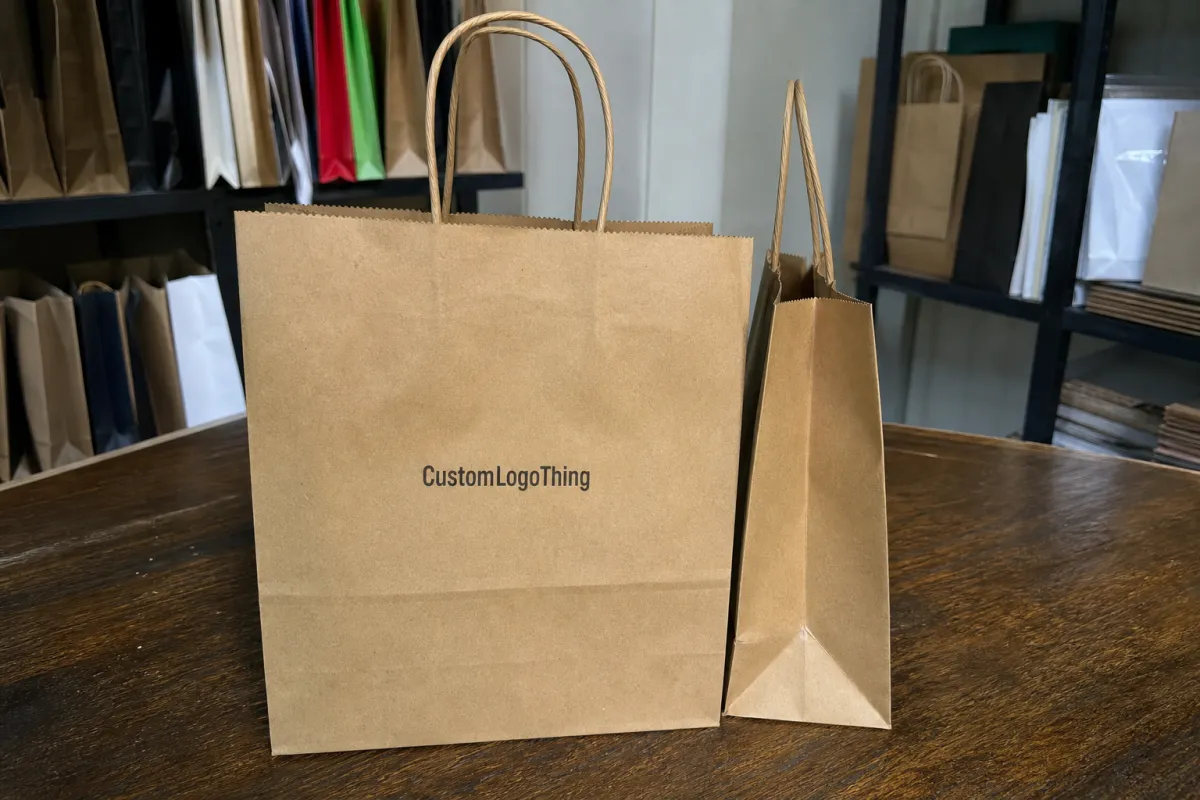
The first planning step is confirming what the bag needs to carry. A light apparel item behaves differently from a boxed skincare set or a mixed-product bundle. A bag can technically fit a product and still be the wrong choice if the contents shift too much, the top edge buckles, or the handle pull concentrates force in one spot.
The second step is checking the packing line. A bag that opens cleanly, folds flat, and accepts the item in one motion saves real labor across thousands of units. That matters more than a small difference in unit price because slow pack-out creates hidden cost that never appears in the quote comparison.
It helps to organize the order by channel. Presentation bags are usually judged on appearance and brand impact. Everyday ecommerce bags need stable handling and decent print quality, but they do not need every finish. Hybrid programs need the strictest spec discipline because they may move from shelf display to direct shipment and then into customer reuse.
A practical buying habit is to compare the filled sample against the approval spec before releasing production. That keeps procurement, operations, and marketing aligned on the same version and reduces revisions later.
Paper stock, handle build, and print choices that hold up
Paper grade is usually the first meaningful cost decision. Kraft stock in the 120-170 gsm range is common for ecommerce because it balances stiffness, foldability, and price. White stock gives a cleaner presentation for beauty, accessories, and gift merchandise, but it tends to show rub marks more easily. Heavier stock, often 170-200 gsm, improves the premium feel and carry body, though it also adds freight weight and can raise carton cost.
Handle construction deserves close attention. Twisted paper handles are common because they are economical and efficient, but the anchor zone, glue coverage, and insertion depth determine whether the handle survives actual use. If the bag will carry boxed or dense products, reinforcement patches are important because they spread load across the top panel and reduce tearing at the handle base.
Print should match the bag’s role. A one-color logo on kraft stock is often enough for inserts and ship-add bags. Two-color work can still be efficient if the layout is clean. Full-coverage printing, white ink on dark stock, or special finishes should be used only when the bag is part of the customer-facing brand moment, because extra decoration usually increases cost faster than it increases performance.
Flat-packed format also affects operations. Bags that arrive in sensible bundle counts and cartons sized for the shelf and pallet are easier to receive and pull for packing. Common bundle counts are 50 or 100 bags per wrap, with cartons arranged to stack cleanly. If the carton is awkward, the warehouse pays for it later through slower put-away and more handling damage.
For repeat programs, keep the key variables stable unless the product or channel changes:
- Paper stock for stiffness, print clarity, and scuff visibility.
- Paper weight for carry strength, fold behavior, and freight impact.
- Handle reinforcement for load distribution and repeat use.
- Print coverage for cost control and visual impact.
Size, capacity, and carton specs to lock before ordering
Size mistakes are expensive because they often show up only after production is underway. The first measurements that matter are width, gusset, height, and usable opening. Together, those numbers determine whether the product fits upright, whether the bag closes neatly, and whether the handle position feels natural in the hand.
Start from the product, not the old bag. Apparel does not behave like rigid boxes. Books sit differently from skincare kits. A soft item may need less height but more gusset room, while a boxed item needs corner clearance and a stable bottom panel. Use the real product, the real insert card, and the real packing method during sample review, because that is the only way to see how the bag performs under actual load.
Carton planning matters just as much. Ask for bags per bundle, bundles per carton, carton dimensions, and pallet stack pattern before approval. Those details affect receiving speed, storage density, and transit risk. A complete spec sheet for larger ecommerce runs should also include tolerances, approved print coverage, glue or reinforcement requirements, and acceptable variance in handle placement. Those details become critical on repeat orders when the buyer needs to compare the new run against the original approval.
There is also a difference between nominal capacity and real capacity. A bag may technically fit the item, but if the top edge flares too much or the corners crush under pressure, the bag feels undersized or cheap. For premium packaging, the customer judges that quickly. A neat, stable fill is usually more useful than a size that only looks efficient on paper.
A simple sizing process works well:
- Measure the product first, not the old bag.
- Add clearance for insertion and clean closure.
- Test carry feel with the actual filled weight.
- Check carton format so receiving does not slow down.
Skipping those steps usually leads to a bag that is either too large for efficient freight or too small to present well, both of which distort the economics of ecommerce twisted handle paper bags Bulk Order Planning.
Pricing, MOQ, and unit cost drivers buyers should compare
Pricing is driven by the whole spec, not by one headline number. Paper grade, finished size, handle reinforcement, print complexity, and order quantity all move the quote. Buyers who compare only the factory unit price often miss the landed cost once freight, palletization, sampling, and setup are added. The better comparison is the same bag, same stock, same print count, same packaging format, and same destination.
MOQ usually works in a predictable way. Smaller runs cost more per unit because setup, proofing, and machine changeover are spread across fewer pieces. Larger runs reduce the unit price, but they also increase storage needs and can create slow-moving inventory if the product is seasonal. The right MOQ is the quantity that fits the replenishment cycle and the warehouse, not simply the largest number a supplier will quote.
Directional pricing ranges can help buyers sanity-check quotes, even though paper markets and freight lanes can move the numbers around:
| Order option | Typical spec | Indicative unit price | Best fit |
|---|---|---|---|
| Small custom run | 120-150 gsm kraft, 1-color print, standard twisted handle | $0.24-$0.40 at 3,000-5,000 pcs | Launches, short campaigns, pilot programs |
| Standard bulk order | 150-170 gsm kraft or white stock, 1-2 color print, reinforced handle | $0.18-$0.30 at 10,000-20,000 pcs | Regular ecommerce replenishment |
| Premium presentation run | 170-200 gsm white stock, heavier reinforcement, higher coverage print | $0.30-$0.55 at 5,000-10,000 pcs | Gift retail, upscale unboxing, branded events |
These figures are only a planning frame. Artwork coverage, paper supply, carton count, and shipping distance can move the final landed cost. Even the difference between a one-color logo and fuller coverage print can matter at scale. Setup charges can also change the math, so a buyer who wants a clean comparison should confirm final artwork, exact dimensions, and delivery location before asking for the final number.
Production steps and turnaround from proof to delivery
The production path is straightforward if the buyer knows where delays tend to appear. It starts with quote approval, then dieline confirmation, then artwork review. Standard proportions and simple artwork move faster. Custom sizing, special reinforcement, or more complex print setups add back-and-forth, so the schedule should account for that before the launch date is fixed.
After proofing, the supplier should provide a pre-production sample or a controlled proof reference for color, placement, and handle position. Once production begins, quality checks should cover print registration, handle attachment, glue strength, bag dimensions, and carton count. These controls keep a bulk order from arriving with crooked print, weak handles, or carton shortages that create avoidable rework.
Lead time depends on season, paper availability, and print complexity. A straightforward order can often move in about 12-15 business days after proof approval. More complex work may need longer. Shipping time is separate from factory time, and that distinction matters. If the launch date is fixed, ask about split shipments or expedited production before release instead of assuming the quoted time includes transit.
It helps to think about the shipment as a system, not just a bag order. Paper bags are not usually tested as heavily as rigid shipping cartons, but the carton still has to hold up through handoffs, loading, and receiving. For larger programs, basic ISTA-style thinking is useful because it keeps attention on the route from factory floor to storage rack.
Break the timeline into three parts:
- Pre-production: artwork, proofing, and sample approval.
- Factory run: printing, converting, handle assembly, and packing.
- Delivery: freight, receiving, and warehouse put-away.
That division makes it easier to spot risk and protect the launch if one phase slips.
What makes a supplier reliable for repeat ecommerce runs
Repeat orders show the real quality of a supplier. The first run may look fine even if the process is loose. The second and third orders reveal whether the manufacturer can reproduce the same color, handle feel, dimensions, and carton pack-out without forcing revisions. Consistency is where the savings usually appear.
Communication matters too. A reliable supplier provides clear proofs, answers questions directly, and documents the approved spec so the next order does not start from zero. That becomes especially important during seasonal demand, when the buyer needs to make a replenishment call quickly and cannot afford confusion about what was approved last time.
Manufacturing discipline shows up in the small things: tolerance control, material traceability, retained samples, and carton verification. FSC-certified paper options can help if the brand wants a cleaner fiber-sourcing story, but certification does not replace process control. The supplier still needs to hold dimensions, manage glue coverage, and keep the printed run consistent from one batch to the next.
Service is practical, not decorative. The better supplier helps translate the buyer’s need into a workable spec by advising on paper weight, handle construction, print limits, and pack format rather than pushing the most expensive option. That kind of guidance protects the fulfillment line as much as it protects the visual brand.
It also helps when the supplier supports repeat purchasing and keeps documentation easy to find. A clear Wholesale Programs page and a detailed FAQ usually point to a process built for reorders, not just one-off quotes. The value of a packaging supplier is often measured on the second purchase, not the first.
Next steps for a clean bulk order and faster quote
The fastest quote starts with clean information. Gather finished size, paper grade, handle style, print colors, quantity target, packaging format, and delivery location before reaching out. If you can share product dimensions or a physical sample item, even better. That gives the supplier a real fit target rather than an assumption and usually shortens the revision cycle.
Ask for a sample or proof before committing to full production. Not every program needs a long approval chain, but every serious bulk order benefits from seeing the structure in hand. Compare landed cost, not only unit price, and confirm whether freight, palletization, and setup charges are included. A quote that looks attractive on screen can become less favorable once those line items are added.
For ecommerce buyers, early reorder planning prevents a lot of stress. Track expected consumption on a calendar and decide when the next order needs to start to keep inventory healthy. If the bag is tied to a campaign, product refresh, or seasonal launch, lock artwork and quantity before demand peaks. That is where ecommerce Twisted Handle Paper Bags bulk order planning becomes less about reacting to shortages and more about holding a stable supply rhythm.
Keep the approved spec sheet, sample reference, and production notes together. A repeat order moves faster when the original details are easy to find, and it is easier to get the same result twice when the source documents are preserved. Custom logo bags do not need flashy language to work well; they need a clear spec, a carton format that makes sense, and a reorder plan that arrives before inventory gets thin.
How do I size ecommerce twisted handle paper bags bulk orders correctly?
Start with the actual product dimensions, then add enough clearance for insertion and closure. Check width, gusset, and height together so the bag fits both the item and the final presentation without crushing the top edge.
What drives pricing in twisted handle paper bag bulk order planning?
Paper grade, finished size, handle reinforcement, print complexity, and quantity are the main drivers. Freight, palletization, and setup charges can change the landed cost even when the factory unit price looks low.
What MOQ should I expect for custom twisted handle paper bags?
MOQ depends on the construction, print count, and whether the bag needs custom sizing or special reinforcement. Higher quantities usually reduce unit cost, but the right MOQ is the one that fits your storage and turnover.
How long does production usually take after proof approval?
Lead time depends on material availability, print complexity, and the amount of proofing required before release. Factory time and shipping time should be tracked separately so the final delivery date is realistic.
Can I reorder the same ecommerce twisted handle paper bags without changing specs?
Yes, if the original spec sheet, artwork, and carton pack-out are preserved and clearly documented. A repeat order is faster when the supplier keeps the approved proof, sample reference, and prior production notes.

