Buying headwear for retail, promotions, or licensed merchandise is rarely about the hat alone. A toy Logo Patch Beanies Unit Cost review helps buyers separate what looks simple from what actually quotes well, and that difference matters the moment you start comparing samples, minimums, and bulk pricing. A clean patch can give a beanie the polish of a premium item without forcing the order into expensive stitch-heavy decoration.
That is why patch beanies have become a practical favorite for toy brands, merch programs, and seasonal campaigns. They photograph clearly, they hold brand marks in a readable way at hat size, and they avoid some of the tension and puckering that can show up in dense full embroidery. In practice, the best quotes come from buyers who know the patch construction, the beanie spec, and the real deliverables before they ask for a number.
Why patch beanies often beat full embroidery on shelf
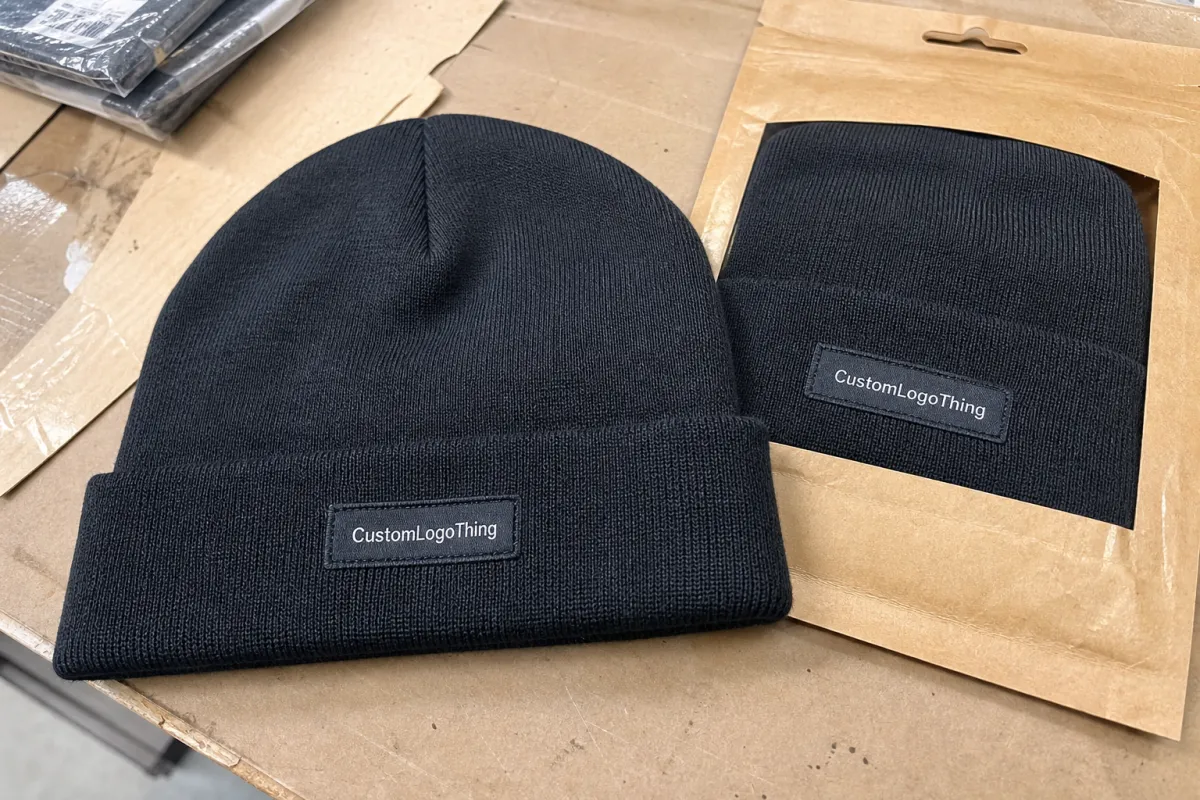
A beanie with a logo patch usually reads cleaner from a few feet away than one covered in dense stitching. That is not just a visual preference. It is a production issue. Full embroidery across a soft knit body can add bulk, distort the fabric, and create a stiffer feel that many buyers do not want on cold-weather retail stock. A patch keeps the decoration more controlled, so the body of the hat still feels like a wearable knit item rather than a stiff promotional cap.
For toy and gift programs, that control matters. A front patch can carry a mascot mark, a short wordmark, or a simple icon without overwhelming the beanie. If the logo uses bright contrast, the shelf impact is immediate. If the brand leans subtle, a tonal patch with a clean edge can still look expensive without pushing the item into a higher decoration tier. The first impression comes from the shape, placement, and contrast, not just from adding more thread.
There is also a practical side. Patch beanies are easier to approve because mockups are usually easier for buyers to read at actual hat scale. Reorders tend to be more consistent because the patch can be repeated with less variation than a large embroidered area. And if the artwork is modest in complexity, you often avoid the thread-tension problems, cleanup time, and uneven density that can create headaches in a run of soft goods.
A clean patch often gives buyers the best balance of visual impact and controllable cost per piece, especially when the order needs to stay inside a fixed merch budget.
That mix of presentation and production discipline is why a toy Logo Patch Beanies Unit Cost review should start with the question: what decoration method gives the strongest look for the least risk on a knit base? Usually, it is the one that uses the least unnecessary labor while still letting the brand read clearly.
Patch build, placement, and construction details that matter
Not all patches behave the same. Woven patches are strong choices for small text and sharp line art because they hold detail well at a compact size. Embroidered patches bring texture and a more tactile look, which can work well for bold logos but may soften tiny letterforms. PVC-style patches offer a molded, dimensional look and can suit playful toy branding, while faux leather patches give a more subdued retail feel that pairs well with neutral yarn colors.
Patch size changes the read more than many buyers expect. A 2-inch patch can feel modest, while a 2.5- to 3-inch patch creates more brand presence on a cuffed beanie. Edge finish matters too. Merrowed borders feel traditional, laser-cut edges look cleaner on modern artwork, and debossed or stitched borders change both the visual tone and the tooling approach. The attachment method also matters: stitched-on patches are common, but some styles use heat-applied backing or a combination of tack and sew-down finishing.
| Patch type | Best use | Visual effect | Cost impact |
|---|---|---|---|
| Woven | Small text, fine lines | Flat, crisp, highly readable | Moderate |
| Embroidered | Bold marks, simple icons | Textured, classic retail look | Moderate to higher, depending on stitch count |
| PVC-style | Playful or dimensional branding | Molded, glossy, toy-like impact | Higher setup charges and tooling fees |
| Faux leather | Premium minimalist branding | Warm, subdued, tactile | Moderate, with special finishing choices |
Placement changes visibility just as much as patch style. Center cuff placement gives the strongest front-facing brand read and is the most common choice for retail. Side cuff placement feels more understated and can work if the brand wants a subtle label-style look. Low-profile front placement sits a little lower on the hat and can feel modern, but it needs careful proportioning so the patch does not get lost in the knit.
Before approving artwork, check it at hat scale. Tiny letters that look fine on a screen can disappear once they are reduced to 2 or 3 inches wide. Ask for a mockup showing the exact patch shape, border color, and placement on the actual beanie blank. If the brand uses gradients or tiny details, ask the factory to simplify the art early rather than discovering the problem after tooling has started.
Fabric, fit, and decoration specifications to lock in
The body of the beanie drives comfort, warmth, and how the patch sits over time. Most buyers compare 100% acrylic, acrylic-wool blends, recycled yarns, and thermal knits. Acrylic is popular because it is stable, cost-controlled, and easy to color match in bulk. Wool blends bring a softer hand and a more natural feel, but they can raise unit cost and care requirements. Recycled yarns may support sustainability claims, though availability and shade consistency should be checked early. Thermal knits or heavier gauges make sense for colder weather programs or premium retail assortments.
Cuff width, crown depth, and stretch recovery also change the buying experience. A deeper crown can feel roomier and sit better on larger heads, while a tighter rib knit may hold the cuff shape longer after repeated wear. If the beanie is meant for broad retail distribution, fit consistency matters more than many people expect. A patch that looks excellent on a loose, tall beanie can sit awkwardly on a shallow crown if the front panel pulls too much after the first wear.
Before quoting, confirm the gauge, yarn weight, color matching method, label type, and packaging format. A 7-gauge knit will feel different from a finer 12-gauge knit, and that difference changes both the handfeel and the visual density of the hat body. If the brand palette relies on bright toy colors or deep neutrals, ask how the yarn is matched: pantone close-match, lab-dipped approval, or mill shade book selection. That choice affects consistency across reorder batches.
There is always a tradeoff between softness and structure. A softer knit is pleasant in hand and usually wears well, but a heavier knit often holds its shape better in store displays and stacks more neatly in cartons. That is not a minor point for buyers trying to keep presentation tight. If the item is going into gift sets, toy bundles, or retail shelf programs, structure can matter as much as comfort.
Packaging details deserve attention too. A simple folded polybag with size sticker is one thing; custom insert cards, hangtags, or FSC-certified paper packaging is another. If your program needs paper components, FSC guidance is a practical place to start: fsc.org. For buyers thinking about shipping performance and carton handling, it is also useful to review transit-test thinking from ista.org, especially if the shipment is moving through multiple distribution points.
Toy Logo Patch Beanies Unit Cost Review: pricing, MOQ, and quote drivers
This is where the numbers separate cleanly. A toy Logo Patch Beanies Unit Cost review should not treat the beanie as one flat price. The quote usually has four buckets: the base beanie, the patch itself, application and finishing, and packaging or freight extras. Once buyers understand those buckets, it becomes much easier to compare two proposals without guessing where the money is going.
Patch complexity is one of the biggest drivers. A simple woven patch with one or two colors may keep the decoration cost modest, while a molded PVC-style patch or a multi-color embroidered patch can push the unit cost higher because of setup, tooling, or stitch time. Yarn choice matters too. Standard acrylic usually holds the most attractive bulk pricing, while blends and specialty yarns add cost and sometimes extend lead time. If the body of the beanie uses multiple color changes, that can also raise knit programming time and knit loss on the machine.
MOQ is another lever. A small run can carry a higher cost per piece even if the final hat looks simple, because the factory still needs to pay for setup charges, sampling, and production scheduling. In many custom headwear programs, the per-piece price drops meaningfully as quantity moves from a few hundred units into the low thousands. The exact break depends on the decoration method and the number of colors in the body and patch.
As a practical frame, buyers often see rough ranges like these for a straightforward custom run, excluding unusual freight situations:
- Simple woven patch beanie: about $2.10-$3.40 per unit at 1,000-3,000 pieces.
- Embroidered patch beanie: about $2.35-$3.90 per unit, depending on stitch count and patch size.
- PVC-style patch beanie: about $2.80-$4.50 per unit, often with higher tooling fees.
- Premium knit or blended yarn beanie: about $3.20-$5.50 per unit, especially if the spec includes custom labeling or specialty packaging.
Those are planning numbers, not promises. A factory may quote lower if the art is simple and the order is large, or higher if the artwork has tight detail, unusual sizing, or a short delivery window. Still, the ranges help a buyer sense whether the quote is realistic before spending time on revisions.
A good quote does not hide the expensive parts. It shows the base hat, the patch, the application, and any setup costs clearly enough that a buyer can see where the unit cost changes.
When comparing offers, ask whether the quote includes mockups, sample revisions, labeling, and carton configuration. Two numbers can look similar on paper, but one may exclude the patch tooling while the other includes it. That is why a serious toy logo patch beanies Unit Cost Review should always break out the line items before the buyer signs off.
Production steps, timeline, and lead time expectations
The production flow is straightforward, but delays tend to happen at the same points every time. First comes artwork intake. Then the supplier prepares a mockup or digital proof. After that, the patch sample or strike-off is made, followed by approval, bulk knitting, patch application, inspection, and packing. The sequence sounds simple, yet each handoff can add days if the buyer is still changing details.
Sample lead time is not the same as bulk lead time. A patch sample may take several business days depending on the material and whether tooling is required, while bulk production often runs longer because yarn has to be allocated and the knit schedule has to be slotted into the factory plan. After approval, a typical custom beanie program may need roughly 12-20 business days for production, with shipping time added on top. Faster is possible, but only when the spec is stable and the factory already has the needed materials on hand.
Where do schedules slip? Usually in three places. One, artwork revisions drag on because the logo is still changing. Two, color selection changes after sample review, which can trigger new yarn matching or a new patch proof. Three, patch revisions reset tooling or setup, especially for molded or specialty finishes. Each of those changes affects the calendar and often the cost.
Repeat orders are usually quicker because the artwork and approval path are already on file. That does not mean the factory can skip checks, but it does mean less time spent on approvals and proofing. For a buyer who is managing a retail drop or a seasonal giveaway, that difference can be the line between calm receiving and a rushed air shipment.
Before asking for a schedule estimate, send the clean logo file, target quantity, beanie color, patch type, delivery date, and packaging need. If you have a hard launch window, say so early. The quote and timeline will be more honest, and the supplier can tell you whether the plan fits the actual production window instead of guessing.
What separates a reliable bulk supplier from a cheap quote
The lowest number is not always the best value. A strong supplier controls spec details, communicates clearly, and sends samples that actually match the approved direction. That matters most in bulk headwear because a small change in cuff height or patch placement can make the entire run look inconsistent. Buyers should care about repeatability as much as they care about unit cost.
Good suppliers talk about measurement standards in plain terms. They will tell you how they measure cuff height, how they place the patch from center front, and what tolerances they allow on knit size or shade. That kind of detail keeps the order honest when it scales up. It also helps prevent the common receiving problem where one carton looks fine and the next looks slightly off because no one defined the acceptance range.
Quality control should cover more than a quick visual scan. Ask how they handle stitch inspection, patch attachment pull checks, shade matching, and carton count verification. For retail or promotional programs, these checks are not luxury extras. They are the difference between an order that arrives ready to ship and an order that needs sorting before it can move forward. If the supplier can explain overages, shortages, and acceptable production tolerance without dodging the question, that is a strong sign.
Packaging and distribution discipline matters too. Some buyers only notice it after the first receiving dock reports a problem. A beanie that is packed loosely, labeled inconsistently, or carton-counted poorly can create hidden labor on the back end. That hidden labor is part of the real cost, even if it never shows on the supplier invoice.
For buyers who want a practical reference point, the Packaging School and other industry resources published by packaging.org are useful for understanding how packaging choices affect handling, protection, and presentation. On the product side, keep in mind that any sustainability claim should be backed by the actual yarn, label, or packaging spec, not just by a generic statement on the quote.
Put simply, a cheap quote is only cheap if it lands correctly, matches the approved sample, and does not generate extra work at receiving. A better supplier protects the buyer from those hidden costs while still keeping the order inside a realistic budget.
Next steps to move from quote to approved order
If you want the cleanest path from inquiry to approval, send a tight brief. Include the logo file, target quantity, preferred patch type, beanie color, packaging requirement, and delivery date. If the brand has a pantone target or a specific retail display plan, include that too. The more exact the brief, the less likely the quote will need to be rebuilt later.
Ask for a side-by-side quote that separates product cost, sample cost, and freight. That structure makes a toy logo patch beanies Unit Cost Review much easier because you can see whether one supplier is cheaper on the garment but more expensive on setup, or whether another quote hides patch tooling inside the piece price. It also helps you compare true cost per piece instead of chasing a single headline number.
Before placing the order, confirm the approval path for artwork, sample, and bulk production. Who signs off on the proof? How many revision rounds are included? What happens if the patch material needs a new mockup? These questions sound basic, but they prevent schedule drift later, especially on custom headwear programs with a fixed launch date.
A practical way to lower risk is to freeze the spec early: knit type, patch style, placement, label, and packaging. Once those details are stable, the factory can price more accurately and produce more consistently. That is the point of a good buying process. Not perfection. Certainty.
For buyers comparing options right now, the smartest move is to treat the order like a small production project, not a casual accessory purchase. The best result comes from balancing visual impact, material choice, MOQ, and real bulk pricing. Done well, the toy logo patch beanies unit cost review leads to a cleaner quote, a cleaner sample, and a finished item that looks right on shelf and in hand.
What affects toy logo patch beanies unit cost the most?
Patch style, patch size, and the number of color changes usually have the biggest impact on price. Yarn type, MOQ, and packaging choices can also move the per-piece cost more than buyers expect.
Are patch beanies usually cheaper than embroidered beanies?
Often yes, especially when the logo would otherwise need dense stitching or multiple thread colors. The final price still depends on patch material, application method, and how detailed the artwork is.
What MOQ should I expect for custom logo patch beanies?
MOQ depends on the factory setup and the decoration method, but smaller runs usually carry a higher unit cost. Ask whether the MOQ applies to each colorway or to the total order across all colors.
How long does sampling and production usually take?
Sampling usually takes longer than buyers expect because artwork approval and patch revisions must be finalized first. Bulk production starts after approval, then timeline depends on yarn sourcing, knit capacity, finishing, and shipping method.
What should I send for the fastest quote on toy logo patch beanies?
Send a clean logo file, target quantity, desired patch type, beanie color, and any packaging requirements. If you already know your delivery window, include it upfront so the quote reflects realistic production timing.

