Cosmetics Paper Bags Sample Order: What a Real Sample Proves
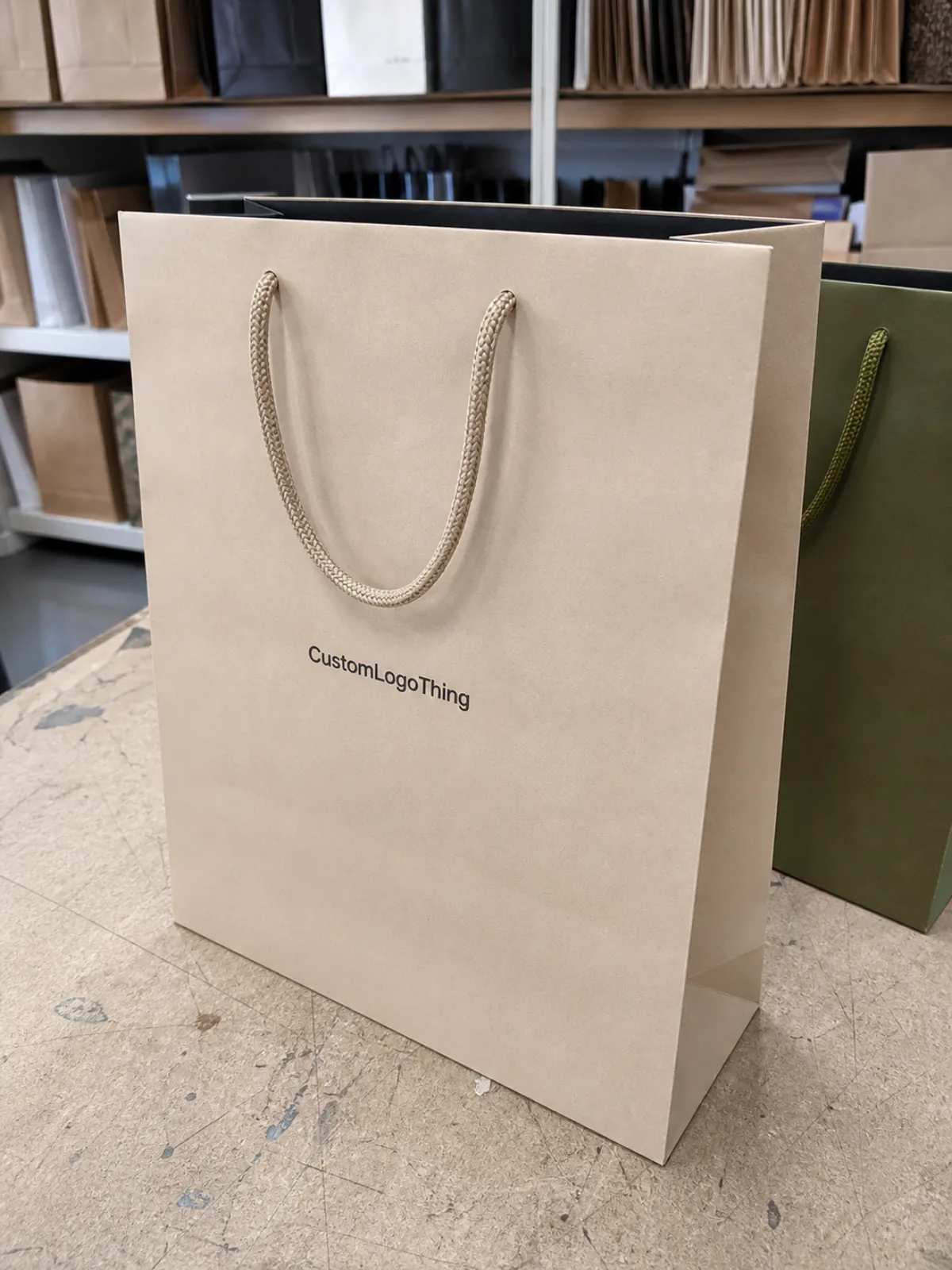
A Cosmetics Paper Bags sample order is the first practical test of whether a bag can carry the products you sell without looking strained, underbuilt, or disconnected from the brand. Set a lipstick carton, serum box, glass jar, tissue wrap, insert card, and receipt into the bag, then pick it up the way a customer would. If the side panels bow, the base dips, or the handle feels too sharp against the fingers, the bag has already told you something useful.
A sample is not only an approval piece. It checks paper stiffness, bag proportions, handle comfort, print clarity, finish durability, and retail presence in one physical object. For beauty brands, skincare startups, spa retailers, gift set sellers, and promotional teams, that one object removes a surprising amount of guesswork before bulk production begins.
The same sample may be reviewed by several teams for different reasons. Marketing may care about how the logo photographs under bright light. Purchasing may need to confirm the unit cost and MOQ. Store staff may notice whether the bag opens easily during a busy checkout. A founder or buyer may simply want to know whether the packaging feels worth the product inside it.
A sample should prove function first. If a bag looks refined but cannot hold the actual product load, it is not ready for production.
The strongest reason to order a sample is risk reduction. It can reveal sizing mistakes, weak handle choices, color mismatch, foil placement problems, and finishes that scuff too easily for a cosmetics counter. It also helps the supplier quote more accurately, because the discussion moves from a loose description to a verified structure with known materials, dimensions, and decoration requirements.
Paper, Structure, and Finish Options That Matter for Beauty Packaging
Paper choice changes both the look and the performance of a cosmetic bag. White kraft gives a clean, practical base for printed branding. Brown kraft suits natural skincare, refill concepts, wellness products, and minimalist retail presentations. Coated art paper allows sharper image reproduction and a more polished surface. Textured, dyed, or specialty papers can lift the perceived value, though they may also alter ink behavior, increase cost, or limit certain finishing options.
Cosmetic bags often look small, but the load can be heavier than expected. Glass jars, boxed skincare sets, candles, fragrance cartons, and bundled promotional kits place concentrated pressure on the bottom panel. A lightweight bag may pass a flat visual check and still fail when a dense product is packed into one corner. Paper GSM, bottom reinforcement, top fold construction, and handle attachment all matter before artwork enters the conversation.
Common structures include flat paper bags for light items, twisted-handle kraft bags for everyday retail use, ribbon-handle bags for gift packaging, rope-handle bags for a more substantial boutique feel, reinforced top-fold bags, and laminated shopping bags for premium launches. None of these is automatically better. The right choice depends on the product weight, retail setting, budget, and how long the bag needs to look clean after handling.
Finish selection deserves the same care. Matte lamination softens reflection and often suits skincare brands that want a calm, understated presentation. Gloss lamination gives shine and strong color density, but it reflects light in product photography. Soft-touch film feels rich in hand, especially on rigid boutique bags, yet dark colors may show fingerprints or rub marks. Spot UV can highlight a logo or pattern. Hot foil stamping adds a metallic accent, but fine lines, tiny type, and foil too close to a fold can produce rough edges. Embossing and debossing add texture when the paper has enough body to hold the impression.
If the bag will carry heavy jars, multiple cartons, or a full gift set, ask about a reinforced bottom card or a stronger glued insert. That small structural change often determines whether the bag stands squarely on a counter or leans after the first use.
Size, Handle, and Print Specifications to Confirm Before Sampling
Before placing a cosmetics Paper Bags Sample order, prepare the core specifications: width, gusset, height, paper weight, handle type, handle color, print colors, finish, logo placement, quantity target, and packing method. These details sound basic, yet they are where many packaging projects lose time. If dimensions are guessed from a product listing rather than measured from the packed set, the sample can arrive technically correct but wrong for real use.
Bag sizing should start with the product load, not the desired look alone. Measure the carton, then add tissue, insert cards, ribbon, protective wrap, and any secondary packaging that will sit inside the bag. A jar set may fit neatly without tissue but become too tall once the tissue is fluffed. A bag may be wide enough on paper while the gusset is too narrow for staff to pack quickly without crushing the top edge.
Handles need honest testing. Twisted paper handles are practical, familiar, and cost-effective. Cotton or polyester rope handles feel more boutique and can support a richer presentation. Ribbon handles suit gift packaging and limited beauty promotions. Die-cut handles can work for lightweight event or sampling bags, but they are rarely the strongest choice for heavier cosmetics loads. Handle drop also changes the experience: too short, and the bag pinches at the top; too long, and it may swing awkwardly when loaded.
Print method affects both appearance and price. Offset printing is useful for detailed full-color artwork and coated papers. Flexographic printing is common for kraft-style bags and larger runs. Screen printing suits bold spot-color graphics. Foil stamping adds shine and contrast, but it requires clean vector artwork and adequate line thickness. Send vector logos whenever possible, Pantone references if brand color is strict, a dieline or size target, and clear notes showing whether artwork appears on one side, both sides, gussets, or the bottom panel.
Digital mockups help with layout, but they cannot replace a physical sample. A real bag shows how color behaves on the chosen paper, how the finish feels in hand, whether the logo sits at the right height, and whether the handle attachment feels secure once the bag is filled.
- Measure the packed product, including tissue, inserts, and protective wrap.
- Confirm the finish under store lighting and photography conditions.
- Review the dieline before artwork is approved for sampling.
- Test handle drop with the actual filled weight, not an empty bag.
Pricing, MOQ, and Unit Cost Factors for Custom Cosmetic Bags
Sample cost and bulk unit cost are shaped by the same variables: bag size, paper grade, paper thickness, print method, number of colors, lamination, foil stamping, embossing, handle material, reinforced components, and total order quantity. A plain kraft sample is much easier to price than a laminated boutique bag with rope handles, foil decoration, and a reinforced base.
MOQ depends on construction and decoration. Straightforward kraft or printed paper bags often start at lower quantities than highly customized laminated styles. As a planning range, buyers may see entry-level production quantities around 500 to 1,000 pieces for simpler bags, while more complex cosmetic retail bags may sit closer to 1,000 to 3,000 pieces or more, especially when special finishing, custom handles, or tooling is required.
Sample pricing should be separated from production pricing. A sample order may include setup, material preparation, proof work, foil or embossing tooling, and shipping. A stock-size blank sample is usually faster and less expensive. A fully custom pre-production sample takes more preparation, but it gives the most reliable view of final size, paper feel, print color, decoration, and handle construction. Paying for the right sample can be cheaper than correcting a bulk order after the bags have already been printed and packed.
| Sample Type | What It Proves | Typical Planning Range | Best Use |
|---|---|---|---|
| Blank structural sample | Size, fold, base strength, handle feel | $25-$60 plus freight | Early fit check |
| Printed sample | Artwork, color, finish, logo placement | $60-$180 depending on setup | Brand review and photos |
| Production-grade sample | Final materials, decoration, construction | $120-$350+ depending on tooling | Final approval before bulk order |
For bulk planning, a simple printed kraft bag at 5,000 pieces may fall around $0.18-$0.35 per unit, while a laminated boutique style with rope handles and foil can move into the $0.60-$1.20 range or higher. Those figures are only planning references, not fixed quotes. Final pricing shifts with paper choice, decoration, shipping destination, carton packing, exchange rates, and production schedule. The cleanest request includes target size, estimated quantity, artwork, finish preferences, product weight, and delivery location together.
If budget and presentation are still being balanced, ask for quantity breaks. A quote at 500, 1,000, 3,000, and 5,000 pieces makes it easier to compare launch timing against inventory risk. For broader packaging planning, buyers can also review resources from the Packaging Consortium and transit guidance from ISTA when the bags are part of a shipping or event distribution program.
Sample Process, Timeline, and Lead Time From Artwork to Approval
The normal sampling path is direct: the buyer sends specifications and artwork, the manufacturer checks feasibility, the quote is confirmed, a dieline or layout is prepared, the sample invoice is approved, materials are arranged, the sample is made, and photos or physical copies are reviewed. Lead time changes quickly when artwork is incomplete, color references are missing, or the finish requires tooling.
There are several sample levels. A digital proof confirms layout and logo placement. A white dummy checks size and structure without decoration. A printed sample shows color and surface behavior. A production-grade pre-production sample is closest to the bulk run, making it the better choice when marketing, retail, management, or a launch partner needs to approve the final direction.
Turnaround depends on complexity. A simple structural sample may be ready within several business days after the details are clear. A printed sample with standard finishes often needs about a week or slightly more. Lamination, foil, embossing, custom ribbon, exact Pantone matching, or specialty paper can add time because each step has to be set, cured, dried, stamped, trimmed, or inspected before the sample is meaningful. Rush sampling may be possible for simple styles, but premium beauty packaging rarely improves when color and finish checks are compressed too tightly.
When the sample arrives, review it as both a buyer and a customer. Check dimensions, product fit, handle strength, print registration, color accuracy, finish feel, edge folding, bottom support, glue lines, and carton condition. Photograph the bag under realistic lighting, not only in bright daylight, because metallic foil, gloss film, and dark matte surfaces can look very different under store fixtures.
If the bag will be used in shipping kits, event distribution, or heavier retail sets, it may need more than a visual review. Compression, stacking, moisture exposure, and repeated handling can affect corners, handles, and lamination. Teams that need a packaging-performance benchmark often reference general ISTA and ASTM-aligned methods while choosing FSC-certified paper when sustainability claims matter to the brand.
Once the sample is approved, the bulk order should follow the signed sample and approved artwork. Any later change to paper, size, handle, foil area, or packing method can affect price, lead time, or require another sample. That is normal, but it should be understood before production starts.
Quality Checks That Prevent Costly Bulk Order Mistakes
Beauty packaging is judged up close. A cosmetic bag may sit on a counter, appear in a gift set, hang from a customer’s wrist, or show up in a product photo. Small flaws become visible: a crooked logo, rough fold, dull foil edge, exposed glue line, weak handle knot, or lamination scuff can make the whole presentation feel less careful.
Useful sample checks include paper GSM, finished dimensions, top fold consistency, bottom reinforcement, handle pull strength, print sharpness, foil adhesion, and surface scuff resistance. The goal is not simply to make an attractive bag. The goal is to produce one that still looks good after packing, carton transport, retail handling, and a few customer touchpoints.
Color control deserves special attention. Screen color, digital proof color, Pantone reference, and final CMYK print are not the same thing. Coated paper shows ink differently from uncoated kraft, and brown kraft can mute pale colors or shift brand tones. Metallic foil reflects nearby light and may look warmer or cooler depending on the environment. A buyer who approves color only from a monitor is taking a real risk; a physical sample gives a much better read on the finished result.
Packaging damage can also come from shipment, not production. Over-compressed cartons, moisture exposure, poor internal wrapping, and rough handling can crease corners or weaken handles before the bags reach the buyer. For that reason, many teams ask for carton packing photos, count confirmation, and outer carton markings before shipment on larger or higher-value orders.
Most common mistakes are preventable: choosing a bag too shallow for tissue, underestimating product weight, placing foil too close to a fold, using very thin strokes for stamping, approving artwork without checking actual scale, or selecting a soft-touch finish without considering fingerprints. A sample is cheap insurance compared with rework, missed launch dates, or customer complaints about bags tearing during normal use.
When Custom Logo Things Is a Good Fit for Your Bag Order
Custom Logo Things is a good fit for buyers who need practical guidance on structure, material, decoration, and order planning rather than a catalog-only transaction. Beauty packaging has too many small decisions for a one-size approach. A spa gift bag, department-store shopping bag, influencer kit insert, launch event tote-style paper bag, and sample counter bag all carry different weight, cost pressure, and customer expectations.
The team can support sample planning, bag size recommendations, artwork review, finish selection, and production quoting based on how the bag will be used. If the product is light and the design is simple, a kraft structure may be enough. If the bag needs a stronger counter presence, laminated paper, foil, ribbon handles, or a reinforced base may be worth the added cost. If budget is tight, changing the handle type, reducing foil coverage, or simplifying lamination can preserve the main visual effect without pushing the unit price too far.
Clear specifications lead to cleaner results. Buyers usually get the best outcome when paper type, finish, handles, logo placement, quantity, filled weight, and shipping destination are discussed before sampling begins. The quote becomes more accurate, the artwork review is faster, and the sample is built around the real product use case instead of an attractive but vague idea.
For buyers still comparing options, the FAQ and Wholesale Programs pages can help clarify whether a project needs a lower-MOQ structure, a premium retail finish, or a simpler bag that still carries the brand well.
The best orders usually start with real dimensions and a clear use case. Once those are known, a cosmetics paper bag sample becomes a practical production tool, not a guessing exercise.
Next Steps Before You Request a Sample Bag Quote
Before sending an inquiry, gather the basics: product dimensions, estimated filled weight, preferred bag style, logo files, finish direction, sample type, and target bulk quantity. If the bag will hold a full retail presentation, measure the packed set rather than the main container alone. Include cartons, tissue, ribbon, inserts, and protective wrap. One missing inch can make a planned design feel cramped or awkward to pack.
Decide what kind of sample you need. A fast structural sample is useful for fit and handle testing. A branded photo sample is better when the bag needs to appear in marketing images, retail presentations, or internal launch materials. A production-grade sample is the safest choice when final approval sits with executives, retail buyers, or launch partners. The more final the decision, the closer the sample should be to the finished article.
A strong quote request includes the bag size or product dimensions, artwork file, preferred paper color, print colors, finish, handle type, quantity, delivery location, and any launch deadline. If you are weighing budget against presentation, ask for three clear options: an economical kraft version, a mid-range printed version, and a premium laminated or foil-stamped version. That side-by-side comparison often shows where the money is best spent.
Before bulk production, a cosmetics Paper Bags Sample Order gives you one real piece to test, measure, carry, photograph, and approve with confidence. For cosmetic packaging, that physical check is often the difference between a bag that merely looks acceptable on a proof and one that supports the product properly in the customer’s hand.
What is included in a cosmetics paper bag sample order?
A sample order can include a stock-size blank sample, a structural dummy, a printed sample, or a production-grade custom sample, depending on what the buyer needs to verify. For the most accurate approval, specify paper type, size, handle, print colors, finish, logo placement, and whether the bag needs foil, embossing, lamination, or reinforced base support. Sample shipping, tooling, and special print setup may be charged separately.
How much does a custom cosmetics paper bag sample usually cost?
Cost depends on whether the sample is blank, digitally mocked up, fully printed, foil stamped, laminated, embossed, or made with custom handles and reinforcement. A simple structural sample is generally less expensive than a production-grade sample using final materials and finishing. Send artwork, size, quantity target, and finish preferences so the quote can separate sample cost from expected bulk unit pricing.
Can I order one sample before meeting the MOQ for bulk bags?
Yes, a sample can usually be ordered before bulk production so you can confirm size, material, print, and finish before committing to the MOQ. The bulk MOQ still depends on bag style, print method, finishing process, and material requirements. If budget is tight, ask for both a lower-MOQ option and a premium option so the tradeoffs are clear.
How long does a sample order for cosmetic paper bags take?
Timeline depends on artwork readiness, material availability, decoration complexity, tooling needs, and shipping method. Plain or structural samples are usually faster than fully customized samples with lamination, foil stamping, embossing, or exact color matching. Complete specifications and quick artwork approval help prevent avoidable delays.
What should I check when my cosmetics paper bag sample arrives?
Test product fit, bag height, gusset depth, filled weight, handle comfort, bottom stability, and whether tissue or inserts sit properly inside. Review print sharpness, logo placement, color, foil alignment, lamination feel, fold quality, glue lines, and scuff resistance. Photograph the sample under retail-style lighting and confirm that all decision makers approve it before bulk production begins.
A careful cosmetics paper bags sample order gives buyers a grounded way to verify structure, finish, print, and real-world handling before production money is committed. For beauty packaging, that is not an extra step; it is the check that keeps the final bag aligned with the product, the brand, and the retail setting.
