The right Courier Mailer Bags for florists order guide starts with a simple packing reality: a bouquet is not a rigid product. It bends, shifts, sheds a little moisture, and usually arrives with extra pieces attached to it, from tissue and ribbon to a card or small gift add-on. A mailer that fits the finished order well keeps that bundle tidy without forcing the shop into a heavier carton for every delivery.
That is why this packaging choice is less about appearance than it first seems. The best bag reduces handling time at the counter, keeps the outer presentation clean, and limits complaints from couriers and customers. A bad fit shows up fast: crushed sleeves, scuffed print, seams that stretch, or a parcel that slides around inside the vehicle. The buying decision should be based on those failure points, not on a generic packaging brochure.
Florists also work under tighter timing than many retailers. Orders are packed in waves, not one at a time, and a delivery run can involve ten parcels that all need to look consistent. In that setting, a well-specified courier mailer is often more practical than a box because it packs quicker, stores flatter, and usually costs less to ship. The trade-off is that the bag has to be chosen carefully. There is very little room for guesswork.
Courier Mailer Bags for Florists: Why They Work on Delivery Runs
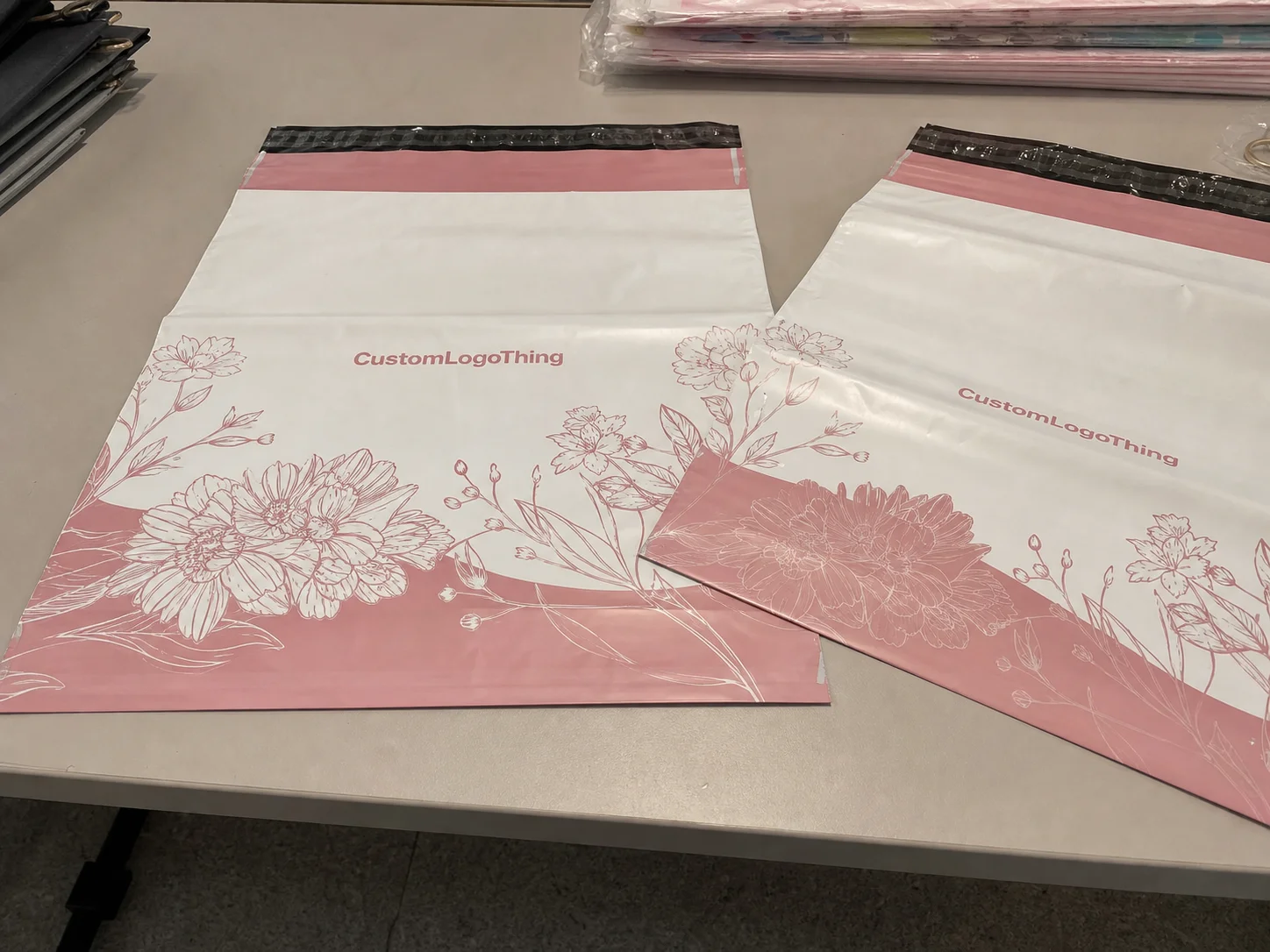
Florist orders are awkward in a way standard shipping packs are not. A wrapped bouquet may seem small on the bench, but once the sleeve, water wrap, insert card, ribbon, and occasional gift item are added, the shape becomes broader and softer. That is exactly the kind of load that can be damaged by a rigid box that is too large or too empty. A mailer keeps the package together without adding unnecessary bulk.
Courier mailers also make sense because they match the way local delivery networks move parcels. A bag that is close to the final packed size is easier to sort and less likely to rattle in transit. The result is usually better edge protection and less surface rubbing than a loose carton. In short runs, the difference can be surprisingly visible: petals stay cleaner, the wrap holds its shape, and the brand panel arrives looking intentional rather than improvised.
For subscription flowers, the value is consistency. The packing team can follow the same method every week, and the customer receives a parcel that looks familiar from order to order. For sympathy arrangements and wedding samples, the presentation signal matters even more. Those orders are not just being transported; they are being received as a finished gift.
Most sizing mistakes come from measuring the bouquet itself instead of the completed pack. The sleeve, tissue, moisture barrier, insert card, and any add-on gifts are the pieces that decide whether the mailer fits cleanly.
The contrast with bubble mailers is worth spelling out. Bubble film adds cushion, but florists usually need shape control more than compression protection. Bubble also increases thickness at the fold and can make a bouquet sit awkwardly in the pack. Plain or lightly structured courier mailers are usually the better fit for flowers because they secure the bundle without crushing the presentation.
That is the logic behind a practical courier mailer Bags for Florists Order guide: size the bag to the finished pack, then choose the material and closure that suit the route, the weight, and the brand finish. If the order is for local handoff, the spec can stay lighter. If it is going through a multi-stop courier chain, the film and seam strength need more attention.
Mailer Bag Materials, Closures, and Print Options for Florists
Most florist mailers are made from LDPE or co-extruded film. LDPE is flexible and easy to fold, which helps when the packing team is moving quickly. Co-extruded film gives more control over outer appearance and inner strength, so it is often the better choice for printed mailers that need to hold up under courier handling. The outer layer can be tuned for print quality while the inner layer carries tear resistance.
For most everyday deliveries, a smooth surface is the most useful finish. It prints more cleanly, especially for one-color logos, short slogans, or seasonal artwork. Gloss gives a brighter retail look, while matte hides fingerprints and tends to read as more restrained and premium. Opaque film protects the contents from view. Semi-opaque film can work if the business wants a little of the bouquet sleeve or card visible through the pack, though that should be a deliberate choice rather than an accident of film opacity.
Print method matters too. A simple flexographic print is usually enough for one or two spot colors and keeps the setup cost under control. More complex artwork, fine gradients, or full-panel coverage pushes the job toward higher setup and tighter registration checks. That can still be worth it for premium orders, but buyers should expect it to raise the unit price. A small logo in one corner is not as dramatic as a full wrap print, yet it is often enough for regular retail deliveries.
Closures deserve more attention than they usually get. Self-seal adhesive strips are standard because they are quick and consistent. Tamper-evident seals are useful for higher-value orders or mixed packs, especially if the parcel may pass through several hands. Resealable closures make sense when inserts or small extras need to be added late in the packing process, but they are not necessary for every florist job.
| Bag Style | Best For | Typical Use Case | Relative Cost |
|---|---|---|---|
| Plain LDPE mailer | Low-cost packing with minimal branding | Everyday local deliveries, internal transfers | Lowest |
| Printed single-color mailer | Brand visibility without heavy setup cost | Subscription flowers, routine retail delivery | Moderate |
| Full-panel branded mailer | Premium presentation and seasonal campaigns | Wedding samples, gift orders, launch packs | Higher |
| Tamper-evident mailer | Seal visibility and added security | Premium accessories, mixed-value orders | Higher |
Sustainability claims need careful reading. A bag described as recyclable may still be rejected by some local collection systems if the film type, adhesive, or print ink is incompatible with the stream. Buyers should ask for the substrate, any recycled content percentage, and the actual certification trail rather than relying on a generic label. If the supplier mentions FSC, recycled content, or compliant materials, ask how that claim is documented.
That level of detail matters because the surface finish and film structure affect the whole buying experience. A cheap-looking bag can make a carefully arranged bouquet feel less valuable. A well-chosen film does the opposite: it protects the order while making the packaging feel like part of the product.
Sizes, Thickness, and Load Specs That Fit Florist Orders
Size selection should start with the finished packed order, not the flowers alone. Once a bouquet is sleeved, wrapped, tagged, and fitted with tissue or moisture protection, the package footprint changes fast. A bag that is too tight stretches at the seams and looks tired before it leaves the shop. A bag that is too large lets the contents slide, which can scuff petals or crease printed wrap.
The easiest way to avoid that mistake is to measure the completed pack in its final form. Record width, height, and thickness, then add only a small allowance for loading. The point is a clean fit, not wasted space. Single-stem gifts, hand-tied bouquets, boxed arrangements, and mixed flower-and-gift orders all need different footprints, even if they come from the same shop.
Thickness deserves equal attention. For lighter bouquet orders, many buyers stay in a moderate film range that balances flexibility and durability. Once the parcel is heavier, travels farther, or is sorted with other courier loads, the film needs more puncture resistance. A number like “strong” is not enough. Ask for the actual gauge or micron range and confirm seam strength, especially if the order includes stiff stems, rigid boxes, or add-ons with corners.
There is a practical test that catches weak specs before they cause a problem. Fill the sample bag with the heaviest version of the packed order, seal it, and lift it by the top seam and closure. If the bag opens at the seal, bows too much, or shows stress marks near the side seam, the spec is too light. Good mailers hold shape under sorting, resist tearing at the fold line, and do not drag the pack out of alignment when the courier lifts it.
For florist buyers, the useful comparison is not just between sizes. It is between the bag and the route. A same-day local delivery can tolerate a lighter film than a long multi-stop courier run. The latter exposes the pack to vibration, stacking, and repeated handling. That is where a few extra microns in the film often pay for themselves.
A buyer also needs to think about packing speed. A mailer that is technically the right size but awkward to load will slow down the team every morning. That cost is easy to miss because it does not show up on a quote. It shows up in labor, in packing mistakes, and in a longer line of orders waiting at dispatch.
For a broader packaging comparison, the logic on our Custom Poly Mailers page is the same: dimensions first, then print, then closure and film choice. The product changes, but the buying method does not.
Pricing, MOQ, and Unit Cost for Florist Orders
Pricing is driven by four things more than anything else: size, film thickness, print coverage, and number of colors. A plain small mailer is the cheapest version. A heavier, custom-sized, fully printed bag costs more because it uses more material and requires more setup. That difference is not subtle. In custom packaging, a larger print area can affect both production time and scrap rate.
MOQ usually moves with the print method and bag size. Smaller runs carry a higher unit cost because the setup is spread across fewer pieces. At larger quantities, the per-unit price falls in a way that can be meaningful for retailers with steady weekly demand. The challenge is knowing where the break-even point sits for your operation, since one florist may reorder monthly and another only before peak dates.
| Order Size | Typical Unit Cost Range | Notes |
|---|---|---|
| 1,000 to 2,000 pcs | $0.22 to $0.38 | Higher setup share, useful for testing or short campaigns |
| 3,000 to 5,000 pcs | $0.14 to $0.28 | Common planning range for many florist operations |
| 10,000+ pcs | $0.08 to $0.18 | Better unit economics, especially with repeat artwork |
Those figures are directional, not fixed market rules. A thicker bag, a larger print area, or a tamper-evident closure will push prices upward. So will special colors, custom sizing, or artwork that requires tight registration. Freight can also change the final landed cost more than buyers expect, especially if the order ships by air or on an accelerated schedule.
For a clean comparison, ask every supplier to quote the same dimensions, material, thickness, print coverage, and delivery term. Otherwise the lowest quote can hide a smaller finished size or a lighter film. That is the most common false saving in packaging procurement. A cheaper unit price does not help if the bag fails on the delivery run.
Buyers should also separate tooling, plate charges, and freight from the unit rate. If those costs are bundled into one line, it becomes difficult to know whether a reprint is actually efficient. Keeping the quote broken out by component makes reorder planning far more accurate.
Production Steps, Lead Time, and Delivery Windows
The production flow is usually straightforward: inquiry, spec confirmation, artwork review, proof preparation, proof approval, printing, curing or drying, inspection, packing, and dispatch. The schedule is only as stable as the slowest step. If the proof changes late, or if the bag spec is revised after artwork is set, the timeline shifts immediately.
Lead time depends on three practical variables: print complexity, seasonality, and shipping method. Plain stock bags are faster than custom printed ones. Bags with special colors, large coverage, or metallic effects take longer. Seasonal peaks matter too. Flower retailers are not the only buyers preparing for Valentine’s Day, Mother’s Day, or wedding season, and that competition shows up in factory queues and freight slots.
As a rough planning rule, stock or plain bags may move quickly, while printed custom runs usually need more time for proofs and production. Add extra buffer before a holiday window. A delay of two or three days can matter more than it does in other retail categories because florist orders often sit on fixed delivery dates.
Quality control should not be an afterthought. A useful inspection list includes seal adhesion, side-seam strength, print rub resistance, and dimensional accuracy. If the bag is branded, check the logo position and color consistency on the first cartons off the line, not just at the end. A small error in print placement can make the whole run look off, especially on matte film where misalignment is more visible.
Third-party test methods can help frame expectations even if formal lab testing is not part of the order. ISTA standards are useful reference points because they focus on the conditions parcels actually face: vibration, compression, and handling stress. That is the real issue with courier mailers. Most failures are not dramatic punctures; they are gradual damage from movement and stacking.
Florist teams that reorder regularly usually benefit from a small safety stock. The stock does not need to be large, but it should cover the busiest week and at least one unexpected delay. Because the packaging is customer-facing, running out is more visible than missing a generic shipping supply. A customer may never see the inside carton, but they always see the outer mailer.
What a Repeat Order Process Should Include
Repeat orders are where packaging suppliers prove whether they are actually organized. The best setup keeps the spec stable, stores the artwork cleanly, and makes reordering faster than a first-time quote. That means the supplier should retain the approved dimensions, film type, closure style, print file, and any tolerances agreed during the first run.
For florist buyers, that matters because seasonal artwork changes faster than the packaging spec should. A spring campaign, a wedding-season design, and a winter gift pack may all use the same bag size. If the dimensions keep changing with each promotion, the operation loses the efficiency that mailers are supposed to create in the first place.
A good repeat-order system also reduces error when several people place orders. Multi-location florist groups, franchises, and larger studios often have more than one buyer touching the packaging account. If the supplier keeps clear version control, a staff change does not create a new round of measurement mistakes.
There is a hidden cost in re-explaining the same job every time. It slows approvals, increases the chance of proof errors, and makes it harder to compare one run with the next. A clean repeat process avoids that. It is not a marketing benefit; it is an operational one.
That is the real value behind a focused Courier Mailer Bags for florists order guide. Not a prettier bag for its own sake, but a packaging spec that can be repeated, checked, and reordered without rework.
What to Send for a Fast Quote and Proof Approval
Fast quoting starts with precise information. Send the finished bag size, estimated contents weight, print area, quantity, delivery country, and target in-hand date. If the order is tied to a holiday launch or a set delivery window, say so early. A supplier can work around a hard deadline only if the deadline is visible before artwork is finalized.
Artwork details should be as clean as the spec. Include the logo file, preferred placement, brand colors, and any seasonal changes that may alter the design later. If one bag will be used for multiple campaigns, say whether only the print changes or whether you need different versions for weddings, retail delivery, and sympathy orders. That answer changes how the artwork file should be built.
It also helps to say whether you need samples, split shipments, or a pilot run before the full order. A small test run can be cheaper than fixing a mistake across thousands of units. For florist operations, that is often the smarter path if the mailer is new, the bouquet format has changed, or the courier route is more demanding than the last order.
- Finished dimensions of the packed bouquet or flower kit
- Bag material preference, if known
- Desired thickness or strength target
- Print colors and logo placement
- Quantity and likely reorder pattern
- Target delivery date and shipping destination
Buyers who want to move quickly should also say whether the first run is for a peak period or a steady replenishment order. That changes the urgency of freight and the amount of stock worth holding. A one-off campaign does not need the same inventory logic as a recurring weekly route.
For support and broader procurement context, the site FAQ can handle common setup questions, while a wholesale account is more useful when the order is part of a larger packaging program. The important point is to keep the spec stable once the proof is approved. That is how repeat orders stay efficient.
What size courier mailer bags work best for florist bouquet orders?
Measure the packed bouquet, including sleeve, tissue, card, and any inserts, not just the flower heads. Choose a bag with a small allowance for easy loading without compressing stems or decorations.
Are courier mailer bags suitable for fresh flowers with condensation?
Yes, if the inner wrap manages moisture properly and the film is chosen for the route. The outer bag should stay intact during short-haul delivery and should not trap excess wetness against the print surface.
What MOQ should I expect for printed florist courier mailer bags?
MOQ depends on size, print complexity, and material. Printed custom runs usually start higher than plain stock bags, so ask for tiered pricing to see where the unit cost improves.
How long does production take after proof approval?
Lead time depends on artwork, bag spec, and shipping method. Build in extra time before holiday peaks and allow for proof approval before the run starts, especially if the artwork has multiple colors or a large print area.
Can I reorder the same florist mailer spec for seasonal campaigns?
Yes. That is usually the most efficient route for shops that want predictable packing and stable unit cost. Keep the dimensions constant and change only the artwork when the season changes.
Florist packaging works best when it solves three problems at once: speed at the bench, protection in transit, and presentation at the door. A good mailer does not try to do more than that. It simply fits the finished order, holds up under handling, and gives the brand a cleaner outer layer. That is the practical standard behind any serious Courier Mailer Bags for florists order guide.