Outdoor brands do not usually lose margin because the mailer cost a few cents more than expected. They lose margin when the packaging fails under shipping stress, and Courier Mailer Bags for outdoor brands wholesale pricing only makes sense once the spec protects the product, the print, and the delivery experience together. A weak bag can turn one shipment into a replacement, a refund, and a support exchange that costs more than the packaging itself.
The better buyers stop comparing quotes as if every mailer is interchangeable. They look at puncture resistance, seal integrity, moisture protection, and how the film behaves after it has been dropped, compressed, and rubbed against other parcels. For soft goods, accessories, hats, socks, and folded apparel, a properly built courier mailer often does the job of a heavier carton while keeping dimensional weight under control. The savings only hold if the structure is matched to the product.
Most failures happen after the parcel leaves the warehouse. Conveyor abrasion, chute drops, truck compression, and carrier sortation are where thin film reveals its limits. If the seal peels, the edge splits, or the print scuffs away, the brand pays twice. That is the real cost model, and it is the one that matters.
Why Outdoor E-Commerce Mailers Fail in the Real World
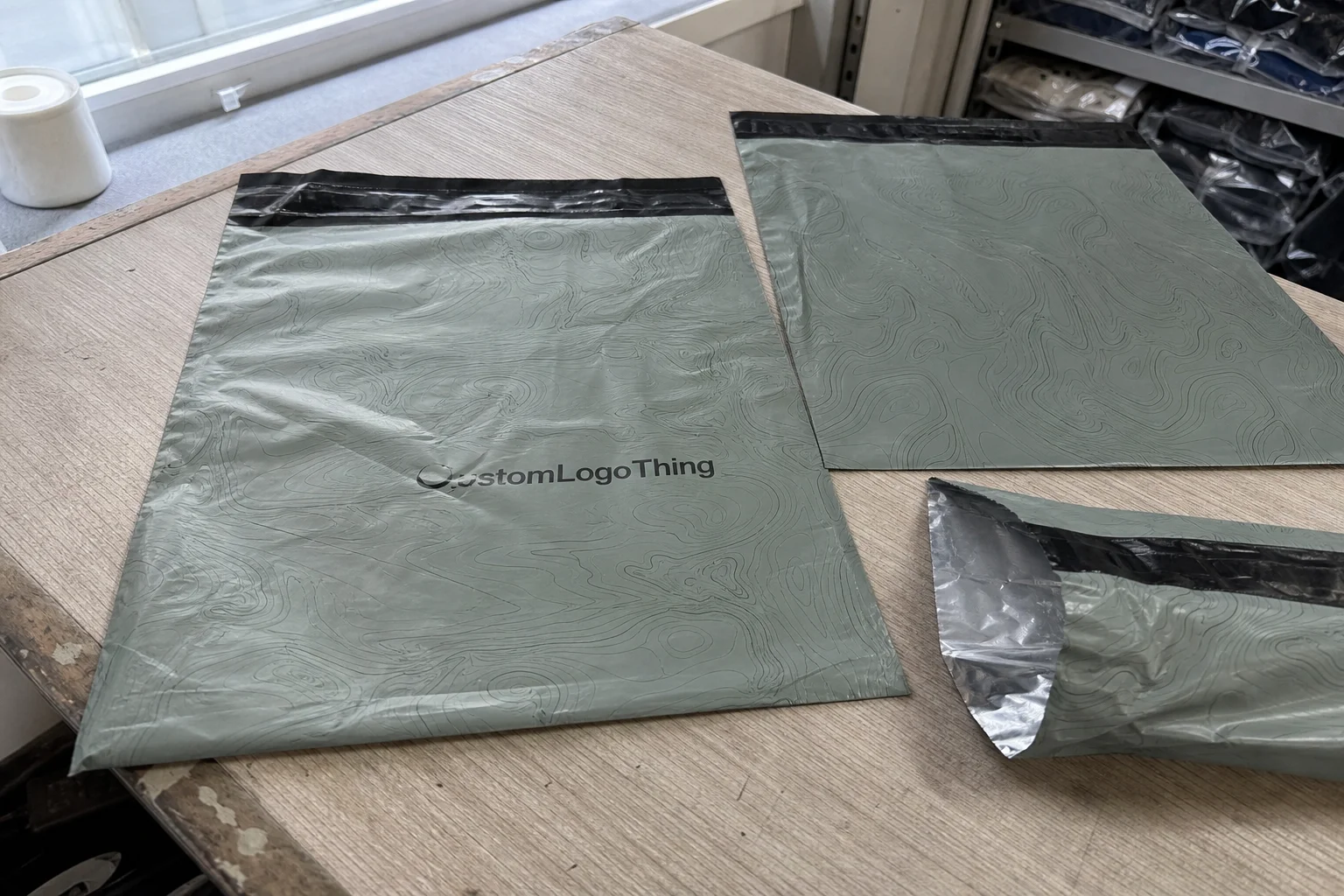
Outdoor gear buyers tend to ship a tougher mix than standard fashion brands. A lightweight shell jacket is soft, but it still carries zippers, cord locks, hook-and-loop closures, and hard trim that can work against a flimsy mailer. Add muddy returns, salt air, long freight lanes, or wet receiving docks, and the package needs more than a plain sleeve. It needs controlled performance.
The three most common failure points are predictable. First, the seal opens during rough handling. Second, the bag scuffs or tears where hardware presses against the film. Third, the printed surface arrives worn enough that the brand looks less premium than the product inside. None of these issues are rare. They show up most often on repeat orders, especially once a brand moves from local fulfillment to national or cross-border shipping.
From a purchasing perspective, the cheapest bag can become the most expensive choice. A damaged first order creates a bad unboxing, but it also creates support work. Staff have to answer complaints, customers lose confidence, and the marketing spend behind the sale works against itself. Failure prevention matters more than shaving a cent or two off the unit price.
Courier mailers are strongest where the product is soft, folded, and not sharp-edged. Think leggings, base layers, rain shells, buffs, gloves, and small accessories. They are a poorer fit for rigid hardware, boxed kits, or anything with hard corners that can punch through the film. In those cases, an inner pouch, corrugate insert, or a box is often the safer route.
There is another reason these bags remain common in outdoor e-commerce: they are light. A 1.5 oz mailer can save more than a few grams versus a heavier carton-plus-fill solution, and that difference compounds across thousands of units. Packaging only feels cheap when it is underbuilt. When it is matched to the product, it becomes a useful part of the shipping system.
Materials, Closures, and Print Surfaces That Hold Up
Material choice is where most buying decisions either get sharpened or watered down. Standard single-layer poly mailers are inexpensive and light, but co-extruded films usually perform better because they can balance puncture resistance, flexibility, and print quality. Recycled-content films are a sensible option if the brand has a real sustainability target, but they should be evaluated for film consistency, seal behavior, and surface quality rather than accepted on claim alone.
For outdoor brands, moisture resistance is not optional. Wet sorting docks, slush, coastal humidity, and incidental rain exposure can all expose weak packaging. A good courier mailer should keep the contents dry in normal parcel handling. That does not make it waterproof in a literal sense, but it should resist short-term exposure far better than a paper envelope.
Closure choice matters just as much as the film. Permanent adhesive strips work well for outbound shipments, tamper evidence, and simple fulfillment lines. Resealable closures make sense for return-friendly programs, but they add cost and process complexity. Some brands want a peel-and-seal system with a second strip for returns; others only need a one-way seal because the product is unlikely to come back in the same pack. The right answer depends on category, return rate, and how the customer is expected to repack the item.
Print surfaces deserve more attention than they usually get. Matte film can hide scuffs better and often feels more premium, while gloss can sharpen colors and make logos pop under bright lighting. If the artwork is dark or heavily saturated, a white underprint helps prevent color shift and improves legibility. Without it, graphics can look flat or muddy on darker film.
Artwork placement should also respect the way parcels move. A logo centered in a clean field may look good on a mockup, but if the bag is likely to rub against conveyor belts, label stock, or other parcels, important copy can wear down. Keep branding clear, leave room for shipping labels, and protect the areas that need to read correctly after handling.
For buyers who want a technical baseline, the ISTA testing framework is useful for thinking about drop, vibration, and compression exposure. The EPA remains a solid source for broader packaging waste and source reduction context.
“A mailer can look fine in a sample kit and still fail after three conveyor transfers and one bad sort. Spec for transport, not for the photo.”
Specifications That Prevent Damage, Waste, and Reorders
If a buyer wants fewer surprises, the spec sheet has to be complete. The minimum fields are simple: width, length, gusset or no gusset, film thickness, seal style, print coverage, and closure type. Leave out any of those and the quote becomes a guess. That is how reorders drift, pricing gets distorted, and production mistakes creep in.
Film thickness should match product risk rather than defaulting to the thickest option available. A 60-70 micron film may be enough for light apparel, while heavier or more abrasive items may need 80-100 micron or more, depending on structure. Thicker is not automatically better. It can raise cost, add stiffness, and make folding less efficient without solving the actual failure point.
For outdoor brands, abrasion risk often matters more than raw tear strength. A package with metal snaps, buckles, or zipper pulls can abrade the inside of the mailer from the moment it is packed. If the item is unusually hard or angular, the answer may not be a thicker mailer at all. It may be a different pack format or a secondary inner wrap.
- Measure the product in its packed state, not just flat garment dimensions.
- Specify the intended shipment weight, because a 6 oz shirt and a 3 lb jacket behave differently.
- Reserve label space so carrier labels do not overlap artwork or tamper seals.
- Confirm color targets using PMS references if brand consistency matters across reorders.
- Document legal copy and recycling statements early, especially for multi-market launches.
Practical testing beats vague reassurance. Ask how the film handles drop stress, whether the seal peels under load, how the material behaves in humidity, and whether tear propagation stays contained or runs across the panel. A supplier who can answer those questions clearly usually understands the work better than one who only talks about price.
Sustainability claims deserve discipline. Recycled content, resin disclosure, and waste reduction targets can help the brand story, but only if they are documented and repeatable. If the supplier cannot show consistent material inputs or stable print results, the claim becomes a marketing risk. For buyers trying to align with FSC-related sourcing principles or broader environmental commitments, ask for proof early instead of trusting a line on a quote sheet.
One more practical point: bag dimensions should allow for real packing behavior. Apparel teams often overfill a mailer in the name of efficiency, then wonder why seals lift or seams stretch. A bag that is too tight performs worse than a slightly larger format with proper film strength.
courier mailer bags for outdoor brands wholesale pricing
Wholesale pricing is usually driven by four levers: quantity, film structure, print complexity, and bag size. That sounds obvious, but many buyers still compare quotes as if every supplier is selling the same thing. They are not. A 25 x 35 cm mailer in a simple one-color logo run is a different product from a full-coverage, matte-finish, resealable bag with recycled content.
Setup and prepress costs are why larger runs become materially cheaper per unit. When artwork, plates, proofing, and machine setup are spread over 10,000 units instead of 2,000, the landed unit cost drops quickly. That does not mean the biggest run is always the right answer. It means the buyer should understand the break points and choose quantity based on inventory reality, not hope.
Here is a practical comparison for buyers evaluating courier mailer Bags for Outdoor brands wholesale pricing across common spec levels.
| Option | Typical MOQ | Indicative Unit Cost | Best Fit | Notes |
|---|---|---|---|---|
| Standard poly mailer, one-color print | 3,000-5,000 pcs | $0.10-$0.18 | Light apparel, socks, base layers | Lowest entry cost, but weaker scuff and puncture performance |
| Co-extruded mailer, custom print | 5,000-10,000 pcs | $0.18-$0.32 | Hoodies, technical tees, accessories | Better balance of durability and brand presentation |
| Recycled-content mailer, branded finish | 8,000-10,000 pcs | $0.22-$0.38 | Brands with sustainability targets | Price varies with resin availability and print setup |
| Premium mailer with reseal strip and matte finish | 10,000+ pcs | $0.30-$0.55 | Outerwear, premium lifestyle gear, retail-ready shipments | Higher cost, but stronger presentation and return utility |
Those ranges are directional, not universal. Freight, proofing, packaging weight, currency, port location, and seasonal resin pricing can all move the number. The cleanest comparison is a landed unit cost. That means ex-factory price plus freight, sample charges, plate or plate-free setup, and any rush premium. A quote that ignores shipping is not a complete quote.
MOQ also needs context. A first order may sit at 5,000 or 10,000 pieces because the supplier wants to protect setup economics. A reorder can sometimes come in lower if the spec is locked and the line is already tooled. For a new outdoor product line, a smaller pilot run is often worth the higher per-unit price because it exposes fit or print issues before the brand commits to full volume.
Hidden costs matter more than most sales sheets admit. Sample packs are usually cheap, but freight can swing the math. Color proofs may take a few rounds if the brand is strict on logo matching. If the delivery window is tight, rush production can add a premium that wipes out a small unit-price advantage. Buyers should ask for every component up front.
For brands comparing packaging families, it helps to review broader pack strategies too. Our Custom Poly Mailers page is useful if you want to benchmark a simpler structure against a printed courier mailer, and our Wholesale Programs page outlines how larger volume tiers usually change the economics.
Production Process and Lead Time from Proof to Dispatch
The production path is predictable if the brand supplies clean inputs. It usually starts with brief intake, then artwork review, then a digital proof or sample, then approval, then production, then dispatch. Every step is standard. Delays come from unclear dimensions, missing artwork constraints, unapproved color targets, or a late decision on recycled material content.
First orders take longer than repeats because the spec still needs to settle. If the artwork has multiple colors, if there is white underprint, or if the supplier is sourcing recycled resin, the timeline can stretch. A typical first run often lands in the 12-20 business day range after proof approval, but that depends on film type, quantity, and freight method. Reorders are faster because the tooling, artwork, and size are already set.
Brands save the most time by sending print-ready files, confirming dimensions before requesting a price, and answering proof questions quickly. A supplier cannot quote cleanly if the bag size is vague or the print area changes every other message. That is not a production problem. It is a specification problem.
Seasonal outdoor brands feel timing pressure more sharply than most categories. If the product needs to land before hiking season, ski season, or holiday travel, the packaging should be ordered well before inventory peaks. The bag is a small component, but it sits on the critical path. A late mailer can slow fulfillment even when the garments are already in stock.
Shipping tests should be part of sample approval, not an afterthought. If a package is expected to handle drops, vibration, and compression, the sample stage should reflect that reality. A supplier with a real quality routine will usually understand that without needing the point repeated.
Supplier Standards That Matter on Repeat Orders
A cheap quote can be attractive. A repeatable quote is better. On recurring packaging programs, consistency beats novelty every time. Outdoor brands need the same film gauge, the same seal strength, the same color tone, and the same bag dimensions on every reorder. If those drift, the packaging becomes another source of operational noise.
Strong suppliers leave a paper trail. They keep documentation on film structure, print files, approved proofs, and production records. That matters when a brand needs to reorder six months later and cannot afford a spec reset. It also matters when a retailer, marketplace, or internal QA team wants evidence that the packaging stayed within tolerance.
Communication speed is a quality signal. A supplier that answers material questions quickly usually understands how to keep a launch moving. Slow replies create more delay than a modest price difference ever saves. For purchasing teams, that is not a soft issue. It changes inventory timing, labor planning, and launch confidence.
This is also where packaging experience shows up in the details. A supplier who has handled apparel fulfillment understands how labels are applied, where seams can interfere with folding, and why outerwear needs a different spec from accessories. That practical knowledge is usually more valuable than a low first quote.
- Ask for defect-rate expectations and how claims are handled.
- Confirm color tolerance before approving the first run.
- Request reorder documentation so the next production cycle is faster.
- Check whether the supplier can support multiple pack types as the line grows.
- Review sample consistency before locking annual volume.
Brands that want to compare packaging options can also review our Case Studies page to see how different pack formats perform across product categories. The pattern usually repeats: fewer package failures, fewer complaints, and lower replacement cost matter more than the first invoice alone.
Supplier quality is not just about polish. It is about keeping the same result on order two, order five, and order ten. That is what protects reorder economics.
What to Send for an Accurate Quote and First Run
The fastest way to get a clean quote is to send complete inputs on the first pass. At minimum, the supplier needs bag dimensions, quantity, product weight, print colors, finish preference, destination ZIP or port, and the target ship date. If the brand has dielines, send them. If the artwork is still evolving, say so early. Ambiguity costs time.
It also helps to specify the use case. A mailer for folded trail shirts is not the same as a mailer for a lightweight rain jacket or a set of small accessories. The more the supplier understands the product, the less likely the first sample will miss the mark. This matters especially for brands with mixed SKUs, because one size rarely fits every item cleanly.
Before committing to full volume, a small pilot order is often the smart move. Use it to check seal performance, fit, label placement, and the unboxing feel under real shipping conditions. A sample can look fine on a desk and still fail in a conveyor system. That is why the first live shipment matters more than the mockup.
Once the bag performs, scale with confidence. If the unit cost improves at a higher quantity tier, use that data to decide whether to consolidate the next run. If the bag is still too tight, too glossy, or too soft, adjust now rather than after customers start receiving damaged goods.
For the most accurate pricing conversation, ask for Courier Mailer Bags for Outdoor brands wholesale pricing only after the spec sheet is complete and the landed-cost assumptions are clear. That is the difference between a quote and a purchasing decision.
FAQ
What makes courier mailer bags better for outdoor brands than standard poly mailers?
They usually offer better moisture protection, higher puncture resistance, and a cleaner branded presentation for apparel and soft goods. They also stay light, which helps control shipping cost compared with heavier box-based formats.
What MOQ should I expect for custom courier mailer bags?
MOQ depends on size, print complexity, and film structure. Smaller pilots are possible in some cases, but better pricing usually starts once setup costs are spread across a larger run. For a new line, a test quantity is often the safer first step.
How do wholesale prices change with print coverage and bag size?
Larger bags use more material, so the base cost rises even before printing is added. Full-coverage artwork, extra print colors, matte finishes, and reseal features also increase cost. The cleanest comparison is a landed unit cost, not just the base bag price.
What lead time should I plan for a first custom order?
First orders usually need more time because artwork, proofing, and sample approval add steps. A reorder is typically faster once the supplier has the approved specification and the production setup is already in place.
Can I get courier mailer bags for outdoor brands wholesale pricing with samples first?
Yes. That is usually the better route because it lets you verify fit, seal strength, and print quality before committing to volume. A sample stage also helps confirm whether the bag performs correctly for jackets, accessories, or folded apparel in real shipping conditions.


