If you are comparing Courier Mailer Bags for Outdoor brands unit cost, the bag price is only the first number. The real cost includes freight, setup, packing labor, damage risk, and the cost of fixing mistakes after the parcel leaves the warehouse. For outdoor apparel, soft goods, and accessories, that difference can move margin on every order.
Outdoor brands also ship a broader mix than many buyers expect. A shell jacket, a pair of gloves, a fleece layer, and a packable hat do not place the same demands on packaging, even if they all fit inside a mailer. A cheap-looking bag can weaken the brand experience. A bag that is too light for the product can raise claims and repacks. The right spec sits between those two failures.
The practical question is not whether a courier mailer is inexpensive. It is whether the structure matches the product, the shipping lane, and the level of presentation the brand needs. A small spend on better film, a stronger seal, or cleaner print can be cheaper than absorbing the cost of damaged goods and service recovery.
Practical rule: the lowest quoted piece price is not always the lowest landed cost. If a thinner bag fails in wet transit or tears during fulfillment, the replacement order and service work usually cost more than the savings.
Why Outdoor Brands Care About Mailer Cost per Shipment
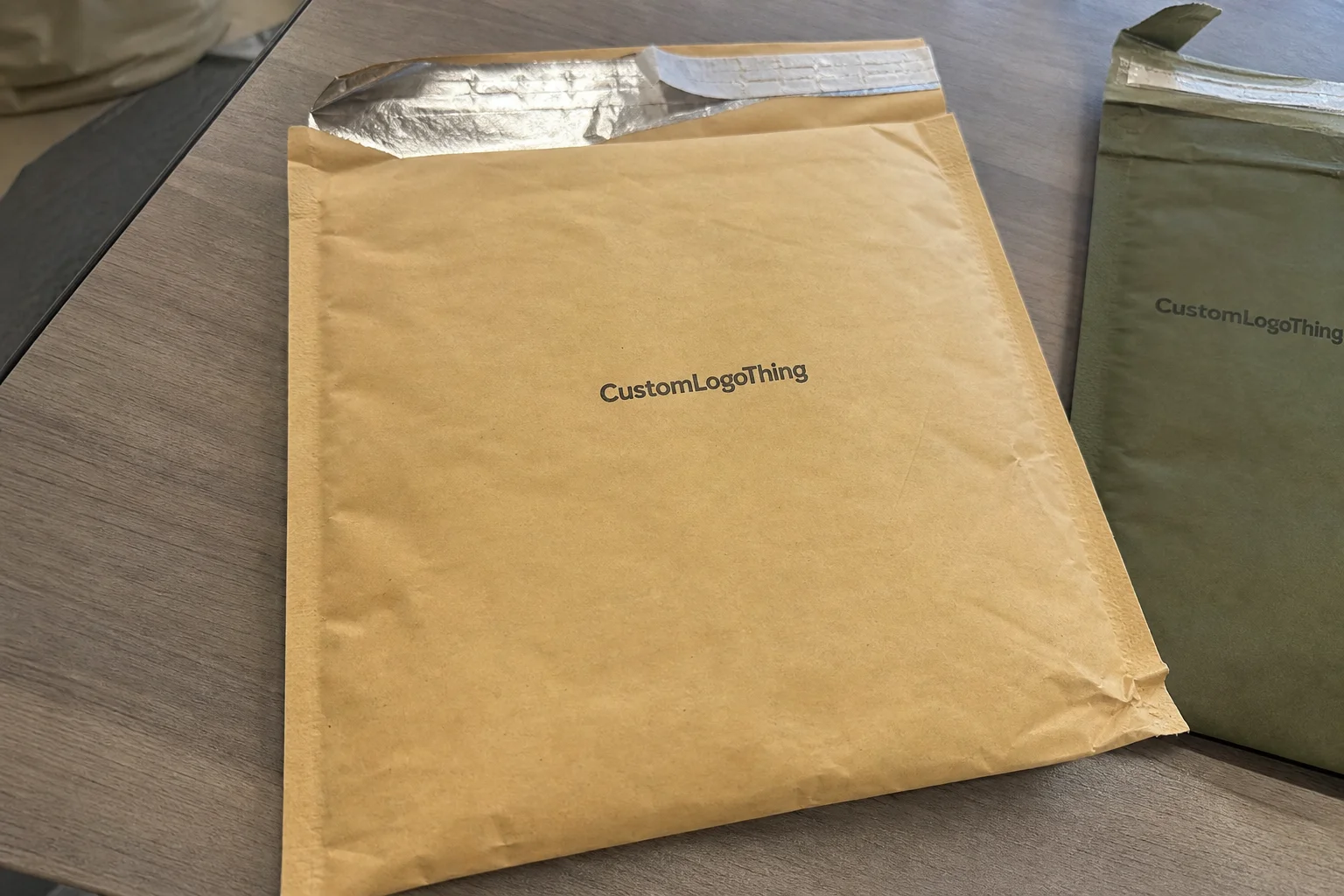
Courier mailers matter because outdoor brands depend on repeatable fulfillment. Customers buying technical apparel expect the package to arrive clean, dry, and intact. If the outer mailer splits, opens early, or looks flimsy on arrival, the package loses credibility before the product is even seen. For Courier Mailer Bags for outdoor brands unit cost, the real discussion starts with shipment performance, not procurement price alone.
Soft goods are more demanding than they look on a spec sheet. A shell jacket is light, but zippers, laminated seams, and folded cuffs create pressure points. Base layers compress well, yet they still need a bag that seals consistently and resists puncture. Gloves and small accessories are often shipped in high volume, which makes unit cost visible, but volume does not reduce the need for moisture protection and transit durability.
From a packing-floor perspective, the cheapest mailer can become the most expensive option if it forces a second pouch, a backup corrugated insert, or extra tape to hold the shipment together. That is why experienced buyers evaluate cost per shipment rather than cost per bag. The outer mailer is also the first physical touchpoint many customers see, so finish quality and print control affect how premium the order feels when it lands.
There is a labor side as well. Oversized bags add unnecessary film and dimensional weight. Bags that are too small slow pack-out, stress the seal, and raise the chance of rejects. Good quoting starts with the product, the pack style, the shipping lane, and the brand standard. Without those inputs, every unit cost number is incomplete.
- Protection: moisture resistance, tear resistance, puncture behavior, and seal integrity.
- Operations: fit, pack speed, and reduced rework at the table or conveyor.
- Branding: logo clarity, finish quality, and a retail-ready appearance.
- Finance: unit cost, freight, setup, and the cost of failure.
Materials, Construction, and Print Options
Most courier mailers fall into a few common constructions. Standard polyethylene mailers are still the baseline for price-sensitive programs and lightweight shipments. Co-extruded film is a step up in durability because it can improve tear resistance and puncture behavior while staying flexible enough for fast packing. Recycled-content options are available in many programs, but they should be tested against the actual product and lane rather than approved on the claim alone.
Film thickness changes both feel and performance. A heavier gauge usually gives more confidence at the seam and across the body of the bag, especially for products with hardware, denser folds, or wider gussets. Seal quality matters just as much as film spec. A weak adhesive strip can undo a strong bag because the package opens, lifts, or needs to be reworked on the line. For outdoor brands, water resistance matters too. Parcels move through damp docks, delivery vans, porches, and occasional bad weather.
Print choices affect unit cost in a way that is easy to underestimate. A small one-color logo on a clean matte bag can look controlled and premium. Full-surface coverage creates more visual presence, but it brings more setup complexity, more ink coverage, and greater scrutiny on registration. Gloss and matte both have a place. Matte usually reads as quieter and more technical, while gloss can feel brighter and more retail-oriented. The right answer depends on brand position and artwork density.
Buyers working through a sustainability review should ask for current documentation instead of relying on broad claims. If the program includes recycled content or fiber-based components, request paperwork that matches the quoted spec. For transit testing, many teams reference standards from organizations like ISTA. That does not replace pack testing with the real product, but it gives the evaluation process structure.
Print coverage also drives cost. A small logo placed deliberately can hold the price down. Full-coverage graphics or multi-panel artwork usually increase setup and press time, especially on lower MOQs where fixed costs are spread across fewer pieces. The visual gain has to justify the extra spend, not just the other way around.
| Option | Typical Use | Cost Impact | Performance Notes |
|---|---|---|---|
| Standard polyethylene | Light apparel, accessories, low-risk lanes | Lowest baseline unit cost | Good for simple shipments, but less margin for rough handling |
| Co-extruded film | Technical apparel, heavier soft goods | Moderate increase in cost per piece | Better tear behavior and improved durability |
| Recycled-content mailer | Sustainability-led programs | Often slightly higher, depending on supply | Useful when verified content and brand positioning matter |
| Full-surface printed mailer | Premium DTC branding | Highest setup and print cost | Strong visual impact if artwork and registration are controlled |
Size, Thickness, and Performance Specifications That Drive Unit Cost
Bag dimensions are one of the biggest drivers of courier mailer Bags for Outdoor brands unit cost. Larger bags use more film, and they often need stronger seals to hold shape and resist splitting at the corners. A bag that is too generous can also create wasted void space, which adds material without helping the shipment. The size should follow the folded product, not the other way around.
Thickness is usually expressed in microns or mils, depending on the supplier and market. Lighter apparel may work in a lighter-gauge mailer, especially if the packing lane is controlled and the product has no sharp hardware. Bulkier items, or shipments that move through rougher fulfillment environments, often justify a heavier film. The goal is not maximum thickness. The goal is enough strength for the shipment profile.
Before requesting pricing, buyers should define the spec clearly:
- Width and length: the flat size that matches the folded product.
- Gusset: useful for bulkier packs or irregular soft goods.
- Thickness: in microns or mils, tied to product risk.
- Closure type: self-seal adhesive, tamper evidence, or another closure method.
- Print count: one color, multiple inks, or full-coverage artwork.
- Finish: matte, gloss, or a specialty surface.
For outdoor brands, performance is not abstract. Parcels may sit in damp receiving areas, move through multiple handoffs, and get stacked under other freight. A mailer that survives a calm desktop test can still fail in an actual lane. If the product is high value, prone to return, or awkward in shape, it is worth testing against a realistic pack-out rather than relying on a spec sheet alone.
Product form matters more than many buyers expect. A folded fleece top behaves differently from a compression-packed shell or a pair of gloves with hanging tags. A zipper can create a hard edge. A care card can concentrate pressure at one corner. Once the supplier sees the real pack, or at least a dimensioned sample with weight and fold style, the recommendation becomes tighter and the quote more believable.
For quality control, simple checks catch more problems than fancy language ever will. Confirm seal width, adhesive alignment, print registration, bag opacity, corner strength, and fit with the actual product inside. If the bag is meant to support returns or resealing, test that too. Many issues do not show up until a pack is opened and closed more than once.
Courier Mailer Bags for Outdoor Brands Unit Cost, MOQ, and Quote Drivers
The pricing structure behind courier mailer Bags for Outdoor Brands unit cost is straightforward once the quote is broken into pieces. The main drivers are size, film gauge, print complexity, order quantity, and whether the bag is a stock format or a custom spec. Add setup charges, tooling, freight, and sample costs, and the landed number can move more than buyers expect.
MOQ matters because fixed costs have to be spread somewhere. On a small run, the same print prep or tooling fee can add a noticeable amount to each bag. On a larger run, those fixed costs are diluted across more units, and the cost per piece usually falls. That is why bulk pricing looks better on paper even before freight is included. The real question is not simply the unit cost. It is the quantity at which the spec becomes efficient.
Artwork can change the price quickly. One-color printing on one face is usually the simplest route. Add multiple inks, larger coverage, or specialty finishes and the quote shifts. If the design needs precise registration or a full-wrap layout, expect more proofing and possibly higher setup charges. A restrained logo often gives a better balance of cost and visual value than a crowded print field.
Shipping method and production location also influence landed cost. Two suppliers can offer similar factory pricing and still produce different totals once freight, packing, and timing are included. Buyers should ask for a quote that separates the moving parts instead of a single blended figure. That makes comparison easier and exposes hidden assumptions before approval.
A practical quote request should show:
- Mailer size and thickness.
- Artwork file or a clear mockup.
- Target quantity and acceptable MOQ.
- Requested finish and print coverage.
- Delivery location and timing.
Typical pricing patterns vary with market conditions, raw material availability, freight rates, and whether the order is a repeat or a first run. Even so, a general range helps a buyer judge whether a quote is grounded. The numbers below are directional, not universal.
| Quantity | Simple Printed Mailer | Heavier Co-Extruded Mailer | Notes |
|---|---|---|---|
| 2,500 pieces | $0.24-$0.38 per piece | $0.30-$0.48 per piece | Setup charges have more impact at lower quantity |
| 5,000 pieces | $0.18-$0.30 per piece | $0.24-$0.40 per piece | Better spread on tooling fees and print prep |
| 10,000 pieces | $0.14-$0.24 per piece | $0.18-$0.32 per piece | More efficient if artwork and size stay stable |
A quote that sits far below those ranges deserves scrutiny. It may be based on a lighter film, a reduced print area, weaker adhesive, a larger MOQ than advertised, or freight that has not been fully counted. A quote that sits above the range may still be valid if it includes a stronger structure, better print control, or lower risk. The key is to compare like with like.
Production Steps and Lead Time for Custom Mailer Orders
The production flow is more predictable than many buyers fear. It starts with specification review, then artwork prep, then proof approval. After that comes film or bag production, printing, curing if the process requires it, packing, and shipment. Repeat orders move faster when the spec is already approved. New sizes, new artwork, or heavily printed programs need more front-end time.
Lead time is often driven by approval speed rather than bag shape. A project can stall if the artwork is not final, if the proof needs revision, or if the supplier is waiting on a clean size confirmation. Late changes are expensive because they can reset tooling, cylinders, or print plates depending on the method. Lock artwork before the launch calendar locks the rest of the plan.
Sample approval is worth the effort, especially for outdoor brands that care about the feel of the finished package. A sample lets you check logo placement, opacity, seal quality, and whether the bag fits the product without strain. If the shipment includes a premium line, the sample also shows whether the unboxing impression matches the intended position.
A realistic custom order often looks like this:
- Proof stage: 1-3 business days, depending on artwork readiness.
- Production: often 10-15 business days for straightforward runs.
- Shipping: depends on location and freight method.
Rush orders can sometimes be supported, but there is usually a tradeoff. You may pay more, accept less flexibility on customization, or work with limited material availability. That is not a flaw in the process. It is the result of production planning, raw material scheduling, and press availability all happening at once.
For buyers comparing supply partners, the packaging spec should not be judged in isolation. The better suppliers ask about the product mix, the packing environment, return volume, and the target lane before quoting. That is the difference between a low number and a usable number.
How We Match Mailer Specs to Outdoor Brand Shipments
The value of a packaging partner is not in printing a logo and moving on. It is in matching the mailer to the product and the shipping lane so the brand does not pay for performance it does not need. A lot of buyers overspec the bag because they want a safe answer. That can work, but it also raises Courier Mailer Bags for outdoor brands unit cost and often adds material that the product does not require.
Good specification work starts with the product mix. Are most shipments single apparel items, or does the catalog include a wide range of soft goods and accessories? Is return volume high? Are shipments concentrated in humid regions or long-distance lanes? Those details affect whether a lighter mailer is enough or whether a more durable film is the better call.
Seasonality matters too. Outdoor brands often have sharp peaks around launch windows and weather-driven demand. Packaging has to hold up under volume, not just look good in a sample review. If a bag is too expensive at scale, the seasonal program feels it. If it is too weak, service issues appear exactly when demand is strongest.
Operationally, the ideal mailer should pack quickly, seal cleanly, and present consistently. It should not force the fulfillment team to tape edges, double-bag the item, or fight the fit. When the spec is right, the process feels ordinary. That is a strength, not a weakness. Packaging should disappear into the workflow and leave the product to do the talking.
For environmental claims, keep the language exact. If recycled content or fiber sourcing matters, ask for documentation and verify the claim against current supplier paperwork. If your team uses a sustainability review process, EPA packaging and waste resources at EPA can help frame broader material-reduction thinking without turning the spec into guesswork.
The most practical reviews usually compare two options: a standard spec and a premium spec. That side-by-side view shows where the added spend actually buys better performance. Sometimes the premium option is worth it. Sometimes the standard bag is already strong enough, and the extra cost is simply margin leakage.
What to Send for an Accurate Quote
If you want an accurate quote, start with the basics and give the supplier enough information to recommend the right spec. For courier mailer bags for outdoor brands unit cost, that means product dimensions, pack-out style, monthly quantity, print file, launch date, and any sustainability requirement that must be met. Without those inputs, the pricing conversation stays vague.
Product photos help. So does a finished pack sample. A supplier can learn a lot from the way a jacket folds, how much bulk a glove adds, or how much stiffness a zipper introduces to the pack. That is how you avoid paying for an oversized mailer that looks safe but wastes film, freight, and money.
Ask for three numbers together before approving a program: unit cost, landed cost, and rejection risk. If one quote is lower but creates more damage claims or slows packing, it is not the lower-cost option. That comparison separates a cheap line item from an efficient packaging program.
A final check should cover the basics that cause the most trouble in production: size tolerance, adhesive performance, seal consistency, print registration, and film strength at the corners. If the bag will support returns, check the reclose behavior too. A good quotation is only useful if the bag can survive the actual packing floor.
FAQ
What affects courier mailer bags for outdoor brands unit cost the most?
Size and film thickness usually drive the biggest changes. Print coverage, ink count, and order quantity also shift unit cost materially, while freight and setup charges can change the landed cost even if the bag price looks similar.
What MOQ should outdoor brands expect for custom courier mailers?
MOQ depends on whether the bag is stock, printed stock, or fully custom. Higher print complexity and custom sizing usually require a larger minimum order, so it is better to ask for an MOQ tied to your exact artwork and size.
How do I choose the right thickness for soft goods and apparel?
Match thickness to product weight, seam stress, and shipping lane risk. Lighter apparel often uses a lighter structure, while bulkier items need more tear resistance. If the bag must survive rough handling or moisture exposure, say that up front.
How long does custom courier mailer production usually take?
Timeline depends on proof approval, print setup, material availability, and quantity. Simple repeat orders can move faster than new artwork or new-size jobs, so build approval time into the schedule early.
Can we get a sample before placing a full order?
Yes. Sample approval helps check size, color, seal quality, and overall fit. A pre-production sample helps prevent expensive mistakes on large runs, especially when the packing format is unusual or the product has more bulk than expected.


