Pom Pom Beanies for Retail Collections That Sell Faster
The pom is the first thing most shoppers notice, but Pom Pom Beanies for Retail collections succeed or fail on the parts that are less photogenic: knit density, fit, trim security, and how well the hat survives handling on a sales floor. A beanie can look perfect in a render and still turn into a problem once it lands in open bins, on hooks, or in the hands of customers who twist the cuff three times before deciding.
Retail buyers judge these pieces differently from promotional headwear. Promo orders can survive on a logo and a decent stitch count. Retail collections need tighter color control, better shape recovery, cleaner finishing, and packaging that protects the product without making it expensive to merchandize. That sounds obvious until a bulk shipment arrives softer than the sample, with poms that lean sideways and labels sewn a few millimeters off center.
The difference is rarely subtle. A winter accessory that feels substantial at sample stage can still be rejected if it collapses on display, sheds fibers, or stretches out after a few try-ons. Those are the details that decide whether a collection looks curated or leftover.
What Retail Buyers Actually Judge
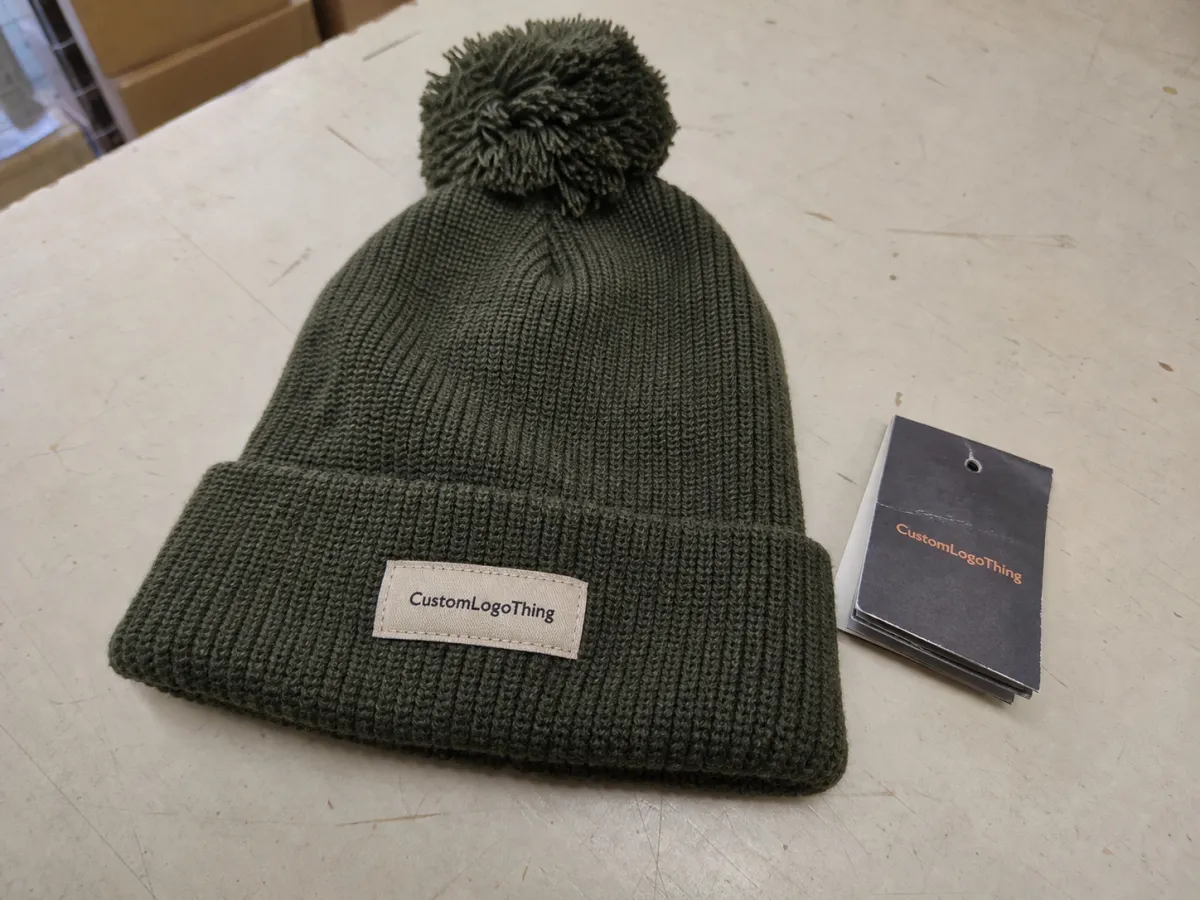
Retailers do not buy a pom hat as a novelty item with a face. They buy it as a stocked product that has to hold up in a display system, fit a range of heads, and stay visually consistent across the full order. The pom may win attention from six feet away, but the body knit decides whether the item keeps that attention at arm’s length.
That is why the best-selling versions tend to be boring in the right ways. The crown shape is predictable. The cuff sits where it should. The pom is full without being oversized. The yarn color matches from lot to lot, or at least stays within the tolerance the buyer signed off on.
Retail buyers usually test for a few things first:
- Shape retention: the beanie should recover after stretching, folding, and light compression.
- Color discipline: black should read as black, not charcoal with a shine problem.
- Trim security: the pom, label, and any hardware need to survive repeated handling.
- Shelf behavior: the product should stack, hang, or fold without looking tired.
The buyer’s eye is practical. If a sample looks premium in a clean photo but sloppy in daylight, the line loses trust fast. And once a winter collection looks unreliable, every reorder conversation gets harder.
If the hat looks expensive from across the aisle but unfinished up close, the shelf will expose it.
For that reason, pom pom Beanies for Retail collections need more discipline than seasonal gift items or event giveaways. The product has to be consistent enough for chain retail, but still appealing enough to feel current. That balance is narrower than it looks.
Production Flow and Lead Time
A clean retail program starts with a proper spec sheet. That means yarn composition, knit gauge, cuff depth, pom type, label placement, color references, packaging format, and carton instructions. If those details are vague, the factory fills in the blanks. The results are often technically acceptable and commercially frustrating.
The production sequence is usually straightforward: yarn sourcing, color approval, sample knitting, sample review, bulk knitting, pom attachment, finishing, packing, and inspection. The complication is time. A simple stock-style order can produce an initial sample in roughly 7-14 days, with bulk production often taking 12-20 business days after approval. Custom yarns, specialty faux fur poms, woven patches, or retail packaging can stretch that schedule quickly.
That is before transit. Seasonal knitwear has a bad habit of arriving after the selling peak if approvals move slowly. A week lost in sampling can be more expensive than a week lost in production, because the customer does not care why the product missed the floor date. The weather only gets cold once.
Practical buyers also ask how the product will survive the trip. Carton compression, moisture, and rough handling can flatten poms and distort folded hats. Distribution testing against standards such as ISTA protocols is not mandatory for every order, but it becomes useful when the shipment is going through multiple touchpoints or long freight lanes. If hangtags, belly bands, or insert cards matter to the presentation, paper stock can be specified with FSC certified material.
One point gets overlooked often: approval timing affects quality. If the buyer wants faster sampling but gives vague feedback, the factory has to guess. Guessing is rarely free. It usually shows up later as a rework, a delay, or both.
Cost, MOQ, and Margin Structure
Cost for retail beanies with poms depends on five variables: yarn quality, knit density, pom construction, packaging, and the number of colorways in the program. Two products can look almost identical on a line sheet and still land in very different cost brackets because one uses a basic yarn pom and the other uses a faux fur trim with reinforced attachment and custom labeling.
For basic retail-ready builds, a larger run often lands around $2.20-$3.80 FOB per unit at 5,000 pieces, assuming a straightforward knit, standard yarn, and simple retail presentation. Smaller runs can rise to $4.50-$7.50 or more once premium yarn, specialty pom construction, or extra labeling enters the picture. Those figures are working ranges, not promises. Material markets move, and labor does not get cheaper because the spreadsheet is tidy.
MOQ becomes easier to manage when one base body supports several SKUs. Once you split the line into multiple colors, each shade can become its own setup, which changes the effective minimum. That matters more than buyers sometimes expect. A collection with six colors is not just six colors; it is also six chances for a lot split, a shade drift, and a lower per-color production quantity.
| Build choice | Typical cost impact | Best use | Main tradeoff |
|---|---|---|---|
| 100% acrylic knit with yarn pom | Lowest baseline; usually the most budget-friendly | Entry price points, volume retail, core colors | Can feel basic if the stitch and finish are loose |
| Wool blend with faux fur pom | Often adds $0.35-$0.90 per unit | Fashion-led lines, premium shelves, gift assortments | More care sensitivity and more sample rounds |
| Recycled yarn with woven label and retail band | Usually adds $0.20-$0.55 per unit | Sustainability-led assortments, branded retail programs | Shade matching can be less forgiving |
| Removable pom with secure hardware | Can add $0.40-$1.10 per unit | Giftable lines, two-look merchandising | More parts, more assembly, more QC risk |
The margin check gets serious once freight, duties, reserve stock, and shrink are added. A beanie that looks profitable at the factory price may look much thinner on the landed-cost sheet. If the intended wholesale price is $12-$18 and landed cost already sits near $4.80, there is room, but not much breathing room. Packaging mistakes and rework can erase it quickly.
Spec Factors That Change the Product
Yarn choice sets the tone before anyone touches the pom. Acrylic is common because it is cost-controlled, easy to source in color, and predictable in production. Wool blends usually read warmer and more premium, though they often require more careful handling and more patience during approvals. Recycled yarns help with sustainability claims, but they can be less forgiving on shade consistency. None of those options is universally best. They suit different price points and different retail stories.
Gauge and knit density matter just as much. A tighter knit usually looks cleaner, holds its shape better, and resists distortion after handling. A looser knit may feel softer on the table, but it can also look tired sooner. Buyers may not describe it that way, yet they react to it immediately.
Pom construction deserves more attention than it usually gets. Yarn poms feel casual and are often less expensive. Faux fur poms look more fashion-forward, but they need stronger attachment and better fiber control. Removable poms give the buyer a second merchandising option, though they also introduce hardware, assembly time, and a few extra ways for quality to slip.
Then come the quieter details. Cuff height changes the silhouette. Crown depth changes the fit impression. Label placement changes the balance. Even the best-looking beanie can feel wrong if a woven label pulls one side down or if the pom sits slightly off-center.
Three specs are worth treating as non-negotiable:
- Knit density: too sparse and the body loses structure; too tight and the hat may lose comfort.
- Pom attachment: secure stitching or reinforced fastening is safer than decorative shortcuts.
- Label positioning: one misplaced label can throw off the whole visual balance.
The material mix should also match the retail environment. A gift shop can tolerate a softer handfeel and a more playful pom. A chain store with harsh lighting and heavy customer traffic needs a product that looks good after being handled, folded, and placed back on the shelf a few times. That is not glamorous, but it is how sell-through actually works.
Sampling and Buying Checklist
Start with the customer, not the decoration. A winter basic for a mass retailer is a different product from a limited fashion drop or a giftable accessory wall item. The target price, channel, and delivery date should shape the spec before anyone approves a sample.
- Write the assortment brief. Lock the customer profile, target retail price, color range, and delivery window.
- Build the spec sheet. Include size, yarn composition, pom diameter, label type, packaging style, and carton count.
- Review the physical sample. Compare the actual knit, fit, and pom size, not the render on a screen.
- Test handling behavior. Stretch the cuff, flatten the crown, and check whether the shape returns cleanly.
- Inspect presentation details. Look at folding, barcode placement, case labeling, and whether the product arrives retail-ready.
Samples should be reviewed under honest light. Daylight and indoor retail lighting do not show the same flaws. A cream color can look clean in a studio and yellow on the sales floor. A black can look flat if the yarn finish is too shiny. A pom that seems full in a photo may appear sparse once it is touched and compressed.
That is why written approval matters. Memory is a bad quality-control system. So is a screenshot with no notes.
Buyers should also ask for simple abuse checks before bulk approval. Light pull tests on the pom attachment, repeated stretch-and-release cycles on the cuff, and a quick review of edge finishing can catch issues before they become a warehouse headache. If the sample already sheds or twists, bulk production will not fix it by magic.
Mistakes That Hurt Sell-Through
The cheapest pom is often the wrong pom. It may look acceptable for the sample photo, but if the fibers collapse after a few touches, the shelf outcome is poor. A retail hat has to survive handling, not just a product shoot.
Color consistency is another common failure point. Mixed dye lots, especially in black, gray, cream, and navy, can make a line look careless. If the order is split across several factories, yarn sources, or trim suppliers, approvals need to be locked down in writing. Otherwise, the assortment can end up with a family resemblance instead of a match.
Too many novelty shades create a different problem. Trend colors are useful, but a collection built mostly on seasonal fashion tones often looks exciting before buying and awkward during reorder planning. Core neutrals do the heavy lifting. Fashion colors add energy. If the line has too much of the second and too little of the first, inventory gets stuck in a way nobody planned for.
Other mistakes show up after the goods hit the floor:
- An oversized pom throws off the silhouette and makes the hat feel unbalanced.
- A short cuff can make the beanie look flimsy, especially on display.
- Poor attachment testing leads to damage during store setup.
- Weak carton labeling slows down replenishment and creates avoidable labor.
Packaging is another place where small decisions become expensive. If the pack format crushes the pom, wrinkles the body, or makes the item hard to stock, the product may still be good, but it will sell like it is flawed. Retail is unforgiving that way. Presentation is part of the function.
Assortment and Packaging Decisions
A core-plus-seasonal mix is usually the safest structure for Pom Pom Beanies for retail collections. Black, cream, gray, and navy create the base. One or two trend shades can then handle the fashion part of the story. That split sounds plain, but it tends to work because the core colors reorder, while the seasonal colors make the line feel current.
Using one base construction across the collection is also cleaner than rebuilding every style from scratch. Buyers can compare colorways and trims without being distracted by unrelated spec changes. That helps the assortment read as a family instead of a pile of one-offs.
Packaging should support the product rather than compete with it. Hang tags, belly bands, folded presentation, and simple retail cards can make a modest beanie feel deliberate. The goal is not decoration for its own sake. The goal is to make the item easy to stock, easy to count, and hard to damage.
If paper components are part of the program, ask for durable stock and avoid delicate finishes that scuff in transit. If the item will hang, confirm the hole placement and the balance point. If it will sit in an open bin, make sure the fold keeps the pom from flattening into a permanent bad mood. Packaging is only useful if it survives shipping and store handling.
A few practical rules usually keep the line sane:
- Use 3-5 colorways for the first buy unless sell-through data already points to a winner.
- Keep one premium finish and one value finish only if the channel split truly needs both.
- Confirm carton count and case label format before production begins.
None of that is glamorous. It is just cheaper than correcting the order after it is on the water.
Final Buyer Notes
The strongest retail programs are usually the simplest to explain. One base body. Controlled colorways. A pom that feels intentional, not tacked on. Packaging that protects the product and helps the store move it quickly. The more moving parts a collection has, the more important the approval process becomes.
For buyers comparing quotes, the lowest unit price is only useful if the sample quality, trim durability, and packing plan are stable. A cheaper number that comes with uncertain yarn, weak attachment, or vague carton specs is not really cheaper. It is just incomplete.
For pom pom Beanies for Retail collections, the practical checklist is short: confirm the body knit, verify the pom attachment, compare the sample against the spec, and leave time for one round of corrections before bulk production starts. That order of operations keeps the season from turning into a panic.
The best versions feel ordinary in the right way. They fit well, hold shape, arrive on time, and survive the customer’s hands. That is a modest standard on paper and a demanding one in production. It is also the difference between a cold-weather accessory that clears and one that quietly lingers into markdown.
What makes pom pom beanies for retail collections different from promo beanies?
Retail versions need tighter control on fit, finish, color, and packaging because the buyer expects consistent shelf presentation across the full order. Promo beanies can tolerate simpler construction, but retail collections usually need stronger trim quality, better shape recovery, and a cleaner visual finish.
How much do pom pom beanies for retail collections usually cost per unit?
Unit cost depends on yarn, pom type, decoration, order size, and packaging. Simple stock-style beanies cost much less than custom retail pieces with premium yarn, faux fur poms, woven labels, or special presentation. Working FOB ranges often sit around $2.20-$3.80 at larger volume, with smaller runs moving into the $4.50-$7.50 range or higher.
What MOQ should I expect for a retail beanie order?
MOQ varies by factory and construction, but custom trim, custom yarn, and multiple colorways usually raise the effective minimum. If one style is split across several colors, each colorway behaves like its own setup, which can make the order less efficient.
How long does production usually take for pom pom beanies?
Simple orders may produce a sample in about 7-14 days, with bulk production taking roughly 12-20 business days after approval. More custom builds take longer, especially when the order includes specialty poms, labeling, packaging, or back-and-forth revisions.
What should I check in a sample before approving the order?
Check the pom attachment, knit consistency, stretch recovery, label placement, color match, and overall balance after handling. If the sample feels flimsy, sheds fibers, or loses shape quickly, bulk production will not automatically improve it.
What is the biggest retail mistake with pom beanies?
The most expensive mistake is usually a mix of weak trim security and inconsistent color. A hat that looks fine in the sample room but falls apart on the floor, or arrives in several slightly different shades, creates avoidable markdown pressure.

