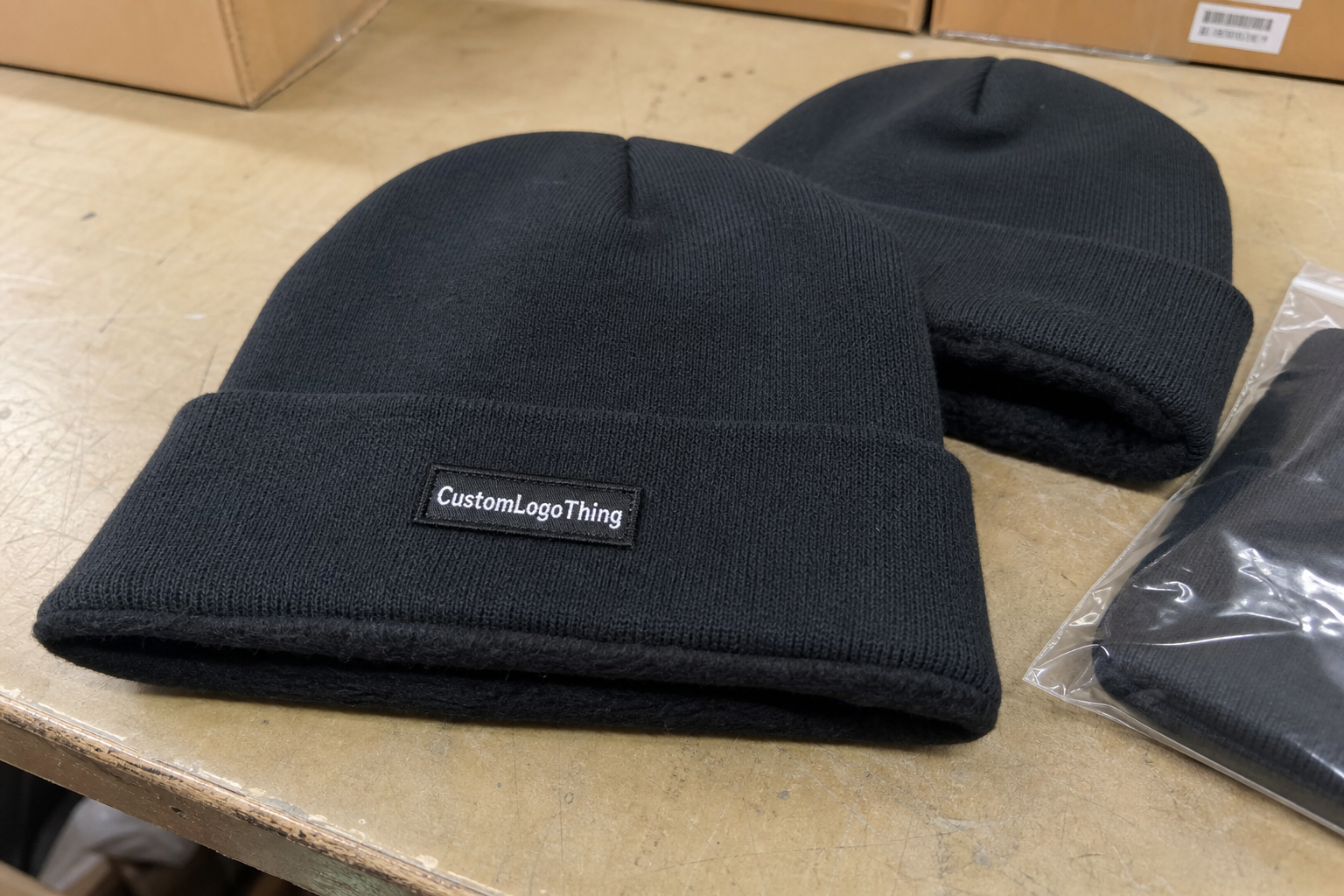
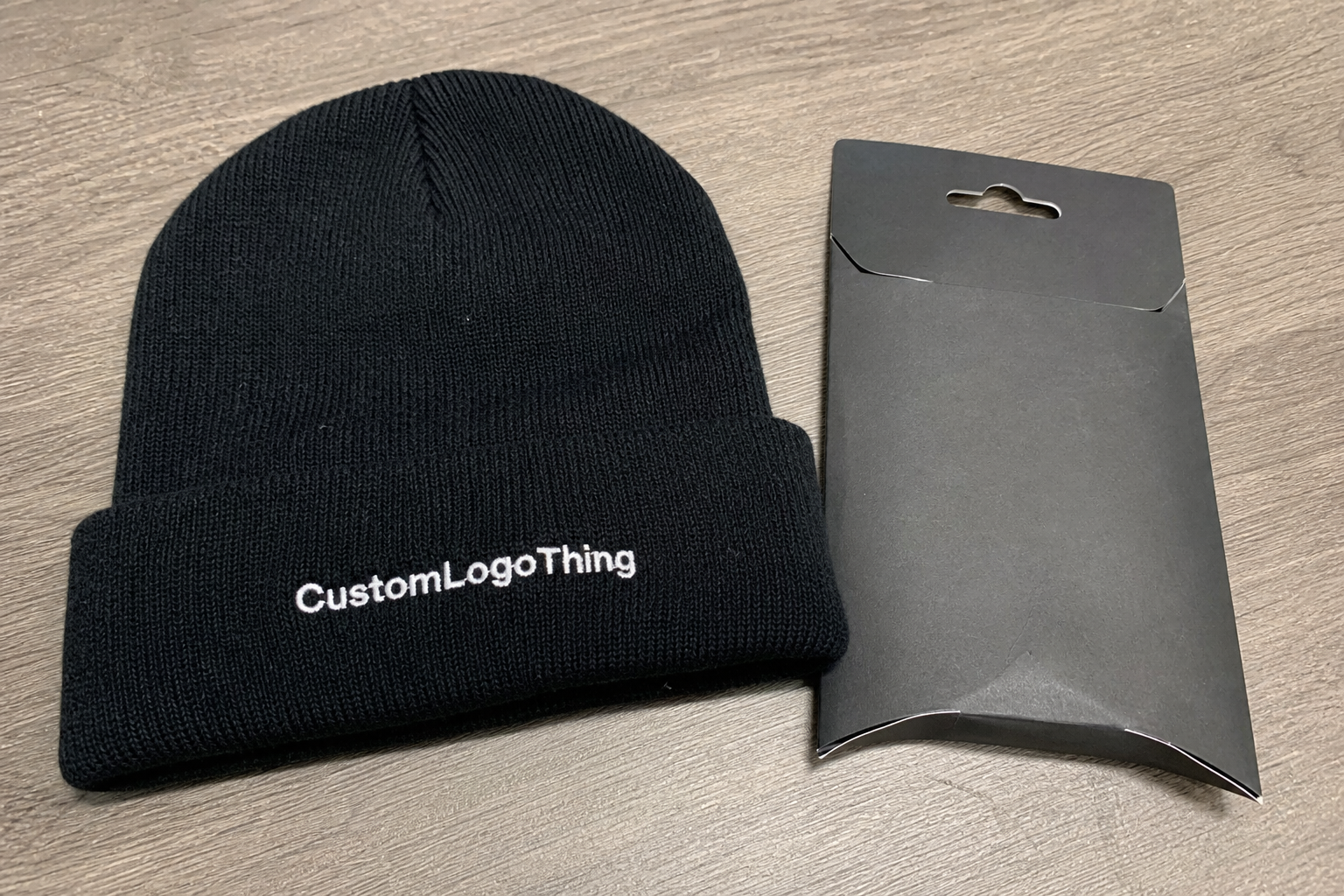
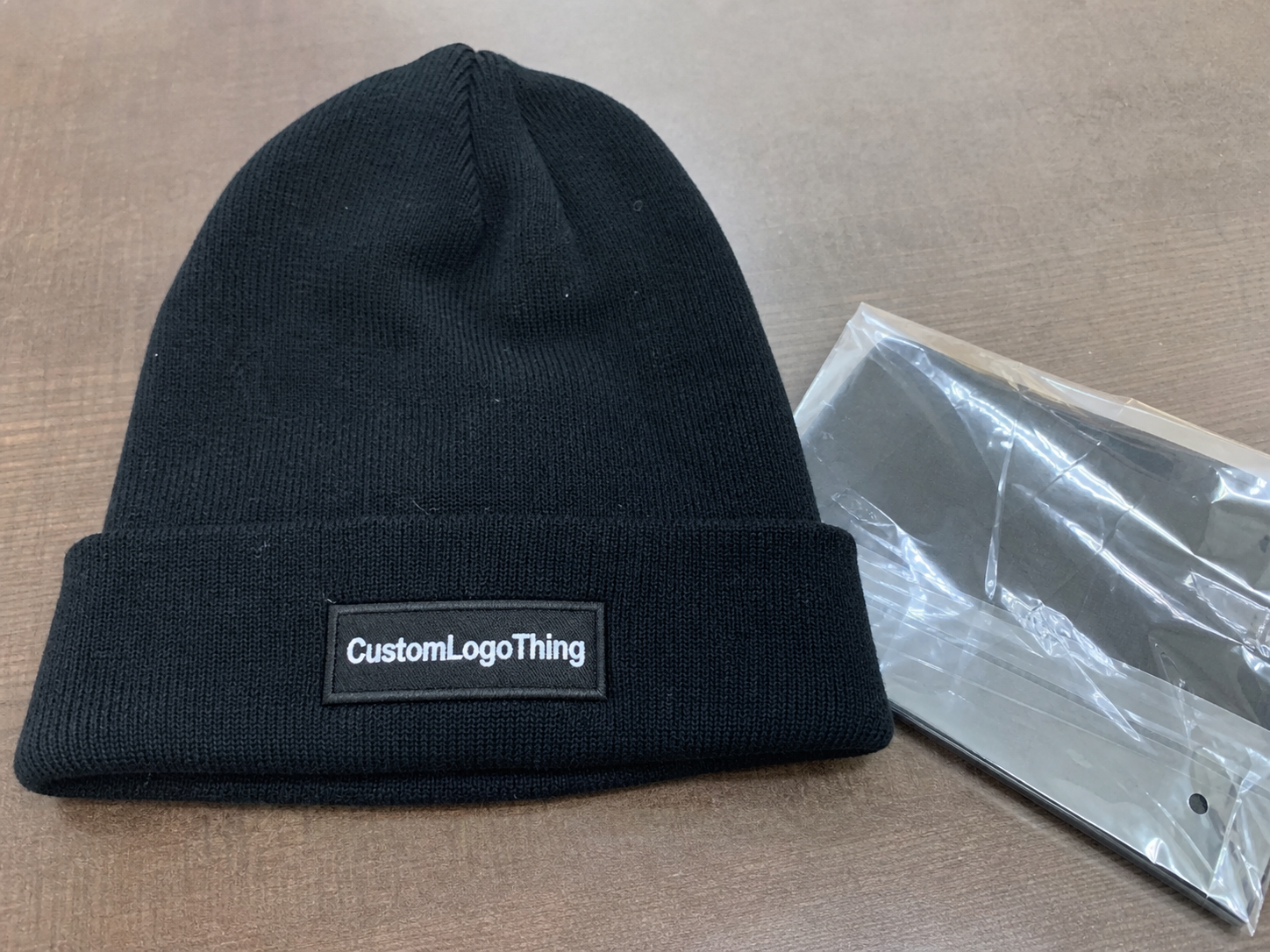
A Cuffed Knit Beanies sample approval checklist keeps a small product from turning into a large production problem. A cuffed beanie can look tidy on a table and still fail the moment it is stretched, folded, packed, or worn for more than a few minutes. The cuff changes the silhouette, the logo height, the amount of visible knit, and the way the crown rebounds after use. A careful checklist treats those details as production controls, not decoration.
That matters because knitwear mistakes multiply quickly. If the cuff is 1 cm shorter than expected, the logo sits higher than planned, or the yarn feels harsher than the reference, the bulk order will repeat that problem across every unit. For retail programs, employee kits, event merchandise, and private-label goods, the sample is the last low-cost place to catch the issue before a warehouse full of finished beanies is on the line.
The strongest approvals are practical, not polished. They compare the sample against measurements, wear behavior, color, trim, packaging, and the exact decoration method. They also leave a written trail so the approved version is clear long after the sample has been handled, mailed, and annotated.
Why the cuffed knit beanies sample approval checklist matters before production
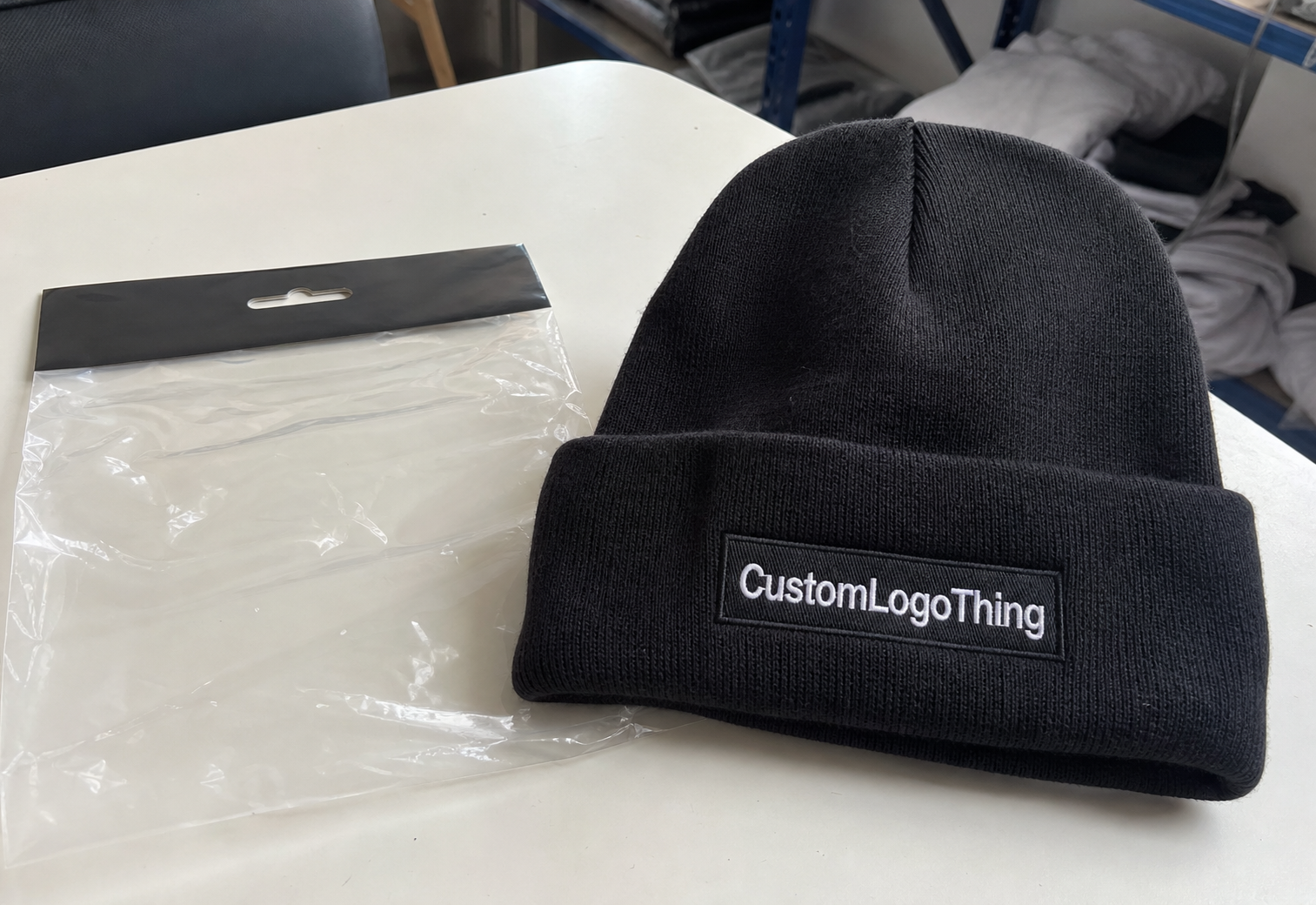
A cuffed knit beanie behaves differently from a simple slouch or un-cuffed cap. The cuff adds structure, but it also changes the balance of the entire knit. The body may feel more rigid, the opening may recover differently, and the front panel can distort once embroidery, woven labels, or patches are added. That makes a visual-only review risky.
The checklist protects four things at once: the spec, the budget, the timeline, and the brand impression. It gives sourcing, merchandising, and quality teams one reference point for crown depth, cuff height, yarn content, label placement, and packaging details. Without that single reference, small wording differences can lead to costly interpretation problems between buyer and factory.
A cuff hides a lot of variation while the beanie is flat. Once it is stretched onto a headform, the true shape, stitch tension, and logo placement show up fast.
Buyers who handle knitwear regularly tend to ask uncomfortable but useful questions during sample review. What happens if the cuff is folded once instead of twice? Does the embroidery pull the knit open? Will the beanie still recover after packing and shipping? Those checks are not overthinking; they are the difference between a sample that only looks correct and one that will hold up in bulk production.
Think of the checklist as a risk filter. A pass means the approved design can move forward with confidence. A fail means there is still time to correct the knit program, refine the decoration placement, or adjust the trim before the order is locked.
Sample approval process and timeline from knit test to final sign-off
The cleanest sample cycles usually move in a familiar order: tech pack review, first prototype, revision round, final sample, then written approval. The actual pace depends on yarn availability, machine capacity, decoration method, and transit time for the physical sample. Simple acrylic beanies move faster than programs that need custom dyeing, special yarn blends, or multiple trim options.
For a straightforward cuffed knit beanie with one-color embroidery, a first prototype may take 3 to 7 business days before shipping. Add another few days for international transit, then 2 to 5 business days for the buyer to measure, wear-test, and send feedback. If a revision is needed, another 3 to 7 business days is common. More complex jobs can take longer, especially if every correction triggers a new sample run.
- Tech pack review: confirm measurements, yarn content, decoration method, and packaging notes before knitting starts.
- Prototype build: the factory makes the first sample and checks whether the knit structure matches the requested shape.
- Transit: a sample in a soft mailer can arrive crushed, so shipping protection matters more than many buyers expect.
- Buyer review: measure, wear-test, compare color, and record every correction in one place.
- Revision round: request only the changes that are actually needed, or the sample cycle can stretch for weeks.
- Final sign-off: issue a written approval that locks the version for bulk production.
There is a real difference between a casual review and formal approval. A casual review is only a quick look at whether the sample is close. Formal approval is the point where dimensions, color, decoration placement, materials, and packaging are locked for production. If that distinction is blurred, teams often assume they have approved something when they are still negotiating details.
Packaging deserves attention during this stage as well. A cuffed knit beanie can lose shape if it is compressed too tightly in transit or packed in a weak mailer. Testing the shipment method and carton protection is not separate from product approval; it is part of how the product arrives in the same condition it left the factory.
Fit, yarn, and decoration details that change the final handfeel
The details that decide approval are usually the ones you can feel right away. Yarn gauge, stitch density, cuff depth, and stretch recovery all affect how the beanie sits on the head. A tighter rib can feel more secure, while a looser knit may feel softer but lose shape sooner. A double-layer construction often carries more body than a lighter single-knit version, and that difference matters more than a product photo suggests.
Material choice changes the experience too. Acrylic remains common because it is affordable, color-stable, and easy to source at scale. Wool blends add warmth and a more natural hand, but they can be more sensitive to pilling, shrinkage, and price swings. Recycled polyester is showing up more often in retail programs, though it usually needs close review for handfeel and surface finish. If the sample uses a yarn substitution, the buyer should confirm that the substitute still matches the intended weight and stretch.
Decoration can make or break the sample. Embroidery on knitwear can pull the fabric if the stitch count is too dense. Woven labels, patches, and heat-applied graphics each interact differently with the cuff fold. A logo that looks centered when the beanie is flat may ride too high once worn, especially if the cuff is taller or softer than planned. That is why placement should be checked on a headform or wearer, not only on the table.
- Cuff depth: confirm the folded height, not just the unfolded length.
- Stitch density: compare the sample against the approved knit reference, not a photo alone.
- Stretch recovery: pull the opening, release it, and watch how quickly the shape returns.
- Decoration behavior: check whether embroidery, patches, or labels distort when the cuff flexes.
- Color under light: view the yarn in daylight and cool indoor lighting, since heather and melange effects can read darker or flatter than expected.
Handfeel deserves the same level of scrutiny. Some beanies feel soft in the first touch test but become less comfortable once the knit is stretched around the forehead. Others feel slightly more structured, yet wear better because they hold their shape and do not collapse at the seam. There is no single correct preference. The sample should match the end use, whether that means retail display, cold-weather wear, or short-term promotional distribution.
Cost, pricing, MOQ, and quote drivers you should verify
Sample cost and bulk cost are related, but they are not the same. A prototype may include knitting setup, embroidery digitizing, yarn allocation, and freight for the physical sample. Bulk pricing spreads those setup costs across the final quantity. The Cuffed Knit Beanies sample approval checklist should include a pricing review because even a minor revision can change the quote more than expected.
| Sample or order item | Typical charge | What drives the cost | What to verify before approval |
|---|---|---|---|
| First prototype | $35-$120 | knit program setup, yarn allocation, basic freight | how many revision rounds are included |
| Embroidery strike-off | $20-$60 | digitizing, stitch density, thread changes | logo size, placement, and thread tone |
| Revised sample | $25-$85 | new yarn lot, corrected cuff depth, updated trims | that only the requested changes were made |
| Bulk order pricing | often $3.25-$9.50 per unit depending on quantity | MOQ, yarn type, decoration coverage, packaging, and labor | whether sample fees are credited back |
MOQ has a direct effect on unit price. A 300-piece order usually costs more per unit than a 1,000-piece order because the setup, trimming, and inspection time are spread across fewer pieces. If the design uses custom yarn, heavy embroidery, or individual packaging, that gap widens. For planning, it helps to ask for two quotes: one at the minimum order quantity and one at a more efficient production quantity.
Ask how revisions are billed. Some suppliers credit the sample fee against the production order if the order moves forward. Others treat sampling as a separate engineering charge. Neither model is automatically wrong, but the rule should be written down before approval. Otherwise a small change in logo placement or cuff depth can become a surprise cost.
Lead times matter just as much as price. A quote that looks attractive can become expensive if the sample cycle takes three rounds instead of one or if the factory has to hold production while waiting for sign-off. The cheapest line on paper is not always the least expensive order overall.
Step-by-step checklist to approve the sample without misses
Strong sample approval starts with the physical beanie and the spec sheet side by side. A good approval record is not a vague comment log; it is a measured record of what passed, what changed, and what is locked for production. For cuffed knit styles, the safest approach is to review the same points in the same order every time.
- Measure the body: check crown height, cuff depth, opening circumference, and symmetry against the approved spec.
- Check stretch recovery: pull the beanie open, release it, and confirm the knit returns evenly without warping the cuff.
- Wear-test the logo: place it on a headform or wearer and confirm the logo still sits at the intended visual height.
- Inspect decoration placement: measure from the cuff edge, front seam, and side points instead of relying on the eye alone.
- Review color under consistent light: compare the sample to the approved reference in daylight or standardized indoor lighting.
- Check trim and labeling: verify woven labels, care labels, hang tags, barcodes, and any recycled-content claims.
- Confirm packaging: make sure the polybag, insert card, carton pack, and carton markings match the final shipping plan.
- Write the final decision: record what passed, what was corrected, and whether any exceptions were allowed.
Practical tolerances help prevent endless back-and-forth. A logo position that is off by 3 to 5 mm may be acceptable if both sides agree before production, while cuff height usually needs a tighter call because it changes the silhouette more visibly. The right tolerance depends on the decoration method and the machine setup, so it should be defined before the final sample is requested.
A sample is only approved when the physical piece, the measurement sheet, and the written notes all say the same thing.
Keep the review focused on one version at a time. Mixing comments from old photos, side emails, and marked-up PDFs creates confusion fast. One file, one decision maker, one result. That process may feel plain, but it prevents more mistakes than any long explanation ever will.
Common mistakes that create rework or delay approval
The biggest mistake is approving from photos only. Lighting changes yarn color, image compression hides stitch density, and a beanie that looks centered in a flat shot may be obviously off once it is worn. If the order is large enough to justify sampling, it is usually large enough to justify handling the physical sample.
Another frequent miss is reviewing the beanie flat and never putting it on a headform. The cuff can shift the logo, the crown can drop differently, and the fit can change as soon as the knit is stretched. A cuffed beanie needs a wear check, not just a desk check.
Vague feedback also slows production. Comments like "make it pop more" do not help a knit factory. "Move the logo 8 mm lower, tighten the crown slightly, and increase cuff depth by 1 cm" gives the team something measurable to act on. The more precise the feedback, the fewer unnecessary revision rounds.
Partial approval creates its own problems. Some buyers approve the knit shape, then leave labels, packaging, or thread tone unresolved. That usually forces another round of samples right before bulk production starts. A complete sign-off should cover the full product stack, from yarn and decoration to bagging and carton marks.
One more issue shows up with mixed communication. If sourcing, design, and operations are not all reading from the same approved version, the factory can receive three slightly different sets of comments. That kind of drift is hard to unwind. The solution is simple: archive the approved sample record and stop using informal threads as the source of truth.
Expert tips for cleaner sign-off and fewer revisions
A simple approval matrix keeps the review organized. Split the sample into fit, color, decoration, trim, and packaging, then mark each line as approved, revised, or pending. That format gives merchandising, sourcing, and quality teams the same status without making them search through a long email chain.
Use three tools during review: a headform, a ruler, and a side-by-side reference sample. The headform catches silhouette problems, the ruler settles placement questions, and the reference sample shows whether the factory is matching the prior version or drifting from it. For embroidered beanies, it also helps to photograph the sample beside the reference under the same light, since those images are useful if there is ever a dispute later.
Define tolerances before sampling starts. If the factory knows the acceptable range for cuff height, logo position, and yarn variance, it can make better decisions during knitting and finishing. That is especially useful with heather or melange yarns, where small tonal changes are normal and should be managed rather than treated as defects.
Keep a written approval trail. Include photos, annotated measurements, and one final decision maker. If several stakeholders need input, let them comment during the review window and then close the file with a single approval note. The process is plain, but it keeps the sample from becoming a moving target after everyone has already agreed.
Packaging deserves the same discipline as the garment itself. If the order includes a recycled paper insert, hang tag, or FSC-certified board, the claims and artwork should match the approved sample before sign-off. That protects the production run from last-minute corrections and keeps the packaging spec aligned with the actual product.
Next steps after approval to keep production on track
Once the sample is approved, the priority shifts from review to control. Archive the approved physical sample, lock the PO details, and confirm that the factory is using the same yarn, trim, decoration setup, and packaging stack for bulk production. If the sample included a revised thread shade or a corrected cuff fold, that change should appear on the final production sheet too.
For larger, custom, or time-sensitive orders, request pre-production photos or a first-off check before the full run continues. That extra checkpoint can catch a yarn substitution, label shift, or carton-pack issue before it spreads across the order. A short delay there is usually far cheaper than reworking hundreds of finished beanies.
Keep sales, sourcing, and operations aligned to the same approved version. Most post-approval problems appear when one person is looking at the latest comments and another is using an older spec. A dated approval note, a clear file name, and one archived sample reduce that risk more than long email threads ever will.
A Cuffed Knit Beanies sample approval checklist only works if the physical sample, the measurement sheet, and the written approval all point to the same version. That is the point where production can move forward with fewer surprises, less rework, and a much clearer record of what was actually approved.
What should a cuffed knit beanies sample approval checklist include?
It should cover crown height, cuff depth, stretch recovery, and overall fit on a headform or wearer. It should also record color match, yarn feel, stitch density, decoration placement, trim, label, packaging, and the final written sign-off so the bulk order matches the approved sample.
How long does cuffed knit beanies sample approval usually take?
Plan for an initial prototype round, then one or more revision cycles if fit, color, or logo placement needs correction. Add transit time for the physical sample and internal review time for merchandising, sourcing, and quality teams. Custom yarns, embroidery changes, and packaging tweaks usually extend the timeline more than the knitting itself.
Why do cuffed knit beanie samples get rejected so often?
The beanie may look fine flat but fail once stretched, which changes the way the cuff and logo sit. Decoration is often placed too high, too low, or off center once the beanie is worn. Color, handfeel, or stitch density can also drift from the reference sample even when the silhouette looks close.
How do sample fees affect pricing and MOQ for cuffed knit beanies?
Sample fees are often separate from bulk pricing and may or may not be credited back on the production order. Low MOQ orders usually carry a higher unit cost because setup, yarn allocation, and labor are spread across fewer pieces. Extra revisions, special trims, and custom decoration can add fees before the bulk quote is finalized.
Should color and decoration be approved together on cuffed knit beanies?
Yes, whenever possible, because color can change how embroidery, patches, or woven labels read on the cuff. If the risk is high, ask for a strike-off, trim card, or partial approval before the final sample sign-off. Keep one written approval log so changes do not get lost across email threads or revision rounds.