Buyer Fit Snapshot
| Best fit | custom boutique bags with handles branding for packaging buyers comparing material specs, print proof, MOQ, unit cost, freight, and repeat-order risk where brand print, material, artwork control, and repeat-order consistency matter. |
|---|---|
| Quote inputs | Share finished size, material target, print colors, finish, packing count, annual reorder estimate, and delivery region. |
| Proofing check | Approve dieline scale, logo placement, barcode or warning zones, color tolerance, and any recyclable or compostable wording before bulk production. |
| Main risk | Vague material claims, crowded artwork, or missing packing details can create delays even when the unit price looks attractive. |
Fast answer: Custom Boutique Bags with Handles Branding: Film, Closure, Print, and Fulfillment should be specified like a repeatable production item. The safest quote includes material, print method, finish, artwork proof, carton packing, and reorder notes in one written spec.
What to confirm before approving the packaging proof
Check the product dimensions against the actual filled item, not only the sales mockup. Ask for tolerance on folds, seals, hang holes, label areas, and retail display edges. If the package carries a logo, QR code, warning copy, or legal claim, reserve that space before decorative graphics fill the panel.
How to compare quotes without losing quality
Compare board or film grade, print process, finish, sampling route, tooling charges, carton quantity, and freight assumptions side by side. A lower quote is only useful if the supplier can repeat the same color, closure quality, and packing count on the next order.
Custom boutique Bags With Handles do more than get a purchase from the counter to the curb. They become the object a customer carries, sets down, photographs, and sometimes reuses long after the sale has faded from memory. That makes them a brand asset, not just a supply item. A good bag keeps working in public, on the subway, in an office lobby, and on a kitchen table where someone asks, “Where did you get that?”
A plain shopping bag moves merchandise. A designed boutique bag changes the feeling around the purchase. The difference shows up quickly: paper thickness, handle strength, print clarity, and the way the bag holds its shape all signal whether the store is thoughtful or merely functional. In retail, those signals matter because people judge with their hands before they explain with their words. That is why custom boutique bags with handles can raise the perceived value of the product inside without touching the product itself.
If your packaging already includes branded boxes, tissue, labels, or inserts, the bag belongs in the same conversation. It plays the same role as Custom Packaging Products, custom printed boxes, and other product packaging pieces: it makes the brand look deliberate. Good packaging does not need a speech. It just needs to feel coherent when the customer holds it.
What custom boutique bags with handles actually do for a brand
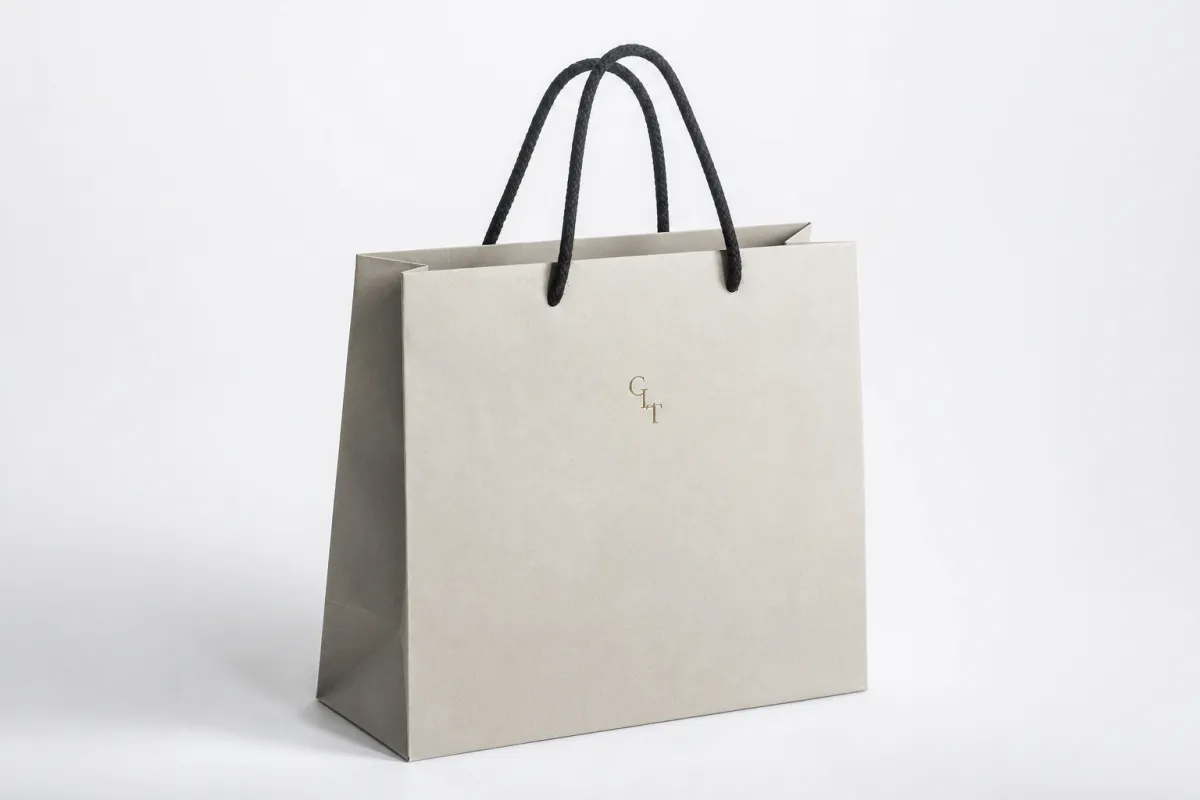
Custom boutique bags with handles work like portable identity. That sounds simple, and it is, but the effect is larger than people expect. A customer leaves with the bag, and the bag keeps moving through the world. It gets seen on sidewalks, in rideshares, in office elevators, on benches, and in mirrors. One purchase can produce a chain of impressions that a paid ad never reaches, because the bag exists in real life rather than in a feed.
I treat bag design as part of packaging design, not decoration. A well-made bag says the retailer paid attention. A flimsy one says the opposite, even if the product itself was excellent. Nobody walks out thinking, “The logo was nice, but the handle felt weak, so I trust this brand less.” They just remember the feeling. That is how a bag influences the sale after the sale.
I have watched boutique owners learn this the hard way. One store I worked with used a lightweight stock because it shaved pennies off the unit cost. The bags looked fine on a sample sheet. On the floor, though, the handles bit into the hand and the gusset bowed after the first heavy purchase. They switched the next season, and the complaints stopped almost immediately. That is not magic. It is packaging doing its job.
Picture two customers. The first leaves with a sturdy matte bag, reinforced handles, clean artwork, and a size that fits the purchase neatly. The second leaves with a thin bag that bends oddly at the bottom and creases around the handle knot. Both customers bought something. Only one felt like the store respected the transaction. That difference is the core value of custom boutique bags with handles.
The category also sits in an interesting middle ground. It is more premium than a commodity shopping bag, less technical than a mailer, and more visible than almost any other low-cost brand object. The right bag can feel soft-touch and elegant, or crisp and minimal, but it should always feel aligned with the price point of the merchandise. A luxury candle in a weak bag creates a small fracture in the story. A casual tee in an overbuilt luxury bag can feel equally strange.
There is a quieter benefit too. Reuse extends the life of the brand mark. Customers often keep custom boutique bags with handles for gifts, storage, or a second shopping trip. That reuse turns one transaction into multiple brand encounters. A disposable item that keeps showing up for free is rare in retail. Bags do that better than most packaging pieces.
Useful packaging carries more weight than it looks like it should. A bag that feels balanced, sturdy, and worth keeping creates trust without demanding attention. That is the advantage of custom boutique bags with handles.
If your store sells apparel, accessories, beauty products, candles, or small home goods, the bag becomes part of the product story. It frames the item, marks the occasion, and helps the customer remember where the purchase came from. A generic bag disappears into the background. A branded one keeps speaking.
How custom boutique bags with handles are made
The production path for custom boutique bags with handles starts with stock selection, because paper determines feel, structure, and print quality before anything else enters the conversation. Lighter retail bags often use paper stock in the 157gsm to 250gsm range, while heavier premium bags can move above that depending on the load, finish, and size. If the bag needs to support folded denim, boxed candles, or gift sets, paper choice matters more than the logo size most buyers obsess over first.
Size comes next. A proper dieline should reflect the actual merchandise, not an optimistic guess. Width, height, and gusset depth need to match the items the bag will carry. Too narrow and the sides crease or bulge. Too shallow and the contents sit awkwardly. Too wide and small purchases look lost inside. Handle drop matters as well. If the handle is too short, the bag swings into the wrist; if it is too long, the bag feels clumsy in the hand. Good custom boutique bags with handles feel right before the customer thinks about the logo.
Print method shapes the final look. Simple logo work usually does well with spot colors. Full-bleed artwork creates a stronger visual field, though it can raise setup complexity and waste during calibration. Foil stamping, embossing, debossing, matte lamination, and soft-touch coatings can push the bag toward a more premium expression. Used badly, those finishes can feel noisy. Used well, they sharpen the brand story. The difference between expensive and effective is smaller than people assume.
Handle choice changes both comfort and economics. Twisted paper handles are common because they are practical and cost-efficient. Rope handles feel more upscale and generally carry better in the hand. Ribbon handles lean fashion-forward and gift-like, though they are not always the best option for heavier loads. Cotton handles can be pleasant and durable, but they add cost. Die-cut handles work for certain lightweight formats, especially when a minimal silhouette matters more than plush grip.
Suppliers should be able to speak clearly about the materials they use. If the paper source matters to your brand, check whether the supplier can support FSC-related claims through the Forest Stewardship Council. If the bag will travel beyond the shop floor or needs to survive rougher handling, testing references such as ISTA can help frame expectations. Standards do not create quality on their own, but they do separate credible manufacturing from hand-waving. I am wary of any supplier who says “eco-friendly” and cannot explain what that means in paperwork, fiber source, or certification terms.
Assembly finishes the job. Gluing, handle insertion, reinforcement at the anchor points, squareness, and print alignment all decide whether the bag looks polished or slightly off. A beautifully printed bag can still feel cheap if the handle angle is wrong or the base lacks reinforcement. Small structural issues show up fast in the hand. That is usually where buyers discover whether their spec was a real spec or just a wish.
The best bags are not the ones with the loudest treatment. They are the ones where the paper, size, handle, and finish all support the same retail message. A bag should not try to be the main event unless the brand needs it to be. Most of the time, it should do something harder: make the purchase look right.
Custom boutique bags with handles: cost, pricing, and MOQ
Pricing for custom boutique bags with handles depends on a small group of variables that never behave politely together. Size, paper stock, handle type, print coverage, coating, and order quantity all affect the final unit price. Add foil, embossing, or soft-touch lamination and the number climbs again. That is not a mystery charge. It is the cost of materials, setup, and labor moving in the same direction.
MOQ matters because setup costs have to be spread across the run. A 500-piece order usually costs more per unit than a 5,000-piece order because the same prep work is divided by fewer bags. Small orders often sit in the “usable, but not cheap” range. Larger orders start to make more sense on a per-piece basis. Factory, region, and spec all influence the break point, yet the pricing curve itself is predictable.
The smarter comparison is not “What is the cheapest quote?” It is “What does the bag actually deliver for the sale?” A low-cost bag that tears, wrinkles badly, or looks off-brand can become expensive in the only way that matters: it weakens customer confidence. Retail packaging is judged in use, not on a spreadsheet.
| Bag type | Typical MOQ | Common unit range | Best use | Main tradeoff |
|---|---|---|---|---|
| Basic kraft boutique bag with twisted paper handles | 500-1,000 pcs | $0.22-$0.45 | Everyday retail, light apparel, events | Lower premium feel |
| Printed paper bag with rope handles | 1,000-3,000 pcs | $0.38-$0.85 | Fashion, gift, lifestyle retail | Higher cost, stronger presence |
| Laminated boutique bag with specialty finish | 1,000-5,000 pcs | $0.65-$1.80 | Premium branding, upscale stores | More setup and finish complexity |
| Heavy-duty luxury-style bag with custom handles | 500-2,000 pcs | $1.20-$3.50+ | High-value goods, giftable purchases | Cost only makes sense at stronger price points |
Those figures are directional, not universal. Freight, artwork prep, regional labor rates, and seasonal capacity can all shift the final cost. Still, the table helps buyers avoid getting fooled by a single low quote that ignores the real job of the bag. A pretty number on paper means little if the handles fail or the base caves in under actual merchandise.
Hidden costs deserve attention too. Freight can dominate the landed price because bags are bulky. Sample fees may appear if you need a physical proof. Artwork cleanup can cost extra when a logo is low-resolution or built incorrectly. Rush charges show up when the launch date is already uncomfortably close. With custom boutique bags with handles, the true price is the full landed cost, not the first number a salesperson mentions.
A useful buying method is to compare suppliers on five points: unit cost, landed cost, structural strength, print quality, and fit for the merchandise. That list sounds basic because it is. Most bad decisions happen when a buyer chases the lowest headline price and ignores the bag’s real performance. In packaging, the bill comes due in public.
Production steps, timeline, and turnaround for custom boutique bags with handles
The production path for custom boutique bags with handles usually follows a familiar sequence. The buyer sends a brief with dimensions, material, handle style, print plan, quantity, and delivery date. The supplier checks or builds the dieline, confirms artwork placement, and issues a proof. Sampling may follow. Once approved, the bags move into printing, finishing, handle assembly, inspection, packing, and shipping.
Lead times depend on the spec, and the spec matters more than most timelines admit. Clean artwork can move through proofing in a few days. Sampling often takes a week or more, especially if the job calls for color matching or structural adjustment. Full production for custom boutique bags with handles usually takes several weeks once everything is approved, but specialty handles, coatings, and peak-season congestion can stretch the schedule. Anyone offering miracle turnaround on a complicated bag without reviewing the details is selling confidence, not manufacturing.
Several choices slow the process. Custom handles are one. Heavy coatings are another. Full-bleed print adds setup time and makes color control more demanding. Pantone matching also takes longer because it needs closer attention than a casual logo job. If the bag has to coordinate with other branded packaging pieces, proofing often takes even more time because the details are not optional.
There is a practical way to compress the schedule without damaging the result:
- Send final bag dimensions instead of rough guesses based on another product.
- Provide vector logo files and Pantone references if color precision matters.
- State the target quantity and acceptable MOQ range before requesting quotes.
- Choose the handle type before the final price discussion.
- Confirm whether the bag must match other package branding pieces such as labels or custom printed boxes.
Buffer time is not a luxury. Store openings, holiday windows, trade shows, and seasonal drops compress faster than they look on the calendar. A ten-day delay in proof approval can become a three-week problem once production and freight enter the picture. With custom boutique bags with handles, good planning looks dull because it is effective.
One more point deserves blunt treatment. If the bags must carry heavier items or survive transit beyond the store, ask how the supplier tests the structure and the handle attachment. That is where material checks and transit-style testing become relevant. Not every boutique bag needs formal lab work, but every bag needs to survive the actual use case without embarrassment. If a supplier cannot describe the reinforcement at the handle anchor or the paper grade with any clarity, I would keep looking.
How to choose the right custom boutique bags with handles for your store
Start with the merchandise, not the logo. The right custom boutique bags with handles should fit your common product sizes comfortably, with enough room for tissue, inserts, or a receipt card. Folded apparel needs height. Candles and boxed beauty items care more about gusset depth. A bag chosen for appearance alone often fails at the register, where staff need speed and the customer needs confidence.
Brand tier matters too. Minimal stores usually look stronger with restrained colors, sharp typography, and a calm surface. Fashion or gift boutiques can justify richer materials, rope or ribbon handles, and a more tactile finish. Loud is not the same as premium. In fact, a cleaner bag often looks more expensive because it leaves room for the materials to speak.
Functional dimensions deserve real attention. Width, height, gusset depth, handle drop, and paper weight all shape the hand feel. A bag that is too short forces customers to pinch the top. A bag that is too narrow creases badly when packed. A handle that is too thin can feel harsh after five minutes of carrying. None of that is dramatic. It is just the difference between a bag that works and one that causes minor friction every time it is used.
Testing should happen with actual products, not abstract assumptions. Load the bag. Carry it around the store. Set it on a counter. Put it in a shopping basket. Notice whether the base flexes, whether the handles pull straight, and whether the print still looks crisp after the bag moves. That kind of reality check exposes weak specs quickly. It also saves you from a lot of expensive guesswork with custom boutique bags with handles.
Smaller stores usually do well with one primary size and one backup size. That keeps inventory simple and avoids paying for multiple custom runs when one well-chosen bag could cover most purchases. Stores with mixed merchandise often only need two sizes: one for compact buys and one larger version for gift sets or heavier items. Trying to cover every edge case with one oversized bag usually creates waste instead of flexibility.
As a practical rule, good custom boutique bags with handles make the store feel organized. They fit the product. They carry well. They match the brand family. They do not look borrowed from a random supply catalog. Customers feel that difference immediately, even if they never articulate it at the counter.
- Use a smaller bag for compact items so the purchase does not disappear inside the packaging.
- Use a reinforced bag for heavier goods so the handles and bottom hold up in transit.
- Use a premium finish only when it matches the product value and store positioning.
- Keep print consistent across bags, labels, and other branded packaging assets.
If you are building a broader packaging system, let the bag support the rest of the experience. The same logo treatment, color palette, and tone can run through bags, tissue, stickers, and Custom Packaging Products. Consistency does more for recall than a random special effect added at the last minute.
Common mistakes with custom boutique bags with handles
The biggest mistake is choosing a bag on looks alone. A polished mockup tells you almost nothing about how custom boutique bags with handles behave once they are filled, carried, stacked, and reused. A good bag has to survive the actual workflow: packing, checkout, transport, and a second life in someone’s home or car. If it fails there, the styling never had a fair chance.
Undersizing is a classic error. Bags that are too small make packing slow and force staff to cram products into awkward shapes. They also make the brand feel cheap or disorganized, even if the logo is excellent. Oversizing is not a clean fix. A bag that is too large makes a small purchase look oddly underfilled. The right size is the one that fits the product with a little breathing room, not a hollow box around it.
Over-design drains budget faster than most buyers expect. It is tempting to combine foil, embossing, multiple colors, lamination, and dramatic handles in one bag. The result can look busy instead of premium. The unit price rises, and the customer experience does not rise with it. With custom boutique bags with handles, restraint usually reads better than trying to prove how much you spent.
Proofing mistakes are expensive because they are avoidable. If the logo is scaled badly, the handle position crowds the artwork, or the bleed is wrong, the reprint cost lands on your desk. Color shifts are another frequent complaint. Screens lie. Paper absorbs ink differently. A careful sample or physical proof catches problems that a PDF will happily hide.
Supplier communication causes its own damage. Vague specs lead to vague quotes, and vague quotes lead to surprises. If you do not specify stock weight, handle type, print coverage, and target quantity, you are not comparing real options. You are comparing guesses. That is how time and budget disappear while the project still looks “in progress.”
Another common miss is treating the bag as separate from the rest of the system. If your store uses premium tissue, labels, or Custom Printed Boxes, the bag should belong to the same visual family. One off-spec piece can make the whole packaging setup feel sloppy. Customers usually cannot explain the mismatch, but they feel it right away.
Expert tips and next steps for custom boutique bags with handles
Build a one-page bag brief before you ask for quotes. Include product size, approximate weight, brand colors, finish preference, handle style, quantity, and launch date. That single page saves time, reduces back-and-forth, and makes supplier comparisons much cleaner. It also forces the decision-making into one place, which is exactly where it belongs for custom boutique bags with handles.
Ask for samples or detailed photo proofs before full production, especially if the bag has to carry heavier items or sit at a premium price point. A sample exposes weak glue, awkward handle placement, poor paper feel, or a finish that looked better online than in hand. Small problems become expensive once the order is scaled. In packaging, a sample is cheap insurance.
If the bag is central to the brand, ordering slightly above minimum quantity can be smart. Reorders move faster when the spec is already locked in, and the second run usually benefits from the work already done on artwork and structure. That is useful for custom boutique bags with handles used in permanent retail or recurring seasonal programs. The first order pays for the learning; the second order gets the benefits.
Seasonality deserves respect. Holiday launches, trade shows, and store openings always feel farther away than they are. Then they are suddenly close, and every supplier is busy. A modest timing buffer avoids rush charges and keeps you from accepting a weaker spec just to meet a date. That is not dramatic strategy. It is simply how sane purchasing works.
Here is the short version of the buying process I would recommend:
- Compare two or three quotes on total landed cost, not unit price alone.
- Test one sample with your actual product.
- Check handle comfort, strength, and print clarity under real use.
- Lock the spec before scaling into larger production.
Custom boutique bags with handles do not need to be complicated to work well. They need the right dimensions, the right handle, the right paper weight, and a design that fits the store’s price point. Get those basics right, and the bag stops acting like a disposable carrier and starts behaving like a dependable brand asset. That shift is bigger than it sounds.
Practical packaging wins. A bag that fits well, carries well, and prints cleanly will outperform a flashy one that ignores the real shopping experience.
The most useful next step is also the least glamorous: test one real sample with the heaviest item you expect the bag to carry, then inspect the handles, the base, and the print after the trip home. If the bag still feels balanced and the artwork stays crisp, you have a workable spec. If it does not, fix the structure Before You Order at scale. That is the difference between packaging that merely looks good and packaging that actually earns its keep.
FAQ
What size should custom boutique bags with handles be for clothing?
Start with the folded size of your most common garments, then leave room for tissue, inserts, or a receipt card. For mixed clothing orders, one size usually works best for smaller pieces and a second, larger size works better for sweaters, coats, or boxed apparel bundles. A bag that is too large wastes material and makes small purchases look strangely sparse.
Which handle type is best for custom boutique bags with handles?
Twisted paper handles suit lower-cost retail bags and keep the look straightforward. Rope and ribbon handles feel more elevated and are a better fit when the bag needs to support heavier items or signal a more fashion-driven identity. The right choice depends on weight, brand tone, and budget, not on which option looks richest in a sample photo.
How much do custom boutique bags with handles cost per unit?
Pricing changes with size, paper weight, handle type, print coverage, and finish, so there is no honest single number. Simple bags at higher quantities sit on the lower end, while specialty finishes and smaller orders push the unit cost up quickly. Ask for freight and setup to be included so you can compare landed cost instead of a misleading headline quote.
What is the typical turnaround for custom boutique bags with handles?
Artwork approval and sampling usually take the first chunk of time, especially if color matching or structural changes are involved. Production often takes several weeks, and specialty handles, coatings, or busy seasonal schedules can extend that window. If your launch date is fixed, ask for the supplier’s realistic lead time before you approve the final artwork.
Are custom boutique bags with handles worth it for a small boutique?
Yes, if the bag helps the store look organized, premium, and memorable after the sale. A small boutique can get strong value from a well-made bag because it becomes part of the customer experience and brand recall. Keep the spec practical and the design clean so the bag adds value instead of draining budget without a clear return.

