Buyer Fit Snapshot
| Best fit | Custom Box Inserts for Fragile Items projects where brand print, material claims, artwork control, MOQ, and repeat-order consistency need to be specified before quoting. |
|---|---|
| Quote inputs | Share finished size, material target, print colors, finish, packing count, annual reorder estimate, ship-to region, and any compliance wording. |
| Proofing check | Approve dieline scale, logo placement, barcode or warning zones, color tolerance, closure strength, and carton packing before bulk production. |
| Main risk | Vague material claims, crowded artwork, missing packing details, or unclear freight terms can make a low unit price expensive after revisions. |
Fast answer: Custom Box Inserts for Fragile Items: Board, Finish, Dieline, and Unit Cost should be specified like a repeatable production item. The safest quote records material, print method, finish, artwork proof, packing count, and reorder notes in one written spec.
Production checks before approval
Compare the actual filled-product size with the drawing, then confirm tolerance on folds, seals, hang holes, label areas, and retail display edges. Reserve space for logos, QR codes, warning copy, and material claims before decorative graphics fill the panel.
Quote comparison points
Review material grade, print process, finish, sampling route, tooling charges, carton quantity, and freight assumptions side by side. A quote is only useful when the supplier can repeat the same color, closure quality, and packing count on the next order.
A product that shifts even a few millimeters inside a carton can turn a normal shipment into a damage claim. That is why Custom Box Inserts for fragile items matter more than they first appear to. A good insert does more than prevent movement. It changes how impact, vibration, and pressure travel through the package. In plain terms: it gives the outer box a real job instead of asking it to guess.
In the packaging work I have seen, the projects that go wrong usually fail for the same reason. Someone sized the outer box, but not the interior fit. Or they picked a material because it looked premium, then discovered it could not handle the product's weak points. Custom Box Inserts for fragile items sit at the intersection of protection, repeatable pack-out, and presentation. If those three things are not aligned, the package tends to feel off, even if it survives transit.
Glassware, ceramics, candles, cosmetics, electronics, and small appliances all create the same basic challenge. The product has empty space around it, and empty space is where damage starts. Transit adds vibration, compression, side loading, and drop shock. A package may be fine for a hand-off at a boutique counter and still fail in parcel shipping. Custom box inserts for fragile items reduce that gap between "looks fine" and "actually survives."
There is also a commercial side that teams sometimes miss. A cleaner insert can cut pack-out mistakes, reduce customer complaints, and make the product feel more considered when the box is opened. That last part is not fluff. For a lot of brands, the interior structure is the first physical proof that the product was packed with care, not thrown together in a hurry.
Custom box inserts for fragile items: what they are and why they prevent damage
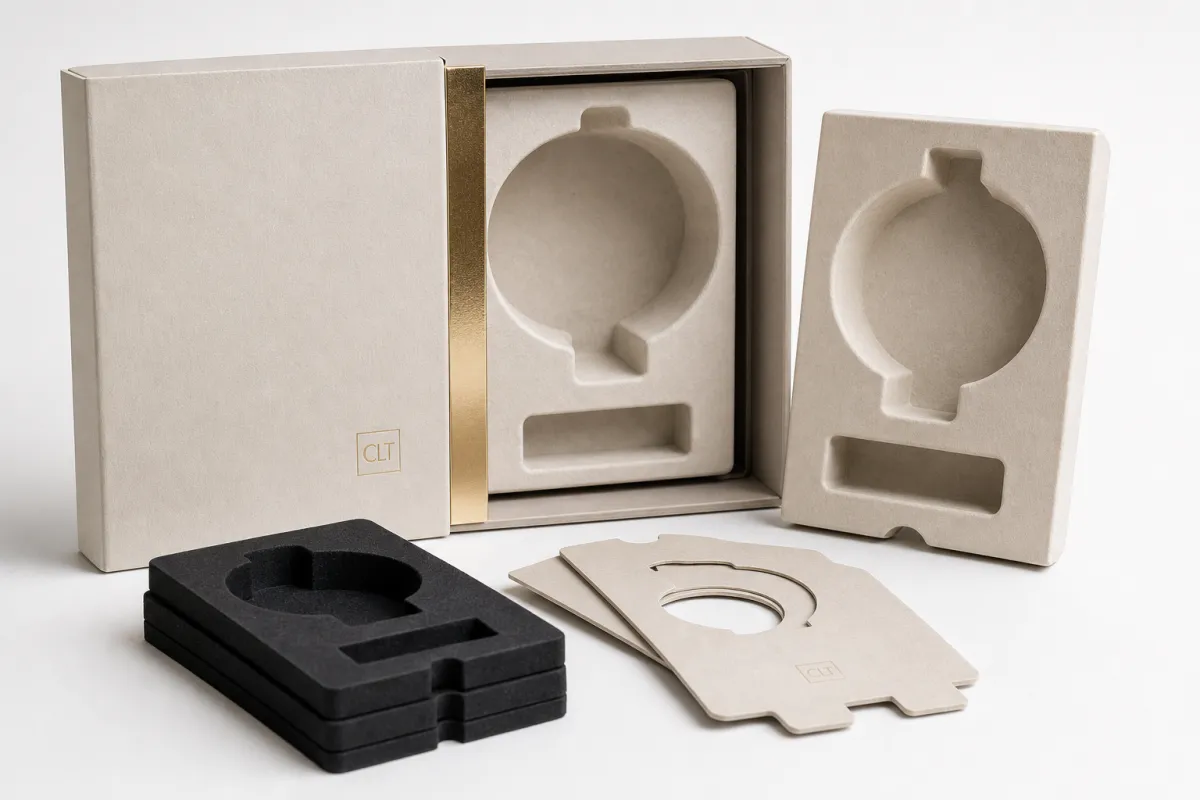
An insert is the internal structure that holds a product in place inside a carton, mailer, or folding box. Custom box inserts for fragile items are cut or formed around the real product geometry rather than around a rough guess, which is the whole point. The item stays centered, the load is spread more evenly, and the chances of motion drop fast. That sounds almost too simple, but in packaging, simple often wins. Fancy is nice. Secure is nicer.
The mechanics are not mysterious. A loose object gains momentum during transit. Once it can move, it can strike one wall, bounce, and strike another. The product may not even break on the first hit; sometimes the second or third impact is the one that causes a crack, a scuff, or a dent. Custom box inserts for fragile items interrupt that chain by holding the item in a controlled cradle and absorbing some of the energy before it reaches the product surface.
That is why the distinction between protective and presentation inserts matters. Protective inserts are built to stop motion, cushion impact, and protect weak points. Presentation inserts are built to organize the layout and make the opening experience feel intentional. The best custom box inserts for fragile items often do both. A skincare set may need the bottle neck restrained, the base supported, and the whole thing arranged in a way that does not look like a shipping accident. A lot of brands want both outcomes, and honestly, they should.
Common examples include:
- Glass bottles, jars, and droppers that need a stable neck and base
- Ceramic cups, bowls, and decor pieces that chip easily at the rim
- Candles and fragrance products that can crack, dent, or tilt in transit
- Electronics and accessories with ports, screens, or delicate finishes
- Cosmetics and skincare kits that benefit from a clean, organized layout
- Small appliances and parts that need repeatable placement for fulfillment teams
Loose fill seems easy at first, then becomes a headache in real operations. It shifts, settles, and creates inconsistency from one pack-out to the next. It can also slow the line because workers need to eyeball the load instead of following a fixed structure. Custom box inserts for fragile items create a repeatable nest, which usually improves both damage control and labor efficiency.
If you are still early in sourcing, do not treat the insert as a separate purchase from the box. Carton style, closure, board grade, and finishing all affect the result. If you are comparing structural options across your line, review Custom Packaging Products alongside the insert concept so the interior and exterior are developed as one system instead of two unrelated choices.
How custom box inserts for fragile items work in real packaging
The principle is straightforward, but the execution is where most of the work lives. Custom box inserts for fragile items function by controlling force flow inside the package. During a drop, the outer carton takes part of the impact. The insert spreads some of the load. The product stays separated from the carton wall. That system only works if the fit is tight enough to stop travel, but not so tight that the product gets scraped, bent, or compressed during insertion.
A decent insert has to solve four problems at once: fit, load distribution, vibration resistance, and crush control. Fit prevents rattling. Load distribution spreads pressure across a larger area so one weak edge is not doing all the work. Vibration resistance matters because parcels do not sit still; they ride belts, trucks, and handling systems for hours or days. Crush control gives the package somewhere to absorb force without passing the full event straight into the product. That is the practical value of custom box inserts for fragile items.
Different structures solve different problems:
- Corrugated partitions separate multiple items in one carton, which suits bottles, jars, and multi-piece sets.
- Die-cut paperboard offers a light, clean structure for smaller SKUs and presentation-led packaging design.
- Molded pulp creates shaped cushioning with a natural look that fits sustainability goals well.
- Foam can deliver strong cushioning for high-value or unusually delicate items, though it raises end-of-life concerns.
- Layered paper systems can secure products while keeping the package lighter and easier to recycle.
No single material wins every time. A glass bottle in a shipper may perform best in a corrugated insert with partitions. A luxury skincare kit may need a paperboard structure that supports branding and a polished reveal. A ceramic item with an awkward shape may need molded pulp or foam if the risk points are hard to shield any other way. Custom box inserts for fragile items should be chosen for the actual failure mode, not for habit or because a supplier had extra stock on hand. That detail sounds small, but it saves a lot of grief later.
Pack-out clarity is another quiet advantage. A well-made insert shows the fulfillment team exactly where each item belongs, which cuts down on mistakes during a rushed shift. That matters in subscription boxes, kitted orders, and retail packaging programs where several components need to land in the right place quickly. If the insert makes the loading sequence obvious, the operation runs cleaner and the finished box feels more deliberate.
Distribution environment matters too. Parcel shipping usually punishes packages more than local delivery or hand-carry retail use. ISTA test methods are a useful reference point for ecommerce and direct-to-consumer shipments, especially when breakage rates need to be defended with more than intuition. The International Safe Transit Association publishes common methods here: ISTA.
Key factors that shape fit, protection, and materials
The product comes first, always. Weight, center of gravity, surface sensitivity, and break-point geometry all shape how custom box inserts for fragile items should be built. A tall bottle does not behave like a flat ceramic plate. A polished metal accessory does not respond like a painted electronics housing. If the item has a thin lip, a weak seam, a protruding nozzle, or a finish that scuffs easily, the insert needs to protect that exact vulnerability rather than simply wrap around the item and hope for the best.
Dimensions matter more than many teams expect. A few millimeters can change the result, especially in paperboard or corrugated systems where folds, glue, and production tolerances all add up. If the cavity is too loose, the product moves. If it is too tight, pack-out becomes frustrating and damage can happen during insertion. For custom box inserts for fragile items, the real target is a controlled fit that accounts for normal production variance, not just the nominal dimension on the drawing. That difference shows up fast once a line starts running at speed.
Material choice changes the feel of the package as much as the protection level. Corrugated board is often the best value for everyday protective work because it is easy to die-cut, familiar to converters, and widely recyclable. Molded pulp works well when the insert needs a shaped cradle and a more natural look. Paperboard can lift the unboxing experience and support strong graphic treatment. Foam still has a place, especially for highly delicate or high-value products, but it comes with tradeoffs in appearance, waste, and disposal. The best custom box inserts for fragile items usually balance protection, cost, and customer perception together.
Sustainability is no longer a side issue that gets brought up only after the quote is approved. Buyers increasingly want materials that fit recycling programs, sourcing standards, and internal ESG goals. If your insert is fiber-based, checking FSC certification can help confirm chain-of-custody claims and responsible sourcing expectations. The Forest Stewardship Council explains that process here: FSC. Certification does not make a package automatically better, but it does make procurement conversations easier when documentation is part of the brief.
Printability and brand presentation also enter the decision. Some inserts remain hidden. Others become part of the reveal. A clean die-cut paperboard insert can support Custom Printed Boxes and package branding. Molded pulp can signal a more understated, eco-minded look. Neither choice is universally right. The question is whether the insert is purely structural or part of the story the package tells when the box opens.
For foam, paperboard, and pulp, ask the supplier about thickness, compression behavior, and assembly method. Practical starting points often include 18 to 24 pt SBS paperboard for lighter presentation work, single-wall corrugated around 32 ECT for many light-to-medium shipping applications, and molded pulp wall thickness around 2 to 4 mm depending on cavity shape. Those are starting points, not laws. They do help frame the conversation around custom box inserts for fragile items with a converter or packaging engineer.
One more thing: the same material can perform very differently depending on the geometry around it. A flat tray may protect a compact item just fine, while the same board stock may fail on a tall, top-heavy object. Material lists are useful. Test samples are better.
Step-by-step guide to specifying custom inserts for your product
Start with a product audit. Measure the item, but do not stop at length, width, and height. Record the heaviest side, the most fragile edge, any surface that scratches easily, and any part that must not be compressed. If the product has a cap, nozzle, screen, or handle, call that out. Custom box inserts for fragile items get much easier to spec when the brief describes how the product fails, not just how it measures.
Then document the carton or shipper the insert needs to fit inside. A strong insert in the wrong box is still a weak system. Record inside dimensions, board grade, closure style, and any secondary packaging around the insert. If the product ships in a mailer, folding carton, or corrugated shipper, the internal structure has to work with that format. Packaging design and product packaging overlap here, because the outer box and the insert should be developed as one system rather than as separate projects.
After that, map the pack-out sequence. How long does it take to place the item? Does the packer need to add tissue, a leaflet, cables, or a small accessory? Does the product need to stand upright, or can it ship horizontally? Can it be loaded from the top, or does it need side insertion? The best custom box inserts for fragile items make the loading sequence obvious and reduce the chance that someone forces the item into the cavity at the wrong angle. That little detail sounds boring. It is not. It is one of the biggest differences between a design that scales and one that becomes a nuisance on the floor.
"If the product is hard to place, it will be hard to scale." That shop-floor rule shows up again and again. A design can look elegant on a prototype table and still fall apart once a fulfillment team is asked to run hundreds of units an hour.
Build a clean spec sheet before asking for quotes. Better information usually produces a better estimate. A useful spec normally includes:
- Product dimensions, weight, and photos from multiple angles
- Carton or mailer dimensions and any insert clearance targets
- Material preferences, such as corrugated, molded pulp, paperboard, or foam
- Print requirements, including no print, one-color branding, or full custom printed boxes treatment
- Expected quantity, annual volume, and any low-MOQ needs
- Target budget per unit and any setup ceiling
- Testing expectations, such as ISTA-style drop testing or in-house transit checks
Once the draft spec is ready, request samples and fit checks before approving full production. That step saves time later, even if it feels slow in the moment. A physical sample can reveal issues that a drawing will never catch, such as scuffing on a gloss finish, too much friction at a tab, or a cavity that looks right on paper but feels too tight on the line. For custom box inserts for fragile items, a sample that fits in the real box is worth more than a perfect CAD file that has never touched the product.
Test the complete package under conditions that resemble the real route. If the box will move by parcel, run a shake test, a corner drop test, and a small transit trial before final approval. Not every program needs a formal lab protocol, but it helps to anchor internal testing to recognized methods such as ASTM or ISTA. That gives your team a clearer comparison point for custom box inserts for fragile items and makes supplier conversations much more concrete.
Custom box inserts for fragile items: cost, pricing, and MOQ
Five variables usually drive pricing: material, complexity, cutting method, print, and volume. Custom box inserts for fragile items made from simple corrugated partitions often cost less than a shaped multi-piece presentation structure. A larger run spreads setup costs across more units, which lowers unit price. That sounds basic, yet it is exactly where many quote comparisons go sideways.
MOQ changes the math fast. A buyer needing 2,000 units absorbs tooling, setup, and material efficiency across a much smaller base than a buyer ordering 20,000 units. A low-MOQ project can still be the right move, but the per-unit price will usually be higher. When comparing offers for custom box inserts for fragile items, do not stop at the unit rate. Compare total landed cost, including samples, freight, and any assembly labor needed to convert flat components into final insert kits.
Here is a practical comparison of common material paths. These are broad market ranges, not fixed quotes, but they help anchor sourcing conversations.
| Material / Structure | Typical Use | Approx. Unit Cost at 5,000 pcs | Strengths | Tradeoffs |
|---|---|---|---|---|
| Corrugated partitions | Bottles, jars, multi-item shippers | $0.18-$0.35 | Low cost, easy to source, good recyclability | Less premium feel, limited shaped cushioning |
| Die-cut paperboard insert | Cosmetics, electronics, retail kits | $0.22-$0.48 | Clean appearance, strong branding surface | Not ideal for very heavy or highly fragile items |
| Molded pulp tray | Cradled fragile goods, eco-focused packaging | $0.28-$0.60 | Good cushion, shaped fit, sustainable story | Tooling and lead time can be higher |
| Foam insert | High-value, highly delicate items | $0.35-$0.90 | Excellent protection, tight custom fit | Recycling concerns, often less desirable for retail packaging |
Those ranges move with cut complexity, board caliper, cavity count, print coverage, and whether the part is flat-packed or assembled. A small design adjustment can change the quote quickly. Removing a decorative tab, reducing the number of folded layers, or standardizing board thickness across a family of SKUs can lower cost without hurting protection. That is one reason experienced buyers treat custom box inserts for fragile items as a structural project rather than a visual accessory.
Setup charges and sample fees can surprise teams that only look at the piece price. A prototype set may be inexpensive or credited back after production, but not always. Freight can matter more than expected, especially if inserts are bulky but low in value. If the inserts will ship separately to a kitting location, ask for pallet counts, carton counts, and estimated cube so logistics does not become the hidden cost center.
A practical sourcing move is to request two or three options in parallel: a low-cost structure, a balanced structure, and a premium structure. That keeps the project moving and gives procurement a clean view of the tradeoffs. Buyers comparing custom box inserts for fragile items often find that the middle option offers the best mix of protection, labor efficiency, and brand presentation, especially inside a broader branded packaging program.
Standardization can save real money across multiple SKUs. A common insert family reduces design time, simplifies inventory, and makes replenishment easier. That does not mean every product should be forced into the same cavity. It means structural commonality across a line can cut cost over time. For many brands, that is the gap between a one-off package and a repeatable packaging system.
In practice, the cheapest unit price is not always the cheapest program. If a lower-cost insert slows packing, increases breakage, or causes rework, the hidden cost can wipe out the savings pretty quickly. Packaging only looks simple from a distance.
Process and timeline for custom box inserts for fragile items
The usual path starts with inquiry and quote, moves into concept review, then dieline creation, sample approval, and production. For custom box inserts for fragile items, the quote stage moves faster when the buyer provides product dimensions, carton size, material preferences, volume, and target ship date at the outset. A precise brief cuts down the back-and-forth and helps the supplier propose a structure that is practical rather than theoretical.
Concept review is where the structure gets challenged. Does the cavity actually hold the item? Can the packer insert the product without forcing it? Does the insert support the intended branding style? This is also where the supplier may suggest a different material or a simpler build if the original idea looks too expensive or too slow to manufacture. Good suppliers do not just redraw sketches. They help refine custom box inserts for fragile items so the package can run in production without drama.
Sampling tends to take the longest when the geometry is unusual or the project needs more than one revision cycle. A simple corrugated insert can move fast. A molded or foam structure usually needs more time for tooling, fit review, and adjustments. Typical timing might look like this: 3 to 7 business days for a quote after complete information, 5 to 10 business days for a first prototype on simpler builds, and 12 to 20 business days or more for final production after approval. Those are not guarantees, but they are reasonable planning ranges for many custom box inserts for fragile items programs.
Production timing also depends on material availability, finishing, and the supplier's queue. If print is involved, add time for proofing and color approval. If the insert needs special cutting, gluing, or manual assembly, add labor time as well. It is better to ask for a realistic lead time than to chase a short one that slips. The most reliable schedules usually come from accurate input, limited revision cycles, and a single decision-maker on the buyer side.
A few moves save time almost every time:
- Send product photos with a ruler or caliper reference
- Provide inside carton dimensions, not just the outer box size
- Share expected annual volume and first-run quantity
- State whether the insert is for ecommerce shipping, retail display, or both
- Confirm whether the project needs sustainability documentation or FSC traceability
When a buyer sends complete information early, the sampling cycle is smoother and the final design usually lands closer to target. That matters because every revision adds friction, and every delay pushes back launch. If the release depends on a seasonal window or retail reset, the timeline around custom box inserts for fragile items can matter almost as much as the insert itself.
One practical question deserves a direct answer: if the package has to survive parcel distribution, will the supplier test against a recognized transit method or at least design with that kind of abuse in mind? That extra rigor does not guarantee perfection, but it gives the launch a much better shot than a purely visual approval process. I have seen more than one beautiful insert fail because nobody asked how it would behave after the third conveyor drop. Not pretty.
Expert tips and next steps for a clean supplier quote
Cleaner pricing usually starts with better input. Ask for two or three material paths in the same request. That lets the supplier compare protection, sustainability, and cost without forcing a full restart every time the budget shifts. A good quote for custom box inserts for fragile items should also spell out exactly what is included: sampling, tooling, print, pack-out labor, freight assumptions, and whether the part arrives flat or assembled.
A small pilot run is worth serious consideration, especially if the product is fragile and the order will move through more than one warehouse or fulfillment team. A pilot shows whether the cavity is intuitive, whether the product scratches during insertion, and whether the insert survives real handling. For custom box inserts for fragile items, a 200- to 500-unit pilot can prevent an expensive correction on the next larger run.
Standardization is another quiet win. If several SKUs use related bottle sizes, similar electronics housings, or consistent accessory kits, try building a family of inserts instead of one-off shapes. That can reduce tool changes, simplify replenishment, and make procurement easier. It also keeps package branding consistent across a line, which matters more than many teams expect once the box becomes part of the customer experience.
Before you sign off, check the following:
- Did the insert hold the product without forcing it?
- Did the packer complete the load in a repeatable sequence?
- Did the material choice match the shipping risk?
- Did the quote include samples, freight, and any setup charges?
- Did the final spec for custom box inserts for fragile items match the real transit environment?
If options are still open, review the broader packaging lineup at Custom Packaging Products and compare the insert concept against the outer box style, print plan, and order volume. The correct answer is rarely just "pick a cushion." It is usually a balance of structure, cost, speed, and the feel of the package in the customer's hands.
My view is straightforward: the best custom box inserts for fragile items do not try to solve every problem at once. They do a few things extremely well. They hold the product firmly. They absorb enough force to protect weak points. They make pack-out easy enough that the operation can repeat it every day without drama. If those three things are true, the project is usually headed in the right direction. If they are not, the packaging may look finished while still being one rough shipment away from trouble. So if you are building a quote request, send the exact product dimensions, carton specs, volume, and shipping method, then ask for a sample that reflects the real risk profile of your custom box inserts for fragile items program.
What materials are best for custom inserts for fragile items?
Corrugated board works well for many lightweight to medium-weight products because it is affordable, easy to cut, and widely recyclable. Molded pulp is a strong choice when cushioning and sustainability matter together, especially for items that benefit from a shaped cradle. Foam can still make sense for very delicate or high-value products, but it should be chosen carefully based on waste, appearance, and recycling goals. In most sourcing discussions, the material should match the product risk before it matches the brand look.
How much do custom box inserts for fragile items usually cost?
Cost depends on material, complexity, size, quantity, and whether the design needs special tooling or multiple pieces. Lower volumes usually carry a higher unit cost because setup is spread across fewer units. The best quote comparison looks at total landed cost, including samples, freight, and any assembly labor. For many projects, custom box inserts for fragile items land in a range that is easy to miss if you only compare the base piece price.
Can custom box inserts for fragile items be made with a low MOQ?
Yes, many suppliers can support smaller runs, especially when using digital cutting or simpler corrugated structures. Low MOQ orders are often ideal for product launches, seasonal items, or testing a new package before scaling. Expect the per-unit price to be higher than a larger production run because setup costs are divided across fewer pieces. That tradeoff is often worth it when you need to validate fit before committing to a bigger order.
How long does the process take for custom box inserts for fragile items?
Timeline depends on design approval, sampling, material availability, and the supplier's current schedule. Simple insert designs can move faster, while highly customized structures may need extra sampling and fit checks. Sending accurate dimensions and product images early usually shortens the quote and sample cycle. For many custom box inserts for fragile items projects, the biggest schedule risk is not manufacturing speed; it is waiting on revisions or missing information.
What should I send to get an accurate quote for fragile item inserts?
Provide product dimensions, weight, a photo of the item, the shipping carton size, and any must-have materials or sustainability targets. Include annual volume, expected MOQ, print needs, and whether the insert must support a specific drop or transit test. The more complete the spec, the easier it is for the supplier to quote custom box inserts for fragile items accurately the first time, and the less likely you are to get surprised later by tooling, freight, or fit issues.

