Buyer Fit Snapshot
| Best fit | Custom Box Inserts with Logo projects where brand print, material claims, artwork control, MOQ, and repeat-order consistency need to be specified before quoting. |
|---|---|
| Quote inputs | Share finished size, material target, print colors, finish, packing count, annual reorder estimate, ship-to region, and any compliance wording. |
| Proofing check | Approve dieline scale, logo placement, barcode or warning zones, color tolerance, closure strength, and carton packing before bulk production. |
| Main risk | Vague material claims, crowded artwork, missing packing details, or unclear freight terms can make a low unit price expensive after revisions. |
Fast answer: Custom Box Inserts with Logo: Board, Finish, Dieline, and Unit Cost should be specified like a repeatable production item. The safest quote records material, print method, finish, artwork proof, packing count, and reorder notes in one written spec.
Production checks before approval
Compare the actual filled-product size with the drawing, then confirm tolerance on folds, seals, hang holes, label areas, and retail display edges. Reserve space for logos, QR codes, warning copy, and material claims before decorative graphics fill the panel.
Quote comparison points
Review material grade, print process, finish, sampling route, tooling charges, carton quantity, and freight assumptions side by side. A quote is only useful when the supplier can repeat the same color, closure quality, and packing count on the next order.
Custom Box Inserts with Logo: Smart Packaging Explained
A crushed outer carton gets blamed first. The real damage often starts inside the box, where a bottle shifts a few centimeters, a charger knocks against a lid, or a compact item tears through a loose corner. I have sat through enough sample reviews to know the pattern: the carton looks fine, the product does not. That kind of movement turns shipping into a guessing game, and custom box Inserts With Logo are one of the few packaging choices that address the problem at its source. They stop the slide, absorb pressure, and keep the first impression from arriving damaged.
Custom Box Inserts with logo do more than protect goods. They build a visual cue the moment the box opens, telling the customer that someone measured, planned, and cared about what happened next. A snug cavity, a clean reveal, a logo placed where the eye lands first: those details carry more weight than most brands expect. Packaging buyers usually learn that lesson after a few returns. Customers learn it in seconds. And once a buyer has seen a $60 kit arrive with a loose insert and scuffed edges, the point stops being theoretical.
Operationally, the right insert can cut breakage, reduce repacking, and save customer service from preventable complaints. Branding-wise, it can push a plain carton into premium territory without forcing a complete redesign. That combination explains why Custom Box Inserts with logo keep showing up in branded packaging and retail packaging programs. They work on the warehouse floor and in the unboxing moment, which is rare. Most packaging only does one job well. A good insert has to do two.
Custom Box Inserts With Logo: What They Are and Why They Matter
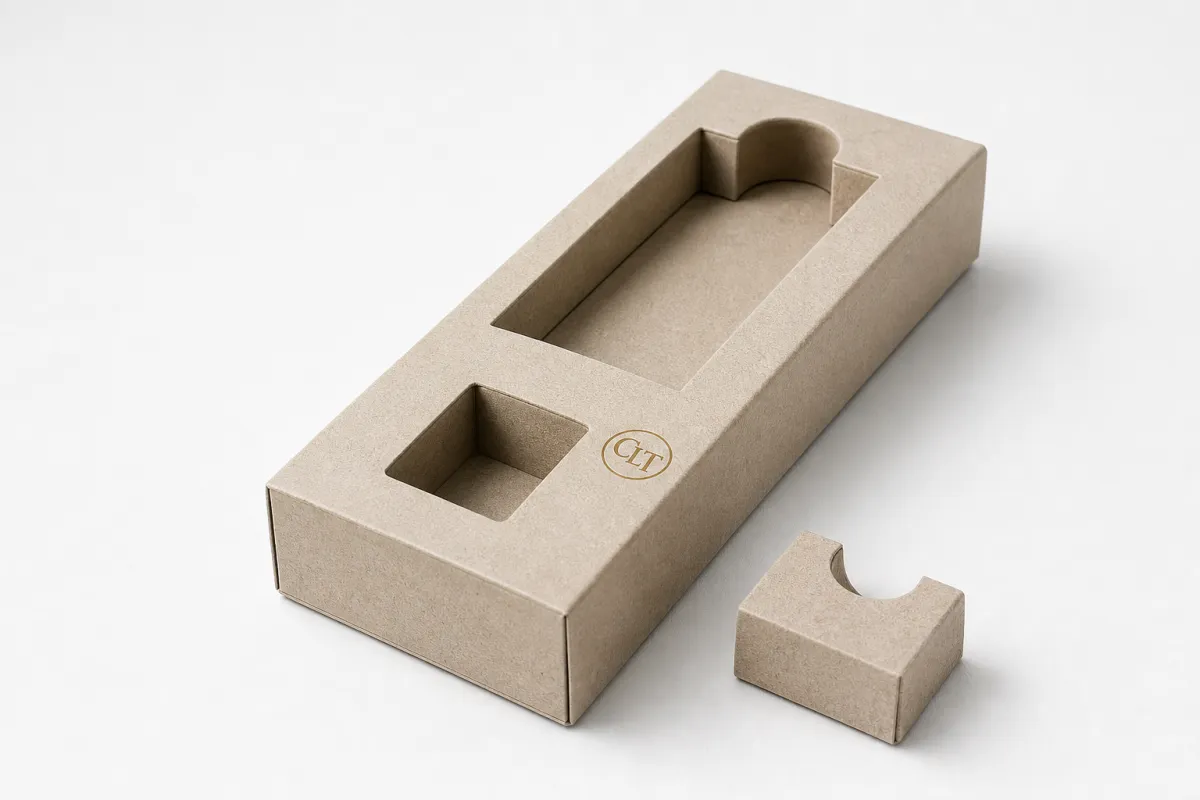
At the simplest level, custom box inserts with logo are shaped components placed inside a carton or rigid box to secure a product while carrying brand marks. Simple description. Complicated job. A solid insert can protect the product in transit, organize parts and accessories, and make the opening feel ordered rather than improvised. That last part matters more than many people admit. Order reads as care, and care reads as value.
Internal movement causes a surprising share of packaging complaints. A box can look pristine after a rough trip and still fail because the product floated around inside it. Glass bottles, cosmetics with caps, electronics with cords, and multi-piece gift sets are especially vulnerable. custom box inserts with logo reduce that risk by taking away the space that lets damage build up. In practical terms, they are closer to seat belts than decoration.
There is a psychological edge here too. People read organization as quality. If the product sits level, the accessory lies in its own slot, and the logo appears immediately when the box opens, the whole package feels more considered. If everything is loose or misaligned, even a high-value item can feel cheap. That is not a printing issue. It is a design decision. And yes, the difference can be a bit unfair, but buyers are human and packaging is a shortcut.
From a packaging buyer's perspective, custom box inserts with logo sit right between product packaging, package branding, and shipping risk control. Small object, large effect. A good insert can influence first impressions, return rates, and how often a warehouse has to touch an order twice. Those are not cosmetic wins. They are cost-line wins. Even a 2% return reduction can matter more than a prettier render if the product runs at scale.
A useful way to break the value down looks like this:
- Shipping protection: reduce vibration, impact, and compression during transit.
- Retail presentation: create a cleaner reveal and a more polished shelf presence.
- Product organization: keep the main item, cords, cards, or samples in one place.
That is why custom box inserts with logo should not be treated like decorative extras. They are part of the package structure. If the insert fails, the outer carton is forced to do a job it was never built to do. The result usually shows up as scuffs, movement, or a disappointed customer opening a box that feels less careful than it should.
For brands building out their Custom Packaging Products, inserts often become the point where function and identity meet. A simple paperboard tray with a foil mark may be enough for one product line. A molded or foam structure may fit another. The decision is not about what photographs well. It is about what survives handling, stacking, sealing, and delivery without creating a hidden mess later.
Packaging testing helps keep that conversation honest. Organizations such as the International Safe Transit Association publish transit test methods that let brands check distribution risk in a disciplined way. That matters because custom box inserts with logo are not just visual objects. They are part of the protective system. If the product rattles after a shake test, the logo placement is secondary.
How Custom Box Inserts With Logo Production Works
The production path for custom box inserts with logo starts with measurements, not artwork. A supplier needs product dimensions, carton dimensions, the number of items in each box, and any accessories that share the space. If the product ships with a charger, cap, wand, booklet, or cable, those items belong in the first brief. Leave them out and the insert may fit the hero product while ignoring the parts that make the real footprint bigger.
After the measurements come the concept and the dieline or cut file. That file defines cavity sizes, folds, cutouts, support points, and walls. The material and construction method decide how the insert is made. Some are die cut. Some use CNC cutting. Others are thermoformed or fabricated from foam. Each route changes the look, the feel, the price, and the timeline. A paperboard tray can move quickly. A molded solution may need tooling and a longer runway. A foam insert can land somewhere in the middle, depending on complexity.
Logo placement usually falls into one of three methods. The insert may be printed directly, stamped with foil, or coordinated with branded carton graphics so the insert and box speak the same visual language. For many brands, direct print or foil gives the strongest mix of clarity and cost. Other brands keep the insert understated and let the outer packaging carry the louder branding. There is no prize for making every surface shout at once.
Approval matters before production begins. Artwork, dimensions, board grade, and sample performance all need a sign-off. That stage is where rushed jobs start to wobble. A logo file with weak resolution, a cavity that misses by a few millimeters, or a substrate that is too light can delay the whole run. Custom box inserts with logo reward precision. Guessing gets expensive. In one cosmetics project I reviewed, the team lost a week because the bottle shoulder was measured without the cap installed. It was a small miss. It was also the only reason the tray had to be recut.
A practical sample review usually checks three things:
- Does the product fit without excessive friction or empty space?
- Does the insert hold the product upright during shake and tilt testing?
- Does the logo remain clear once the box is opened?
Timeline expectations matter because most delays come from revision, not manufacturing. A straightforward paperboard project may progress quickly. A foam or molded program usually takes longer. Complete specs move faster than vague ones, and incomplete specs create the kind of back-and-forth that burns days without adding value. Custom box inserts with logo are the opposite of forgiving when the measurements are sloppy.
"The insert looks simple, but the mistake shows up later in damage claims, customer complaints, and repacking labor. A clean spec protects the budget before the first unit ships."
For companies comparing options across Custom Packaging Products, the question is rarely whether an insert can be made. The real question is which construction method fits the product, the brand, and the launch schedule without creating extra work after launch. That answer changes by category, and the best suppliers will say so plainly instead of pretending every material solves every problem.
Key Factors That Decide Fit, Protection, and Branding
Three factors decide whether custom box inserts with logo succeed: product dimensions, fragility, and handling. If the measurements are wrong, the project starts on the wrong foot. If the material is too weak for the product weight, the cavity can deform. If the box is opened repeatedly or stacked in fulfillment, the insert needs enough structure to stay stable after more than one touchpoint. In real warehouses, that third point matters more than most decks suggest. Boxes get picked up, set down, reboxed, and scanned. They do not live a gentle life.
Material choice is where the tradeoffs become visible. Paperboard and corrugated inserts work well for lighter products and cleaner recycling goals. Molded pulp gives brands a fiber-based option with cushioning built in. Foam, including EVA, suits products that need precise cavities and stronger impact resistance. None of these is best in every case. The right answer follows the product, not the mood board. A brand can want a natural look, but if the item weighs 900 grams and ships in a parcel network, that desire has to meet physics somewhere.
The logo changes the experience too. Large ink coverage can make an insert feel bold, but it can overwhelm a small format or fight a minimalist brand system. A foil stamp gives a sharper premium cue, though it adds cost and may not suit every substrate. Texture matters as well. A smooth white board with a crisp mark tells a different story from a kraft insert with a subdued print. Both can work. They just speak in different voices.
Sustainability adds another layer of pressure. Many brands want recyclable packaging and still want the insert to look engineered, not flimsy. That balance is achievable, but only if the material is chosen carefully. A fiber-based insert may support an easier end-of-life path, while a mixed-material or heavily laminated structure can complicate disposal. If FSC-certified paper matters to the brief, ask for it in writing and verify the chain of custody. The Forest Stewardship Council explains certified sourcing plainly and gives packaging teams a practical reference point.
Product category changes the target. A cosmetic kit can usually tolerate a lighter structure than a glass dropper bottle. Electronics may need accessory management more than cushioning alone. Subscription kits often need a presentation-first insert because the box is opened on camera, in retail, or in front of a recipient. That is where custom box inserts with logo do two jobs at once: they hold the contents and frame the story. I have seen a modest subscription box feel far more expensive simply because the tray lined up the items like a curated display instead of a pile of parts.
Common material choices tend to line up this way:
- Paperboard: good for lighter, branded presentation inserts and organized kits.
- Corrugated: better for protection, stacking strength, and larger products.
- Molded pulp: practical for fiber-based cushioning with a more natural look.
- Foam: useful for precision fit and higher shock absorption.
- EVA: often chosen for premium presentation and exact cavity control.
Custom box inserts with logo can raise or lower perceived value in a very direct way. A clean insert can make a mid-priced product feel more premium. A poor insert can make an expensive product feel discount. That comparison sounds blunt because it is blunt. Packaging buyers see it in sample rooms, and customers see it in the first few seconds of the unboxing. The gap between those two reactions can be surprisingly wide.
For a brand building retail packaging or ecommerce packaging, consistency matters more than drama. The insert should fit the product, match the carton, and reinforce the brand voice without becoming fragile or overpriced. That balance is harder than it sounds. The best custom box inserts with logo are often the ones that look obvious only after they are already working.
Custom Box Inserts With Logo Cost, MOQ, and Quote Drivers
Pricing for custom box inserts with logo usually comes down to six variables: material, complexity, print method, order quantity, tooling, and finishing. Those factors do not behave independently. A simple shape in paperboard may be inexpensive at moderate volume, while a small foam program with intricate cutouts can stay costly even as the unit count rises. Buyers often look at the per-piece number first, but the better question is what that number actually includes. A quote that looks cheap on paper can get less charming once setup, freight, and sample work show up.
MOQ matters because setup work has to be spread across the run. If the supplier needs a dieline, cutting setup, print setup, or mold tooling, a tiny order drives the unit price higher. Larger volumes usually soften that pressure. That is one reason custom box inserts with logo can look very different at 500 units than they do at 5,000 units. The structure of the price changes almost as much as the structure of the insert.
Here is a practical pricing snapshot. These are broad planning ranges, not promises, but they help early budgeting:
| Insert Type | Typical Use | Indicative Unit Cost | Common Notes |
|---|---|---|---|
| Paperboard insert | Cosmetics, lightweight kits, retail packaging | $0.18-$0.45 at 5,000 pcs | Best for clean branding and lower material weight |
| Corrugated insert | Ecommerce shipping, heavier product packaging | $0.25-$0.70 at 5,000 pcs | Better crush resistance, usually bulkier |
| Molded pulp insert | Fiber-based protection, mixed product kits | $0.30-$0.85 at 5,000 pcs | Tooling may affect early runs |
| Foam insert | Electronics, fragile goods, premium gift sets | $0.40-$1.20 at 5,000 pcs | Precision fit, higher perceived protection |
| EVA insert | Premium presentation, exact cavity control | $0.80-$2.50 at 5,000 pcs | Usually the most upscale visual result |
The numbers move. A flat insert costs less than a multi-compartment design. A two-color print differs from a foil stamp. A board insert with one cavity is not the same as one with nested cutouts for a bottle, dropper, and booklet. That is why buyers should compare quotes line by line rather than asking for a vague "best price" on custom box inserts with logo.
Here is where quotes usually split apart:
- Sample charges: some suppliers include them, others bill separately.
- Setup fees: dieline, cutting, print, or mold setup may be itemized.
- Freight: insert shipping can be meaningful because board and foam both take space.
- Finishing: foil stamping, embossing, specialty coatings, and lamination increase cost.
- Tooling: molded or thermoformed structures may require one-time investment.
The smartest buyer reads a quote like a spec sheet, not a sales pitch. Ask which material grade is being used. Ask whether the logo method is included. Ask whether the number shown is based on approved dimensions or estimated dimensions. That distinction matters because custom box inserts with logo can look cheap until a hidden assumption forces a change order. The fastest way to a surprise invoice is to assume everyone defined "insert" the same way.
There is a practical comparison worth making: a cheaper insert that fails in transit can cost more than a better insert that prevents returns. Damage reduction rarely appears in the quote, but it shows up in the margin. Packaging teams that think beyond unit price usually land on stronger decisions. That is not sentimental; it is arithmetic.
Step-by-Step Process and Timeline for Ordering Inserts
A clean ordering process makes custom box inserts with logo easier to approve and faster to produce. The sequence should start with the product itself. Measure the widest points, closures, cords, caps, and any detachable accessories. Then define the main goal: shipping protection, premium presentation, organization, or all three. That decision shapes material choice long before artwork reaches the file. If the team skips this part, the project tends to drift into guesswork. Guesswork is expensive in packaging.
Ask for a dieline or concept drawing next. That step lets everyone see the cavity layout before any material gets cut. Once the first sample arrives, test it in the real carton, not just on a desk. Shake the box gently. Tilt it. Check whether the product lifts, wobbles, or compresses the insert. If the insert will be used in a shipping program, that physical test matters far more than a polished mockup of custom box inserts with logo. A render can hide a thousand sins.
A realistic timeline often looks like this:
- Day 1-3: gather measurements, product details, and branding requirements.
- Day 3-7: review concept drawings or dielines.
- Day 7-14: sample production, depending on material and complexity.
- Day 14-18: fit review, artwork tweaks, and approval.
- After approval: final production, then packing and freight.
That timeline shifts with the project. Simple paperboard inserts often move faster, especially when artwork is already approved. Molded or foam options usually take longer because tooling or fabrication enters the picture. If the launch date is fixed, work backward from it. Otherwise, custom box inserts with logo get rushed, and rushed inserts are where fit problems and rework show up.
Here is a compact checklist to send a supplier first:
- Finished product dimensions and weight.
- Carton or rigid box internal dimensions.
- Photos of the product, accessories, and closure points.
- Brand files for the logo and any print guidance.
- Target quantity, launch date, and shipping destination.
That small stack of information can save days of back-and-forth. It also helps the vendor compare options across Custom Packaging Products without guessing at the use case. The cleaner the first spec, the fewer revisions later. And with custom box inserts with logo, revisions are rarely free.
Packaging standards can help frame testing decisions too. If the insert is meant for transit protection, align expectations with a relevant distribution test approach rather than relying only on visual approval. Many brands use ISTA-style thinking or broader packaging performance criteria to decide whether the insert is ready for production. That keeps the conversation tied to handling risk, not just aesthetics. I would rather see a package fail in the sample room than on the carrier's belt.
Common Mistakes Buyers Make With Custom Box Inserts With Logo
The most expensive mistake is designing for appearance first and movement second. It is easy to focus on tidy renderings of custom box inserts with logo and forget that products move, settle, and flex in transit. A beautiful insert that leaves room for a glass bottle to shift is not a good insert. It is a future claim waiting to happen. The photo gets the approval; the distribution lane exposes the truth.
Another common error is under-measuring the product. Buyers often measure the main body and ignore the cap, cable, clasp, lid, or nested accessory that changes the true footprint. That creates a fit issue that only appears once the sample arrives. With custom box inserts with logo, every protrusion matters. A few millimeters can decide whether the item seats cleanly or jams at the opening. I have watched a tray fail because a pump collar was ignored, and honestly, that one was avoidable from the start.
Material mistakes happen just as often. Some brands pick a substrate because it looks premium in a photo, then find out it does not hold weight well enough or cannot match the recyclability goals. Others choose foam for protection and later realize it conflicts with sustainability positioning. Neither choice is wrong by itself. The problem is choosing before the use case is clear. A nice-looking sample can hide a very ordinary problem.
Logo placement can fail too. A well-built insert can still look generic if the mark is too small, too faint, or hidden once the box opens. That is frustrating because the structure may be doing its job perfectly while the brand signal disappears. Custom box inserts with logo should not only protect the product; they should reinforce identity at the exact moment the buyer sees the contents. If the logo lands under a flap or outside the first line of sight, the packaging misses half its assignment.
Procurement mistakes create their own damage. Skipping samples is one. Comparing quotes without matching specifications is another. Ignoring lead time is a third. A supplier can quote a fast turnaround, but if artwork is incomplete or material stock is tight, the real lead time stretches. That is not only a supplier issue. It is a planning issue too. The brand team has to own the calendar, not just the artwork.
A simple pre-quote checklist helps avoid most of this:
- Have all product dimensions been confirmed with a physical sample?
- Has the insert material been matched to weight and fragility?
- Are the logo method and artwork files approved?
- Has the team tested fit inside the actual carton?
- Does the quote include setup, sample, and freight assumptions?
If the answer to any of those is "not yet," the project is still in information-gathering territory. That is fine. It is better to pause than to rush custom box inserts with logo into production and discover that a corrected sample would have been cheaper than a full reprint.
Expert Tips and Next Steps for Better Packaging Decisions
Start with a one-page spec sheet. That one document clears up more packaging confusion than most meetings do. Put the product dimensions, carton dimensions, accessory list, logo file status, material preference, quantity, and launch date on one page. Suppliers get a shared reference, quotes become easier to compare, and custom box inserts with logo stay aligned with the rest of the packaging system. It sounds basic because it is basic, but basic discipline is what keeps programs from drifting.
Order one sample that tests both fit and presentation. Not five versions. One focused sample. If it passes the physical test and the brand looks right when the box opens, you have something real to judge. If it fails, refine the geometry before moving to full production. That is usually cheaper than fixing a run after the fact. In packaging, a single good sample can save a lot of second-guessing.
Confirm the details in writing. Logo method, material grade, carton compatibility, and test assumptions should all live in the approval chain. If the supplier says the insert is designed for a certain product weight or shipping profile, that note belongs in the record. Custom box inserts with logo are too easy to misread later if the project exists only in emails and screenshots. The memory of a phone call is not the same as a written spec.
It also helps to know where premium spending matters most. For a luxury cosmetic set, a printed or foil-stamped insert may justify itself because the box is part of the product experience. For a subscription kit that ships every month, a simpler corrugated or paperboard structure may be the better choice because scale matters more than drama. The right answer supports the business model, not the one that looks nicest in a sample room.
Use this decision framework:
- Spend more if the product is fragile, high-value, gift-driven, or customer-facing at unboxing.
- Spend less if the item is lightweight, low-risk, and shipped in large recurring volumes.
- Prioritize structure if damage risk is the main concern.
- Prioritize print quality if retail impact and brand story matter most.
Then move through the next practical steps. Measure the product carefully. Shortlist two or three materials. Request quotes based on identical specs. Ask for a sample. Review it in the actual carton. That process sounds ordinary, but ordinary is where custom box inserts with logo become reliable, cost-aware, and brand-accurate. Fancy language will not rescue a loose fit.
For brands sourcing broader packaging programs, a supplier that supports Custom Packaging Products across cartons, inserts, and printed components can simplify coordination. Fewer handoffs usually mean fewer mismatches. Fewer mismatches usually mean fewer surprises once the boxes are moving through the system.
If you want the shortest version of the advice, it is this: measure carefully, test physically, and choose the insert that fits the product and the brand in the same breath. That is how custom box inserts with logo stop being a nice idea and start becoming a packaging system that actually performs. Treat the insert like part of the product, not a last-minute add-on, and the whole package gets better.
Frequently Asked Questions
What are custom box inserts with logo used for?
They keep products from shifting during transit while making the unboxing feel more intentional and premium. Custom box inserts with logo are common in ecommerce shipments, retail packaging, gift boxes, and fragile-product programs. They can also organize accessories, instructions, and sample items inside one box so the customer does not have to search for parts. In some categories, that organization is the difference between a polished reveal and a pile of components.
Which material is best for custom box inserts with logo?
Paperboard and corrugated work well for lighter products and recyclable packaging goals. Foam, EVA, and molded solutions are better when cushioning, precision fit, or higher protection is the priority. The best choice depends on product weight, fragility, sustainability targets, and the visual standard you want from custom box inserts with logo. There is no universal winner, only a better fit for the job in front of you.
How do I size custom box inserts with logo correctly?
Measure the product at its widest points and account for closures, cords, caps, and attachments. Ask for a dieline or sample before approval so you can test fit in the real carton. If the product moves, rattles, or compresses the insert, revise the spec before production. That is the safest way to approve custom box inserts with logo. A millimeter saved in CAD can become a cracked edge in transit.
What affects custom box inserts with logo pricing?
Material selection, order quantity, cut complexity, printing method, and setup requirements drive most of the price. Smaller runs usually raise unit cost, while larger runs often reduce it. Add-ons like foil stamping, special coatings, and custom compartments can also push the quote higher for custom box inserts with logo. Freight and sample charges can also matter more than buyers expect, especially on bulky inserts.
How long does the custom box inserts with logo process take?
The timeline depends on sample approval, artwork readiness, material sourcing, and the production method. Simple paperboard inserts usually move faster than molded or foam options that require tooling. The fastest projects are the ones that start with complete measurements and a clear approval process for custom box inserts with logo. If the brief is loose, the schedule tends to stretch. If the brief is precise, production usually follows suit.

