Buyer Fit Snapshot
| Best fit | Custom Box Inserts Price projects where brand print, material claims, artwork control, MOQ, and repeat-order consistency need to be specified before quoting. |
|---|---|
| Quote inputs | Share finished size, material target, print colors, finish, packing count, annual reorder estimate, ship-to region, and any compliance wording. |
| Proofing check | Approve dieline scale, logo placement, barcode or warning zones, color tolerance, closure strength, and carton packing before bulk production. |
| Main risk | Vague material claims, crowded artwork, missing packing details, or unclear freight terms can make a low unit price expensive after revisions. |
Fast answer: Custom Box Inserts Price: Board, Finish, Dieline, and Unit Cost should be specified like a repeatable production item. The safest quote records material, print method, finish, artwork proof, packing count, and reorder notes in one written spec.
Production checks before approval
Compare the actual filled-product size with the drawing, then confirm tolerance on folds, seals, hang holes, label areas, and retail display edges. Reserve space for logos, QR codes, warning copy, and material claims before decorative graphics fill the panel.
Quote comparison points
Review material grade, print process, finish, sampling route, tooling charges, carton quantity, and freight assumptions side by side. A quote is only useful when the supplier can repeat the same color, closure quality, and packing count on the next order.
Custom Box Inserts Price: What Really Drives the Cost?
For any packaging buyer, Custom Box Inserts price rarely tells the whole story by itself. A cavity that costs $0.22 may look tiny on a spreadsheet, yet if it keeps a glass bottle from cracking, it can save a $14 replacement, a customer service headache, and the labor tied to rework. I have seen plenty of projects where the cheapest insert turned out to be the expensive one once returns and repacks started stacking up. The real number lives inside your product packaging system, your damage rate, your assembly flow, and the way the outer carton behaves once it leaves the dock.
Good packaging design does a few jobs at once: it holds the product in place, keeps the unboxing experience consistent, and lowers the odds that a shipment arrives looking crushed, scuffed, or out of alignment. That matters in retail packaging as much as it does in shipping packs. A well-made insert can protect presentation, keep accessories where they belong, and reinforce package branding without adding much weight. The real question is not whether an insert costs money. It is whether the custom box inserts price supports the full cost of ownership.
Custom Box Inserts Price: Why the Right Insert Pays for Itself
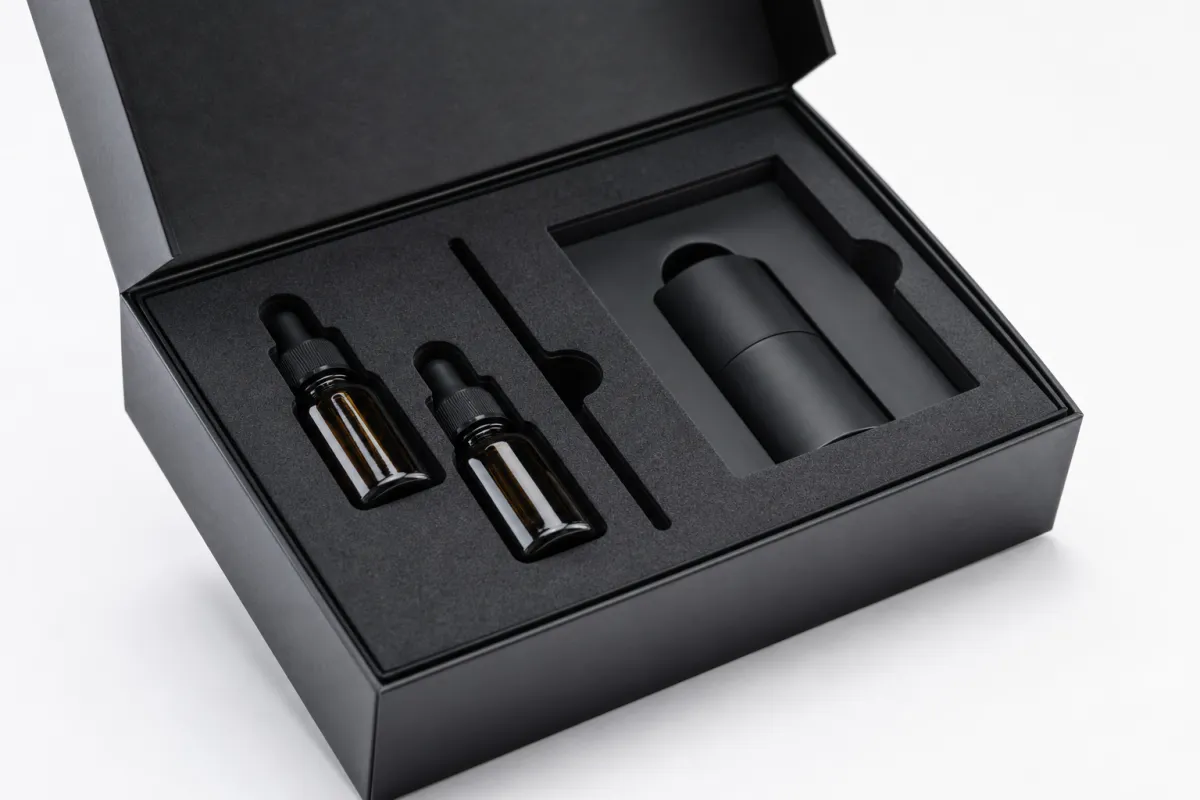
Most buyers first see the insert as another line on the purchase order. In practice, it acts more like insurance with a measurable return. If a fragile item shifts a few millimeters, the result can be scuffs, corner crush, lid lift, or outright breakage. That is why custom box inserts price should be weighed against the cost of returns, repacks, replacement inventory, and the time your team spends cleaning up avoidable problems. A package that looks inexpensive on paper can become expensive the moment it starts moving through the supply chain.
The clearest savings often come from fewer claims and less manual handling. A better-fit insert reduces product movement, keeps components nested, and helps every order land in the same position. That consistency matters for subscription kits, electronics, cosmetics, gift sets, and any line where first impressions carry weight. If your custom printed boxes already communicate the brand, the insert should support that message rather than fight it. Otherwise the customer sees a mismatch, and that subtle disconnect is usually more costly than people expect.
There is also a labor side that gets overlooked. When the insert is engineered properly, packers spend less time adjusting padding, taping loose corners, or checking whether accessories shifted during assembly. In a busy fulfillment environment, a few saved seconds per pack can turn into serious time across hundreds or thousands of units. The same thinking applies to replenishment runs: once the structure is proven, repeat orders move with less friction and fewer surprises in custom box inserts price.
That is the real comparison for a buyer. Not insert versus no insert. It is custom box inserts price versus the combined cost of waste, return shipping, and brand damage. The cheapest-looking package is not always the cheapest package after the full math is done.
A well-fit insert does more than protect the product. It lowers damage risk, improves presentation, and makes pack-out more predictable from one run to the next.
What Is Included in Custom Box Inserts Price?
Quotes vary because the price is built from several pieces, not one. A clear custom box inserts price quote usually covers material selection, cutting method, setup or tooling, finishing, pack configuration, and the labor required to prepare the part for use. If the supplier is doing real custom work, the estimate should also account for fit checks, dieline development, and any assembly that happens before shipment. That part gets glossed over in a lot of low-detail quotes, which is exactly how buyers end up surprised later.
The first split is between simple and complex structures. Plain die-Cut Corrugated Inserts are often priced differently from printed paperboard trays, molded pulp forms, or foam solutions. A basic insert may need little more than a cutting die and a standard fold pattern. A branded insert for premium product packaging may need printed surfaces, tighter registration, or multi-part assembly. Those changes can push custom box inserts price upward faster than many buyers expect.
Product geometry matters too. A box with one bottle cavity is far easier to quote than a kit with five parts, a center void, and accessories that need to be aligned in a specific order. Each cavity adds cut paths, fit tolerances, and possible waste. If the insert has to hold multiple SKUs, the quote should reflect how those items sit together and whether the design must support both shipping protection and shelf presentation. In other words, the drawing on the screen is only the beginning.
Here is the practical breakdown most quotes should cover:
- Material - corrugated board, paperboard, foam, molded pulp, or a layered combination.
- Cutting method - die-cutting, knife tooling, molding, or CNC-style prototyping for samples.
- Setup and tooling - one-time cost to create dies, molds, or cutting forms.
- Finishing - print, lamination, coating, anti-scratch treatment, or specialty wrap.
- Assembly - hand gluing, multi-part fit-up, or kitting if the insert ships flat versus pre-built.
- Packing requirements - bundling, carton counts, pallet configuration, and any special labeling.
That list explains why one supplier may quote a lower base number but a higher total. The useful metric is not only the line item. It is the finished custom box inserts price landed in your warehouse, ready to use. Compare the full structure of the quote, not just the unit cost. If the proposal hides sampling, tooling, or freight, you are not comparing apples to apples, and that can make procurement decisions look cleaner than they really are.
Fit tolerance can move the number more than buyers expect. A loose insert may be cheap to make, but it can also be cheap for a product to move inside. A tighter design may use a little more board or foam, yet it can reduce defect risk and keep the pack visually aligned. That is why a good quote should describe the product cavity count, the outer box size, and the acceptable clearance around the item. Those details are not paperwork fluff; they are the difference between a pack that works and one that just sort of does.
Specs That Move Custom Box Inserts Price the Most
If you want to understand custom box inserts price, start with the specifications. Dimensions, thickness, density, and structural complexity are the biggest drivers. A small insert for a candle is not priced the same as a heavy electronics tray, even if both look simple at first glance. The difference usually hides in board grade, fold count, and the amount of material needed to keep the product stable.
Thickness is the obvious example. A 1.5 mm paperboard insert for a light cosmetic set will not perform like a 3 mm corrugated structure built for shipping protection. Foam adds another layer of choice: EPE, EVA, or polyurethane each behaves differently in compression and finish. Molded pulp brings its own tradeoffs, especially if the shape needs strong ribs or a precise cavity. These choices do not only influence performance; they change the custom box inserts price because they affect tooling, cycle time, and waste.
Oversized products create another cost curve. Once the insert gets large, nesting efficiency drops and scrap rises. That means more raw material per unit, more storage space, and sometimes higher freight cost because the finished part no longer stacks as tightly. A larger insert is not only a larger piece; it is a larger logistics problem. And if the design has to fit into a tight outer carton with almost no airspace, the engineering effort usually climbs right along with the price.
To make the comparison more concrete, here is a typical material view. These are planning ranges, not hard quotes, but they show how the market usually behaves:
| Material | Best Use | Typical Unit Range | Setup / Tooling | Notes |
|---|---|---|---|---|
| Corrugated die-cut | Shipping protection, value-driven kits | $0.12-$0.30 at 1,000 units | $150-$400 | Strong choice for simple cavity shapes and recyclable programs |
| Paperboard insert | Retail packaging, premium presentation | $0.18-$0.42 at 1,000 units | $250-$700 | Works well for branded packaging and cleaner unboxing |
| EPE / EVA foam | Fragile items, electronics, glass | $0.28-$0.75 at 1,000 units | $300-$1,000 | Higher protection, but freight and density can raise total spend |
| Molded pulp | Eco-focused product protection | $0.22-$0.60 at 1,000 units | $500-$1,500 | Tooling can be the expensive part, especially on custom shapes |
The table makes the core point plain: material is only part of custom box inserts price. Tooling, finish, and order size can move the final number more than the substrate itself. A buyer comparing paperboard to molded pulp may find that the lower-cost option in unit terms is not always the lower-cost option once setup is added. That is exactly why experienced packaging teams keep an eye on both the quoted unit price and the front-end work that gets the insert ready to run.
Tolerance also matters. If the product must sit within 1-2 mm of a specific wall, the insert usually needs tighter tooling and stronger quality control. That raises custom box inserts price, but it can also reduce variability across production runs. For brands that care about repeatable shelf appearance or premium package branding, that consistency often earns its place in the budget.
Finally, nesting efficiency can quietly change the total. A design that stacks flat, fits efficiently on a sheet, or folds into a compact packout will usually cost less to move and store. Smart packaging design pays off there. The strongest structure is not only protective; it is economical to produce, pack, and ship. That balance is the sweet spot most buyers are really hunting for, even if they do not say it out loud.
Custom Box Inserts Price, MOQ, and Unit Cost
custom box inserts price behaves differently at 100 units than it does at 5,000. Minimum order quantity matters because setup costs have to be spread across the run. When the order is small, the tooling burden sits on fewer pieces. That is why a short run often looks expensive per unit, even if the material itself is modest.
Here is a simple way to think about it. A job might carry a $350 setup cost and a $0.24 piece cost. At 100 units, the setup adds $3.50 per unit before shipping and handling. At 1,000 units, it adds only $0.35. The insert did not get cheaper to make; the fixed cost simply spread out more efficiently. That is the math behind most custom box inserts price tiers.
To make budgeting easier, ask for pricing at multiple break points. A useful quote often includes 100, 500, 1,000, and 5,000 units so you can see where the price curve flattens. That matters because the lowest unit cost is not always the best buying decision. Inventory risk, storage limits, and sales velocity matter too. If the product changes every quarter, overbuying can create a bigger issue than paying a little more per piece. Nobody wants a basement full of inserts that no longer fit the next revision, and that happens more often than people admit.
Here is a practical planning view of how quote tiers often behave:
- 100 units - high setup burden, best for samples, pilots, and product validation.
- 500 units - still setup-heavy, but often the first level where savings become visible.
- 1,000 units - common threshold for a balanced custom box inserts price and manageable stock.
- 5,000 units - better unit economics, but higher inventory exposure and storage needs.
That is why buyers keep asking for tiered quotes. Once you see where the slope changes, you can decide whether to buy for a single launch, a seasonal run, or a longer replenishment window. A sound purchasing decision compares unit cost, storage, freight, and the risk of design changes. That is the real full-cost view behind custom box inserts price.
Let the quote show both unit price and total order cost. Then compare that total against the damage cost you are trying to avoid. If a slightly better insert lowers breakage by even a small percentage, the savings can outpace the difference in custom box inserts price very quickly. For fragile or premium products, that spread is often larger than people assume, which is why the cheapest quote can be the wrong quote.
One more buying rule helps in practice: ask where the break point sits. Sometimes the jump from 500 to 1,000 units is small enough to justify extra inventory. Other times it is not. You want the lowest custom box inserts price that still matches forecast, shelf life, and available storage. That is the point where finance and operations usually land on the same page.
Process, Timeline, and Lead Time for Custom Box Inserts
Lead time is part of custom box inserts price, even when it never appears as a line item. The process usually starts with product dimensions, weight, fragility notes, and the outer box size. From there, the supplier creates or refines a dieline, reviews fit, and prepares a sample or proof. Only after the structure is approved does production begin. Clean data at the start shortens every step that follows.
For a straightforward corrugated insert, a typical workflow can move from proof approval to production in about 10-15 business days, assuming the materials are standard and no structural changes are needed. Foam or molded pulp can take longer, especially if tooling has to be cut or a sample round is required. If the order is more complex, 15-25 business days is a more realistic planning window. That timing can influence custom box inserts price because rush work, extra revisions, or split shipments often add cost.
What slows a job down? Revisions are the most common culprit. So are vague measurements, unstable product prototypes, and last-minute changes to the outer carton. If the insert was quoted for a box that later changes by 3-4 mm, the whole fit may need to be reworked. That is why a disciplined spec sheet saves both time and money. It also makes the custom box inserts price quote easier to trust.
A practical process looks like this:
- Measure the product and outer box carefully, including any accessories or inserts inside the insert.
- Define the protection goal: shipping, retail presentation, or both.
- Choose the likely material family, then ask for a sample structure.
- Review fit, pack speed, and presentation before signing off.
- Approve production once the final spec matches the launch plan.
That sequence may look simple, yet it is where many buyers save the most money. The fewer surprises you have before the run starts, the cleaner the custom box inserts price usually becomes. It also protects your launch date, which matters just as much as the per-unit number. A missed ship window can erase the savings from a lower unit quote in a hurry.
For shipping protection, teams often test the full pack-out against an ISTA protocol such as ISTA 3A rather than guessing from the insert alone. For paper-based programs, FSC-certified board can support sourcing goals and give procurement a cleaner paper trail. Standards do not make the design cheaper by themselves, but they help prove whether the chosen structure is doing its job. That kind of proof matters when someone in finance asks why the insert is priced the way it is.
Lead time is not just a calendar issue. It is a cost issue, a quality issue, and a risk issue rolled together. If a supplier can shorten proofing, lock dimensions early, and keep the order moving, the effective custom box inserts price often improves even if the sticker price stays the same.
Why Buyers Choose Custom Logo Things for Custom Box Inserts
Buyers usually want three things: the right fit, a clear quote, and no drama during production. That is where Custom Logo Things is positioned. The focus stays on practical packaging guidance rather than vague promises. If the project needs branded packaging support, matching the insert to the outer box matters as much as the insert itself. A good system keeps the product, the carton, and the printed surfaces working together.
Clear guidance on material choice is valuable too. A cosmetic set, a glass accessory kit, and a consumer electronics item should not be priced from the same playbook. The right recommendation can keep custom box inserts price in a sensible range by avoiding overbuilt features. Sometimes the smartest option is a simpler corrugated structure. Other times it is a more refined paperboard insert that improves presentation without forcing a foam-like cost profile. Either way, the decision should come from the product’s actual needs, not from habit.
That is why the product catalog matters. If you are building a full packaging system, you can review the available Custom Packaging Products and compare insert options with outer cartons, printed sleeves, and accessory components. In a buying process this technical, it helps to see how the pieces fit together instead of treating each component as a separate purchase. A better match usually means a cleaner custom box inserts price and fewer revisions later.
Custom Logo Things also matters for scale. The first run and the replenishment run should not feel like two different projects. Once the fit is proven, repeat ordering should feel predictable. That repeatability is what procurement teams value: the same die, the same cavity, the same protection level, and a stable custom box inserts price that does not drift without reason.
For brands that care about retail presentation, the insert can do more than stop movement. It can frame the product, separate accessories cleanly, and support the visual language of the carton. That is the line between an ordinary shipping insert and packaging that feels intentional. And yes, that difference shows up in the way buyers judge the final quote.
Next Steps to Get an Accurate Custom Box Inserts Price
If you want a clean quote, send the right inputs. The fastest way to get an accurate custom box inserts price is to provide product dimensions, product weight, fragility notes, target quantity, and the outer box size. Include any accessories that need to fit inside the cavity, along with the order of unpacking if the unboxing matters. The more exact the information, the less guesswork sits in the estimate.
It also helps to specify what matters most: lowest cost, best presentation, strongest shipping protection, or the lightest possible pack. Those priorities often point to different materials. A buyer who says “lowest unit cost” may receive a corrugated recommendation. A buyer who says “premium retail presentation” may see paperboard or printed board options. That is normal. The goal is not one universal answer. The goal is a custom box inserts price that fits the job.
Before requesting a quote, gather these points:
- Exact product dimensions and weight.
- Outer box size and board style.
- Quantity targets for the first order and replenishment.
- Fragility concerns, drop-test expectations, or shipping history.
- Whether the insert needs to support retail packaging, e-commerce shipping, or both.
- Any print, coating, or branding requirements tied to the insert surface.
If presentation matters, ask for a sample, dieline, or structural mockup before approving production. That extra step can expose a fit issue early, and early corrections are usually much cheaper than reruns. It is also the best way to compare two structures that look similar on paper but behave very differently in real use. That review often saves more money than squeezing another cent out of custom box inserts price.
For buyers making a decision across several order sizes, request pricing at multiple volume levels and compare the break point where inventory risk still makes sense. Then compare the quote against damage exposure, assembly time, and freight. That is the cleanest path to a sensible purchase. If you want the most useful answer from a supplier, ask for the full landed view of custom box inserts price, not just the per-unit number.
Need the shortest route to a quote? Send the product data, target quantity, box dimensions, and any branding or protection goals, then ask for tiered pricing. That keeps the conversation focused and usually produces a better estimate the first time around. For a project that affects product packaging, shipping performance, and package branding all at once, a precise custom box inserts price is worth the extra detail.
Explore our packaging product lineup if you want to compare insert structures with other components, or revisit our Custom Packaging Products page once you have final measurements. The more specific your inputs, the more accurate the custom box inserts price will be, and the easier it becomes to buy with confidence.
Bottom line: the smartest buyers do not chase the lowest number in isolation. They compare fit, material, tooling, lead time, and damage risk, then choose the option that protects margin as well as product. Start with exact measurements, a realistic quantity target, and the protection level you actually need, then ask for tiered pricing and a sample if the product is fragile or presentation-sensitive. That is how custom box inserts price turns from a guess into a controlled purchasing decision.
Frequently Asked Questions
How much does custom box inserts price usually change by material?
Corrugated is often the most budget-friendly choice for shipping protection, while paperboard usually adds presentation value without reaching foam-like cost levels. Molded pulp and foam can cost more because tooling, density, or cycle time adds complexity. The best comparison looks at damage risk, not just custom box inserts price.
What MOQ should I expect for custom box inserts price quotes?
MOQ depends on material, tooling, and the complexity of the insert shape. Smaller runs usually cost more per unit because setup is spread across fewer pieces. Ask for tiered pricing so you can compare the smallest viable order against better break points in custom box inserts price.
Can I lower custom box inserts price without reducing protection?
Yes. A simpler structure, fewer cutouts, and the right material thickness can lower cost without sacrificing performance. A fit review often finds savings by reducing waste, improving nesting efficiency, and removing features that do not change protection. That is usually where custom box inserts price improves fastest.
How long does it take to produce custom box inserts after approval?
Simple orders can move quickly once artwork, dimensions, and samples are approved. More complex structural work, revisions, or specialty materials can add lead time. A clean specification sheet shortens the approval stage and helps production start sooner, which can also keep custom box inserts price from drifting due to rush charges.
What information should I send to get an accurate custom box inserts price?
Send product dimensions, weight, quantity, and outer box size. Include fragility concerns, storage limits, and any presentation goals. The more exact the product data, the faster and more accurate the quote, and the easier it is to compare custom box inserts price across materials and order volumes.

