Buyer Fit Snapshot
| Best fit | Custom Boxes with Cmyk Printing projects where brand print, material claims, artwork control, MOQ, and repeat-order consistency need to be specified before quoting. |
|---|---|
| Quote inputs | Share finished size, material target, print colors, finish, packing count, annual reorder estimate, ship-to region, and any compliance wording. |
| Proofing check | Approve dieline scale, logo placement, barcode or warning zones, color tolerance, closure strength, and carton packing before bulk production. |
| Main risk | Vague material claims, crowded artwork, missing packing details, or unclear freight terms can make a low unit price expensive after revisions. |
Fast answer: Custom Boxes with Cmyk Printing: Board, Finish, Dieline, and Unit Cost should be specified like a repeatable production item. The safest quote records material, print method, finish, artwork proof, packing count, and reorder notes in one written spec.
Production checks before approval
Compare the actual filled-product size with the drawing, then confirm tolerance on folds, seals, hang holes, label areas, and retail display edges. Reserve space for logos, QR codes, warning copy, and material claims before decorative graphics fill the panel.
Quote comparison points
Review material grade, print process, finish, sampling route, tooling charges, carton quantity, and freight assumptions side by side. A quote is only useful when the supplier can repeat the same color, closure quality, and packing count on the next order.
Custom Boxes With CMYK Printing: Cost, Process, Tips
The screen is lying to you a little. A monitor can show a bright blue carton, then the finished box lands flatter, darker, or just a shade off in the hand. That gap is normal in custom boxes with cmyk printing, not a freak press failure. If you are ordering Custom Printed Boxes for retail packaging, product packaging, or branded packaging, the distance between screen color and ink color matters more than most buyers admit out loud.
That is why experienced buyers ask about files, stock, finish, and proofing before they ask for a quote. custom Boxes with CMYK Printing can look sharp, hold together well, and stay within budget, but only when the job is set up correctly from the start. If you want to compare box styles and build options, the Custom Packaging Products page and the Manufacturing Capabilities page are worth a look before you lock the specs.
I have seen plenty of jobs where the design looked gorgeous on a laptop and then printed a touch muddy on kraft or a little too dark on matte board. That is not rare. It is packaging reality. The good news is that custom boxes with cmyk printing are predictable once you know which variables actually move the result.
Custom Boxes With CMYK Printing: What It Means
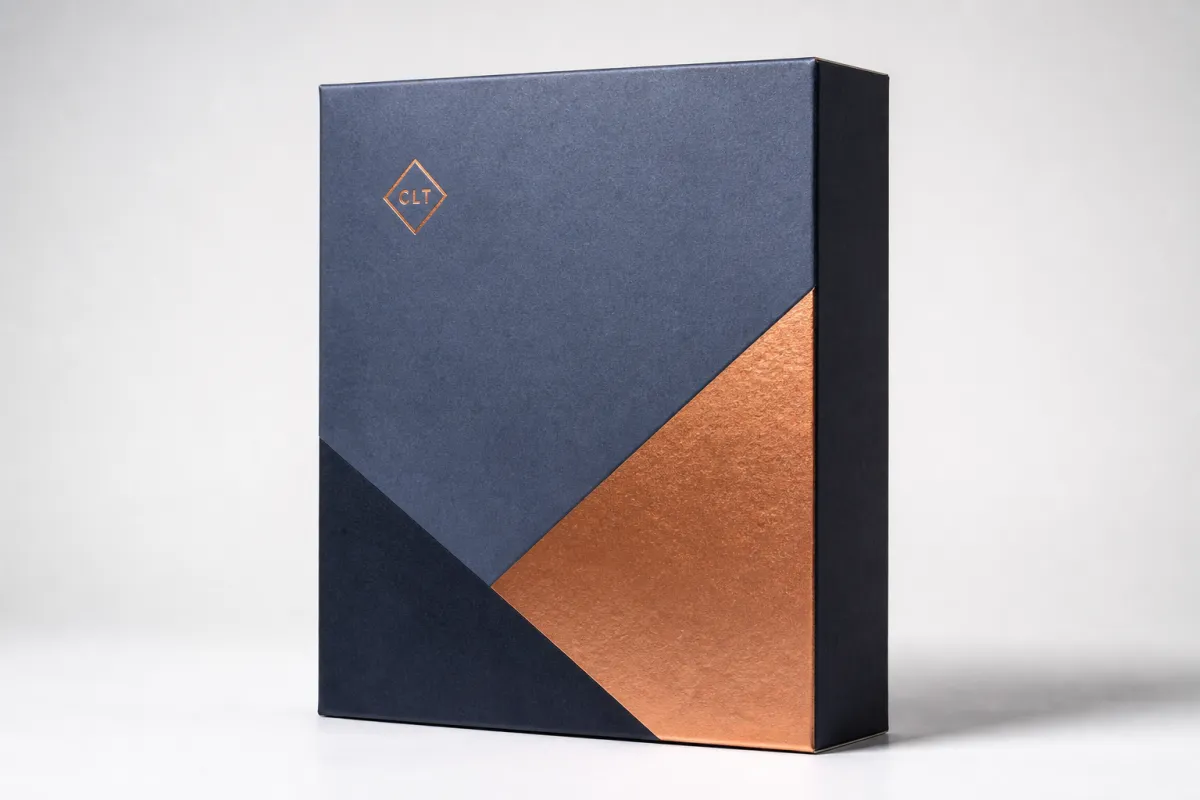
CMYK stands for cyan, magenta, yellow, and black. Those four inks build color on the box through tiny dots arranged in specific patterns. That is why custom boxes with cmyk printing are the default route for full-color packaging design. The method handles photos, gradients, layered backgrounds, and artwork that needs more than one or two flat colors.
The short version is simple: RGB belongs to screens, CMYK belongs to print. RGB uses light, so its color range is wider. CMYK uses ink, and ink has limits. A neon design built in RGB can look electric on a monitor and dull on corrugated board. The printer did not fail. The color space changed, and nobody planned for it. That is the part that trips people up.
custom boxes with cmyk printing fit best when the artwork depends on detail. Think product photography on a mailer box, gradient backgrounds on retail packaging, or a pattern that moves through several tones of the same color. They are not ideal for every brand. If exact brand color control matters across every run, a spot color or Pantone-based system may be the better answer for the logo area, especially on package branding where one shade must stay locked.
The real question is not which method sounds better. The question is what the design needs to do. A startup launch box with a full photo wrap usually suits custom boxes with cmyk printing very well. A premium cosmetics carton with a single signature red and a foil mark may need a mixed approach. That is not a compromise in the bad sense. It is just packaging design matching the print method instead of obeying a buzzword.
Another common assumption deserves a correction: CMYK is not automatically cheap or low-end. The final cost depends on stock, coverage, finishing, and run size. custom boxes with cmyk printing can look premium on coated paperboard with a matte film, or plain on thin stock with poor file prep. The print method is only one part of the result.
In practical terms, CMYK is the workhorse of packaging. It is flexible enough for ecommerce mailers, subscription boxes, folding cartons, and launch kits. It is also the option that most often gets misunderstood because the file conversion happens quietly in the background. A buyer sees one image; the press sees four channels and a lot of tiny compromises.
Bottom line: use custom boxes with cmyk printing when full-color graphics, flexible visuals, and practical production matter. Just do not confuse print-ready with proofed correctly. That is where the expensive mistakes begin.
How Custom Boxes With CMYK Printing Actually Work
Most people picture printing starting when the press turns on. It starts earlier. custom boxes with cmyk printing begin with artwork setup, dielines, and file checks. The design is separated into four color channels, then printed as tiny dot patterns that blend into a finished image from normal viewing distance. A lot of dots pretending to be one clean picture. That is the trick.
The workflow usually starts with the box structure. A dieline shows the cut lines, folds, glue flaps, and safe areas. Artwork goes onto that dieline, then gets checked for bleed, resolution, and overprint behavior. A logo too close to a fold can warp once the carton is formed. A low-resolution photo can turn soft or pixelated. custom boxes with cmyk printing are unforgiving that way. The printer can only reproduce what the file gives it.
Resolution matters more than many buyers expect. For print, 300 dpi at final size is still the safest target for most images. Bleed often needs to extend at least 0.125 inch past trim on many carton jobs, though some suppliers ask for a bit more. Safe zones matter too, because text near the trim can get clipped tight. That is not a cosmetic issue. That is a quality-control issue. And yes, it is the sort of thing that creates a reprint nobody wanted.
Material changes the printed look as well. Coated paperboard usually holds color better because the ink sits on a smoother surface. Kraft board gives a warmer, more organic look, but colors print darker and less saturated. Corrugated stock can handle custom boxes with cmyk printing, yet the liner texture can soften fine detail. Textured boards and soft-touch laminates change contrast and can mute the brightness you saw on screen.
Buyers comparing vendors should ask what print method is actually being used. Digital printing is common for short runs and prototypes. Offset printing makes more sense for larger quantities and usually delivers tighter consistency across a production run. Both can produce excellent custom boxes with cmyk printing. They are not the same tool, and one is not automatically better.
Proofing is the step people skip, then regret later. A digital proof checks layout and general color on a screen or printout. A production proof gets closer to the real box setup and shows how the final result will look on the actual material. A finished box is the production outcome itself. Those three are related, but they are not identical. If color accuracy matters, ask for the proof type in writing.
One simple rule keeps a lot of jobs out of trouble: if the file is sloppy, the box will be sloppy. custom boxes with cmyk printing reward careful prep, clean dielines, and realistic expectations. That sounds dull, which is usually how money gets saved.
There is also a timing detail that is easy to miss. Art approved late in the day often does not move through prepress until the next business cycle. That does not sound dramatic, but on a tight packaging schedule it can slide everything else. A one-day delay in file approval can snowball into shipping changes, missed freight cutoffs, and someone on the operations side making a long face.
Custom Boxes With CMYK Printing Cost: What Changes the Price
Cost for custom boxes with cmyk printing comes down to a handful of predictable inputs. Quantity is the biggest one. Box style is another. Board type, print coverage, finishing, and whether the job is digital or offset all matter too. Artwork rarely drives cost unless it forces extra setup, specialty inks, or repeated revisions.
The biggest trap is assuming a simple design means a cheap box. A clean white carton with one logo can still cost more than expected if the quantity is tiny, the board is heavy, or the box needs a specialty coating. With custom boxes with cmyk printing, unit price usually falls as quantity rises because setup and prepress costs spread across more pieces. That is basic math, not a sales line.
Here is a practical pricing frame. Small digital runs for custom boxes with cmyk printing often land around $0.90-$3.50 per unit for short quantities, depending on box size and coverage. Mid-size offset jobs can drop into roughly $0.25-$1.10 per unit once volume climbs, although setup fees are usually higher. Large repeated orders can go lower still, especially on simple folding cartons. Mailer boxes, rigid boxes, inserts, and specialty finishes push those numbers upward fast.
| Printing option | Best quantity range | Typical unit cost | Strength | Main tradeoff |
|---|---|---|---|---|
| Digital CMYK | 50-500 units | $0.90-$3.50 | Fast setup, good for samples and short runs | Higher per-box cost at low quantities |
| Offset CMYK | 1,000-10,000 units | $0.25-$1.10 | Better economy at scale, stronger consistency | More setup and proofing time |
| Large-run offset | 10,000+ units | $0.10-$0.45 | Lowest unit pricing for repeated programs | Higher commitment and storage needs |
The table is a starting point, not a promise. A folding carton for lightweight cosmetics is not priced the same way as a heavy retail shipper. custom boxes with cmyk printing on coated SBS board usually cost less than a reinforced corrugated mailer with spot gloss, embossing, and an insert. If a quote looks too cheap, check what has been left out.
That is where quote comparisons often go wrong. Buyers compare a bare box price from one supplier against a fully packed, shipped, finished quote from another. Apples and oranges. Or worse, apples and cardboard with surprise fees. Ask whether the quote includes plates or setup, die-cut tooling, finishing, proofing, freight, and any extra handling. If those items are not listed, they are still in the bill somewhere.
Common hidden cost drivers:
- Special coatings such as soft-touch, AQ varnish, or spot UV
- Complex die lines with multiple cutouts or windows
- Extra inserts, dividers, or protective packaging elements
- Heavy ink coverage that uses more press time and drying time
- Rush scheduling that pushes jobs ahead of the normal queue
For custom boxes with cmyk printing, a cheap quote usually means one of three things: the quantity is high enough to hide setup, the specs are stripped down, or something important is missing. A realistic quote usually lists the board, finish, print coverage, quantity, and lead time clearly. That is the quote worth trusting.
I would also be cautious about comparing short-run digital pricing to offset pricing without looking at the full run length. Digital can look more expensive per unit, but if you only need 250 boxes and need them next week, the math changes. Fast is not free, but neither is sitting on inventory you do not yet need.
Process and Timeline for Custom Boxes With CMYK Printing
The production flow for custom boxes with cmyk printing is fairly predictable once the specs are locked. First comes the brief. Then the dieline. Then artwork setup, proofing, sampling if needed, printing, finishing, die-cutting, folding, packing, and shipping. The order matters because one missed step can stall the whole job. Packaging is not magic. It is a chain of practical decisions.
- Confirm box dimensions, style, and quantity.
- Build or approve the dieline.
- Place artwork and check bleed, resolution, and safe zones.
- Approve a proof or sample.
- Print the sheets or run the digital job.
- Add finishing such as lamination, varnish, foil, or spot UV.
- Die-cut, glue, fold, and bundle the boxes.
- Inspect, pack, and ship.
That sounds neat on paper. Real production is messier. custom boxes with cmyk printing can move quickly when the file is clean and the box is straightforward, but lead time can stretch the moment a buyer changes artwork after proof approval. Late logo edits, new barcodes, moved copy, and vague feedback all add days. That happens often, and it is usually avoidable.
Typical timing depends on run size and finish. A rush digital order for simple custom boxes with cmyk printing might ship in 5-8 business days after proof approval if the supplier already has board in stock. A standard production run often lands around 12-15 business days. Larger offset jobs, heavier board, or custom finishing can push that to 18-25 business days or more. Freight time sits on top of that. A job that is done in the factory is not the same as a job that has reached your warehouse.
Proofing is the biggest time saver when it goes well and the biggest time sink when it does not. A digital proof can be turned around quickly, sometimes within a day. A physical sample or production proof may add several days, especially if the material needs to be cut and assembled. For custom boxes with cmyk printing, that extra step is often worth it when color matters or when the structure is new.
Buyers also slow themselves down by being vague. “Make it pop” is not a spec. “Use a matte finish, rich black background, and leave the logo in a white knock-out” is a spec. The more exact the brief, the less back-and-forth later. That matters even more if your schedule is tight and the boxes have to arrive before a product launch or a seasonal shipping window.
If the supplier cannot tell you the substrate, print method, finishing, and proof type in the same quote, you are not comparing the same job. You are comparing guesses.
For buyers trying to plan inventory, a realistic calendar beats a heroic promise. custom boxes with cmyk printing are fast enough for many launches, but only if approvals happen on time and the specs stay still. That is where projects wobble.
If the project is tied to a product release, build in cushion. A three-day delay in proofing can turn into a week lost once scheduling, drying, and freight enter the picture. That is not pessimism. That is how packaging calendars usually behave. I have seen the “small” delay become the headline problem more than once.
One more practical note: if you are coordinating with fulfillment or a co-packer, get the carton count and pallet pattern into the conversation early. A great print job can still become a headache if the boxes arrive in a format that does not fit your storage or packing flow. The press does not care. Your warehouse definitely does.
Key Quality Factors in Custom Boxes With CMYK Printing
Color is only one part of quality. The real result in custom boxes with cmyk printing comes from how the substrate, finish, and structure work together. Great print on the wrong board still looks wrong. A strong structure with poor color management still feels off. Buyers often separate those things. Production does not.
Substrate choice changes color immediately. On coated paperboard, saturation usually looks cleaner and brighter because the surface reflects ink more evenly. On kraft, colors warm up and mute a bit. On matte stocks, contrast softens. On glossy surfaces, deep colors can look richer, but fingerprints and scuffs show faster. If your custom boxes with cmyk printing need a premium shelf presence, ask for the sample on the actual stock, not a random substitute.
Finishing affects both appearance and durability. Matte lamination can calm heavy graphics and reduce glare. Gloss can add punch to certain designs, although it may show handling marks more easily. Spot UV highlights specific areas and gives depth to logos or product names. Soft-touch feels expensive, but it also changes how color reads because the surface diffuses light. For custom boxes with cmyk printing, finishing is not decoration. It is part of the color result.
Color management deserves a plain explanation. CMYK can reproduce a lot, but not every color with equal ease. Very bright greens, electric blues, and some oranges can drift. Rich black is another one. A standard black plate can look flat, while a rich black build adds density for backgrounds and panel coverage. That said, rich black has to be used carefully or it can create registration issues in fine text and small line work.
If brand color accuracy matters, spot color still has a place. CMYK is flexible, but spot ink is more direct for exact brand tones. That is why some projects combine both: process color for images, spot color for the logo. In other words, custom boxes with cmyk printing are excellent for full visuals, but they are not a religion. Use the method that gives the packaging the best chance of looking right.
Structure and fit matter just as much as print. A mailer box that bends too easily, a product carton that will not hold the insert, or a retail box that opens awkwardly will still fail even if the graphics are perfect. For shipping performance, ask whether the design meets the right transit test. Many buyers use ISTA procedures for packaged-product testing; if you want the testing framework, the ISTA site is a useful reference.
For board sourcing, sustainability claims should be backed by something real. If FSC certification matters to your brand, check the chain-of-custody language and not just the logo on the quote. The FSC site explains the standard well enough for a buyer to know what to ask next.
Quality checklist for custom boxes with cmyk printing:
- Board stock matches the intended finish and weight
- Artwork uses the correct color profile and resolution
- Bleed, safe zones, and fold lines are verified
- Proof matches the same substrate or a close equivalent
- Structure passes the handling and shipping requirement
In practice, the best-looking custom boxes with cmyk printing are not the ones with the loudest artwork. They are the ones where color, stock, and structure all work together. That creates retail packaging that feels intentional instead of improvised.
There is a trust issue here too. Packaging buyers sometimes get sold a beautiful mockup that has not been pressure-tested against the actual board. The honest supplier will admit when a finish, material, or ink build carries risk. That honesty matters more than a shiny render.
Common Mistakes With Custom Boxes With CMYK Printing
The first mistake is designing in RGB and hoping the printer will fix it. No. custom boxes with cmyk printing are not a filter app. If the file starts in the wrong color space, the conversion can shift hues, flatten shadows, or mute bright accents. That is one of the fastest ways to create a mismatch between brand intent and final output.
The second mistake is approving a design from a monitor alone. Monitors vary. Lighting varies. Stocks vary. A design that looks crisp on a backlit screen can print softer on kraft or darker on matte-coated paperboard. That is why proof type matters. For custom boxes with cmyk printing, a proof on the actual material is far more useful than a clean screen capture.
The third mistake is overpacking the artwork. Too many colors, too many tiny fonts, too many effect layers, too many demands. Packaging design has to survive print, cut, fold, glue, and handling. Tiny type in low-contrast colors can disappear. Hairline rules can break up. Fine gradients can band. custom boxes with cmyk printing usually reward a simple, strong design more than a crowded layout trying to do everything at once.
The fourth mistake is comparing quotes without matching specs. One vendor may quote a 16pt SBS carton with standard aqueous coating. Another may be quoting 24pt board, matte lamination, and extra freight. Those are not comparable jobs. A quote for custom boxes with cmyk printing only means something if the board, finish, print method, and quantity match.
The fifth mistake is skipping samples. Samples do not solve every issue, but they catch enough problems to justify the step when the product is sensitive to color or fit. If the box needs to hold a jar, an insert, or a gift set, sample first. If the color is central to the brand, sample first. If the order is large, sample first. You see the pattern.
Other mistakes worth avoiding:
- Sending low-resolution images and expecting sharp print
- Forgetting to add bleed around full-color panels
- Using black text built from multiple color channels
- Ignoring the MOQ and assuming the unit cost will stay flat
- Assuming digital printing and offset printing deliver the same result
One small warning on MOQ: the minimum order quantity is not arbitrary punishment. It exists because setup costs need to be spread somewhere. Small runs of custom boxes with cmyk printing can be worthwhile for launches, test markets, and seasonal packaging, but the unit cost will usually be higher. That is the tradeoff. You either pay more per piece or you commit to a bigger run.
For buyers who want custom printed boxes to work the first time, the solution is precision, not optimism. The spec sheet should be boring. That is a good sign. Boring specs usually mean fewer surprises, fewer revisions, and fewer awkward phone calls after the proof is approved.
A final mistake is forgetting the unboxing path. A carton that looks excellent in flat art can feel underwhelming once the tape, insert, and product are in play. I have watched brands spend heavily on print and then lose the effect because the opening sequence felt clumsy. The ink was fine. The experience was not.
Expert Tips and Next Steps for Ordering
If you are ordering custom boxes with cmyk printing, start with a clean checklist. Final dimensions. Quantity. Box style. Board type. Finish. Artwork file format. Delivery date. Storage space. Those eight items answer most of the questions that drive cost and schedule. Miss one, and the quote usually gets fuzzy fast.
I also recommend asking for the exact print path before you approve the job. Digital printing can make sense for shorter runs, samples, and fast launches. Offset printing usually pays off once the quantity climbs and the design stays stable. A good supplier should explain why the chosen method fits your custom boxes with cmyk printing run instead of tossing around jargon.
Here is a straightforward comparison framework buyers can use:
- Same box structure
- Same board stock
- Same print coverage
- Same finishing
- Same quantity
- Same delivery terms
If the quotes are not matched on those six points, the lowest number is just the loudest number. It may not be the best value. That is especially true for branded packaging where a bad finish or color shift can weaken the entire presentation. custom boxes with cmyk printing should support the product, not create another problem to explain later.
Ask for a sample or proof on the actual material whenever color matters more than speed. That is the most useful habit in this whole process. A proof can show whether the white type is too thin, whether the black background is dense enough, and whether the stock changes the tone in a way a monitor cannot reveal. For custom boxes with cmyk printing, that step is usually cheaper than a reprint.
It also helps to think about the box in the context of shipping and shelf life. Retail packaging, ecommerce packaging, and display cartons each have different stress points. A box that looks great in a shelf shot may need a tougher board for parcel handling. A mailer that survives shipping may need a different finish if the brand wants a luxury feel. Packaging is compromise work. Smart compromise, but still compromise.
If you are building a new product launch, I would lock the structure before polishing the art. That order saves headaches. Once the box size and board are fixed, the design can be tuned to the material instead of guessed into it. That is usually where the project gets a cleaner result.
Quick pre-order checklist:
- Confirmed final dieline
- CMYK artwork converted and checked
- Bleed and safe zones approved
- Board and finish selected
- Proof type agreed in writing
- Lead time and freight timing mapped
custom boxes with cmyk printing are usually the right move when you need full-color branding, flexible layouts, and a strong visual first impression. They are less forgiving than people expect, so the winning move is to verify the stock, proof, finish, and lead time before you give the green light. If you do that, Custom Packaging Products becomes a much easier conversation, and your packaging design has a better shot at landing the way you intended.
For brands building retail packaging or launch kits, custom boxes with cmyk printing can deliver a polished result without forcing you into a rigid one-color system. Keep the specs honest. That is where the savings, the speed, and the decent-looking box all show up together. The takeaway is simple: lock the dieline, proof on the real substrate, and confirm the print method before production starts, because that trio catches most problems before they cost you a second run.
Are custom boxes with cmyk printing good for small order quantities?
Yes, but unit cost is usually higher on small runs because setup and print prep get spread across fewer boxes. That is why custom boxes with cmyk printing make sense for launches, seasonal programs, sample packs, and test runs where you want to validate the design before scaling.
Can custom boxes with cmyk printing match my brand colors exactly?
They can get close, but exact matching is harder than people expect because CMYK is process color, not a fixed ink system. If brand color accuracy is critical, ask for a proof on the actual stock and compare it against your target under consistent lighting before you approve custom boxes with cmyk printing.
What affects the unit cost of custom boxes with cmyk printing the most?
Quantity, board material, print coverage, finishing, and box structure usually move the price more than the artwork itself. Special coatings, inserts, and complicated die-cut shapes can push costs up fast, which is why custom boxes with cmyk printing quotes need matching specs before you compare them.
How long does custom boxes with cmyk printing usually take?
Timelines vary by quantity and complexity, but proofing, sampling, and finishing often add more time than the actual print run. Rush jobs are possible, but they usually cost more and leave less room for revisions, especially on custom boxes with cmyk printing that need tight color control.
Should I choose CMYK or spot color for custom boxes?
Choose CMYK when you need full-color artwork, gradients, photos, or flexible branding across many visuals. Choose spot color when brand consistency and exact ink matching matter more than photographic detail. Many projects use both, and that is often the smartest route for custom boxes with cmyk printing.

