Buyer Fit Snapshot
| Best fit | Custom Bubble Mailers Bulk Pricing projects where brand print, material claims, artwork control, MOQ, and repeat-order consistency need to be specified before quoting. |
|---|---|
| Quote inputs | Share finished size, material target, print colors, finish, packing count, annual reorder estimate, ship-to region, and any compliance wording. |
| Proofing check | Approve dieline scale, logo placement, barcode or warning zones, color tolerance, closure strength, and carton packing before bulk production. |
| Main risk | Vague material claims, crowded artwork, missing packing details, or unclear freight terms can make a low unit price expensive after revisions. |
Fast answer: Custom Bubble Mailers Bulk Pricing: Film, Print, MOQ, and Carton Packing should be specified like a repeatable production item. The safest quote records material, print method, finish, artwork proof, packing count, and reorder notes in one written spec.
Production checks before approval
Compare the actual filled-product size with the drawing, then confirm tolerance on folds, seals, hang holes, label areas, and retail display edges. Reserve space for logos, QR codes, warning copy, and material claims before decorative graphics fill the panel.
Quote comparison points
Review material grade, print process, finish, sampling route, tooling charges, carton quantity, and freight assumptions side by side. A quote is only useful when the supplier can repeat the same color, closure quality, and packing count on the next order.
Custom Bubble Mailers Bulk Pricing: What Buyers Pay
Custom Bubble Mailers Bulk pricing rarely lives on the quote sheet alone. A low unit price can hide freight, extra void space, a heavier carton count, or damage that shows up later as returns and replacement shipments. For a packaging buyer, the useful question is not only what each mailer costs, but what the shipment costs after the package reaches the customer in one piece and still looks like the brand meant it to.
That difference changes the math fast. A brand shipping apparel in an oversized stock mailer may save a few cents per unit and lose more than that in dimensional weight, crushed corners, and repacks. A right-sized custom bubble mailer can shrink the package footprint, cut wasted space, and improve presentation in the same move. Small changes carry large effects. A $0.05 shift on 10,000 units equals $500, and that is before freight or damage enters the picture.
Buyers comparing custom bubble Mailers Bulk Pricing usually discover that print is only one part of the bill. Film thickness, bubble lining, adhesive strength, tear-strip configuration, carton count, and minimum order quantity all push the final number in different directions. The sections below break those variables down with the details procurement teams actually use: price drivers, tradeoffs, and the points where a quote starts to drift for reasons that are easy to miss.
Custom Bubble Mailers Bulk Pricing: Why Small Changes Move Big Numbers
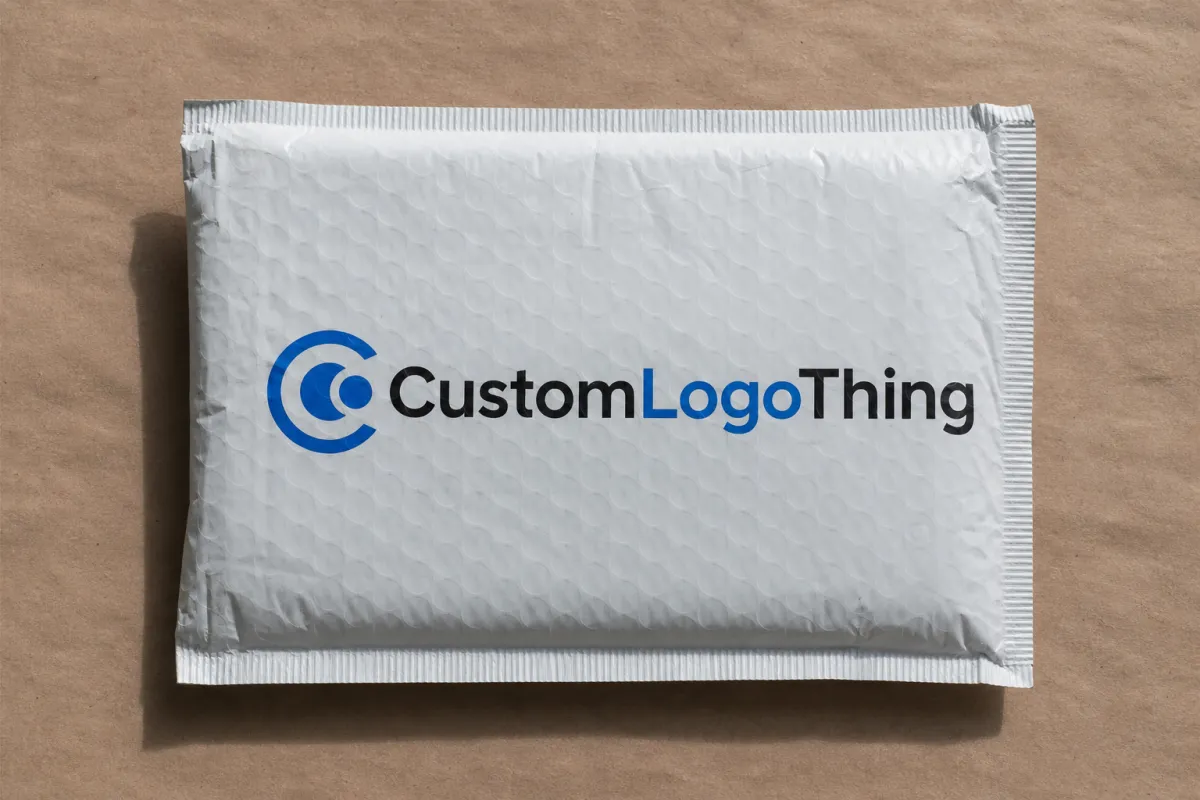
Two mailers can look almost identical and still sit in different price ranges. That is normal. Bubble mailers are layered products, and each layer carries its own cost. A slightly thicker outer film may improve puncture resistance, yet if the print area expands and the seal changes, the quote can move more than expected. Add one more variable and the increase compounds.
Here is the part buyers often miss. A cheaper stock mailer may save $0.04 to $0.06 per unit on paper, then add shipping expense if the size tips the parcel into a higher dimensional weight bracket. Add a few percentage points of transit damage and the savings can vanish. Brands That Ship apparel, accessories, or subscription kits often find that a custom-sized mailer pays back through lower cube, fewer inserts, and fewer packing mistakes.
Think about the decision in three layers:
- Unit cost — what one mailer costs at the quoted quantity.
- Landed cost — unit cost plus freight, duties if relevant, and handling.
- System cost — the mailer plus damage rates, labor, and presentation.
A procurement team may also discover that one custom mailer replaces a small carton, a polybag, and an insert. The mailer itself may cost more than a plain shipping bag, yet the full packaging stack drops in cost or complexity. The cheapest component is not always the cheapest system. Packaging budgets often hide that lesson in plain sight.
Quotes should always be based on real product dimensions, not a “close enough” size. An extra 20 mm of slack can increase the shipping footprint, let the product shift in transit, and make the package look improvised. Seal strength matters just as much. A weak adhesive strip can turn an inexpensive mailer into a return expense that never showed up in the quote.
For brands building a repeatable packaging program, custom bubble mailers sit in a useful middle lane between plain shipping materials and fully custom boxes. They offer a large printable surface, lighter weight than a carton, and less pack-out labor than rigid packaging. That mix makes them attractive for e-commerce teams that want brand visibility without adding a complicated assembly step.
Buyer takeaway: If one quote comes in far below the others, check thickness, print coverage, closure style, and freight assumptions before calling it the best deal.
Packaging teams often cross-check transit and recovery assumptions with organizations such as ISTA and the EPA recycling guidance. Those references do not set custom bubble mailers bulk pricing, yet they help buyers judge performance and end-of-life claims with more discipline. They also remind teams that a packaging spec is not just a marketing line; it is a shipping decision that has to survive real handling.
Product Details: What You Are Actually Buying
Custom bubble mailers are not simply bags with padding. The build matters. Most versions combine an outer film or paper face, a bubble lining for cushioning, a self-seal closure, and optional details such as a tear strip or tamper-evident seal. Once a logo goes on the surface, the mailer becomes part of the product presentation, not just the shipping layer.
The outer layer usually decides the look, print sharpness, and resistance to scuffs. The inner bubble layer handles impact. The seal determines whether the package holds through sortation and last-mile handling. Buyers who focus only on the logo can miss a harsher truth: a great graphic on a weak substrate still fails under pressure. In wholesale programs, that mistake becomes expensive quickly.
Two categories deserve a separate look early in the sourcing process: poly bubble mailers and kraft bubble mailers. Poly mailers usually provide a smooth, water-resistant face, strong color saturation, and high brand visibility. Kraft versions create a paper-forward retail feel and often fit brands that want a natural or minimal presentation. Neither category wins every time. The right pick depends on the product, the channel, and the cost target.
Poly Versus Kraft
Poly bubble mailers often suit beauty, accessory, and apparel brands that want bright color, crisp graphics, and better moisture resistance. The surface can also wipe clean more easily and usually supports vivid logo work. Kraft bubble mailers tend to fit brands that want a recycled-looking presentation and a softer retail story. They feel more tactile and can align better with a restrained identity. One is not better across the board.
A cosmetics brand shipping refill pouches may favor a branded poly mailer because it looks polished and resists incidental moisture. A stationery brand may choose kraft because the paper look supports the brand voice. The decision blends packaging design, operational needs, and the story the shipment tells before the package is even opened.
Custom bubble mailers are a strong fit for:
- Apparel such as tees, socks, and folded garments.
- Cosmetics and personal care items that need light cushioning.
- Subscription kits that need a consistent customer experience.
- Small hard goods like accessories, electronics components, and tools.
- Retail packaging programs where the shipper also carries the brand face.
Branded bubble mailers can also reduce the need for extra inserts or secondary wrap. That does not mean inserts disappear in every program. It means the outer package is already carrying more of the visual work. For many brands, that is enough to simplify pack-out by one step and make the shipment feel more intentional.
If you are reviewing options as part of a broader sourcing plan, it helps to compare the full set of Custom Packaging Products rather than treating the mailer as a one-off purchase. Some buyers shift part of the budget into Custom Poly Mailers. Others use a different insert strategy depending on product fragility and shipping channel.
One more angle matters for operations. Custom mailers can improve pack speed, lower the odds of wrong-bag errors, and reduce the number of package adjustments at the line. Those benefits do not show up in the unit price. They show up in labor, error rates, and the day-to-day reality of a warehouse moving thousands of orders a week.
Specifications That Affect Strength, Print, and Shipping
Specification choices drive both performance and price. Buyers often stare at the printed artwork first, but the structure underneath decides whether the package survives real handling. The key specs are thickness, bubble size, closure strength, opacity, puncture resistance, and available print area. Each one changes the others, which is why quote comparisons can get messy if the specs are not written down carefully.
Thickness is usually one of the first numbers in a pricing discussion. Thicker film or lining can improve durability, yet it also raises material cost. For many e-commerce programs, the right answer is not the heaviest material on offer. It is the thinnest option that still survives the shipping path. That is why testing matters. A mailer that looks fine in a conference room can fail after compression in a carton or contact with a sharp edge.
Bubble size affects cushioning. Small standard bubbles give even protection for light goods. Larger bubbles can improve shock resistance, although they also add bulk and can alter pack dimensions. Fragile products do not always need more bubble. Sometimes they need better fit, smarter orientation, or less internal movement. Geometry matters as much as padding volume.
Closure quality is another direct price lever. A stronger self-seal adhesive can cost more, but it helps prevent open seams during long distribution chains. A tear strip helps the customer open the package cleanly, though it adds a bit of complexity and cost. A premium packaging program may justify that feature if the opening moment matters. A purely operational shipment may not need it.
Print methods affect the quote too. Flexographic printing usually fits larger runs with simple artwork and repeatable colors. Digital printing can suit lower volumes or more complex graphics, though the unit cost is often higher. Spot-color work often lands in the sweet spot for brands that want a strong logo and controlled cost. Full-coverage artwork usually raises the price because it uses more ink and more production time.
To compare options more clearly, review the main tradeoffs below.
| Option | Typical Strength | Brand Impact | Cost Effect | Best Fit |
|---|---|---|---|---|
| Poly bubble mailer, 1-color print | Good for light to medium shipments | Clean, bold, high visibility | Usually lower setup and unit cost | Apparel, accessories, subscription shipping |
| Kraft bubble mailer, 1-2 colors | Good general protection | Natural, retail-friendly look | Moderate cost | Brands with earthy or minimal identity |
| Poly bubble mailer, full-coverage print | Good if material spec is adequate | Strong package branding | Higher print and ink cost | Campaign-driven launches, premium DTC |
| Custom size with tear strip | Depends on spec selection | Best unboxing presentation | Higher tooling and production complexity | Brands prioritizing customer experience |
Operational details deserve the same attention. Buyers should confirm carton pack count, palletization, and case weight before the order is locked. A case of 500 mailers can look efficient on the quote and still be awkward in the warehouse if it is too bulky or heavy. That turns into labor cost every time a picker moves stock from receiving to the line.
Spec sheets should state dimensional tolerances, closure style, and recommended storage conditions. If a supplier cannot provide that cleanly, treat it as a warning. Clear documentation matters even more in wholesale programs where multiple sites receive the same product and expect the same result from reorder to reorder. A supplier should be able to explain the spec without hand-waving.
Packaging systems also work better when the mailer is coordinated with the rest of the kit. A mailer may need to match custom printed boxes, labels, tape, and inserts so the final presentation feels deliberate. In retail packaging, inconsistency can make a mid-priced program feel cheap. Consistency often does the opposite. It can make a modest mailer look more expensive than it is.
Custom Bubble Mailers Bulk Pricing, MOQ, and Quote Basics
This is the part where many buying decisions settle. Custom bubble mailers bulk pricing usually depends on quantity tier, material type, print coverage, number of colors, and whether the mailer is a stock size or fully custom. The math is familiar to anyone who buys print packaging: larger runs spread setup over more units, so the unit price tends to fall.
MOQ shapes the curve in a very real way. A higher MOQ can drop the per-unit price sharply, but it also increases inventory exposure. A smaller order protects cash and storage space, though it often carries a setup premium. That premium is the cost of getting a short run on press or converting a custom size efficiently, not a penalty for ordering less.
Buyers should request at least three quantity tiers. A quote for 5,000 units is useful, but a 10,000-unit and 25,000-unit tier usually reveals how steep the drop really is. On many packaging programs, the difference between 5,000 and 10,000 units is enough to change the sourcing call, especially for recurring wholesale needs.
Below is a practical pricing framework many buyers use to compare quotes. The ranges are illustrative and vary by region, resin or paper market conditions, print method, and freight mode, but they mirror the kind of spread seen in custom packaging manufacturing when specs shift.
| Quantity | Typical Unit Price Range | Common Cost Drivers | Buyer Implication |
|---|---|---|---|
| 3,000-5,000 | $0.42-$0.78 | Higher setup share, shorter runs, more expensive freight per unit | Good for launches or seasonal testing |
| 10,000-20,000 | $0.24-$0.46 | Better spread of setup, steadier production efficiency | Often the sweet spot for growing brands |
| 25,000+ | $0.16-$0.34 | Lower conversion cost, better material purchasing power | Best for stable demand and repeat replenishment |
Those numbers only help if the quotes are actually comparable. One vendor may include freight, another may not. One may quote a standard size, another a custom size with more waste. One may specify heavier film or a stronger adhesive. The safest method is to compare line by line, not by headline number alone.
Ask for the following on every quote:
- Exact size — length, width, and usable internal space.
- Material spec — poly or kraft, thickness, bubble type, and finish.
- Print detail — number of colors, print sides, ink coverage, and PMS references.
- MOQ — the minimum order quantity and whether the price changes at tier breaks.
- Freight terms — EXW, FOB, DDP, or another delivery basis.
- Packaging format — carton pack count, pallet count, and case dimensions.
Landed cost deserves special attention for buyers who budget by unit price. Freight can erase the advantage of a cheaper print run if the cartons are inefficient or if the shipment has to move by air instead of sea. International sourcing makes this even more sensitive. Ask for a landed estimate early. A few extra cents in material may be cheaper than a freight setup that inflates the final bill.
Sourcing structure matters too. Some buyers prefer a specialist partner that manages custom packaging products directly. Others work through a reseller network. A direct producer often has more control over print consistency, size tolerances, and carton packing. That can reduce surprises. A reseller may be easier to start with, but more variables stay outside the buyer’s control.
That difference is practical, not theoretical. A direct manufacturer can explain how an artwork revision changes plate cost, how a size shift affects film usage, and where a reorder saves money because tooling already exists. A quote becomes a sourcing plan when those details are visible.
Process, Timeline, and Lead Time From Quote to Delivery
Custom work follows a sequence, and every step can add time if the buyer is not ready. The usual process begins with an inquiry, then moves through spec confirmation, artwork review, sample or proof approval, production, inspection, and shipping. A smooth order can move fast. A messy one can stall at proof stage for days.
Lead time depends on print method, run size, and shipping mode. For first orders, a realistic planning window is often 12 to 20 business days after proof approval for production, plus transit time. Simpler reorders can move faster, especially when artwork and size are already approved and material is in stock. Revision cycles still deserve padding, particularly if the design is new.
Delays usually show up in three places.
- Artwork revisions — logo scaling, file cleanup, or PMS color adjustments.
- Specification changes — last-minute size updates or material substitutions.
- Freight timing — port delays, warehouse congestion, or carrier scheduling.
Most of those problems can be prevented. Approve dielines early. Confirm color targets before production. Lock the final quantity before the press is scheduled. A lot of lead-time pain starts with one more change after the quote has already been accepted. That sounds minor. It usually is not.
Proof approval deserves real attention. Even a simple logo-only design should be checked for placement, bleed, and contrast. Dark surfaces may need stronger ink density or a different logo position to stay visible after handling. Matte or textured films can change the printed result more than the digital file suggests. A proof is not paperwork. It is the last clean chance to catch an expensive mistake.
Launch calendars need reverse planning. If the first shipment must land before a product drop, count backward from that deadline and add margin for sample approval, freight variation, and warehouse intake. That is normal project discipline, not overkill. In packaging, a late shipment affects purchasing, operations, marketing, and customer service all at once.
Reorders move faster when the file history is clean. Keep the final dimensions, approved print files, exact material spec, and accepted freight terms in one place. That record makes repeat purchasing easier and usually improves quote speed. Procurement teams appreciate that because the budget becomes more predictable from quarter to quarter.
Why Choose Us for Custom Bubble Mailers at Scale
For buyers sourcing at volume, price is only one part of the decision. Consistency, documentation, and delivery reliability matter just as much. A specialist packaging partner should quote clearly, explain spec tradeoffs, and support bulk programs without forcing the buyer to decode vague language. That matters most with custom bubble mailers, where a few hidden details can change the economics quickly.
At scale, the value is straightforward. Better control over materials and production usually means fewer quality surprises, steadier lead times, and a cleaner path to repeat ordering. That is crucial for procurement teams that cannot absorb a different result every time they reorder. If the mailer sits inside a wider retail packaging system, consistency becomes even more valuable.
Good guidance links the mailer to the product, not just the SKU. The answer should not be “buy the biggest one.” It should be based on product weight, surface finish, shipping zone, and branding goals. A 6 oz beauty kit and a 14 oz apparel bundle should not be treated the same. One may need stronger adhesive. The other may need more room for folded contents and a smoother insert flow.
That is where a focused packaging partner can outperform a generic reseller. A reseller may quote a product. A specialist can help configure a program. That includes matching the mailer to a fulfillment line, aligning print choice with package branding, and reducing the risk of under-specifying or over-specifying the bag. Over-specification raises cost. Under-specification raises damage. Both can be avoided with a sharper discussion at the start.
Businesses that source through Wholesale Programs often care about predictable replenishment, tiered pricing, and fewer administrative surprises. That is a sensible goal. Packaging procurement should feel controlled, not improvised. If the supplier can support annual volume planning, carton forecasting, and repeat artwork retention, the buyer gains real operating room.
Reliable sourcing also helps in compliance-adjacent conversations. Buyers who care about material choice, recyclability claims, or documentation may want references from recognized bodies like FSC when paper-based components are involved. That does not solve every packaging decision, but it does separate marketing language from claims that can be verified.
In practical terms, the best supplier relationship answers three questions quickly: Is the quote fair, is the product spec sound, and will the delivery window hold? Clear answers there make the sourcing process easier. That is how custom bubble mailers move from a line item to a dependable part of the packaging program.
Next Steps: Request Samples, Compare Quotes, and Order Smarter
The fastest way to improve the sourcing decision is to standardize the request before asking for pricing. Start with a clear size, material, print color count, quantity tier, and target ship date. If the item will ship with apparel, cosmetics, or other small goods, include product dimensions too. Vague inquiries invite vague pricing. Precise inquiries get you closer to usable numbers on the first round.
Samples matter more than many buyers expect. A digital mockup can look polished and still fail in hand because the closure feels weak, the finish is too glossy, or the mailer is too large for the contents. A sample lets you test fit, seal quality, print clarity, and opening experience before you commit to bulk volume. That step is tiny compared with the cost of reworking a full run.
Use a comparison sheet if you are requesting multiple quotes. Keep every supplier on the same baseline so the pricing can be judged fairly. The strongest sheets use the same size, the same material, the same print coverage, the same quantity, and the same freight basis. If one vendor is quoting a different adhesive or a heavier film, record it. Otherwise, the lowest number can hide the weakest specification.
A practical buying checklist:
- Confirm exact mailer size and internal fit.
- Choose poly or kraft based on product use and brand look.
- Define print colors, sides, and artwork coverage.
- Ask for tiered pricing at multiple quantities.
- Request a sample or proof before production.
- Compare landed cost, not just unit cost.
If your team is still refining the packaging mix, review whether the mailer should stand alone or work alongside another format from Custom Packaging Products. Some brands shift the visual impact into the outer shipper. Others keep the mailer simple and use a stronger branded insert or box for the customer-facing moment. The right answer depends on product size, fragility, and order density.
For brands that want a tight decision, the rule is simple: compare quotes on equal terms, verify the sample, and choose the option that balances protection, presentation, and total landed cost. That is the most reliable way to approach custom bubble mailers bulk pricing, especially when a few cents per unit can become a real budget line. If you need a clean starting point, send one request with the keyword, the size, and the quantity together: custom bubble mailers bulk pricing, with your target specs attached.
What drives custom bubble mailers bulk pricing the most?
Quantity is the biggest lever because setup costs spread across more units as the order grows. Material choice, print coverage, and custom sizing can move the unit price quickly, and freight should always be included so the quote reflects true landed cost.
What MOQ should I expect for custom bubble mailers in bulk?
MOQ varies by print method and whether the mailer is a stock size or fully custom. Larger runs usually qualify for better unit pricing, while small orders often carry a setup premium. Ask for tiered quotes so you can see where the price breaks become meaningful.
How long is the lead time for custom bubble mailers bulk orders?
First orders usually take longer because artwork, proofs, and production setup must be approved. Simple reorders move faster when specs and artwork are already on file. Shipping method, material availability, and revision count are the main schedule variables.
Can I get samples before placing a large custom order?
Yes, and samples are the safest way to check size, seal quality, and print appearance. Request a sample that matches your intended material and closure style, not just a similar product. Use the sample to confirm fit and whether the mailer protects well in transit.
How do I compare quotes for custom bubble mailers bulk pricing?
Compare the same size, material, print colors, quantity, and shipping terms across every quote. Look for hidden cost items such as tooling, freight, case packing, and sample charges. Use landed cost per unit, not the headline price, as the final decision metric.

