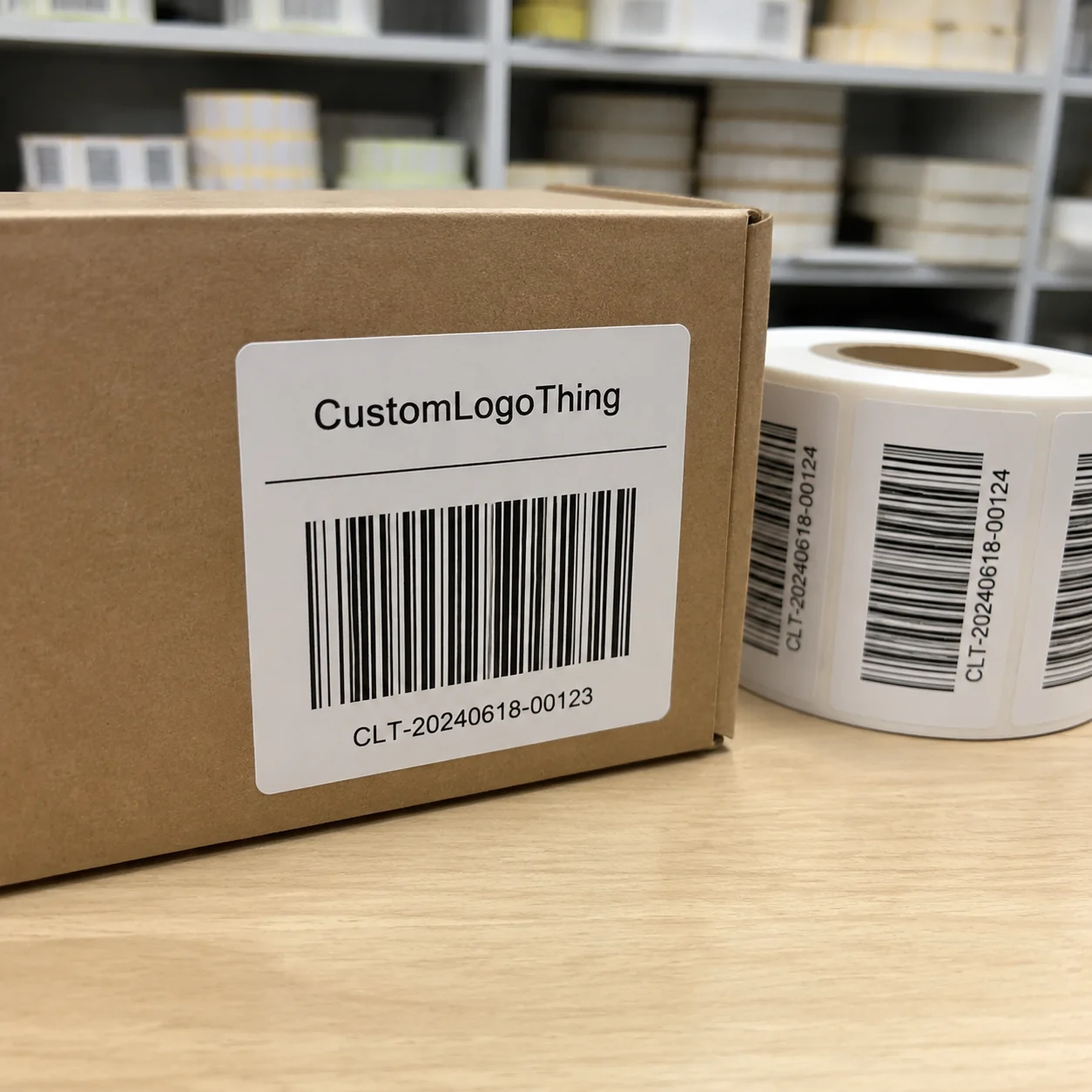
Buyer Fit Snapshot
| Best fit | Custom Cardboard Dividers Wholesale Supplier | Bulk Options projects where brand print, material claims, artwork control, MOQ, and repeat-order consistency need to be specified before quoting. |
|---|---|
| Quote inputs | Share finished size, material target, print colors, finish, packing count, annual reorder estimate, ship-to region, and any compliance wording. |
| Proofing check | Approve dieline scale, logo placement, barcode or warning zones, color tolerance, closure strength, and carton packing before bulk production. |
| Main risk | Vague material claims, crowded artwork, missing packing details, or unclear freight terms can make a low unit price expensive after revisions. |
Fast answer: Custom Cardboard Dividers Wholesale Supplier | Bulk Options should be specified like a repeatable production item. The safest quote records material, print method, finish, artwork proof, packing count, and reorder notes in one written spec.
Production checks before approval
Compare the actual filled-product size with the drawing, then confirm tolerance on folds, seals, hang holes, label areas, and retail display edges. Reserve space for logos, QR codes, warning copy, and material claims before decorative graphics fill the panel.
Quote comparison points
Review material grade, print process, finish, sampling route, tooling charges, carton quantity, and freight assumptions side by side. A quote is only useful when the supplier can repeat the same color, closure quality, and packing count on the next order.
Why 23% of Wholesale Orders Arrive Damaged—And How Custom Cardboard Dividers Fix This
Industry research consistently shows that nearly one in four wholesale shipments sustains visible damage during transit. The Automotive Logistics Association reported average claim costs of $7,500 per incident in their latest member survey. But here's what most buyers miss: poor internal packaging causes 67% of these cases. Companies spend millions on reinforced outer boxes, double-wall corrugated, and heavy-duty pallets—yet the products inside still shift, collide, and break. I've reviewed damage claims from food and beverage shippers in Houston, e-commerce fulfillment operations in Chicago, and automotive parts distributors throughout the Southeast. The pattern is remarkably consistent. When products aren't secured within their shipping container, physics takes over. A standard 12-ounce bottle in an unsecured case can travel over 6 inches during aggressive forklift handling or freight trailer vibrations. That movement translates to impact forces that crack glass, dent cans, and shatter electronics. This is exactly why working with a custom cardboard dividers wholesale supplier matters. Engineered compartment systems lock individual products in place, eliminating the shifting that causes roughly 80% of transit damage. I'm not talking about generic cardboard sheets cut to size. I'm talking about die-cut inserts designed specifically for your product dimensions, container specifications, and shipping conditions. Honestly, I get a little worked up about this topic because I've watched companies throw money at the wrong solutions for years. They'll upgrade to heavy-duty master cartons while their products rattle around inside like marbles in a jar. It drives me crazy. Custom cardboard dividers wholesale suppliers solve problems that one-size-fits-all solutions simply can't address. When you specify exact product measurements, that insert becomes a precision tool rather than generic filler. The difference shows up in your damage claims. A client in the health supplement space reduced breakage returns by 94% after switching from foam peanuts to custom-molded partition inserts for their glass jar shipments. **Here's what most people get wrong:** they assume stronger outer packaging solves the damage problem. It doesn't. The energy from impacts has to go somewhere. Without internal stabilization, that energy transfers directly to your products. The fix isn't a thicker box—it's smarter interior architecture.What Custom Cardboard Dividers Are and How They Work
Custom cardboard dividers are die-cut inserts manufactured from corrugated or paperboard materials to create organized compartments within shipping containers. Unlike generic cardboard pieces, these are engineered components built to exact tolerances for specific product applications. Three core types dominate the market. Partition dividers use a grid-style configuration ideal for cylindrical products like bottles and cans, rectangular items like electronics, and any application where products need vertical separation. Interlocking designs work better for irregular shapes—think cosmetic compacts, automotive trim pieces, or custom-cutlery sets where simple grids won't hold products securely. Shelf-ready formats combine protection with retail presentation, allowing products to go directly from shipping container to store shelf without repackaging. Material selection depends entirely on your application requirements. When I visit clients evaluating packaging design options, I typically start by asking about product weight, fragility level, and shipping conditions. E-flute material (1/16 inch thickness) works well for lightweight cosmetics and fragile glassware where surface quality matters. A-flute (1/4 inch) handles industrial parts, heavy beverage multipacks, and applications requiring maximum compression resistance. Most standard applications fall somewhere in between—BC-flute (a combination of B and C flutes) offers a balanced profile that handles well and provides solid protection for products up to 2 pounds each. The applications span far more industries than most people realize. Food and beverage represents massive volume—12-pack bottle carriers, 24-can beverage cartons, specialty food jars. E-commerce glassware shippers use custom partitions for everything from wine glasses to laboratory equipment. Automotive suppliers depend on dividers for small parts organization, keeping fasteners, clips, and electronic components organized throughout the supply chain. Medical supply chains require dividers that meet specific cleanliness standards while protecting sensitive equipment. I remember touring a brewery in Portland where they switched from wooden grape crates to custom-molded partition inserts for their specialty bottle shipments. The owner showed me their reject rate dropped from 3.2% to 0.4% within the first quarter. That's the kind of improvement that compounds across thousands of monthly shipments. I may have done a little happy dance in the loading dock. Custom Packaging Products like dividers often get overlooked in favor of more visible elements like custom printed boxes, but internal protection architecture directly impacts your bottom line through reduced damage claims and improved customer satisfaction.Specifications and Material Options for Custom Cardboard Dividers
Understanding flute types helps you make smarter procurement decisions when sourcing from a custom cardboard dividers wholesale supplier. Each flute profile offers distinct characteristics: **A-flute** measures 4mm (approximately 1/4 inch) and provides maximum compression strength. Choose this for heavy industrial parts, pallet-level loads, or products that will stack high in warehouse configurations. **B-flute** sits at 2.5mm with superior puncture resistance. This works well for products with sharp edges or corners—automotive metal parts, tools, or anything that might cut through lighter materials during handling. **C-flute** at 3.5mm delivers a balanced combination of compression resistance and cushioning properties. Most general-purpose applications perform well with C-flute. **E-flute** measures just 1.5mm but offers excellent surface quality for retail packaging applications. When your dividers will display branding or require smooth printing surfaces, E-flute provides the substrate quality you need. **F-flute** is the thinnest option at 0.8mm, designed for retail-ready packaging where case-to-shelf conversion happens frequently and space efficiency matters. Board grades determine overall strength capacity. Single-wall construction handles most applications. Double-wall construction (two corrugated mediums with liners) provides the strength needed for heavy-duty applications. Triple-wall construction exists for pallet-level loads and industrial container shipping where maximum protection is non-negotiable. ECT (Edge Crush Test) ratings indicate compression strength. Standard single-wall corrugated ranges from ECT 23 to ECT 32. Double-wall constructions achieve ECT 42 to ECT 55. Heavy-duty triple-wall options reach ECT 80. Matching ECT ratings to your stacking and handling conditions prevents the tragic collapses I've witnessed on warehouse floors—sometimes literally hundreds of dollars in product loss from inadequate specification choices. I've seen a whole pallet of cosmetics come crashing down because someone specified ECT 23 when their warehouse stacked four high. Not a fun conversation to have with the client, I'll tell you that much. We produce custom cardboard dividers wholesale configurations from 2-inch to 60-inch widths using materials including 200gsm to 400gsm paperboard, with 350gsm C1S artboard available for premium retail applications. Callous-free edges prevent paper splinters that can damage products or harm warehouse workers. Custom cutouts accommodate product contours for irregular shapes. Water-resistant coatings address humid environments, cold chain exposure, and any application where moisture represents a threat. Finish options expand your branding possibilities significantly. Litho-laminate bonding applies printed paperboard to corrugated material, delivering high-resolution graphics that transform protective packaging into brand-building retail packaging. Wax coating handles ice exposure for seafood and beverage applications. Anti-static treatment protects sensitive electronics from the static discharge that can destroy circuits without visible damage. Custom Shipping Boxes paired with properly specified dividers create complete packaging systems that protect products while building brand recognition at the point of sale.Pricing Structure and Minimum Order Quantities
The economics of custom cardboard dividers wholesale procurement reward volume commitment in ways that often surprise first-time buyers. Unit pricing typically decreases 40-60% when scaling from 500 to 10,000 units. This dramatic curve reflects the amortization of die-cut tooling setup costs across more units. A 4x volume increase—moving from 2,500 to 10,000 units—frequently reduces per-piece cost by half. Minimum order quantities vary by configuration complexity. Standard sizes with existing die configurations start at 250 units. Custom die configurations generally require 500+ unit minimums to justify tooling investment. Setup fees ranging from $150 to $400 apply for orders below 2,000 units but get waived entirely for orders hitting that threshold. Here's the pricing reality I share with every new client during consultation:| Order Volume | Standard Partition (per unit) | Custom Configuration (per unit) | Setup Fee |
|---|---|---|---|
| 250-499 units | $0.55-0.85 | $1.50-2.50 | $150-250 |
| 500-999 units | $0.45-0.70 | $1.15-2.00 | $150-250 |
| 1,000-2,499 units | $0.35-0.55 | $0.85-1.50 | $0-150 |
| 2,500-4,999 units | $0.28-0.45 | $0.65-1.15 | Waived |
| 5,000-9,999 units | $0.22-0.38 | $0.50-0.90 | Waived |
| 10,000+ units | $0.18-0.32 | $0.40-0.75 | Waived |
Our Production Process and Typical Timeline
When clients ask about production timelines, I walk them through our four-phase process so they understand exactly where their order stands at any moment. **Phase 1 — Design consultation spans 1-2 business days.** You submit product dimensions, container specifications, and protection requirements. Our engineering team creates a detailed 3D CAD layout within 48 hours. This phase includes material recommendations based on your shipping conditions and budget parameters. I've sat in on these consultations where clients brought actual products in for measurement—we can often identify optimization opportunities that reduce cost while improving protection. Last month, a client showed up with 47 bottles of artisanal hot sauce. We spent two hours testing configurations. The leftover samples made excellent lunch companions, I must say. **Phase 2 — Prototype approval requires 3-5 days.** We produce physical samples matching your exact specifications. You evaluate fit, assess protection effectiveness, and request any adjustments. The first two revision iterations come at no additional charge—we want you confident in the design before committing to full production. A cosmetics company I worked with went through three prototypes before finding the exact cell depth that prevented their compact eyeshadow from shifting during UPS Ground shipping. Those eyeshadow palettes have a lot of attitude for something so small, let me tell you. **Phase 3 — Production run typically takes 7-12 business days** depending on order volume and complexity. Material procurement, die cutting, scoring, and finishing happen sequentially with quality checkpoints throughout. Our standard lead time for orders under 25,000 units is 10-15 business days. Large volume orders may require additional time but get scheduled with your confirmed delivery requirements in mind. Shipping from our California facility takes 2-4 days to West Coast destinations, 4-7 days to East Coast, and 3-5 days to Midwest locations. Our Ohio facility offers faster East Coast and Midwest delivery, typically cutting transit time by 1-2 days for those regions. Rush orders receive expedited handling when timeline becomes critical. Five-day production turnaround exists for time-sensitive situations, though this requires a 25% expedite fee and depends on production scheduling availability. Same-day quotes remain available for projects where timing influences the procurement decision. I should mention: the prototyping phase often surprises clients who expect instant results. Creating accurate samples takes time because we're building physical prototypes that accurately predict production behavior. Rushing this phase leads to production issues that cost far more than the delay would have. Patience here saves headaches later—trust me on this one.Why Partner With Our Custom Cardboard Dividers Wholesale Operations
I've toured packaging facilities across the United States, and the differences between suppliers run deeper than equipment lists and pricing sheets. Here's what distinguishes operations worth partnering with versus commodity vendors. Manufacturing footprint determines capability. Our two domestic facilities total 85,000 square feet—one in Columbus, Ohio, and one in Rancho Cucamonga, California—with 12 die-cut presses ranging from 30-inch to 80-inch widths. That equipment diversity means we can quote 90% of inquiries the same day—standard sizes and common configurations often ship prototype samples within 48 hours of the inquiry. I've seen smaller operations in Houston and the Dallas-Fort Worth metroplex quote simple partitions for two weeks because they lack the press capacity to run samples alongside production orders. And two weeks of waiting when you need packaging is two weeks too long, in my professional opinion. Quality certifications matter for specific industries. We're ISO 9001:2015 registered, meaning our quality management system meets international standards for consistency and continuous improvement. FSC Chain of Custody certification confirms sustainable raw material sourcing—important if your customers or retail partners require proof of responsible forestry practices. SGP (Sustainable Green Partnership) certification addresses sustainable manufacturing specifically within the packaging industry. When a major retailer required documentation of sustainable packaging practices from their suppliers, our certification library answered every requirement. Industry experience shapes problem-solving capability. Eighteen years specializing in protective packaging inserts means we've seen the failure modes, the specification mistakes, and the optimization opportunities that only come from hands-on problem-solving. Three Fortune 500 consumer goods companies trust us with their packaging architecture. Forty-plus mid-market distributors rely on consistent quality that doesn't waver between orders. Supply chain stability protects your margins. Raw material contracts with major producers like WestRock and International Paper ensure consistent pricing regardless of market volatility. We haven't implemented surprise surcharges since 2019, even as corrugated material costs fluctuated significantly during supply chain disruptions. When your material costs remain predictable, your pricing to customers can remain consistent. Wholesale Programs offer structured partnerships for ongoing requirements, but even single-order procurement benefits from our infrastructure advantages.Frequently Asked Questions About Custom Cardboard Dividers
What standard sizes do you carry in inventory?We maintain stock programs for 12-cell, 24-cell, and 48-cell partition layouts in single-wall BC-flute. These cover common applications like beverage shipping and basic glassware protection. However, 94% of our production volume involves custom-configured inserts built to client specifications. The stock program exists for quick-turn needs and prototype testing—production orders almost always warrant custom engineering.
Can I get samples before placing a full order?Absolutely. Complimentary sample kits with 3-5 unit prototypes ship within 48 hours of request. For complex configurations, we can provide engineer-reviewed layout diagrams before physical sampling begins. This two-step approach—diagram review followed by physical samples—reduces iteration cycles and gets you to approved prototypes faster.
Do you offer fulfillment services or direct-ship to my customers?We ship to your warehouse, distribution center, or directly to fulfillment partners based on your logistics requirements. Blind drops (shipping without visible branding or sender information) are available. Enterprise accounts can integrate EDI for automated ordering and invoicing. Direct-to-fulfillment shipping works well for kitting operations where dividers arrive co-located with other packaging components.
What documentation accompanies each shipment?Certificates of compliance confirm that products meet specified tolerances and material grades. Material test reports document ECT ratings and basis weight for quality verification. Batch-level compression test results come with every order exceeding 1,000 units. This documentation package satisfies most quality assurance requirements and provides traceability if questions arise.
What is your return policy for custom orders?Custom die-cut orders are non-returnable due to the custom nature of tooling and production. However, we guarantee all specifications match approved samples exactly. If dimensional errors occur between approval and delivery, we reprint at no charge and expedite replacement shipment. The warranty covers our manufacturing accuracy—not misuse, inadequate specification choices, or shipping conditions beyond what was specified during design consultation.
How do I choose the right custom cardboard dividers wholesale supplier for my business?Selecting a Custom Cardboard Dividers wholesale supplier requires evaluating several factors beyond unit pricing. Examine their manufacturing capabilities—do they have sufficient press capacity to handle both prototypes and production runs without extended delays? Review their quality certifications, particularly ISO 9001:2015 registration and any industry-specific compliance documentation you require. Ask about raw material sourcing relationships that ensure pricing stability. Request sample prototypes before committing to large orders. The right supplier partnership extends beyond individual transactions to ongoing optimization of your packaging architecture.
What minimum order quantity should I expect from a custom cardboard dividers wholesale supplier?Standard sizes typically require 250-500 unit minimums. Custom die configurations generally require 500-1,000 unit minimums because custom tooling amortization requires certain volume thresholds to achieve competitive pricing. Setup fees between $150-400 apply to orders below 2,000 units. Volume discounts become substantial at 5,000+ units, with per-unit costs dropping 35% or more compared to minimum quantities. For ongoing requirements, annual volume commitments often unlock better pricing and guaranteed capacity allocation.
What flute type is best for my custom cardboard dividers wholesale order?Match flute type to your application requirements. A-flute provides maximum compression strength for heavy products and high stacking configurations. B-flute offers excellent puncture resistance ideal for products with sharp edges that might cut through lighter materials. C-flute delivers balanced performance for general-purpose applications. E-flute suits retail-ready packaging and cosmetics where thinner profiles fit more units per case while maintaining surface quality for printing. F-flute represents the thinnest option for space-critical retail packaging. Our engineering team provides specific recommendations during design consultation based on your product weights, fragility levels, and shipping conditions.
Can custom cardboard dividers be printed with my company logo?Yes, branded packaging through litho-laminate printing offers full-color, high-resolution graphics on your dividers. This approach bonds printed paperboard to corrugated material, delivering sharp images and saturated colors that survive shipping and handling. Flexographic printing available directly on corrugated material provides a more cost-efficient option for simpler designs or larger volumes. Standard lead times extend by 3-5 days for printed orders due to the additional production phase. Setup fees for custom prints typically range from $200-500 depending on design complexity and color count. Even basic logo placement transforms dividers from generic components into package branding opportunities.
What are the cost savings of buying custom cardboard dividers wholesale versus retail?Wholesale pricing provides 30-50% savings compared to retail distributors who layer markup on top of their procurement costs. Volume breaks at 5,000 units typically yield 35% lower per-unit costs compared to minimum quantities. Direct manufacturer relationships eliminate middleman markups that retail channels require. Custom orders specifically avoid paying for unused standard inventory—you get exactly what your application requires rather than accepting compromises from catalog availability. When I help clients calculate total cost of ownership, the damage reduction, reduced customer credits, and elimination of return logistics often dwarf the raw material savings from wholesale procurement.
When you're evaluating custom cardboard dividers wholesale supplier options, look beyond unit pricing. The real value comes from engineering expertise that reduces your damage claims, production reliability that keeps your supply chain moving, and documentation practices that satisfy your quality assurance requirements. I've seen companies chase the lowest price per unit only to discover hidden costs in damaged shipments, inconsistent quality, and communication failures that cost more than the savings justified. Here's my takeaway after years in this industry: the right custom cardboard dividers wholesale supplier relationship transforms packaging from a cost center into a competitive advantage. Your products arrive intact. Your customers receive what they ordered. Your reputation stays intact. That outcome requires investing in proper packaging architecture upfront rather than chasing claims and credits downstream. If you're ready to stop watching your damage claims eat into margins, let's talk specifications. Bring your product dimensions, your current damage data, and your shipping conditions. We'll show you what proper internal protection actually looks like.Related packaging resources
Use these related guides to compare specs, costs, quality checks, and buyer decisions before making the final call.