Buyer Fit Snapshot
| Best fit | Custom Cardboard Inserts for Bottles projects where brand print, material claims, artwork control, MOQ, and repeat-order consistency need to be specified before quoting. |
|---|---|
| Quote inputs | Share finished size, material target, print colors, finish, packing count, annual reorder estimate, ship-to region, and any compliance wording. |
| Proofing check | Approve dieline scale, logo placement, barcode or warning zones, color tolerance, closure strength, and carton packing before bulk production. |
| Main risk | Vague material claims, crowded artwork, missing packing details, or unclear freight terms can make a low unit price expensive after revisions. |
Fast answer: Custom Cardboard Inserts for Bottles: Retail Fit, Compliance Space, Print, and Cost should be specified like a repeatable production item. The safest quote records material, print method, finish, artwork proof, packing count, and reorder notes in one written spec.
Production checks before approval
Compare the actual filled-product size with the drawing, then confirm tolerance on folds, seals, hang holes, label areas, and retail display edges. Reserve space for logos, QR codes, warning copy, and material claims before decorative graphics fill the panel.
Quote comparison points
Review material grade, print process, finish, sampling route, tooling charges, carton quantity, and freight assumptions side by side. A quote is only useful when the supplier can repeat the same color, closure quality, and packing count on the next order.
Custom Cardboard Inserts for bottles are one of those packaging details people usually notice only when something goes wrong. A bottle arrives upright, the label stays crisp, the carton opens cleanly, and nobody gives the insert a second thought. That is the point. When the fit is right, the insert disappears into the job. When the fit is wrong, it becomes the story: rattling glass, rubbed ink, chipped shoulders, and a customer who now doubts the whole brand before they have even poured a glass.
I have seen teams spend weeks refining artwork and outer carton graphics, only to treat the interior as an afterthought. That is backwards. The inner structure is what decides whether the package behaves like a designed object or like a gamble. Custom Cardboard Inserts for bottles keep the product centered, separate fragile surfaces, and stop movement from building into damage. They also influence how the pack feels to handle, which is why they matter in retail, gift, and shipping applications alike.
There is no single insert that works for every bottle. A lightweight wine bottle headed for a shelf display needs a different structure from a heavy spirits bottle traveling through a parcel network. Shape, closure height, filled weight, carton size, and handling route all change the design. Get those inputs wrong, and the most elegant insert in the world is gonna cause headaches.
Why custom cardboard inserts for bottles matter
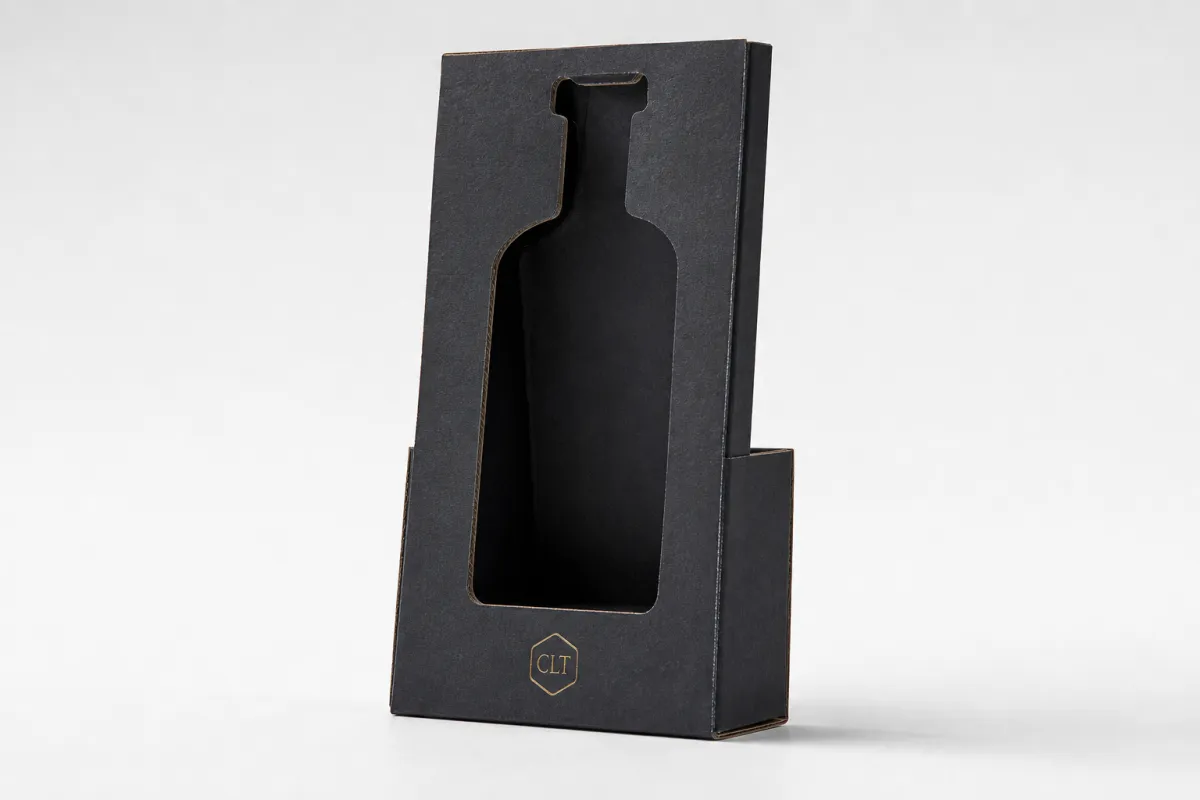
One loose bottle can spoil an entire shipment. A tiny chip on the neck, a label scraped at the corner, or a carton that shifts audibly when lifted is enough to signal trouble. Custom cardboard inserts for bottles exist to interrupt that chain before it starts. They are not decorative padding. They are the internal structure that keeps each bottle upright, centered, and isolated while the carton is stacked, moved, dropped, and sorted through the supply chain.
In practical terms, custom cardboard inserts for bottles are die-cut or folded paperboard components that hold one or more bottles inside a carton, mailer, or presentation box. Some use simple slots. Others use partitions. A few cradle the base and shoulder in a layered structure that feels almost architectural. The shape changes depending on the use case. A single bottle in a luxury set may need a clean reveal and a firm hold. A six-bottle shipper has a different job: keep every unit apart so one impact does not travel through the whole pack.
That split between presentation and protection is where packaging work gets real. Retail packaging wants the insert to stay visually quiet, support the brand, and make opening the box feel deliberate. Transit packaging wants crush resistance, repeatability, and tighter tolerances. The same bottle can need very different custom cardboard inserts for bottles depending on whether it is headed for a shelf, a gift set, or a parcel network that will sort it, drop it, and move it again.
The common mistake is assuming the outer carton can do everything alone. It cannot. The carton contains the package; the insert controls the movement. If the bottle can drift even a few millimeters, the risk rises. If the bottle is tall, heavy, or top-loaded, the risk rises faster. That is why custom cardboard inserts for bottles often cost less than the damage they prevent, once you count void fill, oversized cartons, extra corrugated, rework, and claims handling after the fact.
"A bottle insert does its best work quietly: the carton opens square, the bottle sits still, and the pack never rattles back at you."
Brand perception is tied to that behavior more than many teams expect. A neat insert reinforces the message printed on the label. A sloppy one undercuts it, even if the bottle itself is expensive and the artwork is strong. That is why custom cardboard inserts for bottles belong in the packaging system from the start, not in the category of whatever was left over after the print run was approved.
How custom cardboard inserts for bottles work
The mechanics are straightforward once you see the structure in hand. Custom cardboard inserts for bottles create a controlled cavity around the base, body, shoulder, or neck so the bottle cannot slide sideways inside the carton. Some designs depend on a single slot cut from paperboard. Others use layered supports that form a deeper cradle. Multi-bottle packs often use partitions that separate each cell and reduce bottle-to-bottle contact. The goal never changes: stop the bottle from behaving like a loose object.
What makes custom cardboard inserts for bottles effective is the way they distribute force. A drop, a squeeze from stacked cartons, or the vibration of a delivery route does not hit one point only. A better insert spreads that energy through the board and into the outer shipper, which lowers the load on the glass. Smart geometry can take pressure at the base, steady the shoulder, and leave enough clearance around the label that print does not scuff. That matters for embossed glass, heavyweight spirit bottles, and cosmetic or specialty bottles with unusual shoulders or neck finishes.
Material choice shapes the result. Corrugated board is common in shipping because it adds crush resistance and structural strength. Solid bleached sulfate board can work well for premium presentation, especially where print quality and crisp folds matter. Chipboard suits lighter retail uses. Kraft paperboard brings a more natural, pared-back feel. For sustainability programs, buyers often request FSC-certified paperboard and confirm sourcing through fsc.org. If transit validation matters, the testing guidance at ista.org is worth reviewing early, especially for drop and vibration expectations.
Custom cardboard inserts for bottles work best as part of the entire packaging system, not as a loose sheet that gets fitted in at the last minute. The insert has to match the outer carton, the internal height, the closure style, and the pace of packing on the line. A structurally excellent insert that slows the team down is still a problem. So is one that forces operators to wrestle bottles into place. Good packaging design protects the product and respects the production floor.
Prototype testing is where assumptions get cleaned up. A difference of a few millimeters can mean the gap between a snug pack and a bottle that wobbles in transit. That is why custom cardboard inserts for bottles should be checked with real filled samples whenever possible, not only empty mockups. A full bottle carries weight differently. The center of gravity shifts. Labels add thickness. Closures change the vertical profile. A design that looks perfect in CAD can reveal weaknesses the first time a real bottle slides into it.
For brands building Custom Printed Boxes or premium retail packaging, the insert also shapes the reveal. A clean lift, a finger notch, or a balanced partition changes how the customer experiences the product. The best custom cardboard inserts for bottles stay quiet, but they still carry a lot of the emotional work.
Custom cardboard inserts for bottles: cost and pricing factors
Pricing for custom cardboard inserts for bottles comes down to a handful of variables, and the quote becomes much easier to read once those variables are visible. Board grade, thickness, die complexity, quantity, print coverage, finishing, and assembly method all shape unit cost. A straightforward insert made from standard board with a simple fold pattern can be economical at scale. A premium insert with close tolerances, multiple cutouts, and full-color print will cost more because tooling, make-ready, and labor rise with it.
Quantity is one of the biggest levers. Small orders usually carry a higher unit price because setup costs are spread over fewer pieces. That is not a flaw in the quote; it is the math of production. A basic insert might sit around $0.12-$0.20 per unit at 10,000 pieces, while a more complex multi-bottle version may land closer to $0.22-$0.40 depending on board, structure, and print. At 1,000 or 2,000 pieces, the unit price can climb sharply because cutting and setup do not shrink at the same rate.
Here is a simple comparison of how custom cardboard inserts for bottles are often priced in practice:
| Insert option | Typical use | Approx. unit cost at 5,000 pcs | Notes |
|---|---|---|---|
| Light chipboard insert | Retail display, lighter bottles | $0.10-$0.18 | Clean presentation, less protection for rough shipment paths |
| Single-wall corrugated insert | E-commerce and parcel transit | $0.18-$0.30 | Better crush resistance and better bottle separation |
| Premium SBS or laminated paperboard insert | Gift sets, luxury retail packaging | $0.22-$0.45 | Higher presentation value, often paired with custom printed boxes |
| Multi-part custom structure | Heavier or mixed-format bottle kits | $0.30-$0.60 | More tooling, more assembly steps, better fit for unusual bottle shapes |
Those ranges are starting points, not promises. Custom cardboard inserts for bottles can land above or below them depending on the build. FSC-certified board may be specified. Print may be sparse or heavily covered. The dieline may need a special tool. The bottle shape may force a more complex nest. Even a minor change, like adding a finger notch or moving a fold line, can alter cutting speed and scrap rate. Small design decisions show up in the invoice, whether anyone planned on them or not.
Another price driver is whether the insert supports shipping or display. Retail packaging usually allows more room for appearance and brand cues. Transit inserts are built for strength, repeatability, and efficient loading. Comparing quotes on unit cost alone misses most of the picture. Total packaging cost includes damage claims, labor, freight cube, rework, and the customer’s first impression. The cheapest custom cardboard inserts for bottles can become the most expensive once returns begin.
Standardizing bottle footprints can save real money. If a brand uses several SKUs with similar base and shoulder dimensions, one insert family may cover more than one bottle with small adjustments. That reduces tooling duplication and simplifies inventory. It also makes sourcing Custom Packaging Products more manageable when multiple components must work together, and it can reduce the friction of matching inserts to outer cartons such as the options in Custom Shipping Boxes.
Production process and timeline for custom cardboard inserts for bottles
The production path for custom cardboard inserts for bottles is usually more structured than people expect, because a bad fit is expensive and embarrassing in equal measure. It begins with bottle sampling and measurement. A capable supplier will want the actual bottle or, at minimum, a dimension sheet with base diameter, shoulder width, total height, neck finish, closure height, and any surface details that might interfere with a close fit. If the bottle tapers, carries a heavy base, or uses an unusual profile, that needs to be clear from the start.
After sampling, the design team builds the structure and turns it into a dieline. This is where custom cardboard inserts for bottles move from concept to engineering. The dieline controls the cuts, folds, tabs, and partitions. Once the flat pattern is approved, a prototype is cut and assembled. That sample is then checked against the real bottle, not just visually but physically: Does the bottle load quickly? Does it scrape the label? Does the neck sit at the right depth? Does the insert resist slight side pressure?
Typical timing depends on complexity, but a straightforward project often runs like this: 2-4 business days for sampling and concepting, 3-5 business days for prototype cutting and review, and then roughly 10-15 business days for production after approval. A more complex insert with multiple revisions can take longer, especially if artwork approval, material sourcing, or carton integration adds extra steps. Imported board or special finishing can extend the schedule as well.
Custom cardboard inserts for bottles move fastest when the buyer provides complete information up front. The best project files usually include bottle drawings or sample measurements, the number of bottles per carton, filled weight, shipping method, desired outer carton size, print requirements, and any retail display expectations. If the supplier has to chase those details piece by piece, the timeline slips. That is less a production failure than a missing-input problem.
Compressed schedules can work, but they leave less room for testing and revision. That matters because real handling exposes weaknesses that CAD does not show, especially with tall necks, wide shoulders, and heavy glass. If the shipment will move through a parcel network, the insert should be reviewed against vibration and drop risk. If the cartons will travel on pallets, compression and stack strength deserve more attention.
For buyers who want reliable branded packaging without surprises, a quick prototype is worth the time. One sample can prevent an entire run of custom cardboard inserts for bottles from being too loose, too tight, or too fragile. That is usually a far cheaper lesson than discovering the problem after the boxes have reached customers.
Key factors that shape the right insert design
Every bottle brings constraints, and custom cardboard inserts for bottles need to respect them if they are going to perform well. Bottle dimensions are the obvious starting point, but nominal specs are never enough on their own. Tolerance stack-up matters in real production. A bottle that should measure 72 mm across the base may run slightly wider in practice, or a closure may sit higher than the drawing indicates. If the insert is built too tightly around the paper spec, the real bottle may drag during loading or deform the board during use.
Weight and center of gravity matter just as much. A heavy base with a narrow shoulder behaves differently from a lighter bottle with a broader shape. Custom cardboard inserts for bottles carrying heavier products often need a deeper cradle or stronger base support so the carton does not feel top-heavy. Mixed-bottle kits are even trickier because one heavy bottle may need more support than the others. That is where partitions and layered structures earn their keep.
Closures, shoulders, embossing, and finish all affect insert behavior. A tall cork or cap changes the vertical space available in the carton. Decorative shoulders may need extra clearance so the board does not rub away the finish. Matte labels can scuff differently from gloss labels, and textured glass can catch in ways smooth glass will not. Custom cardboard inserts for bottles need to account for those surface details so the product slides in cleanly but does not have room to shake loose afterward.
The shipping environment is another major factor. Parcel movement differs from pallet freight, and climate matters too. Humidity can soften some paperboard structures, while temperature swings can affect how a folded insert holds shape. If the product will sit in a warehouse, cross multiple carriers, or travel long distances, the design should be tested against that path. For some projects, that means compression testing. For others, it means drop testing or vibration testing based on the route and carton design.
Branding and customer experience complete the picture. Some brands want the insert to vanish into the background. Others want it to feel intentional and premium, almost like part of the unboxing ritual. That is where retail packaging and package branding overlap. Custom cardboard inserts for bottles can be plain and functional, or they can carry printed cues, reveal layers, and improve the sense of order when the customer opens the carton. Neither approach works in every case, but both should be intentional.
There is also a commercial truth that gets missed in early planning: the insert must match the business model. A DTC brand shipping ten thousand units a month needs speed and consistency. A luxury gift program may care more about presentation and reveal. A wholesale order may prioritize pack density and pallet efficiency. Custom cardboard inserts for bottles should reflect that reality instead of borrowing a generic one-size-fits-all template.
Step-by-step guide to ordering custom cardboard inserts for bottles
If you are ordering custom cardboard inserts for bottles for the first time, the process goes much smoother when you treat it like a specification project instead of a casual quote request. Start by documenting the bottle count per carton, the exact bottle dimensions, the filled weight, the closure height, and the outer carton size if it is already fixed. If the insert has to support retail display and shipping at once, say that clearly. Those are different use cases, and the design will shift accordingly.
- Collect bottle samples or accurate drawings, and include the finished product weight, not just the empty bottle weight.
- Define the shipping route: parcel, pallet, mixed freight, or local distribution.
- State whether the insert is for retail packaging, transit protection, or both.
- Ask for a structural prototype before volume production.
- Review the sample with real bottles, real labels, and the real outer carton.
- Confirm print, coating, fold direction, and pack-out method before approval.
That sequence sounds plain, but it avoids a lot of avoidable grief. Custom cardboard inserts for bottles are much easier to get right when the supplier knows the actual handling conditions. A bottle going into a subscription box has a different risk profile from a bottle going into a retail gift set. The more clearly you define the use case, the less likely you are to overbuild the insert or underbuild it.
Requesting a structural sample early is worth the time. I would rather see one prototype fail on a bench than five thousand finished cartons fail in the field. A prototype lets you check fit, loading speed, visual alignment, and the friction points that only show up once the bottle is in hand. It also gives the fulfillment team a chance to handle the insert before the final run begins. That matters because the people who pack the orders can usually tell within minutes whether the design feels practical or awkward.
When comparing suppliers, ask them to explain their recommendation rather than just stating the price. Why does one board grade work better than another? Why is one insert easier to assemble? Why does one dieline hold shape more reliably? Good custom cardboard inserts for bottles are often the result of making tradeoffs explicit, not just assigning part numbers. If the insert needs to coordinate with the outer carton, the supplier should be thinking about the whole pack, not only the interior component.
Before approval, confirm the material, dimensions, print method, and any special coatings. If you want the insert to arrive flat for efficient storage, say so. If you want it pre-formed to reduce labor, say that too. Those choices affect freight, warehouse space, and packing time, and they matter more than many teams realize. A well-planned order of custom cardboard inserts for bottles is not only safer; it is easier to run every day.
Common mistakes to avoid with bottle inserts
The first mistake is designing from assumptions instead of real samples. Custom cardboard inserts for bottles built from a catalog sketch or a bottle drawing alone can miss the small shape differences that make a big difference in fit. A millimeter here or there may be enough to create wobble, and wobble leads to scuffing, looseness, and the kind of movement customers notice the second they pick up the carton. Actual bottles tell the truth faster than mockups do.
The second mistake is making the insert too tight. Tight fit sounds protective, but if it slows loading or forces operators to push too hard, it becomes a production problem. In some cases, excessive tightness can also deform the board or stress the closure. Good custom cardboard inserts for bottles should hold the product securely without requiring awkward force. There is a practical middle ground between slack and resistance, and prototype testing is where it usually appears.
Moisture is another variable that gets underestimated. Paperboard is strong, but it is still paper-based, and humidity changes how it behaves. If the inserts will be stored in a damp warehouse, shipped through varied climates, or exposed to condensation, the design should account for that. Sometimes that means sturdier board. Sometimes it means a coating. Sometimes it means a structure that spreads load more evenly. Custom cardboard inserts for bottles do not need to be overengineered, but they do need to respect their environment.
Brands also run into trouble when labels, embossing, or decorative shoulders are left out of the fit plan. A bottle may measure correctly on paper and still fail in a real insert because a raised logo or wide shoulder catches the board. This is where product packaging gets more technical than it first appears. The insert has to protect the bottle while leaving the label clean and the brand visible. If that balance is off, the presentation suffers immediately.
There is also a communication problem, and it is often the costliest one. Packaging, production, and fulfillment teams do not always speak the same language, so the project can drift if nobody defines bottle count, load orientation, carton size, and handling environment clearly. Custom cardboard inserts for bottles are easier to approve when everyone is looking at the same sample and the same measurements. That sounds basic because it is basic, and it saves a surprising amount of waste.
- Do not approve a design without checking it with actual filled bottles.
- Do not assume a tighter fit is always safer.
- Do not ignore humidity, vibration, or compression on the route.
- Do not leave out label height, embossing, or closure details.
Expert tips for better custom cardboard inserts for bottles
If you want better results from custom cardboard inserts for bottles, start by thinking about pack-out speed. A design can protect beautifully and still cost money if it slows the line. I like to ask one simple question: how many seconds does each bottle take to load, seat, and close? If the answer is too high, the insert probably needs revision. Assembly time is a real cost, even when it never appears on the material quote.
Standardizing bottle groupings is another smart move. Common footprints simplify sourcing, reduce changeover complexity, and often lower the unit cost of custom cardboard inserts for bottles. If one family of inserts can support several SKUs with slight variations, inventory becomes easier to manage and purchasing has fewer moving pieces. That matters in branded packaging programs and in larger product packaging operations alike.
Test the insert in the real shipping environment whenever possible. A carton that survives a bench test may still fail under vibration, compression, or corner drops on a live route. If the product ships by parcel carrier, a drop profile matched to the route makes sense. If it moves on pallets, stack compression deserves more attention. For many buyers, a design that passes only a visual fit check is not enough. Custom cardboard inserts for bottles should be treated as part of a shipping system, not as a decorative accessory.
Ask for one prototype made from the exact bottle and carton combination before committing to volume. That sample can reveal whether the insert feels loose, whether shoulder support sits in the right place, and whether the loaded carton closes cleanly. It also shows whether the outer box and the insert cooperate or fight each other. If the carton bulges or the bottle sits too high, you can still adjust the design before production begins.
Do not ignore the commercial side. The cheapest option is not always the best value, and the most elaborate option is not always worth the extra cost. A small shift in geometry, board grade, or fold design can save more money than reducing thickness ever will. That is why custom cardboard inserts for bottles are best evaluated as part of the full pack-out, including labor, freight cube, damage risk, and customer perception. That wider view is how you get packaging design that holds up in real use.
For teams building a full bottle program, the next step is pretty simple: collect the bottle specs, define the shipping conditions, request a prototype, compare a few board and structure options, and confirm the insert works with the carton and the fulfillment flow. Once those pieces line up, custom cardboard inserts for bottles can protect the product, support the brand, and keep the operation steady instead of chaotic.
How do custom cardboard inserts for bottles prevent breakage during shipping?
They lock each bottle into a fixed position so impact energy is absorbed by the insert and carton rather than being driven straight into the glass. They also reduce bottle-to-bottle contact, neck sway, and shoulder abrasion, all of which show up often in damaged shipments. In practice, custom cardboard inserts for bottles work best when the fit is snug enough to limit movement but still easy enough to load without forcing the bottle.
What materials are best for custom cardboard inserts for bottles?
The right material depends on bottle weight, shipping distance, and presentation goals. Corrugated board is common for protective shippers, while strong paperboard or chipboard may suit premium retail packaging and lighter loads. Heavier bottles, longer routes, or rougher handling usually call for thicker or more structured custom cardboard inserts for bottles.
How much do custom cardboard inserts for bottles usually cost?
Pricing depends on board grade, insert complexity, print coverage, and quantity. Simple high-volume runs are usually more economical per unit, while lower quantities and custom die work raise the unit cost. A prototype or tooling charge may apply up front, but it can save money later by reducing damage, rework, and customer complaints tied to poorly fitted custom cardboard inserts for bottles.
How long does it take to produce custom cardboard inserts for bottles?
Timeline depends on sampling, design approval, material availability, and production capacity. A straightforward project can often move from sample to production in about 2-4 business days for concepting, 3-5 business days for prototypes, and roughly 10-15 business days for final production after approval. Complex structures or multiple revisions can extend that schedule, especially if custom cardboard inserts for bottles need to integrate with other packaging components.
What information should I provide when requesting a quote for bottle inserts?
Share bottle dimensions, bottle count per carton, total filled weight, shipping method, outer carton size, and any branding or print requirements. A physical sample is even better because it helps confirm fit, surface details, and loading behavior. The more complete the information, the easier it is to quote custom cardboard inserts for bottles accurately and avoid back-and-forth during the approval stage.
Custom cardboard inserts for bottles are small by volume and large by consequence. When they are designed around the actual bottle, the shipping route, and the customer experience, they protect glass, support the brand, and make the whole pack feel finished. The most reliable next move is simple: measure the filled bottle, test the route conditions, and approve a prototype before committing to volume. That one step usually tells you whether the insert is doing real work or just taking up space.

