Buyer Fit Snapshot
| Best fit | Custom Cardboard Inserts Price projects where brand print, material claims, artwork control, MOQ, and repeat-order consistency need to be specified before quoting. |
|---|---|
| Quote inputs | Share finished size, material target, print colors, finish, packing count, annual reorder estimate, ship-to region, and any compliance wording. |
| Proofing check | Approve dieline scale, logo placement, barcode or warning zones, color tolerance, closure strength, and carton packing before bulk production. |
| Main risk | Vague material claims, crowded artwork, missing packing details, or unclear freight terms can make a low unit price expensive after revisions. |
Fast answer: Custom Cardboard Inserts Price: What Drives Cost Fast should be specified like a repeatable production item. The safest quote records material, print method, finish, artwork proof, packing count, and reorder notes in one written spec.
Production checks before approval
Compare the actual filled-product size with the drawing, then confirm tolerance on folds, seals, hang holes, label areas, and retail display edges. Reserve space for logos, QR codes, warning copy, and material claims before decorative graphics fill the panel.
Quote comparison points
Review material grade, print process, finish, sampling route, tooling charges, carton quantity, and freight assumptions side by side. A quote is only useful when the supplier can repeat the same color, closure quality, and packing count on the next order.
The Custom Cardboard Inserts price usually sits far below the cost of damaged product, and that is the part many buyers miss the first time around. A bottle that rattles loose, a cosmetic set that arrives scuffed, or an electronics kit that shifts inside the box can wipe out the savings pretty fast. From a packaging buyer's point of view, the real question is not whether the insert has a line item. It is whether the damage, repacking labor, and customer complaints cost more than the insert ever would.
Good product packaging starts with fit, not guesswork. A well-made insert holds items in place, improves presentation, and speeds packing because the operator is not improvising around a weak structure. In retail packaging, that also affects shelf appeal and package branding. Loose fill can look inexpensive on paper, yet it often becomes expensive once returns, replacements, and line delays show up. I have watched small brands learn that lesson the hard way after their first holiday run, and they usually do not forget it twice.
If you are comparing Custom Cardboard Inserts price across suppliers, do not stop at the unit number. Ask what board they are using, how many cuts the design needs, whether the insert must be glued or folded, and how much waste the layout creates. Those details decide whether the quote reflects reality or just a hopeful estimate. Hopeful estimates tend to look friendly right up until production begins.
Custom cardboard inserts price: the hidden cost of loose product
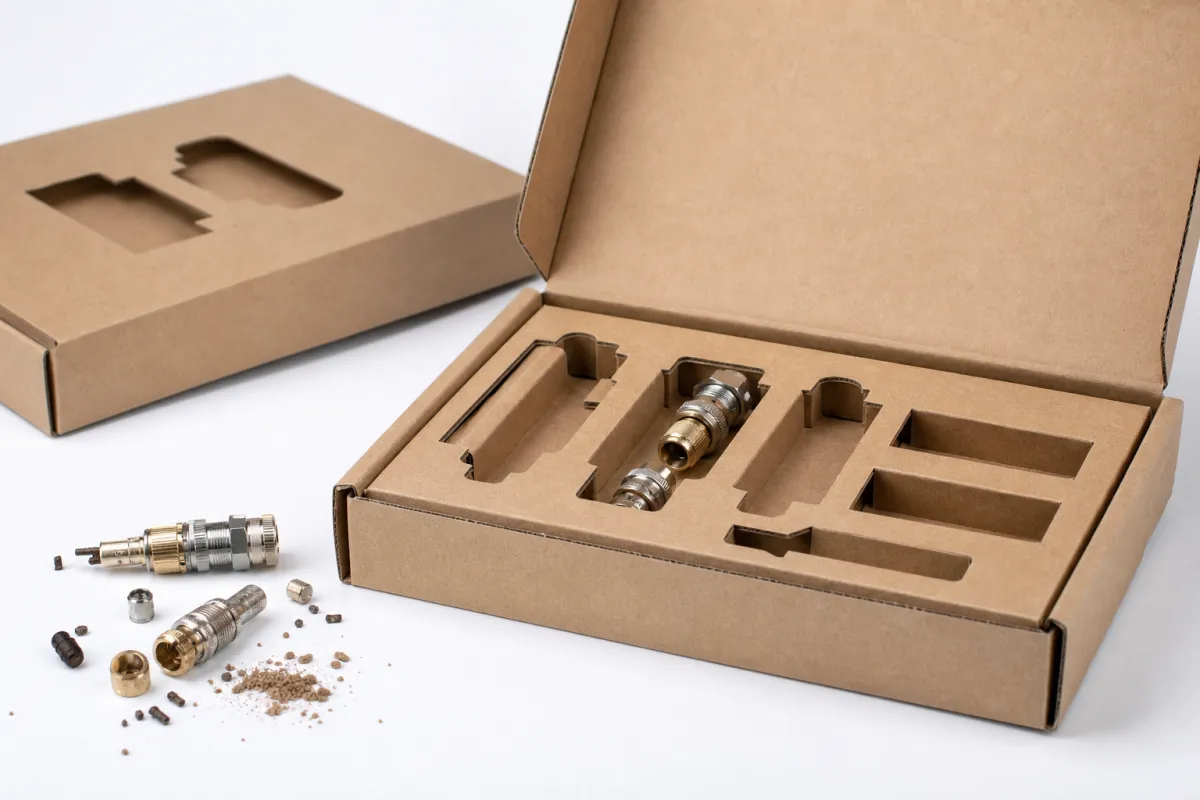
An insert that looks basic can save real money by reducing breakage, scuffed finishes, and packing labor. That is the plain truth behind Custom Cardboard Inserts price. A buyer can focus on a few cents per unit and miss the larger picture: one damaged shipment can erase the savings from hundreds of inserts. Fragile, finished, or oddly shaped products do not treat the insert as an accessory. The insert is part of the protection plan.
Picture a subscription box with three glass bottles. Without a proper fit, the items knock into each other, labels rub, and the outer carton starts taking the impact instead of the insert. The packer then adds tissue, void fill, tape, and extra inspection. That is not efficiency. That is labor spending extra time because the structure is wrong. A better insert locks each item in place, protects the finish, and makes the box feel deliberate instead of improvised. The custom cardboard inserts price may look higher at the start, yet the packing line usually runs faster and more consistently.
Retail packaging for cosmetics, candles, and small electronics creates the same problem in a different form. A product can survive transit and still arrive looking tired because it slid around for hours. Buyers often blame the outer box, the print, or the courier, when the real issue is movement inside the pack. When the insert fits well, the package opens cleaner, the product sits straight, and the unboxing reads as branded packaging rather than a box full of gaps.
A loose insert is not minimal. It is just expensive in slow motion.
Start with the failure you want to prevent. If the product is breaking, the insert needs cushioning and restraint. If the product is arriving sloppy, the insert needs tighter geometry. If the product is packed by hand, the insert needs simple placement and repeatable orientation. The right custom cardboard inserts price depends on the job the insert is supposed to do, not on a generic cheap label that sounds good in an email.
For fragile lines, the practical goal is not a fancy display. It is a structure that survives handling, transport, and unboxing without extra drama. Testing matters here. A good insert design should support the shipping profile, not just look tidy in a sample photo. If your product moves through parcel networks, a fit that holds up under rough handling is worth more than a lower custom cardboard inserts price that turns into replacement orders later.
There is also a human side to this. On the packing floor, a flimsy insert costs attention. Workers slow down, double-check every placement, and sometimes rework a carton because the product will not sit right. That kind of friction does not show up in a spec sheet, but it absolutely shows up in operating costs. A better insert can calm the whole process, which is why the cheapest quote is often the one that ends up costing more.
What drives custom cardboard inserts price?
Insert type is the first driver. A simple divider set usually costs less than a custom-fit cavity insert because it uses fewer complex cuts and less labor. A folded lock tray sits in the middle. A precision-fit structure with multiple compartments, tabs, and folds costs more because it asks more from the die, the operator, and the material layout. That is the core math behind custom cardboard inserts price. More structure usually means more time.
For buyers, the decision often comes down to what the insert needs to do. Dividers work well when separation is the main concern. Trays help organize product. Slotted inserts support multiple units. Folded locks add shape and presentation. Custom cavities are the answer when the product needs a specific seat. Each style changes the quote, and each style also changes how the product performs in the box. The lowest-looking option is not always the lowest-cost outcome.
Board choice matters too. Lightweight paperboard can work for cosmetics, accessories, and other low-load items. Heavier board or corrugated stock makes more sense when the product has weight, glass, or a larger footprint. White-face stock can improve presentation for retail packaging. Kraft stock often fits a natural look and pairs well with simple package branding. The custom cardboard inserts price rises when the board is thicker, the surface needs more finish, or the construction needs tighter crease control.
Structural complexity is another cost driver. Extra folds, glue points, tabs, and precision die-cutting all raise labor and waste. Nested layouts help reduce waste, but not every shape nests well. A design that looks simple in a sketch can become awkward on a press sheet because the parts do not fit efficiently. That is one reason the same insert concept can produce a very different custom cardboard inserts price from one supplier to another. One shop is pricing a clean layout. Another is pricing scrap and setup headaches.
Product category changes the cost profile as well. Lightweight retail items usually need less board strength than glass, ceramics, or electronics. Cosmetic sets may need neat presentation and precise cutouts. Subscription kits may need multiple compartments and easy packing. Fragile gift items may need protection and presentation in the same structure. A buyer who expects one insert style to cover every SKU usually gets a quote that feels random. It is not random. It reflects different loads, different shapes, and different handling risks.
Labor is part of the number too. If the insert arrives flat and self-locking, packers move faster. If it needs manual folding, taping, or alignment, labor cost climbs. That labor belongs in the real custom cardboard inserts price, even if the quote sheet does not spell it out line by line. A better structure can cost a little more per unit and still save money overall because the packing operation stops fighting the carton every shift. That is the sort of tradeoff that tends to matter more than a unit price alone.
One more thing: supplier process quality matters. If a vendor has a stable dieline workflow and a clean nesting plan, they can often keep waste down without cutting corners. If their setup is messy, the quote may look low because they have not fully accounted for the material losses and extra handling. That does not make them evil; it just means the first number is not the whole story. A buyer should always ask how the insert is being manufactured, not just what it will cost.
Here is the short version: the more the insert does on its own, the more likely the quote rises. The more the insert does on its own, the more it can save in packing speed, damage reduction, and presentation quality. That is the tradeoff buyers should compare, not just the headline number. A low custom cardboard inserts price only helps if the insert still protects the product and does not slow the packing line down.
Specifications that change custom cardboard inserts price
The cleanest way to get an accurate quote is to lock down the basic specs early. Product dimensions come first. Length, width, height, diameter, and weight all matter. So does whether the insert needs one cavity, two cavities, or a multi-item layout. If the insert is meant to hold a bottle, a jar, a charger, and a brochure in one carton, the design needs exact spacing. Loose guesses create revisions and make the custom cardboard inserts price harder to trust.
Tolerances matter more than many buyers expect. If the product has a tight finish, a soft-touch coating, or a fragile cap, the insert cannot be cut to some vague close-enough size. It needs measured clearance. Too tight and the product jams. Too loose and it rattles. Even a few millimeters can change the result. A supplier that understands the tolerance window will usually give you a better custom cardboard inserts price because the design will not need a second round of fixes.
Board thickness is another lever. Lighter paperboard suits lighter items and lower-pressure presentation. Corrugated E-flute or F-flute helps when the insert needs more resilience without getting bulky. Chipboard or greyboard works when the product needs a more rigid seat and a premium feel. White-face stock can improve the look in retail packaging. Kraft can be the better answer for a natural, understated appearance. Each choice changes the cost, and each choice changes performance.
Cut complexity shows up quickly. A design with many internal cutouts, deep folds, or nested pieces takes longer to produce and leaves more waste on the sheet. Glue points add process time. Locking tabs reduce adhesive use, but they can increase die complexity. If the insert needs to hold multiple products, the layout often becomes a puzzle. A neat puzzle is fine. A messy puzzle is a pricing problem. That is why a simple spec sheet usually gives a more accurate custom cardboard inserts price than a vague request for something sturdy.
Finish is another place where buyers overspend without thinking. Printing on the insert can support branding, but only if the customer actually sees it. If the insert sits deep inside an outer carton, heavy print coverage may be wasted money. Coating can help with moisture resistance or surface feel, but it should solve a real issue. If you are building branded packaging inside custom printed boxes, the insert can add polish. If nobody sees it, keep it plain and spend the money on structure instead. That decision changes the custom cardboard inserts price in a real way.
To keep the quote steady, send the supplier the exact information they need:
- Product dimensions and weight
- Number of items per box
- Insert style you prefer, if known
- Board thickness or material preference
- Print, coating, or finish requirements
- Quantity tiers for pricing
- Delivery location and timeline
That list does something useful. It cuts down on assumptions. It also keeps the custom cardboard inserts price from jumping around because the supplier had to guess the shape, the material, or the handling load. Better specs mean fewer sampling mistakes and fewer revised dielines. Nobody enjoys those emails. Not the buyer, not the supplier, and not the person who has to explain them to finance.
If you are building a full system, compare the insert with the outer pack at the same time. The insert may need to support a shipping box, a retail display box, or a subscription format. That is why buyers often pair insert development with Custom Packaging Products planning or a specific Custom Shipping Boxes size. The more the specs line up, the steadier the custom cardboard inserts price tends to be.
There is a practical reason to keep the outer box in the conversation early. I have seen projects where the insert was designed first, then the carton changed later, and the fit problems started all over again. That extra round of work almost always pushes the price up. If the outer dimensions are still moving, the insert quote is not really final yet.
Custom cardboard inserts price, MOQ, and unit cost
MOQ is where many buyers get frustrated, and fairly so. Low quantities usually raise the unit price because setup gets spread across fewer pieces. A die still has to be made, the layout still has to be approved, and the machine still has to run. That cost does not disappear just because the order is small. The custom cardboard inserts price for 300 pieces can look very different from the same design at 3,000 or 10,000 pieces.
There are three cost buckets to watch: setup or tooling, sample charges, and unit price. Setup costs may be one-time or partly recoverable, depending on the supplier and the design. Samples often carry a modest charge because someone has to make a prototype, check fit, and adjust the dieline. Then the unit price settles into volume tiers. If a supplier gives you only one number, ask for break points. A serious quote on custom cardboard inserts price should show where the numbers start to improve.
Here are practical pricing bands buyers often see. These are not fixed rules. They are working ranges that move with board grade, print coverage, and complexity:
| Insert type | Best for | Typical setup / sample cost | Unit price at 1,000 pcs | Unit price at 5,000 pcs |
|---|---|---|---|---|
| Simple divider set | Light retail items, cosmetics, accessory kits | $120-$280 setup, $25-$60 sample | $0.32-$0.85 | $0.12-$0.28 |
| Folded tray insert | Organized product presentation, moderate protection | $150-$350 setup, $30-$75 sample | $0.40-$1.00 | $0.16-$0.36 |
| Custom cavity insert | Fragile items, tight fit, shaped products | $200-$500 setup, $35-$90 sample | $0.60-$1.40 | $0.22-$0.55 |
| Multi-compartment retail insert | Subscription kits, bundled sets, premium packaging design | $250-$650 setup, $40-$120 sample | $0.85-$1.80 | $0.30-$0.75 |
The table is the starting point, not the final answer. A plain brown insert with minimal cuts sits at the low end. Add heavy print, tighter tolerances, or thicker board, and the custom cardboard inserts price moves up. Add more manual assembly and the number climbs again. If a supplier quotes a very low price for a complex insert, that is not a bargain. It usually means the labor has not been priced correctly yet.
MOQ also affects how honest the quote feels. Some suppliers improve pricing only after a threshold because they want the die and setup cost spread over enough units to make the job efficient. If you need a small run, ask whether the design can be simplified. Sometimes a one-piece fold or a standard board grade will cut the custom cardboard inserts price enough to make the order workable. Other times, the better answer is to accept a higher unit price and keep the structure clean.
For buyers comparing vendors, ask for the quote in the same format every time. That means same dimensions, same board, same finish, same quantity, same delivery point, same timeline. Otherwise you are comparing apples to oranges, and apples to orange peel with three extra tabs. A clean comparison should show setup, sample, unit cost, freight, and turnaround side by side. Only then does the custom cardboard inserts price mean anything useful.
Also ask what the MOQ is actually tied to. Sometimes it is tooling. Sometimes it is sheet efficiency. Sometimes it is simply the factory's preferred production batch. A good supplier should explain whether the minimum comes from production economics or from material sourcing. That transparency matters. It tells you whether the custom cardboard inserts price can be reduced by a simpler design or whether the only lever is order quantity.
Production steps, lead time, and turnaround
The production process should feel boring in the best sense. Brief, design check, dieline creation, sample approval, production, inspection, packing, shipment. That is the normal flow. If any step turns chaotic, lead time stretches. The custom cardboard inserts price does not depend only on material and quantity. It also depends on how much back-and-forth the order needs before production can begin.
Time gets lost in predictable places. Missing product dimensions, weak photos, and slow approvals cause most of the delay. If the supplier has to chase measurements, the dieline takes longer. If the sample comes back with "this feels off" instead of a specific correction, the revision cycle drags. If the buyer waits three days to approve a sample, the schedule slips for no real reason. A well-managed project keeps the custom cardboard inserts price from rising because the factory is not burning time on avoidable rework.
Realistic timing usually looks like this: sample making often takes a few business days once the spec is clear, while mass production commonly lands around 12-20 business days after approval, depending on quantity and material availability. Simple designs move faster. Complex, multi-compartment inserts take longer. Rush jobs are possible, but only if the board is in stock and the layout is straightforward. Otherwise rush just means the schedule problem is becoming more expensive. Faster turnaround usually raises the custom cardboard inserts price, and that is normal.
Buyers should also ask whether the supplier can pre-check fit before full production. A small sample run is cheap insurance. It catches bad dimensions, weak folds, or cavity spacing that stops making sense once the product is in hand. That matters most for product packaging with fragile items, cosmetics in glass, or multi-piece kits. A good sample reduces risk and protects the final custom cardboard inserts price from surprise revisions.
Testing belongs in the conversation if the insert is protecting shipped product. For transit-heavy work, I like to see design thinking tied to real distribution handling, not just a tidy mockup on a table. The ISTA resource set is useful for understanding transport testing logic, and it gives buyers a practical way to discuss drop, vibration, and compression instead of guessing. If the product is sensitive to rough handling, that discussion matters more than a polished render.
If sustainability is part of the brief, material sourcing should be discussed early as well. FSC-certified board can support a stronger sustainability story, but the material and availability need to be confirmed before the quote is locked. You can review certification basics at FSC. Board selection, certification, and lead time all affect the custom cardboard inserts price, so it is better to cover them upfront than to uncover the issue after approval.
From a buying standpoint, the best turnaround comes when the specs are stable and the approvals are fast. The supplier can only move as quickly as the information they receive. If you want the custom cardboard inserts price to stay predictable, keep sample review focused, answer dimension questions early, and confirm the outer box size at the same time. That is how you avoid the almost right version of the job, which is usually the most expensive one.
One small, practical habit helps a lot here: label the sample with the exact product name, quantity, and box size it belongs to. It sounds almost too simple, but mixed-up samples create avoidable errors, especially in programs with multiple SKUs. The cleaner the handoff, the cleaner the quote and the production run.
Why choose us for custom cardboard inserts
At Custom Logo Things, the goal is not to sell the thickest board and call it quality. That approach is lazy. The real job is to match the insert to the product, keep the fit consistent, and keep the custom cardboard inserts price reasonable for the protection level required. Buyers do not need poetry. They need inserts that hold product still, look clean, and arrive on time without making the production team miserable.
We focus on practical packaging design choices that reduce waste and avoid unnecessary complexity. If a single-fold structure can do the job, we would rather recommend that than inflate the build just to make it sound premium. If a simpler board grade gives the same protection, that is usually the smarter route. Lower waste layouts, efficient nesting, and fewer revisions all help keep the custom cardboard inserts price under control without turning the packaging into a compromise.
Quality control is where the job either earns trust or burns it. That means checking the sample fit against the actual product, reviewing board consistency, and confirming dimensional repeatability before the run ships. A good insert for one box is useful. A good insert for 10,000 boxes is the real standard. That matters even more for repeat orders, multi-SKU programs, and brands using the insert as part of broader package branding. When the product line grows, consistency matters as much as the first quote.
We also understand that many buyers need the insert to work inside branded packaging or alongside custom printed boxes, not stand alone as a nice prototype. If the outer box carries the visual message, the insert should support the opening experience and protect the product without getting in the way. If the insert has to do more, we plan for it. If it only needs to hold and protect, we keep it simple. That approach helps maintain a practical custom cardboard inserts price over time instead of letting every reorder become a fresh negotiation.
There is real value in having one team think through the box, the insert, and the shipping path together. A carton that looks fine on a screen can fail in a warehouse if the insert is too loose, too flimsy, or too expensive to assemble at speed. Strong support on the front end prevents those problems. That is why buyers often come back for multiple packaging items, not just one insert SKU. The point is not to make the project complicated. The point is to make the result predictable, and the custom cardboard inserts price should reflect that.
If you need a better number, better specs, and fewer surprises, start with the actual product and the actual packing flow. Not the hope. Not the polished mockup. The real thing. That is how you get a quote that makes sense and a final insert that earns its place inside the box.
Next steps to get an accurate quote
Start by measuring the product properly. Length, width, height, weight, and any protruding features should be captured before you ask for pricing. Then decide what the insert is supposed to do: stop movement, improve display, protect a fragile finish, or all three. If you skip that part, the custom cardboard inserts price you get back is just a placeholder dressed up as a quote.
Next, send photos, rough sketches, and quantity tiers. A supplier can work much faster when they can see the product and understand the packaging goal. If you have one SKU now but expect more later, say so. That matters. A design that scales well across product sizes can reduce future redesign costs and keep the custom cardboard inserts price steadier over repeat orders.
- Measure the product and the outer box.
- Define the protection goal and display goal.
- Choose the board preference if you have one.
- Share artwork or print requirements only if they are needed.
- Request pricing at two or three quantities.
- Ask for sample cost, freight, and turnaround in writing.
Then compare at least two to three quotes side by side. Not loosely. Properly. Same specs, same quantity, same delivery location, same timeline. Watch the setup fee, sample charge, and freight, because those can hide a supposedly low custom cardboard inserts price. A cheap unit cost with expensive setup is not cheap. It is just accounting wearing a fake moustache.
When the numbers come back, verify the minimum order quantity, sample cost, lead time, and what happens if the insert needs a revision after sampling. Those four details prevent more trouble than most buyers expect. If the supplier is clear about them, you are dealing with a real production quote. If they dodge them, assume the custom cardboard inserts price is not ready for a serious buying decision yet.
One last practical check: compare the insert cost with the cost of damage, labor, and brand experience. If the insert protects product value, speeds packing, and fits the box cleanly, it is doing its job. That is the point. If you want a quote that is actually usable, send the specs, compare the tiers, and judge the custom cardboard inserts price against the full packaging outcome, not just the sticker number.
FAQ
What is the average custom cardboard inserts price per unit?
There is no fixed average because size, board grade, complexity, and quantity can move the number quickly. A simple insert at higher volume may land in the low cents range, while a shaped, multi-compartment design can climb well above that. The smarter move is to ask for tiered pricing so you can see where the custom cardboard inserts price drops as the order gets larger.
What MOQ should I expect for custom cardboard inserts?
MOQs vary by supplier, but smaller runs usually carry a higher unit price because setup costs are spread across fewer pieces. If you need a very small order, expect either a simplified design or a higher custom cardboard inserts price. A good vendor should explain whether the MOQ is driven by tooling, material sourcing, or production efficiency.
Are custom cardboard inserts cheaper than foam inserts?
Often yes, especially when the design is simple and the quantity is healthy. Foam can make sense for higher-impact protection, but it is usually less recyclable and may add processing cost. Cardboard also tends to work better for branded packaging, cleaner presentation, and lower shipping weight, which can improve the overall custom cardboard inserts price equation.
How can I reduce custom cardboard inserts price without hurting protection?
Simplify the cut layout, remove unnecessary folds, and standardize sizes across SKUs where possible. Drop print or coating unless it serves a real branding or moisture-resistance purpose. Most buyers can lower the custom cardboard inserts price by giving exact dimensions early and avoiding design changes after the first dieline is approved.
How long does it take to make custom cardboard inserts?
Sample lead time is usually shorter than full production, but it still depends on complexity and how fast approvals move. Production is faster when the material is in stock and the structure is straightforward. If you need a rush order, ask up front so the supplier can confirm whether the schedule is realistic before the custom cardboard inserts price is locked in.
The clearest takeaway is simple: measure the product, lock the box size, choose the insert job it has to do, and ask for pricing at more than one quantity. That gives you a quote you can actually use, and it keeps the custom cardboard inserts price tied to the real cost of protection, packing speed, and presentation instead of a guess that only looks cheap on paper.

