Buyer Fit Snapshot
| Best fit | Custom Cardboard Inserts Supplier projects where brand print, material claims, artwork control, MOQ, and repeat-order consistency need to be specified before quoting. |
|---|---|
| Quote inputs | Share finished size, material target, print colors, finish, packing count, annual reorder estimate, ship-to region, and any compliance wording. |
| Proofing check | Approve dieline scale, logo placement, barcode or warning zones, color tolerance, closure strength, and carton packing before bulk production. |
| Main risk | Vague material claims, crowded artwork, missing packing details, or unclear freight terms can make a low unit price expensive after revisions. |
Fast answer: Custom Cardboard Inserts Supplier: Material, Print, Proofing, and Reorder Risk should be specified like a repeatable production item. The safest quote records material, print method, finish, artwork proof, packing count, and reorder notes in one written spec.
Production checks before approval
Compare the actual filled-product size with the drawing, then confirm tolerance on folds, seals, hang holes, label areas, and retail display edges. Reserve space for logos, QR codes, warning copy, and material claims before decorative graphics fill the panel.
Quote comparison points
Review material grade, print process, finish, sampling route, tooling charges, carton quantity, and freight assumptions side by side. A quote is only useful when the supplier can repeat the same color, closure quality, and packing count on the next order.
Custom Cardboard Inserts Supplier: How to Choose Well
If you are comparing a Custom Cardboard Inserts supplier, start with the part people like to skip: a carton can survive a drop test and still fail in the real world if the insert lets the product shift even a few millimeters. That tiny gap is where scuffs begin, where glass chips, where caps loosen, and where returns show up with a smug little invoice attached. A good custom cardboard inserts supplier does more than cut board. It turns product geometry, fragility, and pack-out speed into a structure that protects the item and still looks like it belongs to your brand.
That matters whether you sell cosmetics, electronics, candles, subscription kits, or premium gift sets. The right insert handles protection, presentation, and production efficiency at the same time. It shapes the unboxing experience, but it also affects line speed, void fill usage, and the number of damaged shipments you absorb. If your business is looking at Custom Packaging Products or trying to build a cleaner system around Custom Shipping Boxes, the insert is one of the smartest places to start. Ignore it and you end up paying for the mistake twice.
What a custom cardboard inserts supplier actually does
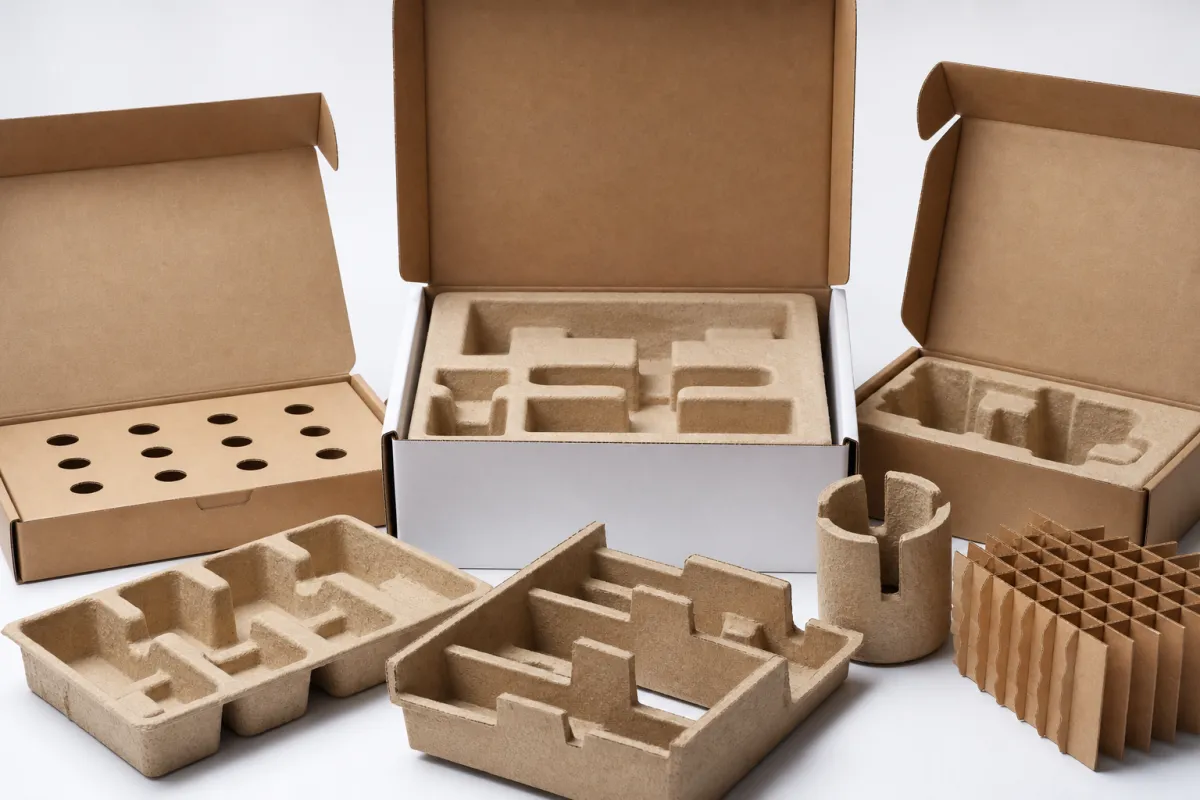
A Custom Cardboard Inserts supplier sits where packaging design, protection engineering, and manufacturing reality meet. In practical terms, the job is to build an insert that locks a product in place, keeps accessories organized, and fits the carton without wasting space. The best suppliers are not just order takers with a die line. They ask how the product travels, how it is packed, and what kind of damage would actually hurt the business.
That distinction matters because a generic divider only fills empty space. A custom insert controls movement. It can cradle a bottle neck, hold a charger cable, separate fragile parts, or present a kit in a way that feels intentional instead of thrown together at the last minute. From a packaging buyer's point of view, this is where product packaging stops being a box with filler and starts acting like a system. It is a small thing on paper and a big thing in the warehouse.
In practice, a Custom Cardboard Inserts supplier may recommend several formats depending on the load and the brand experience you want:
- Die-cut cardboard inserts for shaped cavities and tight product fit.
- Layered pads for stacking, cushioning, or separating products in a vertical pack.
- Locking tab structures that stay assembled during packing and transit.
- Sleeves and wraps that add friction and presentation around a primary item.
- Partitions and spacers for multi-item kits or fragile bottle sets.
- Protective cradles that reduce corner impact and surface contact.
Not every insert needs to be clever for the sake of it. A simple folded paperboard insert can be enough for a lightweight, low-risk product. Once you move into premium branded packaging, the insert starts doing three jobs at once: it protects, it organizes, and it sells. That is why a strong custom cardboard inserts supplier talks about retail packaging, unpacking sequence, and assembly time, not only material thickness.
There is also the business side. Better inserts can lower damage claims, reduce void fill, and speed packing. If a fulfillment team saves even 8 to 12 seconds per pack on a high-volume program, that is not a rounding error. It is labor, consistency, and fewer mistakes. A lot of brands underprice the value of a well-designed insert because they only look at board cost, not the cost of preventable failure.
"The insert looked simple on screen, but the prototype showed a 3 mm rock in the tray. That tiny gap would have become a return-rate problem."
That is the hidden issue a custom cardboard inserts supplier should help you catch early. The good ones reduce guesswork before you place an expensive run. The bad ones keep nodding while the product slides around like it has nowhere better to be.
How a custom cardboard inserts supplier handles process and timeline
The usual workflow with a custom cardboard inserts supplier starts with product review and ends with shipment, but the quality of the middle steps decides whether the project feels orderly or like somebody tossed the spec into a blender. A clean process usually includes six stages: initial inquiry, structural concept, prototype or sample, approval, production, and delivery. Each stage should reduce risk, not invent new surprises.
The first inquiry should not be a one-line email that says "need insert quote." A serious supplier will want product dimensions, product weight, the number of pieces per shipper, carton size if one already exists, and any known failure points. Fragile surfaces, squeeze points, loose lids, cords, or odd shapes all change the design. Leave those out and the supplier starts guessing. Guessing is expensive, and it is usually the buyer who pays for it later.
Timelines usually stretch because the brief is thin. Missing dimensions. Unclear weight limits. Multiple product variants. Late artwork changes. A reference sample that shows up after the design is already underway. Those delays are common, and they are the reason a custom cardboard inserts supplier should ask disciplined questions before promising a date they cannot keep. Fast is nice. Accurate is better.
Sampling is where many projects become real. For a simple insert, one prototype may be enough to verify fit and assembly. For a premium cosmetic set, a glass bottle kit, or any package with tight tolerances, one revision round is often not enough. You may need a structure sample, then a second sample after tiny fit adjustments, then a final approval copy. That is not a sign of poor execution. It is normal when the product is unforgiving.
For straightforward projects with no print and no unusual tooling, things can move fast. Add custom tooling, print registration, coatings, or structural revisions, and the clock gets less polite. Many buyers expect board to be the slow part, then discover artwork and proof sign-off can drag just as hard. A professional custom cardboard inserts supplier should tell you where the schedule is likely to stall before that slowdown turns into a launch delay.
One practical way to reduce stress is to ask about document handoff and revision control. Who owns the dieline? Does the supplier keep the spec file for repeat orders? What counts as final approval? If your team handles product changes often, that record matters. A clean file on the supplier side can shave real time off reorders and keep product packaging consistent.
For products that need to survive transit stress, it can be smart to reference recognized test methods instead of relying on visual judgment alone. Organizations such as ISTA package testing standards provide useful frameworks for shipment simulation, especially when a carton is expected to handle vibration, drops, or compression. A good custom cardboard inserts supplier does not need to turn every meeting into a lab presentation, but they should understand why testing matters and how to interpret the results without drama.
That is where timeline and confidence intersect. The more your supplier verifies early, the less likely you are to discover a fit problem after production starts. And once a full run is printed and cut, nobody is happy paying to fix a mistake that should have been caught with a prototype and a ruler.
What drives cost when working with a custom cardboard inserts supplier
Pricing from a custom cardboard inserts supplier usually comes down to a handful of variables, and the buyer who understands them can compare quotes without getting played by a low number with missing details. The biggest drivers are board grade, thickness, cut complexity, print coverage, quantity, and finishing. Ask for "cheap" without a spec and you will get vague answers. Ask for a clear spec and you can usually see exactly where the money goes.
The table below gives a directional view of common insert options. It is not a universal price list; it is a practical comparison that shows how structure changes cost and use case.
| Insert type | Typical use | Indicative cost at medium volume | What drives the price |
|---|---|---|---|
| 350 gsm paperboard insert | Lightweight cosmetics, small accessories, display kits | $0.18-$0.32 per unit at 5,000 pieces | Print coverage, cut complexity, and fold count |
| E-flute corrugated insert | Fragile items, e-commerce shipper support, added cushioning | $0.24-$0.45 per unit at 5,000 pieces | Board thickness, die complexity, and nesting efficiency |
| Multi-part locking insert | Kits with several components or higher product movement control | $0.30-$0.60 per unit at 5,000 pieces | Assembly time, score lines, and tighter tolerance requirements |
| Printed premium insert | Branded packaging for gifts, retail, and presentation-heavy programs | $0.28-$0.55 per unit at 5,000 pieces | Ink coverage, coating, proofing, and color control |
Small-run economics and large-run economics do not behave the same way. At low quantities, setup and sampling can dominate the total cost. At higher quantities, material efficiency and faster machine time push unit cost down. A quote that looks expensive at 500 pieces may be competitive at 10,000 pieces. A smart custom cardboard inserts supplier will explain that trade-off instead of hiding behind a single number.
Geometry has a real price effect too. Odd shapes are slower to cut. Deep cavities need more structural precision. Multi-item kits often require tighter tolerances because one loose component can spoil the whole presentation. If your insert must fit inside an existing carton, the supplier may have less freedom, which can raise design time. In some cases, changing the outer box by a few millimeters is cheaper than forcing a difficult insert into an impossible space. Packaging design should be discussed as a system, not as separate silos pretending they do not touch.
Hidden costs can creep in fast: rush production, multiple prototypes, specialty coatings, hand kitting, or freight that was not included in the first quote. This is exactly why itemized pricing matters. Separate design, tooling, sample costs, production, and freight. Without that breakdown, one supplier's full landed cost can look higher than another supplier's factory price, and the "better deal" turns out to be a missing line item.
Comparing the quote structure matters as much as the unit rate. A detailed custom cardboard inserts supplier quote gives you room to evaluate the whole program, not just the headline number. That detail also tells you how serious the supplier is. People who hide the math usually do not love the math.
One more commercial reality: the cheapest insert is not always the lowest-cost decision. If it increases damage rates by even a small percentage, the claims and replacements can wipe out the savings. Packaging buyer math is pretty unforgiving. It rewards protection that is measured, not guessed.
Key factors to evaluate before you choose a supplier
Choosing a custom cardboard inserts supplier is partly about price, but the deeper question is whether they know how to fit your product to the real shipping environment. The first thing to watch is the questions they ask. Do they start with dimensions, weight, fragility, and movement limits? Or do they jump straight to a quote? Better questions usually mean fewer structural mistakes later.
Material knowledge is another major marker. Recycled board, paperboard, and corrugated board each solve different problems. Paperboard is often suitable for light, presentation-focused inserts. Corrugated board can add compression strength and impact resistance. Recycled board may be the right choice when sustainability and cost need to stay in balance. A good custom cardboard inserts supplier should explain the trade-offs in plain terms, not hide behind generic claims about quality.
Testing capability also matters. Ask whether they can simulate shipping stress, stacking pressure, or drop risk. Ask whether they understand ASTM or ISTA test logic, even if they do not run formal lab tests in-house. Packaging standards help buyers make better decisions because they replace assumptions with repeatable methods. A supplier who understands testing is usually less likely to oversell weak geometry or hand-wave a design that clearly needs more support.
Service quality deserves real attention. A supplier who returns proofs quickly, marks revisions clearly, and flags practical problems before production is usually worth more than the one with the lowest first quote. Small delays can become expensive when launch dates are fixed. This is especially true for retail packaging, where cartons, inserts, labels, and custom printed boxes often need to land together. If one part slips, the whole program slows down.
Sustainability and brand fit should sit beside protection, not after it. A strong insert should support recyclability where possible, avoid unnecessary material use, and still match the package branding you want in the customer's hands. That balance is one reason packaging teams keep returning to a stable custom cardboard inserts supplier: fewer surprises, fewer reworks, and a cleaner path from concept to production.
Here is the short version. A supplier is easier to trust if they can do all four of these things:
- Explain why a certain board or structure fits the product.
- Show sample revisions clearly and without defensiveness.
- Talk honestly about where the quote is flexible and where it is not.
- Connect protection decisions to the customer experience at unboxing.
That combination is what separates a true custom cardboard inserts supplier from a generic vendor moving flat stock through a machine. It sounds basic because it is. The industry still rewards basic done well.
Step-by-step guide to briefing a custom cardboard inserts supplier
A strong brief saves time, and it usually saves money too. If you want a custom cardboard inserts supplier to quote accurately, start with the product list. Give exact dimensions, product weight, quantity per carton, and whether the insert is holding one item or a full kit. If the product has accessories, include those as separate line items. A cable, a cap, a charger, and an instruction sheet all change the footprint.
Next, share the shipping context. Parcel carrier, retail shelf use, e-commerce fulfillment, or long-distance freight all change the structure. A mailer insert designed for direct-to-consumer orders may not be the right answer for shelf-ready retail packaging. If the pack needs to survive stacking in a warehouse, say that. If it only needs to keep a cosmetic item centered during local shipping, say that too. The more specific the context, the more usable the proposal becomes.
Then identify the failure points. This is where many briefs go vague in a hurry. You do not just want "protection." Protection against what? Corners? Glass breakage? Coated surfaces rubbing? Loose lids? Vibration? If a product shifts, tell the supplier how much movement is acceptable. Sometimes 1 mm is fine. Sometimes 1 mm is too much. A good custom cardboard inserts supplier will take that tolerance seriously.
Sample-based design review is the most useful part of the process when the product is new or the packing line is unfamiliar. Ask the supplier to confirm tolerances, hand assembly time, nesting behavior, and whether the insert folds flat for storage. Those details sound small, but they can affect fulfillment speed and warehouse footprint. If you are building branded packaging at scale, these are not minor operational questions. They are the difference between tidy repeatability and a constant mess on the line.
Do not skip approval controls. Decide who signs off on the dieline, what counts as a final proof, and when production can start. If your team changes product dimensions after sample approval, the fit can drift enough to create waste. This is where a disciplined custom cardboard inserts supplier saves you from internal confusion. They can hold the spec, but only if the brief is stable.
A practical briefing pack often includes the following:
- Product dimensions, weight, and photos from multiple angles.
- Carton internal dimensions or the outer box specification.
- Expected pack count per shipper or retail unit.
- Desired insert style, if you already have one in mind.
- Shipping and handling risks, including any fragile points.
- Artwork or print requirements, if the insert is visible at unboxing.
- Target quantity and reorder expectations.
That is enough for most suppliers to get to a serious first concept. It also gives them a better shot at matching the insert to the surrounding packaging instead of just stuffing a cavity and calling it design. In my view, this is where good custom cardboard inserts supplier relationships start: with facts, not assumptions.
Common mistakes brands make with custom cardboard inserts
The most common mistake is designing around the carton first and the product second. The insert should control the product. If the outer box drives every decision, the insert often ends up as a loose compromise. That usually means movement, awkward assembly, or a presentation that feels accidental. A smart custom cardboard inserts supplier will push back on this when needed.
Another frequent error is measuring only the finished product body and ignoring closures, labels, cords, or accessories. A bottle may fit the cavity until the cap is added. A device may fit until the cable is coiled beside it. A set may fit until the instruction leaflet is inserted. These are common surprises, and they are entirely avoidable if the brief reflects the real packing condition rather than a showroom measurement.
Thickness is often misunderstood. More board is not automatically better. Sometimes a better score line, a deeper lock, or a smarter cavity profile protects more effectively than extra material. That is especially true for product packaging that needs to stay light for e-commerce rates. A competent custom cardboard inserts supplier should be able to explain when geometry beats mass, because usually it does.
Vague language causes trouble too. Words like premium feel and strong enough are not useless, but they are incomplete. What does premium mean in your channel? Smooth surfaces? Printed details? Tight fit? What does strong enough mean? Survive parcel shipping? Stack under pallets? Support a glass jar? If the hazard is not defined, the design will be guesswork dressed up as a quote. That is one of the fastest ways to waste time with a custom cardboard inserts supplier.
Approval drift is another issue. Small changes to product dimensions or branding after sampling can invalidate the fit and waste a production run. This happens more often than teams admit. Someone changes a bottle supplier. Someone updates a closure. Someone adjusts an insert print panel. The part may look minor on a spreadsheet and major in the carton. Once you have approved a prototype, treat the spec as real, not approximate.
There is also a mindset mistake: assuming the insert is only a hidden internal part. In many packages, the insert is the first thing the customer sees after opening the box. It carries the product, but it also carries the brand. That is why a custom insert has a direct connection to package branding, not just logistics. A strong custom cardboard inserts supplier understands both sides of that equation and knows when the visual side matters just as much as the structure.
When brands miss these basics, the result is usually familiar: returns, damaged goods, awkward pack-out, and a design team wondering why a "simple insert" turned into a recurring headache. It never feels simple once it starts failing in real shipments. The box may still look fine on a screen. The warehouse does not care about that.
Expert tips for better results and smarter reorders
If you want repeatable success with a custom cardboard inserts supplier, build one master specification sheet and make it the source of truth. That sheet should include dimensions, materials, tolerances, finish details, carton pairings, and approval history. Reorders become much easier when everyone is working from the same document instead of old email threads and memory.
Ask your supplier to optimize for packing speed as well as protection. Seconds saved per pack can matter more than people expect. At smaller scale, the benefit is convenience. At larger scale, the benefit becomes real labor savings. A well-shaped insert can reduce hesitation, cut hand motions, and lower error rates during fulfillment. That is one of the quiet ways a custom cardboard inserts supplier contributes to operational efficiency.
Keep a photo record of approved samples and failed samples. It sounds basic because it is basic, and basic is often where the good decisions live. If an insert failed because the cavity was shallow, the image proves the problem. If the sample held the product perfectly after a 1-meter drop simulation or a vibration check, that image is useful too. Over time, these records make packaging design less subjective and a lot less political.
Plan for product-line changes before they happen. If you know a seasonal variant is coming, ask whether the insert can be adjusted without rebuilding the entire structure. If a new size is likely, a modular approach may save both design time and sampling cost later. This matters especially for brands with multiple SKUs, since packaging teams often need to scale without restarting the whole process every few months.
There is also an angle many teams miss: sustainability should be designed into the insert, not layered on as an afterthought. When possible, choose materials and structures that support recycling and avoid unnecessary components. The U.S. EPA has useful general guidance on recycling systems and material handling, and that guidance is worth reading alongside any packaging decision. For reference, see EPA recycling resources. A thoughtful custom cardboard inserts supplier can help you balance protection, print quality, and material use without turning the package into a science project.
If you are comparing multiple vendors, ask each one to quote the same spec and the same quantity breaks. Then compare sample quality, revision behavior, and landed cost. Not every supplier will make the same recommendation, and that is fine. What matters is whether the differences are explained clearly. A good custom cardboard inserts supplier should be able to defend the structure with logic, not just confidence.
Here is the simplest workable shortlist process:
- Pick two or three suppliers with relevant insert experience.
- Send the same brief and ask for itemized quotes.
- Review the sample or prototype for fit, finish, and assembly time.
- Run a small production test before scaling the order.
- Lock the final spec so reorders stay consistent.
If you do those five things well, your odds of success rise sharply. That is not theory. It is what happens when a custom cardboard inserts supplier is treated as a technical partner instead of a commodity vendor. And honestly, that is the only way this stops being a recurring headache.
Frequently asked questions
How do I compare custom cardboard inserts suppliers?
Compare how each custom cardboard inserts supplier handles fit, sampling, and revision rounds, not just the quoted unit price. Ask for clear breakdowns of design, tooling, materials, and freight so you can judge total cost accurately. A supplier that explains trade-offs clearly is usually easier to work with across repeat orders and less likely to improvise under pressure.
What information should I send a custom cardboard inserts supplier for a quote?
Send product dimensions, weight, quantity per pack, shipping method, and any fragile points that need protection. Include photos, samples, and the carton size if the insert must work inside an existing box. The better the brief, the more accurate the first response from a custom cardboard inserts supplier. If you have multiple SKUs, list them separately so nobody has to guess which variant is the real one.
How long does a custom cardboard insert project usually take?
Simple projects can move quickly, but sampling, revisions, and artwork checks often add time. Complex structures, tight tolerances, or rush orders usually extend the timeline. A reliable custom cardboard inserts supplier should flag where the schedule is likely to slow before you approve anything. If they promise a miracle without asking questions, that is not speed. That is a future problem.
What affects the price of custom cardboard inserts the most?
Board type, cut complexity, print coverage, and quantity are usually the biggest drivers. Sampling, tooling, and rush production can add meaningful extra cost if they are not planned early. If a custom cardboard inserts supplier gives you itemized pricing, it becomes much easier to see which variables are actually moving the number. That transparency is worth more than a shiny low quote that leaves half the cost off the page.
Do I need a prototype before ordering custom cardboard inserts in volume?
For fragile, premium, or multi-item packs, a prototype is usually worth it because fit problems are expensive at scale. Even simple inserts benefit from a sample if the product shape, closure, or packing line is new. A careful custom cardboard inserts supplier will usually encourage that step rather than skip it. If they try to rush you past it, they are probably protecting their schedule, not yours.
If you want the short version, choose a custom cardboard inserts supplier that understands fit, asks sharp questions, itemizes cost, and treats sampling as risk control instead of a formality. That is how you protect products, speed packing, and make branded packaging feel deliberate instead of improvised. The takeaway is simple: lock the spec, test the fit, and only then place the run. Everything else is just paying to learn that lesson the hard way.

