The custom carton inserts for candle brands Supplier Quote Checklist keeps bad pricing from sneaking into a project before the sample even exists. A quote that looks tidy on paper can turn expensive fast once fit issues, cracked jars, and rework show up after the purchase order is already in motion. If you want fewer damaged shipments and a cleaner approval path, gather the right inputs once and send them through Contact Us without leaving room for guesswork.
A tight insert spec is not a luxury. It is the difference between a carton that protects the candle and a carton that quietly creates claims.
Custom Carton Inserts for Candle Brands Supplier Quote Checklist: Why It Saves Orders
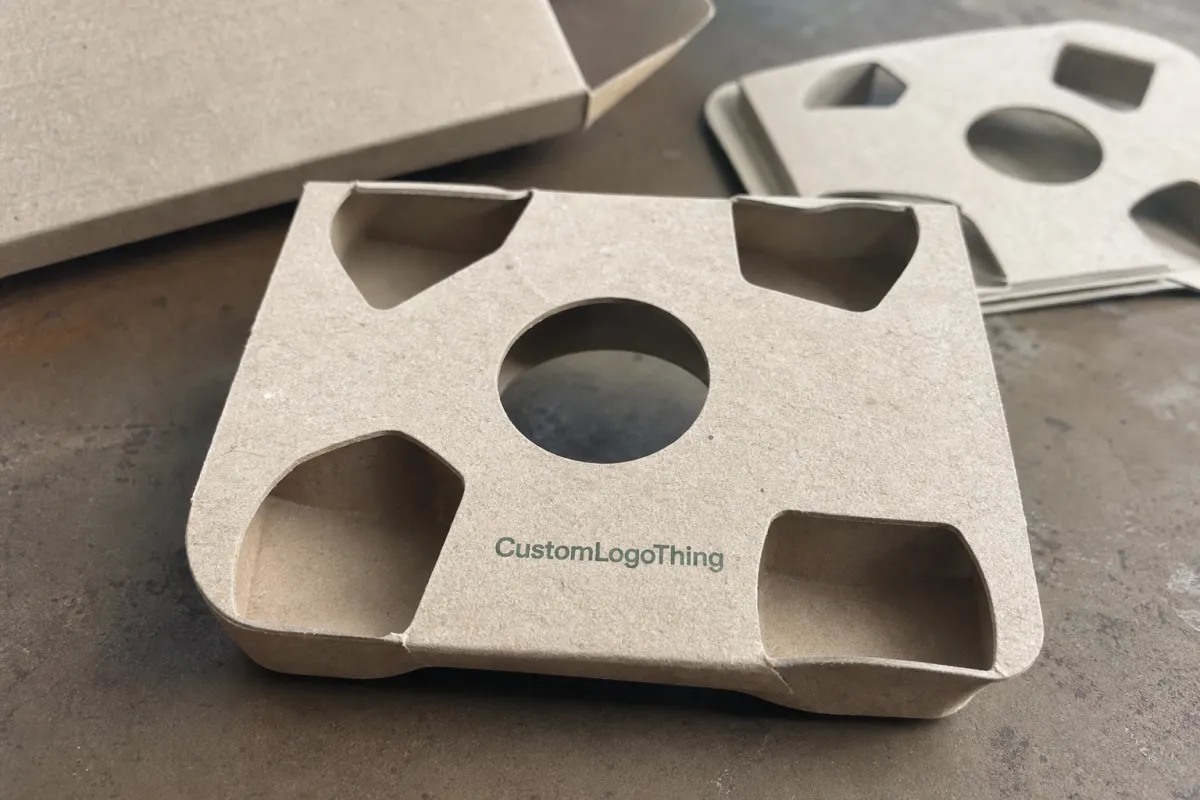
The custom carton inserts for candle brands Supplier Quote Checklist saves money because it forces every supplier to price the same job, not a fuzzy version of it. Candle packaging is unforgiving. Glass shifts shape, lids add height, labels add thickness, and certain jars have shoulders that look simple right up until the cavity has to hold them in place. A loose brief gives you a quote that looks attractive and a result that feels improvised.
The practical role of Custom Carton Inserts for candle brands is more than filling empty space. The insert keeps the vessel steady during packing, shipping, retail handling, and unboxing. It controls movement, keeps the lid from rattling, supports a gift set, and helps the outer carton feel deliberate instead of patched together. Good product packaging protects first, then supports branded packaging and package branding on the shelf or on camera.
There is a clear buyer payoff in that structure. Fewer damaged shipments. Cleaner unboxing. Fewer returns. Less time arguing over whether a cracked jar came from the courier, the packer, or the spec sheet. If the measurements and material choice are defined up front, approval moves faster because nobody has to restart the dieline for a third round of corrections.
The Custom Carton Inserts for candle brands supplier quote checklist also works as a buying tool, not just a planning note. The supplier needs product dimensions, carton dimensions, material preference, quantity, and whether the insert is meant for display, transit, or both. That is not overthinking. That is how you keep a design problem from showing up as a production charge.
Fixed launch date? Lock the structure first. Not the color. Not the fancy print. The structure. A candle brand can always upgrade custom printed boxes later. Rebuilding a carton insert after the production window is already booked is the kind of mistake that makes budgets unravel fast.
I've seen that mistake more than once on candle launches, and it usually starts with a vague assumption that "close enough" will work. It kinda doesn't. Once a heavy glass vessel starts moving inside a carton, the whole pack becomes a test of luck instead of engineering.
Product Details: Choosing the Right Insert Style for Jars, Vessels, and Sets
The custom carton inserts for candle brands supplier quote checklist should begin with insert style, because that one decision affects cost, weight, appearance, and breakage risk. Paperboard partition inserts are usually the lightest choice and work well for simple single-jar shipping cartons or value-led retail boxes. Molded pulp trays bring a natural look and solid shock absorption, which is why they fit well in eco-positioned product lines. EVA foam delivers premium protection, though it adds cost and can feel overly technical when the brand wants a softer retail story. Corrugated die-cuts land in the middle and often solve the problem cleanly for stronger vessel control without overbuilding the pack. Hybrid constructions combine board, pulp, and foam when the set includes more than one fragile element.
Single jars usually call for a straightforward structure: one cavity, one lid allowance, one carton. Duo packs need cavities that stop side-to-side movement and keep labels from scuffing. A candle plus matches, or a candle plus lid, needs separation so the accessory does not press into the glass. Multi-piece gift sets turn the insert into part of the retail packaging experience, which means visual order matters almost as much as protection. The custom carton inserts for candle brands supplier quote checklist should make clear which pieces travel together and which ones must stay isolated.
| Insert Style | Typical Use | Relative Cost | Protection Level | Buyer Notes |
|---|---|---|---|---|
| Paperboard partition insert | Single jar, light gift pack | $0.08-$0.18 per unit at 5,000 pcs | Moderate | Good for flat shipping and simple assembly |
| Molded pulp tray | Eco-focused retail or transit pack | $0.12-$0.24 per unit at 5,000 pcs | Good | Natural look, heavier than board, often slower to sample |
| EVA foam insert | Premium vessel protection | $0.25-$0.60 per unit at 5,000 pcs | High | Best for fragile glass, but can feel too industrial |
| Corrugated die-cut insert | Shipping carton, DTC pack | $0.10-$0.22 per unit at 5,000 pcs | Good | Strong, cost-aware, and flexible for shape changes |
| Hybrid premium construction | Gift set, limited edition, multi-piece pack | $0.28-$0.75 per unit at 5,000 pcs | Very high | Best when presentation and protection both matter |
The table gives the blunt version. The real choice is not just price. It is protection against weight against how the final pack feels in hand. A light candle inside a heavy structure can look overbuilt. A fragile vessel inside a cheap insert can look like the sort of savings someone else will pay for later. The custom carton inserts for candle brands supplier quote checklist keeps those tradeoffs visible instead of left to instinct.
Branding matters too. Plain utility inserts are fine when the carton lives inside a shipper. Presentation-grade inserts matter when the box is part of the customer experience or the gift set is meant to open neatly on camera. At that point packaging design and package branding begin to overlap with protection. The structure should feel intentional, not improvised. If you want to compare different product configurations, our Custom Packaging Products page is a useful place to review formats before you request a quote.
Custom Carton Inserts for Candle Brands Supplier Quote Checklist: Specs That Change Price
The custom carton inserts for candle brands supplier quote checklist only works when the measurements are exact enough to quote. Suppliers need the jar outer diameter, overall height, lid height if it ships attached, the widest shoulder diameter, and the inside dimensions of the carton. If the candle sits in a display tray or a sleeve, those dimensions matter as well. A few millimeters can move the fit from secure to impossible. Too tight means crushed labels, scratched glass, or rejects on the line. Too loose means movement and breakage claims.
I usually ask buyers to define tolerance instead of assuming it. That means telling the supplier how much working clearance is acceptable around the vessel. For many paperboard insert designs, a snug fit with roughly 1.5-3 mm of practical clearance at the critical contact points is a workable starting point, but the right number depends on label thickness, glass finish, and whether the jar carries a cap or a metal lid. The custom carton inserts for candle brands supplier quote checklist should also call out whether the vessel is straight-sided or tapered, since taper changes the die-cut geometry quickly.
- Jar dimensions: outer diameter, shoulder diameter, body height, and lid height.
- Carton dimensions: inside length, width, and height, not the outside carton size.
- Material thickness: board caliper, flute type, pulp wall thickness, or foam density.
- Fit requirement: tight transit fit, display fit, or mixed-use fit with extra clearance.
- Construction method: fold-flat, pre-assembled, glued, or nested insert.
- Finish needs: no print, one-color print, full coverage, or special coating.
- Packing method: ship flat, set up, master carton count, and pallet pattern.
Construction specs drive price harder than most buyers expect. Board thickness changes material usage and die-cut pressure. Flute type changes crush resistance. Deep cavities and nested folds add labor. Complex cutouts cost more than simple rectangular partitions because the tooling has to be cleaner and the assembly time is longer. If the insert is meant to be folded by hand at pack-out, say so. If it must arrive pre-assembled, say that too. The custom carton inserts for candle brands supplier quote checklist should never leave the supplier guessing about labor.
Shipping details matter too. A quote for flat-packed inserts is not the same as a quote for set-up inserts. Master carton count changes freight weight and cube. Pallet pattern changes export packing. If the product is going overseas, the supplier may need different outer cartons or moisture protection. That is one reason a clean brief beats a long email chain. The custom carton inserts for candle brands supplier quote checklist should include the delivery location and target shipping method so landed cost does not become a surprise later.
Testing has its place as well. If the candle will travel through rough handling or ecommerce networks, ask whether the structure has been checked against an ISTA method such as ISTA. If you are using recyclable board, confirm whether the paper component can be sourced as FSC-certified, which you can verify through FSC. Those standards do not replace fit testing, but they keep the conversation grounded.
Pricing, MOQ, and Quote Drivers for Custom Carton Inserts
The custom carton inserts for candle brands supplier quote checklist should push the price conversation into real levers, not vague language like "good quality" or "best option." Material choice is the first lever. Tooling or die fees come next. Print method follows. Then labor. Then packing format. A supplier can show a lower unit price and still be more expensive overall if the setup costs sit hidden somewhere else. Plenty of buyers have fallen for the neat per-unit number, then discovered sample fees, tooling, and freight were doing the damage.
MOQ is where people get caught. A supplier may show a beautiful unit price that only applies at 5,000 pieces or 10,000 pieces, while the actual launch needs 1,000. That is not a bad quote. It is simply a quote for a different order size. The custom carton inserts for candle brands supplier quote checklist should ask for tiered pricing at 1,000, 3,000, 5,000, and 10,000 units if the supplier can support those levels. That gives you a proper picture of launch volume, replenishment volume, and scale pricing in one request.
Here is the practical range I see most often for candle insert programs, assuming standard board or corrugated constructions and normal print requirements: simple paperboard inserts can land around $0.08-$0.18 per unit at higher volumes; corrugated die-cuts often sit around $0.10-$0.22; molded pulp usually comes in somewhat higher because of tooling and forming complexity; and foam can run materially more, especially when the shape is custom. Tooling or sample fees may add $80-$650 depending on complexity, and revised artwork can cost more than buyers expect if the insert carries print or specialty finishing. The custom carton inserts for candle brands supplier quote checklist should bring all of that into the same comparison sheet.
Hidden costs are the part nobody likes to discuss until the PO is already sent. Sample charges. Revised dielines. Special coatings. Expedited production. Freight. Export packing. Rework after a fit change. Even the choice between flat shipping and pre-assembled shipping can move the quote in a meaningful way because labor and cube are not free. The cleanest way to compare suppliers is to make them quote the same scope line by line. If one quote looks low, check what was left out. That is usually where the trick is hiding.
A buyer should also ask for a clear note on what the MOQ really means. Is it a production minimum? A print minimum? A board procurement minimum? Those are not always the same thing. The custom carton inserts for candle brands supplier quote checklist should ask for the minimum order by structure, by print method, and by material. If the supplier cannot separate those out, the quote is not ready for a purchase decision.
| Quote Driver | Low-Impact Version | Higher-Cost Version | What to Ask the Supplier |
|---|---|---|---|
| Material | Standard paperboard | Foam or premium hybrid | Which material gives the required protection without extra weight? |
| Tooling | Simple die-cut | Complex cavity or molded tool | Is the setup fee one-time or repeated on reorder? |
| No print or one-color print | Full coverage, coating, special finish | What does the quote include for artwork and proofing? | |
| Assembly | Ships flat | Ships pre-assembled | What labor cost changes if the insert must arrive set up? |
| Quantity | Launch run | Scale run | Show tiered pricing at multiple volumes. |
The cleanest buying move is simple: compare apples to apples. The custom carton inserts for candle brands supplier quote checklist should force every supplier to state the same assumptions, or the numbers are not comparable. If one quote includes freight and the other does not, that is not a price difference. It is a math problem waiting to happen.
Process and Timeline: From Dieline to Production
The custom carton inserts for candle brands supplier quote checklist also helps you understand the working sequence, which is often more useful than the sales pitch. The usual path is brief, measurements, dieline, prototype, fit check, approval, production, packing, and shipment. If the supplier has a strong engineering team, that sequence can move quickly. If they do not, every step turns into a revision loop. Revision loops are expensive. They consume time, and candle launches rarely care that the supplier needed another round of clarification.
A realistic timeline depends on complexity. A simple paperboard or corrugated insert may sample in roughly 3-7 business days after measurements are confirmed. More complex structures, especially molded pulp or premium multi-piece formats, can take 7-12 business days or longer for sampling. Once approved, mass production often runs around 12-20 business days for standard work, with extra time if print, coating, or special packing is involved. The custom carton inserts for candle brands supplier quote checklist should separate sample lead time from production lead time, because those are not the same thing and buyers often mix them up.
Delays usually come from a few familiar places. Missing measurements. Late artwork. Unclear finish requests. Fit specs that keep changing after the prototype arrives. A supplier can only build what the brief describes, so if the candle jar changes or the lid supplier changes, the insert may need to change too. That is why I tell buyers to freeze the product spec before asking for the final quote. The custom carton inserts for candle brands supplier quote checklist works best when it becomes a lock, not a suggestion.
My rule is straightforward: if the launch date is fixed, lock the insert structure early and avoid last-minute packaging design changes that reset the schedule. A brand can still refine artwork, insert print, or carton messaging later, but the cavity geometry should be stable before production gets moving. If the structure keeps moving, the whole job turns into shifting sand. That is fine for brainstorming. It is a poor fit for a purchase order.
One more practical step: ask for a fit sample before approving the full run. Not a mood-board sample. Not a random blank insert. A real prototype with the correct cavity dimensions and the actual candle sample if possible. The custom carton inserts for candle brands supplier quote checklist exists to reduce mistakes, and a physical fit sample is the quickest way to verify that the jar, lid, and carton behave the way you expected.
Why Choose Us for Candle Packaging Inserts
We keep this simple: the best custom carton inserts for candle brands supplier quote checklist is the one that helps the supplier quote a structure that fits, ships, and looks right. That means engineering support, clear quoting, stable materials, and fit-first sampling for fragile glass packaging. If you are buying for a launch, for repeat production, or for a retailer with strict presentation rules, you need a supplier who can document what was quoted and repeat it without changing the spec on every reorder.
On candle projects, experience shows up in small details. Jar protection is not just about stopping movement; it is about controlling how the vessel sits after carton compression, how the lid behaves if the package tips, and whether the carton can survive a rough delivery network without crushing the corners. That is why a serious custom carton inserts for candle brands supplier quote checklist should ask for actual working dimensions, not loose estimates. If the supplier understands candle packaging, the quote will reflect the real job instead of a generic insert assumption.
Our approach fits both custom printed boxes and plain shipping structures. Sometimes the insert is there to protect a direct-to-consumer order. Sometimes it supports a premium gift set with strong package branding. Sometimes it has to do both. We can usually make a cleaner recommendation if you share one finished sample, a photo set, or a spec sheet with the target dimensions. If you want to see how different structures performed for other packaging programs, our Case Studies page is a better signal than a polished sales deck.
We also keep the communication practical. A good quote should show what material is included, what the assembly method is, whether samples are chargeable, whether freight is included, and whether the insert ships flat or set up. That is what a buyer actually needs. The custom carton inserts for candle brands supplier quote checklist should not leave room for guesswork because guesswork becomes rework. Rework becomes delay. Delay becomes the kind of email thread nobody wants to own when the launch was already on the calendar.
For brands that care about sustainability, FSC paperboard is often a sensible starting point, especially when the structure needs to support retail packaging without adding unnecessary weight. We can also discuss lower-impact construction choices that reduce material use without making the box feel flimsy. The honest version is this: eco claims only matter if the insert still protects the candle. A tidy sustainability statement does not pay for broken glass. The custom carton inserts for candle brands supplier quote checklist should balance material claims with actual performance.
Next Steps: Build a Quote-Ready Request
The easiest way to move quickly is to send one clean input pack. The custom carton inserts for candle brands supplier quote checklist should include product dimensions, carton inside dimensions, target quantity, preferred material, print needs, delivery location, and whether the insert must ship flat or assembled. That is enough to get a quote that means something. If those details are missing, the supplier is guessing, and guessing is how budgets drift.
Then ask for two scenarios. One cost-saving version and one retail-ready version. That gives you a real comparison instead of a fake choice between "cheap" and "nice." A lower-cost structure might use a simple paperboard partition. A higher-touch version might use molded pulp or a hybrid design that improves presentation and stack stability. The custom carton inserts for candle brands supplier quote checklist works best when it forces the supplier to show the tradeoff instead of hiding it behind one mysterious number.
If the candle has an unusual shoulder, a heavy lid, or a label that wraps higher than normal, send a finished sample or at least detailed photos with measurements. Those details save a lot of back-and-forth. They also make it easier to compare the quote with our Custom Packaging Products page and make sure the insert spec matches the rest of the product packaging program.
My final advice is plain: use this custom carton inserts for candle brands supplier quote checklist, compare every quote line by line, and approve only when fit, cost, and lead time match the launch plan. If the supplier cannot explain the cavity size, material choice, MOQ, and sample rules in one clean reply, keep moving. A quote should reduce risk, not create it. The best next move is to build the request around actual jar measurements, the carton's inside dimensions, and a real sample target, because that is what gets you a usable number instead of a hopeful one.
What do I need to include in a custom carton inserts for candle brands supplier quote checklist?
Share product dimensions, carton inside dimensions, target quantity, insert material preference, and whether the order needs print or no print. Add shipping method, delivery region, and any sample requirements so the supplier can quote a real landed cost instead of a guess. If the candle has unusual shoulders, lids, or label thickness, include photos or a finished sample. The custom carton inserts for candle brands supplier quote checklist works best when the supplier can verify fit before quoting the run.
How much clearance should candle jar inserts allow?
A tight fit usually works best, but the exact clearance depends on glass thickness, label wrap, and whether the jar has a lid attached. Ask the supplier to account for production tolerance, because the inside dimensions of the insert should not match the jar too exactly. If the candle ships in multiple orientations, test the worst-case position, not just the neatest one. That is one reason the custom carton inserts for candle brands supplier quote checklist needs real measurements instead of rough guesses.
What changes pricing the most on custom carton inserts for candle brands?
Material choice, die-cut complexity, and order quantity usually have the biggest effect on unit cost. Print coverage, special coatings, and whether the insert ships flat or assembled can move the quote more than buyers expect. Tooling or sample fees should also be checked so the quoted unit price is not hiding setup costs. A solid custom carton inserts for candle brands supplier quote checklist should make those differences obvious.
Can I request samples before placing a full order?
Yes, and for fragile candle packaging you should. A fit sample is cheaper than a pallet of broken jars. Ask for a physical sample or prototype with your actual product dimensions before approving production. If timing is tight, Request a Fast structural sample first, then confirm finish and print on the final proof. That is exactly why the custom carton inserts for candle brands supplier quote checklist exists in the first place.
What is a realistic lead time for custom carton inserts?
Lead time depends on sample approval, material availability, and how complex the insert construction is. Simple paperboard or corrugated inserts are usually faster than highly formed or multi-piece premium structures. Build extra time for revisions, because changing the fit spec after sampling usually adds more delay than the buyer expects. If you want a quote that reflects reality, the custom carton inserts for candle brands supplier quote checklist should separate sampling time from production time and make both visible.

