Buyer Fit Snapshot
| Best fit | Custom Carton Inserts with Logo projects where brand print, material claims, artwork control, MOQ, and repeat-order consistency need to be specified before quoting. |
|---|---|
| Quote inputs | Share finished size, material target, print colors, finish, packing count, annual reorder estimate, ship-to region, and any compliance wording. |
| Proofing check | Approve dieline scale, logo placement, barcode or warning zones, color tolerance, closure strength, and carton packing before bulk production. |
| Main risk | Vague material claims, crowded artwork, missing packing details, or unclear freight terms can make a low unit price expensive after revisions. |
Fast answer: Custom Carton Inserts with Logo: Design, Cost & Fit should be specified like a repeatable production item. The safest quote records material, print method, finish, artwork proof, packing count, and reorder notes in one written spec.
Production checks before approval
Compare the actual filled-product size with the drawing, then confirm tolerance on folds, seals, hang holes, label areas, and retail display edges. Reserve space for logos, QR codes, warning copy, and material claims before decorative graphics fill the panel.
Quote comparison points
Review material grade, print process, finish, sampling route, tooling charges, carton quantity, and freight assumptions side by side. A quote is only useful when the supplier can repeat the same color, closure quality, and packing count on the next order.
Custom carton Inserts With Logo do a lot of quiet work before a customer ever sees the product itself. They steady the contents, shape the reveal, and give the inside of the carton a clear identity. A shipping box can move a parcel from one place to another, but the insert is often the part that makes the package feel intentional. For brands that care about product packaging, branded packaging, and the unboxing experience, the insert is not filler. It is part of the system.
That matters because the inside of the carton is where protection and presentation meet. The outer box handles rough transit, stacking pressure, and the abuse that comes with parcel shipping. The insert handles the handoff at the opening moment, where the customer notices fit, texture, and alignment in a matter of seconds. A logo on the insert is seen up close, which gives it a more immediate role than print that lives on the outside wall and only gets a glance from across the room.
I have seen plenty of packaging projects where the outer carton got most of the attention, only for the interior to carry the real brand impression. That is pretty common. A well-made insert can make a modest carton feel polished, while a sloppy insert can make even a nice box feel rushed. If you are sorting through options for your own packout, our Custom Packaging Products page is a practical place to compare materials and structures before you settle on a direction.
Custom carton inserts with logo: why the first touch matters
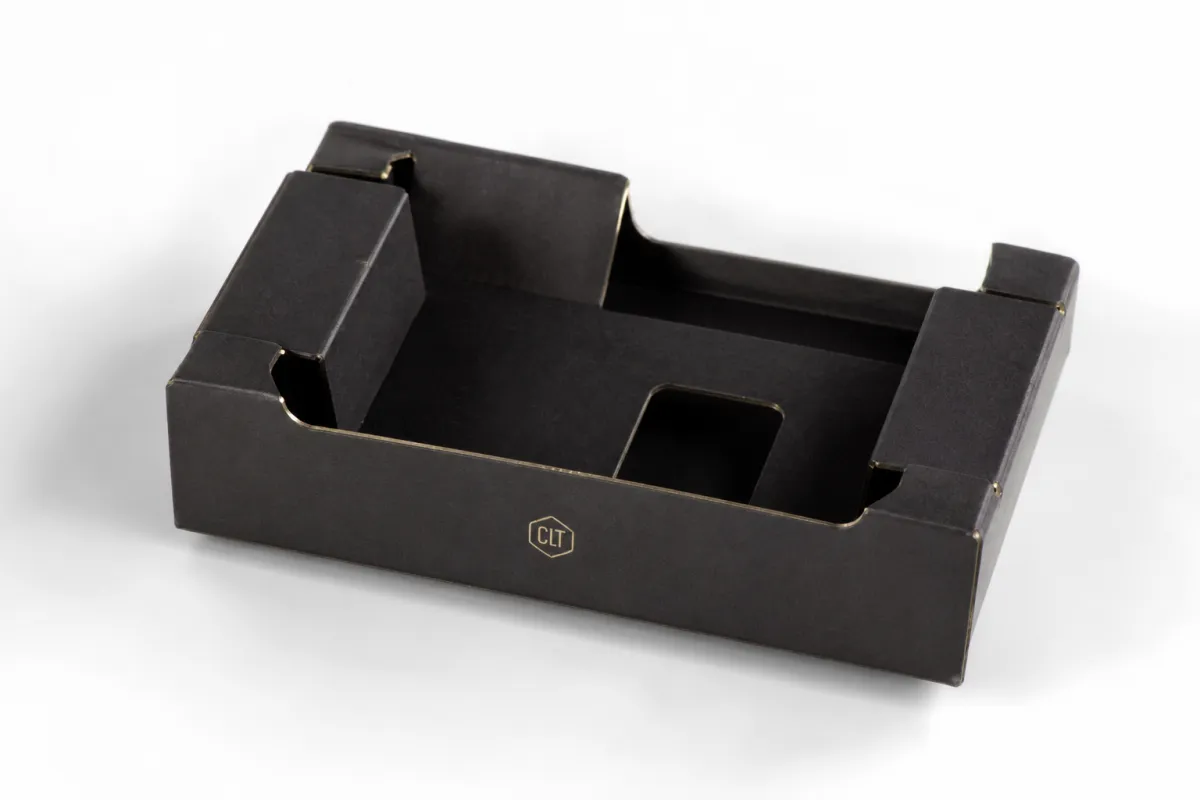
From a packaging buyer's point of view, the first touch is often the real test. A customer may never inspect the shipping carton closely, but they will notice whether the contents shift, whether the pieces sit neatly, and whether the opening feels deliberate. Custom Carton Inserts with logo create that feeling by organizing the inside of the box so the product looks centered, protected, and branded the moment the lid or flap opens.
That is useful for cosmetics, electronics, glassware, stationery sets, food gifts, and a long list of other categories where the product alone does not carry the whole story. The insert helps the product arrive in place, but it also helps the brand arrive in one piece. Those are not separate goals; they are the same job seen from different angles.
People often spend more time on the outer carton than they do on the insert, and that can leave value on the table. The outer carton manages shipping stress. The insert manages the reveal. When a customer opens a packout and finds custom carton inserts with logo holding every item in place, the whole package feels more thoughtful, even if the logo is only one color and the structure is simple. A clean mark on the insert can lift the sense of quality in a way that extra print outside never quite matches.
The structure itself deserves respect, because an insert is not decorative filler. It is a working component of the packout. The best custom carton inserts with logo balance three needs at once: fit, protection, and presentation. A loose insert lets the product rattle. An over-tight insert slows assembly and frustrates the packing team. A good-looking insert that tears at the score lines fails the moment production starts. Good package branding depends on that balance, not on visual effects alone.
A carton insert should make life easier for the fulfillment team and better for the customer in the same move. If it looks polished on a flat proof but fights the product on the line, it is not ready.
When someone asks what custom carton inserts with logo actually are, the plain answer is this: they are shaped paperboard, corrugated, molded, or folded structures placed inside the main carton to secure the product and present the brand in one system. Some are single-piece trays, some use compartments, some rely on locking tabs, and some are more engineered cradles for awkward shapes. What ties them together is the same purpose: protect the contents and make the opening feel deliberate.
A useful benchmark is the moment the carton opens. Think about what the customer should see first, and what should sit just beyond that first glance. The insert should guide the eye instead of fighting it. It should present the item cleanly, hold accessories in their place, and make the logo readable without crowding the layout. That is the practical sweet spot for custom carton inserts with logo: visible enough to brand the opening, restrained enough to keep the structure clean, and sturdy enough to travel well.
How custom carton inserts with logo are made and fitted
The production flow starts with measurements, because an insert cannot be engineered from artwork alone. A supplier will usually want product dimensions, carton dimensions, product weight, and any unusual features such as handles, caps, cords, or delicate corners. From there, custom carton inserts with logo move into dieline creation, where folds, locks, and cutouts are mapped so the product lands in the right position and the logo appears on a visible face rather than disappearing into a crease or a hidden flap.
Prototyping comes next. A real prototype is not just a visual sample; it is a fit test. The product should be inserted, removed, reinserted, and checked for movement. If the insert will be packed at speed, the team also needs to look at how quickly it assembles and whether the locking tabs ask for too much force. That is one reason custom carton inserts with logo can take a little longer than buyers expect when the product has unusual geometry. The insert has to work on the bench and on the line.
The most common formats will feel familiar to anyone who has specified packaging before:
- Die-cut paperboard for lighter products and sharp print quality.
- Corrugated inserts when stronger crush resistance is needed.
- Compartment trays for kits, bundles, and multipiece sets.
- Folded wraps for products that need a sleeve-style hold with a brand face.
- Molded options when cushioning and contoured support matter more than fine graphic detail.
Logo placement can happen in a few different ways. Some custom carton inserts with logo use direct print on the visible face only, which keeps the design controlled and the cost easier to manage. Others use a one-color mark, foil, embossing, or debossing when a more tactile finish helps the story. In some packouts, the logo sits on an inside panel that customers only see after opening, which can work well when the insert has limited print space. The right choice depends on the material, the folding path, and how much ink or pressure the board can tolerate without cracking or feathering.
Fit is the part that separates a decent insert from a frustrating one. A proper insert accounts for product weight, fragility, vibration in transit, and the exact way the item settles inside the carton. Heavier units may need stronger board, tighter score control, and more support at the base. Glass or polished surfaces need contact points placed carefully so pressure spreads over stronger areas rather than concentrating on weak edges or decorative caps. That matters just as much for custom carton inserts with logo as it does for any other kind of Custom Printed Boxes, because the outer package may look premium while the inner structure does the real protective work.
One practical detail is easy to overlook: if the insert is hard to fold, the logo can drift from piece to piece. A well-built structure should register consistently so the printed face lands in the same place every time. That consistency is one of the quiet strengths of custom carton inserts with logo; the brand presentation stays aligned even when the packout repeats dozens or hundreds of times a day. And yes, that little bit of consistency saves headaches later, which is kinda the whole point.
Material, fit, and branding factors that shape performance
Material choice changes nearly everything. Custom carton inserts with logo can be made from SBS paperboard, kraft stock, corrugated board, E-flute, or molded pulp, and each material brings its own balance of appearance, rigidity, and sustainability. SBS board is a strong choice when print quality matters and the product is relatively light. Kraft gives a natural look that fits eco-conscious branding. Corrugated and E-flute add strength and often work better for heavier products, longer transit routes, or kits that need more crush resistance. Molded pulp is useful when impact protection matters more than crisp graphic detail.
A simple comparison can help during scoping for custom carton inserts with logo:
| Material | Best for | Branding look | Typical tradeoff |
|---|---|---|---|
| SBS paperboard | Lighter products, clean print, premium feel | Smooth, sharp, high contrast | Less crush strength than corrugated |
| Kraft board | Natural branding, recycled look, simple inserts | Warm, earthy, understated | Color accuracy is more limited |
| Corrugated board | Heavier items, shipping protection, longer routes | Strong but more structural than decorative | Bulkier than paperboard |
| E-flute corrugated | Balanced strength and printability | Cleaner surface than heavier flutes | Still not as refined as SBS |
| Molded pulp | Cushioning, irregular shapes, eco signaling | Functional and natural | Less ideal for detailed graphics |
Structural details matter just as much as the board itself. Locking tabs keep the insert assembled. Gussets stiffen corners. Score lines control how the material folds. Partitions separate components so they do not hit each other. Cradles hold bottles, devices, jars, or accessory sets in a defined orientation. In well-executed custom carton inserts with logo, those features are coordinated so the insert feels tight and secure without becoming difficult to assemble or too expensive to ship.
Logo decisions deserve just as much attention. A larger mark is not always a better mark. On custom carton inserts with logo, the brand area should be large enough to read at opening distance, but not so large that it fights the structure or folds out of sight. Contrast matters too. Dark ink on natural kraft can look elegant, while a thin logo on a busy printed panel may vanish. A white or smooth coated board usually gives more flexibility for tight registration and crisp detail, especially for branded packaging that needs to look clean across repeated production runs.
Finish and texture shape the experience as well. Matte surfaces feel calm and modern. Smooth white boards feel precise. Natural kraft feels practical and grounded. Soft-touch coatings can add a premium hand feel, though they are not always necessary for custom carton inserts with logo. Sometimes an uncoated surface with a strong one-color logo communicates authenticity better than a glossy treatment would. The right finish depends on the product category, the price point, and whether the insert is meant to disappear into the packout or become part of the reveal.
Sustainability belongs in the decision too. Many buyers want inserts that are recyclable, fiber-based, and easy to discard after use. That does not mean every project should default to the thinnest board or the simplest print. It means the structure should support the real use case without adding unnecessary layers. For brands making environmental claims, it helps to align the insert with recognized materials and recovery paths, and to check guidance from groups such as the Forest Stewardship Council when sourcing fiber-based materials. Custom carton inserts with logo can look premium and still stay honest about what they are made from.
For shipping performance, some teams also reference test methods and handling expectations from organizations such as ISTA. That is useful when the product has to survive vibration, drops, or compression in parcel transit. The insert is not the whole shipping system, yet it is often the difference between a product arriving centered and a product arriving rattled loose. That is why custom carton inserts with logo should be judged on performance first and appearance second, even though both matter.
Process, timeline, and lead time for custom carton inserts with logo
Lead time begins with intake. Before anyone quotes custom carton inserts with logo, the supplier needs final or near-final product dimensions, carton dimensions, product weight, photos of the item inside the box if they are available, branding goals, and any constraints from the packing line. Better intake usually means a better first prototype. A lot of time disappears when dimensions are only approximate or when the product changes after the first discussion.
The proofing stage is where the geometry gets checked. A dieline or CAD layout is created, the fit is reviewed against the product, and artwork placement is verified before cutting or printing begins. This is the step where custom carton inserts with logo either become production-ready or expose a problem that needs another revision. If the logo sits too close to a fold, it may disappear once the board is assembled. If a tab is too narrow, assembly time can jump. If the product sits too low, the reveal loses impact. Catching those issues on proof saves money later.
Most schedules spend time in a few predictable places:
- Sampling and prototype adjustments.
- Artwork revisions and approvals.
- Die creation or tooling setup.
- Material availability and board sourcing.
- Production scheduling and packing of finished inserts.
Simple single-color custom carton inserts with logo usually move faster than more complex builds with multiple compartments, special folds, foil, or embossing. Every added feature creates another checkpoint. Multi-panel structures can need more accurate die cutting, more exact folding, and more careful assembly checks. That does not make complex inserts a bad choice. It only means they need enough calendar room to absorb revision cycles without putting the launch at risk.
A realistic planning window for straightforward work is often shorter than people expect, though it still depends on the project. A basic insert can move quickly if the dimensions are settled and the artwork is simple. Once the design gets more detailed, or the product is fragile and irregular, the calendar stretches. That is especially true for custom carton inserts with logo that must fit a glass bottle, a device with accessories, or a kit with several components that all need their own place inside the carton.
Timeline planning should also account for launch dates, freight timing, and seasonal demand. Packaging teams sometimes underestimate how long final approval takes once samples are in hand. If the insert has to match a specific product angle or opening sequence, leaving room for a physical review is the safer move. That way, custom carton inserts with logo can be checked for assembly speed, logo visibility, and product stability before full production is locked.
One practical habit helps more than people expect: photograph the product in the carton before requesting the final quote. A few clear images can show the supplier where the weak points are, whether accessories move around, and how much height the insert really needs. Paired with exact measurements, those photos make it much more likely that custom carton inserts with logo will fit on the first or second pass. It is a small step, but it saves a lot of back-and-forth.
Cost, pricing, MOQ, and quote factors to plan around
Cost is where the conversation becomes concrete. The price of custom carton inserts with logo depends on material choice, board thickness, structural complexity, print coverage, special finishes, and whether the design needs custom tooling or a new die. A simple one-color paperboard insert usually costs less than a multi-compartment corrugated build with foil and tight cutouts, though the real answer depends on quantity and assembly efficiency. The cheapest quote on paper is not always the cheapest result on the packing line.
MOQ changes the picture quickly. Setup costs are spread across the run, so a small order often carries a higher per-unit price than a larger one. That is normal. If you are comparing custom carton inserts with logo, ask whether the quote assumes one prototype, several proofs, or a single production approval. Also check whether the supplier is quoting raw insert manufacturing only or a finished, packed-for-shipment service. Those details can shift the price more than the logo itself.
To compare offers fairly, it helps to look at the line items rather than the headline number. A quote for custom carton inserts with logo should ideally make clear what is included:
- Sampling and prototype fees.
- Tooling or die charges.
- Print setup and color matching.
- Freight or delivery charges.
- Rush production fees, if any.
- Packaging of finished inserts for your receiving team.
That level of detail matters because a low unit price can hide extra costs elsewhere. If the insert ships in poor packaging, for example, you may lose time sorting damaged pieces. If the sample fee is high, the first order can look expensive even when the production rate is reasonable. If the supplier cannot explain the real constraints behind the quote, it becomes hard to compare custom carton inserts with logo on equal terms.
It also helps to think beyond the unit cost. A slightly higher-priced insert can save money if it reduces breakage, cuts void fill, speeds packout, or lowers return rates. That is especially true for products with fragile surfaces or multiple components. A tight-fitting insert can keep items from rattling, which means fewer complaints and fewer replacement shipments. In many cases, custom carton inserts with logo pay for themselves through lower damage before the branding value even enters the calculation.
Think of value in practical terms. If the insert prevents one broken unit out of every hundred, it may already be earning its keep depending on the product margin. If it also saves a few seconds on each packing step, it can create labor savings that never show up in the material quote. That is why buyers should judge custom carton inserts with logo as part of the total packaging system, not as an isolated line item.
If you are still shaping the rest of the packout, it may help to review our Custom Packaging Products selection alongside the insert quote so the outer carton, insert, and presentation goals all support one another. That keeps the budget tied to one packaging strategy instead of a stack of disconnected parts.
Common mistakes that weaken custom carton inserts with logo
The most common mistake is designing too early. If the product dimensions are not final, the insert may end up loose, too tight, or difficult to assemble cleanly. Even a small dimensional shift can change the way custom carton inserts with logo behave inside the carton, especially where there are cutouts or nested pockets. I have seen projects lose time simply because a cap height changed after the insert proof was already underway.
Artwork mistakes show up just as often. Tiny logos, low-contrast colors, and busy graphics can disappear once the board is folded or seen at a shallow angle inside the carton. A logo that looks fine on a flat PDF may become unreadable on the finished structure. That is why custom carton inserts with logo should always be reviewed as a folded object, not only as a graphic file. The viewing angle needs to match the customer's opening position, not the designer's screen.
Choosing the wrong material for the load causes problems too. Board that is too light will sag or crush. Board that is too heavy can make the insert awkward to assemble and expensive to ship. Corrugated may be the right choice for one product and too much for another. The goal is to match the structure to the real job, not to choose the thickest stock and hope for the best. That matters especially for custom carton inserts with logo used in direct-to-consumer programs, where labor and shipping weight can matter as much as presentation.
Mechanical design errors can be costly. Weak score lines, poor locking tabs, and missing friction control can let the product shift during shipping. If the insert moves inside the carton, the logo may still look polished while the product arrives scuffed. That is a poor trade. For custom carton inserts with logo, the visual layer should never outrun the structure. The insert should hold the product first and carry the brand message second, even though both are part of the same piece.
There is also a subtle branding mistake that shows up often: designing for the flat sheet instead of the reveal. On screen, the logo may appear centered. In the assembled carton, though, the customer may only see a corner of the insert, or the print may sit behind a flap. The opening path matters. A good packaging buyer will ask, "What does the customer see first?" and then make sure custom carton inserts with logo support that view.
Another thing to watch is fold memory. If the board fights the fold, the assembly team will feel it immediately, and the logo may land slightly differently from unit to unit. That variation weakens the polished look people expect from branded packaging. Small shifts can matter more than expensive effects when the product sits inside a tight carton and every millimeter of placement is visible. A package that is almost right can still feel off in the hand.
Expert tips and next steps for ordering the right insert
Start with the product's failure points. If the item has corners that chip, glass areas that need spacing, accessories that drift, or cables that tangle, build the insert around those problems first. That is the practical core of custom carton inserts with logo: protection should be designed around the weakest points of the product, not around the prettiest face of the carton. Once those points are controlled, the branding becomes much easier to place with confidence.
Ask for a plain prototype before you finalize graphics if there is any uncertainty about fit. A no-print sample lets you test assembly speed, product stability, and the opening sequence without getting distracted by color approval. Once the structure is proven, the logo can be added with much less risk. That staged approach often saves time because it prevents expensive rework later. It also keeps custom carton inserts with logo focused on the job that matters most: holding the product exactly where it needs to be.
Keep the logo simple and legible at small scale. A strong wordmark or mark often works better than a crowded graphic that only makes sense on a large panel. If the insert face is narrow, use the space carefully and leave breathing room around the mark. Clear branding on custom carton inserts with logo is usually more effective than trying to fill every inch of print area. The customer needs to recognize the brand fast, not decode it.
Before you request a quote, gather the basics:
- Final product dimensions and weight.
- Carton size and packout orientation.
- Quantity needed for the run.
- Branding goals and logo file format.
- Target timeline and launch date.
- Any sustainability or recyclability requirements.
- Photos of the product inside the carton, if available.
Those details make it much easier for a supplier to recommend the right structure, estimate tooling, and flag potential issues early. If you are comparing options for custom carton inserts with logo, it also helps to ask whether the quote includes sampling, freight, revisions, and assembly guidance. A lower quote may not be the better one if it leaves out the steps you still need to finish the job.
From a packaging buyer's point of view, the best results usually come from a simple process: measure the product carefully, photograph it in the box, request a dieline, compare quotes on equal terms, review a physical sample, and approve production only after the fit and print placement are right. That sequence is plain, but it is reliable. It is also the easiest way to make sure custom carton inserts with logo protect the product while reinforcing the brand every time the box opens.
If you are building a new packout or refreshing an old one, start with the fit, then refine the look, then lock the production details. That order keeps the work grounded in real shipping conditions and real assembly constraints, which is where packaging succeeds or fails. In the end, custom carton inserts with logo are valuable because they make the product safer to ship, easier to present, and more memorable to open, all without asking the outer carton to carry more than it should.
The practical takeaway is simple: finalize the product dimensions first, approve a plain fit sample before you worry about print effects, and make sure the logo lands on the face the customer actually sees during opening. If those three things are right, the insert will do its job without drama, and the package will feel considered instead of merely assembled.
How much do custom carton inserts with logo usually cost per unit?
Pricing depends on material, board thickness, print coverage, die complexity, and order quantity, so there is no single standard unit price. Small runs often carry higher setup costs per piece, while larger runs usually lower the per-unit cost. Ask for a quote that separates tooling, sampling, freight, and production so you can compare offers accurately.
What materials work best for custom carton inserts with logo?
Paperboard works well for lighter products and high-quality printing, while corrugated or E-flute is stronger for heavier items or longer shipping routes. Kraft stocks can support a natural, eco-forward look, and molded options may be better when cushioning matters more than graphics. The right choice depends on product weight, fragility, branding style, and how the insert will be assembled.
How long does the process take for custom carton inserts with logo?
A simple insert can move from measurement to production relatively quickly, but sampling, revisions, and complex print effects extend the schedule. Lead time is influenced by artwork approval, tooling needs, material availability, and the number of units ordered. Build in extra time when the insert must match a fragile or irregular product exactly.
Can custom carton inserts with logo protect fragile products?
Yes, if the insert is engineered around the product shape and shipping conditions, it can hold fragile items securely and reduce movement. The design should support contact points, prevent edge impact, and avoid placing pressure on weak areas of the product. For glass, electronics, or cosmetic components, a sample test is strongly recommended before full production.
What do I need before requesting a quote for custom carton inserts with logo?
Have final product dimensions, carton size, product weight, quantity, branding goals, and any special handling or sustainability requirements ready. Photos of the product inside the carton help suppliers understand the fit and identify weak points quickly. If possible, send a sample unit and ask whether the quote includes tooling, sampling, freight, and revisions.

