Buyer Fit Snapshot
| Best fit | Custom Carton Inserts with Die Cutting projects where brand print, material claims, artwork control, MOQ, and repeat-order consistency need to be specified before quoting. |
|---|---|
| Quote inputs | Share finished size, material target, print colors, finish, packing count, annual reorder estimate, ship-to region, and any compliance wording. |
| Proofing check | Approve dieline scale, logo placement, barcode or warning zones, color tolerance, closure strength, and carton packing before bulk production. |
| Main risk | Vague material claims, crowded artwork, missing packing details, or unclear freight terms can make a low unit price expensive after revisions. |
Fast answer: Custom Carton Inserts with Die Cutting: Board, Finish, Dieline, and Unit Cost should be specified like a repeatable production item. The safest quote records material, print method, finish, artwork proof, packing count, and reorder notes in one written spec.
Production checks before approval
Compare the actual filled-product size with the drawing, then confirm tolerance on folds, seals, hang holes, label areas, and retail display edges. Reserve space for logos, QR codes, warning copy, and material claims before decorative graphics fill the panel.
Quote comparison points
Review material grade, print process, finish, sampling route, tooling charges, carton quantity, and freight assumptions side by side. A quote is only useful when the supplier can repeat the same color, closure quality, and packing count on the next order.
Custom Carton Inserts with Die Cutting: What to Know
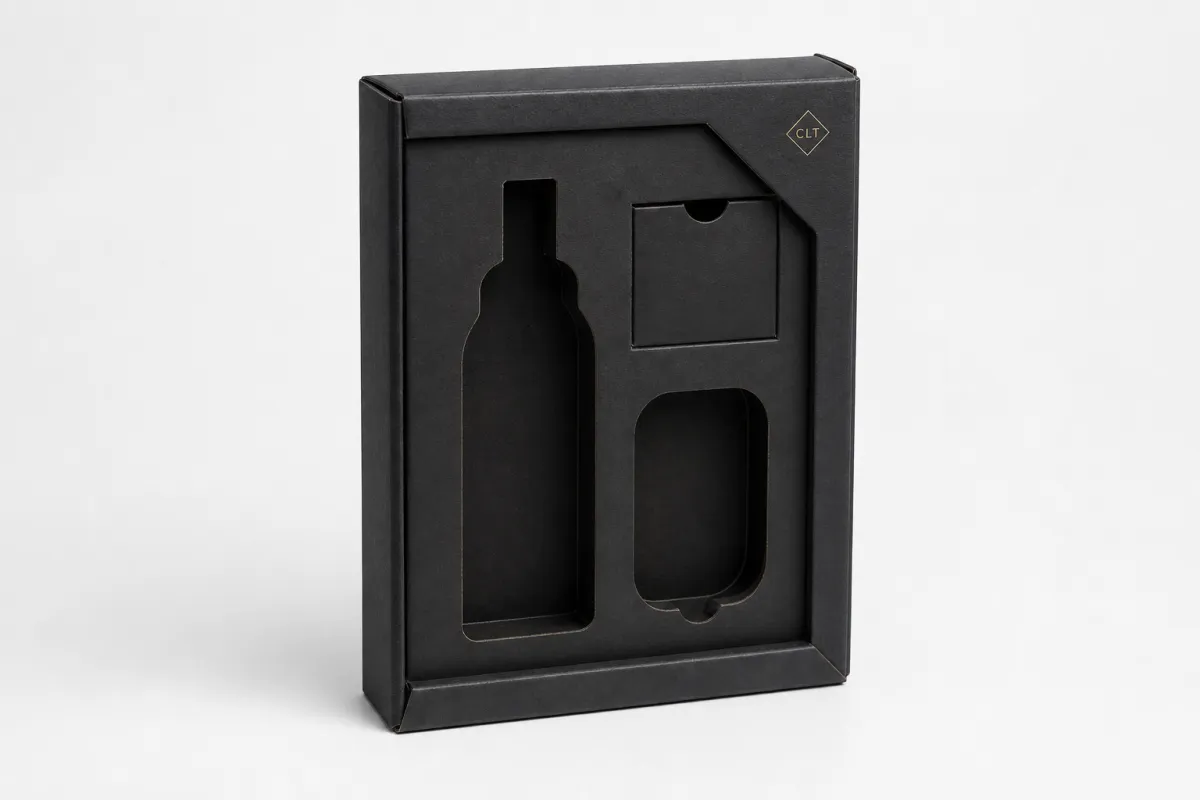
One loose centimeter can turn a clean shipment into a headache. I have seen a glass bottle move just enough in transit to scuff its own label, and I have seen a small electronics kit arrive with one component rattling free because the insert was designed around the carton, not the product. That is the practical case for Custom Carton Inserts with die cutting: they convert empty volume into a controlled load path, and they do it with more repeatability than hand-trimmed filler or a generic void-fill approach.
From a packaging buyer's angle, the insert is not just a piece of board tucked inside a box. It is a shaped internal component that immobilizes a product, separates multiple items, and changes the unboxing experience before a customer even reaches the product itself. That matters in branded packaging. A precise fit can make retail packaging feel deliberate; a sloppy fit can make even well-made Custom Printed Boxes feel improvised. And once that feeling lands with a customer, it is hard to undo.
Die cutting changes the production math. Instead of depending on a worker with a knife or a one-size-fits-all insert, custom carton Inserts with Die cutting are built for repetition. Cut geometry can be held to tighter tolerances, edges come out cleaner, and thousands of units can match the same pattern with far less drift. In a controlled run, the difference between a clean score and a split one can come down to board caliper, grain direction, and humidity. That consistency helps on the packing line, in shipping lanes, and on the receiving dock where the box finally gets judged.
Money enters the picture faster than many buyers expect. Inserts affect more than protection. They influence fulfillment speed, labor per carton, freight efficiency, shelf-ready presentation, and the number of calls that customer service has to answer after a shipment arrives damaged. In product packaging, those downstream costs can wipe out a small difference in board price. The cheapest insert on the quote sheet is often the one that becomes expensive later, after the first round of claims or the first hour of slow packout.
The real decision is not whether custom carton inserts with die cutting are useful. That part is already settled by the market. The better question is which conditions justify the spend, and which design choices shape the result most: material, structure, tolerance, assembly time, or test performance. That is where the savings hide, and where the mistakes hide too.
How Custom Carton Inserts with Die Cutting Work
The production sequence looks simple on paper, but the specifics decide whether the insert works. A dieline is built from the product dimensions and the inside dimensions of the carton. The layout gets reviewed, proofed, and translated into a cutting form or a digital cut file. From there, the material is cut to spec, with score lines, cut lines, perforations, and fold lines placed where the structure needs flex, resistance, or release. That is the working foundation of custom carton inserts with die cutting.
The main line types are easy to separate:
- Cut lines define the final shape of the insert.
- Score lines help board fold without splitting.
- Perforations allow controlled tear-away sections or quick assembly points.
- Fold lines turn a flat sheet into a tray, divider, or retaining form.
Geometry matters more than outer box size alone. A carton can look generous and still fail if the product slides along one axis, tips during loading, or gets pinched at a vulnerable edge. The best custom carton inserts with die cutting are designed around product weight, center of gravity, surface finish, and loading direction. A glass item, a cosmetic set, and an electronic accessory do not need the same internal structure, even when the outside dimensions are close. A millimeter of extra clearance in the wrong place can create movement; a millimeter too little can scrape a finish or crack a scored fold.
Common insert styles include tabs and slots, layered supports, partitions, wrap-style cradles, and cutout trays. Tabs and slots help when packout speed matters and the assembly should stay simple. Partitions work well for multi-piece sets or products that must remain separated. Layered supports are useful when one component is heavier than the others or when the product needs a stepped presentation. Wrap-style supports fit awkward shapes because they add side restraint without requiring a full molded tray. In short-run sampling, digital cutting is often the fastest route to a proof; in volume, a steel-rule die usually makes more economic sense.
From a production standpoint, custom carton inserts with die cutting also let a plant balance protection and line speed. If a warehouse team needs 15 extra seconds to fold every insert, labor costs show up quickly. If the insert can be packed flat, folded once, and locked into place without guesswork, the savings stack across the run. If a packer has to wrestle the insert into shape, the line is gonna slow down - no fancy spreadsheet can hide that. That is one reason custom carton inserts with die cutting are common in custom printed boxes, gift kits, cosmetics, and retail packaging where presentation matters as much as protection.
Many packaging engineers prefer die cutting over hand cutting or loose filler for one simple reason: the first run establishes the pattern, and the pattern repeats. That matters when a brand wants package branding to feel intentional from shipment to shelf.
Cost and Pricing Factors for Custom Carton Inserts with Die Cutting
Price usually gets the first look, but it should not get the only look. Custom carton inserts with die cutting can be economical at scale, yet a more complicated structure can get expensive quickly if the run is short or the design is still changing. Final unit cost depends on material choice, insert complexity, the number of cutouts, print requirements, and whether the insert needs gluing or multi-step assembly. Regional labor rates, board availability, and freight class can move the number too, so quote comparisons need context.
For a practical reference, a simple single-layer insert in a larger run might land around $0.12-$0.22 per unit. A more complex insert with multiple cavities, extra scores, or a premium board could move into the $0.18-$0.35 range. Add glue, layered construction, or a short-run prototype, and the cost can climb to $0.45-$1.20 per unit or more. Those figures shift with board grade, quantity, finishing, and regional production costs, so they should be treated as working ranges rather than guarantees.
Tooling and setup costs matter too. A straightforward die line may carry a modest setup charge, while a more detailed insert can require a specialized cutting form or additional prepress time. That setup cost is easier to absorb at volume. On a 10,000-piece order, one tooling charge can become a small slice of the total. On a 250-piece pilot run, the same charge can dominate the quote. That is why custom carton inserts with die cutting often look expensive in short runs and far more competitive once volume rises.
| Insert Type | Typical Setup | Approx. Unit Cost at 5,000 | Best For | Notes |
|---|---|---|---|---|
| Single-layer die-cut insert | $150-$350 | $0.12-$0.22 | Light products, simple immobilization | Fast to pack, minimal assembly |
| Tabbed or slotted insert | $250-$600 | $0.18-$0.35 | Multi-item kits, retail packaging | Good balance of control and labor |
| Layered or glued insert | $350-$900 | $0.28-$0.55 | Fragile or premium products | Higher protection, more assembly |
| Prototype or short run | $75-$250 | $0.45-$1.20 | Fit checks and pilot launches | Useful before committing to volume |
The hidden cost of the wrong structure can be larger than the quote itself. If an insert adds 8 seconds to packout time, a 20,000-unit run absorbs that delay in labor. If the insert allows a product to shift and scrape during transit, the cost returns as claims, replacements, and bad reviews. If the insert wastes carton space, freight can rise because the shipper is moving air. Custom carton inserts with die cutting should be compared as part of the full system, not as a standalone line item.
The cleanest quote comparison is simple: ask suppliers to price the same product dimensions, the same board grade, the same quantity, and the same assembly assumptions. Similar-looking samples can hide major differences in board weight, cut count, print coverage, or labor. Good buyers ask for identical specs so the quote means something.
If you are comparing carton options against other packaging formats, it helps to place them beside the rest of the line. A project may also involve Custom Packaging Products or a sleeve-and-carton format that serves the branding goal better. If you need a supplier that can handle structural sampling or short-run prototyping, Manufacturing Capabilities is the place to verify what can be produced in-house.
Process and Timeline: From Quote to Production
The sourcing sequence usually follows a familiar path: product review, dimensions and sample collection, structural recommendation, quote, dieline approval, proofing, and production. Custom carton inserts with die cutting move faster when the starting information is complete. Fewer clarifications later means a shorter lead time.
Timeline depends less on press time than on decision speed. A straightforward job may be ready in roughly 8-12 business days after proof approval, though that window shifts with material availability, tooling creation, sample production, and revision cycles. Complex inserts often need a prototype or short pilot run before full production, especially if the product is fragile, unusually shaped, or packed with a premium presentation goal. I have watched one project lose a full week because the product team changed the closure after the sample had already been signed off; the press was not the bottleneck, the approval loop was.
Several checkpoints tend to slow a project:
- Missing or incomplete product measurements.
- Slow approval of the dieline or sample.
- Material substitutions because the first choice is unavailable.
- Extra revisions after the first test-fit.
- Assembly concerns that surface only after the sample is built.
Custom carton inserts with die cutting avoid those delays when the buyer sends a useful brief up front. The most helpful brief usually includes product dimensions, weight, surface sensitivity, carton size, shipping mode, and the expected packout speed. If the product must be loaded from the top, the insert should support that motion. If the line uses gloves, the fit should not demand fingernail-level precision. If the outer pack is part of branded packaging, the insert should match the presentation standards of the rest of the package.
A good sample stage does more than confirm fit. It also shows whether the insert locks too tightly, whether the board cracks on a fold, whether the product shifts after a simulated drop, and whether a packer can assemble the unit without stopping the line. The point is not merely to approve a shape. The point is to prove that custom carton inserts with die cutting work in real handling conditions. That is where the numbers meet the factory floor.
One useful benchmark is transit testing. The ISTA test methods are widely used for evaluating shipping packages, while FSC guidance at FSC chain-of-custody standards can matter when the buyer wants certified fiber. A packaging team does not need to be an engineer to use those references well; it just needs a realistic frame for protecting the product and documenting material choices.
Step-by-Step Guide to Specifying the Right Insert
Specifying custom carton inserts with die cutting starts with the product, not the box. That sounds obvious, yet it is still the most common place where projects drift off course. If the insert is designed to fill a carton rather than control the product, the result can look neat and still fail in transit.
Start with product mapping
List every item that will ship. Record dimensions, weight, finish, fragility, and how each item should sit inside the carton. A glossy bottle cap needs different restraint than a matte component. A tool kit with several parts needs separation; a single premium item may need presentation and protection in the same structure. That is the point where custom carton inserts with die cutting start paying for themselves.
Choose the protection goal first
Decide whether the insert must immobilize, separate, cushion, display, or combine those functions. That decision shapes the rest. An insert that simply fills void space is usually a weak answer. An insert that controls movement in three directions and supports the unboxing moment is much stronger. In daily terms, that is where packaging design, retail packaging, and package branding overlap.
Test fit before scaling
Use a prototype or short pilot run to check clearance, loading direction, and drop behavior. A test should answer practical questions: Can the packer load it in one motion? Does the product rub during insertion? Does the insert still work if a different person packs the carton? Those answers matter more than a neat drawing. Custom carton inserts with die cutting should pass a handling test, not just a visual check.
Check the packaging system around it
The insert is only one piece of the shipping system. Outer carton strength, tape pattern, pallet stacking, and void fill all affect performance. A weak outer carton can undercut a good insert. A carton that is too large can make the insert do more work than it should. If the product is shipping long-distance, the insert should be tested with the actual outer structure, not a placeholder box.
Confirm the production details
Before approval, confirm board grade, cut accuracy, print method, assembly assumptions, and packout instructions. If the insert is part of a branded unboxing moment, confirm whether the graphics need print, embossing, or another finish treatment on the outer pack. A simple checklist should include product dimensions, tolerance range, material grade, sample approval, and labor time. That checklist makes custom carton inserts with die cutting easier to buy, easier to pack, and easier to defend internally.
"The best insert is the one a warehouse team can trust without thinking about it twice."
That line comes up often in packaging reviews because it captures the real goal. The design should look deliberate, but it should also disappear into the workflow. A well-specified insert protects the product, speeds packing, and lowers the chance that someone will improvise at the line.
Common Mistakes with Custom Carton Inserts with Die Cutting
The first mistake is designing around the box instead of the product. A carton can be measured perfectly and still fail if the insert does not control movement. Custom carton inserts with die cutting should hold the item in place, not simply occupy the remaining space.
The second mistake is over-tight fit. A snug insert may look excellent on a sample table, yet it can scratch a finish, slow packing, or make returns painful. A buyer who has to reinsert a product after inspection learns quickly that too much friction is as problematic as too much slack. If the insert is for a premium category, that issue matters even more because the product surface is often part of the perceived value. A fit that looks perfect in CAD can kinda betray you once the package meets vibration, dust, and hurried hands.
The third mistake is choosing the wrong substrate. Lightweight paperboard can work well for many applications, but heavier products, long transit, high humidity, and stacking pressure may require a stronger construction. That is where common paperboard grades, corrugated options, or layered structures become relevant. Some projects also need a paper-based alternative because of recycling goals; others need extra stiffness from a different format. Custom carton inserts with die cutting are flexible, but they are not magic.
The fourth mistake is skipping prototype testing. A structure that looks perfect in a PDF can fail when a packer folds it with gloves, when a product is packed upside down, or when a parcel moves through vibration. Sample approval matters. One pilot run can catch fit problems that would be expensive to discover after launch. This is also where honest expectations matter: not every fragile product should be solved with paperboard alone.
The fifth mistake is underestimating labor. A cheap insert can become expensive if it adds 10 seconds of handling to every carton. The effect compounds. On 30,000 units, those seconds become hours. That labor cost often stays hidden in the first quote, then shows up on the production floor almost immediately.
There is also a brand risk. Poor-fit inserts can make custom printed boxes feel less premium, even when the exterior graphics are strong. If package branding is the goal, the interior cannot look improvised. Clean cuts, controlled folds, and consistent assembly all shape how the customer reads the package.
For a sharper check before launch, use a simple question: if this carton is dropped, stacked, shipped, and repacked three times, will custom carton inserts with die cutting still keep the item where it belongs? If the answer is uncertain, the design still needs work. That question is not glamorous, but it is usually the one that saves the most money.
Expert Tips and Next Steps for Sourcing Better Inserts
If the product is fragile or premium, ask the supplier for a die-line review and a structural recommendation before requesting final pricing. That step saves time because the quote reflects a real solution rather than a guess. It also avoids the common problem of comparing two inserts that look similar but were built on different assumptions. Custom carton inserts with die cutting should be judged on structure, not just appearance.
Order at least one prototype or short pilot run. A pilot is usually the cheapest way to see whether the fit is right, whether packout speed is acceptable, and whether the insert survives transit testing. One short run can reveal issues in the board, the fold, the cavity depth, or the assembly sequence. In packaging design, that small expense often prevents a much larger correction later.
Compare quotes using the same assumptions. Material grade, dimensions, print coverage, quantity, assembly, and tolerance all need to match. If one supplier quotes a simple flat insert and another quotes a layered structure, the prices are not truly comparable. Ask for line-item clarity so the difference between options stays visible. That is the cleanest way to evaluate custom carton inserts with die cutting without getting lost in surface-level pricing.
It also helps to use an internal scorecard. A practical one might include:
- Protection - does the insert stop movement?
- Labor time - how long does packout take?
- Unboxing quality - does the interior support branded packaging?
- Damage reduction - did claims drop after launch?
- Material fit - is the board strong enough for the route?
That kind of scorecard keeps the decision grounded. It also helps teams talk across departments. Operations may care most about line speed. Marketing may care most about presentation. Finance may care most about unit cost. Custom carton inserts with die cutting sit at the intersection of all three, which is why the best buying decisions are usually the ones that measure more than one variable.
If you are sourcing from a packaging partner, ask what else they can support beyond the insert itself. Can they handle matching trays, sleeves, or custom printed boxes? Can they coordinate material finishes so the insert and outer package feel like one system? Can they advise on board choices that fit the shipping mode and the product's fragility? Those questions matter because the insert should sit inside a broader product packaging strategy, not exist in isolation.
For brands working toward cleaner materials or formal certification goals, the board choice may also need to align with sustainability targets. That can mean FSC-certified fiber, recycled content, or a simpler construction that is easier to recover after use. Not every project needs the same answer. Still, custom carton inserts with die cutting should support operational goals, branding goals, and material preferences at the same time whenever possible.
Use the next three steps to move forward:
- Gather product dimensions, weights, and photos.
- Request a structural recommendation and one sample.
- Compare at least two suppliers on identical specs.
Do that, and custom carton inserts with die cutting become much easier to buy well. They stop being a vague packaging line item and become a measurable part of transit protection, unboxing quality, and operating cost. If you want stronger package branding and fewer damaged arrivals, the insert is often the smartest place to start.
Frequently Asked Questions
How much do custom carton inserts with die cutting usually cost?
Cost depends on material, insert complexity, quantity, and whether the design needs extra assembly or specialized tooling. Simple inserts in larger runs usually lower unit cost, while short runs with multiple cutouts or tight tolerances cost more per piece. Ask for a quote based on the exact product dimensions and performance goals so you can compare suppliers fairly.
What details do I need to request a quote for carton inserts with die cutting?
Provide product dimensions, weight, quantity, box size, shipping method, and any branding or print requirements. Share product photos or samples if the item has unusual shapes, fragile surfaces, or multiple components. Include your target timeline so the supplier can estimate sample and production lead times accurately.
How do I know if die-cut carton inserts are better than foam or molded alternatives?
Die-cut inserts are often a strong fit when you want crisp presentation, paper-based recyclability, and efficient flat-pack shipping. Foam or molded options may be better for extreme cushioning, heavy-duty protection, or highly irregular shapes. The best choice depends on fragility, brand goals, budget, and how the product will be packed and shipped.
How long does production usually take for custom carton inserts with die cutting?
Timeline varies by complexity, material availability, sample approval speed, and production queue. Straightforward jobs can move quickly once the dieline is approved, while custom structures with revisions need more back-and-forth. Providing clear specs early is the fastest way to reduce delays and avoid repeat sampling.
What are the most common mistakes when ordering custom carton inserts with die cutting?
The biggest mistakes are measuring only the box, not the product, and skipping a sample test before full production. Buyers also underestimate labor time, choose the wrong material, or approve a fit that is too tight for real-world packing. A short pilot run can reveal issues that are invisible in a drawing. Custom carton inserts with die cutting should be proven in handling, not just approved on screen.
Closing Takeaway
Before you approve a die-cut insert, lock the product dimensions, choose one shipping route to design around, and insist on a sample that has been tested in actual handling conditions. If the insert keeps the product still, survives the test, and lets the packer move without fuss, you have something worth scaling. If it fails any of those checks, revise the structure before buying volume. That is the practical way to use custom carton inserts with die cutting well: start with the product, prove the fit, then spend with confidence.

