Trade show sample bags get judged in a matter of seconds. They are picked up, carried across carpet, stacked under an arm, dropped onto a counter, and judged again under bright hall lighting. Custom Matte Laminated Paper Bags for trade show samples do more than hold inserts; they keep the booth kit looking controlled, protect the contents from scuffs, and give the handoff a more finished feel before anyone opens the bag.
The matte finish matters because the show floor is rarely kind to shiny surfaces. Gloss can throw reflections, make text harder to read, and turn fingerprints into a distraction. Matte lamination softens all of that. It gives the bag a quieter surface, helps printed colors sit more evenly, and usually photographs better when attendees snap quick pictures of a sample kit or leave the hall with the bag in view.
Buyers tend to notice the difference most when the bag is carrying a real load rather than a light brochure set. A well-built matte laminated bag feels like part of the package rather than a disposable carrier. That perception is not cosmetic fluff; it changes how the sample program is received and whether the brand feels organized, careful, and worth remembering.
A sample bag is part of the presentation system. If the bag bends badly, shines too hard, or shows every mark, the booth handoff loses some of its authority.
Why matte-finished sample bags stand out on a crowded floor
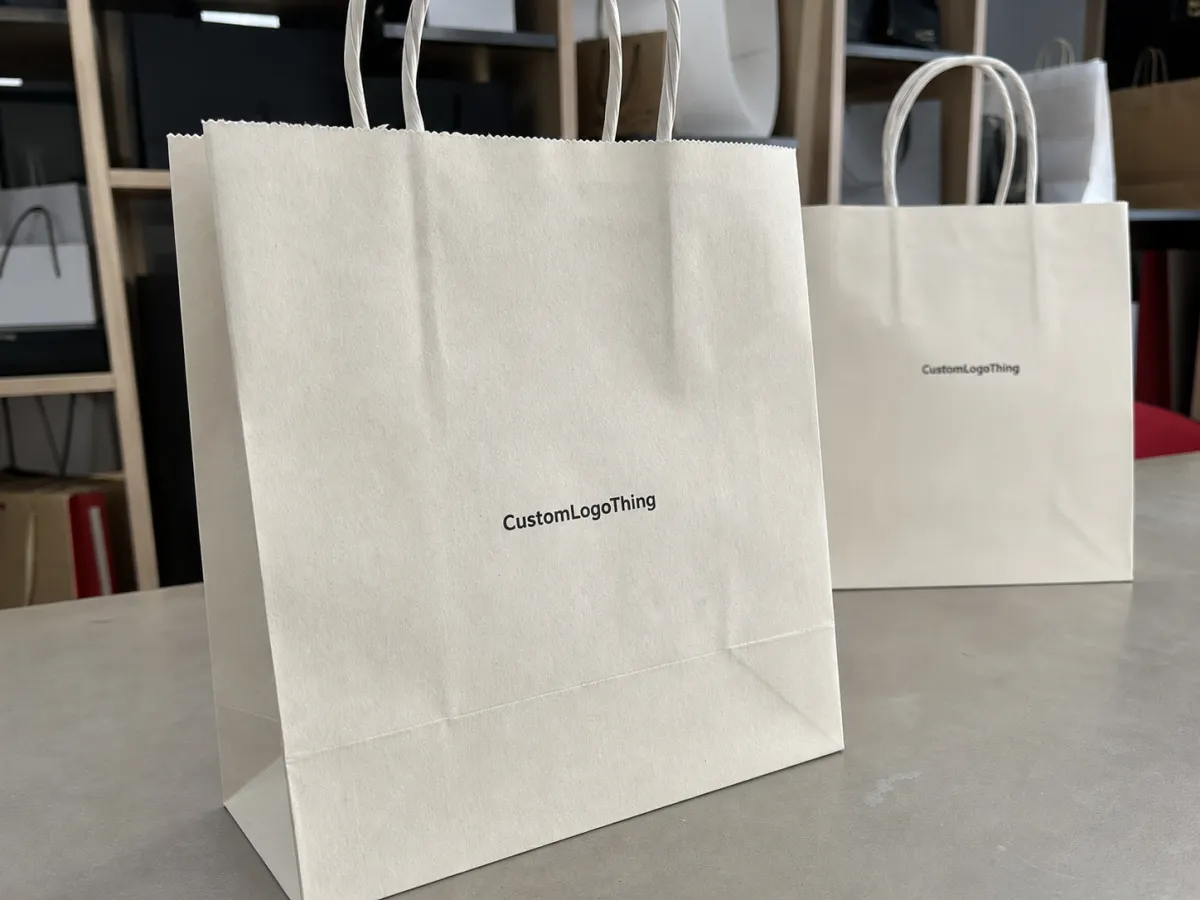
A trade show floor is rough on packaging. Bags are handled by staff, passed to visitors, carried between meetings, and often repacked more than once before the day ends. That means the surface finish has to survive real use, not just look good on a proof. Custom Matte Laminated Paper Bags for trade show samples perform well in that setting because the finish calms the visual noise and the structure can be tuned to the actual contents.
Matte lamination also helps the graphics read more cleanly at a distance. On a bright floor, a glossy bag can become a mirror, especially when overhead lighting catches large color fields or a centered logo. Matte reduces that distraction and makes the brand mark feel more deliberate. If the artwork depends on fine typography, thin linework, or a light background with a dark logo, the lower glare often improves legibility right away.
There is a practical comfort angle too. People carrying multiple items do not want a bag that looks flimsy or awkward. A laminated paper bag with the right board weight, gusset depth, and handle choice signals that the samples inside were planned as a proper kit. That matters for product launches, press handouts, and sales meetings where the materials have to look orderly from the first touch.
For teams building a broader booth package, the bag should fit the same visual language as the rest of the collateral. A matte-finished carrier can coordinate with cartons, folders, and display pieces without making the whole setup feel overdesigned. Used well, it supports the branding instead of competing with it.
The finish also offers a modest layer of protection against scuffing during transport and repacking. It will not make a paper bag indestructible, but it does help the outer surface hold up better than an uncoated option when bags slide against each other in shipping cartons or get handled with slightly damp hands. That small gain becomes noticeable once the bags are used in volume.
How the lamination is built into the bag
The build sequence is simple, but the order matters. The printed paper stock is laminated first, then cut, scored, folded, glued, and assembled into the final bag shape. That order protects the printed surface while the bag is being converted, and it reduces the chance of edge cracking or lifting at the seams. If the lamination is applied too late or the scoring is too aggressive, the bag can show wear much sooner than expected.
Most matte laminated sample bags use art paper or paperboard in the 157 gsm to 250 gsm range, depending on the load and the desired stiffness. Lighter stock can work for brochures, light literature sets, and small inserts. Heavier stock feels closer to premium packaging and tends to hold its shape better once the bag is filled. For dense sample kits, the higher end of that range is usually the safer choice.
Uncoated kraft has its place. It can be attractive for earthy branding and lighter handouts. Still, it gives up some surface protection and usually does not carry the same crisp print finish as laminated stock. If the kit includes boxed samples, swatches, or anything with edges that could press through the panel, matte laminated board usually gives the bag a more stable feel.
The structure deserves the same attention as the print. Gussets need enough room for the kit to sit squarely, the base should be reinforced if the bag is expected to stand upright, and the handles need to be rated for the real loaded weight rather than the empty bag. It is common to see a well-designed graphic fail because the bottom bows or the handles sit too close to the top edge.
- Gussets: Wider gussets help the bag hold a square profile and make insertion easier.
- Base reinforcement: A board insert or stronger bottom panel keeps the bag from sagging under dense contents.
- Handles: Rope, ribbon, twisted paper, and die-cut handles each change comfort and load behavior.
- Laminate finish: A standard matte film is usually more scuff-friendly than a high-gloss surface.
- Assembly quality: Clean glue lines and precise folds keep the bag from looking tired before it is even used.
Some jobs use a full-wrap matte finish for a restrained look, while others add spot accents or small gloss elements to create contrast. That can work well, but it should be handled carefully. Too many finish effects can make the design feel busy, especially when the bag is viewed from a few steps away. For most trade show programs, clarity beats decoration.
If sustainability is part of the brief, the conversation should go beyond the paper surface. Ask whether the stock can be sourced with FSC certification, whether the supplier can provide chain-of-custody paperwork, and whether the handle material and laminate spec align with the rest of the sourcing standards. The FSC framework is a useful reference point when a brand wants documentation rather than vague promises.
When the bag is part of a larger sample system, it helps to think of it alongside cartons, folders, and insert packs. Matching the carry bag to other Custom Packaging Products can keep the booth from looking pieced together from separate orders placed at different times.
Specs that change performance, shelf life, and feel
Three things shape the outcome more than anything else: stock weight, size, and handle style. Change one of those and the bag can shift from lightweight and practical to firm and presentation-ready. For custom matte laminated paper Bags for Trade Show samples, those choices are not abstract. They determine whether the bag survives the show day and whether it feels right in hand.
Size should be based on the actual kit, not a rough guess. Measure the widest item, allow room for the insertion angle, and add clearance for brochures, cards, tissue, or protective padding. A bag that is too tight can wrinkle the finish, flare open at the top, or force the contents to sit crooked. A bag that is too large wastes stock and often looks less polished.
Handle style is a bigger experience factor than many teams expect. Rope handles usually feel more substantial and are easier on the hand for heavier kits. Twisted paper handles suit lighter loads and a more economical build. Ribbon handles can look premium, but they are not always the best match for dense contents or long carry distances. If the bag will move through a large venue, comfort matters as much as appearance.
The table below gives a practical planning range for common builds. These are general estimates for moderate quantities; final pricing shifts with art coverage, quantity, bag size, and finishing detail.
| Build | Typical feel | Approx. unit cost at 5,000 pcs | Best use |
|---|---|---|---|
| 157 gsm art paper with matte laminate | Light, clean, and economical | $0.28-$0.45 | Brochures, light handouts, and small literature packs |
| 210 gsm paperboard with matte laminate | Firmer and more polished | $0.42-$0.68 | Sample kits with cards, inserts, and small boxed items |
| 250 gsm reinforced stock with rope handles | Heavier, better shape retention, more gift-like | $0.65-$1.10 | Premium launches, dense kits, and longer carry distances |
Matte finish also changes how the artwork behaves. Large flat colors look calmer. Fine text usually reads better. Very dark colors can still show handling marks, so buyers often ask for a surface sample or digital proof before approving a full run. That is a sensible step, because the visual tone on screen and the visual tone under show lighting are not the same thing.
Another detail worth checking is how the bag will age in storage. If the bags are produced well in advance of the event, they may sit in cartons for weeks before use. A good matte laminate helps protect the print surface during storage, but high humidity, pressure stacking, or poor carton packing can still lead to curl or corner wear. Ask how the bags will be packed, and whether separators or carton reinforcement are needed for larger runs.
For teams comparing options, the best results usually come from looking at the sample kit, the load weight, and the visual goal together. Choosing the finish first and the structure later often leads to awkward compromises. Starting with the contents gives a cleaner spec and a more predictable bag.
Production process and timeline from proof to shipment
Production usually follows a familiar path: quote, dieline confirmation, artwork setup, proof review, printing, lamination, die cutting, folding, gluing, assembly, inspection, packing, and freight booking. The order is predictable, but the timeline is not fixed. A clean, final spec moves faster. A project that changes dimensions midway almost always takes longer.
For a straightforward run of Custom Matte Laminated Paper Bags for trade show samples, a typical production window often falls around 12 to 15 business days after proof approval. That assumes the artwork is ready, the size is final, and the bag uses standard construction. Add time if the order includes custom handles, multiple print colors, heavier reinforcement, special insert pockets, or pre-packed sample contents inside the bag.
The proof cycle is where a lot of schedules slip. Buyers sometimes approve the look of the artwork before they have locked the sample contents. Then the bag needs to be resized, the gusset adjusted, or the base strengthened, and the clock starts over. The safer approach is to finalize the contents first, then build the bag around the real pack-out.
It also helps to ask for a packed test if the bag will travel with fragile or awkward items. Even a simple compression check can reveal whether the sample set shifts too much or whether the handles pull against the top fold. For more demanding shipments, a transit-style check based on ISTA handling expectations is useful. The ISTA site is a reasonable reference if your team needs a shared vocabulary for shipping performance and pack-out testing.
At the finishing stage, quality depends on small things that are easy to overlook in a mockup. Glue lines should be clean, folds should stay square, and the top edge should not look crushed or wavy. Matte surfaces make these flaws easier to see because the finish does not hide them behind reflections. That is a benefit if the factory is careful, and a problem if it is not.
Build in approval time for real-world checks, not just artwork review. A bag can look perfect on a screen and still fail if it cannot hold the actual load or pack neatly with the rest of the booth kit.
When the project is tied to a live event, the schedule should include a cushion for transit and receiving. Freight delays, carton damage, or a last-minute art correction can compress the window quickly. A production plan that looks comfortable on paper can feel tight once the bags are assigned to a specific show date. That is why pack-out and delivery dates should be treated as part of the spec, not as afterthoughts.
Cost, MOQ, and quote drivers for sample bag orders
Pricing depends on a small group of variables that buyers can control fairly well: bag size, paper weight, print coverage, lamination area, handle type, and assembly complexity. If those details are clear from the start, quotes are much easier to compare. If they are vague, the number usually looks attractive until the hidden changes appear later.
MOQ exists because setup costs have to be spread across the run. Printing plates, cutting dies, scoring, folding, gluing, and labor all require time before the first usable bag is packed. Short runs are possible, but unit cost rises as quantity falls. That is normal in custom packaging, and it is one reason a 1,000-piece order often looks very different from a 5,000-piece order.
Freight can move the landed cost more than buyers expect. Flat-packed bags are easier to ship and stack tighter in cartons, but they may require more handling after arrival. Pre-assembled bags save labor on the receiving side, yet they occupy more volume and can increase shipping expense. Neither option is universally better. The right answer depends on how much prep time the booth team has and how much storage space is available.
For buyers working with a limited event budget, it helps to remember that the real cost is not the factory quote alone. The useful number is the landed cost per bag at the booth, including freight, packing, and any extra labor required to prep them for show day. That number usually gives a clearer picture of whether the spec is practical.
Quote requests become more accurate when they include exact dimensions, quantity, sample weight, handle preference, finish choice, print coverage, delivery date, and whether the bags should arrive flat or assembled. If the bag needs to coordinate with other branded packaging pieces, mention that too. It can affect structure recommendations and sometimes reduce the risk of a mismatch between the bag and the rest of the kit.
Here is a simple way to think about the price drivers:
- Size: Larger bags use more stock, more glue area, and more carton space.
- Paper weight: Heavier stock gives better stiffness and usually costs more.
- Print coverage: Full coverage is usually more expensive than a restrained logo treatment.
- Handle style: Rope and ribbon handles add material and assembly steps.
- Packing method: Flat-packed and pre-assembled shipments create different labor and freight profiles.
The most useful comparison is often not the unit price by itself, but the cost of a bag that arrives on time, holds shape, and works at the booth without extra rework. A slightly cheaper order that needs manual fixing before use is not actually cheaper. In practice, the cleaner spec usually wins.
Common mistakes that make sample bags underperform
The first mistake is undersizing the bag. A snug fit may look efficient on a dieline, but once the sample kit goes in, the top edge can bow, the sides can crease, and the handles can take more stress than planned. If there is any variation in the contents, size to the largest load, not the average one.
The second mistake is overworking the artwork. Very busy graphics, weak contrast, or too much gloss can make the bag harder to read under hall lighting. Trade show visitors are not standing still with time to examine every design detail. They see the bag in motion and at a glance. Simple typography, controlled color, and a clear logo usually perform better than a crowded layout.
The third mistake is ignoring the contents. A bag can look elegant when empty and fail once it holds jars, cartons, cards, or a swatch book with sharp edges. That is why custom matte Laminated Paper Bags for trade show samples should be built from the pack-out inward. Start with the actual kit, then choose the stock, handle, gusset, and reinforcement around that load.
The fourth mistake is leaving approval to the last minute. Artwork changes, logo swaps, and copy edits can all push the schedule back. Once the sample bag is tied to the event calendar, a small change can affect proofing, production, assembly, packing, and transit. Waiting until the final week is usually how good-looking projects become rushed projects.
The fifth mistake is treating the bag as a one-off that will never be used again. If the event happens annually, keep the final dimensions, material spec, pack-out notes, and approved artwork in one place. That makes reorders faster and reduces the chance of rechecking old decisions that have already been solved once. Repetition is not glamorous, but it saves time and money.
There is also a more subtle mistake: assuming the finish can hide construction problems. Matte lamination can make the package look more refined, but it will not disguise weak scoring, bad glue, or a base that does not sit square. The best-looking bag still has to be structurally sound.
If those issues are avoided, the bag does its job well. It keeps the samples protected, gives the booth team a cleaner handoff, and presents the brand with enough control that the carrier becomes part of the message rather than an afterthought.
What to do next before you place the order
Start with a simple spec sheet. Include the bag dimensions, the loaded weight, handle preference, finish, quantity, print coverage, and delivery deadline. That one page makes it easier for a supplier to quote accurately and suggest the right structure without a long chain of guesswork.
Gather the final artwork, logo files, and any required legal copy before proofing begins. If the copy is still changing, the approval cycle will stretch. Clean files are not only easier to review; they also reduce the risk of a press-side correction that can throw off the schedule.
Ask for a packed test or a packing plan if the bags will carry inserts, samples, or small boxed items. That check matters most when the contents are dense or oddly shaped. A bag that looks fine on paper may still be awkward to pack in real life, and that is the point where a quick test saves more trouble than it costs.
If the bags will be reordered for future events, document the final spec now. Record the dieline, the approved art, the exact material, and the pack-out method. A repeat order should feel like a controlled reprint, not a new design decision every time the calendar rolls around.
Before approval, one last practical question helps: does the bag fit the booth workflow, the sample weight, and the handoff style your team actually uses? If the answer is yes, the spec is probably solid. If not, the smartest fix is usually structural, not visual.
FAQs
Are custom matte laminated paper bags for trade show samples durable enough for heavier kits?
Yes, if the paper weight, gusset depth, base reinforcement, and handle style are matched to the real loaded weight rather than the empty bag size. For heavier kits, ask for a packed-weight target and confirm whether the bag should ship flat or pre-assembled to protect the structure.
What paper weight works best for matte laminated sample bags?
Most buyers end up between 157 gsm and 250 gsm, depending on load and desired stiffness. Lighter stock works for brochures and simple literature packs, while heavier board is a better fit for boxed samples, inserts, and kits that need to stand upright without sagging.
How long does production usually take for trade show sample bags?
A straightforward run often takes about 12 to 15 business days after proof approval, but the schedule depends on print complexity, finishing, and freight. If the artwork is final and the dimensions are locked, production is faster. If the sample contents are still changing, the timeline usually stretches.
Do matte laminated paper bags scuff less than glossy bags?
Matte lamination usually hides fingerprints and light handling marks better than glossy film, which helps the bag stay presentable through a long show day. It still needs proper packing, though, because tight stacking and rough transit can leave wear on any surface finish.
What should I include when requesting a quote for sample bags?
Include exact dimensions, quantity, sample weight, handle preference, finish, print coverage, delivery date, and whether the bags need to arrive flat or assembled. The more specific the request, the more accurate the pricing, MOQ guidance, and production timeline will be.
For trade show programs that need a practical, polished handoff, custom matte laminated paper bags for trade show samples are a strong fit when the construction matches the real contents instead of the empty mockup. The best results come from clear sizing, honest load planning, and a finish that supports the artwork without drawing attention to itself.

