Custom Clothing Store Paper Bags Production Timeline
The Custom Clothing Store Paper Bags production timeline often surprises buyers because the bag order looks simple until the schedule starts moving. A clothing retailer may be focused on racks, signage, staffing, and inventory counts, yet a paper bag can still become the item that delays launch day. One change in the specification - a rope handle instead of a twisted handle, a coated surface instead of raw kraft, a larger gusset for folded outerwear - can alter approvals, tooling, and packing more than people expect. Packaging is not an afterthought. It is part of the store’s first impression, and in retail that first impression is handled dozens or hundreds of times a day.
The fastest way to understand the Custom Clothing Store Paper Bags production timeline is to think of it as a chain of handoffs. Artwork has to be correct before proofing starts. Proofs have to be signed off before plates or digital setup are released. Materials have to be available before production can begin. Then the bags still need inspection, carton packing, freight booking, and delivery. If one step slips, the rest do too. That is why stores that lock their packaging early usually avoid the expensive scramble that shows up in the final week before opening.
Why Paper Bags Quietly Delay Store Openings
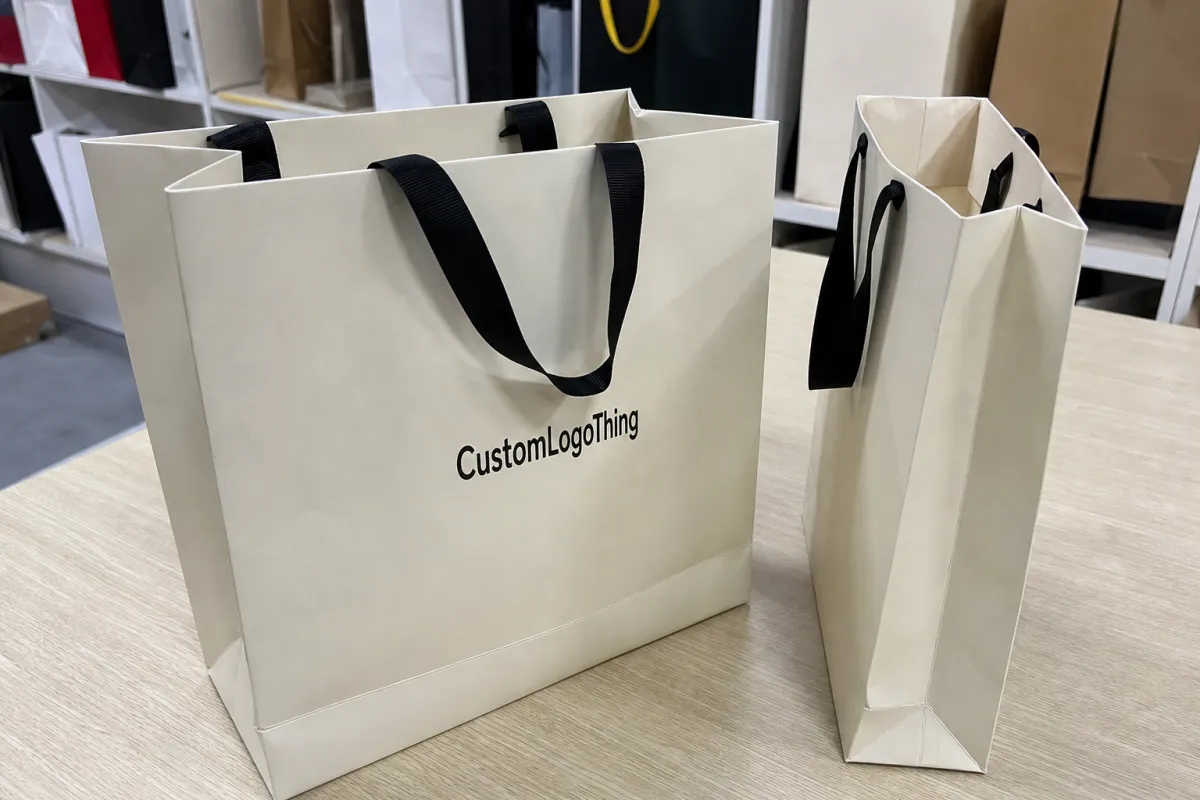
A clothing shop can technically open with incomplete shelves, but open without bags and the operation feels unfinished immediately. Customers notice the absence in a very practical way: there is nowhere polished to hand purchases over the counter. The delay is not only visual. It affects the flow of the transaction, the perceived care behind the brand, and the consistency of the packaging program. For a retailer that has already invested in fixtures, labels, and garment presentation, that last handoff matters.
Buyers often underestimate how many decisions sit inside a “simple” paper bag. Size changes carton count. Handle style changes assembly time. Paper weight affects folding behavior and the durability of the bottom gusset. A matte laminate can change the way ink sits on the surface; foil can add a finishing pass and a stricter inspection step. Even a move from standard stock to FSC-certified board can alter sourcing if the supplier needs to pull from a different mill or wait for inventory. FSC standards and EPA recycling guidance both shape what a brand can claim about its materials, and both influence what is realistic to source on a short schedule. See FSC and EPA for background.
That is the part many launch teams miss. A late bag shipment does not just create inconvenience; it changes the store experience from the first day customers walk in. The product is still there, but the presentation feels improvised. A paper bag order that arrives three days late can undo weeks of packaging planning. The opposite is also true: an on-time, well-finished bag run makes the whole store feel organized, even before the product mix has fully settled.
A bag order is small on paper and large in practice. It moves through the same planning pressure as signage, yet it is handled with the customer’s product in hand.
That is why the custom clothing store paper bags production timeline deserves its own deadline, not a vague note on the broader procurement calendar.
How the Production Timeline Works From Proof to Delivery
The timeline usually starts before any machine runs. Good artwork is the first accelerator. If logo files are vector, dimensions are final, and the dieline already matches the intended bag style, artwork prep can take about 1 to 3 business days. If the files are messy, raster-based, or missing color references, that same step can stretch much longer because the supplier has to rebuild elements before proofing can even begin.
Digital proofing typically adds another 1 to 3 business days, though some suppliers can turn it around faster when the spec is standard and the buyer responds quickly. Sampling, when needed, is the step that protects the rest of the schedule. A sample often takes 5 to 10 business days, sometimes more if the bag uses special finishes or a nonstandard handle. The sample is where size, color, finish, and structural strength get tested before the factory commits to the full run.
After approval, material sourcing and production start to matter more than the artwork. A straightforward domestic run might move through printing, cutting, folding, and assembly in 7 to 15 business days. Specialty decoration, heavier board, or more elaborate handle builds can push that to 15 to 25 business days. Overseas production can look faster inside the factory, but transit changes the real schedule. Ocean freight may add 20 to 35 days. Air freight shortens the wait, but it usually changes unit economics enough to force a different budget conversation.
Customs clearance, port congestion, and inspection holds can also add time, especially when paperwork is incomplete or the shipment is large enough to receive a closer look. For that reason, the production date and the delivery date should never be treated as the same number.
Here is the practical sequence most buyers should keep in mind:
- Artwork ready? If not, design cleanup becomes the first bottleneck.
- Proof approved? Nothing meaningful moves without this checkpoint.
- Sample signed off? This is the cheapest stage to catch size or finish errors.
- Materials confirmed? Stock shortages can reset the schedule.
- Freight booked? Production is not delivery; cartons still need space on a truck or vessel.
The process is similar to custom printed boxes in one respect: the more standard the structure, the easier the run. Paper bags, though, often include more hand assembly than a rigid carton. A bag with rope handles, laminated board, and reinforced bottoms can require more human handling than a plain kraft bag. That means more opportunities for inspection and, sometimes, more chances for delay.
So the timeline is controlled less by the printing press alone and more by everything around it: approvals, available stock, finishing complexity, carton packing, and the route the shipment has to travel.
What Changes Lead Time, Quality, and Reorder Speed
Lead time is usually a stack of small decisions rather than one big one. Quantity, stock choice, decoration, and shipping method all interact. A 1,000-piece run with one-color printing can move quickly. A 10,000-piece run with multiple sizes, foil stamping, and specialty handles almost never does. The custom clothing store paper bags production timeline expands as soon as the order stops being standard.
Material selection is one of the strongest variables. Kraft paper is typically the easiest to source and the simplest to convert. Recycled stock can also be efficient, but quality can vary from mill to mill, which matters if the brand expects a consistent surface for print. Coated board and laminated paper usually create a sharper presentation, but they also introduce more variables: drying time, adhesion behavior, and how easily the finished bag folds without cracking at the crease.
Decoration has the same effect. One-color flexographic or offset printing is generally easier to schedule than full-coverage artwork. Foil stamping, embossing, and spot UV add setup time and often require tighter quality control because every finish must align cleanly. That premium look has a cost, and the cost is not only financial. It shows up in the calendar.
The table below shows realistic planning ranges. These are not quotes; they are the kind of numbers a buyer can use to compare spec choices before requesting prices.
| Bag spec | Typical MOQ | Typical unit cost | Lead-time impact | Best use |
|---|---|---|---|---|
| Standard kraft bag, one-color print, twisted handles | 3,000-5,000 | $0.18-$0.28 | Lowest | Everyday retail packaging |
| Coated paper bag, full-color print, rope handles | 2,000-5,000 | $0.32-$0.55 | Moderate | Launches and branded packaging programs |
| Laminated bag with foil or embossing | 1,000-3,000 | $0.60-$1.10 | Higher | Premium collections and flagship stores |
| Custom size with inserts or reinforced bottom | 3,000+ | $0.35-$0.80 | Higher | Heavier apparel or gift packaging |
Freight can change the result just as much as the factory spec. A bag that leaves production quickly is not useful if it sits in transit for two weeks. For larger retail programs, ISTA test methods are a useful reference point because they help define how the package should survive vibration, compression, and handling through the supply chain. The International Safe Transit Association publishes those protocols at ISTA. That matters more than many buyers think, because paper bags are not only handed to customers; they are stacked, stored, carted across floors, and occasionally crushed into overfilled bins before the store ever uses them.
Step-by-Step Planning for a Launch-Ready Bag Order
The cleanest custom clothing store paper bags production timeline starts with a decision that is often rushed: lock the bag dimensions before asking for quotes. Clothing stores carry folded tees, denim, outerwear, shoes, and boxed gifts. Those products do not all fit the same bag well. A tote that looks generous in a mockup can crease a folded garment presentation. A smaller bag can pinch a box or flatten a heavier knit. Once the bag size matches the assortment, the rest of the schedule becomes easier to manage.
- Step 1: Confirm the use case. Decide whether the bag is for shopping, gift wrap, or premium package branding. That changes the stock, handle, and finish.
- Step 2: Prepare artwork properly. Vector files, accurate color references, and a correct dieline save days. A low-resolution logo attached to an email is almost always a delay.
- Step 3: Approve the proof quickly. If anything needs revision, ask for the next ship date immediately. Quiet delays are how launch week turns into a rush order.
- Step 4: Match the bag to the store workflow. Counter height, folding style, storage room, and shelf access all affect how the bags will be used once they arrive.
- Step 5: Build transit buffer. Backtime from the store opening, campaign shoot, or merchandising handoff, not from the quote date.
A useful buyer rule: if the bag has to arrive before the garments are merchandised, the bag deadline should land earlier than the apparel deadline. That sounds obvious until packaging and product are managed by different teams. One team may know the opening date weeks in advance; the other may hear about it after the freight booking window is already tight. That is where avoidable expense creeps in.
For stores that plan to reorder the same style across seasons, one approved spec can reduce friction later. The first order usually takes the longest because every detail has to be confirmed. The second order should not start from zero. Reusing a proven bag spec for branded packaging reduces proof churn and keeps the custom clothing store paper bags production timeline from stretching every time a new collection drops.
Pricing, MOQ, and Quote Variables That Shape Unit Cost
MOQ changes the math faster than many buyers expect. A factory pays for setup, plates or digital prep, cutting, assembly, and carton packing before the first finished bag leaves the line. Spread those fixed costs across 1,000 bags and the unit price rises. Spread them across 10,000 and the price drops. That is why timeline and pricing belong in the same conversation. The schedule affects cost, and the cost often dictates which production path is even realistic.
Most quotes are built from the same core inputs: size, paper weight, print coverage, finish, handle type, quantity, and shipping method. Larger bags consume more material. Heavier board raises raw cost. Full-coverage artwork uses more ink and requires tighter color control. Rope handles, ribbon handles, reinforced inserts, and bottom boards all add labor. Freight can swing the final number almost as much as the bag itself.
If the budget is tight, there are ways to lower cost without making the bag look stripped down. Simplify the artwork. Use one bag size instead of three. Keep the finish matte rather than adding foil. Standardize handle color. Those choices usually trim the quote while keeping the packaging clean enough for retail use.
It also helps to ask for tiered pricing. A quote at 1,000, 3,000, and 5,000 pieces tells a buyer far more than a single number does. The gap between tiers can reveal whether the supplier’s setup cost is front-loaded or whether the unit price stays stubbornly flat. For a store that expects to grow, that difference matters.
Common quote variables often look like this:
| Variable | Lower-cost option | Higher-cost option | Typical effect |
|---|---|---|---|
| Quantity | 1,000-2,000 | 5,000-10,000 | Higher MOQ lowers unit cost |
| Paper stock | Standard kraft | Heavy coated or laminated stock | Stronger presentation, slower sourcing |
| Decoration | One-color print | Foil, embossing, spot UV | More setup time and stricter QC |
| Shipping | Sea freight | Air freight | Air is faster, sea is usually cheaper |
Hidden costs deserve attention too. Sampling, multiple delivery points, rush fees, and carton rework can appear after the first quote. These are not unusual charges; they are simply easy to miss when the buyer is focused on the bag image and not the production chain underneath it.
Common Mistakes That Add Days and Dollars
The most expensive delays are usually self-inflicted. The first is approving artwork before the physical spec is locked. If the final bag ends up larger or smaller than the proof assumed, logos can land too close to a fold line, a handle hole, or the bottom gusset. Catching that before production costs little. Catching it after production is another story.
The second mistake is treating sampling as optional. A sample is not a decorative extra. It confirms print placement, color tone, handle strength, paper feel, and the way the bag stands once filled. For clothing retailers, that matters because customers judge the bag in the same tactile way they judge the garments. If the finish feels thin or the handles pull unevenly, the packaging weakens the brand story.
The third mistake is confusing production time with delivery time. A supplier may quote 12 business days for manufacturing. That number says nothing about transit, customs, or local delivery. The custom clothing store paper bags production timeline only ends when cartons are in the building, sorted by store, and ready for use.
The fourth mistake is under-ordering. It feels cautious to buy just enough for launch, but a quick reorder often inherits a fresh proof cycle, a new freight booking, and a different production queue. That is how the same team ends up back in panic mode a month later.
Before production begins, the following items should be fixed:
- Bag dimensions
- Handle style
- Paper weight
- Print placement
- Carton count and delivery address
That list is plain for a reason. It catches the variables that create the most expensive rework.
Expert Ways to Shorten Turnaround Without Cutting Corners
If a store needs a faster custom clothing store paper bags production timeline, the answer is not always a rush fee. Often the smarter move is to reduce uncertainty. A single approved bag spec across seasons saves time because the supplier already knows the board, handle, and print setup. In packaging terms, repeatability is speed.
A ready-to-use artwork kit helps too. Keep the dieline, bleed, logo files, and approved color values in one place. A designer should not have to search through old email threads to find a Pantone reference two days before proofing. The cleaner the file handoff, the fewer revisions pile up.
Some finishes are naturally faster than others. A matte bag with standard ink usually moves more quickly than a soft-touch laminated bag with foil and embossing. That does not make the premium choice wrong. It just means the premium option should be reserved for the styles that matter most, while the bulk of the program stays simpler.
The fastest schedules usually come from buyers who backtime from the store opening date, not from the quote date. Subtract proofing. Subtract sampling if the spec is new. Subtract production, inspection, packing, and freight. The date left over is the real order deadline. That habit turns the custom clothing store paper bags production timeline into a working schedule instead of a guess.
Practical ways to reduce risk without sacrificing presentation:
- Use one approved bag size for the first launch.
- Choose the fastest acceptable finish instead of the most complex one.
- Keep a backup artwork version with minimal decoration.
- Book freight as soon as proof approval lands.
- Store a digital spec sheet for reorders.
If the broader packaging program still needs alignment, matching the bag style to other packaging can help keep the customer experience coherent. That matters more than an extra gloss effect. A store that uses consistent materials, handle colors, and logo placement across formats tends to look more deliberate, even when the order sizes vary. For a wider range of options, the Custom Packaging Products and branded packaging supplies pages can help compare structures and finishes.
Next Steps: Backtime the Order and Build a Buffer
The simplest way to manage the custom clothing store paper bags production timeline is to treat it like a launch-critical workstream rather than a side purchase. Start with the opening date. Subtract proofing time. Subtract sampling if needed. Subtract production, inspection, packing, and freight. What remains is the deadline that actually matters.
Create a one-page spec sheet before requesting quotes. Include bag size, stock, handle, print color count, finish, quantity, destination, and required in-hand date. That sheet keeps suppliers aligned and makes quote comparisons fairer. It also forces the buyer to answer a few questions that should not be left floating until the week before production.
If the schedule is tight, build a contingency plan. A simplified backup bag, a secondary freight option, or a reduced finish spec can save the launch if approvals slip. That is not settling for less. It is managing risk in a category where one late shipment can affect the entire customer experience.
The practical takeaway is straightforward: the custom clothing store paper bags production timeline is not just a factory estimate. It is a planning tool for the retail opening itself. Use it early, keep the specs clean, and leave room for freight and reapproval. That is how packaging stops being a surprise and starts doing its job on day one.
How long does a custom clothing store paper bags production timeline usually take?
Simple kraft bags with final artwork can move quickly if the supplier has stock and the proof is approved without revisions. Once the order adds specialty finishes, custom sizing, or overseas freight, the timeline stretches. A safe plan is to backtime from the opening date and keep a buffer for proofing and delivery.
What slows down the custom clothing store paper bags production timeline the most?
Late artwork changes and unclear dielines are the most common avoidable delays. Material shortages and specialty finishes can also add sourcing time. Slow proof approval is the silent one: it pushes every later step back, even if the factory itself is running on schedule.
How does MOQ affect paper bag pricing for clothing stores?
Lower quantities usually raise unit cost because setup is spread across fewer bags. Higher MOQ often lowers the per-bag price, but it also increases inventory and cash tied up in stock. Asking for tiered pricing at several quantities is usually the clearest way to compare options.
Can rush production work for clothing store paper bags?
Sometimes, if the bag style is simple and the materials are already available. Rush jobs usually cost more and may narrow the finish options or freight choices. Fast buyer approval matters just as much as fast manufacturing.
What should I approve before printing starts?
Final size, paper stock, handle type, and print placement should be locked first. Color expectations and any finishes like foil or lamination should be confirmed before production begins. Carton count and delivery address should also be checked so freight does not create a launch-day problem.

