On a busy sales floor, the bag is part of the product handoff. If it is too small, the garment gets crushed or forced in. If it is too large, the order feels loose and wasteful. For buyers comparing Custom Clothing Store Paper Bags Material and Sizing guide options, the real job is to balance fit, durability, cost, and presentation.
That means looking beyond artwork and deciding what the bag must carry, how it will be handled, and what the quote does to unit cost. The best Retail Paper Bags protect folded apparel, hold up in transit, and still look intentional when a customer leaves the store. If you want a broader view of packaging formats before locking the bag spec, our Custom Packaging Products page can help you compare options side by side.
A good paper bag disappears in use. A bad one becomes the part of the purchase customers remember.
Custom Clothing Store Paper Bags Material and Sizing Basics
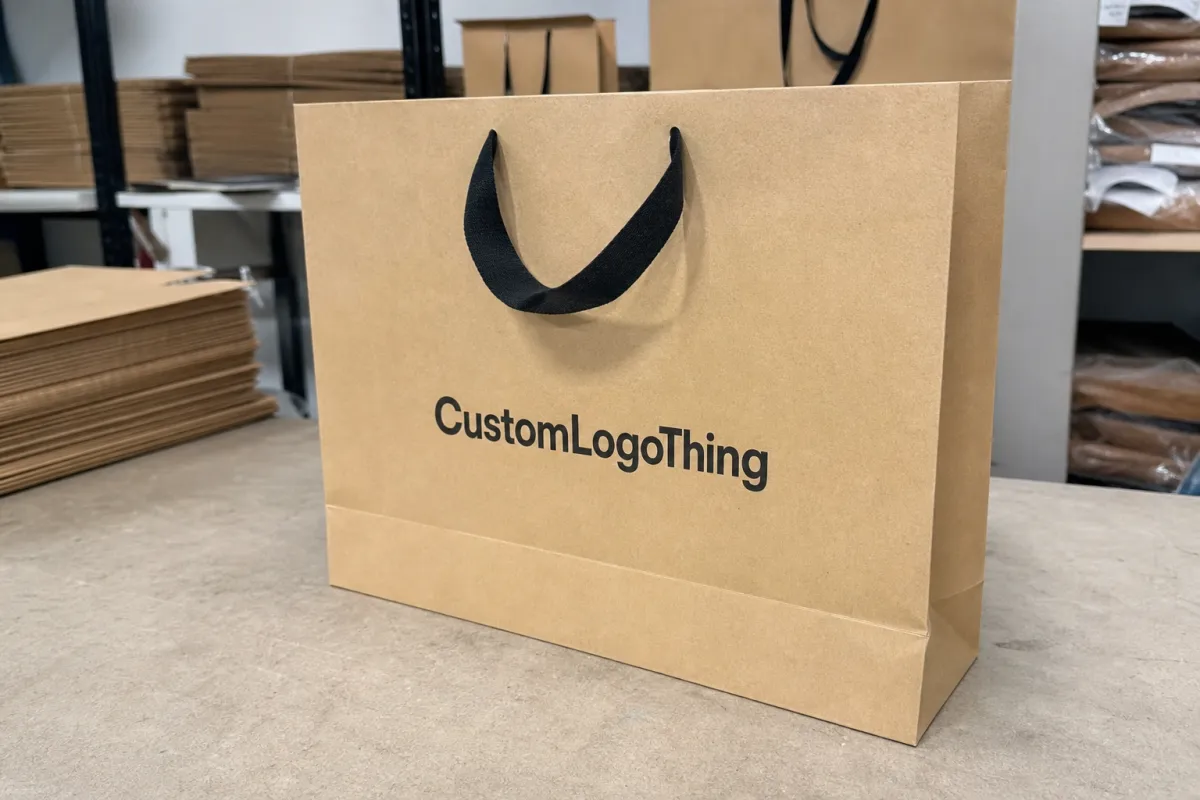
The first step is to treat the bag as a system, not a single item. Paper stock, gusset, height, handle, reinforcement, and print coverage all affect performance. A bag can look fine in a flat mockup and still fail at the counter if the paper is too thin or the gusset is too shallow.
Apparel adds a specific sizing problem because folded products are not uniform. A T-shirt is easy to package; a hoodie, denim stack, or soft blazer needs more volume. Tissue, polybags, hangtags, and security tags all add thickness, so the bag has to fit the packed item, not just the garment.
Width, gusset, and height each solve a different problem. Width defines the front panel, gusset depth controls how the product sits inside, and height determines whether the top closes without stress. In practice, gusset depth is often the dimension buyers under-specify, even though it does the most to preserve shape and prevent bulging.
Oversizing and undersizing both create cost and brand issues. Too much empty space makes the order look careless and wastes material. Too little space wrinkles the product, strains handles, and gives the customer a cramped experience. The right fit is usually the smallest bag that still closes neatly around the real packed volume.
For most clothing stores, that means choosing the bag around the basket mix: tees, knits, denim, accessories, or multi-item purchases. A value-led concept may prioritize simple kraft Paper Shopping Bags, while a fashion boutique may need a cleaner premium white build or custom printed bags with stronger visual presence.
Material Choices That Hold Up in Daily Retail Use
In material selection, most clothing retailers start with kraft, premium white, or coated stock. Kraft is durable, familiar, and usually the strongest value choice. White stock gives cleaner print reproduction and reads more elevated. Coated paper can produce a sharper visual finish, but it often increases cost and can complicate sustainability claims.
Paper weight matters as much as the surface look. A bag may appear premium and still tear under the weight of a sweater or denim purchase. Many apparel bags fall in the 120-200 gsm range, with heavier constructions used when the retailer wants more structure or a more substantial hand feel. The key question is simple: will the bag survive actual store use, not just a photo shoot?
Handle choice should follow load, not just style. Twisted paper handles are the common workhorse because they balance cost and strength. Flat paper handles keep the build simpler and cheaper. Rope handles feel more premium and are better for heavier purchases. Die-cut handles are neat and low-profile, but they fit lighter orders better than bulky apparel stacks.
Finishes change both presentation and operational behavior. Matte softens the look and hides small scuffs. Gloss boosts color but can show handling marks more easily. Soft-touch lamination adds a premium feel, yet it raises cost and can reduce recyclability if the construction becomes too complex. If sustainability matters, ask for the full build, not just the paper type.
When suppliers mention FSC, verify what is actually certified: the paper content, the factory chain, or both. A logo on a quote is not the same as documented sourcing, and buyers should separate marketing language from proof.
- Kraft paper: practical, durable, and usually the best value for everyday apparel retail.
- Premium white stock: cleaner print and a more upscale look for fashion-focused stores.
- Coated stock: stronger visual impact and finer detail, but often a higher-cost option.
- Handle selection: twisted paper, flat paper, rope, or die-cut should match the actual load.
How to Size Bags for Apparel, Inserts, and Folded Volume
Bag sizing works best when you measure the packed item, not the empty display version of it. Standard dimensions are usually listed as width x gusset x height, but that only helps if you know the final folded volume. The right bag needs enough room for the garment, tissue, tags, and any insert without forcing the top closed.
Start with the merchandise category. T-shirts and accessories usually fit smaller bags with shallow gussets. Folded denim needs more depth. Sweaters and hoodies often need both more width and more gusset space so the contents do not bow the sides. Outerwear may require a taller format, especially if the fold is bulky or the store wants cleaner closure.
Gusset depth is one of the most important sizing choices. A bag can be tall enough and still fail if the sides are too narrow. A deeper gusset helps the stack sit naturally and keeps the profile clean when the customer lifts the bag. Height alone usually does not fix a cramped side wall.
The only reliable test is a live pack-out. Use the actual inventory, the same tissue, and the same tags your staff will use in-store. A shirt folded by a merchandising team can be slimmer than one folded during closing, and that small difference can change whether the bag feels right. Sample with the real worst-case fold, not the neatest one.
- Measure the garment after folding and wrapping.
- Add clearance for tags, inserts, and comfortable handoff.
- Match width, gusset, and height to the packed volume.
- Test a sample with your real assortment before placing the order.
For stores with mixed apparel categories, one size rarely fits everything. A boutique carrying only tees and accessories may use one structure, while a multi-category clothing retailer may need two or three sizes to avoid overfilling the bag or wasting space.
Pricing, MOQ, and Quote Drivers That Change Unit Cost
Material and sizing choices drive price quickly. Paper grade, dimensions, print colors, handle type, and finish are the main levers. Bigger gussets and taller side walls use more material. Specialty finishes, reinforced tops, and complex print coverage can also move the quote more than buyers expect.
MOQ changes the math. Smaller runs usually carry more setup burden per unit because the supplier still has to prepare plates, proofs, and production time. Larger runs spread those costs over more pieces. A bag that looks affordable at 5,000 units may be less attractive at 1,000 once setup and freight are included.
Always separate setup charges from unit cost. Plate fees, dieline work, sampling, freight, and storage can hide the real economics if they are rolled into one number. The cheapest headline price is not always the lowest landed cost, especially if the bags are needed by a store opening or a seasonal reset.
| Bag Build | Typical Material | Best Fit | Indicative Unit Range at 5,000 pcs | Notes |
|---|---|---|---|---|
| Kraft twisted-handle bag | 120-150 gsm kraft paper | Everyday apparel, tees, accessories | $0.22-$0.38 | Good value, practical brand image, usually easy to recycle |
| Premium white rope-handle bag | 157-200 gsm white kraft or art paper | Boutiques, premium retail packaging | $0.38-$0.72 | Cleaner print, stronger perceived value, higher handle cost |
| Laminated fashion bag | 170-210 gsm art paper with matte or soft-touch finish | High-visibility launches, gift bundles | $0.60-$1.20 | More upscale feel, more finish complexity, longer production window |
Those ranges are directional, not a promise. Artwork coverage, reinforcement, and freight can move the final number. In many cases, a stronger handle or thicker stock is worth more than extra decoration because the customer feels that upgrade immediately.
If you are comparing Custom Packaging Products, ask suppliers to quote the same size across multiple builds. That makes it much easier to see where the extra cost is coming from.
Production Steps and Lead Time From Artwork to Delivery
The production path usually starts with dimensions, material, handle, artwork files, and quantity. Then comes the dieline, proofing, sampling if needed, production, inspection, packing, and transit. If any of those inputs are incomplete, the job slows down.
Lead time varies by build. A simple kraft order with straightforward print can move faster than a laminated bag with special color matching or heavy finish work. Domestic sourcing often gives tighter control and shorter delivery windows, while offshore production may be better on cost at scale but less predictable on timing.
Most delays come from approval issues. Low-resolution logos, unclear Pantone targets, missing handle placement, and last-minute artwork changes can stall the schedule. If the bags need to support a store opening or seasonal launch, the packaging should be approved before merchandise arrives.
Transit performance matters too. Bags are lighter than shipping cartons, but they still face stacking, abrasion, and humidity changes. Industry groups such as ISTA focus on transport conditions for packaging, and the same logic applies here: if the bag can survive handling without scuffing, tearing, or deforming, the customer experience stays consistent.
A realistic lead-time expectation for many custom apparel bag programs is around 12-15 business days from proof approval for simpler builds, with longer windows for specialized finishes or larger orders. If timing matters, ask for a dated production calendar instead of a vague estimate.
Common Ordering Mistakes That Waste Budget and Inventory
The most common mistake is choosing on appearance alone. A render can look polished while hiding a weak handle, a shallow gusset, or side walls that collapse under load. A sample matters, but only if you test it with the actual items you sell.
Wrong sizing creates inventory waste. Too large, and you pay for extra paper and storage while the merchandise looks undersized inside the bag. Too small, and staff have to force product in, which can damage the garment and the customer experience. The middle ground is only obvious after real pack testing.
Decorative upgrades can also create hidden cost. Foil, heavy ink coverage, specialty coatings, and texture effects often require more process control than buyers expect. If those details are added late, both the quote and the schedule usually move. In many stores, a clean logo on solid stock does more than an elaborate finish.
Compliance language should be checked early. Some retailers need documentation for recycled content, FSC-style sourcing, or local recyclability claims before approval. Others need clear disposal instructions for damaged stock or samples. That paperwork is not glamorous, but it prevents rework and approval delays.
- Do not approve a bag from a mockup alone.
- Do not assume one size will fit every apparel category.
- Do not add premium finishes after the quote is almost final.
- Do ask for real garment testing before volume production.
Final Spec Sheet and Sampling Steps Before You Order
The easiest way to tighten the order is to turn the decision into a short spec sheet. Measure the folded merchandise, define the bag format, choose the paper, set the quantity range, and state the finish and handle preference before asking for pricing. That is what produces comparable quotes instead of a stack of mismatched numbers.
If the order is still flexible, ask for two size options. Side-by-side samples reveal fit issues that a chart can hide. One bag may close neatly but leave too much dead space; another may feel strong until a heavier item goes in. A physical sample makes those issues visible before production starts.
Request quotes that break out unit price, setup charges, freight, and any sample or storage fees. That makes supplier comparison much cleaner. If one proposal is cheaper, check whether it also uses thinner stock, a lower MOQ, or a longer lead time. The lowest headline price is not always the lowest landed cost.
A small pilot run is usually worth it. Let store staff pack real orders, watch how the bag handles different garments, and adjust before the full order is approved. For a clothing retailer, the job is not to impress a procurement spreadsheet. It is to make the handoff feel deliberate, durable, and on brand.
FAQ
What paper stock works best for custom clothing store paper bags?
Kraft is the most practical default because it balances durability, cost, and a natural retail look. Premium white or coated stock is usually better when the store wants brighter print, cleaner color matching, or a more elevated presentation. If the bag is carrying heavier apparel, ask for a thicker build rather than relying on appearance alone.
How do I choose the right clothing store paper bag size?
Measure the garment in its final packed form, not as a flat fold. Include tissue, polybags, tags, and any insert that adds thickness. Then match width, gusset, and height to that packed volume so the bag closes cleanly without crushing the product. That is the simplest way to keep material and sizing choices tied to real inventory.
What changes the price of custom paper bags the most?
Size, paper grade, print complexity, handle type, and finish usually drive unit cost the fastest. MOQ, proofing, setup charges, and freight can change the final landed price even when two bags look similar on paper. If you want a cleaner comparison, ask every supplier to quote the same size, same artwork count, and same shipping assumption.
How long does production usually take for custom retail paper bags?
Turnaround depends on approval speed, sampling, and whether the order is domestic or offshore. Simple jobs move faster. Special colors, lamination, foil, or late artwork changes usually extend the timeline. For most buyers, the safest move is to build a buffer before store openings or seasonal promotions.
What should I send to get an accurate quote for paper shopping bags?
Send target dimensions, quantity, artwork files, handle preference, finish requirements, and the type of apparel the bag must carry. If you can include a sample bag or a reference photo, do it. The clearer the brief, the more useful the quote. That is the fastest path to a realistic material and sizing decision that fits both the brand and the budget.

