Most buyers start with the artwork and end up surprised by the bill. That happens because the Custom Coffee Paper Bags unit cost breakdown usually has more to do with barrier structure, closures, and conversion work than with the paper face alone. A pouch that looks simple on shelf can hide several cost layers, and those layers shift quickly once shelf-life targets, zipper style, or order quantity change.
From a packaging buyer's point of view, the real question is not how cheap the bag can be. It is which features protect freshness, support retail packaging, and still leave room for margin. That frame is useful for any coffee brand ordering branded packaging, whether the SKU is a 12 oz whole-bean line or a refill format sold through grocery and specialty channels.
A good coffee bag quote is not a single number. It is a set of tradeoffs: shelf life, presentation, line speed, and landed cost.
Buyers who understand those tradeoffs usually get cleaner pricing and fewer surprises. Buyers who do not often pay for rework, rush freight, or a bag size that looked fine in a mockup but ran badly on the filling line.
Why coffee bag quotes move before you change the design
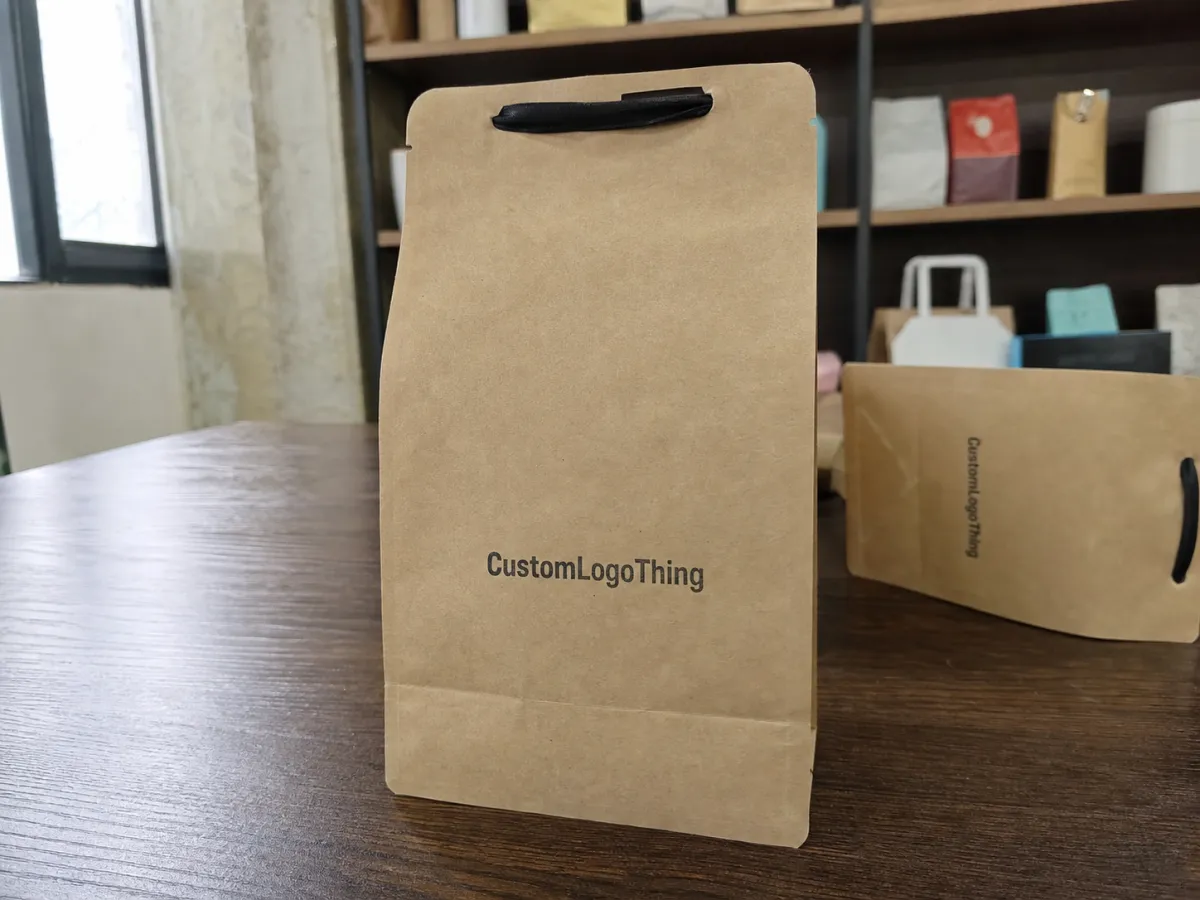
Two bags can look nearly identical and still price very differently. That is normal. The outer kraft face may be the smallest part of the bill once you add a metallized barrier liner, a one-way valve, a resealable zipper, and the labor needed to convert all of that into a usable pouch. In practice, the quote often moves before the visible design changes because the hidden structure is doing most of the work.
Fill weight matters more than many teams expect. A 250 g bag, a 500 g bag, and a 1 kg bag may use the same artwork language, but they do not use the same amount of material, the same gusset geometry, or the same carton count. Freshness targets matter too. Coffee that needs a longer shelf life usually needs a stronger barrier, and a stronger barrier tends to raise the unit cost more than a color change ever will.
That is why vendors can quote the “same” bag at different prices. One quote may assume a basic kraft wrap with a standard liner and no valve. Another may assume a high-barrier laminate, valve placement, and tighter packing for export. The buyer sees one design. The plant sees several production realities.
For brands comparing suppliers, the useful comparison is not the art mockup. It is the complete bag structure, the carton count, and the run size. If those are not fixed, the quote is only a rough signal. The same is true for packaging across categories: the more complete the brief, the less room there is for guesswork.
A small run can be especially deceptive. A 3,000-piece order may look inexpensive in total, but setup, proofing, and tooling can dominate the per-unit price. At 25,000 or 50,000 pieces, those fixed costs spread out and the unit math begins to look more reasonable. That is why the same bag often feels “expensive” at launch and acceptable once volume matures.
Paper bag formats and materials that fit roasted coffee
Coffee bags come in a few common constructions, and each one fits a different sales channel. A kraft outer wrap with an inner barrier layer works well for many specialty coffee programs because it keeps the look warm and tactile while still giving the roaster a usable shelf-life window. Side-gusset bags are efficient for bulkier fills, while flat-bottom packs present better on retail shelves and stand more consistently during display. Tin-tie paper bags are useful for small-batch retail and sample packs, but they are not the first choice when aroma retention is the main goal.
The format should match the product. Whole bean coffee needs enough room for degassing and closure integrity. Ground coffee often needs a tighter seal strategy because it loses aroma faster. Sample packs can use simpler structures, but they still need dependable barrier performance if they are moving through distribution before tasting. Refill programs are a different case again: the bag may carry less premium presentation, but it often needs better strength for repeated handling.
Paper grade changes both the look and the economics. A 60 to 80 gsm kraft outer wrap can keep the packaging light and approachable, while a heavier facestock or specialty coated paper raises tactile appeal and cost. Barrier layer choice matters even more. If the barrier is too weak, coffee quality suffers. If it is stronger than the product requires, the bag may overperform on paper and underperform on margin.
Material choice also changes how the bag behaves in production. Natural kraft can show more variation in color and fiber texture, which is fine for an organic or rustic brand but less ideal for artwork that depends on color precision. White or bleached paper gives cleaner print contrast, yet it can cost more and may need tighter quality control to avoid scuffing. If the brand wants a matte premium look, the finishing system should be tested early, not after the art is approved.
For context, buyers who need deeper technical background often refer to industry bodies such as the Packaging School / packaging education resources at packaging.org and certification frameworks like FSC when they want to discuss paper sourcing and fiber claims. Those references do not replace supplier data sheets, but they help anchor the conversation in recognized standards rather than sales language.
A premium finish can change the tone of the package quickly. Soft-touch lamination, high-opacity white ink, or a matte varnish can make the bag feel more expensive, but each of those choices adds cost across the full run. That is fine when the shelf story supports it. It is wasted money when the brand is trying to compete on value or speed to shelf.
Print, barrier, and fit specifications to lock first
The fastest way to clean up a coffee bag quote is to finalize the specs that actually drive production. Start with dimensions, fill weight, closure type, print method, and barrier requirement. Those five items tell a supplier much more than a rough design concept. If any of them are vague, the quote will be padded to absorb risk.
Artwork decisions also move pricing. A one-color kraft look is simpler than a four-color wrap with full coverage on both panels. White ink on dark or natural substrates can add cost. A design that floods the front and back panels uses more ink and more press time than a restrained brand mark with limited coverage. That is why thoughtful packaging design is not just a creative exercise; it is a budgeting tool.
Technical fit details matter more than buyers usually expect:
- Degassing valve placement should align with fill height and panel structure.
- Zipper style changes both the user experience and the conversion cost.
- Tear notch position affects opening behavior and shelf presentation.
- Matte versus gloss finish changes perceived quality and often the quote.
- Carton count and pack-out spec affect shipping efficiency and damage risk.
Tolerance checks are not glamorous, but they save money. If the bag is too tight, the coffee line may run slowly or reject pouches during filling. If it is too loose, cartons do not stack cleanly and pallet stability suffers. Buyers planning for export or warehouse handling should ask how the supplier checks seal strength and carton fit before the shipment leaves the plant.
For distribution-sensitive programs, it helps to think like the parcel network does. Packaging that looks fine on a desk may fail after vibration, compression, or temperature swings. Standards and test protocols from groups such as ISTA are useful here because they focus attention on real transport stress, not just visual approval. That mindset is especially useful for coffee sold through e-commerce or club channels.
There is also a practical compromise buyers sometimes miss. A high-barrier structure can protect aroma for months, but if the roast sells quickly through local retail, a mid-barrier build may be enough. Matching barrier to channel is one of the easiest ways to hold down cost without gambling on quality. Over-specifying the barrier is a common habit, especially on the first order.
custom coffee paper bags unit cost breakdown
Here is the part buyers actually need: the custom coffee Paper Bags Unit cost breakdown. A proper quote separates the bag into its moving parts, because each part has its own cost logic. The substrate, barrier material, print work, converting labor, closures, and final packing all contribute to the final number. If a supplier only gives one line with no detail, the buyer cannot see where the money is going or how to reduce it without hurting performance.
| Cost element | What it covers | Typical effect on unit cost |
|---|---|---|
| Paper substrate | Kraft or coated face stock, basis weight, paper sourcing | Usually modest, but heavier or specialty paper adds up across the run |
| Barrier layer | Inner film or laminate for aroma and moisture protection | Often one of the largest drivers after print complexity |
| Printing | Color count, coverage, white ink, registration control | Rises quickly with full coverage and multiple passes |
| Converting | Bag forming, sealing, cutting, zipper or valve installation | Higher on flat-bottom or feature-heavy structures |
| Closures | Zipper, tin tie, tear notch, one-way valve | Small per piece, meaningful at scale |
| Packing and freight prep | Cartons, palletizing, protective packing, labeling | Moderate, but it affects landed cost and damage risk |
MOQ changes the math fast. A setup charge that barely matters at 50,000 pieces can be painful at 3,000 pieces. That is why lower volume runs often look attractive on paper but produce a higher cost per bag in practice. Setup, tooling, and proofing are fixed or semi-fixed expenses, so they need volume to spread out.
For a rough buyer's view, simple kraft Coffee Paper Bags with limited print and standard sealing can sit in the low cents per unit on larger runs before freight. Premium flat-bottom bags with zipper, valve, and heavier print coverage can be several cents higher per unit, and small orders can climb much further once setup is allocated. Exact pricing depends on size, region, and shipment terms, but the spread between a basic spec and a feature-heavy spec is often wider than teams expect. In many projects, the difference is not 2 or 3 percent. It can be 20 to 40 percent once all features are counted.
Add-ons deserve separate scrutiny. A one-way valve protects freshness, but it also adds hardware and installation. A tear notch improves opening, but it is still another conversion step. A soft-touch finish may strengthen brand perception, but it rarely helps the coffee itself. If the goal is product packaging that protects aroma and keeps margin intact, the buyer should treat each add-on as a deliberate business choice, not an automatic default.
Freight and duties must be treated separately from factory price. A low ex-works quote can become a weak landed-cost story once cartons, ocean freight, customs handling, and inland delivery are added. That is especially true for brands ordering from overseas suppliers and trying to compare them against domestic options. The smartest comparison is apples to apples: same spec, same quantity, same shipment terms, same delivery destination.
One more practical point: sampling is not free. Some suppliers charge for prototype bags, some roll that cost into the order, and some charge again if the first proof requires revision. Buyers should request that line item in writing. A transparent quote makes it easier to compare custom printed boxes, paper bags, and other custom packaging products on the same financial basis rather than guessing where the hidden costs sit.
Good quote sheets also reveal how much of the price is fixed versus variable. That distinction matters. If the setup fee is unusually high, a larger order may still be attractive. If the variable cost is heavy because of a complex laminate or specialty finish, the buyer has less room to negotiate by volume alone. A clean breakdown turns pricing from a mystery into a decision.
Ordering process and lead time checkpoints
The ordering sequence is usually straightforward, but each step can slow down if the brief is incomplete. It starts with spec review and quote, moves to artwork proof, then sample approval, production, and shipment booking. That sounds simple. It rarely is. Every change after proof approval costs time, and sometimes money.
Missing dielines are one of the biggest delays. So are low-resolution art files, unclear barcode placement, and last-minute changes to finish or closure type. If the buyer waits until the proof stage to decide on a zipper or a valve, the supplier may need to rework the dieline or adjust materials, which pushes the schedule out. One approval loop is manageable. Three revision rounds can turn a two-week job into a much longer one.
Lead time also depends on the structure. A basic printed paper bag can move faster than a premium bag with multiple components and tighter registration control. The more custom the structure, the more the production team has to coordinate details before the run starts. Brands tied to a roast calendar or retail launch should build in buffer time. That is not pessimism. It is supply chain discipline.
If the project ships by sea, allow extra time for booking and customs clearance. If it ships by air, budget accordingly. Either way, the packaging schedule should be built around the product launch, not the other way around. A coffee brand with finished inventory but no approved bag is still not ready to sell.
Lead times often fall into a practical range rather than a fixed promise. Artwork approval and sample sign-off may take a few days if the brief is clean, or several weeks if the team is still changing structure or finish. Production itself can be short for standard builds and noticeably longer for custom laminates, specialty closures, or large print runs. If a supplier promises a very fast turnaround, ask what has to be sacrificed to make that happen.
What to ask a supplier before you approve the run
Before approval, ask for a quote that separates unit price, setup, tooling, sample charges, and freight. That one request filters out a lot of noise. It also shows whether the supplier understands how to quote MOQ-sensitive work clearly. A vague quote usually becomes a vague order process.
Ask about food-contact documentation, barrier performance claims, and quality checks. If the supplier cannot explain how seal integrity is verified or how print registration is controlled, the low price is not much of a bargain. Coffee is sensitive to oxygen and moisture, and the bag has to hold up through filling, warehousing, and retail handling. Quality claims should be backed by process, not adjectives.
Good buyers compare suppliers on responsiveness and proof clarity as much as on price. A supplier that answers fast, marks up the dieline clearly, and flags risk early is often worth more than a quote that is a little cheaper but much harder to execute. In branded packaging, execution risk is a real cost.
Ask for evidence of carton packing, traceability, and shipment labeling too. Those details matter if the bags go straight into a co-packer, a distributor, or a retail rollout. A neat, traceable shipment reduces receiving friction. That is the kind of practical detail that saves time downstream, even if it never appears in the brochure.
For buyers focused on quality control, a useful question is how the supplier handles hold points. Does the plant inspect print registration before full production? Are zipper pull tests done on random cartons? Are valve seals sampled after conversion? Those checks do not need to be elaborate to be useful, but they should exist. If they do not, the buyer is carrying more risk than the quote suggests.
If you want a broader packaging view while comparing formats, our Custom Packaging Products page is a useful starting point for matching coffee bags with other retail formats in the same brand system.
Common mistakes that inflate coffee bag budgets
The first mistake is choosing the wrong size. Oversized bags waste material, raise shipping volume, and can make the pack look underfilled. Underfilled bags create a different problem: poor shelf presentation and weak consumer trust. The right dimensions usually come from the actual fill weight and product density, not from a guess based on a competitor's pack.
Late artwork edits are the second common problem. Even a small change can trigger reproofing, new plates, or a longer production window. If the team keeps tweaking logo placement after the quote is approved, the supplier will either charge for the extra work or protect themselves with a wider price cushion. Neither outcome helps the buyer.
Another cost trap is ordering too many SKUs in one run without enough velocity. A brand may save on artwork management but lose money through slow-moving inventory. Coffee packaging should match roast volume and sales speed. Otherwise the warehouse becomes a storage room for aging bags, not a support system for margin.
Premium finishes can also become a quiet budget leak. Soft-touch, metallic effects, and heavy coverage look strong in a pitch deck, but they need a reason on shelf. If the bag is going into a value-led channel, or if the selling point is origin story rather than luxury texture, some of those finishes are hard to justify. Honest packaging strategy means choosing what the market will pay for, not what the mockup can show.
Finally, buyers sometimes compare factory price only. That is too narrow. The proper comparison includes freight, duties, sampling, waste from line setup, and the cost of holding extra inventory. A cheap unit price can still be expensive if the total landed package is not aligned with the business model. Packaging economics are rarely won on the first line item alone.
Next steps for a quote-ready coffee bag request
If you want a useful quote, send one organized brief. Include dimensions, fill weight, closure type, print file, target MOQ, and shipping destination. Add notes on barrier requirement, desired finish, and whether the bag is for whole bean, ground coffee, samples, or a refill program. The cleaner the brief, the cleaner the quote.
Request two or three pricing scenarios. One should test a lower MOQ, one should reflect your standard volume, and one should show a higher-spec version with the features you are considering. That comparison makes the Custom Coffee Paper Bags unit cost breakdown much easier to defend internally because the team can see exactly what each upgrade costs.
Before release, run a final approval checklist:
- Bag dimensions match fill weight and line speed.
- Artwork is final and approved at the correct resolution.
- Closure, valve, and finish choices are locked.
- Quote separates unit cost, setup, sample, and freight.
- Supplier has confirmed lead time and QC steps.
That process keeps the order focused, comparable, and easier to approve. It also protects margin, which is the point. The best coffee packaging is not the fanciest one. It is the one that protects freshness, supports the shelf story, and gives the buyer a clear cost breakdown before the first run is released.
There is one last habit worth keeping: compare the spec you are buying, not the sample you were shown. A sample can hide short-run bias, special handwork, or a finish that will not survive normal production. If the final order has to move through a co-packer, a distributor, and retail shelves, the quote should reflect that reality from the start.
FAQ
What drives custom coffee paper bag pricing the most?
Bag structure and barrier materials usually outweigh the outer paper finish. MOQ, color count, and closure hardware can move the unit price quickly, and freight plus duties should always be included when comparing suppliers. For many buyers, the barrier layer and converting work are the first places cost climbs.
How does MOQ affect custom coffee paper bag unit cost?
Higher quantities spread setup and tooling across more bags, which lowers the unit price. Small runs often look cheaper to launch but cost more per bag, so it helps to request tiered quotes at several quantities before you commit. That is especially true for feature-heavy bags with valves or zippers.
What specs should I finalize before requesting a coffee bag quote?
Confirm dimensions, fill weight, closure style, and barrier requirement first. Prepare artwork files and note how much print coverage you need. If you want a valve or zipper, include it in the first brief so the quote is accurate and the supplier can check line compatibility.
How long does production take after artwork approval?
Lead time depends on sample approval, quantity, and finishing complexity. Simple orders move faster than jobs that require custom hardware or multiple proof rounds, so first-time orders should include extra time for approval and shipping coordination. Sea freight adds more time than air, but air freight changes the economics fast.
Can I lower custom coffee paper bag costs without hurting shelf life?
Often yes. Simplify print coverage, reduce premium finishes, or choose a standard closure, but keep the barrier spec tied to roast and shelf-life needs so performance is not sacrificed. A line-item quote makes tradeoffs much easier to test, and it helps separate cosmetic upgrades from functional ones.

