Custom Coffee Paper Bags Sample Order Checklist: How to Order Without Delays
The fastest sample orders are usually the clearest ones. A tight custom coffee Paper Bags Sample Order Checklist keeps the process moving because most delays come from missing specs, not from printing. If the fill weight, closure, barrier target, and approval standard are defined before the request goes out, the supplier can build something that actually supports a production decision.
Coffee packaging has to protect aroma, hold shape, fit the filling line, and still look right on shelf. A sample should prove those functions, not just the graphics. A bag that looks good but leaks, curls, or slows the line is not a success for the buyer.
Start with the sample brief: size, fill weight, and approval goals
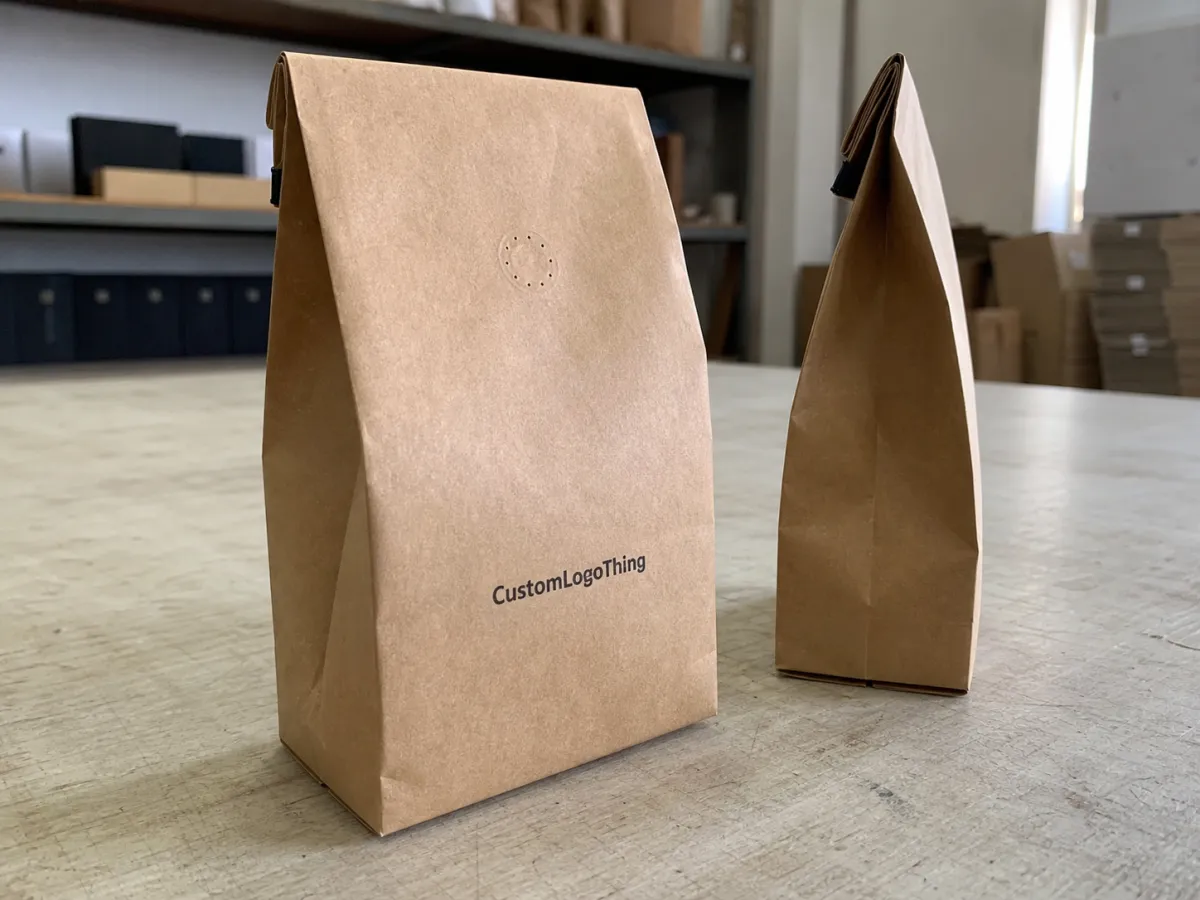
Start with the product, not the artwork. Whole bean coffee, ground coffee, and trial packs stress a bag differently, and each format changes the sample build. A 12 oz retail bag needs different headspace and panel dimensions than a 2 lb wholesale bag.
The most useful sample brief covers four facts: bag size, target fill weight, closure type, and the approval goal. Are you checking shelf appearance, seal strength, valve fit, or transit protection? Those are not the same test, and the supplier should know which one matters before the sample is made.
- Define the product format: whole bean, ground, subscription, or retail display.
- State the fill weight: for example, 250 g, 12 oz, or 2 lb.
- Set the approval goal: appearance, line fit, seal integrity, or shelf stability.
- Confirm the sample type: mockup, fit test, or production-intent prototype.
Choose the bag structure and closure that fit the product line
Flat bottom, side gusset, and stand-up formats each solve a different problem. Flat bottom bags usually present better on shelf and hold a cleaner face for branding. Side gusset bags are often easier to pack tightly in cartons. Stand-up pouches can work for smaller SKUs, but they are not always the best fit for heavier coffee.
Closure choice matters just as much. A zipper changes the opening feel and reclose behavior. A tin tie supports a traditional coffee presentation, but it may affect fill speed. Heat seal gives a crisp finish and is often preferred for freshness control. Tear notch placement matters too, because a bad tear line makes the first opening awkward.
Windows and valves need separate attention. A clear window can improve shelf appeal, but it changes the paper layer count. A one-way valve is common for freshly roasted coffee, but valve location and panel thickness must align. If both are requested, the build becomes more complex and the sample timeline usually stretches.
A sample should answer one decision, not create three more questions.
If you are comparing formats across a broader packaging line, it helps to review the rest of the range alongside the coffee bag sample. Our Custom Packaging Products page is useful for teams balancing coffee bags with labels, cartons, and other branded packaging formats.
Verify paper, liner, barrier, and valve specifications
Paper stock tells only part of the story. Coffee bags usually depend on a layered structure: paper exterior, inner liner, and barrier layer, with a valve or closure system added on top. If you want a sample that can be judged objectively, ask for the actual material stack, not a vague description like "high barrier."
List the barrier requirement in practical terms. Does the coffee need moisture resistance, oxygen protection, aroma retention, or all three? Ask for the liner type and the seal zone width so you can judge whether the structure is suitable for your filling method. A kraft face with a metallized or foil inner layer behaves differently from a paper laminate with a compostable liner.
Recyclability and compostability claims must match the build. Mixed-material structures often look eco-friendly but are not the same as a mono-material or FSC-certified paper solution. If the claim matters to your brand, ask for a written explanation of each layer. For paper sourcing, FSC chain-of-custody information is worth reviewing directly at FSC. If transit performance is a concern, packaging teams often use ISTA test methods to understand whether the bag and carton combination can survive handling without damage.
| Structure | Best for | Typical sample cost | Typical lead time | Watch for |
|---|---|---|---|---|
| Unprinted structural sample | Fit checks, fill tests, line setup | $35-$80 | 3-7 business days | May not show final print or finish |
| Printed production-intent sample | Brand review, shelf mockup, approval | $80-$180 | 7-15 business days | Color tolerance and proof sign-off matter |
| Sample with custom valve or zipper | Freshness testing, closure validation | $100-$220 | 10-18 business days | Tooling and component sourcing can extend timing |
The small details that cause expensive problems later are often adhesive placement, seal width, bottom strength, and whether the valve or zipper blocks a filling nozzle. Those are not design trivia. They are production realities, and they should be checked before the sample is approved.
Review artwork, dielines, and proof details before sampling
Send the supplier a real dieline review, not just a flat artwork file. Coffee bags have folds, side panels, bottom panels, zipper zones, and no-print areas. A logo that looks balanced on a PDF can drift into a seam or disappear behind a gusset in the finished bag.
Artwork control should cover color method, bleed, font handling, barcode placement, and roast date panel location. Ask whether the supplier wants Pantone values, CMYK values, or both. If there is a matte finish or soft-touch coating, the print can read darker than expected. If white ink is used under art on kraft paper, the proof should show how opacity affects the final look.
Compliance copy deserves the same discipline. Country of origin, net weight, storage guidance, allergen language, and certification marks should all be placed before the sample is released. If the proof misses one legal panel note, the sample may need a full rework even if the visuals are strong.
Ask for a marked-up proof, not only a clean PDF. The marked version shows what changed, what stayed fixed, and where the supplier sees risk.
- Send the dieline: do not rely on a flat mockup alone.
- Confirm finish notes: matte, gloss, soft-touch, or uncoated kraft.
- Check all variable data: barcode, lot code, roast date, and origin copy.
- Approve panel hierarchy: front panel, side panel, and back panel should each have a job.
Cost, pricing, and MOQ: what changes the sample quote
Sample pricing should be broken out clearly. Ask what is included: tooling, print setup, special laminations, valve installation, freight, and revisions. A $60 sample that excludes freight is not the same as a $60 delivered sample.
The biggest price drivers are usually size, print complexity, closure type, and barrier construction. A single-color kraft bag with a simple tin tie is very different from a full-color bag with a zipper, valve, and specialty finish. The sample cost may also change if the quantity is low enough that the supplier has to interrupt a production line.
MOQ belongs in the discussion at the sample stage, not after approval. Buyers often focus on the sample fee and forget the production economics. A line that looks reasonable at 500 pieces may be uncompetitive at 10,000. Ask for both numbers, side by side, so you can compare the sample result against the launch budget. If you need volume pricing for multiple SKUs or private label programs, a Wholesale Programs conversation is often more useful than negotiating one sample in isolation.
One practical question cuts through most pricing noise: is the sample fee credited against production? Ask about reprint charges too, because if a change in artwork or materials forces a second sample, you want to know how that is handled before the first order is placed.
Check the sample the day it arrives
A sample should be inspected before anyone starts treating it like an approval. Open the package and check the bag under bright light. Look for print scuffing, panel shift, seam wrinkles, corner crush, and whether the closures line up cleanly.
Then do a short functional check. Fill the bag with the intended weight, close it, and leave it for a day if the coffee will be packed in-house. Watch for bulging, seal creep, or a zipper that pulls off track. If the sample is meant for freshly roasted coffee, confirm that the valve does not hiss unexpectedly and that the headspace is enough to avoid stress at the top seal.
Packaging teams often forget how much the sample can reveal about handling. Does the bag spring back after compression? Does the paper crack at the fold? Does the finish show fingerprints or rub marks after a few passes? A sample is a short, cheap version of the launch, so the inspection should be practical, not just visual.
Process and lead time: how sample orders move from request to shipment
The cleanest sample workflow is simple enough to manage but strict enough to prevent omissions. First comes brief intake. Then spec confirmation. Then artwork review. After that, the supplier builds the sample, inspects it, and ships it out. If any step is skipped, the project usually pays for it later in revision cycles.
Lead time depends on sample type. An unprinted structural sample can move quickly because it does not need the same print and curing steps. A printed sample, especially one with a custom zipper or valve, usually takes longer. Add a few days if the artwork needs correction or if the material must be sourced specifically for your project.
Do not forget shipping. The delivery method should match the review schedule. If a sample is critical for a brand presentation or launch meeting, ask for milestone updates before dispatch. For transit-sensitive packaging, some buyers also ask for carton-level checks or drop testing so the sample reflects what the full case pack will experience.
- Internal owner: one person collects decisions and sends the brief.
- Review window: set a date for the brand, operations, and finance teams.
- Revision plan: allow one round of changes if needed.
- Shipping plan: confirm courier, tracking, and delivery address in advance.
Custom coffee paper bags sample order checklist
If you need the request to move fast, keep the checklist short and specific. The best version fits on one page and leaves little room for interpretation. A supplier should be able to read it, quote it, and build from it without chasing extra detail over email.
- Product: whole bean, ground, decaf, or sampler pack.
- Fill weight: exact net weight and expected headspace.
- Bag style: flat bottom, side gusset, or stand-up.
- Closure: heat seal, zipper, tin tie, or valve plus seal.
- Material: paper face, liner type, and barrier requirement.
- Print: Pantone, CMYK, white ink, finish, and any special coating.
- Artwork files: editable dieline, PDF proof, and variable data.
- Compliance: origin, barcode, net weight, storage, and certification marks.
- Sample purpose: visual approval, fill test, line trial, or shelf mockup.
- Timeline: target review date and shipping destination.
That list does more than reduce delays. It protects the conversation from drifting into vague language like "make it premium" or "we want a greener feel." Those phrases can mean anything, which is another way of saying they mean nothing to production. Concrete specs are easier to price, easier to approve, and easier to repeat.
What a reliable supplier should document before production
A serious supplier should show the work, not just the price. That means material spec sheets, dimensional tolerances, a written approval trail, and a clear note on what is exact versus what may vary slightly from sample to production.
Ask how the supplier handles failure points. If a seal opens, a valve leaks, the print shifts, or the zipper does not close properly, what happens next? A good vendor should be able to explain whether they will rebuild the sample, replace a component, or adjust the process before production starts.
From a buyer's point of view, the best partners speak plainly about tradeoffs. They will tell you if a faster lead time means fewer finish choices. They will say if a recyclable structure reduces barrier performance. They will not pretend that speed, cost, and durability always rise together.
A supplier who explains the compromise is usually safer than one who promises perfection in every category.
If you need a wider view of ordering, materials, and turnaround basics, our FAQ covers common packaging questions beyond coffee bags as well.
Next steps: turn the sample into a production-ready order
Once the sample lands, do not send it to five people and hope for one clear answer. Assign one internal owner to collect feedback on size, artwork, fill behavior, closure function, and shipping condition. That person should also check whether the bag fits the filling line, carton count, and shelf presentation you need for launch.
A short approval form helps. Use pass/fail criteria for structure, print, barrier performance, and transit condition. If the sample needs changes, send one consolidated revision list instead of scattered comments from multiple departments. Before production release, confirm the final dieline, sign-off file, recheck list, and any special notes on material substitutions.
Used well, a custom coffee Paper Bags Sample order checklist is not paperwork. It is a commercial filter that separates cosmetic approval from technical approval and helps launch a bag that performs as retail packaging instead of just looking like one.
How many custom coffee paper bag samples should I order before approving production?
Order at least one production-intent sample for each size or closure style you plan to launch. If the coffee line has different fill weights, sample each one because bag stress and headspace can change. Keep a backup sample if multiple departments need to review the same bag before sign-off.
What files are needed for a custom coffee paper bag sample order?
Provide an editable vector dieline, outlined fonts, and linked artwork so the supplier can build the sample accurately. Include barcode placement, regulatory copy, finish notes, and any panel-specific instructions. Send a PDF proof with comments so there is one clear source of truth during review.
Do sample bags use the same paper and barrier structure as production?
They should match the final paper, liner, closure, and valve whenever possible. If a substitute material is used, ask for a written difference list before you approve it. Re-test freshness and seal performance if any structural component changes.
What affects the price of custom coffee paper bag samples the most?
Size, print complexity, special closures, and barrier construction are the biggest price drivers. Rush sampling and courier shipping can add more cost than the sample itself on small orders. Ask whether the sample fee is credited back when you place the production order.
How long does it usually take to receive a custom coffee paper bag sample order?
Simple unprinted samples can move quickly, while printed or custom-closure samples need more time. Artwork revisions, material sourcing, and shipping transit all add to the total timeline. Confirm a target review date before ordering so your internal approval process does not stall.

