Buyer Fit Snapshot
| Best fit | Custom Corrugated Mailers for Books projects where brand print, material claims, artwork control, MOQ, and repeat-order consistency need to be specified before quoting. |
|---|---|
| Quote inputs | Share finished size, material target, print colors, finish, packing count, annual reorder estimate, ship-to region, and any compliance wording. |
| Proofing check | Approve dieline scale, logo placement, barcode or warning zones, color tolerance, closure strength, and carton packing before bulk production. |
| Main risk | Vague material claims, crowded artwork, missing packing details, or unclear freight terms can make a low unit price expensive after revisions. |
Fast answer: Custom Corrugated Mailers for Books: Film, Print, MOQ, and Carton Packing should be specified like a repeatable production item. The safest quote records material, print method, finish, artwork proof, packing count, and reorder notes in one written spec.
Production checks before approval
Compare the actual filled-product size with the drawing, then confirm tolerance on folds, seals, hang holes, label areas, and retail display edges. Reserve space for logos, QR codes, warning copy, and material claims before decorative graphics fill the panel.
Quote comparison points
Review material grade, print process, finish, sampling route, tooling charges, carton quantity, and freight assumptions side by side. A quote is only useful when the supplier can repeat the same color, closure quality, and packing count on the next order.
Custom Corrugated Mailers for Books: Smarter Shipping
Books have a way of arriving damaged in the places buyers notice first: the corners, the spine, the cover edge. A hardback can leave a warehouse in perfect shape and still reach a reader with a crushed corner because the package flexed under pressure somewhere between origin and doorstep. That is why Custom Corrugated Mailers for books matter. They hold the title steady, protect the edges, and make the shipment look engineered rather than improvised.
Why books get damaged in transit: a surprisingly easy fix
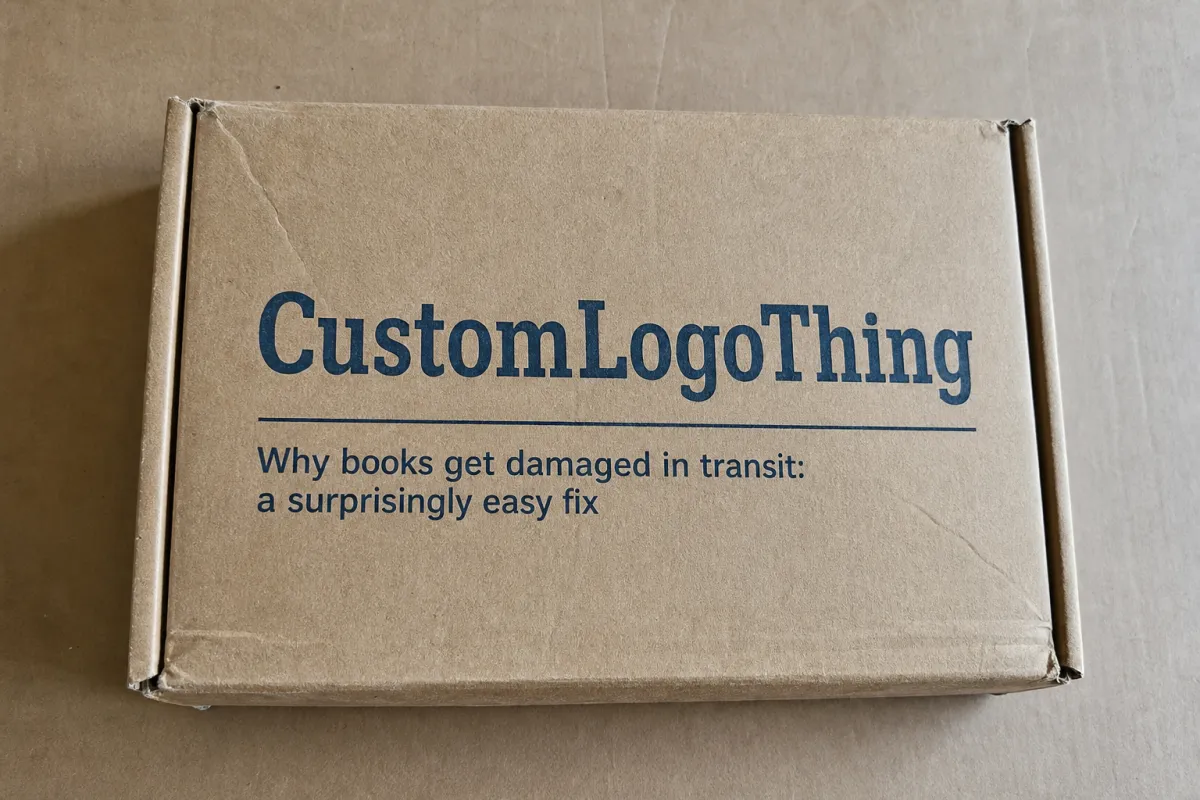
Books usually fail in shipping for unglamorous reasons. The parcel shifts. A carrier stack presses down. One corner takes a hit at the wrong angle. A rigid cover meets a bad drop, and the return request follows. Publishers, bookstores, and direct-to-reader brands often blame the book itself, but the book is rarely the weak point. The real problem is a package that is too loose, too soft, or too generic for something with hard edges and a flat surface that shows every mark.
The value of Custom Corrugated Mailers for books sits in that gap between product and transit. They are rigid, right-sized mailers built to keep the book from moving and to defend the corners from compression. They are not just cleaner-looking envelopes. They are shaped around the book’s dimensions, the shipping method, and the way the customer opens the order.
Generic paper envelopes can work for flat inserts with little value attached. Padded mailers help when abrasion is the main concern. Books ask for more. They need edge protection and crush resistance. Soft cushioning can reduce scuffs, yet it cannot always stop a corner from flattening when a parcel is squeezed under weight. Corrugated construction handles that better because it creates a firmer shell around the item.
The business logic is plain. Fewer damaged books means fewer refunds and fewer replacements. A tighter opening experience supports a stronger brand impression. Packing speeds up when the mailer closes correctly on the first pass. Tape use often drops because the structure itself does part of the work. That matters for publishers, subscription programs, independent bookstores, and any seller whose product packaging needs to look polished without draining margin.
A mailer that looks elegant but lets the book rattle around is just expensive cardboard with confidence issues.
If you already source Custom Packaging Products, the pattern will feel familiar: better fit usually cuts waste somewhere else. Less filler. Less labor. Less damage. Sometimes less freight loss, too, because the package survives the route in better condition.
For a direct-to-reader order, the shipping package is part of the purchase, not a side note. Buyers remember a title that arrives cleanly and opens cleanly. With the right package branding and fit, the mailer becomes part of the book’s presentation instead of dead space around it.
How custom corrugated mailers for books actually work
The structure is straightforward, and that is a strength. Corrugated board uses a fluted medium between liner layers. The flute gives the mailer stiffness, adds crush resistance, and helps the package survive the stacking and vibration that come with parcel networks. Add scored folds, tuck flaps, and a closure that locks without making pack-out miserable, and the mailer keeps its shape instead of collapsing when pressure rises.
Fluting choice matters more than many buyers expect. Smaller flute profiles tend to create a flatter surface and a cleaner print area. Heavier board grades add protection. For books, that decision usually depends on weight, travel distance, and whether the goal is basic shielding or a more premium unboxing. A slim paperback moving domestically does not need the same build as a slipcased collector’s edition heading through several hubs.
Fit is the part that decides whether the package works or merely looks correct. Extra padding does not rescue a sloppy size. If the book can move, the corners still get hit. If the mailer is too tight, the edges may scuff during insertion and the packer slows down because the item resists closing. The sweet spot leaves just enough room for easy loading while still keeping the book square.
That is why a custom dieline often earns its keep. It lets the mailer match the book’s width, height, and thickness instead of forcing one stock shape to pretend it fits everything. A paperback, hardcover, boxed set, and two-book bundle may all need different structures, even if they ship from the same warehouse on the same day.
What the mailer can include
- Self-locking closures that reduce tape use and make pack-out faster.
- Tear strips that make opening cleaner and cut down on frustration at the door.
- Score lines that improve folding accuracy and assembly speed.
- Inside or outside print for branding, handling notes, or a short message.
- Inserts or retention tabs when a thin book or bundle needs a firmer hold.
Protection comes from how the mailer handles the usual shipping hazards: drops, compression, edge impact, and shifting inside the parcel. That is why many brands move from soft envelopes to corrugated book mailers once damage claims start stacking up. The structure does more than cushion. It stabilizes.
If your catalog already includes lighter formats, such as Custom Poly Mailers, that still makes sense. Books present a different problem. They are flat, rigid, and unforgiving at the corners. Corrugated board handles that shape better than a flexible film bag ever will.
For large orders or mixed kits, some brands pair book mailers with Custom Shipping Boxes. That is usually more structure than a single book needs, but it works when the shipment includes merch, inserts, or several titles that need breathing room.
Key factors that affect fit, protection, and presentation
The first spec to get right is the book itself. Measure cover width, height, and thickness after the dust jacket, shrink wrap, belly band, or slipcase is already on the product. A 300-page paperback and a hardback with a jacket are not the same object, even when the trim size looks identical in a catalog. Packaging mistakes often begin with that assumption.
Tolerance matters more than most buyers think. Too loose, and the book slides in transit. Too tight, and the corners rub while the item is inserted or removed. In practice, the safest fit usually leaves a little clearance for the board and fold while still keeping movement to a minimum. There is no single number that works for every title. There is, though, a consistently wrong number: the one that ignores actual handling.
Branding is the other major decision. Some teams print heavily on the outside, some keep the interior plain, and some choose a restrained layout with a logo, return message, and a clean shipping panel. More ink does not always improve the result. If the structure already looks deliberate, a simple print can feel more premium than a crowded design that adds cost and slows production. That is a packaging decision, not just a marketing one.
Fulfillment matters too. The mailer has to store flat, fold predictably, and pack quickly. Warehouse footprint matters when space is limited. Assembly speed matters when hundreds of orders leave each day. If the operation is moving toward more automated packing, the structure should fold the same way every time instead of requiring staff to wrestle each unit into place.
Shipping route changes the spec as well. Postal systems, parcel carriers, and international lanes do not treat packages with the same level of kindness. Longer routes usually justify stronger board or a tighter fit. Heavy books and multi-book orders also benefit from sturdier construction because the load itself raises the risk of compression damage. The carrier will not adjust its behavior because the packaging looks handsome.
Material sourcing has become a bigger question for many buyers. Recycled content and FSC-certified board now show up in procurement conversations far more often than they did a few years ago. That is not window dressing. It gives buyers a clearer paper trail and helps packaging programs satisfy sustainability requirements. If that matters to your account, ask for documentation rather than a verbal promise. The FSC keeps certification guidance at fsc.org.
Testing matters just as much. For a more reliable durability benchmark, the International Safe Transit Association publishes test methods and packaging standards at ista.org. For books, the useful questions are about drop resistance, vibration, and compression, not whether the mockup photographs well under studio lights. ASTM methods are also widely referenced for drop and compression checks, especially when a team wants a repeatable test rather than a hunch.
Cost, pricing, MOQ, and what drives the quote
Pricing on custom corrugated mailers for books comes down to a few variables, and none of them are mysterious. Size, board grade, print coverage, die-cut tooling, coatings, and quantity drive most of the quote. The more specific the structure, the more setup work the supplier has to absorb before the first unit ships.
Setup costs matter most at lower quantities. At higher quantities, those same costs spread out. That is why a quote for 1,000 units can look stubbornly high while 10,000 units starts to make sense. Buyers sometimes focus on unit price alone and miss the real math. A custom die, proofing, and production setup are paid once, not magically absorbed by the factory.
MOQ, or minimum order quantity, is where the practical side of buying shows up. Custom corrugated book mailers often have a higher floor than stock options, especially when the structure is unique or printed. A die-cut shape, a special insert, or full-color print usually requires enough volume to justify the setup. If you are shipping only a few hundred books a month, a semi-custom approach can be more sensible.
Here is a practical comparison of common options:
| Option | Typical use | Approx. unit cost | Protection level | Notes |
|---|---|---|---|---|
| Generic padded envelope | Light paperbacks, low-risk mailing | $0.18-$0.45 at volume | Low to moderate | Cheap, but corners can still bend and covers can scuff. |
| Stock corrugated mailer | Standard book shipping with simple dimensions | $0.35-$0.85 at volume | Moderate to good | Better structure, but fit may be imperfect for unusual trim sizes. |
| Custom corrugated mailers for books | Hardcovers, premium editions, branded DTC shipments | $0.55-$1.40+ depending on quantity and print | Good to excellent | Best fit and presentation, with higher setup and tooling costs. |
| Custom shipping box with insert | Bundles, gift sets, multi-item orders | $0.80-$2.50+ depending on structure | Excellent | More material and labor, but useful when the book is only part of the shipment. |
Those ranges are broad, not promises. Print coverage, board thickness, closures, and freight all move the final cost. A simple one-color logo on kraft board will usually land below a fully printed premium mailer with an interior message and tear strip.
Where can buyers save without making the package worse?
- Standardize sizes around the top-selling trims instead of creating a one-off for every SKU.
- Keep print coverage modest if the structure already feels strong and clean.
- Avoid extra closures or inserts unless the book actually shifts during transit.
- Use one board spec for similar titles to simplify reorders and warehouse handling.
The cheapest quote is often the expensive one. That sounds dramatic until you compare damage rates, pack-out labor, and the time spent refunding broken orders. If a bargain mailer saves five cents but adds two minutes of labor or raises claims, it is not bargain packaging. It is hidden cost wearing cardboard.
For budget planning, think in landed cost, not only piece price. That means the mailer itself, samples, tooling, freight, and any replacement stock for launch or seasonal spikes. If the supplier offers other packaging categories, it helps to compare the book mailer against the wider packaging program rather than buying every item in isolation.
Production steps, timeline, and lead time basics
The production flow is usually more predictable than people expect, provided the brief is clear. It starts with size and structure, moves to dieline review, then proofing, sampling or prototyping, production, finishing, and shipping. The weak link is almost always the brief. If the book dimensions are vague, the schedule starts wobbling immediately.
Artwork changes slow things down. Structural revisions do too. So does switching board grades halfway through because someone decided they wanted a heavier feel after seeing a sample. That kind of change is manageable when the launch has slack built in. It turns ugly when fulfillment is waiting and the packaging still needs another round.
Lead time depends on complexity. A simple unPrinted Corrugated Mailer can move faster than a fully printed, custom-shaped version. A realistic planning range for many custom jobs is about 10 to 15 business days after proof approval for straightforward production, with more complex or heavily printed work taking longer. If the job needs prototype rounds or multiple revisions, add more time. Packaging delays have a habit of showing up at the worst possible moment.
When does a physical sample matter more than a digital proof? Usually when the title is premium, the dimensions are unusual, or the shipment is part of a launch that cannot tolerate a miss. A digital proof can confirm artwork placement and copy. It cannot tell you whether the book seats cleanly or whether packers fight the closure every time they assemble one.
For launch planning, build packaging timing into the campaign calendar. Seasonal peaks, special releases, and subscription renewals all need buffer. If you wait until inventory is nearly gone to reorder, you pay rush costs or compromise on the spec. Neither choice looks good on a brand that sells books.
Here is a simple workflow many teams use:
- Measure the exact book or bundle dimensions, including every wrap or jacket.
- Choose the shipping lane and the handling level that lane tends to create.
- Review a dieline and confirm fit tolerance.
- Approve the print proof or sample.
- Run a small pilot shipment before the full production order.
That pilot step matters more than people want to admit. A mailer can look perfect in a mockup and still be annoying in real pack-out. A test run exposes the actual friction points: closure speed, corner clearance, stacking behavior, and the opening experience. That is the difference between packaging that photographs well and packaging that performs.
Common mistakes when ordering book mailers
The biggest mistake is measuring the book once and stopping there. Dust jackets, slipcases, belly bands, shrink wrap, and inserts all change the packed dimensions. A quarter inch sounds tiny until it turns into a crushed corner during insertion.
Over-branding the structure is another common slip. A complicated print layout can raise cost and slow packing without improving the customer experience. If buyers notice the title and the condition of the shipment, that already covers most of the job. The mailer does not need to shout to prove it is doing its work.
Fit mistakes go in both directions. Too loose and the book moves. Too tight and the cover scuffs or bends during insertion. In the warehouse, an overly tight mailer also slows staff down and increases the odds of a misfold. That is not a design detail. That is labor cost showing up in another line item.
Carrier reality gets ignored more often than it should. Parcels get stacked. Parcels get dropped. Parcels get shoved around. Heavier books need stronger board, and multi-book orders may need a different structure entirely. If the route is rough, the package should be built for rough handling. The carrier will not change behavior because the colors are tasteful.
Skipping test shipments is another easy way to create trouble. The mailer should survive an actual route, not just a countertop demo. Send a few through the same lane your customers use. Check the corners, the closure, the opening experience, and any visible board fatigue. That one test can save a lot of refunds.
If the sample only survives a desk drop, it is not a shipping test. It is a photo prop.
Expert tips and next steps for a low-risk launch
Start with the highest-volume book sizes. Not every SKU needs its own structure on day one. One or two representative trims can tell you a lot about fit, strength, and packing speed. Once those are stable, you can decide whether the next title needs its own spec or only a small dimensional adjustment.
Ask for a sample or prototype, then run a short pilot with real shipments. Five to twenty actual orders is often enough to reveal whether the closure is too stiff, whether the corners need more clearance, or whether the opening feels clumsy. A sample that passes that test is worth far more than a polished render.
Compare at least two quotes using the same spec. That sounds obvious, but a lot of buyers accidentally compare different materials, different board weights, or different print assumptions. Unless the spec matches, the lowest unit price is mostly theater.
Use standard dimensions where possible. Standardization makes reorders easier, shortens procurement cycles, and lowers the odds that a packaging emergency turns into a rush custom job with freight charges attached. For many brands, that is the most practical way to keep branded packaging manageable while still looking tailored.
If the packaging program is growing beyond one book format, think in tiers. A light paperback may ship in a simpler mailer. A premium hardcover may need a heavier spec. A collector’s box set may deserve a full shipping box. That layered approach usually works better than forcing one structure to do everything badly.
Here is the simplest low-risk launch plan:
- Measure accurately, including every wrap, insert, or jacket.
- Define the lane so the mailer matches the roughness of transit.
- Request a sample before you approve production.
- Pilot a small shipment with actual fulfillment staff.
- Lock the spec only after the fit and damage rate look right.
The goal is not the fanciest mailer on the market. The goal is a structure that protects the book, keeps the packing line moving, and supports the brand without wasting money. That is where custom corrugated mailers for books earn their keep. They reduce movement, improve presentation, and cut the kind of damage that turns a sale into a refund. For brands building a packaging system that needs to look clean and ship reliably, the best next move is simple: choose the smallest structure that passes a real transit test, then standardize it before volume climbs.
FAQ
Are custom corrugated mailers for books better than padded envelopes?
Yes, when corner protection and crush resistance matter more than soft cushioning. Corrugated mailers hold the book steadier and reduce edge damage better than padded envelopes. They are usually the stronger choice for hardcovers, premium paperbacks, and direct-to-customer orders.
What book sizes work best with custom corrugated mailers for books?
They work best when the mailer is sized to the book’s thickness and cover dimensions with a small fit tolerance. Paperback, hardcover, boxed set, and multi-book orders can each need different specs. A single universal size usually creates waste or a sloppy fit.
How do I estimate the cost of custom corrugated mailers for books?
Start with size, board grade, print coverage, and order quantity. Higher volume usually lowers unit cost because setup gets spread across more pieces. Add sample, tooling, and shipping costs into the full budget, not just the piece price.
What is a normal lead time for custom corrugated mailers for books?
Lead time depends on whether the mailer is stock-like or fully custom printed and die-cut. Prototype approval and artwork changes are the most common delays. Build extra time into launches and seasonal restocks so packaging does not hold up fulfillment.
Do custom corrugated mailers for books need inserts or extra padding?
Not always; a well-sized corrugated mailer often provides enough protection on its own. Inserts make sense for very thin books, bundles, or premium editions that can shift. The goal is secure fit, not stuffing the package with unnecessary material.

