Buyer Fit Snapshot
| Best fit | Custom Cosmetic Labels with Logo projects where brand print, material claims, artwork control, MOQ, and repeat-order consistency need to be specified before quoting. |
|---|---|
| Quote inputs | Share finished size, material target, print colors, finish, packing count, annual reorder estimate, ship-to region, and any compliance wording. |
| Proofing check | Approve dieline scale, logo placement, barcode or warning zones, color tolerance, closure strength, and carton packing before bulk production. |
| Main risk | Vague material claims, crowded artwork, missing packing details, or unclear freight terms can make a low unit price expensive after revisions. |
Fast answer: Custom Cosmetic Labels with Logo: Material, Adhesive, Artwork, and MOQ should be specified like a repeatable production item. The safest quote records material, print method, finish, artwork proof, packing count, and reorder notes in one written spec.
Production checks before approval
Compare the actual filled-product size with the drawing, then confirm tolerance on folds, seals, hang holes, label areas, and retail display edges. Reserve space for logos, QR codes, warning copy, and material claims before decorative graphics fill the panel.
Quote comparison points
Review material grade, print process, finish, sampling route, tooling charges, carton quantity, and freight assumptions side by side. A quote is only useful when the supplier can repeat the same color, closure quality, and packing count on the next order.
Custom Cosmetic Labels With Logo: Smart Buying Guide
A serum bottle can look polished on Monday and worn out by Friday. That is the real test for Custom Cosmetic Labels with logo: not how they photograph in a proof, but how they behave on a damp bathroom shelf, in a steamy shower, or inside a shipping carton that gets handled more than once before it reaches the customer. I have seen perfectly nice products lose credibility just because the label curled at one corner or the ink got hazy after a week in a wet room. That kind of thing sounds small until you are the one trying to explain it to a buyer.
Labels often get treated like decoration. That is the wrong lens. In real use, custom cosmetic labels with logo do three jobs at once: they sell the product, they carry the required information, and they signal whether a brand feels finished or rushed. A label that wrinkles, peels, or smears turns a good bottle into a cheap-looking one fast. The same is true on jars, droppers, pump bottles, tins, tubes, and secondary packaging for skincare, haircare, and bath products.
This guide focuses on the part buyers usually need most: how custom cosmetic labels with logo are made, what drives price, which materials survive real use, and how to order without creating a reprint. Appearance matters. Durability matters more. Anyone can buy a sticker. Fewer people buy one that still looks right after water, oil, handling, and storage. That is the part that separates a pretty mockup from a package that actually holds up.
What custom cosmetic labels with logo actually solve
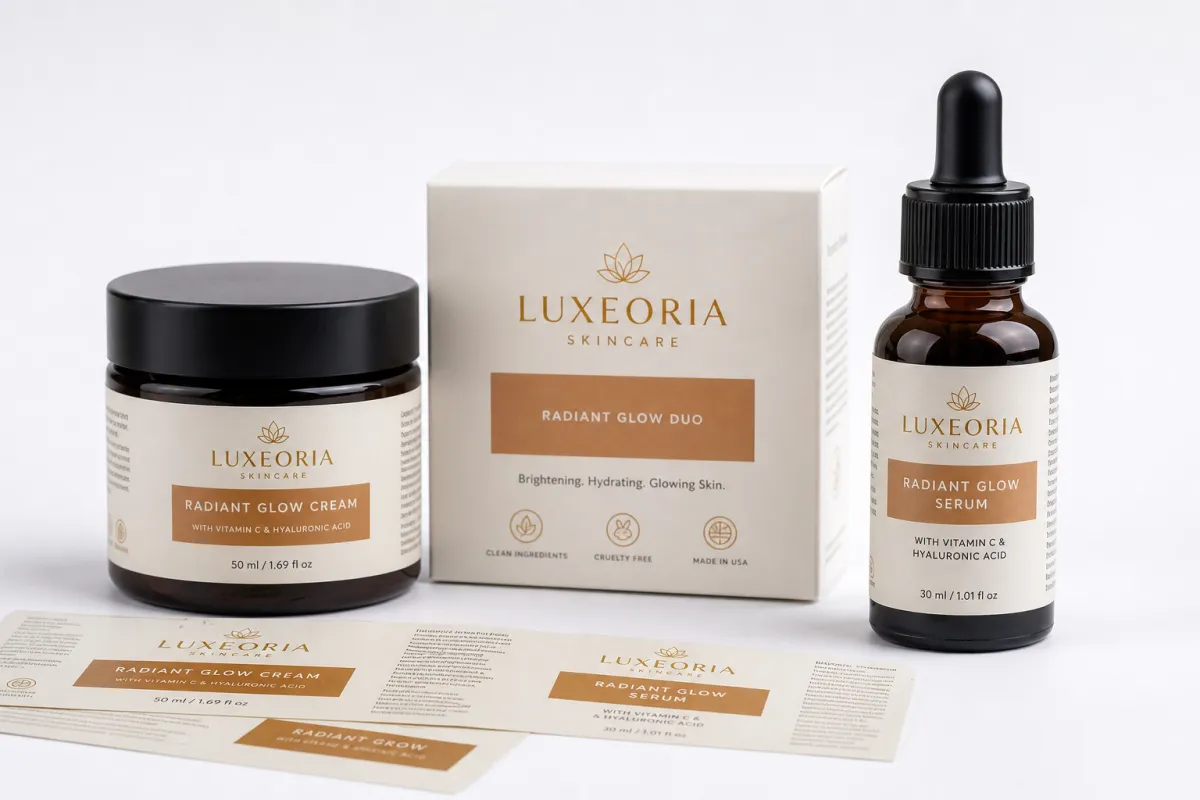
Begin with a simple reality check. A beautiful bottle without a good label looks unfinished. A plain bottle with a well-built label can still look like a brand. That difference explains why custom cosmetic labels with logo matter so much in packaging design and package branding. The label is often the first thing shoppers notice, and it is also the part that takes the most abuse.
For skincare, haircare, and bath products, the label has to do more than carry a logo. It usually supports the full product packaging story: brand name, product name, ingredients, directions, warnings, net contents, batch code, and sometimes barcodes or regulatory details. If the label is cramped, smeared, or hard to read, the package feels smaller, cheaper, and less trustworthy. A customer may not be able to explain why it feels off, but they will feel it.
custom cosmetic labels with logo also help separate handmade-looking retail packaging from a brand that feels ready for shelves, subscriptions, or wholesale. That matters whether you sell through Shopify, boutiques, salons, or neighborhood shops. A good label can make a small run of lip balm, lotion, or face oil look like it belongs beside bigger names. It is one of the least expensive ways to raise perceived value without changing the formula, and honestly, that is why so many smart brands start here.
There is a practical side too. custom cosmetic labels with logo can be sized for curved jars, narrow droppers, small tins, or tall pump bottles, which means the label fits the container instead of fighting it. That sounds basic because it is basic. Still, most bad labels fail for a basic reason: wrong material, wrong adhesive, wrong shape, or too much copy crammed into too little space.
Typical use cases include:
- Face cream jars that need a clean front label and an ingredient panel on the base or back.
- Dropper bottles that need tight sizing and strong adhesion around curved glass.
- Pump bottles that get handled with wet hands in bathrooms and spas.
- Tins and balms that are touched repeatedly and tossed into bags.
- Secondary packaging such as cartons, sleeves, and inserts that support branded packaging.
A label is part of the package, not an afterthought. If it fails in a humid bathroom or during ordinary handling, it was never finished for real use.
If you are building a broader packaging lineup, labels should work with the rest of the system instead of competing with it. That can include matching cartons, inserts, or Custom Packaging Products that keep the brand consistent from shelf to unboxing. For products that need tags, hanging pieces, or wrap-around labels, Custom Labels & Tags can keep the look tight without forcing a one-size-fits-all solution.
One more point. custom cosmetic labels with logo are not only about appearance. They can affect compliance, traceability, and customer trust. A good-looking label that misses basic product information is not clever. It is expensive trouble waiting to happen. And if you are selling in more than one market, the rules can change by region, so a little caution goes a long way.
How custom cosmetic labels with logo are made: process and timeline
The production flow for custom cosmetic labels with logo is straightforward, but the details matter. A proper order usually starts with artwork, container measurements, and a choice of finish and material. After that comes proofing, printing, finishing, quality checks, and shipment. The best jobs are boring in the best possible way. Nothing dramatic. No last-minute scramble because someone guessed the bottle diameter.
Here is the typical sequence:
- Measurements and specs: Provide the exact container dimensions, label area, shape, and placement. A jar with a wide front panel needs a different approach than a slim bottle with a tight curve.
- Artwork setup: Send logo files, copy, ingredient text, and any barcode or batch fields. Vector logo files print more cleanly, especially on smaller custom cosmetic labels with logo.
- Proofing: Review a digital proof or layout mockup. This is where spelling, margin, and sizing issues are caught before material is used.
- Production: Printing begins after approval. Depending on the material and finishing method, labels may need time to dry, cure, laminate, or slit.
- Shipping: Final cartons are packed and sent once the order passes inspection.
Most delays happen before production, not during it. Missing measurements cause wrong die lines. Incomplete ingredient copy creates back-and-forth. Color changes after proofing eat the schedule. A lot of buyers also underestimate how long it takes to approve custom cosmetic labels with logo across multiple stakeholders. If three people need to sign off, the calendar starts behaving like a committee, which is rarely helpful.
A realistic timeline for standard custom cosmetic labels with logo is often 7-15 business days from proof approval to delivery for simpler runs. More complex jobs, specialty finishes, or crowded production periods can stretch into 12-20 business days. Add time if you need design help, samples, or container testing. If the labels are tied to a launch date, build buffer. Two extra days is not paranoia. It is math.
For buyers planning a launch or seasonal restock, here is a practical planning range:
- Design and file prep: 1-3 business days if artwork is ready; longer if the logo needs cleanup or copy needs layout work.
- Proof approval: Same day to 3 business days, depending on how many people review it.
- Printing and finishing: 3-7 business days for many standard orders.
- Shipping: 2-5 business days for domestic ground transit, depending on location.
If you are coordinating custom cosmetic labels with logo with other components like boxes or inserts, align the schedules. It is no fun to have bottles ready, cartons late, and labels arriving just in time to get lost on a desk. The packaging should move as one system, especially if the order also includes custom printed boxes or Display-Ready Retail Packaging.
For transit-heavy shipments, standards from ISTA are useful reference points. They are not a magic fix, but they remind buyers that packaging has to survive movement, pressure, vibration, and handling, not just a polished photo shoot. Labels are part of that system too.
Before the second proof is approved and production locks in, ask one question: will these custom cosmetic labels with logo still look right after contact, friction, and time? That single question removes a lot of avoidable mistakes.
What custom cosmetic labels with logo pricing really looks like
Pricing for custom cosmetic labels with logo is not random. It follows a few clear drivers: quantity, substrate, adhesive, print method, finish, shape complexity, and whether the job needs compliance copy or special handling. If you want a clean answer on cost, stop asking for “cheap” and start asking what the label needs to survive. That usually gets a better quote and fewer regrets.
Here is the practical version. Small runs cost more per label because setup time gets spread across fewer pieces. Bulk orders bring the unit price down because the machine time, prep, and finishing are distributed across the full run. That is why a 500-piece order of custom cosmetic labels with logo can feel expensive, while 5,000 or 10,000 pieces suddenly look much more manageable.
Typical pricing bands often look like this for standard sizes and common finishes, though exact numbers depend on spec:
| Option | Typical Use | Approximate Unit Cost at Small Runs | Approximate Unit Cost at Bulk Runs |
|---|---|---|---|
| Basic paper label | Dry, low-touch products, sample jars, simple retail packaging | $0.18-$0.40 | $0.05-$0.12 |
| Polypropylene film | Skincare, hand cream, bathroom use, moisture resistance | $0.25-$0.55 | $0.08-$0.20 |
| Vinyl or specialty film | Higher handling, stronger durability, unusual containers | $0.35-$0.75 | $0.12-$0.28 |
| Premium finish label | Soft-touch, clear, foil accent, or high-end branding | $0.40-$0.90 | $0.15-$0.35 |
Those ranges are not a sales pitch. They are a working estimate so buyers can budget without pretending every label costs the same. A tiny round label with one color of print will usually sit lower than a wrap label with fine type, a special finish, and an irregular die cut. custom cosmetic labels with logo that include extra compliance information can also cost more simply because there is more copy to lay out and proof. More moving parts usually means more setup, and that is just how the work goes.
Where people overspend is predictable:
- Choosing a premium finish for a product that lives in a dry box instead of a wet bathroom.
- Ordering oversized labels that cover more bottle than they need to.
- Adding too many special effects, then realizing the bottle is still small.
- Using a complex shape just because it looks different, even if it slows application.
- Skipping a test order and paying for a reprint later.
The smarter approach is to spend where performance matters. If the product sits in a bathroom, purse, salon, or shower area, moisture resistance is worth paying for. If the product is a dry balm or a boxed sample, you may not need the most expensive substrate available. The right custom cosmetic labels with logo should support the brand, not eat margin for no reason.
There is also a sourcing angle. If your packaging strategy includes paper-based label stock or carton materials, FSC-certified options can matter for buyer expectations and retail conversations. See FSC for the standard and certification framework. Not every brand needs it, but many do need to answer sourcing questions clearly, and that conversation tends to happen sooner than people expect.
One useful rule: match cost to risk. A label on a lotion pump that gets handled daily should be built more like a working component than a decorative one. That is especially true for custom cosmetic labels with logo on products exposed to oil, steam, condensation, or repeated rubbing.
Material and finish choices that keep labels looking premium
Material choice is where good custom cosmetic labels with logo are won or lost. The wrong stock can curl, smear, or lift at the corners. The right stock can make a product look cleaner than the bottle deserves. That is not flattering, just true.
Paper is the most economical option. It works for dry products, sample jars, outer cartons, and low-touch packaging. It gives a classic look, and it is often a strong match for branded packaging that is not exposed to water or oils. The downside is plain: paper does not love humidity, wet hands, or bathroom storage. If the product lives anywhere near steam, you should think twice.
Polypropylene is a common upgrade for custom cosmetic labels with logo. It handles moisture better, holds print well, and usually performs strongly on skincare bottles, body lotion, shampoo, and conditioner packaging. It also tends to feel cleaner and more professional on the shelf. If the product lives near a sink, shower, or vanity, this is often a safer choice than paper.
Vinyl and other specialty films are useful when the product sees extra handling, irregular shapes, or more demanding storage conditions. They can be a better fit for containers that get squeezed, moved, or cleaned often. They usually cost more, but they can reduce the chance of label failure. For certain custom cosmetic labels with logo, that tradeoff is worth it.
Finish changes the brand impression immediately:
- Matte: Softer, quieter, more modern. Good for clean skincare and minimalist package branding.
- Gloss: Brighter and more reflective. Good for color-heavy labels and products that need to pop under retail lighting.
- Soft-touch: Premium feel, subdued look, and a tactile finish that signals higher-end positioning.
- Clear: Great for a no-label look, but only if the bottle, print, and typography are strong enough to carry it.
Size and shape matter too. A label that is too wide on a curved bottle will buckle or lift. A label that is too tall can crowd the design and make the product look clumsy. A narrow label may fit the container but leave too much empty space for the branding to feel intentional. Good custom cosmetic labels with logo are sized to the package, not guessed from a screen.
Adhesive matters more than most buyers expect. Oily surfaces, cold storage, and wet application areas can all affect bond strength. If the product is refrigerated, chilled, or shipped in variable temperatures, the adhesive should be chosen for those conditions. A label that sticks in the proof and fails in the real world is a very expensive mistake. I would rather have a plain-looking label that stays put than a fancy one that peels on week one.
Here is the shortest version of the decision process: match the material to the environment first, then pick the finish. Bathrooms are hard on weak labels. So are shipping rooms. So are customers with wet hands. The best custom cosmetic labels with logo are the ones that keep looking intentional after all three.
Step-by-step: ordering custom cosmetic labels with logo without reprints
Most reprints can be avoided. That is the frustrating part. custom cosmetic labels with logo usually go wrong because the buyer skipped one detail, guessed a measurement, or approved a proof too quickly. The good news is that the ordering process is manageable if you treat it like a packaging job instead of a casual graphic order. A few minutes of discipline up front can save a lot of awkward backtracking later.
Start with a simple checklist:
- Container details: exact bottle, jar, tube, or tin dimensions.
- Label placement: front, back, wrap, top, neck, or multi-panel layout.
- Copy: product name, ingredients, directions, warnings, net contents, batch space, barcode if needed.
- Brand assets: logo files, brand colors, fonts if they are part of the system.
- Finish preference: matte, gloss, soft-touch, clear, or another finish.
- Quantity range: a realistic first order and a rough reorder estimate.
If the artwork is ready, send vector files and editable copy. If it is not ready, ask for layout help before production starts. A pretty file is not the same thing as a print-ready file. For custom cosmetic labels with logo, small typography and ingredient lists need actual spacing, not optimism. I have seen beautiful labels fall apart because the fine print was squeezed until it looked like static.
Proof review is where the money is saved. Check spelling carefully. Check the size against the real container. Check that the logo is legible at actual print size, not just on a large monitor. Check safe margins, barcode readability, and the distance from any label edge to key text. A proof can look correct and still fail on the bottle if the proportions are off.
A useful habit is to print the proof at actual size on plain paper and wrap or place it on the container with tape. It is simple, and it works. It reveals whether the label sits high, low, crooked, too wide, or too busy. For custom cosmetic labels with logo, a five-minute mockup can prevent a five-day headache.
Then test the real thing. If the product will sit in a bathroom, put the test label on the actual container and leave it there for a few days. Add water exposure if that is part of the product’s life. Feel the surface. Watch the corners. If the label lifts or smears, change the material or adhesive before you order the full batch. That is the unglamorous part, but it is the part that saves the budget.
If the packaging system includes cartons, bundles, or display sleeves, check the whole set together. It is common for labels to look great alone and slightly awkward beside custom printed boxes. A better option is to coordinate the design language so the label, carton, and outer package feel like one product family. That makes the shelf presence stronger and the overall product packaging more credible.
Before full production, request a final approval record that captures the exact spec: size, stock, adhesive, finish, artwork version, and quantity. Store that record somewhere easy to reach. Reorders go faster when the approved version is easy to find, and custom cosmetic labels with logo are much easier to repeat when nobody has to dig through email for the right file.
That last step sounds small. It is not. One clean record can save a future launch, a restock, or a wholesale order from turning into a scavenger hunt.
Common mistakes with custom cosmetic labels with logo
The most expensive label mistake is not always the wrong print file. Often it is the wrong assumption. Buyers assume every label material works on every bottle. They assume the logo will still be readable once it shrinks. They assume a sample label proves the whole order. Those assumptions make custom cosmetic labels with logo fail in very ordinary ways.
1. Choosing the wrong substrate. Paper on a wet product is asking for trouble. A moisture-resistant film is usually safer for skincare, haircare, and bath products that live in bathrooms or salons. If you want a premium look without stress, poly-based custom cosmetic labels with logo are often a stronger choice than paper.
2. Picking a size that fights the container. Labels that are too wide on curved bottles lift at the edges. Labels that are too tall make the container feel crowded. A good label should fit the bottle’s shape, not bully it. This matters a lot on small jars and narrow dropper bottles where a few millimeters change the whole look.
3. Overstuffing the design. Tiny type, weak contrast, and too many claims create a label that reads like a legal form. That is not attractive. If the logo gets lost, the brand gets lost. For custom cosmetic labels with logo, simple spacing and a clear hierarchy are usually stronger than trying to say everything at once.
4. Ignoring the real environment. A label that survives in a dry studio may fail in a humid bathroom, a refrigerated storage space, or a shipping box that sees temperature swings. Cosmetics are used in messy places. The label needs to tolerate that mess, not just the controlled conditions of a design file.
5. Skipping a sample test. This is where people save $40 and lose $400. If the product is new, unusual, or likely to face moisture and handling stress, test first. Then scale. That is especially true for custom cosmetic labels with logo on curved containers or oily surfaces.
6. Ordering too few extras. Launches get damaged. A few labels get misapplied. Some units are held for samples or photography. If the order is exactly the quantity you need and nothing more, you are one mistake away from a shortage. Order a reasonable cushion, usually 5% to 10% extra for smaller runs if the budget allows.
7. Treating labels and packaging as separate decisions. Labels, cartons, inserts, and shipping materials should support the same brand story. If the label looks elegant but the rest of the packaging feels generic, the brand loses consistency. This is where branded packaging becomes more than a buzz phrase. It either works as a system or it does not work at all.
If the product is sold at retail, the label has to survive shelf handling, customer curiosity, and replenishment. That is the real job of custom cosmetic labels with logo. Not just to print well. To keep looking good after people have touched them, moved them, and ignored the care instructions you hoped they would read.
Next steps for custom cosmetic labels with logo that sell
If you are ready to move, keep the next steps simple. First, audit the packaging. What container are you using? Where will the label sit? How much handling, moisture, or friction will it face? Those answers should drive the spec for custom cosmetic labels with logo, not the other way around.
Next, gather the core files and details before asking for a quote:
- Container measurements or supplier drawings.
- Logo files in a clean format.
- Final product copy, including ingredient text and any required warnings.
- Quantity estimate for launch and likely reorder.
- Preferred finish and any must-have brand colors.
If the packaging is new, unusual, or likely to face moisture stress, order a small test run first. That is the sensible move for custom cosmetic labels with logo, especially on products that are going into bathrooms, salons, gyms, or travel kits. One test run can tell you more than ten guesses.
Then compare suppliers on more than unit price. Ask about proof quality, finishing options, reorders, turnaround time, and how they handle layout changes. A slightly higher quote can still be the cheaper choice if the supplier catches mistakes before production and keeps the spec on file for the next run. That matters for custom cosmetic labels with logo because cosmetic lines rarely stay static for long.
Also think about the rest of the package. A label should sit comfortably beside the bottle shape, carton graphics, inserts, and any custom printed boxes you use for retail or shipping. The more consistent the system, the more polished the brand looks. This is why packaging design deserves as much attention as the formula itself. People may buy the product for the ingredients, but they decide whether it feels trustworthy based on the package.
If your line is expanding, keep the same naming convention, visual structure, and label spec across the range. That helps the brand read faster on shelf and makes reorders less chaotic. It also makes future custom cosmetic labels with logo much easier to update without redesigning everything from scratch.
Here is the clean launch path:
- Choose the right material for the product environment.
- Set the label size based on the container, not guesswork.
- Approve one proof carefully, then test it on the real package.
- Order a practical extra quantity.
- Save the approved spec for the next reorder.
That is how you avoid the classic label trap: paying twice because the first order looked good only on screen. Good custom cosmetic labels with logo should protect the product, support the brand, and make the packaging feel finished from the first unit to the last. Build them that way, and they do their job quietly. Which is exactly what you want.
How much do custom cosmetic labels with logo usually cost?
Cost depends on quantity, material, finish, shape complexity, and whether the design needs special proofing or compliance details. Small runs usually cost more per label, while bulk orders lower the unit price fast. A moisture-resistant premium finish will cost more than basic paper, but it can save money by avoiding reprints. For many custom cosmetic labels with logo, the real question is not the lowest price. It is the lowest total cost after durability and reorders are included.
What material works best for custom cosmetic labels with logo on skincare bottles?
Polypropylene and vinyl are common choices for moisture, oil, and handling resistance. Paper can work for dry, low-touch packaging, but it is not the safest choice for bathrooms or oil-heavy formulas. The best material depends on the product environment, not just the look. For custom cosmetic labels with logo on skincare, I usually start by asking how often the bottle will get wet, wiped, or handled.
How long does the custom cosmetic labels with logo process take?
Simple orders can move quickly, but proofing, approvals, and production time all affect the schedule. Artwork changes and missing specs are the usual reasons labels get delayed. Build extra time for launch orders, especially if you need samples or a test run first. A standard order of custom cosmetic labels with logo often needs several business days after approval, and more if the finish or layout is specialized.
Do custom cosmetic labels with logo hold up in showers or humid bathrooms?
They can, if the substrate and adhesive are chosen for moisture and temperature swings. Waterproof or moisture-resistant materials generally perform better than standard paper labels in wet environments. Testing on the actual container is the safest way to confirm adhesion and durability. If the label is part of a bathroom product, I would treat custom cosmetic labels with logo like a functional material, not just a design layer.
What do I need before ordering custom cosmetic labels with logo?
Have your container measurements, logo files, label copy, and approximate quantity ready. Know whether you need a matte, gloss, soft-touch, or clear finish. If your product has ingredient or batch requirements, get that copy finalized before proofing. The more complete your setup, the faster custom cosmetic labels with logo can move through proofing and into production without avoidable corrections.
If you want labels that make the bottle look finished and survive normal use, the answer is simple: Choose the Right material, size the label to the container, test the proof on the actual package, and keep the spec on file. That is how custom cosmetic labels with logo support a brand instead of creating a reprint problem. And yes, the difference shows up fast on shelf, in a bathroom, and in the reorder cycle. The practical takeaway is plain: design for the real environment first, and the label will do its job without drama.

