Why custom cotton labels punch above their weight
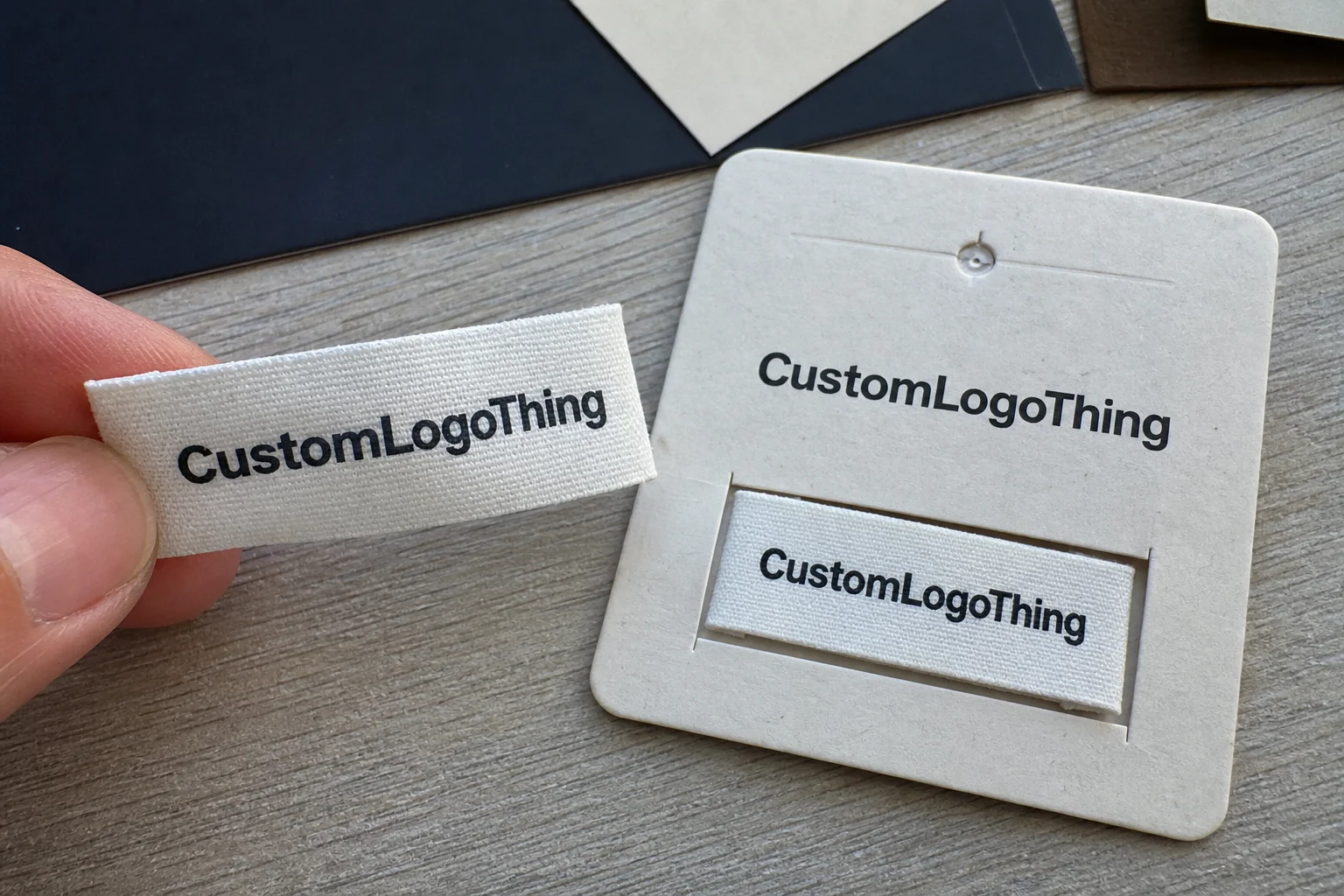
Custom Cotton Clothing Labels are small, but they influence how a garment feels, how it ages, and how polished the brand appears after the first wash. That sounds minor until you compare two nearly identical shirts and one of them feels scratchy at the neckline. The shirt may be the same weight, same cut, same fabric, yet the label changes the experience enough that a buyer remembers it.
Cotton labels are typically used for branding, size information, care instructions, and origin details. They show up on tees, babywear, loungewear, premium basics, and natural-fiber collections where the label should feel quiet rather than glossy. Cotton usually has a softer hand-feel than many synthetic label materials, which is why it gets chosen for comfort-first garments and brands that want a more natural presentation.
There is also a practical reason buyers keep coming back to cotton. It sits between several common label options in a useful way. Satin can look elegant but may feel slippery. Polyester Woven Labels are durable and common, though not always ideal for sensitive skin. Heat-transfer branding removes seam bulk, but it is a different application method and does not suit every garment or every production line. Cotton works best when the goal is sewn-in identification with a softer feel and a cleaner visual fit.
The tradeoff is straightforward: comfort, durability, print quality, and attachment method all have to be compatible with the garment. If one of those pieces is off, the label becomes noticeable for the wrong reason. Usually that means irritation, fading, or a design that looks acceptable on a proof and awkward on the actual garment.
How custom cotton clothing labels are made and attached
Orders usually follow a predictable path. Artwork setup comes first, then material selection, then printing or weaving, followed by cutting, folding, and attachment. The process sounds simple because it is simple in principle. The complications come from decisions made too late or specifications that were never clarified.
There is an important distinction to make before a quote is approved. Some buyers mean labels made from cotton fabric with printed text, while others are asking for woven labels that imitate a cotton feel or use cotton-blend construction. Printed cotton labels use fabric as the base and apply ink or transfer printing for branding and care details. Woven labels are made from threads and usually offer cleaner edges, stronger visual definition, and better long-term durability for simple artwork. Which one is right depends on the design, the garment, and how much detail has to fit in a very small area.
Attachment style matters just as much as the material. Common options include:
- Sew-in labels for standard garment branding and care information.
- Center-fold labels for placement inside neckline seams.
- End-fold labels for side seams or hems where a neater edge is preferred.
- Side-seam labels for a low-visibility location that still carries required details.
- Loop or hanging-style applications for certain retail presentations, though this is less common for everyday apparel labeling.
The garment itself should guide the choice. A heavyweight tee can handle a slightly larger label. Babywear usually needs the softest possible edge and the least bulk. Loungewear tends to need a label that sits flat and does not twist after repeated washing. Premium basics usually benefit from understated branding that looks built into the garment rather than added as an afterthought.
Wash performance deserves more attention than it gets. A label that puckers, fades, or frays after a few cycles quickly makes the whole product look less considered. For garments that will be laundered often, ask directly about colorfastness, shrinkage, and edge finishing. Some suppliers will reference internal testing or standards aligned with common apparel durability expectations. That information should be part of the ordering conversation, not something discovered after the first batch reaches customers.
Key factors that affect cost and unit price
Pricing is driven by a handful of variables, and none of them are mysterious. Label size, artwork complexity, quantity, number of colors, fold style, edge finishing, and attachment method all affect the quote. Bigger labels use more material. More colors increase setup work. Special folds and finishing add labor. Low quantities spread the fixed setup cost across fewer pieces, which is why small runs cost more per label.
MOQ stands for minimum order quantity. In practice, that means the factory needs enough volume to justify setup and production time. A sample run of 50 or 100 pieces will almost always cost more per unit than a production order of 5,000 or 10,000 pieces. That is normal economics, not a penalty.
For custom Cotton Clothing Labels, buyers often see pricing fall into rough bands like these:
| Order type | Typical quantity | Rough unit price | What you get |
|---|---|---|---|
| Sample run | 50–200 pcs | $0.40–$1.20 each | Proofing, material check, basic approval sample |
| Small batch | 500–2,000 pcs | $0.18–$0.45 each | Usable production quantity, better unit economics |
| Production order | 5,000+ pcs | $0.06–$0.18 each | Best pricing, standard setup efficiency, repeatability |
Those ranges move with label dimensions, print coverage, and whether the label is woven, printed, folded, or finished in a more specialized way. If a quote lands well outside that range, ask what is included. Sometimes the answer is straightforward, such as a rush timeline, extra finishing, or a higher-spec material. Sometimes the answer is simply that the quote was built on a different spec than the one you thought you were pricing.
Hidden costs are where buyers get frustrated. Custom folds, special dyes, rush production, shipping, and rework for artwork errors all affect the final number. Comparing suppliers only works if the specs are identical. A lower quote is not actually lower if it leaves out fold style, testing, or a finish you thought was standard.
It also helps to think beyond the label line item. A label that improves comfort and reduces customer complaints can be worth more than one that saves two cents per piece. The same logic applies across product packaging: the smallest detail can influence the perceived quality of the entire order. For broader packaging needs, see Custom Packaging Products and the label-focused options in Custom Labels & Tags.
Custom cotton clothing labels: process, timeline, and lead time
The ordering process should be predictable. A standard run usually goes like this: Request a Quote, submit artwork, confirm specifications, approve a proof or sample, move into production, complete quality control, and ship. The sequence is not complicated. The delays usually come from missing information, not from the production itself.
- Request a quote with size, quantity, fold style, and placement details.
- Send artwork files in vector format if possible. AI, EPS, or PDF is better than a screenshot or flattened social media graphic.
- Confirm specifications such as dimensions, material, color references, and wash requirements.
- Approve the proof or sample so production can begin.
- Production starts after approval.
- Quality control checks consistency, color, cutting, and finishing.
- Shipment goes out once the order is packed and cleared.
Turnaround times vary, but a common pattern is easy to recognize. Proofing often takes 1–3 business days if the artwork is clean and the spec sheet is complete. Production for standard orders is often 10–15 business days after approval. Shipping may add another 3–7 business days domestically, and longer for international freight. Rush orders can compress that timeline, but faster production usually increases the chance of compromises somewhere else, usually in cost and sometimes in finish.
Approval delays slow more orders than production ever does. Factory lead time and buyer response time are not the same thing, though they often get treated that way. If speed matters, have these details ready before asking for quotes:
- Logo files in vector format
- Exact label dimensions
- Fold style and placement
- Pantone references or color targets
- Quantity by SKU or size
- Any required care, fiber content, or origin text
For brands making sustainability or origin claims, verify the supporting documentation before anything is printed. Responsible sourcing and claims discipline matter more than most buyers expect, especially when packaging language, garment labels, and retail documents all need to agree. Useful references include the Forest Stewardship Council, the EPA sustainable materials page, and ISTA for transport testing context.
How to choose the right label specs for your garments
Good label selection starts with the garment, not the supplier’s catalog. Baby clothes need softness first. Activewear needs durability and wash resistance. Premium basics often want a flatter, quieter label that looks integrated with the product rather than pasted on.
Size matters more than buyers tend to expect. A label that is too small becomes hard to read. A label that is too large adds bulk and can irritate the wearer. In practice, many sewn-in apparel labels land around 1" x 2" to 1.5" x 3", but the right size depends on how much information you need and where the label will sit on the garment.
Fold style should match placement. Center-fold labels work well in neckline seams. End-fold labels are common on side seams or hems. Straight-cut labels can work in some applications, but they are not always the best choice for soft garments or areas that rub against the skin. A thin knit deserves a thin label. Otherwise the label becomes the feature nobody wanted.
Readability is another area where buyers often overcomplicate things. A tiny label is not a brochure. Clean fonts, enough contrast, and restrained text usually perform better than trying to fit too much onto a small surface. A dense paragraph of care instructions inside a one-inch label rarely helps anyone. The practical target is brand name, size, and the legally required information.
Compliance details should be checked before production, not after. Depending on the product and market, labels may need:
- Brand name
- Size
- Fiber content
- Care instructions
- Country of origin
That is also where garment labeling and packaging design start to overlap. A label should support the same visual language used on custom printed boxes, hang tags, and retail packaging. When those pieces look like they belong to the same brand system, the product feels more coherent before anyone even tries it on.
Common mistakes buyers make with cotton label orders
The first mistake is using a logo file that looks fine on a monitor and falls apart at label scale. Thin lines, tiny text, and elaborate gradients often lose clarity when the artwork is reduced to a 1-inch or 1.5-inch label. What looks sharp in packaging software can turn muddy once it is woven or printed at actual size. Simplifying early avoids a painful second round of proofing.
The second mistake is choosing the wrong fold or attachment style. A label that sits badly in a seam can twist, bulk up, or rub the skin. That problem shows up quickly on lightweight knits and babywear. If the label feels irritating, customers cut it off. Once that happens, the branding has failed at the one job it was meant to do.
The third mistake is ignoring wash durability. Some labels survive the first few wears and then begin to fade, shrink, or fray. That is not a small defect. It changes the way customers judge the garment itself. Ask whether wash testing has been done and whether edge finishing is appropriate for the fabric and seam location.
The fourth mistake is chasing the lowest quote without checking hand-feel. Saving a small amount per piece is a poor trade if the label makes the garment less comfortable. Buyers tend to understand that in packaging: cheaper does not always mean better value. Apparel labels deserve the same standard.
The fifth mistake is forgetting to confirm legal or retail labeling requirements before production starts. Missing fiber content or origin information can create reprints, delay fulfillment, and waste inventory. That kind of error is expensive because it usually surfaces after the labels are already in motion.
Expert tips for better results on your next order
If the brand is new, start with a sample or digital proof. That matters even more for premium garments or sensitive fabrics. A proof can reveal cramped text, weak contrast, or a fold that looks fine on paper but awkward once sewn into the actual garment.
Keep the first order narrow. One label size. One fold style. One placement. That gives you a clean baseline before you expand into variants. Too many versions too early makes production harder to manage and increases the chance of inventory mistakes. Someone eventually has to sort the labels, and that person is usually you.
Request swatches or material references if color accuracy matters. On labels, a shade that is technically close can still feel wrong when it is sewn onto a garment, especially if the brand already uses a controlled color system for packaging or retail materials. Consistency matters more than most buyers admit.
Match softness and durability to wash frequency. A baby bodysuit will be washed often and needs a different spec than a fashion tee worn occasionally. If the garment will be laundered a lot, choose a label construction that holds shape, resists fraying, and keeps its color through repeated cycles.
Plan reorder timing before stock gets low. Running out of labels in the middle of production slows fulfillment and leaves finished garments waiting on a small but critical component. That is how a simple delay turns into a shipping problem. A modest inventory buffer costs less than a rush reorder.
Next steps to order with fewer surprises
Before placing the order, do three things: choose the label style, confirm quantity, and prepare artwork plus specifications. That alone removes most of the friction buyers run into. If the supplier receives complete information up front, the quote is usually more accurate and the production schedule is easier to manage.
Build a short order brief. Include dimensions, fold type, placement, Pantone or color references, required text, and any notes about comfort or wash performance. If you are comparing quotes, make sure every vendor is pricing the same spec. A cheap quote that omits finishing, testing, or a necessary fold is not really a cheap quote. It is a different product.
Request a proof before approval and save the approved specification sheet for reorders. That one habit prevents a lot of expensive “why does this batch look different?” conversations. Reorders should match the first run unless you intentionally change something.
Custom cotton clothing labels work best when they are treated as part of the garment, not a decorative afterthought. Done well, they support comfort, branding, and trust in the same small rectangle. That is a modest piece of fabric carrying a surprising amount of responsibility.
What are custom cotton clothing labels best used for?
They work well for soft, natural-feel branding on apparel like tees, baby clothes, loungewear, and premium basics. They are a strong fit when comfort and a more organic look matter more than glossy finishes.
How much do cotton clothing labels usually cost per unit?
Unit cost depends on quantity, size, fold style, and artwork complexity. Small runs cost more per label, while larger production runs usually lower the per-piece price significantly.
What is the typical turnaround time for custom cotton labels?
Timeline usually includes proofing, production, and shipping, so approval speed matters a lot. Rush orders may be possible, but standard lead time is usually the safer plan for consistent quality.
Are cotton clothing labels durable enough for repeated washing?
Yes, if the material, print method, and finish are chosen correctly for the garment’s wash cycle. Ask about wash testing and edge finishing to reduce fraying, fading, or shrinkage.
What information should I put on custom cotton clothing labels?
At minimum, include brand name and size; many buyers also add care instructions, fiber content, and origin details. Keep the layout readable at label size so the information stays useful instead of becoming decorative clutter.


