Organic cotton clothing labels Bulk Order: Buy Smarter starts with a small detail that carries more weight than most production teams expect. A label affects hand-feel, brand perception, compliance, and sometimes the pace of an entire production schedule. Done well, a bulk order lowers unit cost, keeps spec drift under control, and reduces the chance of scrambling for a last-minute reprint.
Why bulk organic cotton labels make sense for apparel brands
Small labels are easy to underestimate because they are hidden inside a seam or tucked into the neck line. Buyers notice them anyway. They are one of the few parts of a garment that customers touch before they commit, and one of the first things they feel after the first wash.
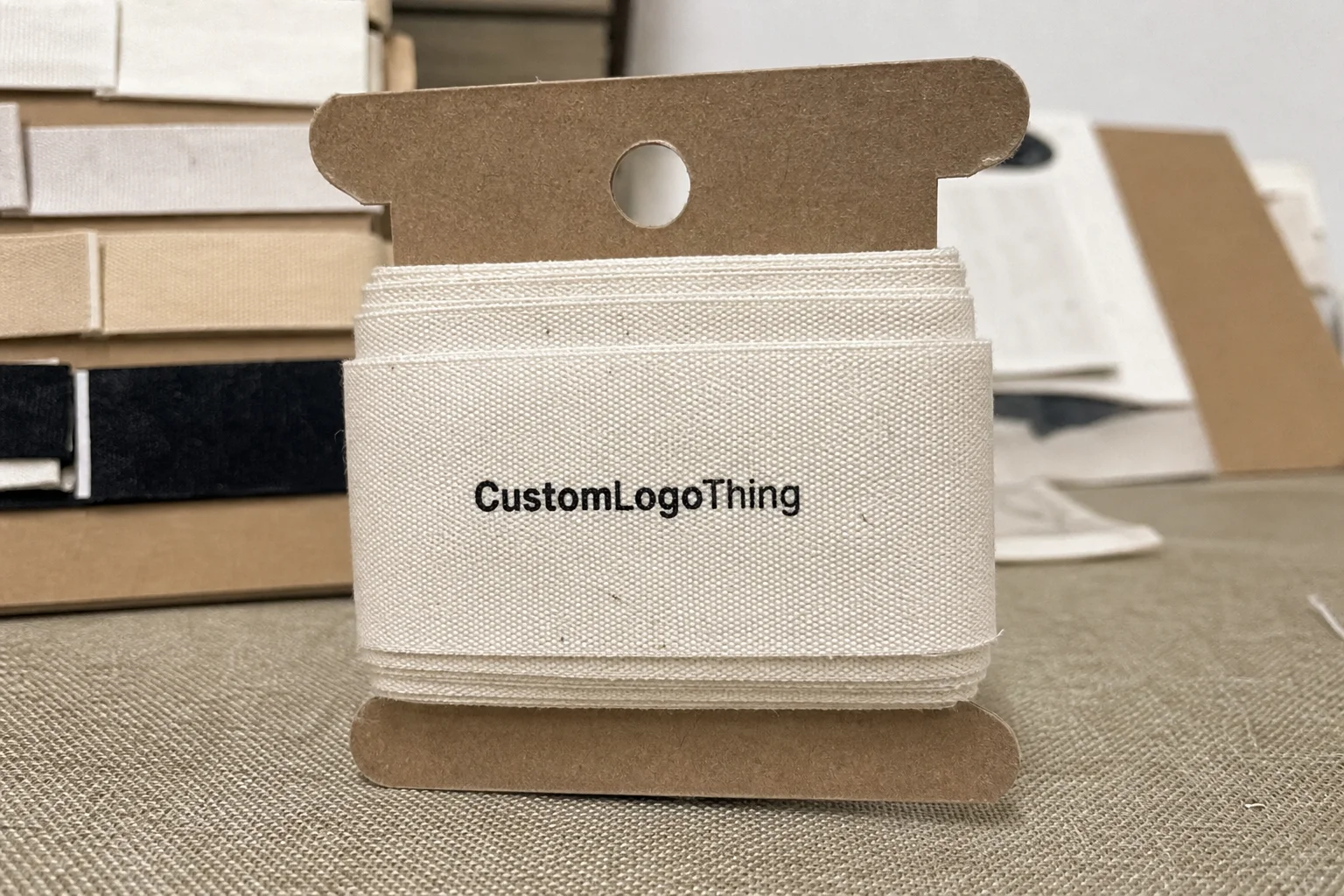
An organic cotton clothing Labels Bulk Order makes sense when the brand wants softness, consistency, and a cleaner material story. Organic cotton usually suits premium basics, childrenswear, loungewear, sleepwear, and eco-led collections because it feels less synthetic than coated or plastic-heavy alternatives. That tactile difference matters more on a T-shirt than it does on a hangtag.
There is also a plain commercial reason to buy in bulk: once the artwork is approved and the specs are locked, the per-unit cost typically improves as quantities rise. A run of 3,000 labels behaves very differently from a run of 300. Setup costs get spread out, waste is easier to absorb, and the supplier is less likely to treat the order as a one-off interruption.
For brands running multiple SKUs, bulk ordering helps keep label appearance uniform across colorways and restocks. The weave, print density, edge finish, and shade all need to match from season to season. A slight difference in white tone or a stiffer fold can make the label look like it belongs to a different product family, even if the logo is identical.
In practice, bulk organic cotton labels tend to work best on:
- T-shirts and heavyweight basics that need a soft neck or side-seam label.
- Childrenswear, where comfort against skin matters more than decorative finish.
- Loungewear and sleepwear, where rough edges trigger complaints quickly.
- Premium essentials that rely on texture to justify price.
- Collections that need a lower-impact label material to match the rest of the line.
The broader advantage is operational. Fewer urgent reorders. Fewer pauses while design and production argue over a spec change. Less risk that one style ships with a slightly different label than the rest of the line. That is why this is a procurement decision, not just an accessory purchase.
Organic cotton label styles, finishes, and attachment options
Label construction changes how a garment feels, how it wears, and how it reads at retail. Organic cotton can be used in several ways, and the structure you choose should match the product, not just the branding mood board.
The most common formats are woven labels, Printed Cotton Labels, and cut-and-sew styles. Woven labels are usually the best choice when the logo includes small text or fine line work. Printed labels are better when softness matters most and the artwork is simple. Cut-and-sew labels are useful when the label needs to carry more text, such as size, care instructions, and origin information on the same panel.
Fold style changes the way the label sits in the garment. The usual options are:
- End-fold for side seams and clean stitched edges.
- Center-fold for neck labels that need to hang neatly.
- Loop-fold when the label is meant to read as a visible brand tab.
- Flat cut for applications where the label is stitched on multiple edges.
Attachment method matters almost as much as format. A sew-in label is still the most durable choice. A seam label usually feels better against skin. A decorative tab can work for seasonal or limited runs, but it does not replace the function of a proper garment label.
The practical issue buyers often miss is edge behavior. A clean cut, stable fold, and accurate stitch placement determine whether the label stays flat after repeated laundering. If the edge frays or the fold springs open, the whole label looks cheaper than the artwork suggests. Thread color matters too. If the brand wants the label to disappear into the garment, a bright contrast thread can ruin that effect.
"If the label feels rough or flimsy, customers remember that faster than the logo."
For teams comparing formats, a physical sample is the safest checkpoint before placing an Organic Cotton Clothing Labels bulk order. A digital proof can confirm text and layout. It cannot fully predict stiffness, fold memory, or how the cotton sits against skin.
Material specifications, sizing, and compliance details
Specs are where label orders succeed or fail. Buyers usually compare fabric weight, dimensions, weave density, print resolution, edge finish, and the amount of detail the artwork can actually carry. A logo that looks clean on screen can become unreadable once it is reduced to a small neck mark or squeezed into a narrow seam allowance.
For neck labels, finished widths often sit around 40 to 60 mm, depending on the fold style and how much copy needs to fit. Side-seam labels and care labels may run longer, especially when they include size information and washing symbols. There is no universal standard. The right size is the one that fits the garment, the seam allowance, and the amount of information the buyer has to include.
Compliance should be planned before approval, not after. Many programs require some combination of:
- Fiber content statement.
- Care instructions.
- Size marker.
- Country of origin.
- Brand name or registered mark.
If the label includes an organic claim, the paperwork has to support it. Organic cotton alone does not automatically satisfy every retail or wholesale program. Some buyers will ask for certification references, supplier declarations, or documentation linked to GOTS or OCS standards. That is normal. The mistake is waiting until after artwork approval to clarify the claim.
Material quality is not just a marketing point. Cotton yarn quality, weave tightness, and finishing all affect how the label feels and how it survives wash cycles. A looser weave can look more natural, but it may also blur fine text. A tighter weave gives sharper detail, but it can feel stiffer if the finishing is heavy.
For shipping and packaging validation, the wider supply chain matters too. If the same order includes hangtags, cartons, or retail inserts, [ISTA](https://ista.org) test procedures are a useful reference for transit risk. If the order includes paper-based components with sustainability claims, [FSC](https://fsc.org/en) documentation may also be relevant.
A clean spec sheet should lock in:
- Exact finished dimensions.
- Fold orientation.
- Artwork file format.
- Pantone or approved color references.
- Stitch position and seam allowance.
That level of detail saves time later. It also keeps the labels from drifting between sample approval and mass production. If one side is trimmed 2 mm shorter than the other, or the fold is reversed in a reorder, the mistake is small on paper and obvious in the garment.
Organic cotton clothing labels bulk order pricing, MOQ, and unit cost
The economics of an organic cottOn Clothing Labels bulk order depend on five variables: label size, print complexity, fold style, finishing method, and quantity. A single-color printed cotton label will price very differently from a multi-color folded label with fine text and custom finishing.
Minimum order quantities usually start around 500 to 1,000 pieces per SKU for simpler programs. Better pricing often appears around 3,000 pieces, and the strongest unit-cost advantage usually shows at 5,000 or more. That is not a fixed rule, but it is the pattern most buyers see once setup and proofing are spread over larger volumes.
Use the table below as a practical buying reference, not a promise. Actual pricing shifts with artwork complexity, print coverage, shipment method, and whether the supplier includes setup in the quote.
| Label option | Typical MOQ | Indicative unit price | Best fit | Main tradeoff |
|---|---|---|---|---|
| Printed cotton label, one color | 500 to 1,000 | $0.06 to $0.14 | Simple branding, basic care or size info | Less detail depth than woven construction |
| Folded woven or printed label | 1,000 to 3,000 | $0.10 to $0.24 | Neck labels, side-seam labels, premium basics | More setup and proofing discipline required |
| Multi-color cut-and-sew label | 3,000 to 5,000+ | $0.18 to $0.38+ | Brands needing more text, icons, or layered identity | Higher cost, longer production window |
| Custom finish with special folding | 5,000+ | $0.22 to $0.45+ | Collections with exact presentation standards | Only worth it if the finish is actually needed |
Ask for a quote that separates the major cost drivers. You want unit price, setup or plate fees, sample fees, freight terms, and whether artwork revisions are included. In smaller programs, setup fees often sit somewhere around $25 to $100. On larger volumes, some suppliers roll that cost into the unit rate.
A slightly higher quote is not always more expensive overall. If the lower bid brings inconsistent sizing, extra rejects, or a reprint risk, the landed cost climbs fast. Procurement teams should ask for tiered pricing so the decision is based on forecasted demand rather than a single speculative volume.
There is also a tradeoff between customization and efficiency. Once the label has multiple colors, complex folds, or unusually fine typography, the process becomes more sensitive to waste and production tolerances. That does not make the order bad. It just means the buyer should expect less room for error and a longer approval cycle.
For brands building a seasonal line, the useful question is not which label is cheapest on paper. It is which label gives the lowest total cost across production, handling, and reorders. That is where an organic Cotton Clothing Labels Bulk order starts to pay back.
Production steps, proofing, and timeline from artwork to delivery
Label orders usually move through the same chain: inquiry, specs collection, artwork submission, digital proof, approval, manufacturing, finishing, and shipment. The process sounds straightforward. The delays almost always come from weak inputs rather than from the production line itself.
Low-resolution logos slow things down. So do missing care symbols, inconsistent color references, and late changes after proof approval. If a buyer sends a blurry file and then asks for a sharper logo, the artwork has to be rebuilt. That costs time and can create a mismatch between the proof and the finished labels.
Simple orders can sometimes move through proof and production in 10 to 15 business days after approval. More complex builds, especially those with multiple colors, folding, or custom finishing, often need longer. First-time buyers should plan buffer time. Launch calendars rarely reward optimism.
Use this checklist before approval:
- Confirm finished size and fold type.
- Check logo placement and copy hierarchy.
- Verify color references against approved brand standards.
- Review all compliance text for spelling and legibility.
- Confirm quantity, shipment address, and target delivery window.
A sample or digital mockup is worth the time. It is much cheaper to correct a label on screen than after hundreds or thousands of pieces are already in motion. For an organic cotton clothing labels bulk order, proofing is not administrative overhead; it is the main control point.
If the labels are part of a broader launch that includes cartons or retail-ready packs, shipping timing should be checked against transit expectations and receiving constraints. A supplier can make the label quickly. That still does not help if the garment production window has already closed.
How bulk label manufacturing supports repeat orders
A repeatable order works best when the supplier treats it like an ongoing spec, not a fresh design brief every time. Stable measurements, documented color references, and retained order history all help keep reorders aligned across seasons and style updates.
That matters for brands selling through wholesale, DTC, and retail at the same time. One label error can ripple through purchase orders, warehouse intake, and customer-facing garments. The brands that scale cleanly usually have a supplier that can reproduce the same label without re-litigating the whole file on every reorder.
Operational reliability shows up in small but telling ways:
- Clear quote breakdowns.
- Fast response on proof revisions.
- Consistent sizing across repeat runs.
- Pre-shipment quality checks on print and finish.
- Order history that reduces rework on future buys.
It also helps when the supplier keeps the spec record organized enough to avoid version confusion. If the label is reordered six months later, the buyer should not have to rebuild the sizing and stitch notes from scratch. That is where a disciplined wholesale structure matters, especially for brands that place labels alongside other sourcing items through Wholesale Programs.
The best supplier is the one that makes the second order easier than the first. That is the test. If the file, quote, and production notes are all in one place, the label stops being a loose admin task and becomes part of the production system.
Next steps to place your bulk label order
If you are Ready to Place an organic cotton clothing labels bulk order, start with the facts. Gather the logo file, label dimensions, placement, quantity estimate, required copy, and any compliance text before you request pricing. That cuts down on back-and-forth and makes quotes easier to compare.
Then ask for a formal proposal with tiered quantities, lead time, proofing terms, and shipping assumptions. A clear quote should let you compare suppliers side by side without decoding vague language. If a supplier cannot give you a clean unit cost and a realistic production window, the quote is not ready for approval.
For labels that sit against skin, or for programs that include regulated information, request a sample or at least a digital mockup before full production. A physical check catches stiffness, edge feel, and fold behavior that a screen cannot show. It also gives design, production, and merchandising one shared reference.
Use the product page for Custom Labels & Tags to review formats and request a closer spec match. If you are comparing options across multiple departments, the FAQ page can clear up common questions before you submit files.
Then compare specs, pricing, and MOQ side by side. If the proof matches the garment plan, the lead time is workable, and the landed cost fits the margin, place the order. A disciplined label buy is one of the simplest ways to improve consistency without adding visible complexity to the product.
What is the minimum order for an organic cotton clothing labels bulk order?
MOQ depends on label style, print method, and finish. Many suppliers start around 500 to 1,000 pieces per SKU, but the more useful answer is a tiered quote that shows how unit cost changes as quantity rises. That tells you whether your forecast actually fits the pricing model.
How long does a bulk organic cotton label order usually take?
Lead time depends on artwork readiness, proof approval speed, and production complexity. Simple labels can often ship in about 10 to 15 business days after approval, while more detailed folded or multi-color programs can take longer. Add buffer time if the order is tied to a launch or a retailer deadline.
Can I include care instructions and size info on organic cotton labels?
Yes. Many buyers combine branding with care and size information on the same label. The key is legibility. If the label is small, keep the copy hierarchy clean and confirm that the final layout still meets any retailer or compliance requirements before production starts.
What affects the price per label the most?
Size, number of print colors, fold style, finishing method, and order quantity are the main drivers. Setup fees and freight can also affect landed cost, so review the full quote instead of focusing only on the unit rate.
Should I request a sample before placing a bulk order?
Yes, especially if the label will be worn against skin or needs exact color matching. A sample or mockup confirms texture, dimensions, and placement before full production starts, which is much cheaper than correcting a bad run later.