Buyer Fit Snapshot
| Best fit | custom countertop display boxes options compared for packaging buyers comparing material specs, print proof, MOQ, unit cost, freight, and repeat-order risk where brand print, material, artwork control, and repeat-order consistency matter. |
|---|---|
| Quote inputs | Share finished size, material target, print colors, finish, packing count, annual reorder estimate, and delivery region. |
| Proofing check | Approve dieline scale, logo placement, barcode or warning zones, color tolerance, and any recyclable or compostable wording before bulk production. |
| Main risk | Vague material claims, crowded artwork, or missing packing details can create delays even when the unit price looks attractive. |
Fast answer: Custom Countertop Display Boxes Options Compared: Dieline, Finish, Proof, and Buyer Review should be specified like a repeatable production item. The safest quote includes material, print method, finish, artwork proof, carton packing, and reorder notes in one written spec.
What to confirm before approving the packaging proof
Check the product dimensions against the actual filled item, not only the sales mockup. Ask for tolerance on folds, seals, hang holes, label areas, and retail display edges. If the package carries a logo, QR code, warning copy, or legal claim, reserve that space before decorative graphics fill the panel.
How to compare quotes without losing quality
Compare board or film grade, print process, finish, sampling route, tooling charges, carton quantity, and freight assumptions side by side. A lower quote is only useful if the supplier can repeat the same color, closure quality, and packing count on the next order.
Custom Countertop Display Boxes: Best Options Compared
The smallest display often wins at checkout, and custom countertop display boxes prove it over and over. A unit that sits at eye level, frames the product cleanly, and survives a week of real handling usually outsells a larger, flashier piece that crowds the counter and slows staff down.
That is the test that matters. Not the mockup. Not the render. Not the sample staged on a spotless table under perfect light. The real question is whether custom countertop display boxes make a product easier to notice, easier to grab, and easier to restock in a busy retail setting. For impulse snacks, lip balms, sample packets, supplements, travel accessories, and small electronics, that can matter more than a full shelf of branded packaging.
I am judging these displays the way a packaging buyer should: structure strength, print clarity, assembly speed, footprint, and whether the display actually helps the sale. Some custom countertop display boxes look excellent in proof and fail the moment they meet humidity, heavy product, or rushed replenishment. That gap is where most poor purchasing decisions begin, and I have seen a few brands learn it the hard way.
Custom Countertop Display Boxes: Quick Answer First
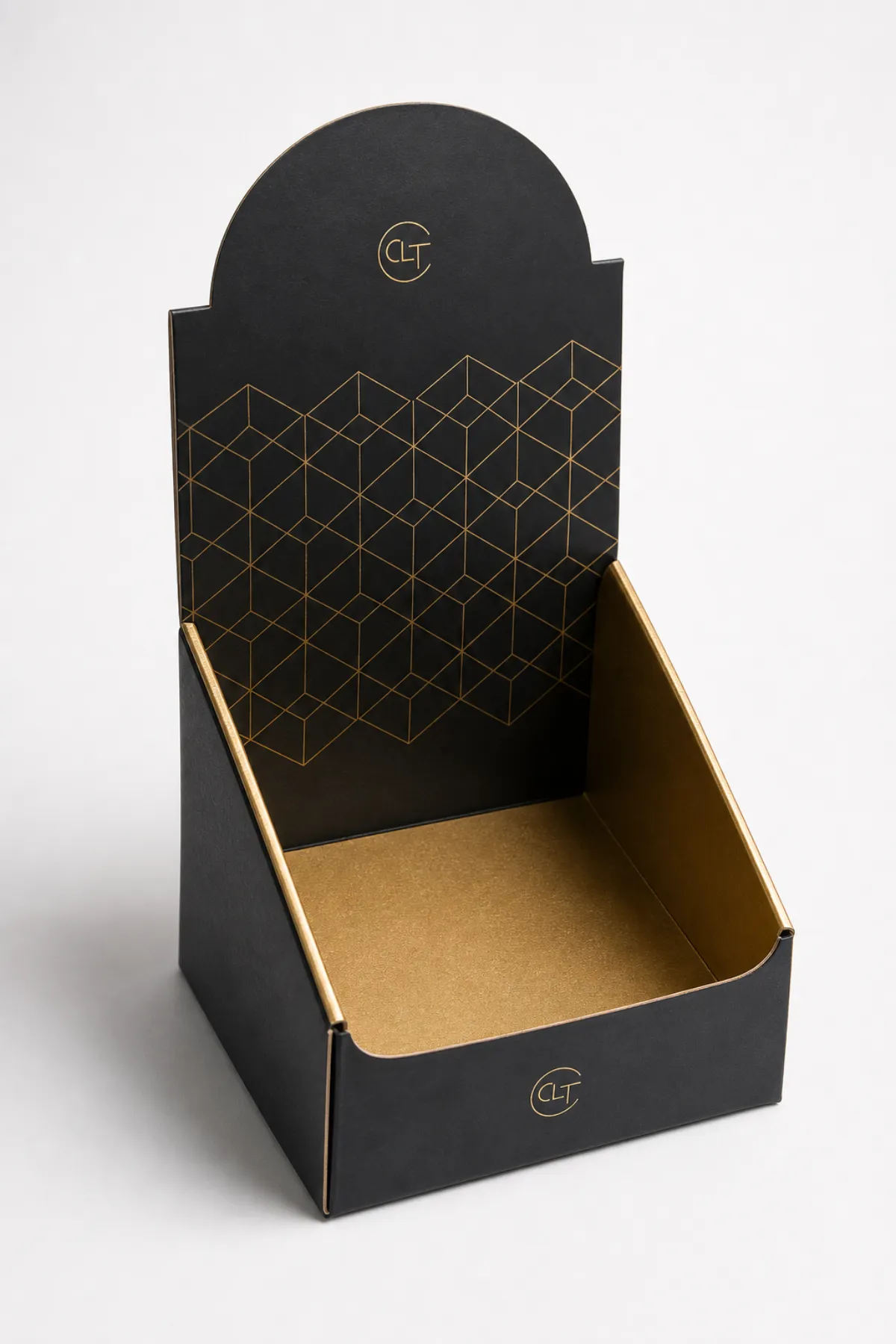
If you need the short version, custom countertop display boxes are compact retail packaging units designed to sit on a checkout counter, service desk, reception area, or shelf edge. Their job is to catch impulse purchases, hold small packaged products neatly, and keep a brand visible when shoppers are already close enough to touch the item.
They work best when the product is light to medium weight, the package size is consistent, and the promotion period has a clear start and finish. That includes sample runs, seasonal items, launch bundles, and fast-moving SKUs that need more lift than plain trays or generic cartons provide. A well-built display also changes how the brand is read, because it turns the counter into a small sales stage.
Here is the part many buyers miss: the best custom countertop display boxes are not always the most dramatic ones. A design with a clean open front, a sensible slot depth, and a strong tuck or auto-lock base often performs better than a decorative shape that steals space and bends under load. If the goal is impulse sales, practicality beats theater more often than people admit.
I also think buyers should be honest about the environment. A display that looks polished in a climate-controlled office may scuff badly in a convenience store, slump near a hot beverage machine, or get crushed during restocking. That is why I treat custom countertop display boxes as both a merchandising tool and a packaging design decision, not just a print project. If the counter is cramped, the prettiest version is kind of useless.
"A display that looks impressive in a render but tips over with six products in it is a marketing expense, not a sales tool."
Before You Order, check four things: whether the board matches the product weight, whether the footprint fits the counter, whether the print finish can handle fingerprints and abrasion, and whether staff can refill the unit in under a minute. Those four points tell you more than a polished sales sheet ever will.
Top Custom Countertop Display Boxes Compared
There are four common structures in custom countertop display boxes, and each one solves a different problem. Some are better for low-cost promotions. Some are better for premium product launches. Some are simply easier to ship flat and assemble quickly. The wrong choice can raise freight, add labor, or make the product look smaller than it is.
The main comparison is not about style alone. It is about how the structure behaves under real retail pressure: how much weight it holds, how straight the print panel stays, how visible the product remains, and how easy it is for store staff to keep it full. That is the point where retail packaging either earns its keep or turns into clutter.
| Format | Best Use | Strength | Print Quality | Restock Speed | Typical Cost Profile |
|---|---|---|---|---|---|
| Open-front display box | Impulse items, samples, small cartons | Good for light-to-medium loads | Excellent on SBS or laminated board | Fast | Usually the lowest-cost custom option |
| Counter tray | Mixed SKUs, grab-and-go items | Moderate; depends on board thickness | Good, especially with full-bleed graphics | Fast to moderate | Often efficient for mid-sized runs |
| Auto-lock display | Heavier products, multi-store promotions | Strong base, better load stability | Very good | Moderate | Higher unit cost, lower failure risk |
| Header-style unit | Premium branding, promotional launches | Depends on insert and board choice | Strong visual impact | Moderate | Higher due to extra structure and print area |
Material choice changes the feel immediately. SBS paperboard usually gives the sharpest print detail and is a strong fit for cosmetics or small retail items. Corrugated board, especially E-flute, makes more sense when you need more crush resistance or a display that can survive shipping better. Premium laminated board, or even rigid board for some promotional builds, adds presence but also adds cost and freight weight.
Three design features alter performance more than most teams expect:
- Slot depth controls how much of the product face stays visible. Too deep and the item disappears.
- Product angle changes how fast a shopper notices the pack under store lighting.
- Front cutout design affects refill speed and whether the display stays tidy after several pulls.
From a packaging buyer’s point of view, the smartest way to compare custom countertop display boxes is to ask one question: which option keeps the product easy to buy without demanding too much counter space? The display that ships cheapest is not always the cheapest choice overall if it takes longer to assemble, damages product, or underperforms on the shelf.
One more practical point. Harsh retail lighting exposes everything. A glossy box can look vivid, but it can also glare. A matte or soft-touch finish feels more premium, yet it may show scuffing faster if the display gets handled often. That trade-off matters more in Custom Packaging Products built for high-touch retail environments than it does in a studio mockup.
Detailed Reviews of Custom Countertop Display Boxes
Let me be direct: not every attractive structure deserves a production run. Some custom countertop display boxes look elegant from the front and awkward from every other angle. Others are plain, but they hold more units, assemble faster, and stay upright after the fifth refill. That is usually the smarter buy.
Open-Front Display Boxes
Open-front units are the easiest to understand and often the easiest to use. They let the product face the shopper directly, which is exactly what you want for small cartons, sachets, lip care, gum, or travel-size product packaging. The front opening improves visibility, and the flat front panel gives your brand plenty of room for package branding.
In testing terms, these are the displays that tend to hold up best when the product is light and the counter is busy. They do not ask store staff to do much. They are usually the first choice when speed matters and the SKU count is simple. If the board is at least 16pt SBS or a comparable corrugated grade, they can feel surprisingly steady for their size.
Counter Trays
Counter trays are more flexible. They are good when the assortment changes often or when you need to ship different pack counts to different locations. The downside is that a tray can look generic if the print system is weak. If the graphics do not wrap properly, the whole thing reads like a carton, not a branded retail piece.
For custom countertop display boxes, trays are the option I reach for when merchandising efficiency matters more than drama. They work well with inserts and partitions, which helps for mixed products or fragile items. They are also a sensible fit if the brand wants to test demand before committing to a more complex structure. I have watched simple trays outperform fancier builds because the staff could refill them without thinking twice.
Auto-Lock Displays
Auto-lock bases are underrated. The assembly savings are real, especially for larger rollouts. A store associate can often pop one open in seconds, and that matters if the display arrives in volume. These units are a strong fit for multi-store retail packaging programs where labor costs and speed need to stay under control.
They are not perfect. Because the locking system adds folds and stress points, poor board choice can create bowing if the product is heavy or the display sits too long near heat. Still, when the board spec is right and the dieline is well engineered, auto-lock custom countertop display boxes are among the most dependable options.
Header-Style Units
Header-style displays are the most branding-forward of the group. They give you a larger surface for logo placement, a stronger silhouette, and more room for promotional messaging. They are useful for launches, seasonal campaigns, and branded packaging that needs to be noticed from a few feet away.
The trade-off is space and complexity. A taller header can dominate the counter, and a poor design can make the product feel secondary. That is not always bad. Sometimes the job is simply to stop the shopper long enough to read the offer. But if your product is already visually strong, the header should support it, not compete with it.
"The best display is usually the one that disappears just enough for the product to take the credit."
For print, I prefer to judge by three things: color accuracy, edge registration, and finish integrity. A good proof can still lose something in production if the ink density is too heavy or the laminate is poorly matched. If you are ordering custom countertop display boxes with full-bleed artwork, ask for a physical sample or at least a hard proof when the order size justifies it.
And yes, the little details matter. Glue lines show on some structures. Corners crush more easily on others. A tight-fitting insert can protect the product, but it can also slow assembly if the tolerances are off by even a few millimeters. That is why a merchandiser’s review and a printer’s review should not be treated as the same thing. The printer can make it look right; the merchandiser has to make it work in a store.
Cost, Pricing, and MOQ for Custom Countertop Display Boxes
Pricing for custom countertop display boxes is driven by a handful of variables, and the biggest mistake buyers make is asking for one “best price” without controlling the specification. Board type, print coverage, finishing, quantity, inserts, and die-cut complexity all change the number. So does whether the display ships flat, pre-glued, or pre-assembled.
A useful way to think about pricing is by range instead of fantasy precision. A simple short-run display with basic 4-color print can land at a very different unit cost than a premium laminated unit with a complex shape. For larger orders, the per-unit price drops sharply, but tooling and setup still need to be recovered somewhere. That is why a quote should always show the setup logic, not just the headline total.
| Specification Level | Typical Quantity Range | Common Materials | Price Direction | Buyer Takeaway |
|---|---|---|---|---|
| Basic promotional display | 250 to 1,000 units | Light SBS or E-flute corrugated | Higher unit cost | Good for testing demand or limited campaigns |
| Mid-run retail display | 1,000 to 5,000 units | SBS, corrugated, or laminated board | Balanced unit cost | Often the best value for recurring programs |
| Large rollout display | 5,000+ units | Board choice depends on ship distance and load | Lower unit cost | Best when artwork is locked and the structure is proven |
Realistic unit pricing can vary widely, but a buyer should expect a simple custom countertop display box to cost less than a premium display with inserts, lamination, and specialty finishing. In many programs, print coverage and board weight matter more than the logo itself. That sounds obvious, yet people still quote jobs as if design complexity has no effect.
MOQ is equally variable. Some suppliers can handle low runs if the structure is standard and the print method is suitable. Others require higher quantities because setup time, die cutting, and finishing make small orders uneconomical. A fully custom dieline almost always raises the threshold compared with a standard tray format.
Here is the pricing checklist I would use before approving custom countertop display boxes:
- Ask for separate pricing on board, print, finishing, assembly, and shipping.
- Confirm whether sample fees are credited back on production.
- Check if tooling or die charges are one-time or recurring.
- Request a flat-pack carton estimate if the display is shipping to multiple stores.
- Verify whether inner supports, dividers, or product inserts are included.
If the supplier cannot explain the cost breakpoints clearly, treat that as a warning sign. Honest pricing should tell you why one version of custom countertop display boxes is cheaper than another. If it does not, you are not comparing options; you are guessing. And guessing is an expensive way to buy packaging.
One comparison worth making is how the display influences total product packaging cost. A slightly more expensive display that reduces damage, speeds restocking, and improves pickup can still pay for itself faster than a cheaper unit that underperforms. That is especially true for launch promotions where the first 2,000 impressions carry disproportionate weight.
Process, Timeline, and Turnaround for Custom Countertop Display Boxes
The production path for custom countertop display boxes is straightforward on paper and messy in real life if the brief is incomplete. The cleanest projects move through brief, dieline, artwork proof, sample or prototype, approval, printing, finishing, conversion, and shipping. If any one of those steps gets reopened, the schedule stretches fast.
In a normal job, the first bottleneck is the dieline. If the product dimensions are not exact, the structure may be too tight, too loose, or too shallow. That is why I always want product measurements, pack count, and counter footprint before final artwork. A display should be designed around the product, not the other way around.
Typical lead times vary, but a practical range after proof approval is often 12 to 15 business days for many standard jobs, with longer timelines for complex finishing or heavy custom tooling. That is not a promise. It is a realistic planning window. If you need custom countertop display boxes for a launch tied to an in-store date, build slack into the calendar early. You do not want to be the person explaining a late display to a retail buyer.
Quality checks matter just as much as speed. For multi-location rollouts, transit testing based on ISTA profiles is worth discussing, especially if the displays will ship flat and be assembled on site. If the brand has sustainability requirements, board sourcing can be aligned with FSC-certified materials. Those standards do not guarantee a perfect display, but they help frame the purchase in a more disciplined way.
The most common delays I see are boring, which is exactly why they are common:
- Artwork is not final when the quote is approved.
- The structure changes after sample review.
- Color approval takes longer than expected.
- A coating or laminate is chosen too late in the process.
- The client discovers the counter footprint is smaller than the artwork assumed.
Here is the practical fix: give the printer a complete brief up front. That means dimensions, target board weight, pack count, preferred finish, shipping method, and a clear note on whether the display must arrive pre-glued. The more complete the information, the less likely it is that custom countertop display boxes turn into a back-and-forth exercise.
One more thing. Ask how the display will be packed for shipment. A clever structure that arrives crushed in transit is a bad structure. Flat-pack efficiency, carton strength, and pallet patterning are not glamorous topics, but they decide whether the final result looks professional or tired before it even reaches the store. I have seen one weak shipper erase the benefit of a very good design.
How to Choose the Right Custom Countertop Display Boxes
The right choice depends on product weight, package size, traffic level, and how long the promotion has to last. A display for lightweight sample sachets should not be spec’d like a display for protein bars or small electronics. That sounds obvious until the buyer is pushed to choose one structure for several product sizes. Then the problems begin.
Start with the product, not the graphics. Measure the footprint of the packaged item, then add only the clearance needed for easy loading and clean removal. Oversized custom countertop display boxes waste counter space and make the product look undersized. Undersized ones pinch the pack, buckle under load, or frustrate staff during replenishment.
Then look at the store environment. A pharmacy counter is not a convenience store counter. A cosmetics boutique is not a warehouse checkout. Humidity, handling frequency, lighting, and shopper dwell time all influence the best board and finish. For heavier or more exposed retail packaging, a stronger substrate and a scuff-resistant coating are worth the extra spend.
Use this decision tree:
- Light product, short promotion: open-front or counter tray.
- Medium product, recurring rollout: auto-lock display with solid board stock.
- Premium launch: header-style unit with refined print and finish.
- Fragile or mixed SKU assortment: tray plus insert or partition system.
Product category matters too. Cosmetics often benefit from soft-touch lamination or spot UV because tactile feel supports package branding. Snacks usually need bold shelf readability and easy refill access. Supplements need a structure that keeps labels visible and does not look medicinal in the wrong way. Small electronics need a display that looks precise, not playful. Each one asks for different custom countertop display boxes even if the footprint is similar.
Window placement is worth studying. A die-cut window can help the shopper see the actual product, which is useful when color or material finish is selling the item. But windows also weaken structure and reduce print area. If the package itself already carries strong branding, an open-front display may do the job better than a cutout-heavy design.
Honestly, the biggest mistake I see is buying the fanciest-looking display instead of the one that fits the volume and restocking plan. A display that holds 18 pieces but sells through 60 units a week is not elegant; it is understaffed. For that reason, I would rather see a simpler custom countertop display box that stays neat and full than a sculpted piece that empties by noon.
If you need to keep the process practical, pair the display decision with the rest of your custom printed boxes strategy. A counter unit should feel like part of the same product packaging system, not a one-off experiment that clashes with everything else on the shelf or at checkout.
Our Recommendation: What to Do Before You Order
If I were narrowing this down for a packaging buyer, I would not start with color. I would start with use case. For low-cost, high-volume promotions, an open-front or counter tray format is usually the safest bet. For premium launches, a cleaner header unit or refined auto-lock display makes more sense. For fragile or heavier products, choose the structure that resists crush and stays square after shipping.
That is the honest answer. Custom countertop display boxes are not interchangeable, and the wrong one costs more than the quote suggests. It costs shelf time, staff time, and sometimes credibility with the retailer. A box that looks expensive but behaves badly is a weak investment.
Before you place the order, do these four things:
- Shortlist two structures and request samples or prototypes.
- Confirm the exact product dimensions with the retail team.
- Review the assembly time and refill method.
- Compare quotes line by line, including freight and packing.
If the display is going into multiple stores, ask how it arrives and how much labor it needs on the floor. If the display ships flat, ask whether the fold sequence is intuitive or if the retailer will need instructions. If the box uses premium finishing, ask whether fingerprints, scuffs, or edge wear will show after a few days. These are not minor details. They decide whether custom countertop display boxes stay attractive after real use.
I also recommend checking the flat-pack size against pallet efficiency. A design that nests poorly can raise freight enough to erase any savings from a cheaper board. That is a packaging buyer problem, not just a logistics problem. The smartest branded packaging programs treat the display as part of the full supply chain.
My final take is simple: choose the structure that is easiest to restock, easiest to ship, and hardest to damage. If the product is light and the campaign is short, keep it clean and economical. If the product is premium, protect the perception with better board, better finishing, and a tighter structure. Either way, the best custom countertop display boxes are the ones that make buying easier without drawing attention to themselves for the wrong reasons.
The practical takeaway is this: order the sample, load it with the actual product, leave it on a counter-height surface for a day, and make one person restock it without instructions. If it stays upright, reads clearly, and can be refilled without a small wrestling match, you have the right design. If it fails any of those tests, adjust the board, the depth, or the base before you spend money on a full run.
Frequently Asked Questions
What size should custom countertop display boxes be for small products?
Measure the product footprint first, then add only enough clearance for easy loading. Oversized custom countertop display boxes waste counter space and usually look less intentional, while tight sizing can slow restocking and damage packs.
Which material is best for custom countertop display boxes in busy retail settings?
Choose a sturdier board and a finish that resists scuffing if the display will be handled often, sit near moisture, or stay on shelf for a long promotion. For many busy stores, that means stronger SBS, E-flute corrugated, or a laminated build depending on the load.
How much do custom countertop display boxes usually cost per unit?
Unit cost depends mostly on quantity, board weight, print coverage, and finishing, so ask for a full quote instead of comparing only the headline price. A basic display in a larger run will usually cost far less per unit than a premium version with inserts or specialty coating.
What is the usual MOQ for custom countertop display boxes?
MOQ varies by supplier and structure, but it is often lower for standard formats and higher for fully Custom Die Cuts or premium finishing. If you want a short-run test, ask whether the printer offers digital or hybrid options before committing to a larger production batch.
How long does the process take for custom countertop display boxes?
Expect time for dieline approval, proofing, and production; the fastest jobs are the ones where artwork, dimensions, and pack counts are finalized before quoting. Many projects move in about 12 to 15 business days after approval, but complex finishing or rework can extend that.

