Buyer Fit Snapshot
| Best fit | Custom Die Cut Stickers Wholesale projects where brand print, material claims, artwork control, MOQ, and repeat-order consistency need to be specified before quoting. |
|---|---|
| Quote inputs | Share finished size, material target, print colors, finish, packing count, annual reorder estimate, ship-to region, and any compliance wording. |
| Proofing check | Approve dieline scale, logo placement, barcode or warning zones, color tolerance, closure strength, and carton packing before bulk production. |
| Main risk | Vague material claims, crowded artwork, missing packing details, or unclear freight terms can make a low unit price expensive after revisions. |
Fast answer: Custom Die Cut Stickers Wholesale: Pricing & Turnaround should be specified like a repeatable production item. The safest quote records material, print method, finish, artwork proof, packing count, and reorder notes in one written spec.
Production checks before approval
Compare the actual filled-product size with the drawing, then confirm tolerance on folds, seals, hang holes, label areas, and retail display edges. Reserve space for logos, QR codes, warning copy, and material claims before decorative graphics fill the panel.
Quote comparison points
Review material grade, print process, finish, sampling route, tooling charges, carton quantity, and freight assumptions side by side. A quote is only useful when the supplier can repeat the same color, closure quality, and packing count on the next order.
Custom Die Cut stickers wholesale does more than mark a box. Put one across the seam of a plain corrugated mailer and the package stops feeling like generic shipping material the second it leaves the packing table. The brand shows up before the customer opens anything, which is a big reason this format keeps showing up in product packaging, retail packaging, and everyday package branding.
For a lot of teams, the appeal is practical, not flashy. Custom Die Cut Stickers wholesale brings the unit cost down, keeps the shape and color consistent across reorders, and removes one more variable from the packaging schedule. The same artwork can move across mailers, inserts, custom printed boxes, and retail cartons without being rebuilt every time. That kind of repeatability matters when the calendar is packed and the launch date is not gonna move.
The real test is not whether the sticker looks nice in a mockup. It is whether it applies cleanly, keeps its edge, and still looks deliberate after a shipping route full of scuffs, pressure, and hands that do not care about brand guidelines. I have seen beautiful sticker concepts fall apart because the adhesive was chosen for a photo, not for a warehouse.
Why custom die cut stickers wholesale work so well on real packaging
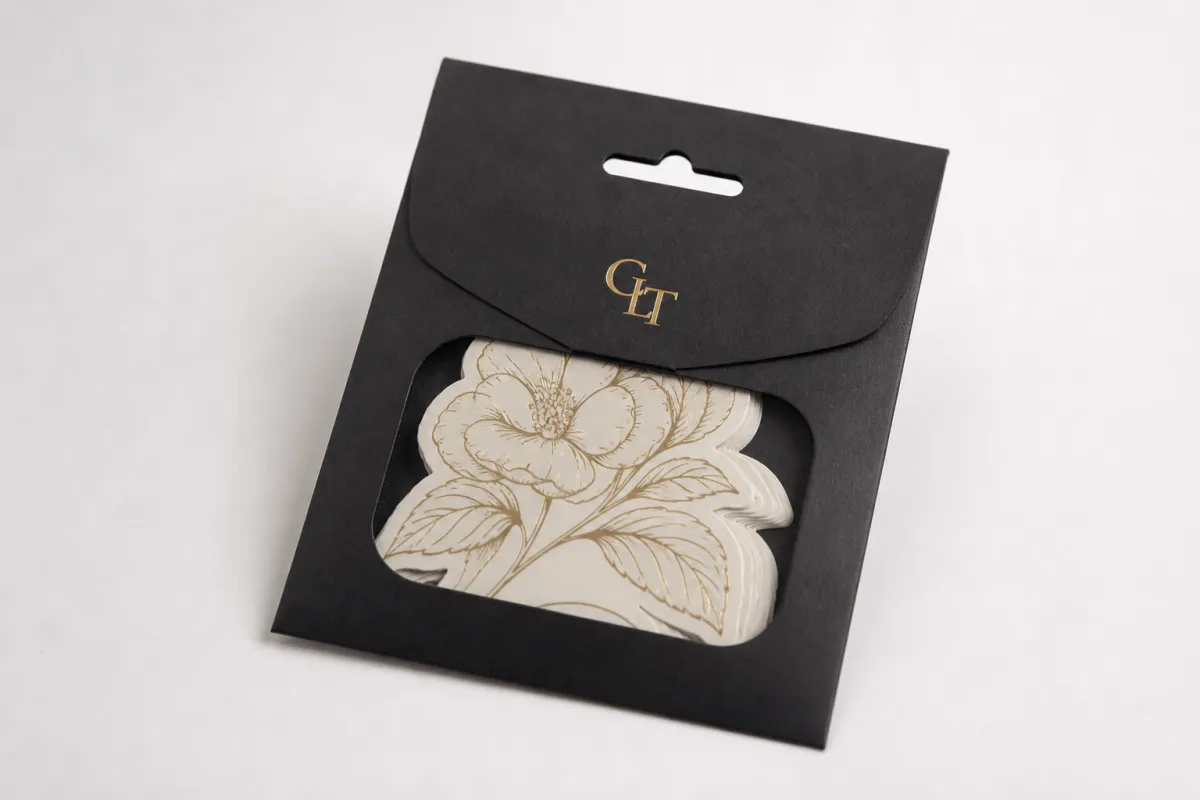
The strongest packaging tools are usually the ones that do one thing well. Custom Die Cut stickers wholesale works because the cut follows the art instead of forcing the art into a circle or square. A logo with a unique silhouette keeps that shape. A mark with fine detail keeps the detail. The sticker reads as part of the design, not a shape slapped on top of it.
Put that sticker on a kraft mailer or a folding carton and the effect is immediate. A box that looked temporary a second ago starts to feel planned. For smaller brands, that shift can make a low-cost package feel far more finished than it actually is. For larger brands, custom die cut stickers wholesale becomes part of a repeatable production system, and that is where the value compounds over time.
These stickers do useful work in a lot of places. They fit mailers, folding cartons, tissue wraps, product bags, inserts, event handouts, and outer shipping boxes that need faster brand recognition. They also move well through fulfillment because they are easy to stack, easy to count, and simpler to apply than labels that need special machinery. Nobody in the back room wants to babysit a finicky sticker run during a holiday rush.
Packaging buyers usually ask the same four questions, even if they phrase them differently: Does it apply cleanly? Does the cut stay accurate? Will the print hold up to handling? Does the adhesive match the surface? When those answers line up, custom die cut stickers wholesale earns its place in the program.
A sticker can be a small line item on a spreadsheet, then turn into the first branded surface a customer notices. That is why edge quality and consistency matter so much in wholesale buying.
There is a planning benefit too. Once the shape, size, and material are set, reordering gets much easier. A purchasing team can keep the same sticker across seasonal packaging, inner bags, and promotional kits without reworking the spec from scratch. That saves time, reduces mistakes, and keeps the brand presentation steady across different package types.
If your packaging mix is broader than stickers alone, think of custom die cut stickers wholesale as one piece in a larger system alongside Custom Labels & Tags, Custom Packaging Products, and, for higher-volume buyers, the ordering structure in Wholesale Programs. The sticker does not need to carry the whole brand. It only needs to do its part cleanly.
Custom die cut stickers wholesale: materials, adhesives, and finishes
Die cut means the finished sticker is cut to the exact outline of the artwork. If the logo curves, the sticker curves with it. If the brand icon has an unusual contour, the cut line can follow that contour instead of flattening it into a standard label shape. That is the core draw of custom die cut stickers wholesale, and it is also why the material choice matters so much.
Paper stock can work for short-term indoor use. It is usually the lowest-cost route, and it fits inserts, handouts, event packaging, and dry cartons that never see much moisture. BOPP is a stronger all-around option for wholesale orders because it resists water better and holds up on shipping boxes, poly mailers, and product packaging that gets handled repeatedly. Vinyl-style films are useful when abrasion resistance and conformability matter, especially on curved or slightly textured surfaces.
Adhesive choice deserves the same attention. A permanent acrylic adhesive is usually the default for shipping, retail packaging, and wholesale applications because it is made to stay in place. Removable adhesive fits short-term promotions, price marks, and packaging runs where the sticker may need to come off later without tearing the surface. On textured kraft board, chilled packaging, or curved containers, a stronger tack may be needed so the sticker does not lift at the corners.
Finish changes both appearance and performance. Gloss makes color pop and gives artwork a sharper presence under retail lighting. Matte softens the look and usually reads as more restrained or premium. Lamination or coating can help with scuffing, moisture, and the friction that builds up inside shipping cartons. Finish is not decoration alone; it changes how the sticker behaves after it leaves the press.
The table below gives a quick comparison that buyers can use when narrowing a quote. The figures are typical wholesale ranges for common production specs, though exact pricing will shift with size, artwork coverage, cut complexity, and order quantity.
| Material | Best Use | Typical Wholesale Range | Notes |
|---|---|---|---|
| Paper label stock | Indoor inserts, short-term promotions, dry cartons | $0.18-$0.32 per unit at 1,000 pieces | Lowest cost, but less moisture resistance |
| White BOPP | Mailers, retail packaging, shipping boxes | $0.22-$0.38 per unit at 1,000 pieces | Strong all-around option for wholesale orders |
| Clear BOPP | Minimalist branding, transparent-looking edges | $0.24-$0.42 per unit at 1,000 pieces | Artwork needs contrast to stay readable |
| Vinyl-style film | Higher handling, curved containers, durability-focused use | $0.28-$0.48 per unit at 1,000 pieces | Better for tough handling, usually higher cost |
That comparison matters because custom die cut stickers wholesale is rarely a one-material decision. A subscription box might need a matte finish for a softer presentation, while a shipping seal on a corrugated carton may need a glossier face stock to resist scuffs. The right build depends on the job, the surface, and the amount of handling the sticker will see.
Artwork setup can make or break the result. A clean vector file makes the contour line easier to prepare. Bleed should extend beyond the cut line so white slivers do not show after trimming. Safe zone keeps text and thin borders away from the edge. These are production rules, not style preferences, and they have a direct effect on how finished the order looks.
For teams comparing sourcing and durability standards, it helps to know the language used by packaging and shipping organizations. The ISTA test framework is a useful reference for shipment handling, while FSC matters when the face stock or packaging components need a responsible paper sourcing story. Those references do not choose the sticker spec for you, but they do sharpen the conversation.
Size, shape, and print specifications for custom die cut stickers wholesale
Size is usually the first question, and it should be. A sticker that is too small makes a logo hard to read; a sticker that is too large can overpower the package and slow down application. With custom die cut stickers wholesale, the right dimensions usually come from the packaging surface itself. A narrow carton flap leaves very little room for error. A larger mailer gives the design more room to breathe.
Shape should support the art, not fight it. Some logos need a tight contour cut that follows every curve. Others look cleaner with a simplified outline that speeds production and avoids fragile corners. A custom silhouette can work well for a memorable icon, though only if the shape still applies cleanly and does not catch during handling.
Print specifications are where many wholesale projects either stay smooth or turn into revision cycles. High-resolution files matter, especially when the design includes thin typography, gradients, or small graphic marks. Vector artwork is preferred in most production workflows because it keeps edges sharp at any scale. Raster files can still work if the resolution is high enough to survive close inspection.
The format of the order changes the workflow too. Sheets can be useful for hand application, especially when a team is labeling kits or filling inserts in batches. Rolls make sense for higher-volume application or dispenser use. Individual-cut stickers are often the best fit for trade show giveaways, retail handouts, or packaging inserts that need a cleaner presentation. For custom die cut stickers wholesale, the packaging method should match the way the stickers will be handled after delivery.
Consistency matters in ways that are easy to miss at first glance. Cut tolerance, edge quality, corner behavior, and registration all affect the final look. On a well-run job, the cut line lands where it should, the color stays aligned, and the edges do not show ragged fibers or film tear. If a supplier cannot explain those points clearly, that is a sign to ask more questions before placing a larger order.
Here is a quick way to think through the spec decisions before you ask for a quote:
- Viewing distance: Close-up labels need simpler shapes and larger text; shipping seals can carry more detail if the surface is large enough.
- Surface type: Kraft board, glossy cartons, poly mailers, and textured packaging all behave differently under adhesive pressure.
- Application method: Hand-applied stickers can tolerate different formats than machine-applied runs.
- Durability need: Indoor inserts do not need the same finish or laminate as outer shipping packaging.
- Brand goal: A minimal mark, a bold logo, or a full-color illustration will all point toward different production choices.
That kind of planning keeps custom die cut stickers wholesale from becoming an oversized sample run that never quite fits the packaging program. It also explains why detailed artwork notes matter. If the design has to match a specific carton panel, say so. If the sticker is going on a curved bottle or pouch, mention that early. The more concrete the spec, the less guessing the production team has to do.
Custom die cut stickers wholesale pricing, MOQ, and unit cost
Pricing for custom die cut stickers wholesale comes from several pieces, not just one sticker line. Material, print coverage, finish, cut complexity, packaging method, and freight all affect the number. A simple one-color die cut label on paper stock will usually price very differently from a full-color BOPP sticker with a complex outline and individual packing.
MOQ exists for a reason. Setup work, proofing, press calibration, and cut path preparation all create fixed labor before the first piece is produced. Once the run gets larger, those fixed costs are spread across more units, and the price per piece usually falls. That is why a 5,000-piece order often looks far better on unit cost than a 500-piece order, even when the artwork stays the same.
For buyers comparing quotes, the most useful ranges are usually tied to quantity bands. Small runs of 250 to 500 pieces may fall in the $0.28-$0.60 per unit range depending on size and finish. At 1,000 pieces, many common specs land around $0.18-$0.42 per unit. At 5,000 pieces, a solid wholesale build can often drop into the $0.09-$0.26 range, though heavy ink coverage, specialty finishing, or intricate cut lines can push it higher. Those are planning ranges, not promises.
The biggest cost drivers are usually easy to spot once you know where to look. Oversized stickers use more material and need more careful cutting. Heavy ink coverage can add cost because it takes more print time and coverage. Specialty finishes like lamination, soft-touch coating, or custom packaging increase labor. Tight contour shapes, especially those with internal cutouts, can also add time to setup and finishing.
Use the table below as a quote-comparison tool. It is not a substitute for a formal estimate, but it can help a buyer understand why one custom die cut stickers wholesale quote sits lower or higher than another.
| Order Size | Typical Setup Pressure | Common Unit Range | What Usually Moves Price |
|---|---|---|---|
| 250-500 pieces | High | $0.28-$0.60 | Setup spread over fewer units |
| 1,000 pieces | Moderate | $0.18-$0.42 | Material choice, finish, and cut complexity |
| 5,000 pieces | Low to moderate | $0.09-$0.26 | Ink coverage, packaging, and freight |
| 10,000+ pieces | Low | Quote-based | Reorder consistency and shipping efficiency |
Some quote questions separate a clear supplier from a vague one. Ask whether setup is included. Ask whether proofing is charged separately. Ask what packaging is used for shipment. Ask whether freight appears as its own line item. Those questions sound basic, but they save real money and fewer headaches on wholesale orders.
Custom die cut stickers wholesale is often compared with other brand touchpoints, and that comparison should stay honest. A sticker can cost far less than a full custom printed box, but it cannot replace structural packaging. A label can do a lot of visual work, but it will not fix a weak carton. The smart budget choice usually balances package branding, application labor, and visual impact instead of chasing the lowest number on the spreadsheet.
The cheapest quote is not always the best wholesale value. Weak stock, sloppy cutting, or late freight charges can raise the real cost quickly.
Custom die cut stickers wholesale process and turnaround
The best orders move through the shop in a straightforward sequence: inquiry, artwork review, proof approval, production, finishing, quality check, packing, and dispatch. That is the basic rhythm for custom die cut stickers wholesale, and the cleaner the input, the faster each step tends to move.
Turnaround depends on how ready the job is when it arrives. Clean vector files reduce artwork corrections. Clear size specifications reduce back-and-forth. A confirmed quantity and finish choice reduce quote revisions. If the surface type is already known, the adhesive recommendation can be locked in sooner. The fastest orders are usually the ones where the buyer has already made the production decisions that matter.
Most delays show up in predictable places. Missing bleed is a common one. Unclear cut lines create extra proof rounds. Color corrections take time when a brand expects the print to match existing retail packaging exactly. Artwork revisions after proof approval can push the schedule back too, especially when the cut path has to change with the design.
For a realistic planning window, many wholesale jobs can move from approved proof to production in about 5 to 10 business days, with shipping adding more time depending on destination and carrier method. More complex jobs, specialty finishes, or very large quantities can take longer. Custom die cut stickers wholesale should never be sold as magic; the honest answer is that the schedule depends on what the art asks for and how quickly approvals move.
Quality control matters at several points. A good production team checks print alignment, cut accuracy, adhesive performance, and count before the order ships. That final count is not a small detail. When a fulfillment team is waiting on 2,500 stickers for a mailing or a retail launch, being short by a few hundred pieces can slow the whole schedule.
Buyers should also think about the final application environment. If the stickers will be applied to a refrigerated carton, the adhesive needs to tolerate that surface temperature. If the order is going onto a highly textured kraft box, the face stock and adhesive should be chosen for grip rather than appearance alone. If the job is for a promotional event, removable adhesive may be more useful than permanent hold. Custom die cut stickers wholesale is not only about how the sticker looks on screen; it is about how it behaves in the real setting.
Helpful order details include:
- Logo or artwork file in vector format, if available.
- Target size in inches or millimeters.
- Quantity needed for the first run and expected reorder volume.
- Preferred finish: gloss, matte, or protected film.
- Intended surface: carton, mailer, pouch, insert, or bag.
- Expected use: indoor, outdoor, or mixed handling.
That information makes the proof stage faster and gives the supplier enough context to recommend the right build. If the order also needs to coordinate with other packaging items, send the carton artwork, insert design, or shipping box mockup so the sticker scale and color can be checked against the full package system.
Why choose us for custom die cut stickers wholesale
Wholesale buyers usually care about the same three things: consistency, responsiveness, and confidence that the spec will work the first time. That is where custom die cut stickers wholesale should feel like a manufacturing decision, not a guessing game. A good partner understands how cut accuracy, material selection, and adhesive performance affect the final result on actual packaging.
Technical support matters because not every sticker belongs on the same surface. A carton with a coated face behaves differently from a recycled kraft mailer. A label for a product bag has different needs than a seal for custom printed boxes. Someone who understands production can ask the right questions before the job goes into motion, which helps avoid waste, rework, and schedule slips.
Consistency is also a brand protection issue. If a sticker is used across insert packs, shipping cartons, retail packaging, and promotional handouts, the same artwork should look and feel the same from run to run. That consistency is part of package branding, and buyers notice when the color drifts, the cut wanders, or the adhesive changes behavior without warning.
Factory-floor knowledge helps in ways that are easy to miss until something goes wrong. It helps catch artwork problems before they become press problems. It helps identify when a contour cut is too tight for the material. It helps match the finish to the handling environment instead of defaulting to the prettiest option on paper. That kind of experience keeps the process grounded in what actually happens during production.
Custom die cut stickers wholesale should also fit the needs of purchasing and fulfillment teams. That means clear communication, predictable timelines, and a spec that can be reordered without starting over. It also means a supplier who can compare sticker builds against other branded packaging choices, whether the buyer is balancing labels, inserts, or a broader packaging design program.
For teams that are scaling, the most useful supplier is usually the one that makes reorder decisions simple. Save the approved artwork. Save the cut line. Save the finish. Save the material. Then the next run becomes a matter of quantity and timing instead of rebuilding the order from scratch. That is where wholesale starts paying off.
When the packaging lineup extends beyond stickers, it helps to keep the rest of the system aligned too. Many buyers source labels, cartons, and inserts together so the shelf presence feels deliberate. That is why Custom Labels & Tags can be a smart companion category, and why broader Custom Packaging Products often make budget planning easier across departments. For larger programs, Wholesale Programs can keep repeat ordering cleaner and more predictable.
Next steps to order custom die cut stickers wholesale
The best place to start is with the core job details. Send the artwork file, target size, quantity, preferred finish, and intended surface. If you already know the stickers will be used for indoor inserts, outdoor shipping cartons, or mixed-use retail packaging, include that too. That context matters more than many buyers expect.
Reference images help a great deal. A photo of the carton, pouch, mailer, or box tells the production team a lot about scale and placement. It also makes it easier to judge whether the artwork should be simplified, enlarged, or shifted to fit the packaging format. For custom die cut stickers wholesale, strong reference material cuts down on back-and-forth and lowers the risk of a mismatched proof.
Compare quotes by line item, not total price alone. A lower number can hide weaker stock, limited proofing, or freight charges that show up later. A slightly higher quote may include better material, clearer approval handling, and stronger shipment packaging. That is usually the better wholesale value than chasing the lowest sticker line on the page.
A simple approval workflow keeps the order moving: review the proof carefully, confirm the cut line and spelling, verify the quantity and pack count, and save the final spec for reorders. If the design must match a carton, insert, or retail display, check the proof against that larger package branding system before signoff. That extra minute can prevent a lot of rework later.
For practical planning, treat custom die cut stickers wholesale as a production purchase, not a throwaway promo item. Choose the material based on the surface. Choose the adhesive based on the handling. Choose the finish based on the visual goal and the wear it will face. Those decisions determine whether the sticker feels like a polished part of the package or just another piece of decoration.
If you are comparing custom die cut stickers wholesale options right now, send the logo file, desired size, quantity, finish, surface type, and target ship date. With those details, it becomes much easier to recommend the right build for your product packaging, your retail packaging, and the rest of your branded packaging plan.
FAQ
What is the difference between die cut and kiss cut custom die cut stickers wholesale?
Die cut stickers are cut all the way through the material and the backing so each piece comes out in the final outline. Kiss Cut Stickers are cut through the top layer only, which leaves the backing intact and makes the stickers easier to peel from a sheet. For wholesale orders, die cut pieces often look cleaner for branding, while kiss cut sheets can be more practical for handouts or multi-sticker sets.
What file type should I send for custom die cut stickers wholesale?
Vector files are preferred because they keep edges sharp and make the contour cut easier to prepare accurately. If you only have a raster file, send the highest resolution version available so the production team can judge whether it will hold up at print size. Include bleed, cut line, and outlined fonts if possible so the proof process moves faster.
How does MOQ affect custom die cut stickers wholesale pricing?
MOQ exists because setup, proofing, and press preparation create fixed cost before production begins. When the order quantity goes up, those fixed costs are spread over more pieces, which usually lowers the unit price. If you only need a small run, expect a higher per-piece cost and compare that against how often you plan to reorder.
Which material is best for indoor or outdoor custom die cut stickers wholesale orders?
Paper stock can work well for short-term indoor use, inserts, or dry packaging where moisture is not a concern. Film-based options such as BOPP or vinyl-style materials are better when the sticker needs more durability, water resistance, or handling tolerance. For outdoor exposure, ask about adhesive strength and finish protection so the sticker keeps its appearance longer.
How long does production usually take for custom die cut stickers wholesale?
Turnaround depends on artwork readiness, quantity, finishing, and whether the proof is approved without revisions. Clean files and clear specifications move faster because the production team can go straight from proof to manufacturing. If you need a specific ship date, provide it early so the quote can reflect realistic scheduling and freight options.
Custom die cut stickers wholesale works best when the spec is practical, the artwork is clean, and the supplier understands how the sticker will behave on real packaging. Send the details early, compare the build instead of only the price, and the finished order is much more likely to support the brand the way it should. If you only remember one thing, make it this: the sticker should be chosen for the surface, not just for the sketch.

