Custom Courier Bags for wellness brands sample order checklist is not a slogan. It is the fastest way to keep a mailer from becoming a problem after production is already underway. A courier bag can look polished in a proof and still fail once it is loaded with glass, droppers, folded inserts, or a subscription kit with odd dimensions. Flat artwork does not reveal that. A real sample does.
That matters more in wellness than in many other categories. These shipments are judged quickly, handled often, and expected to look calm even after a rough trip through fulfillment. If the sample does not confirm size, closure performance, print clarity, and surface finish, the full run often exposes the mistake at the worst possible time: after the cartons are packed and the launch date is fixed.
The practical goal is simple. Tighten the brief, test the bag under realistic conditions, and force the quote to reflect the actual build instead of a vague approximation. Good packaging work is mostly about reducing assumptions before they turn expensive.
Custom Courier Bags for Wellness Brands Sample Order Checklist
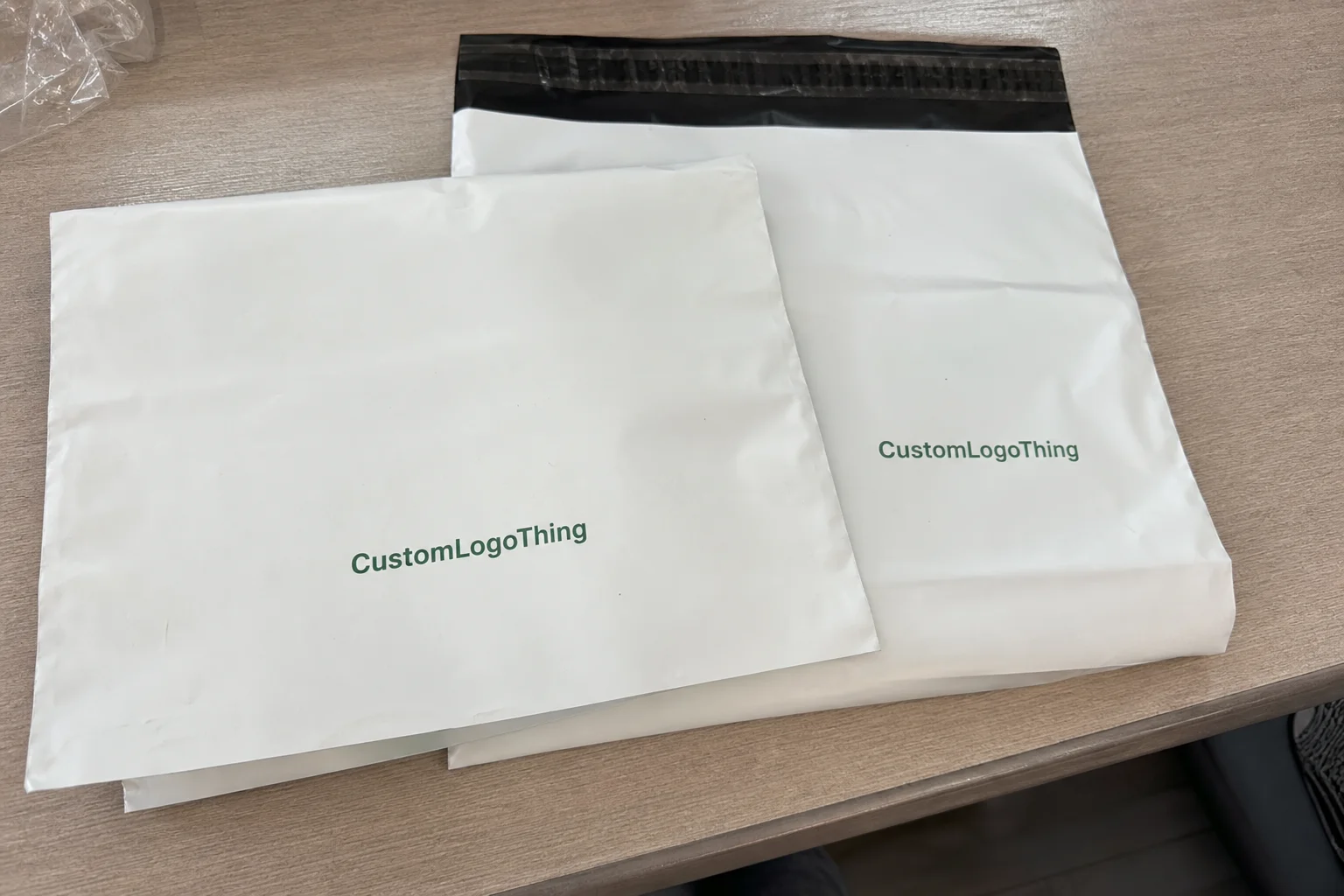
The point of a custom courier Bags for Wellness brands sample order checklist is to catch fit, finish, and handling issues before a full run starts. The sample should behave like the final production bag, not like a stock demo with similar dimensions. If it does not, the sample is only telling you what the supplier wants to sell, not what your product needs.
Start with the actual packout. Use the real bottle, jar, pouch, box, and inserts you expect to ship. A wellness bag that will hold a cleanser kit, an electrolyte set, or a ritual subscription box needs to be tested with the exact contents, not a simplified stand-in. A bag that looks roomy when empty can become tight the moment a folded card, sample sachet, or return label is added.
- Finished dimensions: Confirm width, height, and any gusset or side-seal allowance.
- Packed weight: Record the filled weight and note whether the product has rigid corners, pumps, droppers, or other stress points.
- Opening behavior: Check whether the peel strip releases cleanly and whether it grabs too early or too slowly.
- Seal security: Press the closure after filling and inspect for lift, gaps, or uneven bond lines.
- Surface quality: Look for haze, pinholes, wrinkles, scuffs, or stretch marks that will show under warehouse lighting.
- Print readability: Review logo edges, QR codes, small text, and barcode zones in natural light.
- Presentation: Judge the bag the way a customer sees it in the unboxing moment, not the way it sits on a spec sheet.
If the sample is only checked flat on a table, the most expensive flaw is still hidden. Load it, seal it, shake it lightly, and open it again.
That last step is where many orders get corrected. Wellness brands often favor a restrained look, so the bag has less visual clutter to hide flaws. Matte film can read premium and quiet; gloss can make colors sharper and give lighter artwork more punch. Neither is automatically better. The right finish depends on ink coverage, brand tone, and how the mailer will sit beside cartons, inserts, and other branded components.
For teams ordering at scale, the sample should also be photographed once it is packed. Pictures reveal things a spec sheet misses: label placement drifting too close to a seam, a logo sitting lower than expected, or a filled bag that looks too loose for the product. Those details matter because wellness packaging often has to communicate order and trust before the product is even opened.
Materials, Closures, and Print Choices That Fit Wellness Shipments
Material choice affects more than appearance. It changes seal behavior, puncture resistance, and how the bag feels once it is filled. For wellness shipments, the common starting point is a co-ex film or LDPE structure, then the decision narrows based on product weight, opacity needs, and the level of protection expected during transit. If the bag has to look premium, the film has to support the print rather than fight it.
For brands with sustainability targets, recycled-content films deserve a closer look, but only after confirming seal strength, clarity, and color consistency. Recycled content can affect surface behavior in ways that do not show up in a digital proof. If the broader packaging system includes paper cartons or inserts, FSC-certified paper components may still matter even when the courier bag itself is film-based.
Closures should match the packing line and the customer experience. Peel-and-seal is the most common choice for direct-to-consumer mailers because it is fast and clean. Tamper-evident closures make more sense when the shipment should arrive visibly unopened. Reusable closures can help internal kit assembly, but they are not always the best answer for a customer-facing mailer if the adhesive profile feels bulky or inconsistent.
| Film or Finish Option | Best For | Typical Price Impact at 5,000 Units | Practical Notes |
|---|---|---|---|
| Standard LDPE | Light wellness kits, simple mailers, lower-cost runs | About $0.18-$0.28 per bag | Flexible, easy to seal, and usually the most budget-friendly starting point |
| Co-ex film with matte finish | Premium retail feel, soft-touch presentation, stronger brand impression | About $0.24-$0.38 per bag | Good balance of appearance and handling, but surface scuff testing matters |
| Recycled-content film | Brands with sustainability claims or reduced-virgin-content goals | About $0.26-$0.42 per bag | Confirm color consistency and seal strength before approving the run |
| Opaque film with white underprint | Products that need privacy, light protection, or stronger logo contrast | About $0.28-$0.45 per bag | Useful when the contents should not show through the mailer |
Print method matters just as much as film selection. High ink coverage can make a matte bag feel elegant, but only if the color build is controlled and the white underprint is handled correctly. Fine lines, small text, and QR codes need enough contrast to stay crisp after sealing and transit scuffing. This is where packaging design affects operations directly. A beautiful file that breaks down on the line is not a good file.
For some teams, courier bags are being weighed against Custom Printed Boxes. That comparison should not be framed as prestige versus simplicity. It is really about product shape, fragility, packout speed, and the amount of material the shipment actually needs. A padded box may protect better, but it may also add cost, labor, and dimensional weight. A bag can be the smarter choice if the product is low-profile and the surface finish is tested properly.
Size, Gauge, and Branding Specs to Lock Down Before Quoting
A quote is only as useful as the spec behind it. Measure the finished product, then add the clearance needed for inserts, padding, and any labels that sit inside the bag. If the item has a rigid shape or a raised cap, use the thickest point, not the average dimension. That difference is often the line between a clean packout and a production headache.
Film gauge should be fixed before pricing starts. Too light, and the bag can stretch, wrinkle, or feel flimsy once it is filled. Too heavy, and the order carries unnecessary material cost and a stiffer look than the brand wants. For many wellness shipments, the workable range is often somewhere between 1.5 mil and 3 mil, but that depends on the actual product, the route, and how much abuse the parcel is likely to see.
Do not leave seam style vague. Side-seal, bottom-seal, and gusseted constructions behave differently during filling and delivery. A gusset gives useful volume for kits and bundled retail packaging. A flat mailer is often better for slim pouches, sample packs, or a single product plus one insert card. If you need a brand panel, return-label zone, or barcode area, define it early so the artwork can be built around that space instead of squeezed into it later.
The same logic applies to color targets and blank areas. A courier bag that supports package branding well should have a clean logo lockup, enough negative space for shipping labels, and enough contrast to keep text readable after sealing. If the bag also needs internal print or a branded interior, call that out before artwork begins. Changing those details after proofing usually adds a round of revisions and slows the schedule.
Use this list to package the brief before asking for a price:
- Finished dimensions with unit of measure.
- Product weight and a photo of the packed item.
- Insert count, card size, and any accessory parts.
- Closure type and whether tamper evidence is required.
- Print colors, finish choice, and any white underprint need.
- Barcode, return-label, or address-panel requirements.
- Target quantity and target delivery window.
The better the spec, the cleaner the quote. That is the quiet value of a custom courier bags for wellness brands sample order checklist: it reduces assumption, which reduces rework, which keeps the job from drifting into avoidable delay.
Cost, MOQ, and Quote Drivers for Custom Courier Bags
Pricing is usually driven by a short list of variables. Bag size, film gauge, print coverage, color count, finish, and any special closure detail carry the most weight. The more ink, the more setup. The heavier the gauge, the more material. The more custom the build, the more the quote should reflect actual production steps instead of a placeholder number.
MOQ matters because setup costs do not disappear at small volume. Plates or cylinders, material prep, waste allowance, and line changeover all get spread across the run. That is why a 1,000-piece order can carry a much higher unit price than a 5,000-piece order even if the bag looks similar. Buyers often compare only the unit number, but the smarter comparison is landed cost, including freight, sample charges, and any tooling fees.
For wellness brands, the pattern usually looks like this:
- Short runs: Higher unit cost, useful for launches, testing, or limited-edition kits.
- Mid-volume runs: Better balance of cost and flexibility for subscription mailers and DTC fulfillment.
- Higher-volume runs: Lower unit cost, but they demand sharper forecasting and cleaner artwork approval.
A clean quote should separate bag cost, tooling or plate charges, sample cost, freight, and setup fees. If everything is bundled into one figure, it becomes hard to tell what is driving price and harder to compare alternatives. Ask for line items. Good suppliers should be able to show them without hesitation.
There is another cost driver that gets ignored too often: oversizing. A courier bag that is much larger than the product may seem safer, but it usually wastes film, raises material cost, and makes the filled mailer feel loose. In branded packaging, extra space is not neutral. It changes how the item moves, how it sounds in transit, and how it lands in the customer’s hands.
For teams managing several SKU shapes, the cheapest bag on paper is not always the best buy. A slightly higher unit price can be the better choice if it reduces packing time, improves presentation, and cuts down on damage claims. That tradeoff belongs in the quote review, not after the first shipment is already in transit.
Sample Order Process and Lead Time From Spec to Ship Date
The fastest sample orders begin with a complete brief. Send the finished size, artwork files, quantity target, closure preference, finish preference, and delivery deadline together. If those items arrive in separate messages over several days, the sample process slows before it reaches proofing. A good custom courier bags for wellness brands sample order checklist cuts that back-and-forth out early.
The clean sequence is usually: spec review, digital proof, sample production, sample shipping, and approval notes. Skipping one of those steps often creates a revision loop later, especially if the first sample arrives with a color shift, a seal issue, or a packout problem that was never modeled properly. Most delays are not mysterious. They come from missing detail.
Typical timing depends on the complexity of the print and the speed of approval. A straightforward sample can often be turned in roughly 7-10 business days after proof approval, then shipped according to the carrier timeline. A more customized build, or one with multiple revisions, can push closer to 12-15 business days before the sample is ready to review. If the order is tied to a launch, leave room for artwork correction and signoff. Tight schedules are manageable only when the spec is disciplined.
If the sample will be used for a shipping test, ask whether the bag should be checked against an ISTA-style handling expectation. That is especially useful for wellness kits with glass, powders, droppers, or items that can abrade in transit. A sample that survives real packing and movement is much more useful than one judged only on appearance.
Lead time also changes with seasonality, artwork complexity, and the number of proof cycles. Even a simple mailer can slip if the team is still deciding on logo placement or the return-label panel. Strong package branding usually comes from making those calls before the sample phase, not during it.
The practical rule is plain: build the schedule backward from the ship date. Do not build it forward from the purchase order and hope the rest will fit. That keeps the sample order tied to the actual packing calendar instead of a best-case guess.
What a Reliable Supplier Should Show Before Production Starts
A reliable supplier should show more than a price. They should show that they understand how the bag will be used, how it will be packed, and where it can fail. At minimum, they should be able to explain size tolerance, seal consistency, print adhesion, carton pack count, and whether the sample reflects the actual production setup rather than a stock item with similar dimensions.
They should also flag problems early. Thin margins, unrealistic lead times, missing barcode zones, and artwork that may not print cleanly at small size are all issues that need to be raised before production starts. A supplier that quietly accepts a weak spec is not helping the buyer. They are moving the risk downstream to the fulfillment team and, eventually, the customer.
Good suppliers can talk through test logic in plain language. They should know when a simple hand check is enough and when a more formal test method makes sense. Seal strength, tensile behavior, and scuff resistance can be evaluated using methods aligned with common ASTM-style thinking, even when the order itself is modest. That level of detail matters because wellness brands are often selling trust as much as product.
Ask how the courier bag fits into the rest of the system. Does it match the cartons, inserts, and labels? Does it complement the product packaging instead of competing with it? Does the supplier also handle related components through Wholesale Programs? Those questions reveal whether the supplier is thinking in terms of the entire packout or only the one item on the quote.
There is one final check worth making before production begins: ask for proof that the sample reflects the real build. A stock bag with similar dimensions is not the same thing as a verified production sample. The difference shows up in adhesive behavior, print placement, seal quality, and the feel of the finished pack after filling.
That is the point of the custom courier bags for wellness brands sample order checklist. It makes the supplier prove the bag before the run starts, not after the cartons are already on the floor. The checklist protects the budget, the timeline, and the brand presentation because it forces the decision-making into the open.
What should be on a custom courier bags for wellness brands sample order checklist?
Include finished dimensions, product weight, insert size, and any extra clearance needed for packing. Add artwork files, color targets, finish choice, closure type, and any barcode or label zones. Finish with target quantity, approval date, and delivery deadline so the sample reflects the real job.
How do I choose the right material for wellness courier bags?
Start with product weight, protection needs, and presentation standard. Choose a film structure that seals cleanly and resists scuffing if the bag will move quickly through fulfillment. If sustainability matters, ask for recycled-content options and confirm how they affect price and print quality.
What drives MOQ and pricing for custom courier bags?
Bag size, gauge, print coverage, color count, and special finishes usually have the biggest impact. Smaller MOQ orders often cost more per unit because setup and waste are spread across fewer bags. Freight, sample charges, and tooling should be listed separately so the quote is easy to compare.
Can I test the sample with real wellness products before approving the run?
Yes, and that is the safest way to check fit, opening behavior, and closure performance. Pack the actual product, inserts, and labels so you can see whether the bag stretches, scuffs, or shifts in transit. Use that test to confirm whether the final bag needs a different size, gauge, or seal style.
How long does the sample order process usually take for courier bags?
Timing depends on how fast specs are approved, how many revisions are needed, and how quickly the sample ships. A clean spec package shortens the timeline more than any other step because it reduces proofing delays. If the order is tied to a launch, build in extra time for artwork correction and final signoff.


