Buyers asking about custom cuffed Beanies Wholesale Pricing for Sports teams usually want a usable number, but the quote depends on the knit, cuff size, decoration method, quantity, packaging, and timeline. Those choices affect the unit cost more than most first-time buyers expect, especially when the artwork needs cleanup or the order includes retail-style presentation.
Cuffed beanies are still one of the simplest cold-weather team items to source well. They fit most people, pack flat, ship efficiently, and work for players, coaches, staff, and fans without separate size runs. That makes them practical for winter sidelines, travel, booster sales, and seasonal giveaways.
Why cuffed beanies are a practical team buy
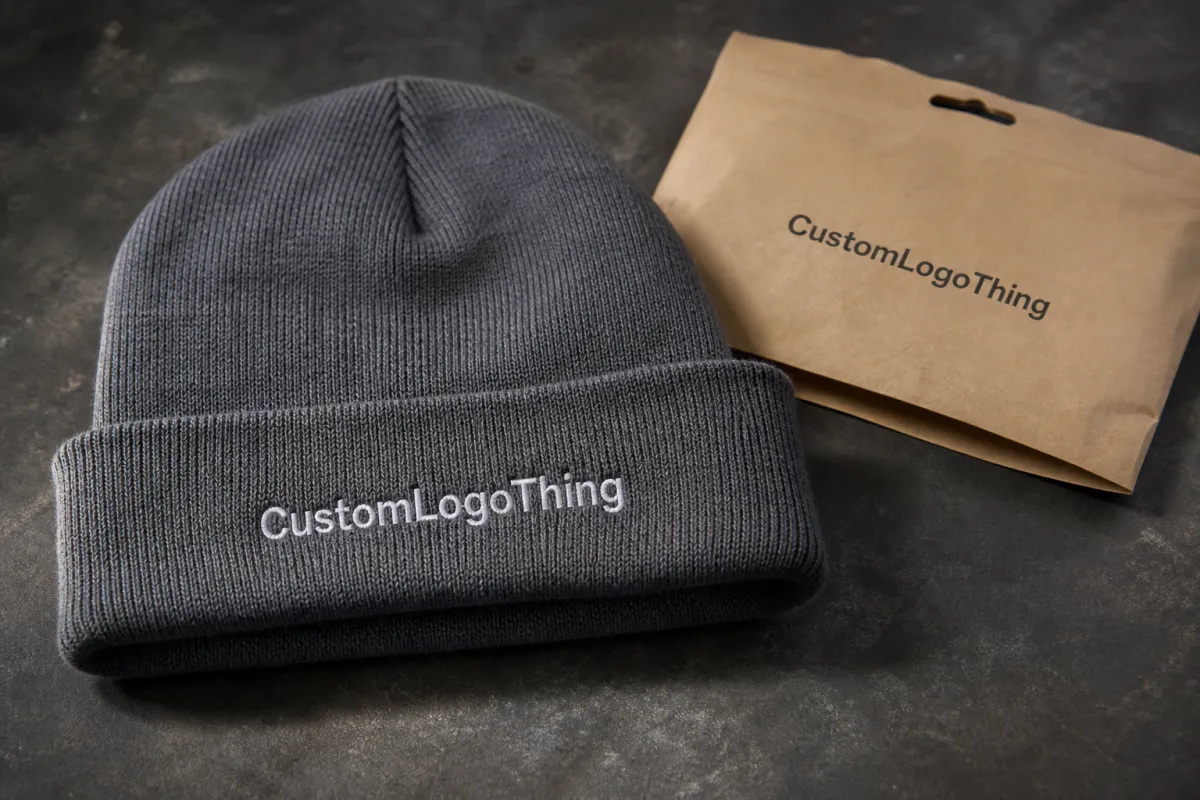
A cuffed beanie solves a basic team problem: you need something warm, unified, and easy to distribute. Unlike apparel with multiple sizes, one style usually covers the full group. That keeps ordering simple and reduces leftover inventory after the season.
The cuff is also the most useful branding area. It stays visible when the beanie is worn low, so the logo is easier to read from a distance. For sideline crews, fan tables, and game-day staff, that matters more than decoration placed higher on the crown.
They are also easy to manage. Beanies store compactly, hold up well in shipping, and are straightforward to sort in bulk. Once the design is approved, reorders are usually simple. That consistency matters for programs that want the same look across seasons or for separate player and fan runs.
A cuffed beanie has two jobs: keep the head warm and keep the mark readable. Everything else comes down to the specs.
For small teams, the appeal is simplicity. For larger programs, it is repeatability. When cuff height, decoration size, and colorway are approved once, the next order is easier to quote and easier to match.
Materials, decoration, and construction options
Most Custom Cuffed Beanies start with acrylic or an acrylic blend. Standard acrylic is common because it is affordable, durable, and easy to color-match across team palettes. Acrylic-wool blends can feel richer and may hold warmth better, but they usually raise the price and may need clearer care guidance.
Construction matters almost as much as fiber. A single-layer knit is lighter and can work for mild conditions or active wear. A double-layer knit usually has more structure, better warmth, and a cleaner cuff. Knit gauge also changes the result: tighter knits look sharper, while looser knits can feel softer and stretch more.
Decoration is where quotes often separate. Embroidery is the most familiar option for simple logos, initials, and mascots. Woven patches handle fine lines and small text better than thread alone. Faux leather or leatherette patches give the beanie a more retail-ready look, which can help with fan merchandise. Sewn labels work when the branding should stay understated.
| Decoration method | Best use | Typical price impact | Buyer take |
|---|---|---|---|
| Embroidery | Simple team logos, initials, mascots | Lowest to moderate | Durable, familiar, and easy to approve |
| Woven patch | Small text, fine lines, multi-color art | Moderate | Better detail than dense stitching alone |
| Leatherette patch | Retail teams, premium fan merch | Moderate to higher | Polished presentation and strong shelf appeal |
| Sewn label | Minimal branding, understated marks | Lower to moderate | Good when the logo should stay subtle |
Material and decoration should match the use case. Player gear needs to survive bags, weather, and repeated wear, so simpler decoration and sturdier yarns usually make sense. Retail stock needs a cleaner finish, so patches, labels, and folding instructions become more important.
If packaging matters, bring it up early. Hangtags, inserts, folding style, and outer packaging affect both cost and presentation. For buyers who want recycled or FSC-certified paper elements, that should be confirmed before proof approval. The FSC program is outlined at fsc.org.
Fit, sizing, and spec details to confirm
Most cuffed beanies are sold as one-size-fits-most, but that label hides important differences. Cuff depth changes forehead coverage and decoration space. Crown height changes the silhouette. Yarn stretch affects how forgiving the fit is across head sizes.
A useful spec sheet should list knit type, fiber content, beanie height, cuff width, decoration size, and packaging requirements. That is the fastest way to compare quotes accurately. Two beanies with similar product names can be very different in fabric weight and finish.
Artwork also needs a reality check. Thin outlines, tiny text, and delicate mascot details may look fine on screen and fail once they are scaled to a cuff. Production-ready art should be reviewed at actual size, not just as a digital mockup. If the design is borderline, proofing is necessary.
Color matching deserves equal attention. Yarn and thread do not behave like print ink. Pantone references help, but they are only part of the picture. Fiber dye, knit texture, and lighting all change how color reads. Physical samples or swatches are more reliable than a monitor.
Shipping and packaging matter too. Carton strength, compression resistance, and packing density affect how the order arrives, especially when beanies move through multiple hands before reaching the team. For buyers who want a baseline on transport protection, the ISTA standards are a useful reference point.
Custom Cuffed Beanies Wholesale Pricing for Sports Teams
Pricing usually comes down to five levers: quantity, decoration method, yarn choice, number of colors, and whether the order includes labeling or packaging. A simple embroidered beanie in a large run can sit in a very different range from a patch beanie with custom inserts in a smaller run. Ask for a line-item breakdown so the quote is easy to compare.
As a practical range, basic wholesale cuffed beanies for team use often start in the mid-single digits per piece at higher quantities. More decorated or premium builds can move into the low teens before freight. Smaller runs usually cost more per unit because setup and labor are spread across fewer pieces.
Quantity tiers matter a lot. A run of 48 or 72 pieces may fit a player or staff issue, but it will usually cost more per unit than 250 or 500 units. The tradeoff is inventory risk. Ordering too many lowers unit cost but can leave a team with unsold stock.
There is also a difference between product cost and landed cost. Freight, packaging, special labeling, and rush timing can change the final number enough to matter. If a quote does not show those items clearly, it is incomplete.
Typical wholesale cost drivers include:
- Higher quantity tiers that spread setup costs across more units
- More complex artwork with extra thread colors or fine detail
- Heavier knit construction or acrylic-wool blends
- Private labeling, hangtags, or retail-ready folding
- Rush timing, split shipments, or special freight requests
The easiest way to control price is to simplify where possible. One strong cuff logo usually works better than trying to decorate multiple areas. Early ordering helps too, because more lead time reduces rush charges and gives room for proof corrections.
Order structure changes pricing as well:
| Order style | Best for | Price behavior | Operational note |
|---|---|---|---|
| Small player batch | Roster issue, tryout gifts | Higher per unit | Good when quantity needs are limited and speed matters |
| Mid-size team run | Players, coaches, staff | Balanced pricing | Often the best mix of cost control and flexibility |
| Larger fan stock run | Retail, boosters, alumni sales | Lower per unit | Supports better packaging and a more polished presentation |
The cheapest quote is not automatically the best one. The right number is the one that matches the deadline, quality target, and intended use. If a team needs the beanies for a short season window, a slightly higher unit price may be smarter than risking late freight or a rushed second round of corrections.
Process, proofing, and turnaround timeline
The order process should be clear from the start. It usually runs through inquiry, quote, artwork review, digital proof, approval, production, quality check, and shipment. If any step is vague, that is usually where delays hide.
To move quickly, send the logo file, target quantity, team colors, deadline, shipping zip code, and packaging requirements up front. If the order includes retail presentation, note whether the beanies need hangtags, barcode stickers, folding specs, or carton labels. The more complete the brief, the less back-and-forth later.
Turnaround depends on decoration method and stock availability. Simple decorated beanies generally move faster than fully custom knit builds. Artwork cleanup can add time if the logo is not production-ready. Freight must be added after production, which is why a factory timeline alone is not enough.
Proofing protects the order before anything is made. It confirms logo placement, cuff size, thread color, patch position, and label details. That step is important because a small shift in placement can change the look once the cuff is folded and the beanie is worn.
For sports deadlines, buffer time is practical. Leaving room for one revision cycle and shipping usually prevents rush freight and compressed approvals. Teams that plan early generally get better results and fewer surprises.
What to look for in a wholesale beanie partner
A low quote only helps if the partner can deliver what was promised. Good suppliers answer spec questions clearly, flag artwork issues early, and keep the buyer informed through proof and shipment. That matters because most teams do not have time to manage every detail themselves.
Reorder consistency is another important test. Sports programs often come back for another run after roster changes, a stronger fan response, or a new season. A reliable partner keeps records of approved specs, thread colors, patch placement, and carton labeling so the next order matches the first one closely.
Operational quality shows up in the small things: stable lead times, clean proofs, careful packing, and honest notes about substitutions or shortages. If a supplier cannot explain how they handle a color change, a proof correction, or a split shipment, that is a warning sign.
For teams that also manage branded packaging or retail packaging, a partner who understands presentation can save time. The same order may need inserts, folding specs, and boxed presentation. When those details are handled as part of the job, the final product feels deliberate instead of improvised.
Common ordering mistakes that raise costs
The first mistake is approving artwork before checking stitch size, logo placement, and minimum line thickness. A mark that looks crisp on screen can turn muddy on a small cuff. If the design depends on thin outlines or tiny type, ask whether embroidery, a woven patch, or a different decoration zone will hold it better.
The second mistake is underestimating quantity. Moving into a higher pricing tier can change unit cost enough to matter, and splitting a later order can create new setup charges. If the team knows it will need more inventory later, it is usually cheaper to include that need in the first run.
Buyers also assume too easily that every beanie is interchangeable. A single-layer knit with basic embroidery is not the same product as a double-layer beanie with a patch, custom label, and retail folding. Material, build, and presentation all affect the quote, so the specs need to be compared side by side.
Rush orders are another easy way to spend more than necessary. They compress proofing, limit room for corrections, and can force expensive freight or substitutions. If a tournament date, season launch, or retail event is already known, artwork should be locked early enough to let the process breathe.
Keeping approved specs on file also saves money later. It protects future reorders from drifting in color, fit, or decoration size, and it makes it easier to add coach bundles, alumni stock, or fan merchandise without starting from zero.
Next steps for a fast, accurate team quote
The fastest way to get a useful quote is to send the logo file, quantity, team colors, deadline, shipping location, and packaging or labeling notes together. If the art has thin lines, gradients, or tiny text, say so. That gives the supplier a chance to recommend the right decoration method before production starts.
Ask for a line-item quote. Product cost, decoration setup, freight, packaging, and optional add-ons should be visible enough that the team can compare options without guesswork. That is the clearest way to see whether the order actually fits the budget.
If the beanies will serve players now and fans later, include that in the brief. The supplier may suggest a cleaner cuff layout, a better label choice, or a presentation style that works for both internal distribution and retail use.
The landed cost includes more than the beanie itself. Carton packing, shipping distance, and delivery timing all affect the final number. A quote that ignores those pieces is not a complete quote.
If you are comparing Custom Cuffed Beanies Wholesale Pricing for sports teams, the best starting point is simple: send the artwork, quantity, colors, deadline, and shipping zip, then ask for the numbers to be broken out clearly so the total is easy to evaluate.
What is the usual MOQ for custom cuffed beanies wholesale pricing for sports teams?
MOQ depends on decoration method, knit construction, and whether the style is stock-based or fully custom. Smaller orders usually carry higher per-piece costs because setup and labor are spread across fewer units. Ask for the exact minimum tied to your artwork and colorway, since it can change by build.
Which decoration works best for team logo beanies?
Embroidery is a strong choice for simple logos and gives a durable, familiar sports look. Woven or faux leather patches are better when the artwork has fine detail or when the beanie needs a more finished retail appearance. The best method depends on logo complexity, budget, and how bold you want the branding to read.
How long does production usually take after proof approval?
Production time depends on quantity, decoration type, and whether any materials need to be sourced. Proof approval starts the clock, but shipping time still has to be added to the schedule. Early orders are much easier to fit into a season deadline than last-minute rush requests.
Can we mix team sizes or colors in one wholesale order?
Often yes, but mixed colors or split styles can affect pricing, minimums, and production planning. The final quote should show whether those changes are included or treated as separate runs. Sending the full order plan up front helps avoid rework and surprise costs.
What artwork do you need to quote custom cuffed beanies?
A vector file such as AI, EPS, or PDF is usually best for clean review and proofing. If only a PNG or JPG is available, send the highest-resolution version you have and expect a proof step. Include Pantone or brand color references, quantity, and deadline so the quote reflects the real order.

