For sports buyers, oem cuffed Beanies Wholesale Pricing for Sports teams can look straightforward until the sample arrives. Then the cuff may be too shallow for the logo, the knit may relax after a few wears, or the shade may miss the school color by enough to stand out in daylight. The cheapest quote is not the lowest-cost order if the spec is loose.
Winter headwear has to do several jobs at once. It needs to keep coaches warm, present well in photos, and hold up for sideline use, fan-shop resale, or booster-club giveaways. A beanie that pills quickly, loses shape, or hides the mark under a folded cuff stops earning its keep. For budget-conscious programs, the difference between a clean product and a compromised one shows up fast.
Custom Logo Things sits at the point where branding, resale value, and procurement discipline meet. The question is not only what the beanie costs, but what the full run costs after decoration, freight, packaging, defect allowance, and possible reorders are counted together.
Why Sideline Beanies Strain Budgets Faster Than Jerseys
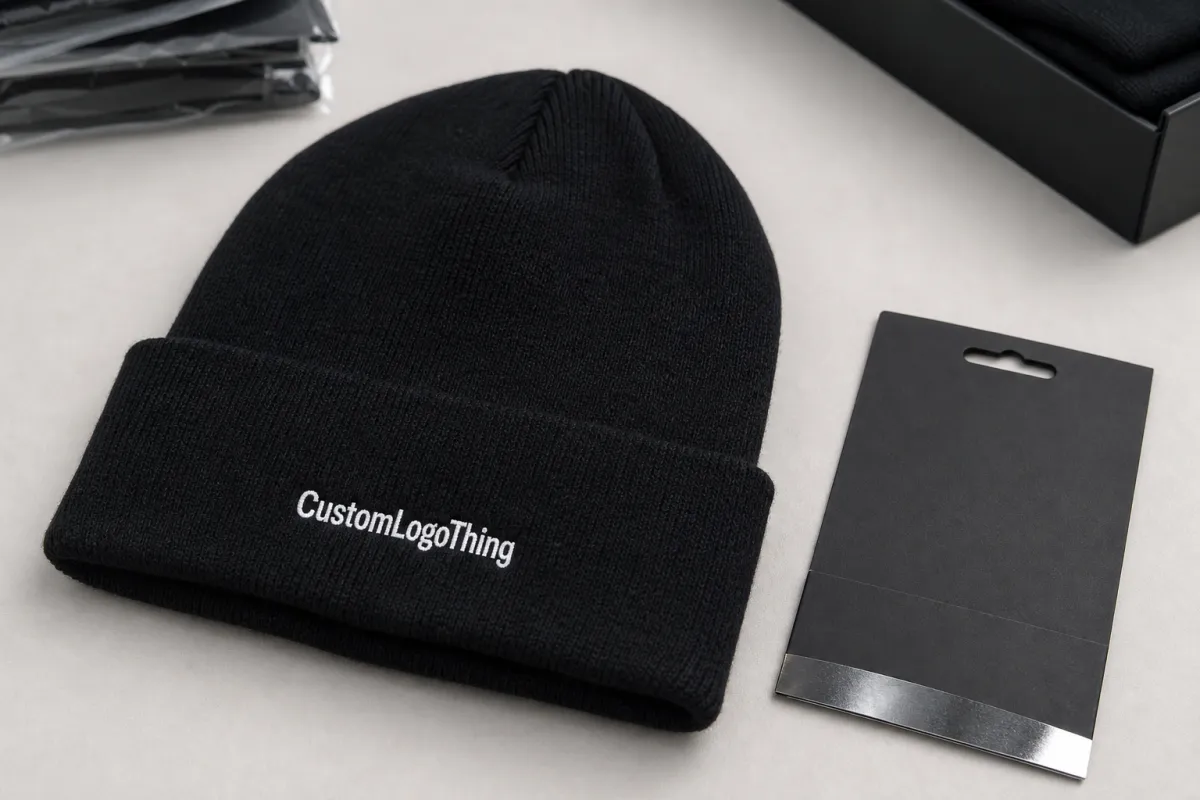
Jerseys get more attention, but beanies can be harder to buy well. They are small enough that buyers assume the risk is low. In practice, the opposite is often true. A weak beanie order can fail through shrinkage, loose stitching, or a shape that collapses before the season ends.
Sideline gear also serves multiple audiences. Coaches care about warmth. Athletic directors care about appearance in photos. Booster clubs care about sell-through. Parents want something that feels worth the spend. One bad spec can disappoint all four groups at once.
The details that usually determine performance are cuff height, yarn density, and decoration space. A taller cuff gives the logo more room, but it can change fit for smaller wearers. A denser knit looks cleaner and holds heat better, but it costs more. A one-size assumption ignores those tradeoffs and often produces an item that looks fine on paper and weak in hand.
Even small defects matter because the season is short. On a 500-piece order, a 6% defect or return rate is 30 units lost before freight, replacements, or labor are counted. That is why buyers should compare unit price with total landed value, then ask how many defects the factory expects and whether the same spec can be reordered without shade drift.
What OEM Cuffed Beanies Are Built to Do for Teams
An OEM cuffed beanie is built around control. The fold-up cuff creates a stable decoration zone. The crown shape determines how the hat sits. Knit density affects warmth, recovery, and how clean the logo looks after application. When those variables are fixed before production starts, there are fewer surprises later.
Most team programs choose between three material paths. 100% acrylic is the practical baseline: warm, light, and easier to source in repeatable color runs. Acrylic-wool blends usually feel more substantial and look a bit richer, but they cost more. Fleece-lined versions add comfort in harsher weather, though they also increase material cost and can reduce stretch slightly.
OEM control matters because school colors are unforgiving. A navy that looks right on screen may appear brighter under stadium lights. A red can shift just enough to make the beanie feel off-brand even if the knit is solid. With OEM production, the buyer can lock the color reference, logo placement, cuff depth, and label style before the bulk run begins.
That matters for repeat orders as much as first orders. Fan shops do not want each restock to look different. Booster clubs do not want a second batch that feels thinner than the first. Athletic departments need the same item to work across players, parents, and staff without reopening approvals every time the season changes.
Spec Sheet Details That Change Fit, Decoration, and Wear
The spec sheet is where pricing becomes real. Buyers who skip it often pay for corrections later. Start with the basics: yarn composition, knit gauge, cuff depth, crown height, seam finish, and label placement. Each one changes how the beanie feels and how well it accepts decoration.
A tighter knit at a common 7-gauge or 9-gauge build usually gives a cleaner face for embroidery than a loose knit. A cuff depth around 2.5 to 3 inches often works well for logos, but that depends on the size of the patch or stitch count. If the cuff is too shallow, the mark feels cramped. If it is too deep, the fit can feel bulky on smaller wearers.
Decoration choice also changes both price and appearance. Embroidery is the most common option for team beanies because it reads well and feels permanent. Woven patches can sharpen small details and work well for retail, though they add a production step. Jacquard knit graphics build the design into the hat itself, which can look premium, but the artwork has to stay simple enough to knit cleanly.
Packaging matters more than it usually gets credit for. Individual polybags help retail presentation and simplify sorting by player or size group. Barcode stickers make warehouse handling easier. Private-label hang tags matter if the beanies will move through fan shops or online stores. If the item is meant to sell, the finish needs to look intentional from carton to shelf.
A clean sample approval process saves more money than a rushed production date. Confirm the mockup, match Pantone references, inspect the sample under real light, and sign the spec sheet before the bulk run begins.
For buyers who need a packaging benchmark, the logic behind transit testing and retail-ready handling is covered well by the ISTA packaging test standards. For a product that moves through cartons, trucks, and storage rooms, that discipline is not optional.
OEM Cuffed Beanies Wholesale Pricing for Sports Teams
oem Cuffed Beanies Wholesale Pricing for sports teams is driven by a short list of variables, and quantity is only one of them. A quote can move sharply depending on decoration complexity, yarn weight, cuff construction, label method, and packaging requirements. Buyers often focus on the unit price and miss the parts of the quote that add 15% to 25% to the landed total.
MOQ logic becomes clear once the production math is visible. A simple single-color beanie with one embroidery location can usually support lower minimums because setup is lean. Add multiple knit colors, a woven patch, or a private-label hang tag, and the factory usually needs a larger run to keep unit economics workable.
| Order Type | Typical MOQ | Indicative Unit Range | Best Fit |
|---|---|---|---|
| Basic acrylic cuffed beanie, single embroidery | 100-300 pcs | $2.20-$4.10 | Sideline staff, small booster runs |
| Acrylic-wool blend, embroidery or woven patch | 300-500 pcs | $3.80-$6.25 | Retail-ready fan shop inventory |
| Fleece-lined, private label, custom packaging | 500+ pcs | $5.40-$8.75 | Premium resale, winter gift packs |
Those ranges are illustrative, not fixed. Thread count, carton count, color changes, and sample requirements all matter. A buyer comparing quotes should separate unit price, setup charges, sample fees, freight, and any rush premium. Only then can the quote be translated into a true landed cost per beanie.
A useful habit is to request tiered pricing at several quantities, such as 250, 500, 1,000, and 2,500 pieces. That shows where the next savings tier begins and whether it is worth increasing volume to unlock better pricing. If the quote does not show the breakpoints clearly, the comparison is incomplete.
The cheapest line item is not always the cheapest outcome. A beanie that lands 40 cents lower but generates a 5% replacement rate is more expensive than the cleaner option. That is the kind of arithmetic procurement teams remember after the season starts, not before.
Process and Lead Time: From Art Approval to Game-Day Delivery
The production path is predictable if the buyer controls it. It usually runs in this order: quote, mockup, sample or proof, approval, bulk knitting, decoration, packing, and shipping. Each step is a gate. Skip one, and the risk of delay rises quickly.
Lead time depends on the build. A simple stock-color beanie with standard embroidery may move faster than a custom knit with a woven patch and retail packaging. On a normal order, buyers often see several weeks from final approval to ship date, and transit time is added on top. Peak winter demand can stretch the schedule further.
What causes delay? Color matching, artwork revisions, factory load, and special packaging. One extra revision on a logo may not sound serious, but if the art has to be re-digitized for stitch density, the schedule can slip by days. The same thing happens when carton labels are changed late or delivery details arrive incomplete.
Rush service can protect a game-day deadline, but it usually comes with tradeoffs. Air freight raises landed cost. Faster slots reduce the margin for proof corrections. In some cases, the rushed order is cheaper in calendar terms but more expensive in money terms. That is why the buyer should decide early whether the order is for immediate sideline use or for a retail program that can tolerate a longer window.
To keep the process moving, send a vector logo, final quantity, delivery ZIP code, exact color references, and a clear decision on decoration placement. If the team needs a broader program, the Wholesale Programs page can help compare order paths before the schedule is locked.
How OEM Production Protects Color Match, Reorders, and Margin
The strongest argument for OEM sourcing is consistency. A school or club that wants the same beanie next season needs the same knit file, the same trim choices, and the same finishing rules. Without that control, small variations in yarn dye, cuff tension, or label placement can make reorders look different enough to trigger complaints.
That matters especially for fan-shop inventory. A retail buyer does not want a navy beanie that arrives in three slightly different shades over the course of a season. Customers may not describe the issue in technical language, but they notice it right away. Uniformity is part of the product, not a decorative extra.
There is also a margin effect. Fewer defects mean fewer replacements. Better color stability means fewer write-offs. A stable spec lets the buyer hold a stronger resale price because the item looks deliberate rather than improvised. Booster clubs feel that directly because every lost unit cuts into funds that were supposed to support the program.
The contrast with ad hoc sourcing is easy to see. A slightly cheaper first quote can look attractive until the follow-up order no longer matches the first batch. Then the buyer spends time reconciling differences, discounting mixed stock, or explaining why the second shipment looks off. Those hidden costs show up later and in smaller pieces, which makes them easy to underestimate.
From a packaging buyer's point of view, the same logic applies to carton count, label placement, and retail readiness. Standardization protects margin because it cuts rework. It also makes reorder planning easier. That is why organized buyers keep the spec file close and the approval trail clean.
If your program uses recycled paper hang tags or printed inserts, FSC-certified paper stock can support that message without changing the core beanie spec. For buyers who care about sourcing discipline, FSC certification guidance is a useful reference point.
What to Prepare Before You Request a Team Beanie Quote
Fast quoting starts with good inputs. If the buyer sends only a logo and a guess at quantity, the factory has to fill in too many blanks. A cleaner request includes quantity, color count, logo files, target delivery date, packaging needs, and whether the order is for players, staff, or retail resale.
Ask for tiered pricing in the same email and ask for sample photos if the order uses an existing build. Ask for a clear timeline. That way the decision can be made on facts instead of on a chain of separate replies that all need to be stitched together later.
Here is the comparison that matters most:
- Landed cost versus headline price.
- Decoration method versus visual impact.
- MOQ versus storage and resale risk.
- Reorder path versus one-time savings.
Before approval, compare the spec against the real use case. A sideline gift can tolerate a simpler finish. A retail beanie needs stronger presentation. A booster-club run often sits somewhere in the middle. The best choice is rarely the cheapest line item; it is the option that matches the life of the product after it leaves the carton.
Buyers who move quickly still need a disciplined process: one quote, one sample, one approval path, one release to production. If the program needs a broader purchasing setup, the Wholesale Programs page can help map the right order structure before you commit.
The cleanest way to judge oem Cuffed Beanies Wholesale Pricing for sports teams is to compare it against the full landed cost, not the unit price alone. That is how budget stays intact, brand consistency holds, and the next reorder still looks like the first one.
Common Questions
What affects OEM cuffed beanies wholesale pricing for sports teams the most?
Quantity, decoration method, and knit complexity usually drive the biggest swings. Private-label tags, custom packaging, and rush freight can raise landed cost as well. The cleanest comparison separates unit price from setup and shipping.
What MOQ is typical for custom cuffed team beanies?
Minimums vary by factory and by how many colors or decoration steps the beanie needs. Simple one-color orders often support lower MOQs than multi-color private-label runs. Ask for MOQ by variant if you plan to split colors or logo placements.
How long does production usually take after art approval?
Lead time depends on sample approval, current factory load, and the complexity of the knit or decoration. Bulk production often takes several weeks after final approval, then shipping time is added on top. Air freight can shorten delivery, but it increases total cost.
Can we mix school colors or logos in one beanie order?
Yes, but each extra color or logo position can add setup work and increase unit cost. The more variants you add, the more important it is to confirm minimums for each version. If budget is tight, ask whether a shared base color with different patches is cheaper.
What files do you need for a fast team beanie quote?
Send a vector logo, approximate quantity, target delivery date, and the delivery ZIP code. Include color references if your school or club uses specific Pantone values. If you need retail-ready packaging, note that upfront so the quote reflects the real scope.


