A custom embroidered Beanies Bulk Order has one job: put a logo on winter headwear so it still looks clean after real use. Not just after a product photo. After staff wear it on job sites, students stuff it into backpacks, customers wash it badly, and event teams toss extras into storage bins.
Print can work on plenty of promotional products. Knit headwear is less forgiving. It stretches, folds, rubs against coat collars, and rarely sits perfectly flat. Thread gives the mark a raised, durable finish that usually holds its shape better than surface ink on a moving textile.
That is why embroidered beanies show up in staff uniform programs, winter giveaways, school merchandise, retail drops, field team kits, and cold-weather events. A blank beanie may be inexpensive, but the finished product carries the brand for a whole season. Sometimes longer, if the hat is comfortable enough that people keep wearing it. Comfort matters. So does the logo. Nobody needs another stiff, crooked, mystery-yarn hat living in a drawer.
Custom Embroidered Beanies Bulk Order: Why Stitching Holds Up
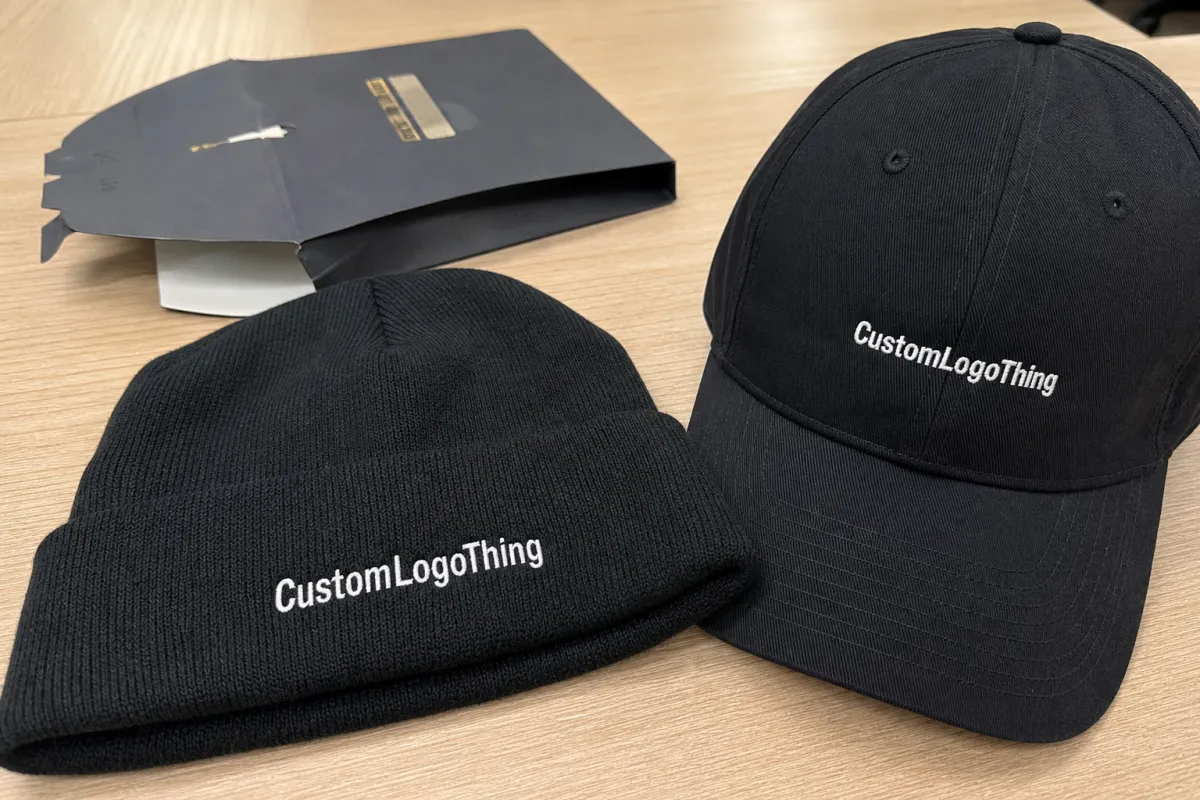
Embroidery is usually the strongest decoration choice for beanies because the logo is built with thread instead of sitting on top of the fabric. On a cuffed knit beanie, the decorated area may stretch 10% to 25% during wear depending on the knit structure, cuff tension, and head size. A printed design can crack, distort, or lose edge definition on that kind of surface. A properly digitized embroidery file can flex with the knit and keep the main shapes readable.
Readability is the point. If a logo needs to be recognized from 6 to 10 feet away, bold stitching on a cuff is hard to beat. It gives the buyer texture, contrast, and a decoration method that does not require a perfectly smooth surface.
Bulk orders also get easier once the first approved setup is locked. The digitized file, thread colors, hooping position, backing choice, and sew-out notes can be repeated across 50, 250, or 1,000 pieces. That reduces guesswork. It also keeps the production team from making judgment calls halfway through the run, which is how small inconsistencies become very visible.
Practical buying rule: If the beanie will be worn often, sold as merchandise, or handed to employees, prioritize stitch clarity and fit before chasing the lowest unit price.
A good bulk beanie order should feel consistent in the hand. The cuff height should be close across the run, the logo should sit level, and the thread should not pull the knit into a puckered oval. Not every beanie style behaves the same under a needle, so the best results come from matching the garment, artwork, and production method before the purchase order is released.
Beanie Styles, Yarn Weights, and Fit Options
Most buyers start with style. Fair. Style decides whether people will actually wear the thing.
A cuffed rib knit beanie gives the cleanest decoration zone because the folded cuff creates a firmer embroidery base. Slouch beanies have a more relaxed look, but the logo may sit on softer fabric with more movement. Double-layer knits add warmth and body. Lighter acrylic promotional beanies keep cost down for high-volume giveaways.
Yarn weight affects more than warmth. A dense 12-gauge or tightly ribbed acrylic knit can support small logos with better edge definition than a loose chunky knit. Chunky yarns can look more premium, especially for lifestyle merchandise, but tiny lettering may sink between ribs or look uneven as the needle moves over peaks and valleys. For most branded team programs, a midweight acrylic or acrylic-blend cuffed beanie is the safe center lane.
Material blend also matters. Acrylic is common because it is affordable, colorfast, and easy to source in bulk. Acrylic blends with polyester, nylon, wool, or recycled fibers can change the hand feel, warmth, stretch recovery, and price. Wool blends feel better to some buyers but may require more care and can raise cost quickly. Recycled yarns can support sustainability goals, but color availability and inventory depth should be checked early.
Fit deserves more attention than it usually gets. Unisex adult beanies often cover a head circumference range of about 21 to 24 inches because the knit stretches. Youth sizing, extra-deep slouch styles, and heavyweight cuffs change that range. Cuff height matters too. A 2.5-inch cuff may limit logo height, while a 3-inch to 3.5-inch cuff gives more room for a 2-inch wide emblem or short wordmark.
Color selection should be handled like packaging or signage: contrast wins. Navy thread on black fabric may satisfy a brand guide on paper, but it can disappear in warehouse lighting or on a cloudy job site. White, cream, metallic silver, gold, safety orange, or high-saturation thread often reads better on dark beanies. On light gray, oatmeal, or cream knits, black, navy, forest green, and deep red usually carry better from a distance.
If you are comparing beanies for a custom embroidered Beanies Bulk Order, ask for the material blend, cuff height, approximate weight, available colors, and whether the style has been used successfully for front-cuff embroidery. Those five details prevent a surprising amount of rework.
Embroidery Specs That Protect Logo Detail
Embroidery quality starts with digitizing. The digitizing file tells the machine where to place stitches, which direction the thread should run, where underlay stitches support the top thread, and how dense each fill area should be. On knit fabric, underlay is not decoration trivia. It stabilizes the surface so the finished logo does not wander as the beanie stretches.
Stitch count is one of the biggest cost and quality variables. A simple 2.5-inch wide text logo might run around 3,000 to 6,000 stitches. A denser badge with filled background areas may reach 8,000 to 12,000 stitches or more. Higher stitch counts can look impressive, but they also add machine time, thread, and stiffness. On a narrow cuff, too much thread can make the logo feel like a patch of armor. Very fancy. Also annoying.
Thread color matching is usually close, not exact. Polyester embroidery thread is commonly selected from established color charts, and the production team matches the closest available shade to the brand color. If a brand depends on a specific Pantone value, ask for the closest thread numbers during proofing and approve the compromise before production starts.
Artwork prep makes or breaks the result. Vector files such as AI, EPS, SVG, or clean PDF artwork give the digitizer solid shapes to convert into stitches. Small text under 0.20 inches tall, thin outlines, gradients, distressed textures, and tiny registration marks are risky on knit headwear. What looks sharp on a screen at 400% zoom may collapse into thread mush on a ribbed cuff. That is not a production failure. That is physics being rude.
Placement also needs care. Front-center cuff embroidery is the standard because it is visible, familiar, and firm enough for most logos. Side placement can work for fashion retail or understated staff programs, but it should avoid thick seams and heavy knit transitions. A sew-out sample can reveal whether spacing, thread density, and logo height need adjustment before the full run begins.
- Best logo types: bold wordmarks, simple icons, initials, mascots with clean outlines, and 1 to 4 thread colors.
- Risky logo types: thin script, small taglines, gradients, photo-style artwork, and fine details below 1 millimeter.
- Common logo size: about 2 to 3.5 inches wide on a cuff, depending on artwork shape and beanie style.
- Useful proof check: review a real sew-out on similar knit fabric, not only a flat digital mockup.
Cost, MOQ, and Quote Variables for Large Orders
Pricing depends on quantity, beanie style, stitch count, thread color changes, decoration locations, packaging, and shipping. Minimum order quantities often start around 25 to 50 pieces for stock styles. Better price breaks usually appear at 100, 250, 500, and 1,000 units because digitizing, setup, production planning, and machine loading are spread across more pieces.
As a practical range, a basic acrylic cuffed beanie with one front embroidery location may land around $7 to $14 per unit at lower quantities, depending on supplier, stitch count, and blank style. At larger volumes, a standard program may fall closer to $4.50 to $9.50 per unit. Premium knits, private labels, retail folding, belly bands, individual poly bags, hang tags, or special carton sorting can push the cost higher.
| Order Type | Typical Quantity | Common Unit Range | Best Fit |
|---|---|---|---|
| Standard cuffed acrylic beanie | 50-250 pieces | $7.00-$14.00 | Staff uniforms, school clubs, local events |
| Midweight rib knit with detailed logo | 250-1,000 pieces | $5.50-$10.50 | Team branding, franchise rollouts, winter promotions |
| Premium knit with labeling or retail pack | 500+ pieces | $8.00-$16.00+ | Merchandise, retail shelves, corporate gifting |
Those ranges are planning numbers, not a promise. Thread coverage, freight, rush timing, blank inventory, and order complexity can shift the final quote. A second embroidery location, such as a small side mark, may add $1 to $4 per piece depending on stitch count and handling. A high-stitch emblem can also slow output because each unit spends more time on the machine.
Quotes get cleaner when the buyer sends useful information up front: artwork file, target quantity, beanie color preferences, thread color expectations, logo placement, delivery deadline, and shipping destinations. If the beanies are part of a broader branded kit, mention inserts, cartons, belly bands, or product packaging at the same time. Coordinating the headwear with Custom Packaging Products can make the final handoff feel more deliberate without turning a basic merch order into a luxury unboxing project.
For larger or repeated programs, Wholesale Programs often make more sense than treating every order as a one-off. Quantity tiers, saved artwork, and planned reorder windows are easier to price cleanly when the production requirements are known.
Production Process, Proofing, and Lead Time Planning
A typical custom embroidered Beanies Bulk Order moves through a clear sequence: artwork review, digitizing, proofing, sample or sew-out approval, blank inventory confirmation, embroidery, trimming, inspection, folding, packing, and shipping. Standard production often takes 10 to 20 business days after proof approval, though quantity, season, inventory, and sample requirements can stretch or compress that window.
Digital proofs are useful for checking size, placement, thread colors, and layout. Physical sew-outs are better for judging stitch density, fabric pull, and whether fine details are getting lost. For retail merchandise, executive uniform programs, or orders with more than a few hundred pieces, spending extra time on a real sample is usually cheaper than fixing a bad assumption after production.
Delays usually come from three places. First, artwork arrives as a low-resolution PNG, JPEG, or screenshot instead of vector art. Second, buyers request late changes after digitizing has started. Third, approvals sit in an inbox while the production schedule keeps moving. None of this is dramatic. It still costs days.
Seasonality matters. Demand for beanies climbs before winter events, holiday gifting, school fundraisers, ski season, and outdoor staff rollouts. If the order must arrive for a fixed event date, plan backward from the in-hands date, not the party date printed on the flyer. Receiving, internal sorting, and repacking all take time.
Rush orders may be possible, but faster timelines can limit choices. A supplier may need to use in-stock colors, reduce thread color changes, skip physical samples, or ship by expedited service. That can be the right decision for an urgent event. It should be a controlled tradeoff, not a surprise fee after everyone has already approved the artwork.
For buyers who manage packaging and promotional merchandise together, standards-based thinking helps. Transit testing resources from ISTA are useful when cartons will move through parcel networks or mixed freight lanes. FSC guidance can matter if paper labels, hang tags, inserts, or outer cartons need responsible fiber sourcing claims.
Packaging, Labeling, and Shipping for Multi-Location Orders
Bulk beanies are soft goods. That does not mean packing can be an afterthought.
If 1,000 embroidered pieces arrive loose in mixed cartons, someone on the buyer’s side has to sort every color, count every stack, and rebuild the distribution plan. That labor may not show up on the supplier quote, but it is still real cost. Usually the kind that appears at the worst possible time.
For multi-location programs, request packing by color, by style, by department, or by destination. Individual bagging can protect the embroidery surface and keep the beanie clean during handling, though it adds material and labor. Retail orders may need hang tags, belly bands, barcode labels, size stickers, or carton labels that match warehouse receiving rules.
Carton labeling should be clear enough for a busy receiving team. A useful label might include style name, beanie color, thread color, quantity, destination code, purchase order number, and carton count such as “Carton 2 of 8.” For franchise groups, campuses, field teams, event coordinators, and distributed retail teams, that level of labeling can save hours.
Shipping method depends on total volume and destination mix. Small and mid-size orders often move by parcel. Larger programs may ship by palletized freight, especially when cartons are routed to one distribution center. Split shipments to 10, 25, or 50 locations require more address checking and carton-level organization, so those details should be shared before the order is packed.
There is also a brand presentation angle. If the beanies are part of a launch kit, the final packaging should feel intentional. A kraft mailer, printed insert, labeled carton, or simple belly band can connect the headwear to broader package branding without overbuilding the project. The right level depends on audience, budget, and whether the recipient is an employee, customer, reseller, or retail buyer.
Quality Control and Repeat Order Planning
The cheapest quote is not always the lowest-cost order. Rework, late delivery, unclear approvals, and inconsistent placement can chew through the savings quickly. A dependable embroidery process asks the uncomfortable questions early: Is the logo too detailed for the cuff? Are there multiple ship-to addresses? Does the buyer need retail labeling? Are thread colors approved? Is the delivery date fixed or flexible?
Consistency is the heart of a large run. On 25 pieces, a small placement variation may not cause much trouble. On 1,000 pieces, that same variation can make the order look sloppy across store teams, event photos, or employee kits. Production notes should specify logo width, logo height, cuff position, thread numbers, backing, trim expectations, and approved sew-out reference.
Inspection should catch the boring problems before packing: thread breaks, loose backing, crooked hooping, skipped stitches, heavy puckering, color mix-ups, stains, wrong quantities, and cartons packed without labels. Boring checks are the good checks. Exciting quality control usually means something already went wrong.
Buyers should also understand what can and cannot be changed after approval. Thread color swaps, logo size changes, placement changes, and style substitutions may affect cost or schedule once digitizing and blank allocation are underway. A clear quote should separate the blank beanie, embroidery, setup, optional packaging, and freight so budget decisions are visible.
Repeat orders are easier when the first order is documented well. Saved digitized files, confirmed thread colors, approved placement notes, carton pack counts, and shipping preferences can make reorders faster and more consistent. That helps uniforms, seasonal employee kits, school spirit programs, and team merchandise that return every cold-weather cycle.
For general ordering questions, the FAQ page can help buyers sort out file needs, timing, and product options before requesting a formal quote.
Next Steps to Lock in Artwork, Quantity, and Delivery
A tight order starts with clear inputs. Gather the best logo file available, preferably vector artwork. Choose one or two beanie styles. Decide whether the logo should sit on the front cuff, side cuff, or another location. Confirm the main beanie colors and whether thread colors can shift for better contrast on dark and light knits.
- Set quantity targets and ask for price breaks at 50, 100, 250, 500, and 1,000 pieces if the budget is still open.
- Confirm whether the order needs a digital proof only or a physical sew-out sample before production.
- Share the in-hands date, not only the event date, so receiving and internal distribution time are covered.
- List all shipping destinations early if the order needs split delivery, carton labeling, or retail-ready packing.
- Decide whether the beanies stand alone or coordinate with branded packaging, inserts, cartons, or launch kits.
If the best logo version is unclear, compare two embroidery proofs: one simplified mark and one full brand lockup. On knit fabric, the simpler option often wins. Not always, but often enough that it is worth checking before the full run.
Once artwork, quantity, beanie style, packaging needs, and delivery date are confirmed, pricing becomes cleaner and production can move with fewer stops. That is the practical way to plan a custom embroidered Beanies Bulk Order: reduce uncertainty before the machines start, then keep the approved standard consistent through packing and delivery.
FAQ
How many custom embroidered beanies do I need for a bulk order?
Many stock programs begin around 25 to 50 pieces, while stronger unit pricing often appears at 100, 250, and 500 pieces. The exact minimum depends on the beanie style, decoration complexity, and setup method. If the quantity is close to a price break, ask for tiered pricing so the budget difference is clear.
What artwork works best for embroidered beanies?
Simple logos, bold lettering, and clean line art usually stitch best on knit fabric because they stay readable at small sizes. Vector files such as AI, EPS, SVG, or PDF are preferred. Avoid tiny text, thin outlines, gradients, and overly detailed textures if the logo needs to stay sharp on a cuffed or ribbed beanie.
How long does a custom embroidered beanies bulk order usually take?
Many programs take about 10 to 20 business days after proof approval, depending on artwork readiness, sample needs, quantity, blank inventory, and current production load. Rush timelines may be available, but they can limit style selection, reduce proofing options, or increase freight cost.
Can I mix colors or styles in one bulk beanie order?
Yes, many orders can mix beanie colors or a small range of styles if the production plan allows it. Mixed options can affect pricing because different yarn colors, thread colors, or setups may require extra handling. Ask for a quote that separates the base style cost from add-on costs so each variation is easy to evaluate.
What should I include when requesting a quote?
Include artwork files, target quantity, preferred beanie style, color choices, logo placement, delivery deadline, and shipping destinations. If the order needs packaging, labeling, retail preparation, or split shipping, share that up front because those details affect both price and schedule.


