A custom Poly Mailer Bags bulk order looks simple until the first shipment arrives with split seams, scuffed print, weak adhesive, or bags so tight that every packer loses time wrestling products into them. Poly mailers are lightweight. They are not magic.
The bag still has to protect the product, carry the brand cleanly, seal fast, and survive parcel handling without adding cost you did not need to pay. That is the whole job.
For apparel, soft goods, small accessories, subscription kits, and light retail packaging, poly mailers can be one of the most efficient shipping formats. They store flat, ship in compact cartons, and usually weigh far less than custom printed boxes. But buying them well means treating the spec like a production decision, not a design afterthought.
Custom Poly Mailer Bags Bulk Order: why the details matter
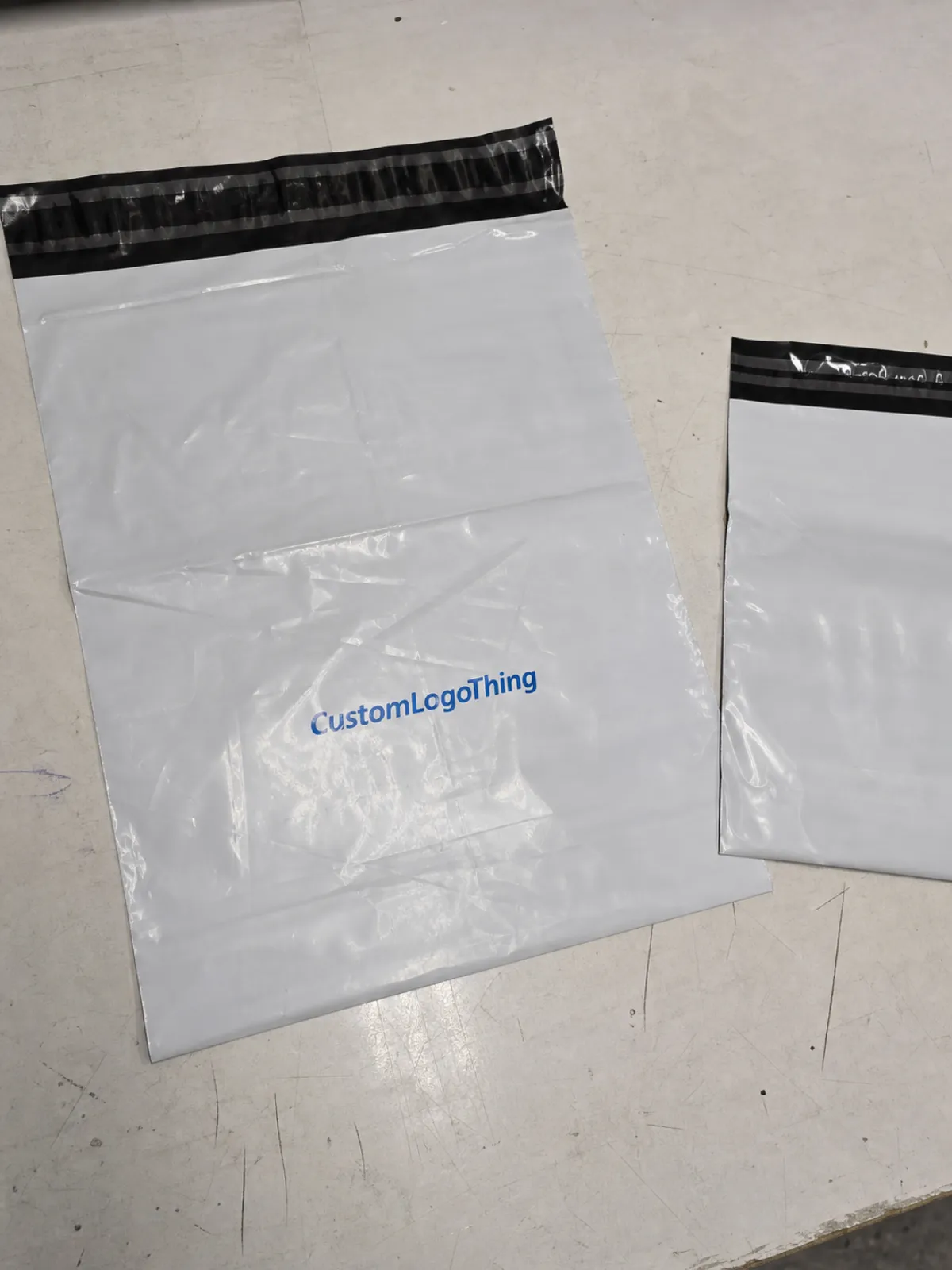
Most pricing confusion starts with vague specs. A buyer asks for a “standard 10 x 13 mailer with logo,” then gets three quotes that are not comparable. One supplier priced 2.0 mil film. Another assumed 2.5 mil co-extruded film. A third quoted one-color print on one side only.
Now everyone is talking about the same bag size and three different products. Fun.
Thickness, seal design, closure style, print coverage, and order quantity usually decide whether the bag performs well. A folded T-shirt does not create the same stress as a boxed cosmetic item with firm corners. An outbound-only shipment does not need the same closure setup as a return-friendly mailer with a second adhesive strip.
The first question should not be “How bold can the design be?” It should be “What construction lets the team pack this product quickly, seal it cleanly, and get it through normal parcel handling?” Once that is answered, the branding work gets easier. Good package branding supports the operation. It should not fight the packing bench.
Practical rule: lock the fit and film spec before debating ink coverage. A great-looking mailer that stretches at the seal or tears at the side seam is still a bad buy.
For a first run, be ready to discuss quantity, finished bag size, film gauge, print colors, closure style, and carton packing. If the product has sharp edges, heavy contents, delicate surface finishes, or a fixed launch date, say that early. Those details change the quote and the risk profile.
Poly film build, seal types, and print coverage that survive shipping
Most shipping mailers are made from polyethylene film, often LDPE or a co-extruded blend designed to balance flexibility, opacity, puncture resistance, and printability. A single-layer film can work for basic soft-goods shipping. A co-extruded structure may provide better surface feel, stronger opacity, and cleaner print definition.
The outside layer matters because ink needs a properly treated surface. If the film surface is not treated well, print can rub, fade, or look muddy after stacking, conveyor movement, and normal handling. That is not a branding problem. That is a production spec problem.
Film finish affects both appearance and function. A white opaque mailer gives strong contrast for dark logos and helps hide contents. A tinted film can improve privacy. Frosted film can feel softer and more retail-oriented, though it may show the product outline more clearly. Writable surfaces can help warehouse teams mark exceptions, but not every finish takes marker or shipping labels equally well.
Seal construction deserves more attention than it usually gets. Side seams carry stress as the product shifts inside the bag. Bottom seals have to hold when a packed mailer is dropped, tossed, or compressed under other parcels. For soft goods, a standard side-welded or bottom-sealed bag may be enough. For heavier kits or products with rigid corners, ask about seal width, reinforced seam options, and burst resistance.
Testing methods from groups such as ISTA can help frame transit risk, especially if the mailer is part of a larger parcel shipping program. You do not need a laboratory report for every T-shirt shipment. You do need enough testing to know the bag will not fail in the most predictable way possible.
Printing can be simple or expensive in a hurry. One-color logos are usually the cleanest and most economical. Two- or three-color designs can look strong, but registration tolerance on flexible film is not the same as printing on rigid paperboard. Full coverage and large ink fields can raise cost, lengthen proofing, and make scuffs more visible after transit.
Keep critical logos, QR codes, barcodes, return instructions, and compliance text away from folds, seal areas, and crushed corners. A gorgeous QR code printed across a fold is just a square decoration.
Functional extras can be worth the cost if they solve a real packing or customer problem. Tamper-evident closures help with security. Punch holes can support retail hanging or internal handling. Double adhesive strips make returns easier. Vent holes help bulky garments compress, though they may not fit moisture-protection requirements.
Choosing sizes, gauges, closures, and finish options
Size should be based on the packed product, not the flat product. Measure the item after folding, polybagging, boxing, or bundling, then add clearance for insertion and the final seal.
A folded hoodie that measures 11 x 13 x 2 inches will not pack comfortably into an 11 x 14 flat mailer. Thickness consumes usable width and length. In practice, many apparel mailers need 1 to 2 inches of extra room in both directions, sometimes more for bulky fleece, denim, or multi-item orders.
Gauge selection is the next major decision. A 2.0 mil mailer is common for lightweight apparel and soft goods. A 2.5 mil to 3.0 mil bag may be better for heavier garments, accessories, or items with firmer edges. Some specialty applications go thicker, but more film means higher material cost and sometimes a stiffer feel.
Thicker is not automatically better. It depends on weight, shape, product value, packing speed, and the shipping environment. Overbuilding the bag can waste money. Underbuilding it can create claims. Neither is impressive.
| Typical use | Common film range | Best fit | Buyer watchout |
|---|---|---|---|
| Light apparel | 2.0 mil to 2.25 mil | T-shirts, leggings, scarves | Avoid tight sizing that stretches the seal |
| Mid-weight soft goods | 2.5 mil to 3.0 mil | Hoodies, denim, small bundles | Confirm opacity and side seam strength |
| Accessories or boxed items | 3.0 mil or higher | Small boxes, kits, firm corners | Request puncture and drop-performance guidance |
| Returns-friendly shipping | 2.5 mil to 3.0 mil | Apparel returns, subscription goods | Use dual adhesive strips if returns are expected |
Closure style affects packing speed. A self-seal adhesive strip is standard and works well for outbound-only orders. Peel-and-seal liners give clean application and reduce exposed adhesive issues during packing. Reusable or dual-strip closures cost more, but they can reduce return friction and protect the product better on the trip back.
Finish choices should match the brand and the workflow. Matte film can feel more premium, especially for branded packaging. Glossy film can make colors appear sharper. Heavy ink coverage may look excellent on a sample and still show rub marks after parcel movement.
If the bag will carry shipping labels, test label adhesion on the chosen surface before committing to a large run. Smooth, coated, or heavily inked areas can behave differently from untreated white film.
A custom poly mailer Bags Bulk Order should balance freight savings against protection. Lighter film can reduce material use and shipment weight, but a claim rate increase of even 1% to 2% can erase those savings quickly for higher-value goods.
Cost, pricing, MOQ, and what changes your unit quote
Unit price usually moves with five variables: size, gauge, print colors, quantity, and finish. A small one-color mailer in a standard size may quote around $0.12 to $0.22 per unit at higher quantities. A larger 3.0 mil Custom Printed Mailer with two-sided graphics may land closer to $0.28 to $0.55 per unit, depending on coverage, packing, and freight.
Those ranges are general. Resin cost, film availability, ink coverage, order volume, and shipping distance can move the number. Treat any price range as a planning tool, not a promise.
MOQ stands for minimum order quantity, and it matters because setup cost has to be absorbed somewhere. Artwork review, plate making, press setup, film handling, converting, inspection, and packing all take time before the first finished bag is boxed. For simple one-color work, some suppliers can support lower MOQs. For custom size, multi-color print, or specialty film, the minimum often rises because the setup is less efficient.
Do not compare quotes by unit price alone. Ask whether tooling, plates, digital proofs, physical samples, carton packing, and freight are included. A $0.24 bag can become more expensive than a $0.27 bag if freight or plate charges were left out of the first quote.
Also confirm whether the quoted size is the usable inside dimension or the flat finished dimension. That one detail can decide whether the product fits. Packaging quotes love tiny assumptions. Tiny assumptions love becoming expensive.
- Lower cost levers: higher order quantity, standard bag size, one-color print, repeat artwork, and fewer special finishes.
- Higher cost drivers: thick film, custom sizing, double-sided print, heavy ink coverage, return strips, and tight delivery windows.
- Quote comparison basics: confirm MOQ, setup charges, freight terms, proof fees, lead time, carton count, and size tolerance.
A practical bulk order usually becomes more stable after the first run. Once artwork, size, film, and closure are approved, reorders avoid some of the early back-and-forth. Buyers with recurring volume should ask about Wholesale Programs instead of treating every reorder like a brand-new project.
Production steps, proofing, and lead time
After the quote is accepted, the order normally moves through artwork intake, dieline review, proofing, production scheduling, printing, converting, inspection, carton packing, and shipment. Each step catches a different risk.
Artwork intake checks file quality. Dieline review confirms print position and orientation. Proofing catches layout issues before film is printed. Inspection checks print legibility, film consistency, closure alignment, seal quality, and carton count.
Good artwork speeds everything up. Send vector files, usually AI, EPS, or PDF with outlined fonts. Include Pantone references if color consistency matters. Raster logos pulled from a website often print poorly, especially if someone tries to stretch them across a 12-inch panel.
If the mailer uses a white flood, tinted film, metallic ink, or a large logo, the supplier may need extra time to confirm ink opacity and film treatment. Flexible film printing has limits. Better to learn them during proofing than after 25 cartons arrive at receiving.
Typical production timing for a Custom Poly Mailer run is often 12 to 20 business days after proof approval. Specialty film, high quantities, revised artwork, or added inspection requirements can extend that timeline. Rush orders are easiest when the size already exists, the artwork has been used before, and the print is simple.
A first-time custom poly mailer Bags Bulk Order with custom dimensions and multi-color graphics should not be planned like a stock-label reorder. It needs more room.
Inventory planning matters. If your fulfillment team uses 4,000 mailers per week and the lead time is three weeks after approval, waiting until only 2,000 bags remain creates a preventable stockout. Set a reorder point based on weekly usage plus proofing, production, transit time, and a buffer for demand spikes. For repeat programs, staged shipments may help if storage space is limited.
For sustainability claims or recycled-content questions, rely on documented specs rather than vague language. The EPA provides useful material and waste-management context, and certifications such as FSC apply more directly to paper-based packaging than plastic mailers. If a supplier makes a recycled-content claim, ask for the percentage, documentation, and whether it affects opacity, strength, or print results.
What a dependable supplier should prove before you reorder
A dependable supplier proves consistency. Film thickness should stay within an agreed tolerance. Seals should hold under normal product weight. Print should remain legible, with reasonable color repeatability from run to run. Cartons should be labeled clearly enough for warehouse receiving to identify size, color, quantity, and reorder code without opening every box.
Communication is a technical signal. A capable supplier asks specific questions: What product goes inside? Is it soft or boxed? What is the packed weight? Will customers return items in the same mailer? Is the shipping label applied by hand or machine? Those questions are not delays. They prevent wrong assumptions.
Many buyers overvalue a tiny unit-price difference and undervalue supplier accuracy. Saving $0.015 per bag sounds good until an order arrives with weak adhesive, poor opacity, or a logo printed too close to the fold. Rework costs money. So do returns, repacks, and customer complaints.
If the mailer is part of a larger packaging system, connect the dots. A brand that uses Custom Packaging Products such as inserts, tissue, retail cartons, or labels should keep color and finish direction consistent. Poly film will not match paperboard exactly, and forcing that match usually creates disappointment. The whole package can still feel intentional.
Before reordering, check a sample from the original run against a sample from the new production batch. Look at seal position, print clarity, opacity, closure tack, film feel, and carton labeling. For larger programs, a basic retain sample process helps catch drift before thousands of bags enter fulfillment.
Common specification mistakes that raise damage and waste
Under-sizing is the mistake I see most often in buyer specs. A tight mailer slows insertion, wrinkles the print, distorts the closure, and can leave the product exposed near the seal line. If a packer has to force the item into the bag, the bag is too small or the product needs a different fold pattern.
Overprinting is another common cost leak. A mailer does not need to be covered edge to edge to create strong branded packaging. A well-placed logo, return message, or simple pattern can deliver a clean customer experience without adding unnecessary ink, proof cycles, and registration risk. Large dark ink areas can also show scuffs more readily during shipping.
Ignoring gauge and seal type creates failures that may not appear on a desk sample. A bag can look fine during review, then split when a boxed item hits the corner after a drop. ASTM test methods can be useful for comparing material properties, but practical pack testing still matters because real products create real stress points.
Skipping proof review is risky. Check artwork orientation, logo size, barcode readability, adhesive strip placement, return-strip instructions, and opacity before approving production. If the bag has a return strip, make sure the customer can use it without covering the original shipping label in a confusing way.
Do not assume Custom Poly Mailers replace all void fill or protective packaging. They are excellent for many soft goods and light product packaging applications. Rigid, fragile, sharp, or high-value items may still need custom printed boxes, inner wraps, padded mailers, corner protection, or inserts. The right answer depends on the product, not the category name.
What to send for a fast quote
The fastest quote starts with complete information. Send the product’s packed dimensions, target bag size if known, quantity, film thickness preference, print artwork, number of print colors, closure preference, delivery location, and target in-hand date.
If you are unsure about gauge, describe the product honestly. Include packed weight and note whether it has corners, zippers, hardware, boxed edges, hangtags, or anything that could rub or puncture the film. Photos help. Samples help more.
- Lock the size first: measure the packed product and allow clearance for insertion and sealing.
- Confirm protection needs second: choose gauge, opacity, seam strength, and closure style based on the product and shipping path.
- Compare cost third: review MOQ, setup charges, proofing, freight, carton packing, and production timing before choosing the lowest unit price.
For buyers who already know they need custom mailers, reviewing Custom Poly Mailers keeps the conversation focused on bag construction instead of broad packaging ideas. If you are still comparing mailers against cartons, sleeves, padded bags, or other formats, the broader FAQ can help clarify the basic order path.
A good supplier should come back with questions if the spec is incomplete. That is a positive sign. A quote that assumes everything without confirming size, gauge, closure, and print coverage may be fast, but it may not be useful.
If you want the order to move cleanly, send real packed product dimensions, final or near-final artwork, quantity target, and deadline in the first message. That gives the supplier enough detail to recommend a practical spec, quote the right MOQ, and help you avoid paying for a bag that looks right but performs wrong.
FAQ
What is the minimum order for a custom poly mailer bags bulk order?
MOQ depends on size, print count, film gauge, closure style, and whether the bag uses a standard or custom dimension. A simple one-color run in a standard size usually starts lower than a custom-size, multi-color mailer with a specialty finish. Higher quantities spread setup cost more efficiently, which lowers the unit price. If a supplier offers a very low MOQ, confirm whether plates, proofing, freight, and packing are included before comparing it against a larger-run quote.
How long does a custom poly mailer bulk order usually take?
After proof approval, many custom poly mailer orders take about 12 to 20 business days to produce, depending on film availability, print complexity, quantity, and inspection requirements. Repeat artwork usually moves faster than a first-time order because the size, print position, and color targets have already been reviewed. Rush requests are most realistic when the artwork is final and the size does not require new tooling.
What size and gauge should I choose for apparel mailers?
Choose size by measuring the folded, packed garment and adding enough clearance for clean insertion and sealing. Lightweight apparel often works in the 2.0 mil to 2.25 mil range, while hoodies, denim, bundles, and higher-value soft goods may need 2.5 mil to 3.0 mil film. If the product is bulky or compression-packed, request a sample or spec check before placing the full order.
Can I print both sides on custom poly mailer bags?
Yes, both-side printing is possible when the print method, film surface, and layout support the added coverage. It can make branded packaging feel more finished, but it may raise cost, increase MOQ, and lengthen proofing. Keep core brand marks and shipping-related information on the most visible panel, away from folds and adhesive areas.
How do I get the best price on a bulk order?
Keep artwork simple, choose a standard size when possible, confirm quantities early, and avoid specialty finishes unless they solve a real packing or branding need. Ask whether the quote includes tooling, freight, proof costs, and carton packing. Reordering the same approved spec usually delivers the most stable unit cost for a custom poly mailer Bags Bulk Order.
