Custom dad hats for Coffee Shop Merchandise work because they feel easy to wear, not promotional. A low-profile crown, curved brim, and adjustable back make them comfortable for staff and familiar enough for retail buyers. The best versions balance everyday wearability with a clean logo that still looks intentional on a shelf.
Buyers usually need to look past the artwork and check the parts that affect sell-through: fabric handfeel, crown shape, closure quality, decoration method, and the final finish. A hat that looks fine in a mockup can feel stiff, tall, or cheap in hand, which is why practical spec choices matter more than a flashy design.
For coffee shops, the hat has to do two jobs at once. It should be comfortable enough for shifts, and it should feel polished enough that a customer will pay for it later. If it fails on either side, it becomes hard to justify as merch.
What custom dad hats for coffee shop merchandise really are
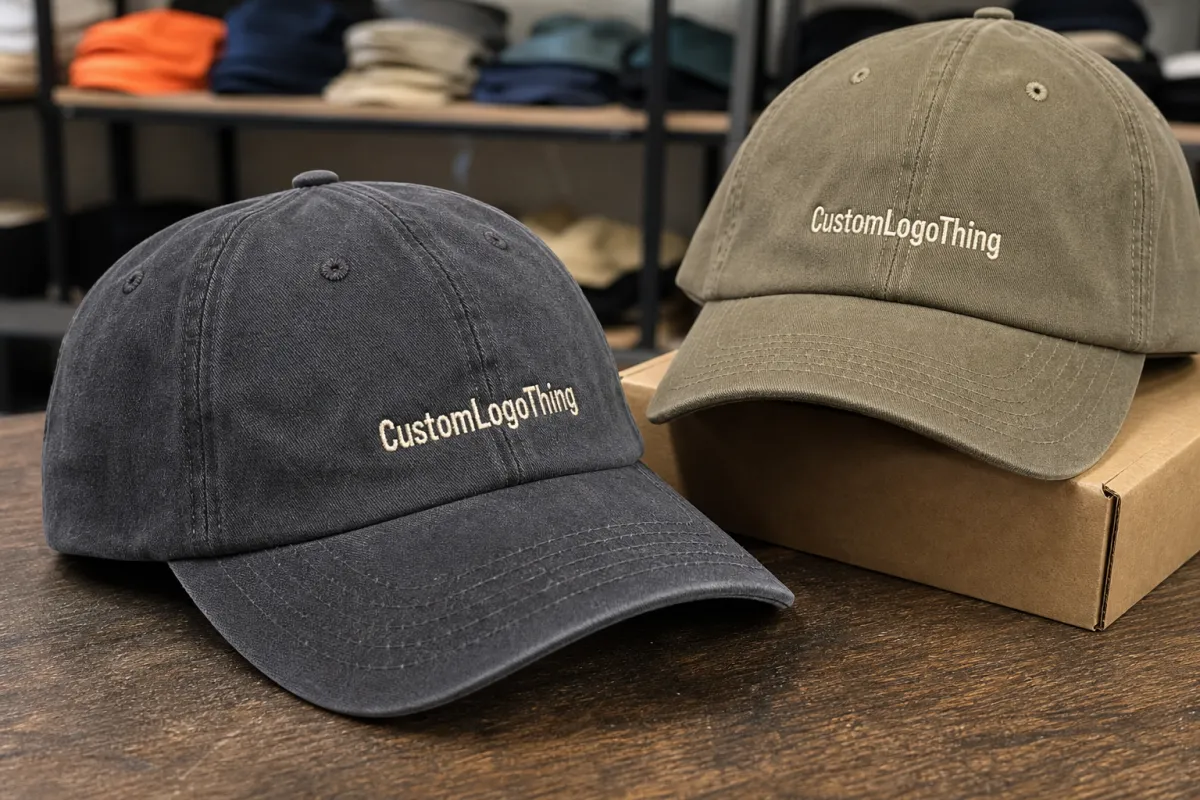
A dad hat is usually unstructured or lightly structured, with a curved brim and an adjustable back. Most are made from washed cotton twill, brushed chino twill, or a cotton-poly blend. Those materials differ in softness and drape, and that affects how the hat feels the first time someone picks it up.
The category fits coffee branding because it does not read like a souvenir cap. A simple logo on the right body feels closer to everyday apparel than to giveaway merchandise, which is why the style sells well at counters and on shelves.
From a buyer's point of view, a good hat needs to pass a quick practical test:
- Fabric should feel broken-in, not cardboard stiff.
- Fit should sit low enough to look relaxed on different head shapes.
- Closure should feel finished, whether it uses a strap, buckle, or metal slide.
- Logo size should sit cleanly on the front panel instead of fighting the crown shape.
That last point matters because embroidery or patch placement changes once it is applied to soft fabric. A logo that is too large can make the front panel flatten out, while a compact mark usually wears better and looks more premium. For the strongest retail result, the hat should feel like something a customer would buy even if the branding were smaller.
If the shop is building a broader merch program, the hat should fit the same visual system as mugs, totes, and other branded items. That keeps the display cohesive without forcing every product to look identical. For that kind of line planning, the cap often works best alongside custom packaging products so the shelf presentation stays consistent.
A coffee shop hat does its job when comfort comes first and branding supports it, not the other way around.
Decoration choices that hold up on a busy counter
Decoration is the main decision point because it determines how the logo reads, how durable the hat feels, and how much the item will cost. The right method depends on artwork detail, fabric type, and how premium the final product needs to feel.
Embroidery is the most common choice. It is durable, tactile, and immediately looks finished. Flat embroidery works well for simple logos and short wordmarks. 3D puff embroidery adds dimension, but it suits bold, minimal art better than small type or detailed coffee shop marks.
Woven patches are useful when the logo has fine detail or small lettering that would be hard to stitch cleanly. They preserve sharper edges and tighter artwork. Leather and PU patches create a more minimalist look and can fit rustic or premium branding, but they are not a match for every illustration.
Printed transfers can make sense for small runs or multicolor artwork. They are usually the most flexible for short-term testing, but the finish needs to match the hat fabric and expected wear. If the order will see repeated handling, it is worth checking how the print ages before committing to a larger batch.
| Decoration method | Typical add-on cost | Best for | Watch-outs |
|---|---|---|---|
| Flat or 3D embroidery | $0.80-$2.25 per hat at moderate quantities | Simple logos, durable retail hats, premium feel | Very small text and fine lines can close up |
| Woven patch | $1.20-$2.75 per hat | Detailed artwork, sharper edges, small lettering | Needs a clean patch shape and good edge finishing |
| Leather or PU patch | $1.50-$3.50 per hat | Minimal logos, rustic or premium lifestyle branding | Not ideal for detailed artwork or gradients |
| Printed transfer | $0.60-$1.50 per hat | Low-run tests, multicolor artwork, promo pieces | Can feel less permanent if the finish is not well matched |
These are planning ranges, not fixed quotes. Fabric, placement, number of colors, thread density, backing material, and quantity all affect the final number. As a rule, embroidery is the cleanest choice for simple logos, while patches usually handle tiny type or illustration better on a curved crown.
There are also size limits to keep in mind. Text below about 3 mm in height can become hard to read, and thin strokes need enough spacing to avoid filling in. A logo width around 2.25 to 2.75 inches is common, but crown height and seam placement can change what looks balanced in the final sample.
Quality control should check thread tension, stitch alignment, patch adhesion, crown symmetry, and whether the closure sits flat. Small defects stand out quickly on a cap because the decoration area is compact. If the sample already shows puckering or crooked placement, that issue usually gets more visible in bulk.
Pricing, MOQ, and unit cost drivers
Hat pricing is easiest to compare when it is split into pieces: blank cap, decoration, digitizing or setup, packaging, and any special labeling. Buyers often ask for a lump sum before deciding what the hat actually needs, which makes it harder to judge value.
For Custom Dad Hats for coffee shop merchandise, the blank body can range from lower-cost wholesale options to better washed twill or bio-washed cotton styles. At modest quantities, the blank may land around $2.50-$6.50. A finished decorated hat often falls in the $6-$12 range, though premium bodies, more complex artwork, or extra finishing can push it higher.
MOQ should match inventory risk, not optimism. A small shop testing demand may be comfortable with 48 to 72 hats. A busier cafe or multi-location brand may prefer 150 to 300 pieces if the per-unit savings justify the extra inventory. Shelf space, cash flow, and seasonal traffic should drive the decision as much as price.
A useful quote should separate the blank cap, decoration, setup or digitizing, label or hang tag, and packaging. If the hats will be bundled, shipped, or paired with other items, those costs need to be known early so the retail plan does not drift after production starts. That matters even more when the hat is part of a broader branded set rather than a stand-alone item.
Packaging can also affect the presentation and sourcing story. If inserts, hang tags, or cartons are part of the order, FSC-certified paper is an easier standard to explain than vague eco language. For shipped merch, transit testing may be useful too. The International Safe Transit Association publishes methods for checking vibration, compression, and drop risk before products move through distribution.
Process and timeline: from artwork to shelf-ready hats
The process should start with artwork and specs, not with color choices alone. Vector files are best because they hold clean edges at stitch size and keep the logo readable after placement on a curved front panel. Before production starts, the proof should show the hat style, decoration method, logo size, and placement.
For embroidery, digitizing is the step that matters most. The digitizer converts the art into stitch paths and decides density, direction, and pull compensation. That file determines whether the logo feels crisp or crowded, especially when the design is reduced for a front-panel application.
A typical timeline for Custom Dad Hats for coffee shop merchandise looks like this:
- Day 1-2: artwork submission and hat style selection.
- Day 2-4: proof preparation, digitizing, and placement review.
- Day 4-6: proof approval or one revision cycle.
- Day 7-12: production, decoration, and quality check.
- Day 12-15: packing and shipment, depending on quantity and stock.
That schedule can stretch if the blank body is backordered, if the artwork needs another revision, or if the decoration method requires separate approval for a patch shape or backing. If the hats are tied to a seasonal launch or grand opening, build in extra time so the order is not rushed at the end.
Retail-ready finishing should be approved with the hat itself. If the launch uses hang tags, fold inserts, or display cartons, those pieces should be proofed with the decoration file. Otherwise the hats can arrive finished while the presentation still needs work. That is a common failure point in smaller merch programs.
Before shipment, the inspection should confirm that the logo is centered, thread tension is even, the patch is applied flat, and the caps are sorted correctly. Those checks are simple, but they catch the problems customers notice fastest once the hats hit the counter.
Common mistakes that make merch hats sit on the shelf
The most common mistake is oversizing the logo. Dad hats work because they feel relaxed, and an oversized mark can make the cap look more promotional than wearable. That may be acceptable for a giveaway, but it usually weakens retail appeal.
Weak contrast creates another issue. A logo that blends too closely with the crown color may look refined on a screen but disappear in a real store. On the other hand, too many accent colors can pull the hat away from the rest of the brand system. A single clear hero color usually works better than a crowded design.
Choosing the wrong decoration method is equally risky. Tiny lettering stitched in too many colors can blur together, while a detailed illustration can lose clarity if the fabric is too soft or the stitch level is too high. If the artwork is busy, a woven patch or simplified icon usually performs better. If the artwork is spare, embroidery often feels cleaner and more premium.
Fit and finish matter just as much as the graphic. A flimsy closure, stiff brim, or crooked seam can make the hat feel cheap the moment someone touches it. Coffee shop customers often buy on impulse, which means the tactile impression can matter more than the brand deck. If the product does not feel right in hand, it may never get worn.
If a hat only looks good from a distance, it is probably too promotional. If it feels good in the hand and still reads clearly across the counter, the balance is much closer to right.
The retail setting matters too. A staff cap can be more functional, but a customer-facing cap has to compete with every other item on the shelf. That means the front panel, thread, patch shape, closure, and tag all contribute to how finished the item feels.
Expert tips and next steps for a stronger merch launch
A two-hat strategy is often the safest route. One version can be made for staff wear, where comfort and durability matter most, and another can be tuned for retail with a cleaner closure, better patch, or more polished finishing. That keeps the offer practical without forcing one style to do everything.
Ask for a physical sample or a close prototype before moving into a larger run, especially if the logo includes small type or sensitive color matching. Screens flatten texture and hide scale issues. Cotton twill, for example, absorbs color differently than a coated paper mockup, and a patch can shift in appearance once it bends over the crown.
For design, choose one clear brand color and let the fabric do some of the work. Warm cream, espresso brown, black, washed olive, and faded navy tend to fit coffee settings well because they feel grounded and easy to wear. A simpler design also photographs better in-store, which helps the hat sell without much explanation.
Before launch, keep the checklist focused:
- Finalize the art in vector format.
- Confirm quantity, decoration method, and hat color.
- Approve the proof and placement.
- Set retail pricing with margin in mind.
- Decide where the hats will be displayed.
Display matters more than it sounds. Hats hidden behind the register move more slowly than hats placed where shoppers can see texture and pick one up. If the shop already uses branded mugs, sleeves, or packaging, the hat display should feel like part of the same system.
If the launch includes bundles, gift sets, or shipping cartons, coordinate the rest of the custom packaging products early so the presentation stays consistent. That consistency helps the merch line feel intentional rather than assembled in pieces.
Set a restock trigger before the first batch sells through. Decide what number means reorder, what quantity makes sense for the next run, and whether the second order should repeat the same version or improve the decoration. That kind of planning keeps supply aligned with demand instead of creating a gap just when the item starts moving.
Done well, the hats become the kind of product customers wear on the commute, at the market, and back into the shop for another coffee. That is the real test: a cap that feels natural beyond the counter while still carrying the shop identity clearly.
FAQ
What should I order first for custom dad hats for coffee shop merchandise?
Start with a modest quantity that covers staff wear plus a small retail test. Choose one decoration method and one colorway so you can judge demand before expanding the line. A sample or proof is worth requesting so you can confirm logo size, placement, and overall feel before placing the full run.
Which decoration method works best on coffee shop dad hats?
Embroidery is a strong default because it is durable and looks finished on a simple hat body. Patches are better when the logo has tiny text, a detailed illustration, or sharp edges that would be hard to stitch cleanly. The right method depends on the art, the hat fabric, and how polished you want the final item to feel.
How much do custom dad hats for coffee shop merchandise usually cost?
Pricing depends on blank quality, decoration complexity, quantity, and any added finishing. Lower quantities usually cost more per hat because setup and decoration are spread across fewer units. Ask for separate line items for the blank, decoration, and packaging so you can see where the cost is actually going.
How long is the typical process and timeline for a small hat order?
Simple orders can move quickly once artwork is approved and the hat body is in stock. Embroidery adds time for digitizing and proofing, while patch orders may need extra material coordination. The best way to keep the schedule moving is to approve artwork promptly and avoid late design changes.
What logo style is best for a coffee shop dad hat?
Simple, high-contrast marks usually perform best because they stay readable at hat size. Small text should be used carefully since it can close up once it is stitched or applied to a curved front panel. A clean icon or short wordmark often feels more premium and more wearable than a crowded design.

