Custom Woven Label Beanies for Coffee Shop Merch That Sell
For coffee shops that want merch people actually keep, custom Woven Label Beanies for coffee shop merch are one of the easiest places to get the details right, because buyers can feel the knit, judge the cuff, and read the label before they ever ask what it costs. That is exactly why these beanies work so well at the counter, in a seasonal drop, or as part of a gift bundle: the product looks finished, not improvised.
Custom woven label beanies for coffee shop merch: why they feel retail-ready
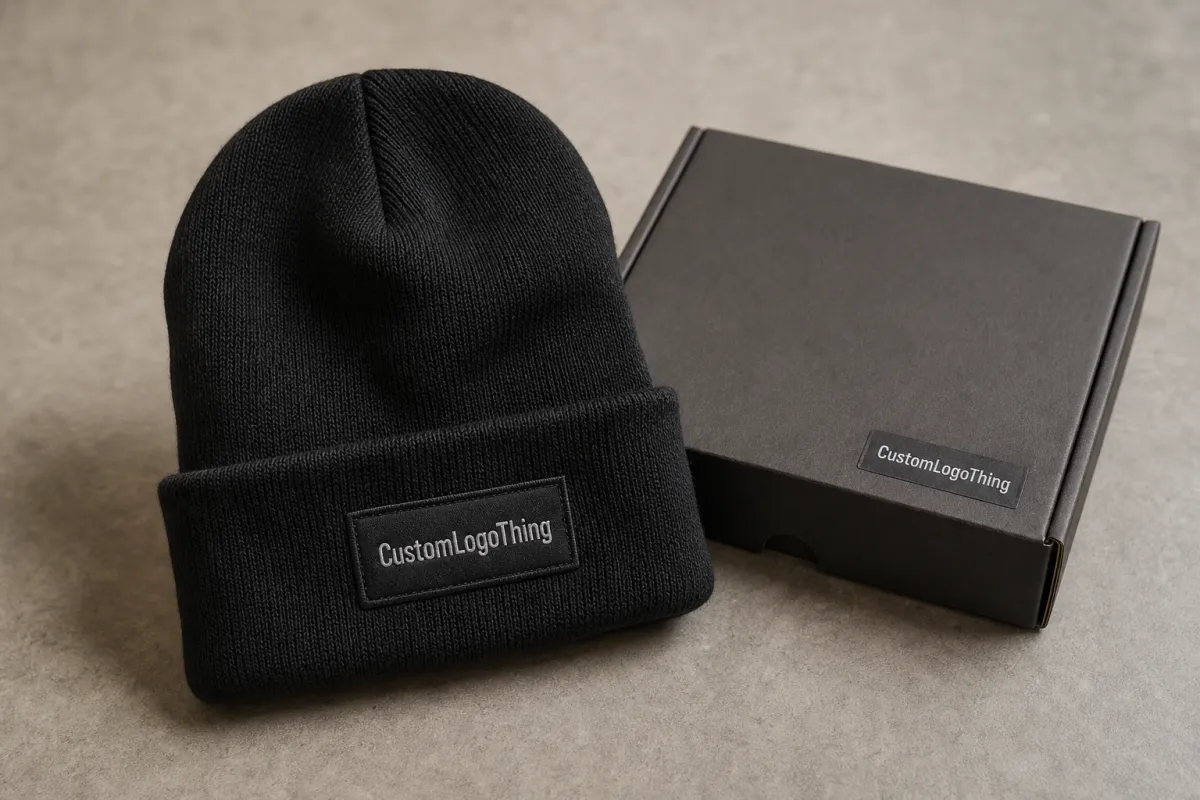
On a shop floor, beanies are judged fast. A customer runs a thumb across the cuff, checks the stretch, glances at the label, and in about five seconds decides whether the piece feels like retail packaging or just a blank hat with branding added later. That is why custom Woven Label Beanies for coffee shop merch have such strong shelf appeal: the label does the quiet work of making the whole item feel intentional.
A woven label changes the read of the product in a way screen print cannot. It gives the knit a small, structured identity marker, almost like a stitched signature. For coffee shops, that matters because merch often sits beside pastries, beans, mugs, and branded packaging all telling the same story. If the hat feels cheap, the whole brand story softens. If it feels considered, it supports the rest of the display.
I think a lot of buyers underestimate how much the label influences perceived value. A clean woven patch or folded label can make a mid-weight acrylic beanie feel closer to a boutique accessory than a giveaway item. That is especially useful for shops running a seasonal drop, a holiday bundle, or a small counter display where the merch needs to carry itself without a salesperson standing there explaining it.
In plain terms, this product is a knit beanie with a woven brand label attached in a visible spot, usually on the cuff or side seam. The buying goal is not just decoration. It is to create a coffee shop item that wears well, photographs well, and fits the price point of a customer who already trusts the brand enough to take a piece of it home.
The best cafe merch does not shout. It looks like something the shop would stock even if nobody asked for it, and that is why people reach for it.
Production steps, lead time, and proofing for labeled beanies
The production flow is usually straightforward, but each step affects the final result. It starts with artwork setup, then woven label development, then beanie selection, then label attachment, then finishing and inspection. For custom woven label beanies for coffee shop merch, the order of those steps matters because the artwork has to be translated from a screen file into thread, and thread behaves differently than ink.
Artwork review is where most delays start or end. A supplier will usually want a vector file, clear logo proportions, and color references that make sense in woven form. If the logo has thin outlines, tiny text, or a lot of nested detail, the label designer may need to simplify it before weaving begins. That is normal. Good buyers treat that as part of the process, not as a surprise.
Lead time often comes from four places: yarn sourcing, knitting capacity, label weaving, and attachment. If the label color needs custom matching, add a little more time. If the beanie body itself is custom knit rather than stock, add more still. For many standard runs, you are often looking at about 12-20 business days after proof approval, though custom knit bodies or complex finishes can extend that.
Proofing should focus on the details that affect sales, not just the artwork in isolation. Check the logo legibility first, then the label size, then placement, then how the cuff sits when folded. If the sample looks great flat but twists when worn, that is useful information. It is much cheaper to correct it before production than to discover it on the second box of finished goods.
For buyers who care about sourcing and transit quality, it can also help to ask whether packaging and shipment testing follow recognized standards. The ISTA test methods are a useful reference point for handling and transit durability, and the FSC system is worth asking about if your shop wants more responsible paper-based inserts or hang tags. Those details are not mandatory for every order, but they are part of a smarter procurement conversation.
Cost, pricing, and MOQ: what coffee shops should budget
Pricing for custom woven label beanies for coffee shop merch depends on the base beanie, the label complexity, the number of colors in the label, and how many pieces you order. Small runs usually carry a higher unit cost because setup is spread across fewer hats. Larger runs bring the price down, and that is where the economics start to look more like real retail.
For a coffee shop testing the market, a modest order is usually the safest place to start. If you are proving demand, a minimum order quantity in the 48-100 piece range is common, though some suppliers can go lower or higher depending on the decoration method and the beanie body. The key question is not just "What is the MOQ?" but "What is the cost difference between my test quantity and the next price break?"
Here is a practical budgeting view based on typical market ranges for labeled knit beanies. These are broad numbers, because yarn weight, stitch density, and finishing all move the quote:
| Order quantity | Typical unit range | What usually changes | Best fit for |
|---|---|---|---|
| 48-99 pcs | $7.50-$12.00 | Higher setup share, less pricing efficiency | Small launch, staff gift, local test run |
| 100-299 pcs | $5.50-$8.50 | Better spread of setup and label costs | Seasonal merch drop, steady counter sales |
| 300-999 pcs | $4.25-$6.75 | Lower unit cost, more room for premium finishes | Multi-store rollout, bundled holiday program |
| 1,000+ pcs | $3.25-$5.50 | More efficient knitting and labeling | High-volume retail, regional brand program |
Those numbers move with construction. A simple cuffed acrylic beanie with a one-color woven label will sit lower than a heavier knit, a wool blend, or a label with several thread colors. If you also add private labeling, hang tags, or custom printed boxes for a bundled retail set, the order becomes more polished but the landed cost rises accordingly.
From a buying perspective, the smartest move is to quote three quantities at once. Ask for the test run, the likely reorder level, and the volume that gets you a meaningful step down in unit cost. That gives you a clearer view of margin, not just sticker price. If you already know you need labels or packaging add-ons, keep an eye on Custom Labels & Tags and Custom Packaging Products so the merch, insert cards, and outer presentation all stay aligned.
Material, knit, and label placement choices that shape the final look
The material choice affects more than warmth. It affects how the hat feels in a customer’s hands, how the cuff holds shape, and how the label presents against the knit. For coffee shop merch, the common starting point is a mid-weight acrylic beanie because it is soft, practical, and usually easier to price into retail. A wool blend or thicker knit signals a different tier and can feel more premium, but it also asks more from the budget.
Rib knit beanies are especially popular because the texture gives the label a stable backdrop. A cuffed style is even easier to work with, since the label has a visible, flat-ish area that reads cleanly from the shelf. Slouchier fits can look great, but the label may sit lower or shift more during wear, which matters if your shop wants the logo visible from across the room.
Label placement should be decided with the same care as packaging design. Center cuff placement is the classic choice because it is easy to see and photograph. Side seam placement feels a little quieter and more fashion-led. Woven patch style works well if you want a stronger retail look, almost like a small badge. Each option changes how the beanie reads next to mugs, totes, and other product packaging on display.
Color contrast deserves real attention. A cream label on a heather gray hat may look refined, but if the logo is thin-lined or the type is delicate, the contrast may not be enough at arm’s length. A black or deep navy cuff with a light label often gives stronger legibility. That does not mean every coffee brand should go high-contrast. It just means the logo has to survive the distance from shelf to hand, because that is where most retail decisions happen.
There is also a practical fit issue. Some labels are softer and more flexible, while others feel slightly firmer depending on weave density and backing. If the beanie is meant to be worn all day, that comfort difference matters. A label that feels fine on a display sample can feel different after two hours on a customer’s head, and that is the kind of detail that separates decent merch from the kind people actually keep.
How to spec the artwork and approve a sample without slowing the order
Good artwork spec starts with restraint. Woven labels are small, and thread does not reproduce like a digital file. Bold shapes, clean edges, and controlled text sizes work best. If a logo contains script lettering, very fine strokes, or stacked taglines, the supplier may need to simplify the layout so it survives the weave. That is not a flaw in the product; it is just the nature of thread-based decoration.
As a rule of thumb, avoid tiny text below about 5-6 pt in the final label size unless the supplier has already confirmed it will hold. Keep linework thick enough to remain visible after weaving. If the mark is highly detailed, ask for a label mockup that shows the actual stitch resolution, not only the color placement. That makes approval faster and keeps the result closer to expectation.
A sample should prove four things: color balance, logo readability, placement, and comfort. If the label is too stiff against the cuff, that is a problem. If the cuff pulls oddly after the label is attached, that is also a problem. A good sample lets you see whether the beanie still feels like a beanie, not just a branded object.
For the approval step, I like a short checklist rather than a long email chain. Confirm the logo reads from arm’s length. Check that the label is centered or intentionally offset. Make sure the beanie shape matches the retail position you want, folded or unfolded. Then approve or request one clean round of changes. That is usually enough to keep the order moving.
It also helps to understand the difference between apparel decoration and packaging design. A beanie label is small, but it still plays the same role as a hang tag, carton panel, or retail insert: it tells the buyer who made it and why it belongs to your brand. That is why the merch should feel tied to the shop’s broader visual system, not designed in isolation from the rest of the package branding.
Common mistakes that make merch beanies look generic
The biggest mistake is overcomplication. Oversized logos, thin fonts, and too many small details can turn into visual noise once they are woven into thread. A customer may like your logo on a website, but that does not mean every element will translate cleanly onto a 2-inch label. Simplifying the mark is often the smarter branding move.
Another common miss is weak contrast. If the beanie color and the label color sit too close together, the design can flatten immediately. A charcoal beanie with a nearly black label may sound tasteful in theory, yet on a retail rack it can disappear. The goal is not loudness. The goal is a clear read at the distances that matter in a shop.
Placement errors matter more than people expect. A beautiful woven label on the wrong part of the cuff can make the whole item feel slightly off. Too low, and it looks accidental. Too high, and it can interfere with the fold. This is why the mockup should show the hat on head shape, not only as a flat artwork sheet.
Rushed budget decisions can also backfire. If the lowest quote forces you into a scratchier yarn, a label with poor weave density, or a finish that frays after handling, the hat may sell once and disappoint later. That matters in coffee shops because customers often compare the merch to the quality they already expect from the cups, sleeves, and custom printed boxes around the rest of the brand experience.
Honestly, I think the most common brand mistake is treating the beanie as an add-on instead of a core retail item. Once you do that, the logo gets oversized, the label gets generic, and the whole piece reads promotional instead of collectible. The better path is simple: design it like a small retail product that happens to carry your logo.
Actionable next steps for ordering coffee shop merch beanies
If you are ready to order custom woven label beanies for coffee shop merch, start with a clean file, a clear quantity target, and one decision about where the label should live. That sounds basic, but it keeps the quote process fast and accurate. You do not need ten options to begin; you need one good direction and a supplier who can price it honestly.
A smart launch plan usually includes two versions: a core color, such as black, oat, or heather gray, and one seasonal color that gives the drop a little energy. That gives the shop room to test demand without overcommitting inventory. It also makes your display look intentional, which matters as much as the product itself.
Before you place the order, have real staff members try the sample. A beanie can look great on a flat table and still sit awkwardly on different head shapes. Check cuff depth, stretch, and whether the label feels comfortable after a few hours. If the team will wear it behind the counter, that feedback is more valuable than a polished mockup.
Here is the short version of what to ask your supplier:
- What are the prices at 48, 100, 300, and 1,000 pieces?
- What is the sample turnaround and the full production lead time?
- What label finishes, stitch densities, and placement options are available?
- What artwork limits should I follow so the woven label stays readable?
- What exactly is included in the quote, especially packaging and hang tags?
If you want the merch to feel fully integrated, think about the whole display, not only the hat. The beanie should sit comfortably beside the rest of your retail packaging, whether that includes bags, tags, sleeves, or custom printed boxes. That is how a coffee shop turns a simple seasonal item into a small branded system instead of a pile of unrelated products.
From where I sit, the best custom woven label beanies for coffee shop merch are the ones that respect the material, keep the design legible, and match the shop’s pricing level without pretending to be something they are not. Get those three things right, and the hat tends to sell because it feels like part of the place, not just a logo product.
How long does custom woven label beanies for coffee shop merch usually take to produce?
Lead time depends on whether the beanie body, woven label, and packaging are stock-based or made specifically for your order. In many cases, artwork approval, sample review, and knit production are the biggest checkpoints, and a supplier should be able to map the schedule before you approve anything.
What is the best beanie style for custom woven labels on coffee shop merch?
Cuffed rib knit beanies are a strong choice because the cuff gives the label a visible, stable area and the style feels familiar to most customers. A mid-weight knit usually balances structure and comfort well, which helps the merch feel retail-ready instead of flimsy.
How much do custom woven label beanies for coffee shop merch cost per unit?
Unit cost changes with quantity, beanie quality, label complexity, and any packaging extras. Smaller runs cost more per piece, while larger orders usually reduce the price noticeably, so it helps to request pricing at multiple quantity levels before deciding.
Can a woven label show a detailed coffee shop logo clearly?
Yes, but the logo needs enough contrast and simplified detail to read well in thread. Thin lines, tiny text, and crowded layouts usually work better after they are adjusted for weaving, and a good proof should show whether the design still reads at the actual label size.
What should I ask before placing an order for custom woven label beanies for coffee shop merch?
Ask about sample timing, production lead time, MOQ, and pricing by quantity. Confirm label placement, artwork limits, and whether the beanie style fits your season or climate, then make sure you know exactly what is included in the quote so there are no surprises later.

