Place a Custom Dad Hats Bulk Order for Teams and Brands
If you are planning a Custom Dad Hats bulk order, the first decision is not the logo. It is the job the hats need to do. A cap for staff uniforms has different priorities than a giveaway item, and both are different from a retail style that has to earn shelf space. Dad hats work well across those use cases because the low-profile crown, curved brim, and relaxed fit feel familiar to most buyers and rarely need much explanation.
That familiarity is part of the appeal in bulk production. The style is forgiving on the head and forgiving in decoration, which makes it easier to keep a run consistent across a few hundred or a few thousand pieces. Buyers usually care about three things once the hats arrive: whether the fit is comfortable, whether the logo reads cleanly, and whether the order looks like one unified program instead of a stack of near-matches. A dad hat can do that job without feeling overly formal or overly trendy.
The other reason this style stays in circulation is practical. It handles embroidery well, it accepts patches without looking overworked, and it tends to hold up better than a highly structured cap when the goal is repeatable results. For brands, teams, and event planners, the value is not novelty. It is a cap that looks right in a staff photo, a trade show booth, and a retail rack without needing three separate designs.
Why a custom dad hats bulk order fits real-world promo use
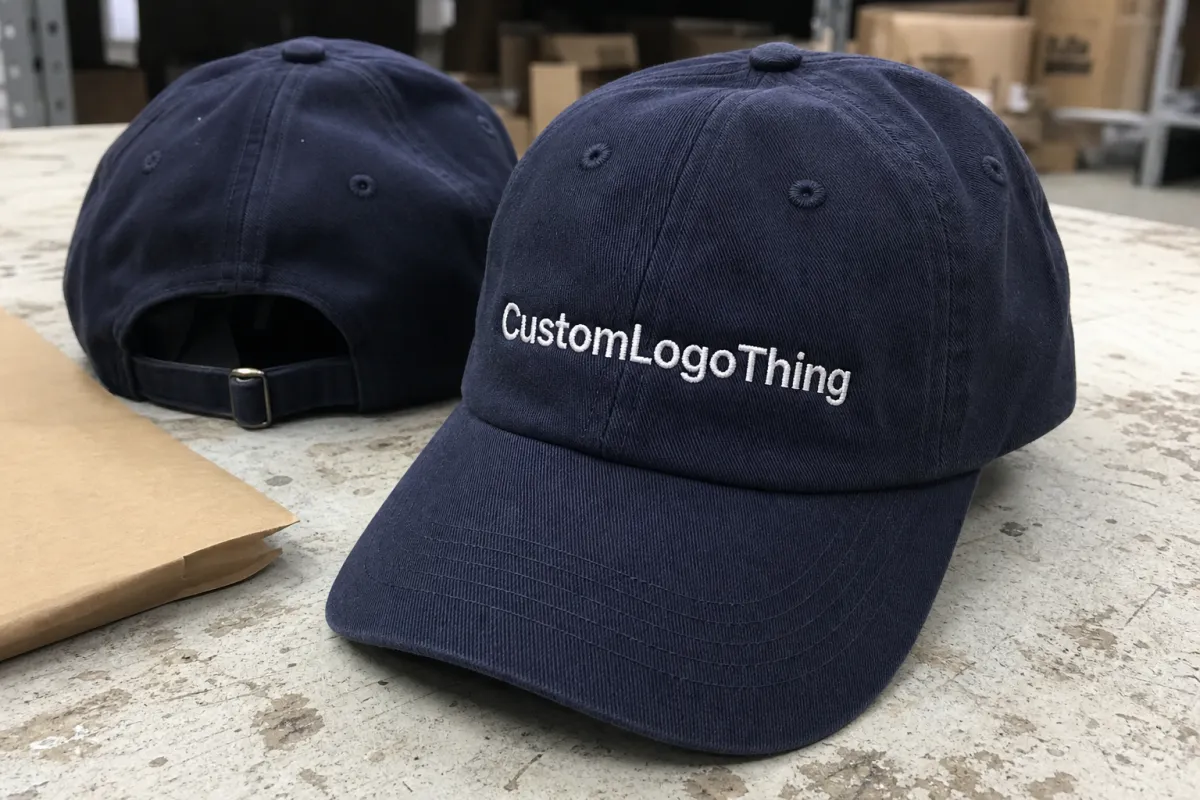
A custom Dad Hats Bulk order makes sense when the same item has to work across different settings without losing credibility. The hat can support a staff program, cover a giveaway table, and still feel appropriate as merch someone would actually wear later. That flexibility matters because most buyers do not want to manage multiple silhouettes for different channels unless the volume justifies it.
The style also tends to get approved faster. A low-profile crown feels less intimidating than a tall structured front panel, and the curved brim is familiar to people who never warm up to square, rigid caps. In a team setting, that reduces pushback over fit. In a brand setting, it lowers the chance that the hat gets purchased but never worn. Those are small differences on paper and major differences once the boxes are open.
From a production angle, dad hats are friendlier to repeat runs than many trend-driven cap styles. The construction is usually straightforward, the closure options are common, and the decoration area is predictable. That makes a second order easier to match to the first one, which is more useful than chasing a temporary look that may age out before the inventory clears.
If the goal is practical visibility, not fashion theater, this is often the safest place to spend the budget. A good bulk hat should not demand attention. It should carry the branding cleanly, survive distribution, and still feel like something a person would reach for on their own.
“The best bulk cap is the one people wear twice without thinking about it, then ask for again because it fit the job.”
Dad hat construction details that affect the final look
The difference between an ordinary cap and one that feels thoughtfully made usually starts with the build. Most dad hats are unstructured or lightly structured, often with a six-panel construction and a curved brim. Five-panel versions exist too, but the front shape changes the feel of the logo and the overall profile. A six-panel cap usually reads more classic. A five-panel can look cleaner for certain graphics, though it gives less room for tall artwork.
Fabric choice matters more than many buyers expect. Cotton twill is a dependable base because it has body, holds color well, and takes embroidery cleanly. Washed cotton creates a softer hand and a more worn-in appearance, which suits lifestyle brands and casual uniforms. Brushed chino feels smoother and often gives thread a crisp finish. Blends can lower cost or improve shape retention, but the hand feel varies enough that the exact fabric content should always be confirmed rather than guessed.
Fit details are where experienced buyers save themselves trouble. Crown depth changes the way the hat sits. A slightly deeper crown can improve comfort for some wearers, while too much depth makes the cap slump in a way that may not suit the brand. The sweatband also matters. A stiffer band can help the cap keep its shape; a softer band can feel better on long wear days. Ask for the spec sheet, not just a photo, because the details that matter most are often the ones you cannot see from a front-facing mockup.
Closures deserve the same attention. A self-fabric strap with a metal buckle usually feels more refined than a plastic snap, while a fabric-and-slide closure sits in the middle for cost and comfort. For a custom dad hats bulk order, that choice affects more than appearance. It changes the perceived value, the adjustment range, and how the hat looks once it is hung on a retail peg or packed in a shipped kit.
Distressed finishes need a quick reality check. If a hat is washed or deliberately frayed, confirm how that effect is created and where it should appear. Some buyers expect a clean retail finish and receive a style that looks worn by design. That is not a quality failure if it was approved that way, but it becomes one if nobody defined the finish before production started.
Decoration choices that hold up in bulk production
Decoration is where the hat becomes a branded product instead of a blank. For most bulk runs, embroidery remains the most dependable option. It wears well, looks premium without being fragile, and usually scales better than methods that depend on a perfectly flat print surface. A small wordmark or simplified logo often translates best to embroidery because the thread gives enough texture to feel substantial without overwhelming the cap.
That said, not every logo belongs in thread. Fine lines, tiny type, thin outlines, and complex gradients can collapse when scaled down to cap size. If the artwork depends on detail, a woven patch often gives a cleaner result. Woven patches preserve sharper edges and small shapes better than embroidery, which makes them useful for retail merch where the logo needs to stay legible at arm’s length.
Leather and faux-leather patches create a different look. They read more rustic or more premium depending on the finish, and they work best with simple shapes and tonal branding. Printed decoration can also work, especially for color-heavy graphics or limited test runs, but durability should be discussed honestly. Print is not automatically the better answer just because it can reproduce more detail.
Placement is as important as method. Center front is the default because it is easy to read and easy to approve. Side embroidery gives a subtler result. Back branding can help with event identification or small promotional runs, though it rarely carries the same visual weight as front placement. Adding more placements increases cost and production complexity quickly, so keep the layout intentional.
Here is a practical comparison of common decoration choices:
| Decoration method | Best for | Typical added cost | Notes |
|---|---|---|---|
| Embroidery | Bold logos, team names, durable basics | $0.60-$2.00 per hat, plus digitizing | Clean and durable; very small details need careful scaling |
| Woven patch | Detailed artwork, sharper edges, retail merch | $0.90-$2.50 per hat | Good when thread would blur the design |
| Leather or faux-leather patch | Rustic or premium branding | $1.00-$3.00 per hat | Best with simple marks and strong contrast |
| Print or transfer | Color-heavy graphics, short runs, special art styles | $0.40-$1.50 per hat | Can be cost-effective; ask about wash durability and surface prep |
Before approving a custom dad hats bulk order, ask for a proof that shows logo size, thread colors, patch border width, and exact placement. On low-profile caps, a few millimeters of change can alter the whole look. A logo that feels balanced on a computer screen can appear too large on the actual front panel, especially if the hat has a soft crown and limited structure.
Pricing, MOQ, and unit cost drivers to compare
Bulk hat pricing follows a few predictable forces. Quantity is the first one. Decoration method is the second. After that come thread colors, patch construction, labeling, packaging, and whether the supplier has to split the order across colorways or versions. A simple embroidered run in one color almost always costs less per unit than a short run with multiple production steps and custom finishing.
For rough planning, decorated dad hats in bulk commonly land somewhere around $4.50-$9.50 per unit. That range is broad on purpose. A one-color embroidered logo on a standard cotton cap is not the same product as a patch hat with custom hangtags, size labels, and individual polybagging. If the quantity drops, the unit price usually rises. If the decoration becomes more complex, the same thing happens.
MOQ, or minimum order quantity, is where many buyers get caught off guard. The minimum may apply per style, per logo, per color, or per decoration method. A 100-piece minimum sounds manageable until it turns out to apply to each colorway separately. That is why it helps to ask a supplier how the minimum is counted before comparing quotes. Otherwise, two quotes that look similar can behave very differently once the pieces are allocated.
The lowest headline price is not always the best deal. Shipping, rush fees, relabeling, overage policies, and special pack-in requirements can change the final landed cost. If the order includes retail-ready packaging, coordinate it early so the hat run and packaging run are built around the same delivery window. For broader presentation needs, pairing the order with Custom Packaging Products can help keep the product presentation consistent across the full shipment.
These scenarios usually behave differently in the quote process:
| Order type | MOQ pressure | Price behavior | Best fit |
|---|---|---|---|
| Single-logo embroidered run | Low to moderate | Usually the best value per unit | Teams, clubs, and straightforward brand merch |
| Patch-based retail run | Moderate | Higher unit cost, stronger shelf appeal | Retail packaging and resale programs |
| Mixed colors, same logo | Moderate to high | Can increase setup complexity | Campaigns with multiple team or event colors |
| Short test run | Highest relative cost | Often priced near the floor | New artwork, pilot merchandising, limited drops |
If you are deciding whether to keep the order simple or customize every detail, the safest move is usually to protect the details customers will actually see. Spend on the logo, the fit, and the finish. Be cautious about extras that only look useful on a quote sheet. That is usually how a custom dad hats bulk order stays useful instead of becoming expensive clutter.
Process, proofing, and lead time from quote to shipment
The cleanest orders follow a familiar path: request quote, submit artwork, review mockup, approve proof, enter production, finish decoration, pack, and ship. Each step sounds ordinary, but small issues can slow the entire schedule. A fuzzy logo file, an undefined color, or a late change to placement can push a job back more than a buyer expects. The proof stage is the last point where those mistakes are cheap to fix.
Lead time should always be split into proofing time and production time. Proofing can take a day or several days depending on how quickly the buyer responds and whether the artwork needs cleanup or digitizing corrections. Production for standard decorated orders often falls in the 12-15 business day range after proof approval, though patch work, custom labeling, or larger quantities can extend that. Shipping time sits on top of manufacturing time, so the calendar should be built with both pieces in view.
If you have a fixed event date, ask three things before approving the run: when the clock starts, whether rush service is available, and what happens if artwork changes after approval. It also helps to ask whether partial shipments are possible if some units are needed sooner than the rest. Those answers should be clear in writing. If they are vague, the schedule will probably be vague too.
For programs that include hats with shirts, inserts, or other merchandise, the packing plan matters as much as the decoration plan. The cap should move through the same timeline as the rest of the order, not arrive in a way that forces last-minute repacking. A well-managed custom dad hats bulk order should fit into the larger distribution flow without creating a bottleneck. If you are coordinating multiple product types, the order often runs more smoothly when the packaging and fulfillment requirements are discussed together instead of one after the other.
Supplier standards that protect consistency across every dozen
Consistency is what separates a decent sample from a dependable bulk program. On hats, that means checking stitch alignment, logo placement, thread tension, brim curve, closure function, and color match before the cartons leave production. One crooked logo may be tolerable in a one-off sample. Ten crooked logos in a shipment is a quality failure. The same is true for color variation. Even small shifts across cartons can make the order feel mismatched once the hats are laid out together.
Good suppliers should provide a spec sheet that is specific enough to be useful later. That sheet should include the base hat style, fabric, closure, decoration method, logo size, Pantone or thread references where relevant, packaging details, and any overage allowance. The more detailed the spec, the easier it is to catch drift before it becomes a problem. Strong communication is part of quality control, not a separate service.
There are also useful standards outside the cap itself. If your order includes shipping cartons or packaging inserts, the ISTA testing framework is a practical reference for distribution handling. If your packaging includes paper-based components, the FSC certification system helps support responsible fiber sourcing. Those references do not replace inspection, but they show the supply chain is being considered beyond the visible product.
Carton counts, size breakdowns, label placement, and overage policies can all affect receiving. If the order is being sold retail or packed into kits, the container spec should be written down early. A hat that looks fine in production can still become a receiving headache if the cartons are packed loosely, labels are inconsistent, or the counts do not match the paperwork. That is why a custom dad hats bulk order is still a manufacturing job, even though the finished item feels casual.
For broader packaging literacy, the Packaging School and Packaging Professionals site is a useful reference point for material and process basics. That kind of discipline helps here because the hat, the carton, and the insert all need to behave like part of one system.
What to prepare before you request your quote
Quotes move faster when the buyer sends complete information the first time. At minimum, prepare the quantity, preferred delivery date, hat color or color range, logo file type, decoration method, and any special packing or labeling requirements. If you already know the closure preference or the brim style, include that too. If you do not know, say which details are fixed and which are flexible. That one distinction helps a supplier price the job honestly instead of filling gaps with assumptions.
Use a short checklist before sending a custom dad hats bulk order request:
- Quantity: total pieces and, if needed, the breakdown by color or version.
- Artwork: vector file preferred, plus font notes and color references.
- Decoration: embroidery, patch, print, or a combination.
- Finish: washed, clean, distressed, premium closure, or standard closure.
- Packing: individual polybags, size labels, carton markings, or retail-ready packaging.
- Timeline: target in-hand date, event date, or shipping window.
If the hats are part of a larger brand drop, think about the full presentation at the same time. The cap, tag, shipper, and insert should read as one program instead of separate purchases that happen to leave the warehouse together. That is where Custom Packaging Products can support the order if you are matching apparel, accessories, or retail packaging across more than one SKU.
One more practical point: decide what you can approve quickly. Buyers slow themselves down when every detail stays open during quoting. If the logo is final but the color is not, say so. If you are open to one of three closures, say that too. Clear boundaries help the supplier return a tighter number, which keeps the schedule realistic and the custom dad hats bulk order easier to execute. If you need a broader purchasing path, the FAQ page can also help sort common order questions before you request pricing.
When the specs are clear, a custom dad hats bulk order stops feeling like a guessing game and starts behaving like a straightforward production job: choose the right crown, confirm the decoration method, approve the proof, and allow enough time for manufacturing and freight. The strongest orders are usually the ones with fewer surprises at the start. That is what keeps the quote accurate, the proof clean, and the finished hats aligned with the standard you had in mind.
Frequently asked questions
What is the usual minimum for a custom dad hats bulk order?
Minimums vary by decoration method and supplier, but embroidered and patch styles often start at quantities that make sense for team use, retail, or event giveaways. Ask whether the MOQ applies per color, per logo, or per style, because that changes the real budget impact quickly.
Which decoration method is best for custom dad hats in bulk?
Embroidery is the most common choice for a durable, premium look, while woven or faux-leather patches work well for bolder branding and texture. The right answer depends on logo detail, budget, and the finish you want across the full order, not just on one sample.
How long does a custom dad hats bulk order usually take?
Timing depends on proof approval, decoration method, order size, and current production load, so buyers should separate sampling time from manufacturing time. If the event date is fixed, ask for the estimated lead time before artwork changes and confirm whether rush production is available.
Can I mix colors or styles in one bulk order?
Many suppliers allow mixed colors, but the minimum may apply to each colorway or each variation, which affects pricing and production planning. Confirm whether mixed closures, mixed decoration placements, or mixed artwork versions are allowed before you finalize the quote.
What do I need to send for an accurate quote on custom dad hats bulk order pricing?
Provide your quantity, preferred hat color, logo file, decoration method, target delivery date, and any labeling or packaging requirements. The more complete the request, the more accurate the pricing and lead time estimate will be.

