Buyer Fit Snapshot
| Best fit | Custom Die Cut Corrugated Boxes projects where brand print, material claims, artwork control, MOQ, and repeat-order consistency need to be specified before quoting. |
|---|---|
| Quote inputs | Share finished size, material target, print colors, finish, packing count, annual reorder estimate, ship-to region, and any compliance wording. |
| Proofing check | Approve dieline scale, logo placement, barcode or warning zones, color tolerance, closure strength, and carton packing before bulk production. |
| Main risk | Vague material claims, crowded artwork, missing packing details, or unclear freight terms can make a low unit price expensive after revisions. |
Fast answer: Custom Die Cut Corrugated Boxes: Design, Cost, Fit should be specified like a repeatable production item. The safest quote records material, print method, finish, artwork proof, packing count, and reorder notes in one written spec.
Production checks before approval
Compare the actual filled-product size with the drawing, then confirm tolerance on folds, seals, hang holes, label areas, and retail display edges. Reserve space for logos, QR codes, warning copy, and material claims before decorative graphics fill the panel.
Quote comparison points
Review material grade, print process, finish, sampling route, tooling charges, carton quantity, and freight assumptions side by side. A quote is only useful when the supplier can repeat the same color, closure quality, and packing count on the next order.
Custom Die Cut corrugated boxes start with the product, not with a random catalog size and a prayer. That sounds obvious, but plenty of packaging still gets designed backwards. The result is usually the same: extra filler, sloppy fit, higher freight, and a carton that feels kinda close without actually doing the job. A well-built custom die cut corrugated box removes that guesswork because the board, folds, and closure are built around the item instead of forced to accommodate it.
I have watched teams spend more money compensating for a bad box than they would have spent on a better structure in the first place. More dunnage. More labor. More damage claims. Sometimes the box is only a few millimeters off, yet that tiny mismatch creates a chain reaction at pack-out and in transit. Custom die cut corrugated boxes are valuable because they trim those hidden costs before they spread downstream.
Packaging buyers do not just manage dimensions. They manage dimensional weight, breakage risk, line speed, and customer perception all at once. A carton that is five millimeters too wide can trigger extra filler and bump shipping cost. A carton that is too tight can crush corners or slow assembly. A box that fits properly is not a luxury; it is a practical decision that pays off in fewer surprises and cleaner operations.
For brands comparing Custom Packaging Products with standard formats, the real tradeoff is rarely only price. It is fit, protection, labor, and the experience on the other side of the unboxing. That is why structural design matters just as much as graphics.
"A carton is not only a container. It is part of the product journey, part of the shipping unit, and often the first thing a customer judges before they touch the item itself."
What Are Custom Die Cut Corrugated Boxes?
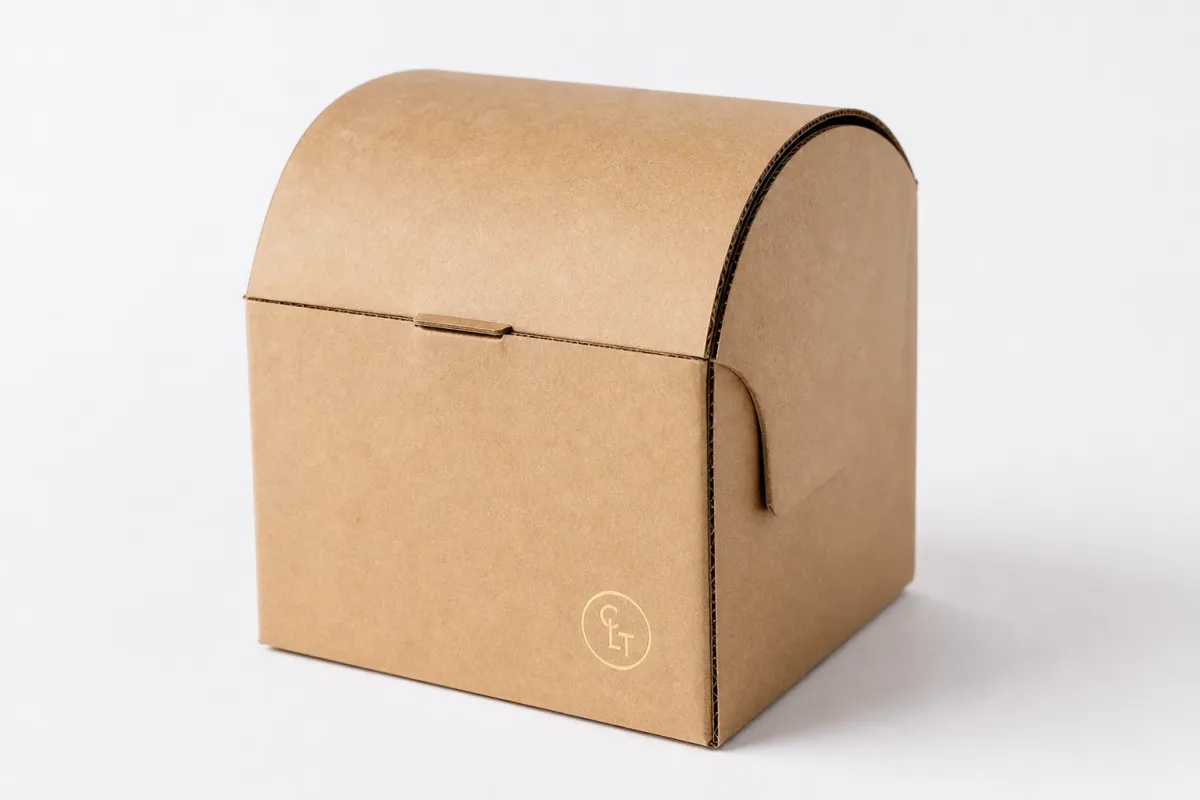
Custom die cut corrugated boxes are corrugated containers cut to a specific dieline so the board folds into a shape matched to a product, a shipping method, or a retail display goal. A cutting die or digital cut path creates scores, slots, flaps, and locking features in precise locations. The blanks are shipped flat and assembled only when needed, which helps reduce storage space and inbound freight. That flat-packed format is one reason custom die cut corrugated boxes show up so often in ecommerce, subscription programs, and kitting operations.
The biggest benefit is fit. An item that would rattle inside a stock carton can sit in a snug cavity with less filler and fewer internal shifts. That matters for glass, cosmetics, electronics, and oddly shaped goods with handles, corners, or accessories that need to stay aligned. It also changes the customer experience. A box that opens cleanly and holds the product in place feels deliberate. A box stuffed with void fill feels improvised, even if the shipping cost on paper looked lower.
There is a freight angle that is easy to miss until the invoices start landing. Oversize the box and dimensional weight climbs. Undersize the protection and claims climb. Carriers price around cube as much as pounds, so a few inches can change the math in a way many teams do not expect. Custom die cut corrugated boxes affect both sides of that equation.
These boxes are common in retail packaging, ecommerce fulfillment, industrial kitting, and promotional mailers for a reason. They are not always the cheapest line item on a quote, but they often become the lower-cost choice after labor, filler, freight, and damage are counted together. The payoff is a carton that fits, protects, and presents as if somebody planned the shipment from the beginning instead of building it on the fly.
There is also a nice side effect for the pack line: less fiddling. When the structure is designed correctly, assembly gets faster and the box closes the same way every time. That consistency matters more than people think.
How Custom Die Cut Corrugated Boxes Are Made
The process usually begins with measurements, product photos, and a clear use case. Will the box ship by parcel or pallet? Does it need to hold one product or a kit of parts? Is the carton meant to look polished on arrival, survive a warehouse lane, or do both? Those answers become a dieline, which is the flat map of cuts, folds, and closures. Packaging designers use that map to make sure the board folds cleanly, locks properly, and protects the product without turning packing into a wrestling match.
Once the structure is approved, the dieline becomes a cutting die or a digital cut file, depending on the production method. The corrugated board is cut, scored, slotted, and sometimes perforated so the panels behave predictably during assembly. In custom die cut corrugated boxes, those folds are functional, not decorative. A bad score line can keep a flap from closing. A misplaced tab can slow a line. A weak corner can fail long before the shipment reaches a customer.
Many designs also include tuck tabs, dust flaps, crash-lock bottoms, thumb notches, or internal retention points. Those features can save time at pack-out because the box opens faster, folds more intuitively, and seals with fewer extra steps. Good die cut design lowers friction. Faster assembly. Fewer mistakes. More consistent output across the whole run.
After cutting and scoring, the blanks are bundled flat. That is one of the strongest operational advantages. Warehouse space is not cheap, and neither is inbound freight on pre-assembled containers. Flat blanks can be staged beside the line and built only when the order appears, which helps when demand rises and falls or when labor has to move quickly from one SKU to another. Custom die cut corrugated boxes fit that reality better than bulky rigid structures.
For teams comparing broader structural options, Custom Shipping Boxes are a useful starting point before narrowing the dieline. The same rule applies across most packaging decisions: define the product first, then let the structure follow.
Key Design Factors for Custom Die Cut Corrugated Boxes
Board selection comes first. Flute choice changes crush resistance, print quality, stack strength, and the way the box behaves after a few hours in transit. A lightweight ecommerce mailer may work well in E flute. A heavier shipment may need B flute or a double-wall build. Custom die cut corrugated boxes are only as good as the board underneath the structure, and that board is carrying more than a surface-level design decision.
Product weight and geometry come next. Square products are easier to protect than items with handles, protruding corners, or irregular profiles. Fragility changes the answer again. Sometimes the best solution is a tight cavity. Sometimes it is a Tray and Sleeve. Sometimes the product needs shock absorption more than restraint. The right custom die cut corrugated boxes should address the failure point, not just the outside dimensions.
One practical rule: measure the packed unit, not only the product itself. Include labels, inserts, manuals, cables, caps, and the little bits that seem unimportant until they are taking up space in the carton. That is where a lot of bad fit issues come from.
Board Grade and Flute Choice
A buyer comparing custom die cut corrugated boxes should ask for samples in more than one board grade if the item has any weight or fragility. The difference between a single-wall and double-wall carton can be dramatic in edge crush performance and compression behavior. Parcel shipments tend to punish puncture resistance and edge integrity. Palletized freight puts more weight on stacking strength. Test methods such as ECT, burst, and box compression give the decision a measurable basis instead of leaving it to instinct.
For transit validation, ISTA protocols are useful because they create a shared testing language, but they are not a stamp of approval by themselves. A box still has to pass in the real lane, with the real product, under the real handling pattern. That is the part people sometimes skip, then wonder why the field results do not match the sample room.
Print, Coatings, and Branding
Print coverage influences both cost and presentation. A simple one-color exterior is not the same purchase as a full-coverage wrap with interior print, spot color, and coating. That extra spend can be justified when the box carries part of the brand story, especially in retail packaging or premium ecommerce programs. Matte varnish, aqueous coating, and soft-touch lamination each change the feel in a different way. Interior print can hold instructions, promotions, or a welcome message that appears only after the customer opens the box. A carton can be plain outside and still be sharp-minded inside.
For sustainability-focused programs, the sourcing story matters too. Recycled content, chain-of-custody records, and responsible forestry claims can shape the final brief. Certifications are only useful if the paperwork is current and the supplier can trace the material properly. Third-party references such as ISTA and FSC help frame testing and sourcing conversations, but they do not replace due diligence. If a vendor cannot explain where the board came from, the claim is weak no matter how polished the brochure looks.
The shipping lane deserves equal attention. Parcel, LTL, subscription fulfillment, and retail distribution each create different abuse points. A box that looks perfect on a design table can still fail when it hits a conveyor corner, drops off a dock plate, or takes the weight of other cartons on a pallet. Custom die cut corrugated boxes should be built around the route the shipment actually travels, not the clean version on a slide deck.
Many teams miss this and optimize for appearance alone. Others overbuild the box and bury the product under extra board, extra labor, and extra cost. The strongest custom die cut corrugated boxes usually sit in the middle. Strong enough. Simple enough. Fast enough to pack repeatedly without training every new employee to become a folding expert.
Process, Timeline, and Lead Time for Custom Die Cut Corrugated Boxes
The process usually starts with a spec sheet, and the quality of that sheet often predicts the quality of the quote. A complete brief for custom die cut corrugated boxes should include product dimensions, weight, fragility, shipping method, target quantity, print requirements, and any inserts or coatings. Photos help. A sample helps more if the item has fragile corners, odd surfaces, or a closure that needs extra support. The more a supplier can see, the fewer surprises show up later.
After that, the supplier builds a dieline and reviews it with the buyer. Straightforward jobs can move through that stage in one to three business days. Unusual products, multi-part kits, and structures that have to coordinate with trays or partitions take longer. Sample production usually follows. That is the point where the details stop being theoretical. A tab catches. A flap interferes. The closure sits tighter than expected. Packaging that looked perfect in a PDF starts telling the truth.
A realistic timeline for custom die cut corrugated boxes often looks like this: spec review in one to two days, dieline development in one to three days, sample production in three to seven business days, and full production in eight to fifteen business days after approval. Specialty print, finishes, or very large quantities can extend the window. New tooling can extend it too. A launch plan that ignores those steps is usually a launch plan that needs a backup plan.
For product launches, assuming at least one revision loop is safer than pretending every first sample will be flawless. A team that wants custom die cut corrugated boxes ready by a release date should leave room for proof sign-off, freight transit, and warehouse receiving. Otherwise the packaging becomes the bottleneck, and the calendar starts slipping for reasons that have nothing to do with the product itself.
Lead time also shifts with board availability and plant workload. A plain monochrome structure on a common flute can move quickly. A multi-color run with interior print, custom inserts, and a specialty finish will not move at the same pace. That is normal. The mistake is treating all custom die cut corrugated boxes as if they share the same production path.
In a busy plant, I have seen a good sample shave seconds off every pack because the closure was designed for a natural hand motion instead of a forced one. Seconds sound tiny until you multiply them by thousands of orders. Then they stop being tiny very quickly.
Cost and Pricing for Custom Die Cut Corrugated Boxes
Pricing for custom die cut corrugated boxes usually stacks up in familiar layers: board choice, tooling, print coverage, finishing, inserts, and freight. Change one variable and the quote shifts. That is why two boxes that look nearly identical can land in very different price bands. Sheet count matters. Flute choice matters. Ink coverage matters. Even the die style can push cost up or down.
Minimum order quantities shape the economics more than many buyers expect. Small runs cost more per unit because setup is spread across fewer boxes. A 500-unit order may look expensive beside a 5,000-unit run, but that does not mean the supplier is inflating the price. It usually means tooling, proofing, and setup are being absorbed by a smaller number of custom die cut corrugated boxes. Unit price without setup context is a poor comparison tool.
Here is a practical way to read the cost stack. A simple structural job with limited print sits in one band. A branded package with multiple colors and inserts sits in another. For simple runs of custom die cut corrugated boxes at around 5,000 units, directional pricing might look like this:
| Structure / Board | Typical Use | Approx. Unit Range | Cost Signal |
|---|---|---|---|
| E flute single-wall | Light ecommerce, retail kits, compact product packaging | $0.55-$0.95 | Lower material weight, good print surface, moderate protection |
| B flute single-wall | Heavier retail packaging, stronger shipping performance | $0.62-$1.05 | Better crush resistance, slightly bulkier footprint |
| EB double-wall | Fragile, high-value, or palletized shipments | $1.15-$2.10 | Higher material and conversion cost, stronger protection |
Those ranges are directional, not a promise. A brown stock shipper and a fully printed branded packaging project do not sit in the same lane. Quotes should separate one-time setup costs from recurring unit cost so comparisons stay honest. If a supplier rolls die setup, plates, and freight into a single number, ask for the breakdown. That makes it easier to compare custom die cut corrugated boxes across multiple bids without guessing where the money went.
The hidden cost of the wrong size often exceeds the quote itself. Oversized boxes increase dimensional weight and filler usage. Undersized boxes can crush corners or force a repack. A cheaper carton that adds five seconds of labor per unit can cost more over a full run than a better structure that packs cleanly. That is why custom die cut corrugated boxes are often the better financial choice even when the sticker price looks higher.
For a buyer reviewing options, the most useful question is not "What is the lowest price?" It is "What is the lowest total cost for the protection and presentation I need?" That is where Custom Printed Boxes, packaging design, and operating efficiency overlap in a very practical way.
If you are comparing suppliers, ask them to quote the same structure in multiple board grades and order volumes. A 1,000-unit quote and a 10,000-unit quote do not mean much unless setup and freight are normalized. A clean quote for custom die cut corrugated boxes should make the price drivers obvious.
Common Mistakes With Custom Die Cut Corrugated Boxes
The most common mistake is measuring only the product body and ignoring everything around it. Closures, labels, cables, literature, inserts, and transit movement all change the final packed dimensions. If the item shifts even a little, the box may need more depth or a different retention strategy. Many custom die cut corrugated boxes fail because the buyer measured the object, not the packed unit.
Another mistake is overdesigning the structure. It is easy to pile on tabs, windows, coatings, and insert layers that sound impressive but slow down assembly. More features do not automatically mean better performance. In some cases, the pack line ends up fighting the box every shift, and labor cost climbs faster than anyone expected. A cleaner structure often performs better when the shipping risk is moderate and the pack-out has to stay fast.
Skipping testing is the third major miss. A prototype that looks sturdy on a desk may not survive a drop test, a compression load, or a rough freight lane. That is why test methods matter. Drop testing, compression checks, and transit simulations can expose weak points before production scales. For custom die cut corrugated boxes, a small pilot batch usually costs less than a large failure.
There is also a quieter operational mistake: poor fit at the pack line. A handsome box still fails if the team cannot fold it consistently. If the structure requires too many hand motions, the line slows and error rates rise. In a busy warehouse, that means labor, time, and damaged throughput. The best custom die cut corrugated boxes protect the product and build quickly, a combination that sounds ordinary until you try to find it.
One more point deserves attention. Retail packaging and shipping packaging are not the same brief. They can overlap, but the priorities differ. Retail packaging may ask for stronger graphics and shelf appeal. Shipping packaging may need better compression and less waste. Custom die cut corrugated boxes can handle both roles, but only if the job starts with the right priority order.
"If the box looks elegant but slows packing by six seconds per unit, the design may be costing more than it saves."
Expert Tips and Next Steps for Custom Die Cut Corrugated Boxes
Start with a spec sheet that does the hard work early. Include exact dimensions, product weight, fragility notes, shipping method, print expectations, and target quantity. If the box has to work with a tray, insert, or partition, say that plainly. The better the brief, the faster custom die cut corrugated boxes move from concept to prototype.
Request a sample before committing to a full run. Then test fit, assembly speed, and actual damage resistance. A good prototype should answer three questions: does the product sit correctly, does the carton close the way it should, and can the warehouse team assemble it without hesitation? That last question matters more than buyers often admit. If the box is awkward at the pack line, the cost shows up long before the customer opens the package.
Ask vendors to quote the same structure in more than one board grade and order volume. That gives you a cleaner comparison between protection, cost, and lead time. It also helps you find the sweet spot for custom die cut corrugated boxes. The lowest-cost board is not always the best value if it drives filler spend or damage claims later.
Here is a practical checklist before launch:
- Confirm packed dimensions, not just product dimensions.
- Decide whether the box must support ecommerce, retail, or both.
- Test assembly time with the people who will actually pack orders.
- Review print coverage against budget and brand goals.
- Ask for a drop or compression test that matches the real shipping lane.
For teams building a wider packaging system, custom die cut corrugated boxes work best as part of a connected plan rather than a one-off purchase. That is where product packaging, branded packaging, and the choice of corrugated structure start to reinforce each other. A box that fits, protects, and presents well can reduce waste while improving the customer experience. That is not decoration. It is operational discipline.
If the project is still early, a pilot run is often the smartest next step. A small production quantity gives real numbers on assembly time, freight cost, and product protection before the order scales. From there, custom die cut corrugated boxes can be refined in a second round with less guesswork and fewer expensive assumptions. That approach is unglamorous, which is exactly why it works.
For buyers at Custom Logo Things, the path usually runs like this: define the product, compare structural options, sample the fit, then scale the version that balances protection with throughput. Whether the goal is retail packaging, shipping efficiency, or a more polished unboxing moment, custom die cut corrugated boxes can carry all three when the structure is planned carefully. If the box is doing its job, nobody should be thinking about it. They should be thinking about the product inside.
The clearest next step is simple: gather packed dimensions, shipping method, and one sample of the actual product before asking for quotes. That gives a supplier enough context to build a structure that fits the item and the workflow, not just the catalog. From there, custom die cut corrugated boxes can be tuned for protection, speed, and cost instead of guessing at all three.
That is the real value of custom die cut corrugated boxes: less wasted space, fewer surprises, better consistency, and a package that earns its place every time it leaves the dock.
Are custom die cut corrugated boxes better than standard shipping cartons?
They are usually better when the product has an unusual shape, needs tighter protection, or benefits from cleaner presentation. Standard cartons can still win on simplicity and speed if the item fits a common size well. The decision comes down to freight efficiency, damage risk, and how much assembly time your team can tolerate.
What do I need to request a quote for custom die cut corrugated boxes?
Provide product dimensions, weight, shipping method, quantity, print needs, and whether inserts or coatings are required. Include photos or a sample if the product has fragile corners, irregular shapes, or special closure needs. The more complete the spec sheet, the less likely the first quote will miss a critical cost driver.
How long does the process usually take for custom die cut corrugated boxes?
Simple structures can move quickly, but complex designs with samples, revisions, or specialty print take longer. The biggest timeline variables are dieline approval, tooling, board availability, and proof sign-off. If launch timing matters, build in buffer time for one prototype round and one revision round.
Can custom die cut corrugated boxes be printed inside and out?
Yes, many designs can carry exterior branding and interior graphics at the same time. Inside print is especially useful for unboxing, instructions, promotions, or product education. Print coverage should be balanced against cost, assembly complexity, and how much visual impact is actually needed.
What tests should I ask for before ordering custom die cut corrugated boxes?
Ask for fit checks, assembly trials, and drop or compression testing that matches the real shipping lane. If the product is fragile or high value, include a pilot run so you can measure damage rates before scaling. Use feedback from warehouse staff and customers to confirm the box is both protective and practical.

