Buyer Fit Snapshot
| Best fit | printed tray and sleeve cartons for packaging buyers comparing material specs, print proof, MOQ, unit cost, freight, and repeat-order risk where brand print, material, artwork control, and repeat-order consistency matter. |
|---|---|
| Quote inputs | Share finished size, material target, print colors, finish, packing count, annual reorder estimate, and delivery region. |
| Proofing check | Approve dieline scale, logo placement, barcode or warning zones, color tolerance, and any recyclable or compostable wording before bulk production. |
| Main risk | Vague material claims, crowded artwork, or missing packing details can create delays even when the unit price looks attractive. |
Fast answer: Printed Tray and Sleeve Cartons: Design, Cost, Timing should be specified like a repeatable production item. The safest quote includes material, print method, finish, artwork proof, carton packing, and reorder notes in one written spec.
What to confirm before approving the packaging proof
Check the product dimensions against the actual filled item, not only the sales mockup. Ask for tolerance on folds, seals, hang holes, label areas, and retail display edges. If the package carries a logo, QR code, warning copy, or legal claim, reserve that space before decorative graphics fill the panel.
How to compare quotes without losing quality
Compare board or film grade, print process, finish, sampling route, tooling charges, carton quantity, and freight assumptions side by side. A lower quote is only useful if the supplier can repeat the same color, closure quality, and packing count on the next order.
Printed Tray and Sleeve cartons have a quiet advantage that makes them hard to ignore: they can look refined, feel deliberate, and still stay practical enough for real production. The sleeve carries the visual story, the tray gives the product structure, and the finished package avoids the bulk that comes with some fully rigid builds. For brands that care about shelf presence, unboxing, and freight cost at the same time, that combination is hard to beat.
Many buyers begin with rigid packaging in mind and then discover that printed Tray and Sleeve cartons can deliver a similar presentation with less material and often less shipping volume. The savings are not automatic, and the strength is not universal, but the format often lands in the right middle ground. Getting the result you want means understanding where the structure helps, where it falls short, and how to brief the supplier so the quote matches the package you actually need.
A well-made tray-and-sleeve package should feel calm in the hand, not fussy or overworked. If the reveal is clean, the fit is controlled, and the print survives ordinary handling, the carton has done its job.
Printed tray and sleeve cartons: what they are and why brands use them
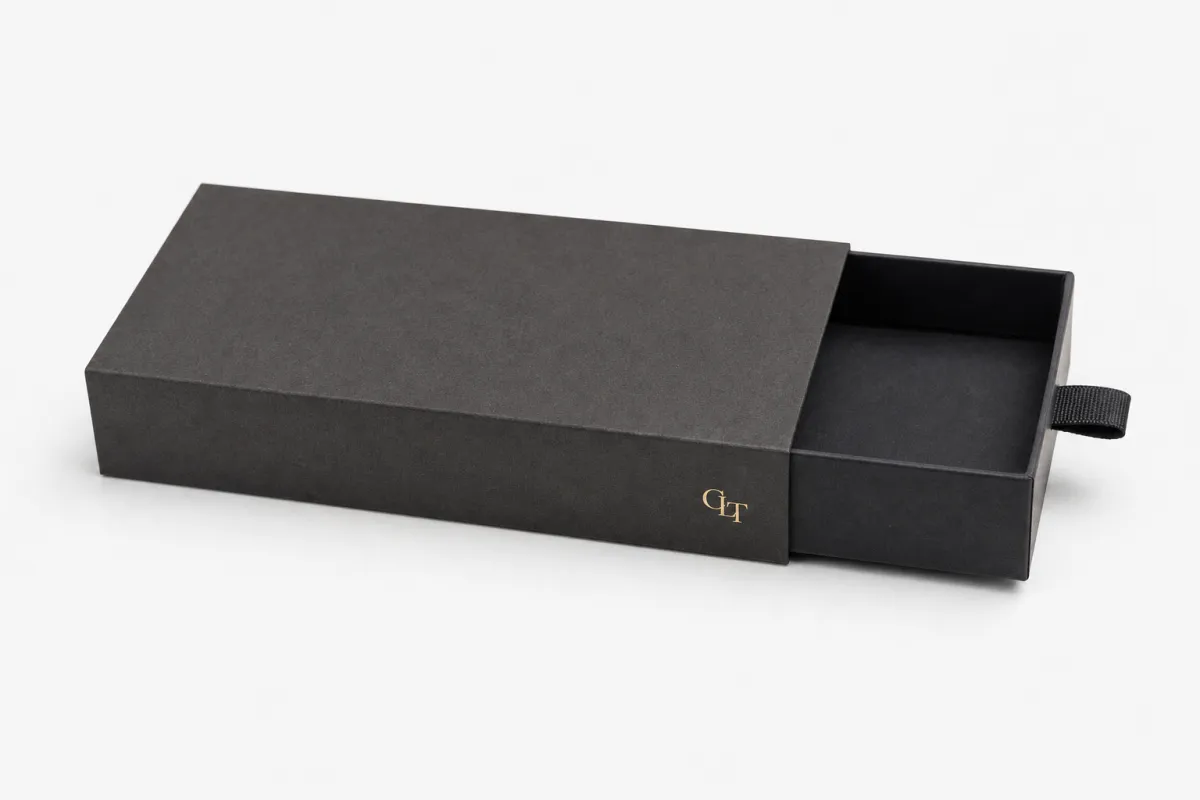
Printed Tray and Sleeve cartons are exactly what the name suggests. A tray holds the product, and a printed outer sleeve slides over that tray to create the finished package. Depending on the weight of the product and the feel a brand wants to create, the tray can be made from paperboard, chipboard, or a sturdier construction. The sleeve takes the lead on branding, while the tray does the less visible work of holding, spacing, and protecting the contents. That split is why printed tray and sleeve cartons appear so often in cosmetics, specialty food, apparel, electronics accessories, gift sets, and subscription kits.
The format works because it solves two problems at once. The tray keeps everything aligned and organized, while printed tray and sleeve cartons give the outside face a polished look without forcing the brand into a full hinged rigid box. For smaller and mid-sized items, that can be a much better fit than adding material just for the sake of visual weight. I have seen buyers spend more than they needed to on ornate structures when a well-sized tray and sleeve would have delivered the same premium impression on the shelf.
Shipping efficiency is another reason printed tray and sleeve cartons keep showing up in production conversations. Many versions can ship flat or semi-flat before final assembly, which lowers freight volume and makes warehouse storage easier to manage. That is not some clever packaging trick; it simply means you are not paying to move empty space. If your operation involves kitting, regional assembly, or pick-and-pack work, that detail can make a real difference.
There is also a branding benefit that gets underestimated. Printed tray and sleeve cartons give you plenty of usable surface area for logos, product names, ingredients, barcodes, batch codes, and short instructions. You can often keep the package clean without adding a second label just to cover the basics. For brands trying to keep the presentation focused and uncluttered, that is a useful advantage.
Printed tray and sleeve cartons are not a cure-all, though. Heavy products, sharp edges, oily surfaces, and parcels that will bounce through carrier networks all demand more thoughtful structure. A good-looking sleeve wrapped around a weak tray is still a weak package. Product weight, fit, and shipping method decide the final result more than the rendering does.
How printed tray and sleeve cartons work in shipping and shelf presentation
The user experience is straightforward, which is a big part of why the format works so well. The product sits in the tray, the sleeve slides over the tray, and the fit holds everything in line through friction, overlap, or both. When the customer opens the carton, the sleeve comes away and the tray reveals the product in a tidy, controlled way. That reveal is one reason printed tray and sleeve cartons often feel more premium than plain folding cartons with hidden inserts.
From a logistics angle, printed tray and sleeve cartons are useful because they protect the contents while staying easy to inspect and reopen. Retail staff can remove the sleeve, check the product, and close the package back up without destroying it. Customers can open the carton without fighting a glued flap or tearing through a seal that leaves the box looking abused. For shipped goods, that balance matters because the package has to look good and work well in the same real world.
Sleeve length and tray depth shape a lot of the behavior. A longer sleeve overlap can add stability and conceal tray edges, but it can slow down opening. A deeper tray can hold the product more securely, but it can reduce the drama of the reveal. With printed tray and sleeve cartons, the best proportions usually depend on whether the package is intended for retail display, e-commerce unboxing, or both.
Fit is the part people most often underestimate. If the sleeve is too loose, the package feels cheap and may rattle in transit. If the sleeve is too tight, pack-out slows down because workers have to force every unit together. In printed tray and sleeve cartons, the fit should feel deliberate, not stubborn. A warehouse team should not have to wrestle the carton into shape for every unit.
Another practical benefit is the way the same print area can support both branding and operational data. Printed tray and sleeve cartons can carry instructions, batch numbers, QR codes, and barcodes without requiring a separate label layer. That keeps the package cleaner and removes one more step from production. Small efficiencies like that tend to matter more than they look on paper.
Key design factors that affect strength, branding, and usability
Structure comes first. If the board grade, wall height, or sleeve overlap is off, printed tray and sleeve cartons will never feel fully right in the hand. The tray needs enough rigidity to hold the product without flexing, and the sleeve needs enough stiffness to stay square instead of curling at the edges. Lighter products can work well with paperboard. Heavier goods or more premium builds may need thicker chipboard or a reinforced construction.
Branding choices come next, and this is where buyers sometimes spend money in the wrong places. Full-coverage print, spot graphics, matte lamination, gloss coating, foil, and embossing all have uses, but not every finish earns its place. Printed tray and sleeve cartons often look strongest when the design stays disciplined: one or two focal points, strong typography, and a finish that matches the product rather than competing with it. Loading the carton with every special effect usually makes it louder, not better.
Internal organization matters just as much as the outside face. If the product shifts around inside the tray, the package loses the clean, controlled feel that printed tray and sleeve cartons are meant to deliver. Foam inserts, paperboard dividers, pulp trays, and folded supports can all work, depending on the product and the amount of movement you can tolerate. The right insert prevents damage without turning pack-out into a fight.
Logistics-specific details are where a packaging job quietly succeeds or quietly fails. Stacking strength matters if cartons will sit on pallets. Scuff resistance matters if the surface touches other cartons, shrink wrap, or warehouse shelving. Humidity exposure matters if the product will travel through warm storage or coastal transport. If the package must survive parcel shipping, printed tray and sleeve cartons should be tested under the handling conditions the shipment will actually face.
For those tests, third-party standards help keep the conversation grounded. ISTA publishes transportation test procedures used throughout the industry at ista.org. For fiber sourcing and forest certification, FSC details are available at fsc.org. Those references do not design the box for you, but they do give the project a standard to work from instead of relying on guesswork.
The best-looking printed tray and sleeve cartons still fail if the tray flexes, the sleeve cracks, or the opening sequence feels awkward. Beauty does not cancel physics. It only makes the mistake more expensive when the carton disappoints.
Printed tray and sleeve cartons cost, pricing, MOQ, and quote drivers
Cost is where printed tray and sleeve cartons become less romantic and more useful. The biggest price drivers are size, board thickness, print coverage, finish complexity, insert design, and whether the tray or sleeve needs custom tooling. Larger cartons consume more material. Heavy print coverage uses more setup and press time. Special finishes add labor and waste. Custom tooling can add fixed cost that is easy to miss if you only look at the unit price.
MOQ changes the math more than many buyers expect. Small runs usually carry a higher unit cost because setup, proofing, and press preparation are spread across fewer cartons. Larger runs bring the cost down, but only if the forecast is realistic. Printed tray and sleeve cartons can be a smart choice for launch testing at low quantities, yet they are rarely the cheapest route if the product already has stable demand.
There are hidden costs that can sneak into the quote if you are not reading carefully. Sampling, dieline revisions, plates, proof corrections, freight, and assembly labor can move the final number more than many teams expect. A quote that looks attractive on the first page may still be the expensive option once you include pack-out time and shipping. Buyers get burned when they compare only the carton price and forget the rest of the job.
Printed tray and sleeve cartons usually sit in a value zone between plain folding cartons and fully built rigid boxes. A simple printed sleeve over a plain tray can cost far less than a fully printed rigid package while still feeling intentional. That can be a smart move for product lines where the packaging needs to feel premium without absorbing heavy abuse. If the customer will see the box, touch it, and then discard it, spending like it is a jewelry vault usually makes little sense.
| Option | Typical use | Cost behavior | Notes |
|---|---|---|---|
| Plain tray + printed sleeve | Accessories, kits, cosmetics, retail sets | Lower setup, moderate unit cost | Good balance of appearance and budget for printed tray and sleeve cartons |
| Fully printed tray and sleeve cartons | Premium retail, gifting, branded launches | Higher print and finishing cost | Best when the inner tray is visible or part of the reveal |
| Tray with inserts and specialty finish | Fragile or high-value goods | Highest material and labor cost | Worth it only if protection and presentation both matter |
When you compare quotes, compare spec for spec. Two suppliers can both say they produce printed tray and sleeve cartons, but one may be using heavier board, a different coating, a looser tolerance, or a cheaper assembly method. That is not an apples-to-apples comparison. It is a pricing trap wearing a spreadsheet. Ask for the board grade, finish, insert assumptions, assembly method, and packing format in writing.
As a rough buying range, simple printed tray and sleeve cartons for mid-volume runs can land anywhere from a few tenths of a dollar to more than a dollar per unit depending on size, coverage, and finish. Smaller runs can run much higher. Premium rigid-style builds with special finishes and inserts climb fast. The exact number depends on the spec, and pretending otherwise is how people end up approving the wrong quote.
Printed tray and sleeve cartons process, timeline, lead time, and production steps
The production flow is usually straightforward: brief, dieline, structural sample, artwork setup, print proof, mass production, finishing, assembly, and shipping. That sounds tidy because it is tidy on paper. In real production, the handoff points are where printed tray and sleeve cartons start slipping if the product dimensions are vague or the artwork keeps changing after sampling.
Lead time depends on how ambitious the build is. Simple printed tray and sleeve cartons can move quickly if the structure is already known and the artwork is final. Custom structures, premium finishes, inserts, and unusual board stocks stretch the schedule. One common mistake is treating a prototype timeline like a production timeline. Those are not the same thing, and suppliers who blur the difference are usually smoothing over a scheduling problem.
Sampling deserves its own place in the schedule. A structural sample shows whether the fit works. A printed sample shows whether the colors, type, and coating feel right. In many cases, you need both. Skip the sample step and printed tray and sleeve cartons can go straight from concept to expensive disappointment. That is not dramatic language. It happens often, usually right before a launch.
Timeline planning also needs a logistics checkpoint. If the cartons arrive but still need assembly before pack-out, someone has to account for that labor. If the finished cartons must land before a store reset or a subscription ship date, the buffer should be real rather than optimistic. For most custom orders, a buyer should think in terms of proof approval date, production run, assembly time, and freight transit as separate steps.
One more practical note: if the project uses board from certified sources, the supplier should be able to document it clearly. If the packaging carries a recycling or recovery claim, that claim should match what can actually be supported. For general recycling guidance in the United States, the EPA is a useful reference at epa.gov/recycle. Good specs tend to be boring in the best way. They hold up when questions start coming in.
Printed tray and sleeve cartons are manageable on timeline if you treat them like a production project instead of a mood board. The art can be beautiful. The schedule still needs discipline.
Common mistakes that make tray-and-sleeve projects expensive or sloppy
The first mistake is measuring only the product and forgetting clearance, finger access, and material thickness. Printed tray and sleeve cartons need room for the product, the tray board, and the way people will actually remove the sleeve. If the design ignores those realities, the final carton can look perfect in CAD and feel awkward in the hand. Physics again. Very consistent, very inconvenient.
Overdesign is the second trap. Too many finishes, too many colors, too many inserts, and too much decoration can raise cost without improving the package. Many printed tray and sleeve cartons look best when the design stays focused. Strong layout. Clean typography. One premium finish instead of three competing effects. The package should support the product, not try to win a beauty contest against it.
Fit problems are common because tolerances can shift once production starts. A sleeve that slides nicely in a mockup can scuff, jam, or drift once the real board comes off press and gets converted at scale. Printed tray and sleeve cartons need tolerance checks before approval, not after the line is already running. If the friction fit is too loose, it feels cheap. If it is too tight, it slows packing and can mark the printed surface.
Shipping is the other major miss. A structure that looks strong on a shelf may still crush in parcel transit if the product has weight or the carton lands in a bad orientation. Printed tray and sleeve cartons are often chosen because they look premium, but the shipping method decides whether that premium survives the trip. If the package will move through parcel networks, test it that way. Retail stiffness and shipping durability are not the same thing.
Proofing mistakes can damage brand credibility faster than almost anything else. Weak review cycles lead to color mismatch, blurry text, off-center graphics, and barcodes that fail scanning at the worst possible moment. With printed tray and sleeve cartons, the print is part of the product experience, not just decoration. If the barcode does not scan or the legal copy is wrong, the box is not almost fine. It is a problem.
Buyers also get into trouble when they optimize for a single sample instead of the full run. One perfect prototype does not guarantee a thousand consistent cartons. Printed tray and sleeve cartons need spec control, not wishful thinking. Once the run starts, repeatability is what matters.
Expert tips and next steps for ordering printed tray and sleeve cartons
Start with the product, not the artwork. Lock the size, weight, fragility, and shipping method before you start debating finishes. That sounds basic, yet people reverse the order all the time. Printed tray and sleeve cartons become much easier to spec once the product profile is fixed, because the structure can be built around the actual use case instead of a vague idea of premium.
Ask for a plain structural sample first. It costs less to fix fit issues before print than after print, and the sample tells you whether the tray depth, sleeve overlap, and opening friction are working. For printed tray and sleeve cartons, that one step can save a lot of money and even more frustration. If the sample rattles, binds, or crushes too easily, you know before the full run locks in the mistake.
Use one quote sheet for every supplier. Same dimensions. Same board grade. Same finish. Same insert assumption. Same assembly condition. That is the only way to compare printed tray and sleeve cartons without turning the process into theater. If one quote assumes a plain tray and another assumes a reinforced tray, the price gap tells you almost nothing useful.
Choose the finish based on handling, not only shelf appeal. Matte hides scuffs better. Gloss can pop harder under retail lighting. Soft-touch feels expensive, but it can show wear if the package gets handled a lot. Printed tray and sleeve cartons should be judged in the environment where they will live, not only in a render. A package that photographs well and falls apart in distribution is expensive optimism.
Build a one-page spec before you send the job out. Include dimensions, product weight, target quantity, print method, finish, assembly expectations, and product photos. If the product has edges, fluids, coatings, or fragile parts, say that plainly. Good printed tray and sleeve cartons quotes come from clear inputs. Vague specs produce vague prices, and vague prices usually hide a problem.
If you are still early in the buying stage, a practical path is to ask vendors for three things: a structural sample, a unit quote at your target quantity, and a lead time split between sampling and production. That gives you a real picture of how printed tray and sleeve cartons will behave on your timeline and budget. Not glamorous, but far better than guessing.
One last point: the package should fit the channel. If it is primarily retail, the brand face matters most. If it is mostly shipped direct to consumer, protection and pack-out efficiency matter more. Printed tray and sleeve cartons can serve both, but only if you design for the dominant channel first and the secondary channel second. Build for reality. That is where the money goes furthest.
Done well, printed tray and sleeve cartons give you a clean presentation, workable protection, and a cost structure that is often more sensible than people expect. Done poorly, they turn into another box of regrets in the warehouse. The difference is usually not luck. It comes from spec discipline, fit testing, and a little less faith in pretty mockups.
For brands that need printed tray and sleeve cartons without wasting budget, the smartest move is simple: define the product, test the structure, compare quotes on the same spec, and keep finish choices tied to handling reality. That is how printed tray and sleeve cartons earn their keep instead of just looking good on a slide deck.
FAQ
What are printed tray and sleeve cartons used for?
They are used when a brand wants a neat unboxing moment plus reasonable product protection. Printed tray and sleeve cartons work well for retail items, gifts, subscription kits, cosmetics, and premium shipped goods. The tray holds the product, and the sleeve carries most of the branding and presentation.
How much do printed tray and sleeve cartons cost per unit?
Unit cost depends on size, board thickness, print coverage, finish, inserts, and order quantity. Smaller runs usually cost more per carton because setup and proofing are spread across fewer units. If you want a real comparison, ask suppliers to quote the exact same spec for printed tray and sleeve cartons, or the price talk turns into noise.
What lead time should I expect for printed tray and sleeve cartons?
Simple jobs move faster than custom structures with premium finishes. Sampling adds time, and production lead time is separate from prototype lead time. For printed tray and sleeve cartons, build in extra buffer if you need assembly, freight booking, or a launch date that cannot slip.
Which materials are best for printed tray and sleeve cartons?
Paperboard or paper-based rigid stock works well for most light to medium products. Heavier items may need thicker board, stronger inserts, or a reinforced tray. The right material for printed tray and sleeve cartons depends on product weight, shipping method, and how premium you want the package to feel.
How do I keep printed tray and sleeve cartons from scuffing or loosening?
Use tolerances that keep the sleeve snug without binding. Pick a finish that matches handling conditions, especially if the carton travels through parcel shipping. Test a sample with the real product before approving a full run, because printed tray and sleeve cartons that look great in a mockup can behave very differently in production.