Buyer Fit Snapshot
| Best fit | Custom Display Boxes with Logo projects where brand print, material claims, artwork control, MOQ, and repeat-order consistency need to be specified before quoting. |
|---|---|
| Quote inputs | Share finished size, material target, print colors, finish, packing count, annual reorder estimate, ship-to region, and any compliance wording. |
| Proofing check | Approve dieline scale, logo placement, barcode or warning zones, color tolerance, closure strength, and carton packing before bulk production. |
| Main risk | Vague material claims, crowded artwork, missing packing details, or unclear freight terms can make a low unit price expensive after revisions. |
Fast answer: Custom Display Boxes with Logo: Board, Finish, Dieline, and Unit Cost should be specified like a repeatable production item. The safest quote records material, print method, finish, artwork proof, packing count, and reorder notes in one written spec.
Production checks before approval
Compare the actual filled-product size with the drawing, then confirm tolerance on folds, seals, hang holes, label areas, and retail display edges. Reserve space for logos, QR codes, warning copy, and material claims before decorative graphics fill the panel.
Quote comparison points
Review material grade, print process, finish, sampling route, tooling charges, carton quantity, and freight assumptions side by side. A quote is only useful when the supplier can repeat the same color, closure quality, and packing count on the next order.
Custom Display Boxes with logo are packaging, yes, but they also act like sales fixtures, and those are not quite the same job. A box can look polished in a rendering and still fall apart the moment it gets loaded with actual product, moved through a warehouse, and set under bright retail lighting. Once that happens, the pretty mockup stops doing the heavy lifting and the shelf starts telling the truth.
For brands selling through retail counters, checkout lanes, club programs, or shelf programs, custom display boxes with logo need to make the product easier to spot, easier to pick up, and easier to trust. That sounds simple until the engineering, print setup, material choice, and finishing details start pulling in different directions. A display that is too light will sag, a display that is too busy will hide the product, and a display that ignores the store environment will lose the sale before anyone even touches the item.
A useful way to approach the project is to start with the merchandising problem and work backward. A countertop display for lip balm needs a different structure from a floor-ready carton for hand tools, and both are different from a shelf tray that has to keep products lined up after repeated handling. That is the space where custom display boxes with logo actually prove themselves. I have seen plenty of projects where the artwork looked finished long before the structure was ready, and that usually ends with a very expensive lesson.
What custom display boxes with logo actually do
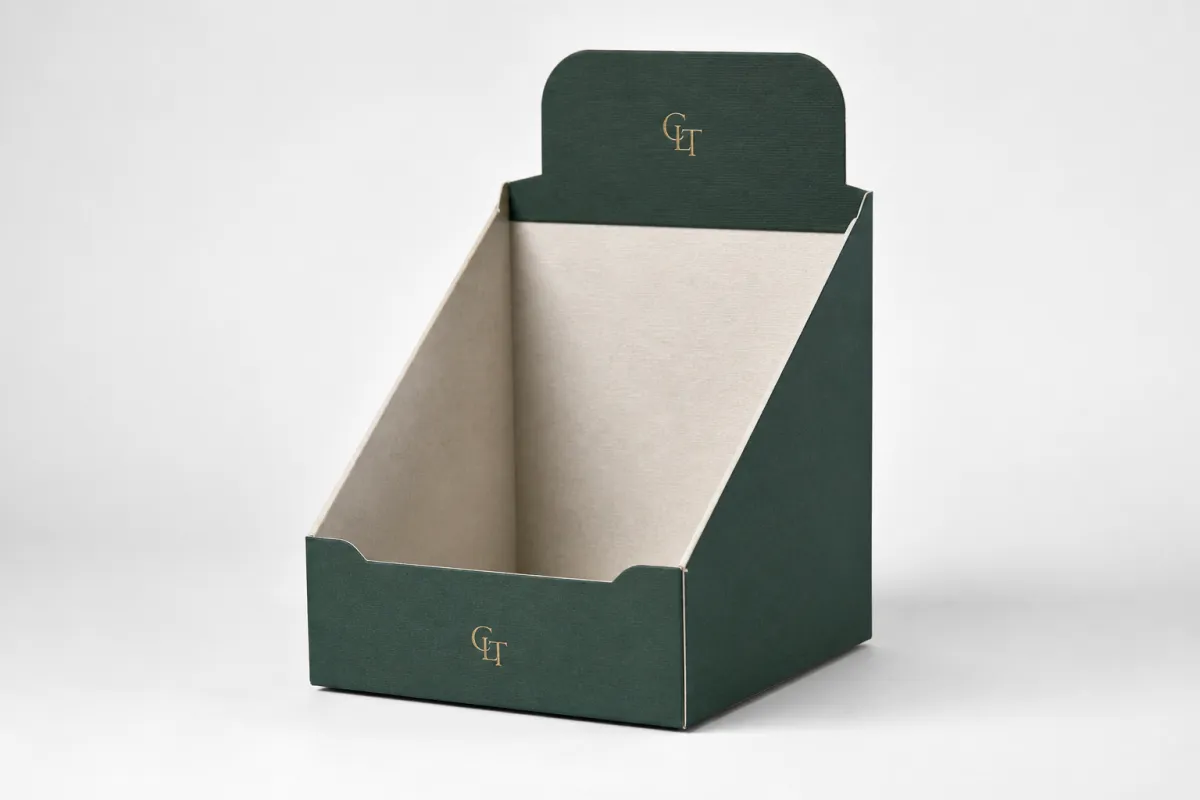
A display box acts like a tiny salesperson. It sits on the shelf, catches a shopper’s eye, and gives just enough information for a quick decision. That is the real purpose of custom display boxes with logo. They are not there to make a brand board look elegant. They are there to help product move.
The format changes the job. A counter display usually lives near checkout and is built for compact, impulse-friendly products such as mints, cosmetics, sample packs, phone accessories, or travel items. A floor display stands taller, carries more inventory, and needs a stronger base because shoppers, carts, and freight all put stress on it. A shelf-ready tray should load quickly, open cleanly, and present the front edge of the product without turning stocking into a puzzle. A display carton or open-top tray can work well when the product is light and the presentation is simple. The wrong structure turns custom display boxes with logo into a storage problem dressed up as marketing.
Branding matters, yet structure matters first. A loud box that blocks the product can hurt conversion instead of helping it. A strong product can often live with a quieter frame that keeps the item visible. A plain product usually needs the box to do more work through contrast, hierarchy, and cleaner copy placement. In practice, custom display boxes with logo perform best when the branding reads from a distance and the product comes out of the box without a struggle.
Small items close to checkout need speed and visibility. Heavier products need load support, stronger board, and a base that will not twist after a few days on shelf. A flimsy display carrying a 12-ounce jar will bow, split, or lean long before the marketing team notices. That is not a design preference. That is an engineering failure, plain and simple.
“A display that cannot survive the pallet ride, the warehouse, and the first week on shelf is not packaging. It is a liability with a logo.”
Brands that want the simplest path to a good result usually do better choosing the lightest structure that still protects the product and presents it clearly. If you are comparing formats, you can browse Custom Packaging Products to see how different package types compare before asking for a quote.
Good custom display boxes with logo also reduce friction for shoppers. The product should be obvious at a glance. The brand should be readable without effort. The box should say what it is without making the shopper work for the answer. Shelf competition is brutal, and most stores reward clarity long before they reward cleverness.
Displays for durable goods can do a little more. They can organize refills, communicate pack count, and keep the presentation tidy after several customers have already pulled product from the front. For lightweight or fragile goods, the display needs tighter internal fit and more restraint so the items do not tilt, rattle, or arrive damaged. Good shelf presentation lasts only when the build supports it.
Custom display boxes with logo: process and timeline
The production path for custom display boxes with logo looks simple on a whiteboard and much less simple once product dimensions, artwork approvals, and print setup enter the picture. The process usually starts with a product brief that includes size, weight, fill count, retail setting, shipping method, and print goals. From there, the supplier confirms or creates the dieline, and the artwork is built around that structure. That sequence matters. Skipping the dieline step is how logos end up under folds and headlines get cut by locking tabs.
Proofing follows the dieline stage. This is the point where late artwork, vague measurements, or a structural revision can add time. If the display needs a deeper base, a different tab lock, or a new header card, the timeline stretches faster than most buyers expect. For custom display boxes with logo, the schedule usually depends more on decision speed than machine speed.
A typical timeline looks like this:
- Simple standard structure: about 10-15 business days after proof approval, assuming artwork is ready and there are no structural changes.
- Custom structure or complex print: about 15-25 business days, especially if there is spot UV, foil, unusual folds, or multiple insert parts.
- Sample or prototype stage: often adds 3-7 business days, depending on whether the sample is digital, flat proof, or physical.
- Rush production: possible on some jobs, but usually only if the structure is already known and the supplier has material and press time available.
That kind of timeline is normal, not a warning sign. The delays usually come from three places: artwork submitted in the wrong format, a product dimension that changes after the quote, and a finish upgrade added after proofing. Any one of those can push custom display boxes with logo back by several days.
When you ask for a schedule, get the supplier to confirm quantity, board grade, print method, finish, assembly state, and delivery location in writing. If any of that is vague, the lead time is not a schedule. It is a guess wearing a tie.
Buyers should also ask whether the quote includes dieline setup, proof revisions, and sample approval. Some suppliers include those steps. Some do not. The difference may be small on a large run and irritating on a smaller one. Either way, custom display boxes with logo should be planned against a real calendar, not a hopeful one.
For launches with hard deadlines, the safest move is to lock the structure early and keep the artwork disciplined. That does not mean dull. It means controllable. A clean production plan beats a beautiful delay every time.
Key factors that shape custom display boxes with logo
Structure comes first. Custom display boxes with logo can take the form of countertop displays, floor displays, open-top trays, shelf-ready cartons, or hybrid builds with header cards. The right choice depends on the product weight, how the display will be refilled, and where it will sit in the store. A small cosmetics SKU does not need the same engineering as a snack tray or a bottle set, even if the artwork department would love the same visual treatment.
Board strength follows structure. Lightweight items can often run on paperboard or SBS/C1S stock, while heavier products usually need corrugated board, stronger fluting, or a reinforced base. If the display needs to carry several pounds of product, the locking tabs and bottom panel become part of the load path. In plain terms, the box has to hold itself together before it can do any selling.
Branding needs the right scale. A logo that looks sharp at arm’s length may vanish from a shelf ten feet away. For custom display boxes with logo, size, contrast, and placement matter more than most people want to admit. A short headline, a clean product promise, and one strong brand mark often outperform a crowded front panel loaded with taglines and tiny claims. Retail packaging is not a billboard. It is a speed test.
Finish changes the feel of the whole piece. Matte can read more restrained and modern. Gloss can catch attention under bright retail lighting. Soft-touch can give a premium feel, though it also adds cost and can show scuffs if the display gets handled often. Recycled board and uncoated stock can support a more natural package branding style, but only if the print contrast still reads clearly.
Lighting is a design variable, not an afterthought. Fluorescent and LED lighting can flatten muted colors, wash out low-contrast logos, or create glare on high-gloss surfaces. That is why custom display boxes with logo should be reviewed in a bright room and, better still, under conditions similar to the store itself. Screen previews are helpful. They are not the whole story.
Refill method matters as well. Some displays are built to be stocked from the back, some from the top, and some by lifting a front panel or removing a shipper sleeve. If staff will restock the display multiple times, the opening should be easy to access and durable enough to survive repeated use. If the unit is meant to sell through once and get replaced by a fresh tray, the build can be more disposable and cost-efficient. That choice affects both engineering and pricing.
Here is a practical comparison of common options for custom display Boxes With Logo:
| Display type | Best for | Typical material | Common unit range | Notes |
|---|---|---|---|---|
| Counter display | Impulse items, small retail packs | Paperboard or light corrugated | $0.18-$0.55 | Low footprint, fast grab-and-go presentation |
| Shelf-ready tray | Grocery, club, pharmacy shelves | Corrugated or reinforced board | $0.35-$0.90 | Designed for quick stocking and clean shelf presentation |
| Floor display | Larger inventory, seasonal promotions | Heavy corrugated | $1.20-$4.50 | Higher visibility, more structural demand, more freight impact |
| Header-card tray | Simple branded merchandising | Paperboard plus tray | $0.22-$0.75 | Good when you need branding without a full custom build |
Testing standards matter too. If the display will be shipped, stacked, or handled over long distances, ask about ISTA testing or at least some kind of performance check that mimics real transport and warehouse handling. For fiber sourcing, FSC-certified board is a useful option for brands that care about responsible materials. You can read more at fsc.org, and transport testing guidance is available through ista.org. Those references are practical, not decorative. They help avoid packaging failures that cost far more than the test.
The sales channel deserves the same attention as the materials. Retail packaging for a pharmacy shelf does not need the same visual force as a discount-store clip strip, and a premium presentation in the wrong store can feel out of place fast. Branded packaging should suit the channel. A cheap-looking layout in a premium store looks cheap. A luxury-looking layout in a value store can feel disconnected from the aisle around it.
Custom display boxes with logo: cost, pricing, and MOQ
The price of custom display boxes with logo comes from a predictable set of inputs: material grade, print coverage, finish, die complexity, labor, and whether the display ships flat or assembled. A simple structure with clean artwork stays easier on the budget. A design with heavy ink coverage, specialty coating, inserts, and odd folds costs more. There is no mystery there. The quote is doing arithmetic.
MOQ matters because setup costs have to be spread across the run. A 500-piece order can look expensive per unit because the tooling, press setup, and prepress work stay almost the same whether you make five hundred or five thousand. On a 5,000-piece run, those fixed costs spread out, and the unit price usually comes down. That is why short runs of custom display boxes with logo often feel pricey while larger runs look more manageable.
Digital print usually makes sense for short to mid-size runs, especially when artwork changes often or the display is tied to a seasonal promotion. Offset printing usually fits larger quantities with stable graphics. Flexo can work well on corrugated display jobs when the artwork is simpler and the volume supports the setup. The right choice depends on quantity, color count, and board type, not wishful thinking from the buying side.
Here is a realistic pricing view for custom display Boxes with Logo:
| Run size | Typical print method | Approx. unit price | Setup impact | Best fit |
|---|---|---|---|---|
| 250-1,000 units | Digital | $0.45-$1.80 | Higher per unit because setup is spread thin | Launches, pilot programs, fast design changes |
| 1,000-5,000 units | Digital or offset | $0.22-$0.95 | Balanced for many retail programs | Seasonal campaigns, regional rollouts |
| 5,000+ units | Offset or flexo | $0.08-$0.45 | Best spread of fixed costs | National programs, stable artwork, repeat orders |
Those ranges are buying ranges, not promises. They move with size, ink coverage, board grade, finishing, and assembly. Spot UV, foil stamping, embossed logos, and custom inserts all increase the cost. Flat-packed, simple displays usually stay friendlier on price. If the box needs to survive long shipping lanes or heavy handling, the stronger board and better structure are usually worth the extra spend, because replacing damaged units costs more than protecting them right the first time.
Every supplier quote should break out the following:
- Unit price at your target quantity.
- Tooling or plate fees, if any.
- Sample cost for a physical proof.
- Assembly cost if the display is not shipped flat.
- Freight to your destination or distribution center.
- Finish upgrades such as matte laminate, gloss varnish, or soft-touch coating.
The full landed cost matters more than the headline unit price. Plenty of buyers get pulled in by a low print number and then watch freight, assembly, and sample charges eat the margin. It is one of the oldest packaging traps. The box looked cheap until it had to travel.
One useful move is to ask whether the supplier can keep graphics consistent across displays and other package formats. Matching package branding across the display, the primary carton, and the retail shipper can make the product line feel more deliberate. That consistency often costs less than buyers expect and delivers more shelf impact than another finish upgrade.
If you are comparing suppliers, ask for two versions of custom display Boxes With Logo: one optimized for cost and one optimized for presentation. Then compare the landed cost, not just the factory price. Sometimes the more polished option wins because it lowers shrink, improves shelf conversion, or makes the brand easier to trust in a crowded aisle.
Step-by-step: ordering custom display boxes with logo
Start with the product, not the artwork. Measure the item, confirm the weight, decide how many units each display should hold, and figure out how customers will remove the product. For custom display boxes with logo, those numbers shape every other decision. If the product is top-heavy or oddly shaped, the base and internal fit need extra attention. If the product is light, the display can usually be simpler and less expensive.
Pick the display style that matches the retail setting. Countertop displays work well near checkout. Shelf trays fit stores that want quick replenishment and a tidy edge. Floor displays make sense for larger launches and promotions. If you want a broader view of what is available before you commit to one structure, the range at Custom Packaging Products is a useful place to compare formats.
Request the dieline before the artwork is finalized. That step sounds basic, yet people still design first and try to squeeze the graphics into a box later. That is how logos land in folds, text gets clipped, and mockups look far better than the finished carton. Custom display boxes with logo should be designed around the real die, not around the idea of the die.
Build the artwork for shelf distance. Use one strong headline, one clear brand mark, and a readable callout that tells the shopper why the item deserves attention. Do not cram the panel with every product claim that sales, legal, and marketing have ever wanted on the box. At retail distance, clarity wins. That is even more true when the product is competing with several other packages all asking for the same few seconds of attention.
Approve a sample or proof before production. A proof can show layout, but a sample shows fit, structure, stability, and how the finish behaves in real light. For a retail launch, that extra step is usually worth it. Custom display boxes with logo have to survive the shelf, not just the art review.
Before the order is released, confirm the packing instructions. Flat-packed cartons should be bundled clearly and labeled by SKU. Pre-assembled displays need stronger outer shipping protection so corners and edges do not arrive crushed. Ask whether the supplier includes master cartons, palletizing, or assembly instructions. If the shipping plan is vague, the warehouse will improvise, and warehouse improvisation is rarely the version you wanted.
- Measure the product and weigh a filled unit.
- Choose the display style that fits the store.
- Request the dieline before artwork is finalized.
- Keep the front panel simple and readable.
- Approve a sample or proof before production.
- Confirm packing, freight, and delivery timing.
That sequence sounds plain because it should be. Boring is a virtue here. Boring keeps custom display boxes with logo from becoming a surprise cost overrun. A clean ordering process saves more money than flashy artwork ever will.
Common mistakes with custom display boxes with logo
The biggest mistake is designing for the mockup instead of the product. A display can look sharp in a PDF and still fail the moment the actual items are loaded into it. If the base bows, the opening is awkward, or the product sits too low to see, the branding does not rescue the result. Custom display boxes with logo live or die on physical behavior, not render quality.
Another common error is overloading the front panel with copy. Too much text, too many colors, too many claims, and the logo disappears into the noise. That weakens package branding fast. Shoppers are not standing in an aisle to read a thesis. They are moving through a store, distracted, and looking for a package that makes immediate sense.
Shipping and storage get overlooked more than they should. If the display has delicate corners, weak tabs, or a finish that scuffs easily, it may arrive looking tired before it reaches the shelf. Custom display boxes with logo should be designed for the full trip: production, pallet handling, freight, warehouse storage, and retail placement. A display that only survives the studio is not doing its job.
Skipping the sample stage is another expensive habit. Plenty of buyers trust a print proof and assume the rest will work out. Then the first full run reveals a problem with fit, color density, or tab engagement. Testing one sample is cheaper than fighting 2,000 boxes that were printed correctly and built wrong. That is not a fun meeting, and it should not be a surprise.
Materials need to match the product. A premium cosmetic line on thin board feels off. A heavy hardware item on lightweight paperboard feels worse. Retail packaging should match both the weight and the perceived value of the product. If the display is underbuilt, the brand feels cheap. If it is overbuilt, the price starts to look silly.
Store lighting matters too. A design that reads well under bright pharmacy lights may look muddy in a convenience store. A gloss finish that works in one channel can create glare in another. That is why custom display boxes with logo should be tested in the environment where they will actually live, not only on a screen or under office lighting.
“If the first full run is the first time you discover a problem, the real mistake happened weeks earlier.”
From a cost angle, the worst mistake is approving upgrades too late. A finish change, insert revision, or larger die can add setup time and freight cost. Small changes add up fast. Better to decide early which lever matters most: low cost, premium feel, or stronger shelf drama. Getting all three at once is possible only if the budget agrees.
The short version is plain: custom display boxes with logo fail when people focus on appearance and ignore loading, shelf distance, and replenishment. That is the whole problem in one sentence.
Expert tips and next steps for custom display boxes with logo
Use one strong message on the front panel and let the structure do the rest. For custom display boxes with logo, the front should usually carry the brand name, product type, and one useful selling point. Compliance text, ingredients, and technical details belong elsewhere unless they are the primary reason the shopper is buying the item.
Ask for two quote paths: one lean and one presentation-focused. The lean version should show the lowest practical structure and finish cost. The premium version can include a nicer coating, thicker board, or a more polished merchandising face. Seeing both versions side by side makes it easier to understand what presentation really costs.
Test the display under real conditions. Put the actual product inside it. Set it under bright light. Look at it from six feet away, then from arm’s length, then while walking past it. That is how shoppers encounter it. If the logo disappears, the copy feels crowded, or the box looks awkward in motion, fix it before production. Custom display boxes with logo should earn shelf space in the first glance.
Think about shipment format early. Flat-packed units save freight and warehouse space. Pre-assembled displays save labor at store level. There is no universal winner. The right answer depends on labor costs, distribution model, and how much handling the product can tolerate without getting damaged. Practical matters decide this, not romance.
Here is the order I would recommend for most buyers:
- Shortlist the display style that fits the channel.
- Collect product weight, dimensions, and fill count.
- Request a dieline and first quote together.
- Review a sample in real lighting.
- Approve production only after the fit feels right.
- Scale up after the test run proves the concept.
If your goal is to make the product easier to sell, custom display boxes with logo are worth the effort. If your goal is only to put a brand mark on a box, there are cheaper ways to spend money. That sounds blunt because the shelf is blunt. Packaging should solve a retail problem, not create one.
For brands building a full packaging system, it helps to keep the display aligned with Custom Printed Boxes, outer shippers, and the rest of the product packaging line. Consistency makes the shelf presentation feel intentional rather than improvised. It is one of the simplest ways to strengthen retail packaging without adding unnecessary extras.
My practical advice is to start with the smallest display that still does the job, then upgrade only where the product or channel needs it. That approach usually gives the best mix of shelf impact and control. If you are planning custom display boxes with logo for a launch, run a test order first. A small pilot costs less than a full mistake and creates a lot less friction.
Custom display boxes with logo work best when they are built around the product, the store, and the budget at the same time. Miss one of those, and the box may still look fine on paper. On shelf, the market tells the truth very quickly. So the most practical next step is simple: lock the product dimensions, request the dieline, and approve one physical sample before you commit to volume. That order keeps the design honest and the rollout a lot less risky.
What are custom display boxes with logo used for?
They present products in retail settings so shoppers can see the brand fast, understand the offer quickly, and grab the item without friction. Custom display boxes with logo are especially useful for impulse products, small packaged goods, and shelf or checkout placement where visibility matters more than storage.
How much do custom display boxes with logo usually cost?
Pricing depends on size, board grade, print method, finish, quantity, and whether the display ships flat or assembled. Small runs of custom display boxes with logo usually cost more per unit because setup is spread across fewer pieces. Ask for a quote that includes tooling, sample costs, freight, and assembly so you can see the real landed cost.
What is the typical turnaround for custom display boxes with logo?
Simple jobs can be ready in about 10-15 business days after proof approval, while more complex structures can take 15-25 business days or longer. Changes to size, finish, or layout usually add time. For custom display boxes with logo, the safest move is to confirm the schedule before final artwork approval.
What information do I need before requesting a quote?
You will get a better quote if you provide product dimensions, product weight, fill count, preferred display style, quantity, finish preferences, and delivery timing. For custom display boxes with logo, also tell the supplier whether you need flat-packed boxes or pre-assembled displays.
How do I make custom display boxes with logo look more premium without overspending?
Keep the layout clean, use one or two strong brand colors, make the logo readable from shelf distance, and choose one finish that supports the product instead of stacking every upgrade. A sample helps you catch weak structure or awkward branding before the full run of custom display boxes with logo goes to print.

